5 Steps to Start a Biz when you work a 9-5
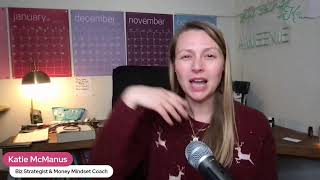
Katie McManus walks through five steps to launch a service business while keeping your day job. Start by picking your service and niche, then talk to potential clients to validate demand before you build anything. Land your first five paying clients, then think about websites and leaving your job.
Chapters
I can taste yo yo, yo I can taste yo yo, yo yo Words I can taste yo yo, yo I can taste yo, yo, yo I can taste yo, yo, yo I can taste yo, yo, yo I can taste Y.
Hello and good evening. Afternoon. Yeah, what time is it? It's dark but it's only 4:15. I just realized. Good afternoon everyone. I'm Katie McManus, business strategist and money mindset coach. Coming to you live on the Facebook's LinkedIn, YouTube and Instagram. I honestly cannot wait until Blues, Blue sky, the new one, the the, you know, the Twitter knockoff until they figure out some kind of live thing because I really loved going live on the old, you know, you know what, I'm not gonna say the word because I don't like them. But anyway, welcome. Tonight today I'm gonna be talking about. I really like. I. I need to live somewhere close to the equator so that I don't have this like change in. In sunset. It really throws me. Anyway, today I'm going to be talking about the five steps that you need to take if you are a full time worker. If you are employed in a business, you have a 9 to 5 and you want to start a business. And I'm going to break this down, I'm going to make it super simple. It is not what you think. It'll be okay. And I know, I know there are a lot of people out there who have advice about starting a business and they're like go and start an LLC and go create a business plan and go do this and go do that. And while yeah, those are important aspects, those are the legal parts that you need to do. You do need to have contracts drawn up and all that jazz, you know, none of that really matters if you're not making money. Right. I'm also not going to give the typical hustle bro advice which is quit your job, go all in on your dream because that is not realistic for people. There are a lot of people who aren't necessarily like living paycheck to paycheck, but you know, they would put themselves in a perilous situation if they were to leave their job and have to live off their savings or rely solely on their spouse's income. I am a firm believer that money in good money in is great. And you know, if you have a secure income, keep it for as long as humanly possible while you are building the business. All right, the best case scenario here is that you have your full time job, you make a good income from it. In addition to that you work like between 8 to 12 hours a week. Honestly, that's all it takes, especially if you're doing a service based business like consulting or coaching. 8 to 12 hours a week on your side hustle business. And as you get clients, as you're making money, save it, do not spend it or reinvest it into the business so you can make more money and just continue to grow your side business until you either have a big enough nest egg from the money you've made or you have so many clients that you need to leave your full time job. All right, I don't recommend quitting the job before that point. And this point is different for everyone. It really depends on what your tolerance for risk is. One of the things, one of the tools that I use with my clients, my one on one clients and my advanced clients is the sacred money archetypes. And basically it breaks down what your operating system is. So for instance, I'm a maverick. Mavericks tend to be very, very comfortable with risk. Maybe it's ghost too comfortable with risk versus the accumulator. On the extreme other end of the spectrum, they do not like risk. They do not want to invest in the stock market. They don't want to do anything that might have any chance they could lose even a dime of their hard earned cash. Whereas mavericks are like, I can make more money. Here you go, let's make this happen. Anyway, so I'm going to be going through the five things that I think are most important in you starting a business. I'm also going to be going deeper into detail, but I am going to be wrapping this up at about 10 of the hour because I have a massage tonight and I do not want to be late anyway. So step number one, step number one, if you want to start a business, figure out the service you want to provide. Okay? If you're a copywriter and you want to do copywriting, great, do that. If you are a social media manager and you want to go and do social media management, great. That is your service. If you are a consultant, say you are a consultant for like implementing Salesforce, that is actually a thing, then great. That is your, your service, right? If you are a life coach, great. That's your service. If you're a lawyer and you want to do wills trust in the states, that is your service. All right? And the reason I keep saying that is your service is because people often figure out like what they want to do and they're like, cool, that's my niche too. No, no, no, no, no. No, they're not. They are not the same thing. They are different things. And hi, Nor. And hi. It's bonbon. Welcome. They are different things. Your service is the thing that you do and your niche is the people that you provide that service to. Okay? So step one is figure out the service, all right? And honestly figure out the thing that, yeah, you're pretty good at. Like, you're gonna get better as you do it, I promise you. Okay? Figure out the thing that you're good at that people, you know, don't know how to do. But make sure it's something you really enjoy doing, all right? Because if you're trying to start a business around something that you're just not stoked for that you just, yeah, you're like, I can do this in my sleep. It's fine. You're not going to be passionate enough to show up every day in the little ways that you need to to be able to grow this to a full time business. All right? So make sure it's something that you really enjoy doing. It fills you up, it lights you up. All the things. Don't build something around something that just. All right, all right, so that is step number one is figure out your service. Now step number two, like I kind of already talked about, you need to figure out your niche. All right? So I'll use that example of the consultant who helps businesses set up Salesforce. All right? So there are a lot of different kinds of companies that use a platform like Salesforce. And if you're not familiar with what Salesforce is, Salesforce is basically a CRM. It helps companies manage, you know, all the potential clients that they have coming in, leads and, you know, the whole sales cycle. I personally use Salesforce when I worked at Equinox, when I worked at Cisco Systems and when I worked at SolarCity. It's an incredible platform, but it's com. It's complex. When they rolled it out to Equinox, just a little side story, they didn't do like a beta test first. They didn't do it to like one little group of the company. They just did it to the whole company all at once. And at our sales forum that year, they're going through like the list of all the achievements and all the things that they're proud of and they like, everyone was cheering and then they. About this and that and the other thing. And then they're like. And then we've rolled out Salesforce. It's just crickets. Everyone hated it because no one got trained on it. Anyway, but say that is your service. You're helping people. Companies set up salesforce in their own ecosystems. You know, you can get really nitty gritty here. You can help companies in the health sector, you know, in fitness, in, say, plastic surgery offices, in whatever. You know, you can absolutely do that. You could absolutely help folks who are in the B2B space set up the salesforce for themselves. You could help people in agriculture with salesforce. Like, there are so many different niches that you could pick. And what this does, it makes it really easy for you to get business, right? Because a, especially if you're going and talking at events, you don't have to talk at 300 events, hoping you're going to get one client. You can go to three events that are really specifically targeted to your ideal clients and pick up some business. All right? You also have an easier time creating content on social media because you're talking about one specific thing that's relevant to your clients. You're not trying to talk about everything to everyone. Okay? Because what's going on for the farmers who are selling grain to the. The people who, you know, do cow stuff like milk and. And beef and stuff, I'm sure there's a more cohesive word for that. You know, that's going to be a very different sales cycle and business model than people who are, you know, selling gym memberships, for instance. So it makes your life so much easier. It also makes you the spirit specialist, which means that you get to charge more, which we love, don't we? We don't want to be making pennies on the dollar. We want to be charging specialist dollars. All right? Okay. So now that you have picked a niche and figured out your service, we're gonna actually market test your services and that niche. All right? This is a step that most people jump over. They're like, cool. I have a service and I have a niche. I'm going to create an offer, and then I'm going to go out and I'm going to sell it and market it. And most of the time when they do that, they get crickets. They don't get anyone who likes their content. They don't get people signing up for their newsletter, and they certainly do not get paying clients. Now, why is this? Now? There are a few reasons. So when you go and market test your service and your niche, for first and foremost, you're making sure that there are people out there who have the problem that you solve and are willing to spend money on solving that problem. Okay? The bare minimum we need to make sure that these people exist. All right? So if you're not doing that work to market test your service and your niche, you are setting yourself up for failure. All right, now, as you're having these conversations with your potential clients and people who are in this niche, you know, you're talking to people who have the problem, who have a budget, and who might want to invest in solving this problem, and they're talking to you. How funny. How funny. I wonder if that might turn into business. Now, this is something that I have all my clients do in my build your own business group program, BYOB for short. And it's an amazing process because not only do some of my clients end up getting some clients, not necessarily the whole point of it, but you really understand, like a, that this is needed. I need to be providing the service to this niche. So you feel a lot more confident what you're offering, but you also learn how your ideal clients, who are not experts at what you do, how they talk about the problem and how they talk about what they want. Right? Because remember, you have experience here. You know the vocabulary of whatever it is that you do. You understand the nuances. You can see the root to the problem. Okay? They don't have any of that. There's a reason they would need to hire someone like you. So you being the expert, it's going to be so tempting to go out and try to, like, show off how smart you are to the entire world to show them, like, how they need to hire you. And that's actually the last thing you need to do in marketing your services. What you need to do is you need to understand how your clients talk about their own problems, their desires, their frustrations, and you just need to go and talk about that. Okay? Simple. It's also one of the things I train in byob, the build your own business program. It's called empathetic marketing. All right? And it's amazing for people who are just starting their businesses who don't have testimonials yet because you just started, okay? It's hard to have testimonials for all your happy clients when you've never had a client, much less a happy client, right? So when you have this, like, list of. Of ways that your ideal clients are talking about their problems, it makes it so easy to go and create content or create keynote talks or just go out and have conversations with people and say, hey, this is the kind of person I help, and these are all the problems that they have, and they'll be like, oh my God, that's me. That's me. And that's me. And that's me. And that's me. And that's me. That's not really me, but that's me. Oh my gosh. And if you understand their problems to that degree, if you're that tuned in with what's going on with them and they're not even like telling you this stuff, you don't have to tell them that you solve the problem, right? People are just going to assume that you are the answer to their woes, all right? And they're going to want to book a call with you, all right? So you. But you cannot get to that point where you can market in this way, where you can land clients in this way without doing the market testing, the market research to make sure that this is actually something that is viable. Okay? So that is step three, step four. Now this is something that's different for everyone, okay? So create a strategy for you to get clients that won't get you fired, all right? Especially if you're working in a 9 to 5, right? Because you do not want your boss to be like, what are you doing in your spare time, huh? You're not supposed to have a business on the side and so on and so forth. Now there's so many different strategies and this is where a lot of business programs kind of fall flat, right? Because it's usually like, hi, I'm so and so. And this is the, the format that I followed step by step. And if you do the exact same thing that I did, then it'll work for you too. No, no, no, no, no, no. Okay, so some people are brilliant at writing. Some people are so good at writing and they can make people feel, feel things and they're really compelling. And so their strategy to get clients is going to be very written based. Okay? So they're going to be writing content and they're going to have to also figure out where to write that content, what social media platform, or are they doing email marketing, depending on the, the structure of their nine to five, the rules around their nine to five. So like, if they have to keep it on the DL, it's going to be much more of like an asking for referral, emailing, maybe some like private Facebook groups or whatever to get your first few clients. Now if you're not good at writing, that's okay. Like, I think it's a really great business school skill to have. And if you're thinking about starting a business, you're not really sure what to do? I highly recommend that you invest in some copywriting courses. But if you're not great at writing, but say you're, you're good on camera, you like doing little videos, maybe you have a silly little tech talk, then that can absolutely be your strategy. But again, there is a different strategy for video content, right? Each person has their own strengths and their own challenges, all right? And it doesn't make you wrong that you don't have the same strengths as everyone else, all right? What makes it wrong is your business has to support those strengths. Your business has to leverage those strengths for you to be able to get clients. Now this is a big part of what I do with my clients in the build your own business group program and with my one on one clients, right? Because you know, it feels pretty shitty for someone to sign up for a business building course or coaching program and be told, well, you have to be good at all these things and then they're not and then it doesn't work for them, right? And that's not something I ever want my clients to go through. And so what we really do is we figure out a what their services, right? Who their niche is, where are those people hanging out, where did they make these kinds of buying decisions? And then what is this person's strength? What are they really, really good at and how can they get clients, right? So, so there's so much advice out there about like what the right strategy is. There's no such thing as a right strategy for everyone, okay? There is a right strategy for you, all right? And that is what you're trying to find here, all right? So step four, it's so important to find the strategy that fits you and that works for your business model, all right? And remember, remember, this has to be something that you enjoy because you're gonna have to do it over and over and over and over and over again. And if you hate it, if it's like pulling teeth and you're just miserable doing it, you're not going to be consistent at it. And because you're not consistent, it's not going to work for you, okay? So this is a very important step, all right? Now step five, this is, I mean, this is my number. I think this is a very important number. But you know, it depends on your business type. I'm a firm believer that you need to focus on getting your first five high paying clients, right? By the time you've talked to enough people for you to get five clients, you're going to understand a, where these People are discovering you and what's working B, you're going to verify the whole market verification process that you did in your market research because you have actual human beings who are paying for your service, right? And three, I mean they're, they're, they're really endless. The reasons, but like another reason is that you're going to understand what language lands with your ideal clients, right? So at this point, this is where you go and build the website. This is where you go and create landing pages and lead magnets and all that jazz and, and really like all the things that people generally start with in their business. I actually recommend you delay it, right? Because oftentimes I'll see people, they come and they sign up for my group program and they sign up to work with me one on one and they're like, cool, here's my LLC and here's my website and here's this and here's. And like their LLC is pretty much irrelevant. It's just a legal thing that protects them. So we don't even really look at that. Their website like without fail has to be redone, has to be completely rewritten and made over, right? Because it's about them, it's not about their ideal client, right? The goal of any website is for people to show up and be like, oh my God, that's me. And oh my God, that's me. And oh my God, that's me. And like people can't do that if it's just like a nicer version of your resume, right? And let me tell you, like, people spend so much money on websites. If you've ever talked to someone about doing a website for you, it can cost anywhere from like a thousand to someone on the really low end to like $10,000. Or you could have wasted hours and hours and hours and hours and hours doing it yourself, right? So I actually have clients wait to do the website until after they have their first five high paying clients because it just, you know, we might as well just spend the money once or like spend that time and energy once when you know, you know, like what you need to be putting on that website and the list goes on and on. But also at the point that you have five high paying clients, you have five paying clients, right? You have people who are paying you for your service and that money can be put into savings so that as you start building this business beyond that, you can see that savings grow and grow and grow and grow. And all the money that's in that savings account can then become the Money you live off of when you're ready to leave your nine to five, right, which is a super scary moment for all entrepreneurs. And I want to just own. I left my job way too early. I shouldn't have left when I did. I left way too early. I was way too ambitious. And about a month in, I was like, oh, my God, I have to go back and get a job. And the universe is like, nah, that's not going to happen. And like, the only time I never got a job, I never got the. The offer was after I started my business. But the universe is just like, you have to do this. You, like, you've been talking about this for so long. We're not letting you chicken out on your dream. But if you can stay in your job for as long as possible, it makes it so much easier for you to be confident in going full time in your business. Because imagine, imagine you leave your job and you're still trying to market test a lot of this. Like, you know, a lot of people do it. And, you know, it takes a great deal of bravery for folks who are lucky enough to have some kind of severance package if they leave, if they, you know, have some kind of agreement with their former employer. Amazing. Like, the more time you have to put into this business, the better. But you have to have the stomach for it. You have to have the setup for it, and you have to have the desire to be a business owner. All right? And also, like, this is a great way for you to kind of test drive being a business owner. You know, if you have a side business and it's going well and you. But you like working a 9 to 5 and you kind of like having this, like, little thing that's going on for some people. That's enough. I had one client a few years ago who to this day still works a nine to five. Adam. He was a copywriter. He was an engineer by trade, and he worked on his copywriting business like, 8 to 12 hours a week, both doing the copywriting and promoting his work. And he built his business from like $2,000 a month to $150,000 a year. All right, you can do the math there on top of his nine to five. All right, if that's possible for him. And I'm. And not that he's not special. He's incredible. But copywriting takes more time. But say you're a coach or say you're a consultant, you're really just meeting with your clients a couple hours a month. Imagine what you. You could do there. All right, so anyway, if you're wanting to start a business and if you're full time employed and if you're just like not sure where to even start. Hi. You've been hanging out with me for about 23 minutes now. I'm Katie McManus. I'm a practical business coach. I really hold your hand step by step as you figure out, like, what is right for you to do in this business. I train on how to do all the market research to verify your niche, figure out your niche, how to do sales calls, how to do empathetic sell empathetic marketing, how to do social media. However, we're about to lose TikTok, I think, so I'm going to be dropping that. And then of course, how do you set up backend back? I can't speak back end system so that you don't have to invoice people all the time and so much more. So if you're curious about any of my programs, then I want you to go to the link in my bio and book a call. They're called a generate income strategy call. And we'll talk about what your business idea is. We'll poke holes in it, we'll talk about, like, what makes it a really good idea. And we'll also think about, we'll talk about all the things that you see as a challenge in you getting started on your own. And if it's a fit for both of us, then we can talk about different ways to work together. All right. And if you are starting your entrepreneurial journey, I wish you so much luck. This is honestly one of the scariest but also fulfilling and growing processes you will ever go through in your life. I think being a parent is another one, but I have no experience there, so I can't say. But seriously, you know, it's. It's scary. It's scary. And you will grow in ways that you did not know you could. It's kind of like when you go to a new workout class and you're like, I didn't know I had muscles there. That's starting a business. But really, there's nothing like having control of your life in the way you do when you work for yourself. All right, so Anyway, I'm Katie McManus, business strategist and money mindset coach. Thank you so much for being with me tonight. To the folks on Facebook and LinkedIn and YouTube and Instagram, I wish you an amazing evening and I will be live with you again soon. Okay, be well, everyone.
More from Katie





How to do self care right now, so you can do what needs to be done, for yourself, your business, and

How to do self care right now, so you can do what needs to be done, for yourself, your business, and

#greenscreen How to build a consulting business that makes you $200,000-$700,000 a year

#greenscreen How to build a consulting business that makes you $200,000-$700,000 a year

Maybe we’re not the imposters…? #businesscoach #startup #entrepreneur #smallbusiness #consulting

Maybe we’re not the imposters…? #businesscoach #startup #entrepreneur #smallbusiness #consulting
