Are You Needy For Clients? 2/5
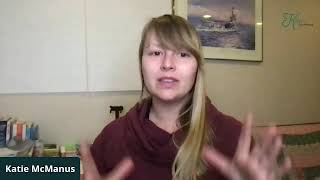
Katie McManus breaks down why service-based business owners feel desperate for clients: no clear niche, discounting too much, and needy energy on sales calls. She recommends interviewing ideal clients, pricing for transformation value, and speaking only 20% of the time during consultations to let prospects do the talking.
Hello, I'm Katie McManus, business strategist and leadership coach, continuing with part two of my five part series on are you needy and desperate for clients? I thought this would be a great topic for this week. We're heading into the holidays, the new year. We're realizing that our numbers are not landing where that we want them to be often the time. So. And even those of us who are successful, if you're not successful and you're still, still struggling, know that even people who are successful are still not reaching their goals at the end of the year. And that's okay. And I'm here to show you some really simple things that you can do to make sure that you meet. That you meet those goals. So tonight I wanted to talk about some shit that's probably, scratch that, that is definitely going on in your business and talk about, you know, how it shows up so, you know, if this is you and what the problem actually is. Because just talking about how it feels isn't going to get you anywhere. We have to talk about the actual problem and then some really simple solutions to get out of it. And hi, whoever's watching, I am doing this through Streamyard. So if you are commenting through Facebook, LinkedIn or YouTube, know that if I don't call you out, it's just that I didn't see your comments. Sometimes Streamyard doesn't work perfectly. Oh, my gosh. Hello, we have Scott Thompson. Hi. We have Quinn. Oh, first time. Welcome. Welcome to the show. And Carlos from Brazil. Welcome. So good evening, everyone. So I'm going to just dive right in. I have some stuff on the stove, so I'm going to make this quick tonight. Okay. Anyway, so there are three things that I can guarantee are happening in your business. If not all three, then at least one or two of them if you are desperate and needy for clients. Okay? So real fast, let's dive right in. So number one is when you describe what you do, you're not getting the response you want. And the response that you want is, oh my God, I need that. Or oh, my God, I know like one to seven other people that I could connect you with right now who absolutely need your service. That is the ideal. And oh my gosh. And we have Reuben. Oh, my God. From Malaysia, we have Yvette. Hello, welcome. Welcome to the show this evening. So, okay, so that sucks, right? That sucks to tell people what you do, what you're so excited to be making your business and have them go, oh, that's nice. Or, oh, what does that mean? Or oh, and then like assume something that is completely besides the point. Okay? And if you've been there, please, I'd love to hear it in the chat. I've been there. You know, this is, this is one of the reasons. Just a side note for my coaches out there, okay, this is one of the reasons why, you know, people who are starting off in coaching, they get super precious about, well, what kind of coach am I? Am I an executive coach? Am I a leadership coach? Am I a life coach? No one gives a. Okay? No one cares. Okay? Because it doesn't matter what you do. It matters who you help. Okay? So what is actually happening here most of the time is you have not done enough market research. And if I'm saying this to you and you're in this bucket, you might, may have done market research, but you probably didn't do it correctly. There's a way to do it that's like, you know, what corporate companies do, but then there's a way you can do it for service based businesses. And when you're doing market research, you need to be finding out what people want, why they want it, what they're afraid of, what they're frustrated with and trying to get what they want, so on and so forth and hi, Gabriel. Welcome. And so you, if you do not have that, it's going to be really, really hard for you to get in front of people and say, hey, I'm your go to person. If you are X type of person who's struggling with a, B and C and really, really wants X, Y and Z. And I just dropped my pen. Okay. Hi. So I, I have this weird thing. I have to be holding something or else I feel like I am not grounded. So if you see me playing with a pen or a chapstick or a coffee mug, that's just me. If I drop it, I like need to pick it up. So anyway, just a little quirk about me. And so what happens when you do not have a defined niche, when you don't have a defined niche is people don't understand that you are relevant to them. Sure, you can go around and say, I'm an executive coach all you want, but that doesn't mean anything to anyone. If you are an executive coach who works with women who are transitioning from the corporate world into nonprofits, who also have children and who want to have more work life balance. Oh my God. Okay, cool. I can think of two people that I can refer to you like, boom, perfect. Okay. If you're just an executive coach okay, well, that's too vague. I don't know who to refer to. You. Okay? I don't have any idea. Quinn, it's your talking stick. It is my talking stick. That's exactly what it is. Thank you. My talking stick. I love that. I'm going to coin that. And so there's a really simple fix here, and it takes work. This is a simple fix, not an easy one. Okay? You have to go out and you have to interview your ideal clients, and there are a few questions I want you to ask yourself as you're trying to discover your niche and figure out what this tiny corner of the market is going to be for yourself. First and foremost, I want you to look at past experiences that you have and what you're qualified in. Okay? Make a list of anything and everything that you have done or have any competency in. Okay? Literally anything. Just get it on a list. It doesn't matter. It doesn't have to be perfect. You could actually, you know, put underwater basket weaving on there. If that's one of the things that you know how to do, it doesn't mean that you have to go with it. Okay, then I want you to go through and I want you to circle the things that you love talking about all day, every day. Yeah, Quinn, Customer discovery. Exactly. But customer discovery to support a business that you're going to want to be in for the next 10, 20, 30 years of your life. Okay? It's not just about market need and, you know, being able to narrow down who has the most money. It's also about you and what you're going to enjoy talking about for however long you're going to be in this business. Okay. Because what's the point in getting yourself involved in conversations that you're going to be bored to death with after about a year or two years? Not worth it, because then you just have to ditch it and start from scratch. No one wants to do that. So anyway, unless you're a serial entrepreneur, in which case you don't need my help anyway. So once you have this list of the things you really like talking about, you need to start doing some interviews you need to start seeing. Okay. Do these things actually have need out there in the market and. Or do I actually like these people who need this? That's another part that people generally jump over. Okay. And just know you're not. You're probably not going to get it perfect right out of the gate. And that is totally okay. You guys know my story. I started off as a dating coach for Men, I went out in the world, I announced it. I got business cards, I did a website, all the things. And I got one dude and eight women. The world did not want me coaching dudes on dating. They, the universe also didn't want me coaching women on dating. Only one of my female clients continued with the dating topic. Everyone else I did executive coaching for and then I ended up in business development and doing this stuff. So the picking a nation is a dance with the universe. But you have to do the work, okay? Or else you're just going to end up in that desperate and needy state where you just aren't getting, you're not getting sales calls and you're also not getting clients because you're not on sales calls. We're going to be talking about sales calls at the end of this, so stay tuned for that. Now here's another thing that I bet is going on in your business if you're desperate and needy for clients, okay? So we know how, how like retail does it. So they have a surplus of something, maybe like white T shirts, right? And it doesn't look like they're going to sell very fast and they want to get rid of the inventory. So what do they do? They discount and then they discount again and they discount again and then they discount again. And by the time they're just like giving the T shirts away, they need the space on the shelves, you know, get it the fuck out of my store now. What works for retail does not work for service based businesses. Because here's what happens when you discount your services as a service based business who offers a transformative transformation. Transformative, I always trip over that word. It's like core to my work. And I can never say it properly. If you offer transformative service. When you go out and you say, hey, listen, I can change your life for 20 bucks a month, you know what happens? People aren't like falling over themselves to try to get on your calendar to get booked or. No, they're. They're looking at you and thinking like, ew, really? No, no, no, no. This sounds like that infomercial junk. That is super steak oily. There's no fucking way you're going to change my life or whatever aspect of my life for $20 a month, for $200 a month, in some cases not even for $500 a month, okay? Because here's the thing. If you're offering that big of a transformation, that's huge. That's huge. And if you actually had the key to make that whole transformation, that's worth so much more money, okay? So you cannot do a race to the bottom to try to fill up your client list, okay? The other thing that happens is if you do do that and you do happen to get some clients and they give you their $20 a month to 500amonth and they, you know, it's discounted from what you really should be chargin transformation you offer, guess what happens. I'm gonna give you a moment to just think about it, okay? Now that you had a moment to think about it. So these people are not bought in, okay? They don't have any skin in the game, okay? So they're probably gonna no show appointments. They're gonna try to reschedule last minute. They're probably not going to do any of the side work that they're required required to do to be able to see any results. So at the end of your engagement with them, if they stick with you, because oftentimes these are the flaky ones who drop out early, you're probably not going to have great testimonials, if any testimonials. The testimonials you do get aren't going to be that impressive. You're also not going to want to use them. I'm a firm believer that words carry energy. Okay? So if you have a testimonial from someone who didn't do the work and you know isn't your ideal client, guess what? That testimonial is going to attract more of that kind of person. You only want to use testimonials from your ideal clients, okay? So that's one of the ways that that can go. Okay. The other way this can go is those clients can become super demanding. Super demanding. And they may try to refer you business, but guess what? They that that business they're referring you are also bargain hunters and they are also super demanding. And so you're going to end up working for less than the the poverty line in the United States. You're going to feel super resentful about it. And you're going to have some clients that aren't really that happy because they think they should be getting their life changed for 20 bucks. They're the ones that would buy the snake oil, okay? So the race to the bottom, trying to discount your prices to get bodies in the door, do not do it. I know it's tempting and it's really hard to believe in yourself and your worth when you first get out the door and you're offering the service. But you have to do it just Trust me. Go on. Faith. If you don't believe me, you can talk to my clients, okay? They know it's true. And I've seen this in my own business. You know, like, I started off like anyone. I just counted my rates. I'd been on a sales call and someone would be like, oh, how much do you charge? And I'd panic and I'd throw a number, and then before they could even answer, I would throw out another number that was half the price. Okay, don't do that. Don't do that. I come from a background sales. I should have known better, but I was unprepared. But anyway, so you need to be charging your worth. Quinn, I love all these points about essentially being careful what you wish for, because you will get more and more of that. And the resentment is real. Yes. Yes. You know, I love. You know that in Cinderella, like a dream is a wish your heart makes. Yeah. Okay. So dreams are wishes that your heart makes. But when you start working in a business, those dreams turn into reality and you have to be super clear about what that dream is, because you. You can reverse engineer anything. Okay. But you have to start with what the big dream is. If you want to make $200,000 a year, you have to reverse engineer that to what you need to do today. You can't just haphazardly end up there. It doesn't work that way. And there's some really simple math to get there. And that's one of the things that I. I walk all of my clients through in my one on one work and through the BYOB program. Because pricing yourself fairly so that you can live the life you want, and so that your clients get the results that they an art form. And it is something that I. I just urge everyone to try to perfect in their own businesses, whatever the business is. Okay, so that is one and two. Okay. So you don't have clarity about who you serve. You're not clear on your niche. People aren't resonating with how you're describing what you do. Okay. Absolutely. Going on. You're discounting, and it's just not working. Or it's working in a bad way. Number three. Three. Let's talk about the stench you're giving off in your sales call. Okay, So I used to come. I used to be in sales. Okay. And we all know if you've been in sales before, those tough months where you feel like you're trying to squeeze blood out of a rock and it's just not happening. Everyone's saying no. And you have a quota and you're only about 50% to it 3/4 of the way through the month. It feels awful, okay? Now if any of the other things are also going on, you probably don't even have sales calls. You're not even on the phone with people who are interested in your work, which feels even worse. Okay? So let's talk about some things that go wrong in the sales call, okay? So first and foremost, if you don't know how to run a sales call, okay? If you don't know how to actively, if you don't enroll client and you don't have a system that you do every single time, babes, you got to get one, okay? It's one of the core things that I train in BYOB and in my one on one coaching, it's what I train on is holistic selling. But there are tons of different styles of selling out there. For me, I believe that relationship consultative style selling is the only way to go if you're providing a service. Because it's not like you're selling a car, right? When you sell a car, people can get away with being kind of a dick. Let's be real, okay? Because ultimately they're just getting your money, they're handing you the keys and then they're never going to see you again. If they do it well, they'll be in relationship with you and you'll come back and you'll buy your next car from them and your next car and you're going to refer your friends and family and neighbors to them. That's far better, right? So when, but when you're in a service based business, you're selling someone something and then you're with them for like the next six months to a year. So if not longer. So you need to tend to that relationship in every single stage, okay? Holistic selling is my style, like I said, but there are other styles out there. If I'm not your fit for sales anyway. So you need to have a system. And the reason why you need to have a system is because if it's not working, there's something that's not working. If you're not getting clients, it's easier to make a tiny, tiny little change in a system that you already have cemented in, okay? So if your pricing is actually wrong and you're not getting clients because your pricing is either too high or too low, it's really hard to know that unless you're certain that the way you're selling is working or it works for Other people. So you need to get that down first and foremost. Now, oftentimes when I start with people, they start telling me about their sales call and they are talking about explaining what they do and giving a presentation and a slideshow. And this is how I convince people that they need to work with me. And I'm just gonna stop you right there. No, no. A sales call, a good one that gets you high paying clients, actually has you talking about 20% of the time. So if you're talking more than 20% of the time, I guarantee you're talking too much and you're actually scaring them away from you. And I know that's tough to hear if that's what you've been doing, but isn't it so much better to know what you've been doing wrong than just be wandering around the dark and not have any awareness as to why it's going wrong? Oftentimes when someone starts a business and they have a really hard time on the sales call, they start believing it's not necessarily about that enrollment call. It's actually about how good they are at their service. And let me tell you, they are two separate things. Okay? How good you are in your service is a separate talent. Okay? Sales is a separate talent. I personally believe that we should be training everyone in high schools and middle schools how to sell, because we are constantly selling throughout our lives on everything. Here's what I'm about. Here's my idea. Here's this thing I have to sell. And we are doing a disservice to our whole population by not training on this. But, you know, to my. My benefit, this creates a great opportunity. Quinn. I moved from LinkedIn mobile app to LinkedIn on Firefox desktop. It's a smoother. Oh, okay. Got it. Well, Quinn, it's great to keep you here. And then just want to make sure I'm caught up on the chat. And like I said, I love this to be interactive. So if you have any questions throughout this, please do let me know. Now, if you're doing a sales call and you're really needy for clients, people can tell. They can tell. It's like a stench. It's like. It's like. Have you guys ever gone to a fish market? It's that. That. That fishy smell that never gets out of your clothes. Okay. When you are desperate for the money in someone's pocket, they can tell. And so I know you're struggling in your business. I know you have bills to pay. I know you're desperate for Some feedback that you're doing things right and that this business is going to work. But you need to self manage your neediness for the client and building that relationship with the client. Because if someone feels like you need them, you guys, here's an example. So have you ever been in a bar and had someone like come to ask you out but they were like way too intense about it and instead of them making you feel like sexy and desired and excited to go on a date with them, you're leaning into your friend and you're like oh my God, like 911911 please someone help me. I don't want this person near me at all. Okay? That's what you're doing in your sales call. If you're bringing that energy of I need you. No one likes to be needed. People want to be wanted, okay? And wanted with no strings attached. So you're allowed to be excited about this client. You're allowed to say, hey listen, I would so love to work with you, but once you bring that, oh my God, I need the money in their pocket energy, I'd be shocked if they signed up. So you need to do something to take care of your energy. This is one of the things that I work on with my one on one clients. It's also a component of the BYOB program because taking care of your energetic needs so you can be high vibe when you show up on stages in front of poor prospective clients in just general interactions makes a huge difference in attracting high paying clients. Let me see. Okay, so that, well, that is all I had for today. So Tom, tomorrow, Thursday and Friday I'm going to be going into some other things that you can do to get out of this. We're also going to be some just doing. Can't speak. We're also going to be doing some more projects, problem spotting. So you know, some things that are going on, you know, so you can be aware, so you can fix them. So I hope you'll stay tuned. Tomorrow and Friday are going to be on Facebook. Both of my Facebooks, the LinkedIn and the YouTube. Thursday is going to be exclusively, exclusively on Instagram. So if you want to watch it on Instagram, you're going to have to go over there and follow me. It's Katie.the.coach, not Katie.the.touch. okay. I also have Katie the couch. It's where I, I share all of my stupid TikToks that I love. Nothing that I've done. But Katie the coach and I will be doing that live Thursday and going deep into some actual things that you can do. So anyway, I thank you all for joining me. Quinn, hold on, I'm going to scroll through so I can say it. Thank everyone. Gabriel, Yvette, Ruben, Carlos, Scott. Thank you all for joining me. And for everyone else who didn't comment or whose comment I didn't see, thank you for joining. I hope you found this useful. Quinn, I know lots of coaches who try to serve high vulnerability populations, Disabled, lgbtq, and they price cut because they can't afford it. Our community is broke. Any advice? Oh, my God. Yes, yes, yes, yes, yes, yes. Okay, so, so many thoughts coming through my brain. Okay, so here's the thing. We all want to serve populations that we think can't afford us. Okay? Now there's a story that happens. We tend to make up stories about what other people have for money and oftentimes we're wrong. Okay. Oftentimes we also make up stories about what people are willing to pay to change their. Okay. And oftentimes that's wrong. We're projecting our own beliefs about this on them. If we were in their shoes, we probably wouldn't spend money on it. But actually that's false because we probably would if we see the value in it. Now, for a business, for you to have a sustainable life, for you to have a successful business, you cannot discount everything. It just, it's not feasible, it's not viable. You're going to have to go out of business and go back to a job and not make any difference in these people's lives. Okay, so here are some options. Okay? So you can serve a higher net worth, not necessarily high net worth, but a higher net worth population with a similar need. And then you can offer either a couple scholarship positions to people in this, in these communities, or you can offer a group program that's a little more financially viable for them. But the main thing is don't let, don't, don't let your assumptions that people are broke and can't pay for you stop you from actually asking for the money that you deserve. And I'm going to use myself here because when I hired a business coach, I was broke as a joke, okay? I think I had less than $2,000 to my name at the time. I had very few paying clients. I also was about $50,000 in debt. And right after I signed up for this coach, I became, I came this as close to having to declare bankruptcy. Do not assume that because people don't have money, they won't find the money that they won't make it work. If what you offer, the transformation you offer is worth enough to them, they will find the money, they will find a way to work with you. And then of course, it's ultimately your business. So say you have 13 high paying client spots that are full and you have three scholarship spots and someone enrolls for one of your open, high paying spots and they genuinely can't afford it. It's your business. You're in charge. You're the boss. You can say, oh, you know what, I really want to work with you. And so what I'm going to do is I'm actually going to open up a fourth scholarship spot. Or you're describing a need that I see in the community. So what I'm going to do is I'm going to create a group program. You're going to be the first member and we're going to be enrolling more people who have the same needs as you. So, Quinn, I hope that helps. There's a whole money story here, too. It's also another program or portion of the BYOB program. Oftentimes we have, I mean, we all have crappy relationships with money in some way, shape or form, and it gets instilled in us really early on in life. It's so critical to heal that and clean up your beliefs around money before you start a business or else it's just going to poison everything. So, anyway, I hope that was helpful. Thank you. Great question. I have to go check with the thing that's on the stove. This has been longer than I thought it would be. Anyway, thank you all for joining. Happy Tuesday. And I will be talking to you all tomorrow. All right, Katie McManus, leadership coach and business strategist. I'm out. Have a good night.
More from Katie





How to do self care right now, so you can do what needs to be done, for yourself, your business, and

How to do self care right now, so you can do what needs to be done, for yourself, your business, and

#greenscreen How to build a consulting business that makes you $200,000-$700,000 a year

#greenscreen How to build a consulting business that makes you $200,000-$700,000 a year

Maybe we’re not the imposters…? #businesscoach #startup #entrepreneur #smallbusiness #consulting

Maybe we’re not the imposters…? #businesscoach #startup #entrepreneur #smallbusiness #consulting
