Be + Do = Have
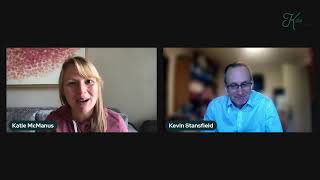
Kevin Scansfield, a UK business coach with 17 years in the field, talks about why most founders fail at business skills beyond their craft, and how defining what your finished business should look like before you start changes everything.
Questions this video answers
About 17 years.
September 17, 2022.
Three.
Roughly 60% of businesses will fail within five years (as cited).
About 98% (as cited).
Chapters
Hello, I'm Katie McManus, business strategist and leadership coach. I am thrilled to be going live today with Kevin Scansfield and fellow business strategist and coach from the south of England.
Great to be here.
Tell us a little bit about what you do.
So I've been coaching business owners predominantly in, I would say the small to medium size for about 17 years. Prior to that I was an accountant, worked in practice and in industry. Ended up helping about three businesses grow to multi millions, but realized that there was more to business growth than just the numbers. And that then took me into doing an mba, Master of Business and ultimately finding coaching. Because I'd never heard of coaching before. I found action coach. And I love the concept of you helping people to discover their own way to success because there isn't one path to get to where you want to be. The coach's job is to uncover that individual strengths and help them to get to where they want to be. So, yeah, that's what I've been doing on the way. I've written three books, which has been a challenge in itself because as I was saying to you earlier, I'm mildly dyslexic. So. So writing books and editing them. I'm. Writing them is fine. Editing them is a real pain in the neck.
So I'm laughing at you because I've literally blocked off this whole weekend and Monday and Tuesday because I've been writing a book for a year and a half now and I have to get it done. I have adhd, so it's like. And we were talking about some neurodiversity stuff, but like, I have to have a deadline and also I can't have anything else going on when I'm in creative mode. Like it all has to happen in one go.
Yeah. But if it's any, any consolation, my first one took me four years, so.
Oh, great.
Oh, so you've got plenty of time. Plenty of time. But that was one thing that. And I, I was two and a half years in or nearly three years in, and it wasn't getting done right. It was, yeah, lots of excuses and mainly because I don't know if you found it, but I had this love hate relationship with it. I love doing it. And then they always say, never read your book before it's finished. And I started reading it and then I hated it. And I thought. And I was up and down, up and down. And in the end I came back to coaching, which is about helping people achieve their goals. And I thought, well, look, if I'VE got to do this. I need to find a coach to help me finish this book. And literally two weeks later, a book writing coach came to one of my networking groups and said, I'm a book writing coach. I help people bring their books to reality. And I just went, there you go. I'm going to be the easiest referral you've ever had. And she helped me count. Every single week we had a call, I told her what I was going to do, I did it, she proof read it and gave me positive reinforcement, which is what you need when you're trying to move forwards in anything. You're doing a good job. Well done. But also, if she didn't agree with it, yeah, I think you should rewrite this bit. And after, say, three and a half years, the book was then completed within about nine months. So it's what I needed, that catalyst to make it actually happen. And. And she had the connections with the publishers and the editors and the. Because I want it visual as well. So there's loads of pictures in. In it. So I needed a graphic designer to draw those pictures and.
Right.
Yeah. And it made it happen. So it's great.
Yeah.
So the second one was much, much. Well, the second one was really easy because I had it ghostwritten, so I wrote half of it and the majority of the work was done by somebody else. And then the third one I wrote during COVID and that was much easier because I'd been through the process. So it was the easiest second time. So. Good. So I wish you well with finishing it.
Thank you. Well, I think that kind of ties into our topic today. It's like the first time you do everything is going to be harder than something that you've done a million times. I think when people are starting a business, part of it is they've just never done it before. And so it seems scarier, it seems bigger, like you don't know what you don't know. So it just becomes like this overwhelming thing.
It's always amazed me and having been around businesses all my life, both my parents had businesses. My mum started one from our front room. My dad gave up a really good job to buy a business off a man in a pub. So as you do, knew nothing. It was a sign business. He knew nothing about sign making. But now I want to be a businessman, so he bought the business. But what's amazed me over all these years is when people do start their business, you know, there's this almost feeling that I should know what I'm doing.
Yeah.
Because the majority of people start businesses in things that they're good at. So the plumber starts a plumbing business, the accountant starts an accountancy business. So I'm really good at doing the stuff. But no one actually questioned, well, you're going into a business which is about sales and marketing, it's about employment, it's about finance, it's about, you know, all these different. And you've got no skills whatsoever in those. So we, we always say there's this sort of this crazy thing that, you know, people who start their own business don't want to work for a complete idiot, their boss. So I'm fed up with working complete idiot. So I'm going to go and start work for a complete lunatic. Because at least Your boss had five, 10 years of experience of managing and training and things like you've got none whatsoever. And that's why the sad statistic is roughly about 60% of businesses will fail within five years.
Right.
And 98% will never get beyond employing 10 people. And that's, that's, I've done this, I've done the statistics in the UK and I know from colleagues in America, it's, it's a, it's the same in America and I guess it's the same everywhere because people can start a business that's easy, but taking it to the next level and creating a business that works without you, that's the bit that you've got to learn those skills. And if you're not learning it from somebody or somewhere, then all you're doing is the first year experience again and again and again. And it's the same in sport, you know. Do you play any sports, Katie?
Oh, no, I have no hand eye coordinator.
Okay, brilliant. So if you were to, if you.
Were to start tennis courts, I like, I've seen, I've seen people going to watch sports on TV and I think that's great for them, you know.
So if you, if you said, right, you woke up one morning, said, right, I'm going to go and play tennis, right, yeah, that, that's like saying, I'm going to start a business. So you'd go out on the tennis court with a tennis racket and a load of balls and you'll start hitting balls. Yeah. You had no, no lessons? No, no. Nobody telling you what to do in five years time, do you think you'd be a really good tennis player?
No, I probably still be like running around like a crazy person.
And that's the sad fact within business is people, okay, they can hit the ball over the net. Because in five years you've probably got the. Some experience to hit the ball over the net. But as soon as you come up against, say, a decent a opponent who's had coaching, who's learned how to do it, you know, you're going to realize how bad you actually are.
Right.
And that say that, that's really where we are with the majority of people in business, unfortunately. That's, that's why I got into doing what I do, because my father was one of those.
Yeah.
And after 15 years, his business went. Went pop. You know, he wasn't capable. I mean, he was a very clever man, but he wasn't able to. To actually take his business to that next level where it ran without him or it was sellable. He could sell it to somebody else. And yeah, he just basically bought himself a job for 15 years. And then, you know, the recession in the mid-90s basically killed the business and nearly killed him.
Yeah.
And. And that was my, My book was about his story. So that's. It was. You know, this is a little homage to my father about the roller. It's called the Big Dipper. How to survive the Roller Coaster Ride of Business ownership. Because that's what it's like. You know, I've run my own business. You know, all my clients will say the same thing, that it's this, I mean, roller coaster that goes up and down. It's great when it's great and it's dire when it's dire. But like all roller coasters, you've got to know when to get off.
Totally.
And that, that's the key thing is building a business that you can, you can exit at some stage in the future. Yeah.
Well, and I always, I always akin it to, you know, we weren't, we didn't come out of the uterus knowing how to use a fork or how to speak French or how to do advanced algebra. Like, we had to learn those things. Someone had to teach them to us. And we might have been able to, like, learn some of them from a book or from an online program or whatever, but oftentimes it takes mentorship. It takes practicing with other humans with some guidance, and there's no shame. Like, it's funny how new business owners think that they're supposed to have this all inherently built into them, and then they start punishing themselves for not having it inherently built in. You know, like, you have, you have your whole career before now that helped you be able to do this. Likewise, like, I come from sales and Marketing. I'm able to apply all of that into my work.
And the other thing is, you know, once you realize that, that learning is key, you realize you never stop learning. So I've got 30 odd years of business experience behind me, but I still know that I don't know.
Right.
You know, so there's that quest for more, you know, for more knowledge. So I run a book club, you know, that, you know, get people to read books and then talk about books, you know, because, you know, it's better to learn from people that have been there, seen it and done it than through your own experiences.
I'm curious though, in your process of growing your business, thinking about bravery, what were the, what were the things in your business that required the most bravery from you?
I think that the starting point is, you know, letting go of the past. Yeah. So, so I, I was, as I said, I was a, an accountant. I had my own accountancy business, so I would, I was a freelance finance director. So I had these clients that were paying me a good amount of money and I was going in there once a week, once a month and making sure their finances up together. And then I made this jump into business coaching. But I held on to this comfort blanket of the accountancy side.
Yeah.
So I'm, I'm running this business on one hand, you know, with almost one hand, but the other hand's tied behind my back because I didn't want to let go because it was safe and I could do it my eyes closed. And I see that with a lot of people is, is the fit, the fear of letting go of what they've got actually prevents them from going forwards.
Yeah.
So there's almost that sort of, you know, there's the phrase of, you know, you've got to burn your boats. You know, if you make the commitment, you've got to get it. So you can't go back because if you've got the option to go back, you've never fully committed to going forward. So that, that was really my first one was waking up about six months into running this business and going, you know what? I've just got to sack all my accountancy clients because I can't do both. My future is this direction, you know, and if I keep doing this, I'm going to hold myself back.
Right.
So that, that was, I think that was the sort of, the first part of, you know, bravery is to let go of the, you know, let go of what you've got.
Yeah.
But have the faith that you can actually move forward.
Yeah, well, and, you know, the thing that we get all tripped out about when we talk about bravery and making the brave choice like that is like, we expected to feel good as we're doing it. Right. But I'm sure those six months, like, you're questioning yourself, you're, like, looking at other people to see what they're doing. It's. It's probably one of the worst feelings is when you're building up to a brave move.
We, we have a saying. It's. It's called perturbation.
Yeah.
Have you, have you come across some. Some of your listeners won't know. You know, perturbation is a bit of a strange word, but the art of being perturbed is a feeling of uncomfortableness. So supertubation is a natural human state that is basically your little voice in the back of your head going, are you sure this is the right way?
Right, right.
You know, it's, it's the sort of, you know, the, the devil and the, the angel on your shoulders, and one of them is saying, you know, is this really what you want to be doing? So it makes you feel perturbed. It gives you an emotional feeling of uncomfortableness. Now, for most people, when they, when they feel uncomfortable, you know, they go, oh, I feel uncomfortable. And then they go back to their previous state of being comfortable. And it's a bit like taking a, a pan of boiling water, your pan of water, and turning into steam. You know, if I want to change the state from a liquid into a gas, you know, and I've got that pan of water sitting on my stove, you know, I've got to apply heat, okay. So the heat is generally the energy that moves you away from something. Now, that might be the idiot boss. It might be I'm not earning enough money. It might be I don't spend enough time with my family. It might be, you know, I want more in my life. I don't know what it is, but I want something more than I'm getting. So there's some form of energy that takes you to think about starting your own business. So that. So you start applying heat to that water. Then it starts to boil, it starts to simmer, and you get the boiling and the bubbling and, you know, it makes a bit of a noise and you start going, oh, God, this is if I really made the right decision. Oh, no, I don't know. I don't. Because you can't see the future. You can't see where you're going to go. So if you had that pan of water. What most people do then is turn the heat down, okay? So they turn the heat down because they don't like being in that state. Well, if you turn the heat down, you go back to being as you were. What you need to do is turn the heat up. So you've got to apply more pressure. More. And I would say it turns from a negative pressure of this is what I don't want into a positive pressure of this is what I do want. And this is where you come into visualization, you know, and sitting with your dream board and talking to other people who have been there or, you know, family. Because you'll always find family and friends and people, you know, who will have a reason why you shouldn't do what you want to do. Oh, you know, I knew somebody who ran a business once, and he lost his house and his wife left him or his. Yeah. And the kids. You hated him and things like that. So you've got to go and find the positive people who go, yeah, that's great. Who will back you. And that's what I do a lot of time with my clients. You do with yours is, yes, this is the right thing. Okay. It feels bad. It's. It's not going well at the moment, but you've got to keep pushing forward. You know, it's like the gym coach who's. You're sitting there sweating, and they're going to come one more, one more, one more repetition, One more repetition, one more. You can do it. You can do it. And then when you've done it, you feel great. Yeah. And that's that transition. Then when you go from the liquid state into the gas state is suddenly you are free, and then you've got that energy then to go on to do something else.
What I find with my clients who are, like, really in the beginner stages is like, that. Hank, stop barking, please.
That's not me, by the way.
No, no, no, no. It's all good. Hanky, come here. It's okay, buddy. Well, what I find with my clients is, you know, like, especially when they're first starting out, like, they put a few posts out there, and they're like, okay, it didn't work. And it's like, yes, you just put a few posts out there. That is just the very beginning stages. Like, it takes four to five months. You have to turn the heat up because you have to just make sure everyone in your world knows what you're up to. And part of I. I love what you're talking about is, you know, Finding that positive affirmation because it is finding your business besties and your, your allies and the people who can not only cheer you on, but also normalize the struggle with you.
Yeah, yeah. You got people to understand the, the mental journey that you're going on because, you know, a lot of people, if they, if they don't have a business or run a business, you know, they, they can't see the, that roller coaster that you're on, you know, they'll go, oh, well, you know, you'll get over it. You know, well, when you've got a job, you can have a day off, you can have a week off and come back to it fresh. When you have a business, you don't get any time off because you're constantly thinking about it. When you're at home, you're thinking about it. When you're at work, you're thinking about. On your holiday, you're thinking about becomes all encompassing. And that in itself can create the stresses and strains that can cause problems down the line as well. So teaching clients to let go and have time off is one of the big things that I do. I had one guy who was a multimillionaire, been running his business for 20 years. From outside, you would think he's the guy that varies all the success most people could ever dream of. And he came to me and said, look, I'm just not happy. You know, in 20 years, I've never had more than one week's holiday. But you earn probably a million, $2 million a year. You know, you drive, you've got Ferraris in the garage. He said, yeah, but I'm sort of. Yeah. And he wouldn't admit it, but I said, look, you're a workaholic. You're addicted to work now. You can't let work go because it's your identity. So we worked. It took us about six to nine months. We had to put people and processes in place in the business so he could have time off. And eventually we managed to get him out and he had a month's cruise around and he was just a different man after that. It was just, I can see now my business should work without me. Yeah.
There's a joke to be made that that's very American that he only had one coffee floor.
It still amazes me, you in America that, you know, how little holiday you. You've given as, as a legal side of things, you know.
Yeah. No, and, and there's no legal protections if you have a baby around, maternity leave or anything. Yeah, it's insane.
Yeah. So it's the land of the free. Unless you work.
Well, I think that's why a lot of people are turning to entrepreneur, the entrepreneur life now, because they're wanting more freedom and flexibility. And the only way a lot of Americans can get that is by creating it for themselves.
And then it's that sort of whole energy that an entrepreneur is somebody that would rather work 16 hours a day for themselves than 8 hours a day for somebody else.
Right, right, right, right. Although, I have to say, like, I think if you're working 16 hours a day for yourself, you're doing it.
That is the thing that, you know, that's not how. In the early days. Yes, you do. You've got to get the momentum to get it going. But after a year, two years, if you're still working 16 hours a day, you're definitely doing something wrong.
Yeah, yeah.
And that's because no one's taught you how to do it, you know, because probably the people you hang around with are all working 16 hours a day, you know, seven days a week, and they haven't got it right. So you've got to go and learn from somebody who's been there and understands how to build a business.
Yeah, well, there's. There's how to build a business, but then there's also how to build a business that directly leads to you being able to lead whatever life you've envisioned for yourself. Yeah, right. They're two different things.
I would say. Look, the definition of a business is a commercial, profitable enterprise that works without you. That's. That's it. Anything else is a job.
Right.
You know, most, most people go out and get by themselves a job.
Yeah.
You know, because they can't. They can't leave it for a month. They can't sort of, you know, so. So they get stuck in this rut, you know, and. Yeah. They change one hamster wheel of the corporate life into another hamster wheel of the business life. Now you have the sense of more freedom. Yeah. And it's a little bit like the. The adage of when you're driving a car down the. The interstate and you're in traffic, okay. You know it's going to take you half an hour to do a mile.
Right.
Okay. So you either sit in traffic for half an hour and do a mile, or you take the side road and drive 10 miles, which would take half an hour to do a mile. Which one would you prefer to do? Most people would prefer to do the 10 miles because they feel in control. Of their destiny rather than being stuck where I'm not in control. And that's an analogy of business is it's that 10 mile route to go the same distance for most people.
Right. Right.
Now if that, if that is a shortcut and that takes you to, you know, from a job, I could be where I want to be in 20 years time and if you could bypass that and do it in five years, you know, then why wouldn't you take that shortcut? Yeah, I was with a, with a new client today and his, his goal was to, to be able to, he's 40 years old. He wanted to be financially free at the age of 50. Okay. So he's got 10 years and you know, it wasn't a massive sort of desire. He wanted to be earning about 40,000, $50,000 a year financially free. So he'd have passive income of 50,000 a year so he didn't have to work at the age of 50.
Right.
So rather than being on the corporate and getting that by the time you're 70. So something like that. And we did the calculation and I always reverse engineer. So okay, so where do you want to be in that time? So what do we need? So if you want 40, $50,000 a year, you need around about a million pound of invested assets, so property, stocks and shares, anything that drives the income. So we work that out. So in order to achieve that from a business valuation point of view, you need a business that's probably bringing around about 200, 250,000 pound net profit per year. His business model meant that that would require a turnover of around about 800 to a million pound turnover and he's currently around about 150,000. So you know, it's quite a big jump.
Right.
But when you did the numbers, that meant he had to employ around about seven people.
Right.
So he had to go from employing nobody to employing seven people.
Yeah.
And I said, how long do you think that would take you? He said I think I could probably do that in two years. So suddenly his 10 year goal of retirement was not 10 years by reverse engineering. It was probably more like I said, look, it'll probably take you a bit longer than that. Let's aim for five. If we can do it in two or three, you've done really well. If it does take you 10, it doesn't matter because you can still get to financial freedom in 10 years.
Right.
And that's what most people do, don't do when they start a business is like, why do I want this business where does it want. Where do I want to be in 10 years time? What does that look like in a monetary. Because the money does make the world go around. You can't retire financially free unless you've got those assets.
Right.
And then we work out what does the business need to look like in order to get you to where you want to be. And whenever I do it, we never very. I think in 17 years, I think I've probably had one person where they wanted it far quicker than the numbers would. Actually. I want, I want to be. I think you wanted to do it in three years. I said, look, you can try, but I can't see you going to employ 100 people in three years. You know, the people are there. So you're probably going to have to take five years. Okay, I'll take five years to do that.
Yeah, Well, I think, I think most people are just going into it kind of like, well, I'm going to just do whatever I can to get to this goal. And when they finally know, like, here are the steps and here's the timeline, it's such a relief for them. Like, oh my God, like, I didn't know. I was just kind of like doing stuff and praying.
Hope is not a strategy.
Like, it's beautiful that you have faith and also with the mother's life as.
Well, you definitely need faith. But yeah, you can't rely on faith alone. So.
So, well, we were talking before we got on about neurodiversity and I have ADHD and you had mentioned that you have dyslexia. I'm curious, how has that impacted your journey into entrepreneurship?
I think I said to you before, I haven't done the test to see I am dyslexic. I just knew that from back in primary school, I had to go into special classes for my reading and writing. Yeah, at the time I didn't think I had a problem, but I was, I was sort of pigeonholed and I had to go to special classes and I was extremely embarrassed about that. Same time I had to start wearing glasses. So here's a kid starting to wear glasses, going to a special school, right, to learn reading and writing that everyone else gets really easy. And it's like. So my, I remember at the time, my confidence, you know, I was a, yeah, very confident young lad, you know, as most young lads are. And that, that really, you know, looking, looking back, I didn't realize at the time, but looking back now, that really did set me back.
Right.
And yeah, and I would in a Way I was lucky with my parents, were very, you know, positive about it, it wasn't an issue, you know and, and I was, I did the classes I think for about a year or so and then I sort of, you know, I, I got to a level where it was, it was, I could cope with it. Right. So I've got extremely bad handwriting and I put my handwriting down to my bad spelling that if you write really badly no one picks up on the bad spelling. And, and I, and I, but likewise I was always good at maths so numbers for me were generally much easier. So I went down the maths and science route, left English and languages behind, can't be bothered to learn any other languages. Everyone speaks English so I'll put up with that. So really I just thought it was, you know, I was a bit shit at something and good at other things. That was it. So it didn't really come into to any of this. I can't see that. I would look back and say yeah, because of that sort of mild dyslexia that it led me to do anything right. I think that the key to it is and what I've learned through the neural sort of science and things is more about outlooking life and the people that I was around have been a far bigger influence in what I've done over the years than. So the external and the internal, you know, the internal, you've got what you've got, you know, you are wide, you're born with what you've got. You know, if you're born with one arm, one leg, you know there's a fantastic guy, I haven't checked if he's still around but Nick Vujicic, he was born with no arms, no legs.
Motivational speaker that yeah, yes I have.
Seen, yeah, I mean I saw him in Australia and I mean I, I, I'm a pretty hard nosed guy and I'm, I'm not easily impressed by speakers. He had me in tears, absolutely in tears that you know the bullying he got when he was a kid stuck in a dust piece being this guy now runs numerous multi million pound businesses and I thought at the time I thought well yeah, I think I've got problems. If you, if you can do this then yeah, I've got no problems.
Right.
And, and, and I think that that was sort of it, it was a case of you know, look, you've got what you've got. You, you, you're good at some things, you're not great at other things. I, I, I chose finance as my Route forwards because I was good at numbers. So the dyslexia thing just. I just dealt with it, you know, I said I didn't know what it was. I just thought I was a bit rubbish at something and good at other things and.
Yeah.
So I think that knowing yourself is one of the key things to success, is accepting yourself and saying, okay, I've got some issues, everyone's got issues. But it's. I have to take ownership of that. It's me. I can't sit there. And too many people in today's world, it's a blame, excuses, denial world, you know, somebody else's fault. I'm not successful because, you know.
Right.
And. And because of my parents that both started their own businesses, they just go on and did it, you know, they both, they, they. My mom learned bricklaying so she could build an extension on the house. You know, she was just one of those people that just got on and did it, you know, I didn't, I didn't have a haircut from a barber's until I was 16. Just do it ourselves, you know.
Well, it's funny, you know, you're. You're pointing to, you know, your school honed in on. Here's the specific problem that you're having and they gave you that. My school, the, the public school I went to before my parents picked me, switched me to private. They basically divided the. Our third grade class into the early class, which was like the smart kids.
Yeah.
The kids that were fast learners and all this stuff. And then like the late class. So the early kids would come in at 7, we would start at 8:30, and then we'd have to stay an hour and a half after. But it's like the way they didn't specify what we were behind on. Right. So it was just like the dumb kids coming and there was nothing more. More of a hit on your confidence when you're just like, oh, I guess I'm just with these people now.
I mean, the whole education system is based that we had classes, you know, class one, two, three, four, five, six. The bright kids are in class one. The next bright kids are in class two. If you're in class six, you sort of, you know, you knew where you were.
Right, right.
And it's like, okay, you do have to deal with people, you know, because, you know, it is. I find it now when I go to big events and things, really frustrating when, you know, people are slower learners than I am. Right. I've got it. Let's move on.
Exactly.
We gotta Go through this one more time. So I think there is an element. You. You do need to put bright kids together and, you know, people the same level together so they can learn at the same speed.
Well, yeah, and also I think those with.
Of us, but you need to mix.
Yeah, but those of us with neurodiversity, like, that doesn't help us. Like, the type of support. Because I have ADHD doesn't mean I'm a slow learner. It just means that I couldn't learn the way the teacher was teaching. Right. So it's like, you know, they're. There just needs to be a lot of. A lot of. A lot more supports to kids because, you know, that's.
That's the big thing, you know. Okay. I couldn't. Yeah, I struggled with reading and writing and grammar and things.
Yeah.
But, you know, and also, I'm. I'm not very auditory, so, you know, I. If somebody gives me instructions to drive, you know, from here to somewhere and says, right, you go down there, turn left.
Yeah.
Three roads that. Yeah. I can't even get to the first junction because it's gone. If I drive it once, I'll remember for the rest of my life.
Right.
Whereas my wife, you can tell her, and she'll follow those instructions to the letter, go down again. She'll go, where? Where do I go now? You know, we are just wired differently. We, you know, we're kinesthetic learners, auditory learners or visual learners, and that. That's the bit that they should pick up on in school. Yeah. I was a kinesthetic visual learner. So I need to see it and I need to do it.
Right.
Then I get it. What's education? People just sitting there talking at you.
Right.
I didn't get it. Maths is easy because you have to draw it. You have to visual.
Exactly.
Language is a verbal thing, so that, you know, doing French and all they're doing is talking to me and then they're telling me that I'm not repeating it in the way that they're saying, yes, I am exactly as you said. No, no, no, you're not. Well, what are you saying then? Because I don't understand it. It's just like rubbish to me. It's so funny now, looking back. But, you know, but yeah, and this is what, 40, 40 years ago, you know, we still haven't learned, you know, it's just crazy, right? Crazy.
Well, we take. We really do take, you know, who we thought we were as children and when we were learning new things and we Apply it to us as adults, you know, and. And especially when you're starting a business, if you are still carrying that baggage of, I think I am bad at learning new ways, then that's going to get in the way of you actually being successful in this business.
I get lots of my clients when I say, look, you're part of this program is I need you to learn some stuff. And the best and easiest way to learn is. Is read books. Because it's all there. You know, it's. It's. You can see my. My bookcase, you know, and I'm not. I'm not a great. I wouldn't put myself down as a great reader. But, you know, I've gone through a lot of stuff in my time, and they say, oh, no, I haven't read a book since I was at school. And, you know, I never read books. I said, well, look, you know, you've got to learn this somehow. So.
Right.
It's the best way.
Yeah.
And then you give them, you know, so I generally start with audiobooks because, you know, a lot of them are driving in their cars and things like that, or, you know, start them with a small book and. And then they're really, oh, this is brilliant. You know, I learned so much from that. And you go, well, yeah, because when you were forced to learn stuff that you had no interest in.
Right?
Yeah. What. What happened was it put you off learning. Not that you can't read. You know, you can read okay. You know, you might read out loud, you might read slow. You might want to be a more auditory person. But again, the education system, you know, I mean, I just remember one of the books you had to read, you know, I think it was called the Siege of Krishna. Poor. And it was like, most boring book I've ever read.
Sounds boring.
And I think that was the last book I read, apart from a John Grisham, I think, for about 20 years. Right. You know, and I look back and think, you know what? Whereas I'd read comics and stuff like that. And my parents said, no, you can't read comics because comics add all your mind. What were you talking about? You know, that's the best way to start reading.
So we're almost up on time, and I want to hear from you, like, if you were to give one lesson or one nugget of truth to someone who's starting out, what would that be?
I think, can I have two nuggets?
Yes.
The first one.
And a half. One and a half.
The first one is when you start your business, that there'll be a reason why you're starting it, which is generally moving away from pay. Okay, that's fine. But understand that will only get you so far. What you've got to do, and I would say before you even start is, is write down what your business is going to look like when it's finished, okay, Is to say, right, I'm going to take next 10, 20 years and build a business that looks like this, okay? And then share it with somebody, somebody who's not your family, not your friends, because they're not going to turn around and say, that's a load of rubbish, you know, or perhaps they will tell you it's a load of rubbish. But you need, you need to get some honest and say, look, that's what I want to build, you know, Can I build it?
Yeah.
And then the second thing is you've got to be prepared to learn because, you know, that's a bit like me saying I want to win Wimbledon, you know, because I like tennis, you know. Well, right, if you want to, if you want to win Wimbledon, you've got to be prepared to put the effort in to be good enough to when Wimbledon and that. And that's. So if you've got big dreams, you've got to prepare to put a lot of work in to get there. If you've got little dreams and you're happy with, that's fine. You know, you don't have to do much work, but don't get to that point and then be dissatisfied with what you've got because your business will always, you know, every person's business is perfectly engineered to give them the results they're getting.
Right?
So if you're not getting the results you want, then it's because you haven't built it properly. Yeah. Yeah.
Amazing. Kevin, thank you so much for joining me today.
Been a pleasure.
Thank you. And to Kartik and Sean o' Sean is in London amid all the madness leading up to Monday morning. You're, I mean, you're aware of this. This is your home, your hometown.
It's. It is a bit crazy, but, you know, each, each to their own. If you want to stand nine hours to look at a coffin that you.
Can'T even see, Sean is a 12 hour wait right now.
12 hours now, is it?
Oh, my God. I hope they're bringing chairs and snacks and cars.
What happens when you want to go to the toilet? Do you have to lose your place in the queue?
And then, I don't know, they must have people like, I mean, someone could, like, you could hire people to wait in line for you. That's a business option, you know, opportunity. Anyone wants to make some cash, just go stand.
And.
Everyone, thank you so much for tuning in, Sean and Karthik and anyone else who watched and didn't comment. This is day 16 of me going live every day of September. And also, what a lovely treat to have Kevin here with me. Kevin, thank you. And to everyone, I hope you have an amazing Friday and an amazing weekend and we will see you all soon. Bye bye for that.
More from Katie





How to do self care right now, so you can do what needs to be done, for yourself, your business, and

How to do self care right now, so you can do what needs to be done, for yourself, your business, and

#greenscreen How to build a consulting business that makes you $200,000-$700,000 a year

#greenscreen How to build a consulting business that makes you $200,000-$700,000 a year

Maybe we’re not the imposters…? #businesscoach #startup #entrepreneur #smallbusiness #consulting

Maybe we’re not the imposters…? #businesscoach #startup #entrepreneur #smallbusiness #consulting
