Behind the scenes- Writing a book
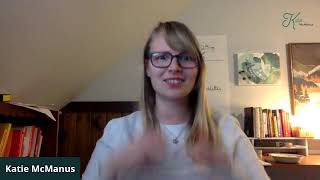
Katie McManus talks about procrastinating on her book and why it's not just laziness. She explains how procrastination can actually help creativity, especially for neurodiverse people, but it costs sleep and stress. She's using external accountability to hit her May 29 deadline for six chapters, with the book out in September.
Chapters
Hello, everyone. I'm Katie McManus, business strategist and leadership coach, coming live to you today to talk about procrastination. And this is a super topical topic or present current topic for me, I don't know, I can't find words, which is great because today is a day to write my book. So it's current for me right now. I am currently procrastinating, writing my book. This is why I'm live right now. Hello. And I wanted to talk about this because it is how I do things. I'm a procrastinator. And I know those of you out there who are procrastinators. There's a lot of emotional baggage that goes along with that. There is feeling disorganized, there's feeling lazy, there's feeling like you can't get your shit together. And hi, whoever's watching, welcome. And for those of you who are watching, I am doing this through Streamyard, to the Facebooks, to LinkedIn, to YouTube. Sometimes not all the comments from all the technological places show up. So if you comment and I don't shout you out or say hi or respond to your question, it's not you. It's just the technology. It's failing us. But anyway, let's get back to the topic of procrastination. So in my life, there was only ever one piece of homework that I did ahead of time. And it was honestly right after my high school boyfriend dumped me. And I was so heartbroken and sad and literally I was so desperate for anything to distract me that I did this one paper ahead of time. And ever since then, like, there's never been a paper that has done that I've done on time in that manner. Everything has been the night before, everything has been. I mean, research papers that were 20 pages long. I would literally start. I'd start Reach researching them early, but I wouldn't start writing until about 10pm the night before it was due to which, I mean, granted, I never really had early classes because I'm not a morning person. But still, it wasn't a lot of time I gave myself. And just to brag, like, I got A's on those papers. Okay, I think I got one B. But you know, I think procrastinators, one, we like the thrill, if you're honest with yourself, you kind of like the thrill of getting things in under the deadline. Like just squeeze, squeaking in. Like sometimes I would finish printing 30 seconds before my class and I'd have to run across campus to get it in you know, there's something exciting in that. It's like living on the edge in a kind of safe, boring way. So let's just own that. We kind of like that excitement. Okay? There's also, you know, we think that we're lazy, but actually, if you're a procrastinator, let me ask you this question. When you're procrastinating a project, are you just completely forgetting about it? I doubt that. I don't know any procrastinators that I've spoken to who don't actually think actively about the project they're procrastinating on. Actually, the act of procrastination, you're constantly thinking about it, and you're constantly thinking of, okay, well, this is how I'm going to do this part, and this is how I'm going to do that part. And you might not write anything down, but I want you to give yourself credit for the fact that you are actually doing work in those moments. You're actually doing the mental and intellectual work that it takes for that project to actually come to fruition. Okay? So you're not being lazy. You are doing the hard mental labor in that time where you're not actually doing the writing. For those of us who are on the ADD in the ADD world, you know, our brains are a little neural diverse. It is really common for us to take random inspiration from different things in our lives. The fact that we procrastinate actually actually gives us more time to integrate more creative ideas into this project. Whatever it is, could be remodeling your house. It could be writing a book, it could be designing your website. So it's actually an act of creativity. And here I am completely justifying why I'm procrastinating right now. Let's just own that too. You know, we get defensive about it. We want to. We want to make it into a process. And there's nothing wrong with that, so long as you get it done. So long as it actually happens. Procrastination there. I mean, it's so funny. There are actually a ton. There's tons of research on procrastination. And I think it's because so many people feel so shitty about it. You know, it's something that we're made to feel bad about, and it does. It can mess with our lives. You know, it can mess with our sleep patterns. I can tell you, those nights that I would stay up writing paper, I absolutely was not getting any sleep. And sleep is completely necessary to our health. But it's also Process. Like we get to let it be part of a process as well. And it's funny, I, I can take a huge project, I can take a huge dream for my clients. I can take something that's just ginormous, you know, multi million dollar project and break it down into action steps and break that down into action steps for things that you can do today. I can do that for other people, okay? For some reason, I can't do it for myself. I have to hire coaches to help me do it, help do it with me. You know, Rick Tamlin, Kelsey Letko, Suzanne Evans, Megan Jo Wilson. These are all coaches that I've had in the past, currently have, or are going to be starting working with to help me break these down. And let me just tell you, if you can do this stuff for other people and you can't do it for yourself, that is super normal. That is so normal. I work with so many coaches, okay? I work with so many coaches who are actually trained coaches. So they know the processes, they know the skills, they know all the exercises to take their clients through to find, you know, whatever answer they're looking for. We all get stuck when it comes to ourselves, okay? We don't have objectivity when it comes to ourselves. It's really hard to self coach yourself and it's really hard to create strategy for yourself, okay? So if you're in this boat where you are an expert in the thing that you do for your clients and you need that thing to be done for yourself and you find it super hard to do for yourself. So say you're a marketer and you're good, you're so talented at creating marketing for other people, but you struggle to, to do it for yourself. Honey, you are fine. You are fine. That is so normal. I would actually be concerned if you, if you easily did it for yourself. You know, that might speak to a little sociopathy happening there. If you, if you're a coach, say you're a mindset coach and you find yourself getting freaked out about all these projects or getting discouraged, but you're so talented with your clients, you're able to help your clients move mental mountains. You're able to help them completely transform their lives and how they view it, and yet you still get stuck in it. That's so normal. That is so normal. Just take a deep breath. You're right on time, you're right on track. You're fine. This is one of the reasons I do the work that I do, because my clients are not dumb people. They are all Highly intelligent, they know how to tackle things and generally they just need to know the how. And they need the big project to be broken down into little steps because while they can do that for everyone else and their mothers, it's really hard to do for yourself. And I say that as someone who literally breaks down business structures for my clients into action steps and can't do it for myself. So one of the reasons I hired Karen Strauss, I actually just hung up from watching her speak at Rick Tamlin's event produce you. And she's. I don't know if you'd call her a writing coach or she's a publisher or whatever. I've hired her to help me get my book out and she has built in accountability and this is one of the things that I do with my clients as well. We have regular calls and they check in on their progress and all this stuff. But I'm so grateful that I have her doing this with me because there's built in accountability, there's benchmarks. So I owe her six chapters by Monday. One written, half, half written and it's too long, I have to cut down anyway. But she has the whole schedule broken down for me. She's an expert at that. She gets to come in and say, hey, listen, I'm an expert. Here's what you need to do. Here's your next step, and then here's your next step after that, and here's your next step after that. And I watch her doing it and I just think, oh my God, this must be what my clients feel when I'm walking them through how to set up their business. There's just this sense of, whoa, like my shoulders go down. I get to. It feels like I'm putting down this huge project and all this responsibility and all this mental weight that I don't have to figure it out on my own. Hi, Scott Thompson. Nice to see you. And how LinkedIn user said LinkedIn, nevermind LinkedIn user, your name is not showing up. So hello, welcome and thank you. I think I got this too, but we'll see. The book should be coming out in September, so I will be announcing it as we get closer. But you're going to be seeing a lot more. I have, I've set a date, a deadline for myself, of May 29, which is my birthday. Between now and then, you're going to be seeing a lot more procrastination videos I am anticipating because it's overwhelming. It's overwhelming. A big project like that. I remember, my God, in 8th grade our biology teacher assigned us this ginormous project and I was looking at my friend Sarah, who was just one of the smartest kids I ever knew. I mean, she's just so book smart. She could. And she was so organized and she didn't procrastinate at all. Like she had homework time that she did every day where she'd work on the bigger projects. But anyway, we had this massive biology project do, and it was just too overwhelming to me. I just, like it was something that big. Like it was just a whole binder that we had to go through and, and do problems and do this. I don't even remember all the details. And I probably even didn't even do half of it because I failed that class. But anyway, don't ask me any science questions. I remember just asking her for help, asking her for help because I, as a ADD person, my brain just didn't comprehend how I would even tackle something like this. And she just, she walked me through it and made it so easy. And maybe she had someone do that for her as well. Maybe she learned early on how to do this. But, you know, some of us, we're just not built for big projects. We're built for small projects. Scott Thompson I've worked hard to change from procrastination to precrastination. It is hard, but rewarding in a different way. Oh, I love that concept of pre crastination. And I'm curious, Scott, do you mind typing what your definition of it is? Because I can come up with the definition on my own, you know, and I love that you're pointing to rewards. You know, there's. I think it's the, the chemical that gets released when we're check. When we check something off and there's like adrenaline attached to, I think is endorphins. We actually get a rush of endorphins when we complete a project just under the deadline. Actually, we get endorphins anytime we finish a task. So if you're like me and Adele Dujardin, who I had on the show or on the live earlier this week, we are high achievers. We are endorphin addicts. We are junkies for it. We will get done. We will get so much shit done in a day that doesn't even really matter to anything just because we like the rush of it. Paul Nunn the problem is kids are meant to feel stupid and lazy just because they don't think that way. Yeah, you know, I shy away from big generalizations like that, but I actually agree with that one there's. I mean our education system is not designed to create free thinkers. Our education system is not designed to grow creativity of the mind. It is designed literally to train future factory workers. I mean literally it is eight hours a day. It has you sitting down and focusing on something for eight hours a day to train you to then be able to go to a factory and focus for eight hours a day with only little breaks in between. I mean literally. Okay, so here's, here's an interesting bit. So the eight hour workday started during the Industrial revolution. Right around that time, the sleep cycle of sleeping eight to nine hours a night, that's when that started getting pushed out naturally. Humans, Homo sapiens don't sleep eight hours straight. Humans are actually designed to sleep about four or five hours at a time, wake up, do some stuff and then go back to sleep. That is actually how we're designed to do our lives. When the industrial revolution happened and we had to train all these factory workers, we actually had to restructure how humans are supposed to sleep so that they could be bright and bushy, bushy tailed. Bright eyed and bushy tailed for work. How do you say that? Humans are not naturally meant to sit in a factory all day. That's not how it goes. So Paul, I agree with you. And then we shame kids who don't fit the norm. I was one of them. Hello, survivor right here. David Fryman, does watching LinkedIn live in the middle of the day count as procrastination? Asking for a friend? I mean, no. So long as it's just a thing on procrastination. I don't know. Gosh, I mean I look at LinkedIn lives all the time. Why are you bringing this up, David? You want to fight? Just doing a LinkedIn live in the middle of the day count as procrastination if it's on procrastination. I don't know, this is getting confusing. Let's just say no, no, it doesn't count as procrastination. It's personal development. You're welcome. Scott Thompson. It is a real word. It means to do things in advance before they are due. Oh yes, dopamine, rush. Oh, it's dopamine, adrenaline, etc. I used to rush to FedEx with seconds left to send an overnight package or slide into the airport with moments left before a flight departed. I just got stressed with that. Love the rush. Scott, I am with you on all of those rushes. Except for the airport bit. You will find me at any airport. I don't care if it's international or domestic. Four hours before my flight. I do not like the potential of missing a flight. Real, real story. The only time I missed a flight was because I booked a flight and forgot about the trip. Just completely forgot I was going on that trip. And I started getting texts one day that I, you know, needed to check in for my flight and just completely blanked. But that's a story for a different day. Anyway. Yeah, so, anyway, I think I need to get back to writing my book, because that's what today is for. And, you know, this is really, really fun to hang out with you all, but it sounds like you guys have some work to do, too. So here's the deal. I'm going to go back and I'm going to write my book, and you guys are going to go back and you're going to do one thing. And I say guys, but I mean all people of all genders and all identities. I just use that word as kind of the neuter, but I know it doesn't sound neuter. Okay, so. But we're all going to go back and we're going to tackle at least one part of the projects that we are avoiding doing. Okay? That is the homework from this. Kevin, I'm waiting till the last minute to comment. Well, congratulations. You did it. You got it in. We are wrapping up now. But this homework's for you, too, Kevin. Just because you procrastinated here doesn't mean you're allowed to procrastinate after this. This is homework for everyone watching, including myself, that we are going to go and we're going to tackle that project, even if it's just a small part of it. We are going to get started on it because, you know, that rush is amazing, but let's get that rush from other things, you know, other things that make us feel a little better about ourselves, maybe. Anyway, thank you for joining me this evening and letting me procrastinate a little bit with you. And Scott, thank you so much for that new word, precrastination. I will aspire to becoming more of a procrastinator, and I'm going to work on that today. I don't have my six chapters due until Sunday, so, you know, we're gonna try to get it done today. But anyway, I hope you're all having a great week. We're at Thursday. We've already made it. Tomorrow's Friday. And I know if you are all aware of me on LinkedIn, you know that I do a Friday call. It's a group call called Being Brave. There's a link in my featured posts. It's at 11am Eastern every single Friday. And it's for anyone who's building their business, who wants to become a thought leader, who wants to get clients. I offer it's a free form Q and A with me, business Strategist, where I offer guidance on your business strategy, your marketing, your money mindset, and so much more. So if you're interested in joining us again, it's tomorrow, Friday at 11am Eastern. I'd love to see you there. The link is in one of my featured posts in my LinkedIn, so just go there. Other than that, have a great Thursday, everyone. And thanks for joining me. I'm Katie McManus, business strategist and leadership coach. I will talk to you soon.
More from Katie





How to do self care right now, so you can do what needs to be done, for yourself, your business, and

How to do self care right now, so you can do what needs to be done, for yourself, your business, and

#greenscreen How to build a consulting business that makes you $200,000-$700,000 a year

#greenscreen How to build a consulting business that makes you $200,000-$700,000 a year

Maybe we’re not the imposters…? #businesscoach #startup #entrepreneur #smallbusiness #consulting

Maybe we’re not the imposters…? #businesscoach #startup #entrepreneur #smallbusiness #consulting
