Big Ideas Are Great... but...
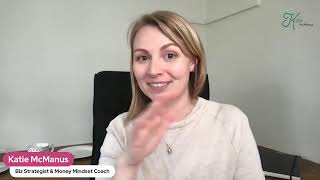
A live YouTube talk by Katie McManus advising prospective entrepreneurs to avoid trying to "go big" immediately. She argues the fastest path to revenue is starting with one-on-one clients to establish proof of concept before launching groups or digital products. She compares group program models (rolling enrollment vs. cohort), explains why groups are harder to sell than 1:1, and gives low-cost starter business examples (power washing, house cleaning) with practical client-acquisition and operational tips. The video closes with a CTA inviting viewers to DM business ideas for feedback.
Chapters
Foreign. Hello, I'm Katie McManus, business strategist, Money mindset coach, coming to you live on this beautiful Friday to talk about the inclination that a lot of people have when they start a business. I'm going to be going live or I am going live to the Facebooks, to LinkedIn, to YouTube, to Twitter and to Instagram. So I'm doing the thing where I balance my phone against my computer. Hi, Sandy. Welcome. Let's dive into it, shall we? I'm also really cold. I just realized how cold my hands are. So oftentimes I hear from new business owners who are wanting to get started. There's this fear that they have to like, go big or go home and. Right. And what I hear is like, oh, well, I have to quit my job if I'm going to start this. Oh, I need to have like a really, really well done website. I need to have like online courses built out. I need all these different things and it has to be absolutely massive. And they usually have like an amazing idea behind them as well. Like there's something that they want to do, a big, like, impact that they want to have in the world. And these are also the people, the ones who like, have all these ideas and are like really obsessed with them. They talk about them all the time. These are usually also the people who never actually take action on them. They never take action because here's the problem with the big idea. The big idea is too big. It's too big for the person who has never started a business before to look at and think, cool, here's how I'm going to break it down into smaller pieces. They just can't do it because they've never done it before. Now I talk to potential clients all the time who want to basically start an empire. They want to start multiple businesses. They want to do all these things and they have none of them built yet. And my advice to them is start small, start simple. Your fastest path to cash will always, always be one on one clients. They are your fastest path to cash. The reason for that is that one on one clients, literally, like, there's just one person who has to decide to work with you. Okay, I know, I know. We've been sold so many online courses and free downloadable PDFs and all the things about how great it is to have an online course, to have a group program, to have all those things. Yes, they're great. After you have a solid one on one practice. Okay? We can't bypass having proof of concept. Okay. We can't Bypass having actual clients that have seen results with us before we try to launch a group. Launching a group is one of the biggest goals that I hear from a lot of my coaching clients. And I mean coaching clients, clients who are coaches and starting a coaching business. And they get really, really excited about this idea of a group because, oh, my gosh, you get to start a group and you get to have all these people showing up at the same time. You get to, you know, not give all of your time away, but you get to make extra money doing this, more money than you would one on one, and. Absolutely, that's amazing. And also, groups are harder to sell than one on one coaching. The reason being is that groups, typically there are a few different ways you can start group programs, right? So you can have rolling enrollment like I do with byob. Okay? My BYOB program, basically, you can join any month you'd like. Okay. The reason I do this is because I don't assume that everyone is going to want to start their business, like, when convenient for me, right? If you're thinking about starting a business, you have a life that you have to balance with that. You have a schedule, you have work, you have obligations. I want there to be a system, a model that is available to you whenever you're ready to start that will get you into this. So rolling enrollment is absolutely a model. It. I will say from experience. Hello, Mark. I will say from experience that it is hard to even remember to. To market, especially if you have adhd. I go through months and months and months of forgetting to promote my BYOB program. You know, I have adhd. It's. It's hard. I get bored of promoting things all the time, so I'm getting better at it. Don't worry about me. I'm fine. But if you're gonna do open enrollment or rolling in enrollment, just be aware. Like, that is a challenge. Also, like, there's no urgency when you have a rolling enrollment program, right? Because if someone can join at any point, they can join at any point. Unless you have a rate increase happening or there's something new and exciting that's about to be launched into the program. There's really no reason for them to get off their butts and do the thing, right? So that's rolling enrollment model. On the other side, there is the, like, the cohort model, right? So you say you have a group program. It has a start and has a finish, and everyone has to go along the same steps. All right? Now this is my wealthy Winnie's program, okay? It's a 10 week program. It's a weekly call. There's also some other trainings that I offer in between those weekly training or in between those weekly group coaching calls. Now the challenge with this is that not everyone is going to be available for the time you choose. Not everyone is going to be ready to work on their money stuff right when you're ready to do it. And so you're going to not be able to get everyone. So that is that model. Both of these, like, it's hard to find enough people when you're first starting out. Okay. When you're first starting out, like, you need to build up a one on one business, right? If you don't build up a one on one business, it's going to be really hard to get people into that group. Right? Now when, when you start this group, you want to be very specific about the problems that you're solving. You can't solve everything. Okay. And this is where a lot of folks get really wrapped into, oh my God, like, well, what am I going to do here? You know, like, it's just too big. Because they want to solve all the problems. They want to solve every single problem that their client has. And remember, your clients don't want a generalist. They don't want someone who can do everything. Okay. They want and. Hi, David, welcome. It's funny to have you on Instagram and not on LinkedIn. You're usually one of my LinkedIn people. So your clients want a specialist, right? So if you're offering a group program that solves all the problems in the world for them, they're going to think you're full of shit. They're not going to buy it. They're going to think, okay, cool. It's really nice that you're offering all the things I need. What this one thing. I'm going to go somewhere else for it. Right. So I know it's really, really tempting to like launch a program and build a business that is just massive and really complicated, right? Because then it feels more legit in your mind. Hi re. Welcome. It feels far more legit in your mind than a small little coaching business or a small little consulting business. David, you like to keep me on my toes. You certainly do. You certainly do, sir. Thank you. But remember, like, a business's main metric for success is money in the door. You can make a massive business with a huge idea that's way overwhelming and complicated, that's going to cost you more money to start than you'll ever make back. And yeah, you can have the fancy website and you can have the online course, you can have all the stuff, but the real metric is money in the bank. And, and if you don't have clients, then it doesn't really matter how legit your business looks on the outside. It's not legit at all because you're not making money from it. A lot of clients who start with me, you know, their first priority is to get five to 10 one on one coaching clients. And these clients typically pay anywhere from like 700 to $2,000 a month. Okay? So imagine if you were to have 10 clients on the low end paying $800 a month. That's $8,000 a month, okay? That is more than teachers make. That's more than a lot of professions make. All right? And, and that's just the tip of the iceberg because if you're coaching, you're only doing like two or three sessions a month. And I mean that's 30 hours max of, of actual like live coaching time per month. Imagine all the different ways once you've gotten this proof of concept, once you've gotten these one on one clients and you're really clear on what the specific problems all of them have in common are, you can so easily then go and market a group program. And by the way, the group program, like you are selling it to the same exact audience that you have for your one on one clients. And you get to circle back to anyone, anyone that you have ever spoken to who wanted to be a one on one client but couldn't afford to work with you. All right? Those are your lowest hanging fruit for your group programs, right? So you run a group program and what I always recommend is run the group program, you know, two or three or four times. And then if you can turn it into a digital product, okay, if it's transferable to a digital product, right? If it's transferable to a course like that way you don't have to be there, you can literally just have this available on your website, post about it on social media fairly often, which I need to remember to do for myself. And then you're free and clear. You know, you can continue to take your one on one clients, you can continue to do the groups occasionally, but you can have this as passive income, right? Also, like, let's assume that you don't have any experience coaching, okay, let's assume you think that you don't have any special skills that can be turned in any, into any kind of like mentorship or consultancy. Here are some Businesses that I would start if I were in that position, I would either start a cleaning business or a power washing business. Both of these can be done very economically. Okay, so both ones, I think you could probably like start both for under a thousand dollars. What I would do is I would try to get clients on the front end for both. And then let's start with the power washing business. So if you want to start a power washing business, I would go to a neighborhood that looks affluent enough but is also working class because people who are working all the time don't have time to, to focus. And I would go door to door and I would say, hey, listen, I'm going to be in the neighborhood this Saturday and Sunday doing power washing for your neighbors. I am booking, I have some appointments available in the afternoon. You know, would you like me to come by? Here's how much it costs and if they say yes, great, we would love to have you come by. Then, you know, you have, you keep doing that door to door until you have like eight clients all lined up. And then with those eight clients, those appointments already booked, then you go to Home Depot or wherever you go to to rent a power washer for the day. You do this for three weekends. You can buy your own power washer, right, and make some money on top of it. And then you just continue to do that and you ask those people for referrals. Anyone that you go to, you ask for referrals. You can show up on social media, you can post about it and then have that be a referral. There are so many ways that you could get clients just for a simple business like that. Likewise. And it's also something that you could, you know, delegate out. You could delegate it out. Once you get busy enough, you could hire other people to go and do this in your set. You'd basically just be the appointment setter and the person who's processing payment. Okay. The other one that I would do is a house cleaning business. Now I hate house cleaning. I probably wouldn't be the one that would do it, but I would be the account manager, right? So I would start, I would hire a couple people or I would set up a relationship with a couple house cleaners and come up with a very high end standard operating procedure. Okay. And I talked about this before, I've done a whole live on this, but I would basically put together a whole questionnaire that, you know, I would walk through with the homeowner and the person who would be cleaning and say, okay, cool, what in this room needs Special attention. You know what in the kitchen needs extra care. What's the first thing that you notice when you walk into a room? If it's clean or dirty, right. How do you like your bathroom organized? How do you like your bedroom organized? So on and so forth. And I would create a document for each one of my clients. That way if one cleaner who's their regular is, you know, unavailable one week because they're sick or on vacation, there's another person who could sub in and still deliver the quality that that client expects. Now, I would do this on subscription. I hate getting cash for my cleaners. I would rather just have it be on a credit card and just auto charged every month. I would have it auto billed on the front end of the month. And I would do extra, like, nice things for my clients, right? So like, I might put like a nice hand moisturizer in their bathroom or by the kitchen sink. I might bring some flowers. I can ask what their favorite flowers are. I might bring a nice scented candle or something. Or maybe even if they have, I would get them like an infuser and bring them like special different scents every time I come. You know, I would want to make it more of an experience where they come home and they're like, it feels so good here. Like, this is just like that extra notch, right? Because here's the thing. If people are already going to spend money on a house cleaner there, I mean, what's a little bit more to make sure that it's your house isn't just like, okay, clean. But now I can't find my. And it's not really done the way I want, but it's that extra element. It's that extra like luxury feel. And honestly, both of those, you know, you just have to get the equipment. You just have to get the equipment and get the clients. Most of the clients that you can get for most of them also you can get by either going door to door or by posting for free on social media. So if you're thinking about starting a business, if you're like wrapped up in like a big wild idea and you really, really want to go for it, I think I'm pronouncing your name correctly. Welcome. So, and forgive me if I mispronounced your name the, the Habib Habib. And then extra things after that, for me, it's like, it's like my lips and my tongue get jumbled. Habibula. I hope I'm pronouncing it right. Okay, that's a fun name to say. Hi. Hello. Hi, Alexia. Welcome. So if you're wanting to start a business, back to the point. If you're wanting to start a business and. And you're getting all wrapped up in, like, here are all the complicated things that I feel like I have to do. When you take a deep breath, you don't need. You don't need a website. You need a way to process payment. You need a way for people to get in touch with you. You need a social media presence, you know, so you can get clients. And if you need any equipment, you need those things. That is it. That is. That is it to get started. Okay? As you get some money in the door, you want to establish an llc. You want to get insurance if it's. If it's necessary for what you do. Hi, Cesar. Welcome. There are a bunch of things that you want to do, but, like, you don't have to front load those, right? You don't have to front load those. I know. I have a lawyer watching. David's my lawyer. He's incredible. If you ever get sued or, you know, you want to sue someone, he's a litigation attorney. But anyway, just a little plug, David. But chances are your very, very first client that you have out the door, not going to sue you. All right? Eventually you want to make sure that you're covered, right? But if you have no money to your name, if you literally just need to, like, grab your own vacuum cleaner and go start cleaning houses, there's a way for you to start. Okay? And I guarantee you it doesn't. It doesn't actually have to be a complicated thing. And I believe everyone out there. Sorry, I'm getting text messages and it's distracting me. There's. Everyone out there has some kind of skill that other people would pay them for, right? So if you think that you want to work, like, as a coach or as a mentor or do some consulting or be a teacher of any kind, like, I want you to really assess what skills you have that you'd have fun teaching other people. I've been a knitting teacher. I didn't make a lot of money from it, but it was a lot of fun. And if I had been more serious, there absolutely would have been a way for me to monetize it more. And that's a very small kind of business. Anyway, if you have any business ideas and you want to bounce them off me, you don't normally do this, but if you have those business ideas and you want to get some verification if they're good or if they need need work, or if it's something that you should just run with right now, I want you to DM them to me, okay? I want you to send me a little message and just say, here's my idea. What do you think? And I will give you my honest to goodness opinion on it. I will also, if I have any expertise in that area, I will give you a hot tip to make it easier for you. Anyway, that is my Friday little rant for you all. I hope you enjoyed it. David, Caesar, Alexia, Re who else? Mark and Sandy. Thank you all for joining. I hope you enjoyed. And Habibullah, I hope you enjoyed as well. Have a great weekend, everyone, and I will see you all next week. Okay? Bye.
More from Katie





How to do self care right now, so you can do what needs to be done, for yourself, your business, and

How to do self care right now, so you can do what needs to be done, for yourself, your business, and

#greenscreen How to build a consulting business that makes you $200,000-$700,000 a year

#greenscreen How to build a consulting business that makes you $200,000-$700,000 a year

Maybe we’re not the imposters…? #businesscoach #startup #entrepreneur #smallbusiness #consulting

Maybe we’re not the imposters…? #businesscoach #startup #entrepreneur #smallbusiness #consulting
