Biz Lessons From Harry Potter
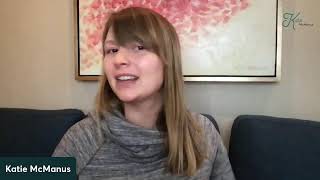
Katie McManus uses Harry Potter scenes to teach business strategy: persist with outreach, ask forgiveness not permission when it matters, hire experts for what you can't do, trust your gut, and make your customer the hero of your story.
Chapters
Good morning. I'm Katie McManus, business strategist and leadership coach. It is morning time. I'm doing a live. I know the world is tilted on its axis. It's. It's going cattywampus. I don't know what's happening here. I am still in my first cup of coffee, so if I jumble words, I'm just still waking up. I know it's 9, 9, 11 here. Nine, none. Yeah, 9, 11 in the morning. And so, you know, I'm not a morning person, but I have a really busy day ahead, and I really wanted to go live today. Welcome to those of you who are tuning in. Hi, good morning. I love this to be interactive. So if you're tuning in from any of the platforms, I'm streaming to Facebook, LinkedIn, YouTube. One of the things I like you to know is that I do this through Streamyard and sometimes Stream Yard doesn't give me the comments from all the places. So if you're commenting, which please do, if you have any questions, please pipe up. But if I don't call you out or if I don't answer your question, know that it is not me. I'm not mad at you. It's just our technology that's failing us. Anyway, let's dive in. So yesterday I was making a list of all of the books that have had an impact on me as an entrepreneur that I would recommend for other entrepreneurs to read. And I really struggled with myself because I just wanted to put. Oh, hi. Hi. Tell me if I'm pronouncing your name incorrectly. Sushant. Sushant K. Hi. The lions after your name. Oh, in India. Good evening. So I really was really struggling with myself because I was trying to put together this list of books that had had an impact on me as an entrepreneur. And I just really wanted to put the whole Harry Potter series on there. And yes, I'm a Harry Potter nut. Like. Like, I absolutely love the Harry Potter world. Am a little bit obsessed. Understatement. Anyway, but why not? Why not? We can get inspiration from absolutely flipping anywhere. Right? And so I wanted to go down. I made a list of all the lessons learned through the Harry Potter series that can be applied in business. Whether you like Harry Potter or not, you should be able to follow this list. So I hope it's super helpful for you. And I am going to be referring to, like, things in the Harry Potter book. So like I said, if you're not a Harry Potter, not like me, and you don't know what I'm talking about. Just wait till I get through the description and I will explain it further. And hi, whoever just said hi, you're showing up as LinkedIn user, so I can't actually see your first name and give you a shout out, but good morning. Okay, so let's just start at the very beginning, why don't we? So the lesson I want you to. The lesson number one is that persistence always works. Okay? So in book one, Harry Potter keeps getting these letters from Hogwarts and his aunt and uncle don't want him to. To see them. And so Hogwarts doesn't just send one letter, they send one letter and then two. And then they, they start getting really creative and they, they find like dozens and dozens of different ways to get these letters telling Harry that he's a wizard and he's invited to go to school at Hogwarts until he finally gets one. And so the lesson I want you to learn from this and that I take from this is that you have to be persistent in how you show up. Because the people you're trying to get your message to, they are out there living their lives. They are busy, there are obstacles. Their phone may die one afternoon after you've posted that one brilliant thing on LinkedIn or onto Instagram that'll really get in their face and tell them that they need to hire you. Their phone may be dead that time and they didn't see what you had to say. Or they may have like an, you know, something that happened in their life that keeps them from interacting with you. Hi, Lisa. Good morning. And so it is super critical for you to just be persistent in how you're showing up. Be persistent even if it feels like you're not getting anything back. Okay? Because let's be honest, most of the clients you're going to get, most of the clients I've gotten started off as lurkers, okay? I didn't know that they were tracking me. I didn't know that they were following my posts. I didn't know that they were watching my lives. And the same is happening for you. And so my challenge to you is be more persistent. Send more letters inviting people to Hogwarts because you have to show up a ton to try to get people to, to even notice you and remember your name and even have the vaguest idea of what it is that you do in the world, okay? And if you don't show up consistently, if you're not persistent about it, they're never gonna know about you. You know, if Hogwarts had only sent one letter to Harry, he'd be going to some like shitty Muggle school. Okay. He wouldn't be the wizard that we know him today. Okay. It would have been a very short series. It would have been like a picture book. Okay. So persistence is absolutely key. And I have my little list here. I didn't put things in order, which would have made my life a little easier. So the next one I want to go for. Okay? So you're going to be more persistent today. You're going to go out and you're going to, you're gonna follow up with people, you're gonna post on social media. You're gonna post on another social media platform that you don't normally post on about your business. Okay? Persistence showing up, Just be there. You want to give yourself the, the biggest chance of being seen, remembered and thought about today. Okay. And so you're just going to go and do that. Okay, Whatever that looks like for you. Yes. Lisa, Persistent and consistent wins the race 100%. And I just want to point out we have a co active professional certified coach here. That's one of the certifications I carry, guys. If you're looking for a coach, I can't recommend that certification enough. The training is absolutely phenomenal. And then Banu, I think I'm pronouncing your name correctly. Good evening. I imagine you're joining us from the other side of the world, which is just so mind blowing to me. Isn't technology just amazing? Okay, so the other thing I want to point out that Harry and his friends do really, really well that I think we can all learn from is they, they opt to ask for forgiveness over asking for permission. Meaning they get in trouble a lot, you know, because they know that the answer is probably going to be no. But they also know that what they need to do is really flipping important. Okay. And so where, where we can all ask for forgiveness rather than permission. You know, I don't want anyone to get in trouble here, but if you're, if you're starting a business, many times you're starting a business while you also have a full time job. Okay. And the point of starting the business while you also have the full time job is to build the business up big enough so that you no longer need the full time job. I am very honest about this. I jumped too soon from my corporate life into, into working for myself. I very nearly crashed and burned, became like this close, got this close to having to declare bankruptcy even. It all worked out, obviously, but I wouldn't recommend that path to many other people unless. Unless you have, you know, big chunk of savings or you're just really confident that that pressure is going to help you with your liftoff. But here's what I want you to think about, is that, you know, as you're launching your business, maybe don't ask permission from your employers. Maybe don't ask them if you're allowed to take a course on Tuesday nights or, you know, block off, you know, your lunch hour, which normally people maybe book calls in. Like, just have your lunch hour be the thing that you do and have it be about your business. If they're upset about you doing something like that, they will tell you. Oftentimes they don't really don't care as long as you're getting your work done. But yeah, as. As you're starting your business, go for asking for forgiveness rather than asking for permission. Unless it very, very clearly states in your employment contract that you're not allowed to start a business on the side. Um, I wouldn't make a big fuss about it. One of the questions that I get asked a lot with my clients who are doing this, who are starting a business, and also have, you know, a company that they work for is how can I update my social media platforms to reflect that I run a business when my employers may see it, to which I usually say, like, you know, I doubt your employer is really paying attention to that. And also, you know, generally, we don't make big jumps. We don't make dramatic jumps that take us from, you know, maybe you're like a shark tamer and then you're going into retail. Like, there's no crossover there. Generally, like, we're in marketing and we're going to become a copywriter. You know, it's something that's related to what we used to do, but we're just going to be doing it for ourselves. There's absolutely a way to craft the words to reflect both of the things you do. And it's. It's totally okay for you to highlight something that you see yourself as really good at. I don't think any employer is going to. To make you wrong for that. Hi, Kashav. Thank you. Good evening. Where you are? Good morning. Where I am. I'm gonna have a little sip of my coffee because I need to wake up. I have a call at 10. Anyway. Okay. So forgiveness over permission. Can we all agree just go for that? Um, this goes for our families as well. Like, the people around us who love us the most. We're used to going to them for advice. We're used to going to them to get them to validate our ideas. However, when we're starting a business, they may not understand all the things that we're doing and so they may think that our ideas are dumb. They're probably not the person we want to go to ask for permission for on things. Okay. We may just want to leave them out of that conversation and go to better people. All right, which takes me to my next piece of advice from the Harry Potter series. Where is it on the list? Oh, go to the expert. Go to the expert. You know, in the third book when Harry was struggling with dementors, he went to the Defense against the Dark Arts teacher, Professor Lupin. He's like, listen, I don't have the skills here to deal with this problem and I know there has to be a way to deal with it. You know, we're all magical. So, you know, can you show me how to get rid of my fear of dementors? And he learned how. You know, we, we have this expectation of ourselves and our businesses that because we're good at this one thing and we know how to do it really well and because we also had a job at some point, right. That we should know how to run a business. And let me tell you, honey, they are completely different skill sets. You know, running a business has so many parts to it. Has so many parts to it. There's the marketing part. There's setting up back end systems. There's learning how to sell your services. There is speaking at events, there's delivering to clients. There's, you know, setting the expectations with clients so that everyone's happy at the end of the day. Oh, it's exhausting. And let me tell you, you unless, unless you went to some school I've never heard about, you didn't learn this in school. You didn't learn it in school. You might have learned a part of that in your career at your job, but the rest you didn't learn how to do it for yourself. You didn't learn how to do it for a service based business. Okay? So cut yourself some fucking slack here, okay? You are absolutely fine that you don't know how to do all the things, okay? That's why there are people like me. I'm a business strategist and coach. I help my clients create a strategy that's going to help them make money and get clients that pay them really well so that they can leave their jobs finally. Okay? I don't teach all the parts like, there are some parts like, you know, I always refer people to Leah Turner. Leah Turner is absolutely incredible. If you need to learn LinkedIn, I send people to her because I can explain it, you know, in a half assed way. But she has this amazing session where she goes all in to all the details that will be super helpful to you. Okay. So if you don't know something, there's nothing wrong with going to an expert on it. Okay. Absolutely nothing wrong. And let me just catch up with the, with the chat. Let me see. So LinkedIn user, I was upfront and honest about what I was doing. Your employers understood. Amazing. And I still don't know your, your first name, but I'm so happy your employers understood. Many employers don't. They're, they're greedy and they want you all to themselves. But I love that, I love that you have that in your life. And Kashav, you are in India and it's nice. Oh, thank you. It's nice to have you here live. Thanks, Kashav. Okay, so that was. Go to the expert. Okay. The other thing I wanted to talk about is trust your instincts. Just trust your instincts. I think throughout the whole series of the Harry Potter books is Harry and his friends trusting their instincts about their there being something wrong or something that they needed to do. You know, they were reading the world really well. They were noticing things, they were saying, oh my gosh, there's a problem over here or this thing over here could be solved or you know, you know, we know that we have to fix this, but you know, we're open to different ways to doing it. Oftentimes they had people saying, no, you're wrong, there's no problem. Oftentimes they had people saying, you're crazy, just go back to your schoolwork, don't worry about this. You know, in the sixth book, Harry was convinced that Draco Malfoy was up to no good. And he was right. You know, Dumbledore and Snape both knew it, but they didn't want Harry going into it. They didn't want Harry distracted by it because they were trying to deal with it on their own. But Harry knew something was wrong there and he trusted his instincts. Even his friends thought he was nuts. Even his friends just thought that, oh cool, like Harry hates Draco. There we go. I know I'm getting super nerdy right now, so trust your instincts. When you, when you start thinking about where your services could be needed, like what's the problem you could solve? You know, I'm reading This great book by John Cleese right now, who's a. If you're not familiar with him, he's one of the masterminds behind Monty Python. He's a comedian out of the UK of an earlier generation. But he wrote this really cute, like, concise book, I wish I had it down here with me, about creativity. And, you know, it's just creativity, essentially, is a different way to solve a problem that hasn't been done before. And I guarantee you is that if you. If you tap into your creativity and you see a problem out there in the world, you can find an interesting, unique, novel way, and I know it's another word for unique, to solve this problem. You can absolutely do that, and hopefully you can make some money from it. But trust your instincts that you know what the need is. Okay? Instincts. Now, instincts ties into the next piece of advice from the Harry Potter world is that people who seem full of themselves right off the bat are usually full of shit. Okay? Talking to you, Gilderoy Lockhart. So here's the thing. We're in a virtual world, right? We're on LinkedIn, we're on Instagram, we're on all the social medias. And if you're showing up consistently and you're putting yourself out there, you're probably also noticing other people who are showing up consistently and putting themselves out there. And it can be very triggering. You can get imposter syndrome really easily if you start comparing yourself to other people. But here's what I want you to remember is that usually. And this. You know, I hate to say this, because there are some genuinely popular people who have an amazing following, that their following is really loyal and they actually have. Have built a business that is really successful. But there are also a lot of charlatans out there, okay, Like Gilderoy Lockhart. And if you don't know who he is, read the series, Book two. He, like, faked all these, like, heroic rescues and then wrote books about it. And he was just faking it the whole time. He was stealing other people's stories. So what I want you to ask yourself is, is. And you don't have to point fingers, you don't have to make it into a big thing. But ask yourself, like, is this person genuinely successful? And if you. If you can't answer that definitively yes or no, just assume that they're not. Just assume that they're not, because otherwise you're just going to hold yourself up to them constantly and it's going to drive you crazy. It's just going to drive you crazy. And you don't ever have to say this to anyone. You don't have to share your conclusions with anyone. That's not helpful either. We don't need to get into this game of where we're putting each other down. But unless you can see exactly how they've created their success, do not hold yourself up to them, okay? Because they're probably full of shit. I hate to say that, because there. There are exceptions to this, but, you know, you see. You see the. The coaches who are supposedly super successful, and they're hanging out poolside with their Mai Tai and their laptop, to which I say, have you ever tried to work on a laptop when it's hot out in the sun? Like your laptop, A, overheats and isn't going to function, and B, hopefully you're wearing sunscreen. And if you are like, sunscreen is greasy, your keyboard is just going to be slimy after today. What are you doing? So, oftentimes, those people, those coaches, those influencers, they book a room at a hotel for a day, at a fancy hotel for one night, and it's usually the cheapest room, and then they hire a photographer to come in, and it's a photo shoot day. It has nothing to do with their business. They're not there for work. It's nothing. Also, you know, people can buy followers. That's the thing, too. So really, do not trust all the pomp and circumstance of what other people have going on. Just keep doing you, okay? You cannot compare yourself to everyone. And I bring this up because I don't want you comparing yourself to people who are full of shit. Okay? Kishav, Harry taught us to never give up. He showed us that you can push through even the hardest times, bounce back and succeed. Kashav, you're stealing my points here. I mean, yes, absolutely. And even when. When times look darkest, you know, what's the saying that Dumbledore says? Even when times look darkest, you know, you can turn on a light or something. Like, they look brighter when you just turn on a light. So look for silver linings. Look for the good in the world. I'm. That I'm gonna forget that quote, and it's gonna drive me crazy. Okay? The next point I want to get to is the importance of friendships. Okay? The importance of friendships. And not just any friendships. Friendships that fulfill a particular need. Okay, so Harry has a lot of different kinds of friends, right? He has Hagrid, who's kind of a parental, like, uncle figure. He has Lupin who's also like that parental uncle figure now he doesn't have parents. Those are really critical to him. Serious black. Don't even get me started. I'm still mad at J.K. rowling for that. But anyway, let's talk about Ron and Hermione. So there are times throughout the books, because they're kids, right? They're gonna fight. There are times throughout the books where Harry, like, stops being friends with Ron or stops being friends with the Hermione. You know, they have these arguments and each time this happens, he. He misses them for a particular reason. You know, there's. I forget which book it is. I think it's the third book when Hermione's cat, like, tried to. Or something happened, I don't know. But Ron and Harry, like, kind of stop talking for a while and Ron is. And Harry's just hanging out with Hermione and he misses talking about Quidditch, he misses talking about sports and goofy things. And it just doesn't feel right. You know, we all need this. We cannot expect all the things that we need from one relationship. And so this is why, when I'm advising someone on their business, if they're struggling to build this community around them, struggling to find support and getting frustrated with their significant others, their best friends, their family members for not being supportive enough, this is why I tell them, go and get some entrepreneur friends. Go and get some business besties, okay? Because your family, they're afraid for you. They're seeing you do something risky and scary and they're afraid for you. And of course they're not going to get it because they want you to have housing, they want you to have food, they want you to have all the necessities to live a good life. And they just don't see it in your business yet, okay? And that's okay. They don't need to because they love you and they're there for you in so many other ways. Your spouse likewise know it's a little closer to home even, because what you do or don't make or don't bring home also affects them. And so ensuring that you are not leaning into them for something that they can't provide for you in this entrepreneurial journey is so critical. Your friends also, they love you. They may not get it. They may just, you know, like, why would you leave a stable job to go and start a business? You're nuts. And to them, like, for them, that would be nuts because that's just not their personality. But for you, you need that. That Added support. And if you're not going to get it from them, you need to go outside your circle. You need to go outside your life. And you need to find business besties, as I like to call them, business BFFs. You need to find entrepreneurial friends. You need to join groups that have other people who are doing brave ass with their lives, okay? Because they're gonna get it now. They may not be free. They be there for you in the same way your parents are, your spouses, your best friend are. And that's absolutely fine, okay? Because we're not trying to get everything we need from one relationship. Kenneth Mumford, where are the heroes? Oh, we're getting there, Kenneth. Don't worry, Kashav. Truth friendship can get you through anything. And unlikely trio to begin with. Harry, Ron Hermione proved time and time again that real. Yes, absolutely. Well, and here's the other thing is that we don't have to have everything in common with our friends. We don't. You know, and if you have a lot of friends that maybe like the same sports, you like the same foods and all that stuff, great, they're not going to be great for you. When you're trying to get creative in your business, when you're trying to think outside the box, you need friends who are thinking outside the box. You need different friends. I think that's why Harry, Ron and Hermione work so well together. Let me see, Kenneth. And Good morning, Kenneth. Need to see how someone with the best on earth gets treated. Love it, live it. Embrace the fanatics. Shoot for the fences, win. Oh, Kenneth, I swear, all the time, honey, you're new to this little world, aren't you? Okay? So find friendships that fulfill each and every part of you. Okay? So here's a lesson that I want to take. We're going to spend a moment talking about Fred and George Weasley, who are my absolute heroes. Fred, rest in peace. I love you. I'm going to answer that question a little bit, but great question. So friend George Weasley are so much fun because here's what they did. They found the thing that absolutely lit them up. They, they found the thing that made them the happiest, that just made their lives so enjoyable. And then they saw what their strengths were. They just utilized their strengths. Their, their, their superpower. So their superpower was to make everyone else laugh. They love making everyone around them make just laugh like that is. And they're so good at it, right? They're just this dynamic duo. And the thing that Lights them up is pulling pranks on people. Like, you know, like, they love pulling a little fast one and tricking people so that something funny happens. And what do they do with Weasley Wizard Wheezes? Okay, they. They came up with a whole collection of. Of products that they could sell that would pull pranks on people and make people laugh. And they started small. They started small. They started in their dormitory. I don't recommend experimenting on children, but that's basically what they did. What they did was they did it. They did it publicly so that everyone got to see the impact of their products and got to enjoy it. And then they started where they were. There are no computers in Hogwarts. I think it was before the Internet really took off. And also apparently Hogwarts, no electronic devices work there, so that wasn't an option anyway. But they did it by mail order. They ran a whole business by mail order for years and years and years before they invested in a shop. Okay, so a couple lessons folded in here, right? Is. Is figure out what lights you up and figure out what your superpower is, and if you can mix them together and turn that into the thing that you want to do, because that is just gonna spell a happy life for you. And finally, start where you are. Don't try to go for the big thing right away. Just start where you are. Build it up. You know, get proof of concept first before you go all in. Been watching. I'm a weenie. I love it, Kenneth. Okay, so find what lights you up. And finally. It's not. Not finally. I have a couple more. It's not always as bad as it seems. Okay, so bad things happen throughout the series, right? People die. Really heartbreaking things happen. And you can tell, like, it always feels like to the characters, like, oh, my God, this is the worst thing that ever happened to me. And I think we all remember being teenagers. Like, everything feels like the worst thing that has ever happened to you. And yet we move on. And yet things get better or we heal or the grief stays, but we are able to continue our lives. Running a business, starting a business is a roller coaster, okay? There are ups and downs and all arounds. And the trick is to not let the downs keep you down. The trick is to trust that it is a roller coaster. That. Okay, you're down in the pits right now. It's gonna come back up, okay? You just have to get through it. Now, many, many entrepreneurs quit when they hit the low parts because they can't handle it. Because they think, oh, God, this is what it's going to be like. And yes, yes and no. But the more, the more downturns you go through, the less scary they are, the less, the less twisted you become when you go through them. And so you just, you have to have a certain level of optimism that things are going to get better. And if, if the Harry Potter series taught us anything, it's optimism, right? And finally, I forget who said it. My last point here, as I'm going through my little list here, is I'm going to make another book recommendation that has nothing to do with the Harry Potter series. It's building a story brand by Donald Miller. Leaning into the Hero's Journey. The Harry Potter series is. Is a whole mishmash of different heroes journeys and the hero's journey, everyone. So here's, here's what I want you to walk away with. Also. Everyone sees themselves as a hero. Everyone sees themselves as a hero of their own life. You know, you don't watch a movie and, and see yourself as the sidekick, right? You don't watch a movie and see yourself as like the best friend who's kind of in the background, who has like a dramatic life, but isn't the main character. Okay? We don't read the Harry Potter books and not see ourselves as one of the main characters, okay? We, we see ourselves as the hero. And so as you're going out, as you're marketing yourself, as you are talking about what you do, stop making it about you. Because your people don't give a fuck. They really don't. They don't care about you. They care about themselves because they are the hero of their own journey. They're the hero of their own journey. And yes, you telling your personal story that they may be able to kind of plug themselves into and be like, oh, my God, I went through a similar thing. This person gets me. That's one thing. But you going out and trying to prove to yourself, to everyone, that you know your stuff and that you're credible and want this thing happen to you. And like, look at me. That is not what they need to hear. They need to hear how you get them, okay? So you need to be leaning into everyone else's hero's journey, not your own. And also realize when you are going through dark times, where in your hero's journey you are, okay? Because you may just be in one of those, like, really awful, like, having to battle through moments. And that's natural. Okay, so let me see. Answering questions. So Banu Manohar, what is that one? Mantra to become a successful entrepreneur. Oh, my God. Well, there's no one mantra. Mine is showing up always works. Showing up always works. And this is the way that I show up. I show up going live. I show up by posting on LinkedIn. I show up by commenting on other people's stuff. I show up by following up with people. I show up by speaking at events. Showing up always works. And really, if you don't show up, you're never going to get it. It's never going to happen. For you, showing up is the bare minimum, and it's what you do when you show up that actually makes a difference. So I don't know what it is for other people. I think that's a very personal question. I think you have to also look and see. Where do you struggle? What's the thing that you need to be doing more of? And what's the mantra that can be designed around that? But for me, it's showing up always works. Let me see. Kenneth, what if we all of us work together and we all get paid? Well, I mean, that is. That is the ideal, Kenneth. That's what we're here for, hopefully. I, you know, I'm a firm believer that everyone deserves to do work that they love and get paid a really decent, handsome wage from it. Okay? And I don't see that as scarce. I don't think we need to have a certain amount of people working in factories and doing menial jobs to make that happen. Because, I mean, look at technology right now. You know, if there's need, they're going to build it. There's need for, you know, a machine that can do a factory job. They're going to build it. Okay? We. We need to be leaning more into our creativity right now and into the empathetic gifts that only humans can have, because that is going to be what machines fail at. Machines cannot show empathy. Machines cannot tap into creativity. They can tap into randomness, into chaos. They can learn empathetic phrases, but they can't do that. Only humans can. And dogs. Let me just show you. Pretty good at it, too. She has great empathy. But anyway, yeah, that's, that's the point there. I love how you're making everything into knees. Okay? And Ken, this mantra is solving problems. All of us have. Bring value. Let the people define the value. Yeah, 100. It's. It's. It's unique to everyone. So, anyway, so everyone, thank you so much for joining me this morning or evening, wherever in the world you are. Kenneth, Let me see. Let me just call out Banu. And I hope I'm pronouncing everyone's names correctly. Kashav, LinkedIn user who I never actually learned your name, so thank you for joining. Sushant. Thank you all for commenting, for interacting. If anyone was commenting in other platforms and I didn't call you out, I apologize. Sometimes we just have a technology glitch and it doesn't happen. Anyway, if you have any others, any other lessons that you've learned from the Harry Potter series that you'd like to add, please put them in the comments. I'd love to see them. Otherwise, I look forward to seeing you as I go live later this week. All right, bye, everyone. Have a wonderful day, and I'll talk to you all soon.
More from Katie





How to do self care right now, so you can do what needs to be done, for yourself, your business, and

How to do self care right now, so you can do what needs to be done, for yourself, your business, and

#greenscreen How to build a consulting business that makes you $200,000-$700,000 a year

#greenscreen How to build a consulting business that makes you $200,000-$700,000 a year

Maybe we’re not the imposters…? #businesscoach #startup #entrepreneur #smallbusiness #consulting

Maybe we’re not the imposters…? #businesscoach #startup #entrepreneur #smallbusiness #consulting
