Brave Biz Lab 2024 08 23
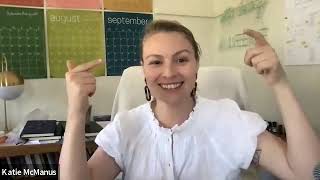
Katie McManus leads a Brave Biz Lab call on mindset and business tactics for neurodivergent founders. The core idea: choose your "favorite self" over an idealized best self to cut shame and work better. The group covers ADHD, time-blocking, niching, and platform strategy, with a 30-day content challenge launching Sept 3 for $197.
Questions this video answers
September 3, 2024.
$197.
9am Eastern, Monday–Friday during the 30-day challenge.
Chapters
Hello. Everyone in. Good morning. Happy Friday. See, See. Seline, Jessica, Rocky. Hello. We have Candace joining. Happy Friday, everyone. What are we celebrating?
Another weekend?
Yes.
Actually productive week. So I'm celebrating a productive week.
Good, good. Awesome.
Love that.
What else are we celebrating? And if you're new to Brave Biz Labs, I always like to start with celebrations. Sometimes we go into some kind of little micro training and then we go into open Q and A. So any question you have about your business, literally anything that's going on for you, there's no such thing as a dumb question. Feel free to ask it then. You do not have to engage. You don't have to ask questions. You don't have to speak at all. It's all voluntary. The only time it's not is at the very end. I'm going to ask for main takeaways and we popcorn it. So I won't be offended if at some point you're like, oh, she's going to have me talk. I want to leave now. Peace out. Then at that point, get what you need from the call and do it, do it. Serves you best. But all questions are welcome. Okay, the Rocky is celebrating productive week. What else are we celebrating? Hi, Monica. We're just doing celebrations.
Hello. Hello.
And hi. Erica.
Who.
Hi. Hi. It's Friday.
I know.
That's the big one. And Candace, what were you saying?
I just said hi, Katie.
Hi.
I'm celebrating being here today. I. I had a call with you and you. I was driving down the street listening to a podcast of you and when I, I heard about what you did, I just burst into tears and had to pull over into Whole Foods. And I'm just so happy to be here and see you and listen to what these guys are going to be doing.
Oh my God. I. I'm glad you safely pulled into Whole Foods. I hope you got something tasty while you're there.
A few months ago.
Yeah, we did.
We did.
But it's so great to have you here.
Awesome.
Hi, Ursala. Welcome. Hi. Hi. Oh man. Happy Friday. Couple more celebrations. What are we celebrating today?
I'm celebrating that after losing my job in June, I am getting a background check for another job that's going to be more flexible and better for a neuro divergent person. So I can like have three months on and two months off, that kind of thing.
Amazing. Oh, I'm so happy to hear that. Fingers crossed.
Thank you. And then I'll be able to, you know, participate more in these with some more business stuff.
Yes, yes. Can't Wait for that. What else are we celebrating?
I can go ahead just have two leads this week for coaching.
Oh, fabulous.
So that's exciting.
Yeah. Seriously, Congratulations. Thanks. And you know, and I love that because, you know, leads are great, but, you know, they can turn into clients. They cannot turn into clients. But what it tells you that whatever you're doing for marketing is working.
Right?
So well done. All right. I wanted to offer a little training this morning on this new kind of mindset that I'm. I'm playing with with myself and with my clients. And if you've already been heard this from me because you were in a group call with me, then forgive me. We're just going to little rerun. So I know if you're a personal development junkie like I am, you probably have a lot of books on your shelf that talk about the best self, you know, or refer to it like, who's your best self? Who's your higher self? Who's the part of. Who's the part of you that, like, you strive to be at all times? And I don't know about you guys, but, like, when I think of my best self, I'm just flooded with shame. I'm flooded with shame because, like, I can never be her. You know, she works out every day. She eats salads for lunch all the time. She does this and that and the other thing. She never misses anything. She. And she operates in a way that my brain just doesn't function on that level. It doesn't function in that way. And so whenever I think of my best self, I think of all the things I should be doing, and then I start feeling behind, and then I start feeling bad about myself, and then I get overwhelmed because it doesn't really matter what I do next because I'm already behind. Right. Does anyone else also have this experience when you think about your best self? Yeah. So I had this realization last week that, like, your best self, them, they do not matter. The person that you need to align to in all days. Thanks, Candace. Is actually your favorite self. Right. Your favorite self doesn't have any qualifiers. Your favorite self is like, who is it that you want to show up as in every any given moment? You know, Your favorite self is the person who, like, actually understands how you get work done. And they don't make it wrong. They don't make it like, oh, well, you're not working in a linear. Linear matter. So that is wrong. And you should be doing it this other way. Your favorite self is like, no, start from the end. Reverse engineer it. Have fun. Go do somersaults in the grass before you sit down and write that email. I. I brought this up in the BYOB call this week, and it was funny. One of our members immediately went to, well, my favorite self wants to do this fun thing and this fun thing.
And it's.
And underneath that. That there's this. This distrust that our favorite self can't be trusted to get things done. But what I heard was my favorite self wants exercise and to be well fed before I start the work. Right. Our favorite self, yes, like, has a different sequence of events, has a different itinerary for things, but our favorite self actually does want to get work done. Your favorite self is the reason you're in this room right now. Right. You have something that you want to do. It's not something you should be doing. Right. Let me see. Candace, what are you saying? I found that doing the fun thing breaks me out of executive function pro 100%. Yes. Yeah, I, you know, I was in this class, the seminar last week about adhd, and we were talking about. Is it like a bunch of therapists? I felt totally out of place. But, you know, they were talking about working with children and how do you get children to do homework? And. And mainly it's like, make the homework novel, make it fun, make it interesting. You know, do fun things around the homework so it feels like it's part of something that they actually want to do. Right. You know, we. We make that okay for kids, but at some point we're like, no, we can't operate that way. We have to be hard. You know, who, who, like, like, did grueling study sessions in high school and in college and then was proud that you put yourself through that. Right, Right. Like, you're like, oh, I studied for 10 hours last, last. Last night, and I took like, three Red Bulls, and it was awful, and I hated it, you know, and it's like. It's like a badge of honor that we made ourselves suffer. Why do we do that to ourselves? And then we carry it over into our jobs, Then we carry it over into running our businesses. I was just talking to a client, and, you know, I reminded him that however we do our business now is how our business is going to need to be run forever. Unless there's a really jarring interruption. Yeah. Best self is part of the capitalist mindset and also reflects internalized ableism. Oh, my God, I love that we are dopamine driven and we are amazing the way we are. Self compassion is the way that broke me out of weeks of paralysis. Oh my God, yes. Such a great point. Thank you for sharing that, Candace. So I, I, you know, I challenged my group on Wednesday to really think of who their favorite self is and to come up with a definition to describe this person. You know, my best self, like went to Harvard. She has like a really high paying like you know, multiple six figure jobs. She has a really hot husband who has like ripped abs like Ryan Gosling. You know, she works out every single day. She eats perfectly. She has like the perfect social calend calendar. She gets nine hours of sleep every day. She meditates all the time. I can't be that. I just like that's, I don't have access to that. That's not who I am either. It's like this idealized version of myself that has been planted in my head by the world around us because that's supposedly all the good things, right? My favorite self is chaotic as my favorite self like is a little witchy, loves hanging out in the woods, loves animals, like wears comfortable clothes that maybe little like out of the ordinary, but whatever, who cares? You know, she has fun. She takes a nap when she wants to. But I'm a big granny napper.
You.
Know, she makes a difference in other people's lives. She makes good money, but it's not the big driver. And at any moment she can stop and like go and do something that she really wants to do. So curious as I'm describing this, what's coming up for you and who do you think your favorite self is?
Would it be safe to say that your favorite self is your more authentic self versus, you know, this idealized, perfect self. I'm sorry. Yeah, the best self. It's funny when he talks about the studying for 10 hours and stuff. I always used to have this glory in burning myself out and working myself so hard and it's like it's Saturday but I'm still working kind of attitude. And I unhappy when I do that. And I'm not my best self in my real life when I, when I kind of do that. So I, this year especially I've been focusing on finding joy. And I think that is in, you know, under the umbrella of your favorite self. And my favorite self is Happy. She works hard, but she doesn't bust her ass. She doesn't lose sleep, you know, but she does good work and she takes care of herself too. Whereas my best self never really prioritized her herself. She was prioritizing work and the burnout and the, the Hustle and glorifying that. So that. That's what comes up for me is just that the idealized version versus the more authentic version, which is obviously, you know, I'd rather be the latter than the former.
Yeah.
Yeah. You know, and I. I love the term authentic self. I. I do notice sometimes that people get into right and wrong with authentic self. Like, yeah, being my authentic self or not my authentic self. And then they get, like, paralyzed in the. What's my authentic self? And then they get into, like, a little mini existential crisis. No, you know, same thing with intuition. You know, it's like, you know, a lot of the work that I've done in starting my business has really been strengthening my intuition and understanding it better and having more faith in it. And also, I know sometimes I can get super precious about it. I can get really wrapped up in, is this intuition correct or is it a wrong intuition? Is it not my intuition? So, you know, I find there's a little bit of levity in favorite self. And there's less. There's less, like, judgment of right and wrong.
Yeah.
Because it doesn't matter if it's. If it's wrong. It's like, what's giving you enjoyment right now.
Exactly. There's this standard that I feel like, you know, there's like this weird imagined checklist that I used to feel like I had a hit, you know, and it was like, who's making the rules? I'm 45. I'm making the rules. This is what works for me, you know, and it's.
It's.
It's so strange. At this phase of my life, I'm just learning this. But nonetheless, here we are. Yeah.
Yeah. You know, it's the seminars in last week, to your point, he was saying that those of us who have ADHD and who, like, haven't really figured out, like, how to manage it will often, like, marry a version of our fifth grade teacher who treated us like an idiot, or we'll work for them or our spouse. And what I like added to that is if you work for yourself, if you're starting a business, you become that to yourself. Yeah, right.
I agree with all that. Yeah, right.
And it's like, oh, okay, cool. But, like, that is a choice. 100% a choice. And it's a choice. Not like we were just handed. Like, this is the model for how we get to exist in the world is we always have someone who's treating us like we're less than or we're not smart enough or we're not working hard enough. Right. And when we miss that, when we don't have that, and thank God, like you don't have that in your relationship, it sounds like you become it yourself.
Yep, that's it.
Right. And it's really hard to unlearn. And it's hard to just unlearn something without replacing it with something else, you know? So this is just another thing that you can replace it with. I'm not saying it's like the only thing you can replace it with, but it's something that I'm finding very helpful in my work from. With myself and with my clients, so. Or Zala.
Okay. So my challenge is that I am struggling to let go of the person that I was before because that person was doing everything right. So I was like. So for me, I'm still struggling to accept my adhd because I really didn't have a lot of struggles. I was high achiever in doing everything, didn't struggle in school. And it actually just. Things fall apart in my world. Like, it's been, I would say, four years. So I had my house together. I have systems, I had checklists. Even as a mom, my place was organized, all of that stuff. And all of a sudden, my family started noticing my car was out of control. My home was just. So for me, I am still basically grieving that other person because I was that person for so long of my life. Yeah. So that's my struggle where it's like I can, you know, it's like it's not my ideal. I was there. So then how do you. It's like you were able to do all of this, and then all of a sudden your whole world is different. Like, I guess my challenge is how do you let go of that? When I was there and I was able to handle everything, and I just don't know what happened.
I'm pretty sure I know the answer, but tell me what happened four years ago? Was that when you had your kids?
It's not even. It got worse four years ago? No, I didn't. I just got very busy in my business. But it all started, I would say, like, my family was noticing it around eight, nine years ago when I basically got a divorce. And then I was on my own. So the entire time, like, from the time that I was 19, I got married early. I was living with somebody who had ocd. So I was going. Plus also with my boys, they kept me active. So I never had a lot of long period of sitting in front of computer, but I didn't have that struggle even working a 9 to 5 job. So that's where I am really, like, confused. Even with the diagnosis going, like, I wasn't that person. I was doing extremely well. I had all these awards at school where my sister also have adhd, but she completely was the opposite of me.
So. So here's. Here's what I'm hearing happen is you. You walked away from the structure. Right. Here's the thing about ADHD is we're actually great when we have structure created for us. We're able to, like, just plug in, do the thing. Especially if we're interested in what we're doing, we, like, there really aren't problems then. Right. So when we walk away from the structure and we have to create the structure ourselves, that's when it gets weird, you know, that's when it becomes a real challenge. And so I don't. I don't think, like, your ability changed at all. I don't think, like, you became less smart or less capable or any of these other things. Like. Sure, I understand. Like, there's absolutely a part of you that wants to mourn the change in you. But, like, the thing that changed was you lost structure. That's it.
Yeah. I guess I'm struggling to get to that. It's like grieving, and I'm like, I literally sit there and visualize that person that I was. Right. And I am struggling to get there. One of the things that was part of it, which wasn't like, a good accountability, was my hus. My ex husband, who was, like I said, had ocd. So it's. It was that accountability that he was gonna snap or if the house wasn't clean and organized and all that, where Partner doesn't really care.
Yeah.
That much.
Yeah.
Yeah.
You know, there's a lot of things that I could say about that.
Yeah.
My question for you is, why does it matter now?
Because it bothers me. So I feel like it sits. It just creates an space in my. Like a mental space in my head.
And I don't want that.
It's like, I should be more organized. This and that. And I also suspect that my boys may have it too. My teenager, my two boys. So it's like a house full of.
Yeah.
Yeah.
So, I mean, we can absolutely talk about this in. In hyper focused as well. This is a huge ADHD thing. You know, I encourage you to play around with your favorite self this weekend.
Okay.
Right. Because I. I heard so many shoulds in. In how you described all that. And like, what is it that you want to spend time on. What is it that like, is calling to you to come and play with it for a little bit? Right. Play with that this weekend and then we'll, we'll absolutely dive into this in the hyper focus community next week. Okay, Sounds good.
Thank you.
Awesome.
All right, any final thoughts about favorite self versus best self before we dive into open Q and A for today?
For me, my favorite self was always when I was doing. Being productive.
Yeah.
And I think sometimes that actually held me back or in a sense that disappointment would set in and. And then you just kind of get stuck. So I'm learning that even though I'm not progressing like I would like to, it's more about progressing from the standpoint that it's not happening quick enough for me. And I have to realize that, you know, I'm doing several different things. I'm running a business, I'm trying to start another business. I'm getting into coaching. So there's different things going on and that I just need to focus on what I can do right now based on what's a more most important, and that is the income producing property. My. My business. While continuing to work on those other things that may take longer than I like for them to take. So I'm going from not feeling like I'm not being productive enough and allowing that to hold me back to realizing that as long as I'm not sitting downstairs or watching TV or I'm not, you know, doing some other activity that's not really productive. And I, I do consider going to the gym, playing to exercise, productive stuff. But. But other things just sitting around doing nothing or, you know, whatever reading articles on the Internet, then. Then I'm doing okay.
So, yeah, you know, we have this, we have this drive to like attach like the thing that we're doing right now to the immediate result. You know, it's like, it's like the gumball machine effect. Like, we're so used to just putting a, like a nickel or quarter in the gumball machine and just getting a gumball out. Right. And that's not how life works. Like, how many women did you have to date before you met your wife?
Oh, yeah, there was several.
I mean, unless you're incredibly lucky to find your partner on the first date. You know, how many job interviews have we all been on? You know, before we got a job? How many resumes have we had to send out? How many schools do we have to apply to for college? You know, how many times did we have to like, just get on the bike and start pedaling before we felt really confident in riding our bike across town.
Yeah. Yeah.
How many times did we have to, like, put some marketing up or have conversations with people before they came up, became our clients? You know, it's not a gumball machine. Like, if it.
If.
Like, if they produce gumball machines like this, you'd have really angry children just sitting. Crisscross applesauce.
And the.
On the grocery store floor, which is a pile of quarters, is like, give me a fucking gumball. Give it to me now. And then all of a sudden, a few would come out. You know, it's a gamble, right. What we have to give ourselves credit for and what we have to, like, really focus the win on is the act of showing up, the act of putting the quarter in the gumball machine. Right. Like, you're not gonna have ripped abs after going to the gym one day.
No.
Right. It's silly to get discouraged that you don't have ripped abs after going to the gym one day. Right. But after going for a few weeks, you're stronger, your back hurts less.
Yeah. I remember a story. It was actually a pastor, but he. He said that his son would always complain to him that he just felt lazy. He wasn't getting his work done. He was supposed to get this homework assignment, do it this and that, all this nice stuff. So he said, son, what are you doing tomorrow afternoon? He says, why, dad? He says, I want you to meet me at the gym. All right, I'll meet you at the gym. Frustrated, he doesn't know what he was talking about, but, yeah, okay, I'll meet you at the gym. He goes to the gym. He said, okay, sit on the bench. He lies down on the bench. He puts his barbell up with, I don't know, £200 on. He goes, okay, lift it, pig's leg. You know, I can't lift this up. He's like, okay.
So they.
They lessened the weight. He was able to pick that up. He says, okay, I want you to meet me here every afternoon at whatever time. And each day they increase the way. He says, see, now you're able to pick the £200 up. You weren't able. Or whatever the weight was that you weren't able to pick up on day one. Of course, it took time. Took whatever days, 30 days, whatever it was. Yeah, we exercise what we're doing, whatever that is. Not physical. Not necessarily physical, but it could be the mental, you know, capacity that it takes to. To complete something. Then we'll see Results. So that's what I keep thinking about is, okay, I'm just going to keep applying, applying, applying a little at a time. Yeah, it'll. It'll grow, it'll. It'll become to fruition one day where I can pick up the 200 pounds, exactly.
100. 100. And this is in the doing, also in the being and how we show up as us. Right. Because, I mean, like, do we want to live a life where we're constantly telling ourselves that we're a failure and we're doing everything wrong? Like, that doesn't sound great. I mean, unless you're a masochist and you really enjoy suffering, then go for it. But, like, I don't want to live my life that way. Right. Yeah. So, yeah, yeah, it's showing up every day. It's doing the thing and, and not tying your success to the outcome because you have no control over the outcome. Right. I, you know, as a final thought, you know, during COVID like when Covid hit, I don't know if you guys remember, but there were, There were companies that were mid launch. Then you could tell they were mid launch. And there was this moment where they were like, well, we're mid launch. Like, we've already done all this work and momentum. Like, if we, if we cut it off now, like, we lose all the momentum. So they continued. They got eviscerated. Like, the market went for them. All the customers, all the people who felt any loyalty to their brand went for the jugular. They were like, how insensitive. People are dying. There are refrigerator trucks in New York City for dead bodies. There's this, there's that. We're all terrified that we're going to lose our houses, that we're going to lose our jobs, that everything's ending. And you're so insensitive for just continuing working. Right. Like, we, like these companies who put in all the work, they had no control over a global pandemic. They had no control over the fear that was going to come from. From people's lives being interrupted in that way. Right. But, you know, the ones that succeeded are the ones that just kept showing up and, and apologized and read the room and, and, you know, you know, shifted from there. We. And hopefully nothing like that happens in our lifetime again, that'll interrupt our, you know, it's a great point that we don't have any control over when the results happen.
Right.
So. All right, with that, let's move into open Q and A. What questions do you have? How can I help you in your business, who wants to go first?
Well, since everyone's volunteering at once, I'll go first.
Rocky, what can I help you with? So.
I, I, in starting my coaching business, I had to come up with a niche. And recently I was listening to a podcast or something and, and the part of the niche that I came up with did not include a. The line they used was ID of result.
Yeah.
So I feel like it makes it too long, but I'll read it. I coach faith based men dealing with shame from addictive behaviors. And then I added and break free from shame. But is that to kind of bring in the id, the result part? But yeah, that works for me.
Yeah. So here, here's, here's the, the model I like to hold it up to. Okay. So it's either like drunk a few pints the pub and they're bitching to their friends about it, or tossing and turning all night, can't fall asleep because they're stressed out about it. Right. So I want you to think about like, do, do your ideal clients sit like a little drunk in the pub with their friends and think, oh my God, I have so much shame around my addictive behaviors?
I don't think so.
Do they, do they toss internal night because they're like, I just want to be free of shame?
Well, there's one person that I do coach that I feel like that's the case. But.
But that's not the, the actual words that are happening.
Yeah.
The corporate mind that they're actually complaining about to their friends. What is the thing that's actually like just ruminating in their head as they're trying to fall asleep?
I got you.
We want to bring it to their language because right now you're talking root cause, which you see as the expert.
Right, Right.
But they're not seeing it that way. They're chewing the symptoms of the problem to be able to see that there's a root cause for it.
So if they're thinking about anything, they're probably thinking about the fact that they got a change. This is holding me back.
Holding them back from what though? We got to get really specific about what is the thing that they're feel they feel like they're being held back from.
Is their best life too generic?
Yes.
Okay.
Because what is the best life?
Right. Yeah. Yeah. So if anything, it's something along the lines of accomplishing their goals.
But what is the goal?
Ah, So if you get that specific, doesn't it have to include a lot more language?
You know, we get, we get scared of language. I would rather something be long but crystal clear than short and clever. Right. Because short and clever is up for interpretation. Like being a business coach. Being a business coach means so many different things to so many different people.
Right. Okay.
Right. Business coaches coach CEOs of Fortune 500 companies. I don't. Being a business coach is doing classical coaching and not giving answers I don't like. Well, I do sometimes, but like mainly I'm showing people how to do the thing. Right. We want to, you know. And I would rather, instead of you being like the, the, let's see, the relationship coach. The relationship coach who helps you find the love of your life. I would rather you be the relationship who works with divorced lesbians who have kids who are doing their best to co parent with their ex, who want to find their next life partner, who will be an excellent step parent. Right. I want you to be that specific because like, I might not know someone who's your ideal client right now, but I bet you anything that the next time I meet, I meet someone, they say, oh, I'm a lesbian and oh, I'm divorced and oh, I have kids and oh, I'm in the market for my next relationship, I'm gonna be like, oh my God, you have to talk to my friend Rocky. You know.
So, yeah, no, I hear what you're saying. And that does happen. So really then it's, I mean, I would think that most would be thinking about the fact that they want to be free of that addiction. But what's the addiction, whatever that is. Right.
You know, sex addiction? Is it alcohol addiction? Is it drug addiction? You know, the, the tricky bit about addiction in particular, unless they've like already kind of healed from it, is that you're competing with aa. You're, you're competing with N A or Gamblers Anonymous, you know, which are very low cost programs. Of course, you know, the main reason people don't go to those programs is because they don't like the God aspect. Right, right. They're atheist or agnostic or they had a bad like situation with religion. If you're going for faith based men, they're not going to have that hang up about it.
Right, exactly.
So like what stage of addiction are they in? Are they recovering? Do they come from a family that, that dealt with a lot of addiction? Are they dealing with the, the shame that comes from that? Right. So it's not something you have to think of right now in this moment. Those questions slow.
Definitely things to think about. All right.
Yeah.
Yeah. But don't be afraid of your niche being long.
Okay?
Right. Because the goal with a niche is not to be clever. It's not to be, like, like, understood in, like, you know, a split second. It's for someone to listen and be like, oh, my God, I know three people. I know three people who. Who have those problems and who want those goals.
All right.
My best friend was just talking about that. Holy. I should introduce you guys, right?
Yeah.
Think of it.
Think about, like, you know, you have people, you have your neighbors over for, like, a barbecue, and maybe you just redid a bathroom and you take them through and you show them and you're like, explaining, this is what it was before and this is what it is after. And here's like, what we did or what we had the plumber do, you know, like, instead of you just saying, oh, we have a great plumber, like, showing them, this is what it was before, and this is what it is after. And here's what the plumber did that's going to get them wanting the plumber's information. Not, oh, plumber. Because what does that mean? Like, you had a leaky toilet and they came over really fast.
Right. Instead of. He came over and fixed it. It was more. He was responsive. He came over right away. He took care of it, didn't make a mess.
He figured out a way to, like, hot water that's going to the shower to also heat the bathroom floor in the winter. Oh, my God, that's amazing. You know, using extra energy.
Okay. You know, so don't be afraid of being too. Well, I don't want to be too wordy, but don't be afraid of being a little more worried.
Yeah.
You know, and it's easier to edit a full page of words down to a single sentence than it is to edit two words into a full sentence.
Okay.
Right.
Yeah. Yeah, it is. Actually, when I write, that's typically what I do, so. Yeah, no, I do that all the time, actually. Okay. Good way to think about it.
Yeah.
Thank you very much.
Of course.
Great question. What other questions do we have today?
I think the question I have is not necessarily a very business focus. Welcome.
If it's coming up for you in your business, it's welcome.
I think it's more within. I'm finding a little bit of struggle of separating my time within meetings, trying to take time within, working on, like, the organization and, like, the admin role, like, job of, like, the whole business side of things.
It's just.
It feels as though the seesaw Is like very off balance. And oh, I am just like, well, I've been taking so many meetings, but I haven't had a moment to just like actually work on like the strategy or just sitting down and things like that. It just feels like more with an action versus, like taking a moment to like, plan to like, do other things that would benefit. Yeah.
So question. Are you setting aside time and blocking off on your calendar to work on your business? New cool thing? Yeah, really? It's a simple fix.
So.
So I ran into this earlier on in my business when I. I felt like if people are paying me a ton of money to work with me, then I better be available to them whenever they want their appointment. And so like, and of course it was during the pandemic, so I didn't have a whole lot else going on when, when this became the problem. But like, you know, 9am to 9pm Monday through Friday, people could book appointments if they wanted, right? Because I have ADHD. If someone booked an appointment on Monday at 3pm, even if I had nothing else going on earlier that day, I was in waiting mode. No way of getting anything done in between, like starting my workday and that 3pm call, because I'd just be like, oh, am I gonna miss it? Am I gonna miss it? Oh, how much more time do I have? Oh, okay. And then, and then I'd constantly be like, cool, well, how long will this take? This will take three hours. Okay, do I have three hours? Okay, yeah, so I can start. But then of course, you don't start right away. And then all of a sudden you have two and a half hours left and you're like, oh, shit, like, I can't do this now. Now I have to switch, I have to switch gears something else. So what I did is I ultimately changed it so my one on one clients could only book with me on Tuesdays, Wednesdays, and sometimes Fridays for their one on one calls. Any group stuff I did, I like parsed out throughout the week so I'd have enough energy and I figured out blocks of time. Not just an hour here and there, but like four, five hour blocks where I would be working on my business.
Got it?
You are the mistress of your time. You get to control things.
Right?
And I was like, the biggest fear was that my clients would come to me and like, be like, I quit. I don't want to work with you anymore. You're not available on Mondays anymore. No one noticed. No one noticed that my availability changed. And if they did, they didn't say a Damn word.
Right? Yeah, I think, yeah, I'm guilt. Weirdly enough, I've used a calendar only like within this past year and this past month specifically has been the first time I've made my Google calendar so colorful. So I'm just like, oh, wow, all right, well, there's that. That I could do. And I think I've just been putting a lot of time into, like testing out certain things that I'm forgetting.
Okay.
Like, well, we gotta record. We gotta like make sure we're on. Like, know that this is really actually working to a point. And is this something that I want to keep moving and if I don't document it then like, and learn at the same time, then you know it's gonna get lost on the wayside.
Yeah, yeah. You know, there's a tactic that I do that I forget that I do sometimes is that like there, you know, there are windows of time that I'll sit down, I'll just like break down my to do list. Right. But my to do list, I have it right in front of me, is like, like, Carrie, I'm working with someone for PR and it's like two hours of carry work. Right. But like, that includes so much. Right. What we tend to do, especially with adhd, is we tend to like give ourselves a task. But it's such a big task. Right. And then like to start it, we feel so overwhelmed because we're like, where do we start? But when, when I break it down, I delayer the task. So what's the first thing I need to do? I need to log in to her, kind of like her lesson space. Right. I need to check what is the homework that she wanted me to do. And then I need to go find the, the video that relates to that. I need to watch it, I need to take notes, and then I need to do whatever the next step is.
Right.
We need to take time to delayer the tasks before we try to go and do it because otherwise we'll go to try to do it and it just seems too big and like too overwhelming and we back off of it. And then all of a sudden it's four hours later and we have a call, but we haven't gotten any work done.
Right? Yeah, yeah.
Yep.
Yeah. So that, that adage, like, you know, how do you eat an elephant one bite at a time. Yeah. Not like we're not eating elephants, but like if you were going to eat an elephant, like you have to butcher it first. You have to like actually cut it up into bite sized bits. But again, don't.
Don't harm 100%.
Okay. Does that help? Yes. Yeah, but seriously, right now, I want you to go into the next three months, and I want you to pick at least nine days out of the next three months that are innovation days. And those days you're in a block off, no one is allowed to go and book anything. Those are days that you're going to be working on your business.
Deal.
Deal.
Cool.
All right, what other questions do we have?
I have a question.
Yes.
So I'm working to revamp my social media strategy right now based on our conversation to be launched for fall. I think what I'm struggling with is am I focusing on getting more management clients at the rate that we talked about, or am I completely revamping it for. To get coaching clients because the strategy and the platforms that I would focus on would be different? Or do I like, LinkedIn would be more premium management clients versus Instagram. Facebook would be more for coaching clients from a strategy perspective and the type of content I would create.
Yeah, so I think you just answered your own question there.
So is that. So I need to strat. Is that what you. Okay.
Yeah. So you just said, you know, if you're focusing on getting management Clients, that's your LinkedIn strategy on Instagram. You're going after coaching clients.
Yeah, well, that's what my thought process is right now. So I just wasn't sure. It just means that I have a lot of content creation to do.
Yeah, yeah. You know, you know, with you, it's. It's odd because you have chicken egg. Right? You have like, the management clients are big money and you want the money right now. Right. But the coaching clients are decent money, but they take a lot less time than the management client. So if you get one big management client, you don't have enough time to do the coaching clients, which are more like, technically more money for less time. Right. So like three coaching clients will take like a third of the amount of time as a management client, but you will make three times as much money. Right?
Yeah.
So, yeah, I mean, it's. It's up to you, depending on how much money you need to bring in and how quickly and which is the faster sale for you. I would personally think. Long game. Long game. Start filling up your business with coaching clients.
Okay.
Okay.
And also we talked about audits in our call as well.
Yeah, we did. So that's something that I would have to push more. They seem to sell more in on the other two platforms. I find more coaching Clients come from the other platforms versus for management where LinkedIn management. Clients don't really care about how reels are created or what's going on. They just want somebody do it. So it's just the mindset is very different and the pain points.
So.
Yeah, so I am kind of torn between the two right now. It's an interesting space to be in right now.
Yeah.
And also remember like you're only one person.
Yeah.
I mean I don't care if you do social media for everyone else. You're still just one person doing all the marketing for your one company. And there's no shame in really putting, you know, all of your efforts into one platform for a time.
Yeah.
Because sorry, I'm just working on my strategy. My other question is I know everybody talks about having a niche. I feel like my niche is really small business owners. Do I need to dig it, drill it? More than that help.
It would help people like remember who you are and refer business to you because like there are so many different kinds of small business owners and also like what they see as successful is different. You know, a small business owner restaurant on social media is very different from an E commerce business. Right. E commerce you can see like how many sales a post generates, you know, pretty quickly versus a restaurant. Like, you know, it happens over time. How do you track it all that stuff. So. And the pain points are different and you know who they might have already doing stuff in their business is different. I think it would help. But you know, I also want to nod to the fact that you already have clients.
Yeah, it's just I have a very diverse clients. That's the thing. And I've been struggling with people asking me who want to refer going like the premium clients going like, well who is your client that are willing to pay these prices? So right now I'm really struggling with that.
Yeah, yeah. I mean I would look at who's already paying the prices. Okay, right. And who do you enjoy working with? Okay, right. Because I mean like it, you know there are like most restaurants can't afford a 20,000 restaurants are that I've known.
What really work with any restaurants.
But there are restaurant groups who can. Yeah, right. So I mean you can find the riches and the niches, but you have to have the niche first.
Okay.
Yeah. So I, yeah, I push you towards find the niche and, and think long game. That that's, that's what I would be focusing on if I were in your shoes. But also want to nod to the fact that you have bills to pay and things to do and like, if you need to take the short win, go for it. Okay, thank you.
Yeah.
What other questions do we have today?
Katie, how do you feel about challenges? Like 75 hard, 90 hard, all those things. I'm just curious and based on the beginning of our conversation, how do you feel about that kind of stuff?
I. Let me give you an example of how I feel about those things. I made up my own version of 75 Hard. It's called 37 Weenie and I didn't even follow it. You know, amazing. I love it, a lot of fun, but I couldn't even stick with it. So I mean, here's the thing about a challenge is that for especially people with neurodiversity, like we're really good at short sprints that have us do one thing right. So like I just finished a 60 day sprint where every single day for 60 days I was taking a one hour French course in the morning.
Okay.
Right. So one thing that I changed about my, my list or my, my to do list every day, you know, I'm about to do a 30 day content challenge where you know, every day starting September 3rd, anyone who's in the challeng is going to be posting every day for 30 days. By the way, if you want to do this, it's only $197. You get a full content plan. It's. You also get daily accountability calls and group coaching and I can share the link at the end of this if you want it. It's. It's bomb. I did it in May and. Yeah. Who? I know. Eric, I know. I'm sorry. I know. Monica, you were in it in May. I don't think anyone else here was in it. No, but it's so much fun. I like and I selfishly just like hanging out with everyone every morning. But it's, it's one single thing and has one single goal. Yeah, right. I think the other ones like we get too scattered and it becomes like way too imposing and then also we have this all or nothing. So like what happens if you fail one day? You know what happens?
What I'm grappling with now. Yeah. What if you miss a day and you feel. I just, I feel like utter. I feel like, you know, you can't do this one thing. You know, it's, it's good in that like you said, I, I'm good at sprinting. It's been two weeks. I'm hitting all the things on the checklist, but I almost didn't make it yesterday and I kind of half assed it a little bit and I'm like, yeah, now, now I'm an. You know, and I hate that. But I, I'll just keep going and, and you know, I didn't hit every day. So what? I'm still hitting most of the days, so. Right, that's.
Right. That's my outlook and it really, it depends on the person. Right. So like for, for people like me, stuff like that, where there's so many opportunity for failure and I'm likely to fail like on a little thing and then feel like, oh my God, well it doesn't matter anymore because I failed that one day and it becomes too shame based.
Yeah.
And then everything else gets dragged down with it.
Yep.
You know, versus, you know, the beginning of the pandemic. I started a sprint of 10 days on the peloton with a bunch of friends I have on Instagram and two of us like continued on to 100 days. Now there were some days in there that I, I got on with my flip flops and a glass of wine and rode the peloton for like five minutes, just kind of like sipping wine and like playing. But those weren't every single day. You know, those were just like the. Oh, like it's 11pm And I gotta check the box.
It's 13 checks.
Exactly.
Exactly.
But you know, it depends like if you're, if you have a lot of shame resilience and it's not going to tear you down, then I say go for it. But it just, it really depends on the person. Right. And it also depends on what your. Why is, why do you want. You know, there's, there's a, there's a thing that we do where we're like, I'm gonna challenge myself to do this really hard things that I can prove to myself that I'm good enough and that I can do stuff worthiness and that. And that's such a heavy lift for a challenge.
Yeah, it really is. It's exactly that. Yeah.
Yeah. You know, there's starting. I mean starting a business is basically like one of these challenges. Right. And it's hard. And there are so many people who start the business because they want to prove that they're good enough to run a business.
Yep.
Right. And a business's job is never to prove your worth. Right. That is not a business's purpose. That is not what businesses are good at. Right. And, and naturally like starting a business is going to bring out all the shadow work you need to work on anyway. It's going to bring up every doubt and every fear you have about yourself. But if you're tying, I'm gonna prove my worth through this. Like it it if it's so damaging to your spirit. Right. So I mean, I'm curious, you know, what are you feeling as you're going through 75 hard?
I felt really badass the first two weeks because I was really nailing it.
Yeah.
And for those who don't know, I have a 4 year old now and she's a lot and my husband's a first responder so he's not home a lot, which is fine. It's all great. But I was nailing it and it's in this other coaching group I'm in. And it came at a time where I was not really feeling great about me doing the things I need to do to build my business. So I was like, I need discipline, I need a checklist. I need someone to tell, like slap me in the face and say you have to do these things. So the 14 days, first two weeks or whatever, I got very cocky and like I said yesterday, I was driving home from the mountains and I did, I kind of half assed part of it because I was driving and I feel like, I mean it's been a day and I feel like, you know, now your business isn't going to take off because you don't even have the discipline to do this, you know, and that's like I'm not shame resilient I guess because I feel like I carry this with me. I'm still trying to just move ahead and just keep going. But that, that's what comes up for me. But the opportunity at least the cost for me of feeling like crap for a couple of days is that I've actually done 14 straight days or something that I haven't done before in my business. And I feel like that if I continue just focusing on that and just moving forward, I'll feel better once I start seeing results. So that's where my headspace is.
Right, Right. Well and then for ADHD specifically, like we need benchmarks to be able to renegotiate, right?
Yes.
Right. We need to have like after two weeks where you're feeling great like and you stop feeling great like it's probably that your brain isn't getting the stimulation or the rush from it.
The rush, Yep.
Right. So like maybe there has to be a renegotiation around like what one of those things is.
Yeah, maybe like a little recalib a little bit. Just to kind of see. Yeah, yeah.
So like, maybe instead of what is it like reading for however much time or however many pages, maybe you're like coloring, you know, maybe, maybe you're watching a TED Talk, maybe you're doing something a little different. Maybe instead of one of the, like one of the workouts, you're, I don't know, doing like a 15 minute dance party.
Yeah.
Or just some sort of meditative walk or just something else. Just kind of switching it a little bit, Getting a little flavor to it. Yeah.
You know, like you need to evolve it. Maybe it's maybe instead of like outside workout, you're cleaning for 45 minutes. You know, maybe you tie it to other little goals that you have around the house or with your life. Maybe you want to clean out your closet. You know, whatever.
It is a good idea. I like that.
Then it stays interesting to you and then you buy it too. You get to see the actual results. So like, if you're weeding the garden or if you're cleaning out closets or whatever, you know, for that time every day. And I also think, you know, like, let's not make ourselves cut up our day so much. Like maybe you go for a three hour hike one day and that covers you for the next three or four days.
Yes, yes. Experimenting with that too. Yeah. Because it doesn't always make sense every day to do, you know, the same portion of the day. So. Yeah, I like that idea too.
Yeah, I, I, you know, I had a friend who did 75 hard in freaking Arizona in this.
Oh, geez.
And yeah, I mean, you know, Monica, you live there. Yeah, yeah. No, thank you. Thanks. Yeah, so, yeah, those, I mean, those challenges, I think, I think they're great if they're, if they're good for you, but if, if it really causes you to start believing bad things about yourself, why it's such an arbitrary thing.
I know, I know. And I'm hanging my value as a human on this. And it's like, I look, I took a step back and I'm like looking at my planner, I'm like, all right, stop, stop. Just, just like you said, recal, change the flavor a little bit, but keep moving. Yeah, right.
I mean, you have a four year old, you had a child, and you've kept it alive this far.
I know.
That's pretty impressive.
I don't think we've tried. She's tried to do things to herself, run into couches and stuff. So she's, she challenged that too. So. Yeah, I checked that box every day.
At least it's not Katie Vance's couch. Right? Anyway. Good enough. Good. All right. Want to move to main takeaways? I'm noticing the time. Who would like to start us off? And we're going to popcorn it. So whoever goes first voluntel is the next person who voluntels the next person.
I'll go.
Yes.
Monica. I like the reminder of that you.
Can'T control the outcomes, and so don't tie your success directly to that outcome.
Thank you. And who are you picking next?
Jessica.
I love how you kicked it off with your favorite self and your best self, because I've been grappling with that too, especially with this challenge. And I screw my best self. She's boring. You know, my favorite self takes care of herself and her family, looks for joy and still is productive, and that's fine. You know, Orzala.
I'm gonna go with the similar thing. That's Jessica, the favorite self and the best self. And obviously, I need to do some soul searching around that to figure out my favorite self this weekend, so it's a great takeaway for me.
And who are you picking next? Rosala.
Oh, sorry. Candice.
Hi. I liked what Katie was saying about niching down your audience because as a marketing major and thinking about a business now, I always I'm trying to expand, but, you know, the most successful essential marketers say you have to picture your customer in the infinite detail, and that's how you're going to draw them to you. So I like that reminder. Thank you so much.
Thank you.
And who are you picking next?
I'm going to pick Rockman.
I'm going to echo Monica said, in terms of the fact that it's okay if you don't accomplish what you think in your mind you should have accomplished, but rather that you're making progress. So concentrate on the fact that you're moving forward and as just come to my mind, James, clear In terms of 1% improvement every day, and that will be sufficient and move the needle forward. Thanks. I will pick Erica.
For me, I think the biggest takeaway is definitely the best self versus your favorite self. I. I feel like something that I didn't share within the winds was actually I had. I went to, like, a journaling art picnic yesterday and where they had, like, very fun things there. I, like, realized, like, my favorite self was being able to have moments bringing community together, bringing, like, my roommate and my friend meeting each other and, like, having a ball versus, like, my best self is just so disciplined. So, like, David Goggins style and I just realized that I really want to be able to just have so much more fun with like making the business and versus just like trying to.
Do.
What makes it feel like it's going to be successful. So who did not go?
Am I the last one?
Last one. Oh, okay, cool. I love, I love finishing with that. Like what a great. You know, you're already putting it to work and I love that. Wanna thank everyone for coming this Friday. If anyone does want to join the challenge, I'm putting the link to sign up and more. It has more on the landing page for that. It does start September 3rd. Calls are at 9am Eastern starting that Tuesday for every Monday through Friday for 30 days. We take weekends off. I'm not a monster. But yeah, there's a whole content plan that goes along with it. Tons of prompts that you can just keep on using. And I set up the, the content plan so that there are four, four of them that are really geared towards different stages of business. So like if you're like in the closet and like your boss can't know that you're starting a business, there's one for that. If like you haven't been consistent on social media, there's one to really start building up your relationships there. If you've already been consistent but you haven't been doing a lot of sales stuff, there's one that's really geared towards pushing people to book a sales call. And my personal goal for everyone in it is that you get a, you get a client that through that month. So I'm going to be pushing you guys not just have fun with it and not just bring your favorite self to your content every day, but to really go after those relationships that are with your ideal client and really like have that conversation with them so that they book a call with you and really see the value in working with you. So I would love to see you all there. But otherwise this call as always is open every fourth Friday of the month unless you are in hyper focus focused or BYB or in my 101 client list. So if you're not in one of those, I look forward to seeing you next month on the fourth Friday. But if you do join then we can do this every single Friday and with that, have an amazing weekend and keep on keeping on be your favorite self and I'll see you all soon.
Thank you so much. Thank you, thank you.
More from Katie





How to do self care right now, so you can do what needs to be done, for yourself, your business, and

How to do self care right now, so you can do what needs to be done, for yourself, your business, and

#greenscreen How to build a consulting business that makes you $200,000-$700,000 a year

#greenscreen How to build a consulting business that makes you $200,000-$700,000 a year

Maybe we’re not the imposters…? #businesscoach #startup #entrepreneur #smallbusiness #consulting

Maybe we’re not the imposters…? #businesscoach #startup #entrepreneur #smallbusiness #consulting
