Bravery & Persistence win ALMOST every time
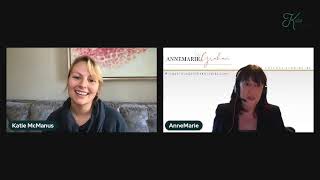
Katie McManus and Anne Marie Graham discuss building a business through recession and growth. Graham left nursing to start a workplace healthcare company, survived 2008 when one in five Irish businesses closed, sold it in 2015 after 11 years, and now runs group programs. They cover visualization, daily action, and planning in 90-day blocks.
Questions this video answers
2008 (she states that during that recession one in five businesses went out of business).
2015 (she says she sold the business in year 11).
20th of October (she says she booked a hotel and is launching the next group at an in-person event on the 20th of October).
mindsetsuccessstrategies.com (she says there is a contact button to book a 30-minute strategy call).
Chapters
I can taste yo, yo, yo, I can taste yo, yo, yo I can.
Taste yo, yo, yo I can taste yo, yo, yo I can taste.
Hello, everyone. I'm Katie McManus, business strategist and leadership coach. I am so excited to be going live today with Ann Marie Graham. Ann Marie is a coach who lives across the Atlantic. And, Ann Marie, I'm going to let you describe who you help and what you do with them, because I tend to jumble all that stuff.
Thanks so much, Katie. It's great to be here. Thanks so much for the invite. Yeah. So I based in Dublin and I work, I brand myself really as a business growth and mindset strategist. So I work with business owners around growth strategy in their business, but also where their own behavior and thinking is holding them back.
Yeah. Amazing. Amazing. Well, it's so great to have you here. We're talking about the blend between bravery and persistence in our business, which I think is a really important combination. And I love the story you have about how you did this in 2008.
Yep. So in 2008, Ireland was all over world news in terms of the recession. So we were in a particularly bad state. I know there was a global recession, but I was four years into my business and I'd worked really hard to get it to that point. And that was when the real. That was really my first introduction to. Okay, I need to think really differently here, and I hate the word pivot, but I really needed to look at where the business needed to change to survive, not just to thrive. It was actually, I mean, at that time in Ireland, one in five businesses went out of business in the recession. And I was just so determined, having given up a permanent pensionable job, that I was not going to be one of those casualties.
Right, right. And remind me what the business was about.
So I had a healthcare business. So I'm a nurse by profession, and I started a workplace health business. So where I would have done myself, my team would have done medicals on employees around health and safety. And then also another aspect of the business was health screening and health promotion. So all the nice to haves.
Yeah, serious.
Yeah. Well.
And what do you think it was that you did differently in 2008 versus other businesses?
So in 2008, when we were going into, you know, before we went into the recession, I would say 65, 70% of my business was the health screening, health promotions. Like I say, all the nice to haves, 35% of it then was the kind of legal end of things that employers have to do and training. So I literally had to flip that on its head.
Right.
And I had to make the 70% around because now employers were actually so more, much more cognizant of what they had to do, you know, in that time. And it was about spending money on the, on the essentials only. So that was the biggest thing that I did. It wasn't where I necessarily wanted to bring the business. It wasn't the most enjoyable aspect of the business for myself and my nurses, but I was like, guys, look, you know, the one thing we need to do is stay afloat, stay in jobs, keep the business going. So it was, it was just one of those decisions that I had to take.
Yep. Yeah. Well, it's interesting. So I always say, you know, people spend money, big money on three things and getting laid, getting paid and living longer. No different for businesses, though.
Yeah, right, yeah.
Like higher level stuff. Like, and when times are good, when there's no recession, when everyone's flush with cash, like, yes, sell that higher level stuff. But you know, when, when the hits the fan, like really bring it back to those three needs. And, and companies want to live longer, you know, they want to make more money. And I know people in it want to get laid. So.
Yeah, I'm sure there are. I guess so. It wasn't my priority in 2008, but yeah, you know, not in front, not in the business anyway.
Right, right. But it also, you know, it really exhibits bravery that, you know, it wasn't something that you enjoyed doing and you knew that you were leading your team into stuff that they weren't gonna be particularly happy about, but it was that tough decision that you had to make.
Yeah, yeah. And I guess even when I went into the business, there was an element of bravery. I mean, like I say, I'm a nurse by profession. I failed business studies in school. I was told by my business studies teacher I wouldn't be suited to business and I wasn't cut out to be an entrepreneur. So even though I had actually always wanted to do nursing because I just love the idea of helping people and empowering people, but I almost had an entrepreneurial spirit as well. So the business was really combining the two. But I remember thinking, no, no one's going to tell me I'm not cut out for something. If I go into it and I decide, then that's fine, but I'm not going to be told because I failed one exam, you know, so there is an element of brave. And then obviously, you know, leaving the profession where it is that permanent, pensionable job. I mean, my family and friends thought I was crazy because I had no business experience. I don't come from a business background, but I just had this vision of what I wanted to do. And I'd worked for a workplace health business in the uk, and I thought, I can take this model back to Ireland and mimic it exactly as it is and make it a success. So it did take an element of bravery. And I had times where I was shitting myself, you know, oh, my God, what have I done? What am I at? You know, that's where the persistence comes in. You keep your eye on the vision of what you want to achieve.
Oh, yeah. Oh, yeah. Well, I think that's. That's kind of what we get mixed up about when we talk about bravery, because, like, bravery after the fact feels good, but in the moment when you're being your bravest, it is that, holy, what did I do? Like, I'm gonna pee myself. And also, like, who else is doing something better that, like, I can replicate or, you know, compare myself against?
Yeah, yeah, big time.
Yeah.
As you say, it's after the fact. And I look, I love Steve Jobs analogy of when he talked about, you can't join the dots looking forward.
Right.
It's only when you get to where you want to be, you can look back and say, they are all the things I did. And sometimes that's what I. That's what I. On days where I may be procrastinating on stuff or struggling myself, that's always what I said to myself and my clients, you know, just keep doing the things every day that are leading you from where you are to where you want to be.
Yeah.
And when you get there, you can look back and say, oh, yeah, although. But you mightn't see how all those dots are going to join together as you're doing them.
Right, right, right. You know, I always saw myself as I was going through my career. I knew everything that I was doing in sales and wine, in the solar industry. Like, I knew it wasn't what I wanted to do, but I kind of just imagined like I was collecting ingredients for a cake. I didn't know what the. The recipe would be yet, you know, and so when I finally got to the point of building my business, I kept looking back and be like, oh, my God, I have this experience that I can so easily apply here. And so I'm sure when you were in university, like, you know, you weren't set up to be an entrepreneur. You didn't have pieces of the, of the recipe.
No, absolutely not. And that's the thing I just always had, you know, when I was young, even the kind of games I love to play were shop and you know, Monopoly and it was always around businessy kind of stuff. But, but yet I loved, I loved so many aspects of nursing as well. But one of the big drivers. And it took me a while to be comfortable saying this and I mean, you know, nearly 20 years on, I'm very comfortable saying it. But one of the big things for me that I can now say unapologetically was that I didn't want to be stuck in a career with crap pay and crap hours.
No.
You know, that was. I wanted to have a higher level of prosperity. I wanted to have a higher level of freedom in terms of time off.
Yeah.
You know, but I kind of felt guilty saying that.
Yeah.
Initially.
Yeah, well, yeah, I mean this is really common in the nursing, in teaching professions. Right. You, you have this deep desire to help people and our society has kind of framed it up like great, you get to help people, but to help people in a really meaningful way, you have to also basically take a vow of poverty. Yeah, right.
And. Absolutely right.
And it kind of transfers over to other helping industries. They're like, I help a lot of coaches and they have this mindset of you have to be poor.
Yeah.
And it's almost like we have this, this framework that was set up by the church of, you know, you want to become a monk or a nun, you have to give up all your worldly possessions and be poor. Completely discounting the fact that a multi billion dollar indus or set up behind you that makes sure that you're fed and shelter and watered and all the things.
Yeah, yeah, exactly.
Yeah, yeah. What's, what's the greatest lesson you think you've learned in, in scaling your business to where it is right now?
So I sold that business in 2015 and I'd kind of taken it on as a 10 year plan. So I sold it in year 11. The biggest lesson I learned was a lot of the stuff that I teach now that when I started doing it myself, I didn' leaving it. So the whole area of visualization, the whole area of seeing yourself from the place of the goal achieved. I mean, I remember I was only about two, maybe nearly three years into my business and I went to a Jack Canfield seminar in Dublin and he sat there and he talked about, you know, your three year, your five year, your ten year plan. He said, I want you to write down what the Goal is I want you to write down that you've already achieved. And I was sitting there writing that and I was thinking, this guy is off his head. You know, this is. I can't believe I've paid, you know, €500 for this one day seminar of crap because I just didn't get it. And, you know, we were sitting and visualizing it and I couldn't see it at the time. And yet then when I, in fairness, I thought, okay, my way is not working, I'm working harder, doing the same thing and the business isn't moving forward or I want. This guy's a multi millionaire with multiple books in multiple countries. He clearly knows what he's talking about.
Yes.
I thought, I'll give his way a go.
Yeah.
But that's the biggest lesson that I have learned, to trust the process.
Yeah.
You know, to put out to the universe what you want, you have to take the action. I mean, one of my bugbears, I suppose, is when people talk about the law of attraction, they miss the last few letters in that word. It's action.
Yes.
You know, the visualization is a huge part of it, but you also then have to take the action. But it was marrying the two, really that I would say turned my mindset, which. And when I refocused the mindset, the results automatically started to change.
Yeah, yeah. No, it's, it's funny, you know, the law of attraction has gotten so much, I mean, so much discussion around it in past years. Like, it's way more acceptable these days. And people think, okay, well, it's just journaling and creating vision boards and. No, no, you can't just create a vision board and hang it on your wall and do nothing.
Yeah.
The universe doesn't know how to deal with that.
Yeah. And I see a lot of people through coaching as well. Katie, I don't know if you are the same where they're mechanically doing the things, you know, they have the vision board and they're writing the affirmations and they're doing the gratitude. So they are taking a level of action, but they don't really believe it.
Right.
They haven't got emotionally involved with the idea where their subconscious mind is gonna, you know, make that happen.
Yeah, I see this. It's really common in, in the weight loss space. You know, it's like you can do the diet and you can exercise, but if you're not actually believing that you're going to, you know, have a smaller body.
Yeah.
It's just not going to happen.
Yeah, right.
Because if you don't believe it, then it's so much easier to sabotage yourself in moments. It's so much easier to, like, not stick with it.
Yeah, absolutely. 100. And I. I can really resonate with that as someone who, you know, went into nursing maybe a few pounds heavier than I could have been. And then in nursing, in our, particularly in our first year, we know we got our food paid for and our accommodation. So you were eating hospital food. Right. And you were out partying, let's be honest. So, like, you know, the end of first year, I be three, four stone, or the second year, maybe four stone overweight. And it took me years, even though I'd lost the weight, to not see myself as that big girl in the mirror. So in my head, I was still the overweight.
Yeah.
You know, and I see that actually with a lot of my female clients in particular, not as much with male. So it is. It's like you say, you have to believe it, you have to see it, you have to act as if you are that.
Yeah, no, it's really interesting concept. It's, you know, it's body dysmorphia, but there's also business dysmorphia. That happens completely. Right. Because you see yourself as, like, you go from being someone who's struggling in your job because it's not built for you and it doesn't fulfill you and it doesn't pay you enough, and then you start this business and you start seeing success, but you, you have this dysmorphia because you still see yourself as that struggling employee. Yeah, right.
Yeah, yeah, absolutely. And I, I see it as well with people where I would have clients where maybe it's a sideline business, but they want it to be their, you know, they want that to be their main job. And it's exactly what you're saying. It's not just morphia when they leave the job and that comfort blanket is gone, and then there's suddenly this business owner that they have to be 24, 7.
Right, right, right, right. Well, and part of it is how they talk about it, Right. If they just spent three years talking about their side hustle and train their whole world that this is just their side hustle. Then when they go full time and people ask them, oh, how's your. How's your side hustle going? They don't mean to be demeaning about it, but what it does is it knocks this person down to. Oh, God, that's right. It's just a side hustle. That I'm doing full time now.
Yeah, exactly.
Full time business.
Yeah. And I mean I even think as well it's important because I have. So when I, in 2012, I bought over one of my competitors in the healthcare space with a view really to scale in the business. The acquisition was really purely to scale. And then I sold in 2015. And it's one of the things that I really work with now. And for any business owners on your call who are grooming a business for sale or they're maybe about to go into a sale of their business because what I found was I, I had complete disorientation when I sold the business. It wasn't mine yet. I was legally tied in. So yeah, kind of was mine. And where the client's mind, they still saw me as the business.
Yeah.
And then, particularly then when I went coaching full time, which was always my area of passion, I suddenly went from being this recognized healthcare business owner.
Yeah.
To a coach where I was. Felt like I was nearly starting at the bottom again.
Yeah.
So there was a huge amount of mindset work I had to do with myself and my own coach around that because I was kind of like, okay. But I was top of my game and top of my field and so recognized and I know one knows me as a business coach. Where do I start?
It's funny you say that I had a, I had a similar experience because I jumped careers and industry so much in my 20s that when I started coaching I was like, oh God. Like I was kind of embarrassed to admit that I'd started switched careers again because I didn't want people to be like, oh cool, like how long is this gonna last for her? You know, changed so much.
I know. Yeah. And sometimes that's, it's a matter of reframing that, you know, in your mind because I, I was speaking to somebody recently and they're. I'm a Bob Proctor, one of the Bob Proctor certified consultants. And there was a young girl. When I say young, she's in her probably late 20s maybe. And she was so. God, I don't know if people are going to take me seriously with life experience. And the whole thing in PGI was where we were saying to her, look, you're going on someone who had 60 years experience. So he only died in February this year.
Right.
You're selling his knowledge and his program and all and you're facilitating all that knowledge. So kind of. And when she reframed that actually she started to do, to do much better.
Right. Yeah. I mean the Reframe is so helpful. But also just having someone to believe in you, you know, and say, no, no. Like, I wouldn't be working with you right now if I didn't see this for you.
Absolutely. Yeah, yeah, yeah, absolutely. And that's why I say that a lot to clients when I start out. I say, you know, just borrow my belief. I can see it. I can see the potential, and you will see it. But for now, just borrow what I see.
Yeah, yeah. No, it's. It's. It's. It seems negligible. It seems like some. It's something that someone says, but it really. I had a coach say that to me early on, and it meant so much, because even when I was having a meltdown and thinking, I just can't do this, I knew he was out there just kind of believing in me on his own.
Yeah, yeah, yeah. 100%. What.
What area in your business are you being bravest in right now?
Scaling to group, actually, because, well, pre pandemic, I was doing everything face to face. So on the 12th of March, 2020, I literally went, oh, my God, what do I do? I'm gonna have to go back to nursing. But so the bravery of the last few years has run being getting online, learning technology. I would have had a huge mental block about technology and made all the crappy excuses. You know, I'm Irish, and we're into connection with people. You have to be face to face, and I won't get the right. Oh, you know, it was just. That was a cave I feared to enter, so I overcame.
What's about being Irish?
Why, you know, But Irish people, you know, connection is so important to us, and you have to be face to face, and you have to look in the whites of their eyes. It's like, no, that's a crappy excuse, Emory. You're telling yourself because you don't want to be online because it's not comfortable. So that was probably a huge discomfort. And then at the moment, then, because I've been so used to doing it one to one, so I started my first group in April, and they ran for. For three months. And I was. I only had five people actually started about eight people sign up, and then three pulled out.
Yeah.
So that was kind of like, oh, my God, that's a sign I'm not good out for group. You know, just any little thing to hook onto. And I thought, no, this is crap. What. You know what. What would you tell your client who said that?
Right.
So, yeah, get scared into group in. In terms of scale in the business. That's the only way I can because the one to one time, you know, you're capped in terms of physically about the amount of time you have. So yeah, that's been, that's been my kind of push through that discomfort for the last few months.
Yeah, yeah. It's interesting. I'm, I'm, I think probably just five months ahead of you in that because I launched my BYOB group in January and I think it was like April was the first session I had with them because it's part online training and part in person group coaching or, you know, group coaching. And I think my very first call where I wasn't like nervous was in April, you know, like I had been running it for three and a half months and I was like, oh, I don't have a pit in my stomach about like fucking this up.
Okay. But yet it's funny, I got feedback from the five participants and I was very honest with them and they were happened to be all women. I said, guys, look, this is the first group program I've done as in group program I've done online. I've done a lot of corporate training where you go in with a group and train, but that's, you know, that's different. And two out of the five of them said, because I had this kind of nearly mental block about group, well, groups for people who can't afford one to one. That's also the way I looked at group.
Right.
So we, you know, I guess we view the world from our own internal lens as well. But two out of the five ladies were like, I'm really, I've just learned so much, learned so much from you and it's been brilliant. But I've learned so much from the other women as well. And we all experience the same stuff and we all go through the same things. So the learning they got from each other and all of them put that on the feedback form.
Yeah.
Two of them in particular actually really, really honed in on that point.
Yeah, yeah. I mean, it's magical.
Yeah, yeah, yeah. That was my excuse blown out of the water.
Well, it also takes the pressure off of you to be the smartest one in the room. Right. But because you were hosting the room, like everything gets get attributed back to that room.
Yeah, Right, Yeah, absolutely.
Yeah.
Cool. Yeah, it does take the pressure off.
Yeah. Well, congratulations on, on moving past that. And are you in your next group soon?
Yes, I'm going to launch the next group. So I have an in person, my first in person event, actually since 2020. January 2020 was the last in person I did. So I have my next in person event in Dublin coming up on the 20th of October. So I'm launching the next group at that event.
Oh, fabulous. Yeah, Tell me about this. Because events are like in my future, I haven't gotten my brain organized around them. How are you setting this up?
So I'm going for a hotel in Dublin that's near the airport because it's convenient for all the highways, motorways, you know, all the different areas around Dublin. So I literally, again, it was, it was a matter of just, Emery, get off your ass and do it. So I, I booked the hotel, I rang the hotel, I booked, I know the hotel because I've, I've booked stuff there before and I just paid the deposit with my card, which is non refundable. Yeah. And I said I want the room booked for 50 people. So. And I've ordered, you know, breakfast for 50 people, lunch for 50 people. So it's like, okay, you gotta make this happen. But it's funny, in two weeks I have 20 tickets sold.
Right, of course.
And you know, I have another four weeks to go, so. But it was just, I thought if it's booked and it's done and it's in the diary, if I have more than one person, it's an event.
Yeah.
That's the way I kind of look to it. And I guess you forget. You forget maybe in some ways that it is different in terms of reaching out with ticket sales and all of the other things that you have to consider, you know, like audio, visual and the kind of room setup. Workbooks, so physical workbooks, getting them printed, getting my signage read on.
Right.
So they're all the additional things that. I wouldn't have thought of that again. You don't have to worry about on, on Zoom. Yeah. Brett had burned the boats. Absolutely. I love that phrase.
I know.
Yeah. Yeah.
And we make up all these things like, oh, well, I've mentioned doing an event and people are like, oh, I might be able to go and. But we forget that people can't RSVP to a maybe.
Yeah.
Right. But if you give them a date and you give them a time, when you give them a location, they, they can say yes or no.
Yeah, yeah, absolutely.
Yeah, yeah.
And like I say, if it's a, if it's an in person event and you have more than one or two people, it's an event, you know. Right. Because sometimes I have clients who get very hung up on, you know, I only had four people or five people in my webinar. And what I said to them is, you're better to have a small audience that are your people, they're your tribe. That, the type of people you want to work with and they want to work with you then have 50 people in a room or in a zoom room, you know, with cameras turned off and they're working away and they've just, they've signed up and they feel guilty, so they just click in.
Yeah, totally.
No, so, so I think, I think that's important. It's, it's not always about quantity.
Right.
I, I would be more quality than quantity.
Well, also, you know, we discount that. We have to train our audience to know that we're the type of people that host webinars that host live events. Right. So I'm sure there are a couple hundred people out there who are like, oh my God, Anne Marie's having an event. Those, those dates don't work for me. I'm going to keep my eyes peeled for the next time she's hosting an event because I want to make sure I can go. And they're not telling you about this?
Yeah.
This is something that is just going on kind of subconsciously in their brain. They're not even really consciously aware of it. But we have to go through this process when we first start doing webinars or events or anything where people have to come together.
Yeah, yeah, exactly. It's, it's not really much different with a webinar. You know, you have to schedule it in, you have to work around it. You have to have two, three weeks prep time, give people notice, you know, people are busy.
I do pop ups.
Yeah. Okay. I prefer to have kind of two, well, a two, a minimum of a two week lead. But I'd be more comfortable with three.
Right.
Getting it out. But then there's the other thing of, you know, I see sometimes people advertising a webinar that's six weeks away, but people aren't going to remember that they're going to book it now unless they're paying for it. Free webinar. They're going to book it and they're not going to show up because they won't even remember.
No, totally. I'm sure my team would prefer that I do two or three weeks lead up time because then they'd have some time to like build some stuff around it. But no, I usually just typically am like, I just feel like doing a webinar tomorrow.
So is that your comfort zone? The pop up is your.
I think so. Yeah. That's the zone I like to live in.
Okay. Yeah.
Yeah.
I'm the opposite. I'm. We had planned in the diary, worked around, you know, lists. All done.
Oh, that's funny. No, you know what's funny is I actually, when I do do that, by the time I get to the webinar, I'm so bored of the topic.
Okay.
That, like, I can't even muster up excitement for. For it. Like, I usually get to the webinar, I'm like, we were gonna talk about this, but we're gonna talk about this instead. Related. Stick with me. You know.
It'S a difference in people.
I know. Well, and it's, you know, there's no right or wrong way to do this. There's your way.
Right, Exactly.
And whatever works for you and for your audience and your business, like you. You get to design that and make up the rules, which is both beautiful and terrifying.
It's. Yeah. But the thing about it as well is I always say to, you know, even people on my webinar, even if they don't become clients, nothing's forever. You don't have to do it for. If it doesn't work out, just take the lesson learned and walk on.
Yeah.
Do something different, you know?
Yeah. I. I had a mentor early on who said all marketing works. You know, it either works and you get clients or it works and you hear crickets. And you know that you shouldn't post that ever again.
Okay. Yes, absolutely. It's great. That's an analogy. Yeah.
You know, but you're not going to know. Like, we can't figure out what's going to work to make us lots of money in our business by hiding alone in our houses, not talking to anyone.
Yeah. Yes, exactly.
Yeah.
Yeah. It's so true. Just take the action and do it, and it doesn't work out. Do it differently next time.
Yep. Yeah.
I think I told you before. The first webinar I ran, which was in April 2020, and, like, I had all friends and family. Like, I had family and everything. And I was literally begging people to come in. As an audience, I think I had about 20 people, and 14 of them were friends and family. I shot the webinar down. I was trying to put them into a breakout room, and I shot the total screen went. It was gone. Meeting ended by the host. I was going to. Oh, my God. But look, everybody just logged back in. I had a friend who was like, don't panic. We all log back in again now. I guess at that time, there was. There was comfort in knowing that everybody was making the same mistakes. But you know what? I say it so often, I think maybe it's the nurse and me where I say, is anyone gonna die by me doing that? No. So it's not that bad.
Yeah, it's not that bad. I'm impressed. That was your first webinar and you had that many people.
Well, As I say, 14 of them were rent a crowd, but I still did six.
Still I. My first two or three webinars, no one showed up. And then my. I think it's my third or fourth. My marketing guy who I paid showed up. It was just one person, and I, like, completely overloaded him with information. And then my fourth or fifth, I can't remember, two people registered and, like, confirmed that they were coming. So I made my dad, my sister, and my friend Palmer show up. This is also before the pandemic. Before, like, being on.
Okay.
Normalized, you know.
Okay. Because in that particular webinar, my little niece, who was about 5 or 6 at the time, she heard my voice on my sister's laptop, and she came in, and she was down behind her. She was like, hi, Auntie Annie. I was like, hi, Alice. You know, I was like, oh, my God, now it's totally obvious.
Well, it's funny, you know, I had. My dad and my sister were all McManuses.
Okay.
So it was just like, that's either a really funny coincidence.
You see, if you knew it now, you could just get them to rename, you know.
I know. I didn't know that.
But.
But it is. It's just. It's the beginning stages. And I think what people are really afraid of when they. When they first put together a webinar is like a what if no one shows up? What if only one person shows up? Or what if 100 people show up?
Yeah.
The cool thing is that that last fear, it's not going to happen. It's far more likely that you're just going to have the first or second one.
Yes. That's so true, actually, because I had a client recently who she converted from the Zoom meeting to Zoom Webinar. So she was running her first webinar. And I said, look, I log in, and I'll just, you know, kind of be there that you know, that you have a number. But, you know, the way on webinar, you can't see the participants.
Right.
So she thought that there was nobody there. She delivered the best webinar ever, because she thought. And What I said to her was, if no one shows up except me, you record it and then you have an evergreen. So it's not a waste.
Yeah.
And so she was talking as if this was an evergreen webinar. She didn't know that she had seven people at the webinar that she didn't realize. Oh, my God, seven others apart from me, because she couldn't see them. So it just, you know, goes to show.
Yeah, it's funny, that's. I think that's my next brave barrier is doing like a proper webinar because I'm so comfortable in the meeting room scenario, people's faces and interactive, really sticking with like a, a proper plan and all that stuff and, and doing it without seeing that immediate feedback is my next area for bravery.
Yeah, actually that. Yeah, Well, I haven't done that yet either, but group was kind of my big bravery move. So now that I. When I get the second group launched, I might tackle a webinar before Christmas, be my Christmas present to myself.
Merry Christmas. Oh, man. Well, we're coming up on time. I wanted to ask you before we wrap up, if you were to give one piece of advice to our audience if they're wanting to start, grow, scale their business, what would that advice be?
I would say know what it is you want and look at two things. Where you are now and where you want to be. Just put 90 day blocks in place to get you there.
Yeah.
So I encourage all my clients because if you look at one year, three year, five year plans, it can seem so overwhelming. If you set a goal of 90 days or even 30 days, just start by looking at what would the building blocks need to be for me to get from here where I am to here where I want to be. And then it's just the continuous action. Daily, daily, daily action.
Yeah.
But you have to know there are two things you have to know, particularly for the likes of time and money, freedom and business success. You have to know where you are and you have to know where you want to go.
Yeah, yeah. No, you know, yeah. It's so true. I mean, you can get in a car and start driving. There's no guarantee you're going to get anywhere you want to go.
Yeah, exactly. Exactly. Yeah, yeah. And if you don't know what star you're shooting at, it's kind of pointless.
Right. You know, even if your aim is, you might land on something else, you never know.
And the other thing as well, I think, you know, we have this perception in business that it's A straight line to success. And it's not. It's such a zigzag. It's not even funny.
Well, I mean, it's like a loop de loop sometimes. Sometimes you have to go like 20 steps to back to get 21 steps forward.
Yeah. 100%. Yeah. Yeah.
Oh, man. Well, thank you so much for being here with me today. If anyone wants to get in touch with you, how do they do that?
So if you go onto my website, which is mindsetsuccessstrategies.com so it's my background and there's a contact button on my website so you can book a 30 minute strategy call with me through that. I have about three calls three days a week, so it's about nine calls a week. But they can go to the website and look at the either booking with me or the type of programs that I have available.
Okay, fabulous. And I just want to do a call out to those of you who've joined us today. Thank you for tuning in. Juana Erdal. I hope I'm pronouncing your name correctly. David Fryman. Hello, Samuel. Stephen Doyle is actually an Irish guy. He's usually tuning in from Ireland, but I think he's traveling in Belgium. Hello, Stephen and Brett. Thank you. I. I hope, I think you got a lot out of this. I'm so happy. Gabriel from Brazil. Asher, let's see. Lee Markham and Kristen. You just wrote something. A long one. My first time arguing a motion in federal court on a three million dollar claim. I stood up and may it please the court. Then vomited on the court reporter's trash can. So now I can get through anything. Be brave and do it. Oh, my God. Kristen. This is my. My go to. Well, at least that didn't happen to me. Thought, oh, my God.
Wow. Kristen.
I hope it helped. I hope they were like, well, we can't. We can't let her lose. Like, she's gonna vomit again. Oh, my God. Anne Marie, I hope you'll come back and come live with me again. This has been so much fun.
Absolutely. Thanks so much. I'd love to. Okay, thanks a million.
All right, well, thank you, everyone for tuning in. I'm Katie McManus, business strategist and leadership coach. Today is actually day 23 of me going live every single day in September. So we have seven days left. If you have any topics you'd like me to talk about, then please DM them to me. I'd love to make the last seven days of this super valuable to you. Anyway, joining me today was Anne Marie Graham. Thank you so much for joining with us and we will talk to you soon.
Bye bye, everyone.
More from Katie





How to do self care right now, so you can do what needs to be done, for yourself, your business, and

How to do self care right now, so you can do what needs to be done, for yourself, your business, and

#greenscreen How to build a consulting business that makes you $200,000-$700,000 a year

#greenscreen How to build a consulting business that makes you $200,000-$700,000 a year

Maybe we’re not the imposters…? #businesscoach #startup #entrepreneur #smallbusiness #consulting

Maybe we’re not the imposters…? #businesscoach #startup #entrepreneur #smallbusiness #consulting
