Building a Recognizable Brand
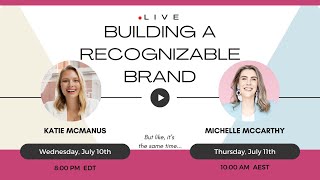
Katie McManus and Michelle McCarthy talk about building a personal brand that sticks. McCarthy says embrace your weird details, experiment publicly without shame, and use consistent motifs like a hot dog or coffee to make yourself memorable. She offers strategy sessions to help you get started.
Questions this video answers
Search @michellemccarthy on social platforms (she says 'I'm Michelle McCarthy on all socials').
She offered free strategy sessions—advertised as 10 total with eight left—valued at about $500 each (bookable via links in her bios).
Yo, yo, yo I can taste yo, yo, yo, yo I can taste yo, yo, yo I can taste yo, yo, yo Words I can taste yo, yo, yo, I can taste yo, yo, yo, yo I can taste Y.
Hello and good evening, everyone. I'm Katie McManus, business strategist and money mindset coach. And I'm here tonight with one of my absolute favorites, favorite human beings in the entire world, Michelle McCarthy, all the way from Australia. Welcome, Michelle.
Hi.
And I am so excited for our conversation tonight because we're talking about building, like, a brand that people actually remember. They recognize it, and you have this really special process to help people figure out what that is for them. And it was honestly one of the hardest things that I had to do, and it ended in me wearing a hot dog costume. So I'm really happy that you're making this a little less painful for people. People.
Yes. I love that you know, that you're using a hot dog in your branding. It's just. It's so random, and I love the randomness of it all. And I think that's what people overlook because my, like, my process and. And what I do is kind of help people uncover that part of themselves. Like the really weird stuff that you don't actually think, like, that you don't want to share, it's actually into that a little bit more and show. Show your weird. And that's, like, that's how you get recognized. So. Yeah, I love. I love this, and I love chatting about this.
Yeah, yeah, yeah. Well, and I love your story because, I mean, you came from branding and you did a lot of design work and you were working with. With companies and you're helping them kind of figure out their brand, and then when you kind of flipped into doing your own brand, you realize, like, that doesn't work.
Yeah, yeah. 100. It was. So I studied visual communications, which is like a fancy way of saying, like, graphic design. Yeah. And went through, like, the normal process. Worked for agencies, worked in design, got into branding, brand strategy, and. Yeah. And worked for some really, really big companies. And then I was like, you know what? I want to set up my own design agency. So packed in my corporate gig and was like, easy peasy. I do this for a living. I'm going to, like, create my own brand, be a millionaire by Tuesday. Happy days. And I actually discovered it was actually really, really hard that, like, corporate. Corporate strategy and corporate branding is totally different from personal branding. So then. Yeah. So that's when I kind of realized that, well, if I'm struggling with it, and I've got all this experience and this is literally what I get paid to do. Then there has to be people out there who aren't in this industry and are just like, what do I do?
So. Yeah, yeah, yeah. There are a lot of us out there. Yeah, well, and it's funny because it's like this. It's kind of like people who are on LinkedIn and they used to use LinkedIn to find jobs, and now they're on LinkedIn trying to find clients. And it just operates in a very different fashion for that purpose. And, you know.
Yeah, yeah, yeah. And I, And I. And I am that person as well, because I got my. My last corporate gig. I got through LinkedIn, I've got several jobs through LinkedIn, and now I'm. Like you said, I'm. I've switched it now to build my own brand and get my own clients through there as well. So, yeah, it definitely operates a little bit differently and trying to figure out the mechanics of it all.
Yeah, yeah, well, and I love where you start with clients because, I mean, you know, building a personal brand, especially when you have your own business, you know, and I say this to my clients all the time, is that, you know, we have to figure out what, like, what the market wants from you. Yeah, right. And, like, you can only figure that out once you start getting clients. And so, like, everyone wants to start with doing the brand first. And it's like, well, you have to see what is resonating with people first.
Yes. I mean, yeah, there's. There's like two different parts of it. You have to do, obviously, your market research to figure out if your idea is viable. But then everybody. Yeah, everybody wants to not make any mistakes and be super, super polished. And, you know, the perfectionist. Perfectionist in all of us just wants to, like, just step into it as, like, the best part of us. And then. But what you need to do is. I call it like the teenage phase. You know, when you were in school and you might have had like a goth phase or like an emo phase or, you know, your. You just. Did you look back.
Oh, my God. I. I had to cut my own hair phase. It was really, really bad as school pictures. I just. I don't show to anyone. They were. Yeah, yeah.
You have to go through all of that to kind of like, figure out who you are. And that's what, like, your teenagers and your. Your teenage years in your early 20s is all about branding, particularly personal branding. There's a lot to. There's A lot in that as well. You need to throw spaghetti at the wall, see what sticks, and try things on for size. And the more you kind of put yourself out there and share, like I said, those weird parts of yourself, and you go, oh, my God, and I didn't die, and people actually like it, then it allows you to kind of, like, lean into it a little bit more and lean into it a little bit more and see what you like and what you don't like and what your audience likes, doesn't like. And then that's how it gets polished over time. Everybody just wants to skip to the end, myself included. Like, I want. I like, you know, want to be super, super polished, and I want to be there already. But it's. It's in the grunt work and it's in the experimenting that all the, like, all the nuggets are found.
Right, Right. Yeah. You know, going through the process with you, I loved that you're not just looking at, like, all the glitzy and glammy parts of people's lives. Like, you're actually digging into, like, things that people are ashamed of and scared of and, like, our world about, like, everyone finding out about. Because we all have those quote unquote skeletons in our closet.
Exactly. That's exactly it. I mean, perfect example. And I shared this on my Instagram story last night. So, Alex Cooper, also, if anyone's watching this, this is not safe for work, by the way. Just. I would put in your headphones now. I'll give you about 10 seconds. I shared my story. So, Alex Cooper, call her daddy Podcast. Biggest podcast in the world. She is the definition of leaning into your effed upness. And the stuff she has built, her personal brand. I'm talking about blowjobs, sex, drink, drugs, like the whole. Maybe not drugs, but, you know, like, all that stuff she's talked about all the messed up things she's done in college, all these. These things, and she is the number one podcast in the world. And celebrities are queuing up to get on her podcast. Yeah, like, that's the stuff that none of us want to talk about. None of us want to talk about that time in college where we got drunk and we. We did. Did this one thing or whatever. Nobody, like, that's. That's the stuff we shy away from. And she has literally built her brand on that. And she is on the Wall Street Journal this week. The Wall Street Journal?
Yeah.
Blowjobs and Wall Street Journal don't really go together, but somehow she's made it work.
If you saw the Wolf of Wall street, then.
Yes, I guess that's true. So maybe they do go together.
But.
Yeah. So I love. I just love her as an example of being authentic, you know, being vulnerable, but also just being weird and owning your weird and figuring out whatever. Whatever that is for you. I mean, it doesn't have to be about your sex life. It can be anything but figuring out what those bits are. And that's where, you know, that's what I do with my clients. But then also, that's also where the experimentation comes in.
Right.
Because you, like, you. You try it on and see. Oh, yeah, okay. This. People like this. And I actually, I feel. I feel comfortable sharing this or maybe I don't. And, you know, it's.
Yeah. It's funny, in the last six months especially, I've been noticing this with my clients that, like, really, your level of success will stop at the level of your shame. Yeah. You know, like, it's just like, whatever shame you have, like, and it doesn't even have to be related to your business. It can genuinely be, like, shame that you have from where you grew up and what your story is, what school you went to, you know, and if, like, you hold on to that shame and keep it in the dark and don't let the light see it, like, that is going to be the. The dark ceiling that you're going to bump up against at all times in your business. Yeah.
Yeah. I mean, working with you for the past couple of months, I, you know, I've learned to see those parts of myself as well. And I can always say that, like, if you don't like yourself, you know, we always say in marketing that to build an audience and build your client, build rapport, people need to know, like, and trust you.
Yeah.
But if you don't like and trust yourself and know yourself, I mean, how. How can you. Like, how can you expect anybody else to?
Right.
And I do think that in terms of your reach, it does come back to how much you like yourself and how much of the weird you're. You're willing to show and how much of the real you. Because I. I say all the time, people have the best BS detectors.
Yeah.
Like, you know, you can say all the things and have all the production, but, like, if you don't like yourself, if you don't believe in what you're selling, if you don't believe in yourself, I. Nobody else is going to.
Right.
No, it's. People can see through it.
Oh, 100. And it's. And I think we all resonate. We see content online and, like, when we receive something that feels. Feels genuine, we feel like we're friends with that person.
Yeah. You know, I was. I was in Pilates yesterday, and at the end, the. The instructor she was talking about, she's like, oh, I have this friend. And then she goes, actually, she's not a friend. I just follow her. I just follow her on Instagram. And it was just so funny because she. Obviously, whoever she was talking about, she felt like she knew her. Oh, yeah, no, I know this girl. She's like, well, actually, I don't know her. I just. I just follow her. But it's. It's true. Like, you feel like you and the best brands and the best people online and the people who have the most success and the biggest audiences create that environment where they feel. Where you feel like you're part of their lives. Yeah, there's this connection, and you feel like it feels like a FaceTime with your friends, or it just feels like you feel like you're one on one with them.
Yeah.
Yeah, those. Those are the guys that just, you know, skyrocket and success.
Totally. It's so funny you say that. I had a guy, Lex, who lives in France. You know, he collects all these books. Like, he does a lot of, like, esoteric, and I absolutely love it. And so I started following him last year or something, and he messaged me a couple months ago, and he's like, dude, like, we've never spoken, but I had a random dream last night that we were at a amusement park and Chevy Chase was going around being an asshole to everyone and with things, and we had. We're trying to, like, go and. And do all this stuff to, like, keep them from ruining things. But it's like, it's so funny because, like, at the level that you've infiltrated someone's subconscious, that they're, you know, like you're in their dreams just as a random character. It's just. It's absolutely wild.
That is so.
And I know I have dreams about. I don't know his actual name, but the guy who does dad chats on TikTok.
Oh, yes. Yeah, yeah, yeah.
He and his wife, I just feel like they're my besties and I. I can't get enough of them. They're so funny.
They are hilarious. Yeah, I love that. Yeah, it's. And I think those people that have done that really well, I think, again, they're. They're owning their. Their own story and they're. They're liking Themselves. And that's where, you know, they're not trying to be super polished and super professional. So. Yeah, I think, I think we can learn a lot from those people.
Yeah, yeah, no, 100%. And I, you know, we all think, and I know this from all my clients. You know, everyone, when they first start, they think, okay, I have to go out there and I have to like, prove that I'm smart and capable and show everyone that I can do this. And really they're trying to show themselves, you know, but it's like, you know, the people out there, they assume that you're smart and they assume that you're people if you say that, you do the thing. And I always remind people, like, because all of my clients have, you know, a gazillion self help books of. I'm like, go pick up a self help book from the shelf and I guarantee you the intro or the first chapter are going to be about how that author completely fucked up their lives. Crashed and burned everything, got addicted to heroin, whatever came back from it.
Yeah.
And that's. It builds trust because when someone sees that someone has like done something that serious and then come back for a minute, you're like, oh, well, I'm not that fucked up. I can totally, you know, get there too.
Yeah. I think the other side of that as well, though, which is definitely a kind of a talk that I had before is, you know, you hear, you hear these like Phoenix Rising stories that people have hit rock bottom and you're like, well, I haven't hit rock bottom. So, you know, it's like my comeback story isn't. Isn't as good as like you said, the person who got addicted to heroin. It was only a cocaine addiction on my, like, for me. So, yeah, like, you know what I mean? It's. You feel like you, your story isn't worthy. It's not, it's not fucked up enough.
Right.
So, you know, I think that's a lot of work that we both do with our clients is kind of figuring out that it doesn't have to be that extreme either, that you're kind of figuring out what is your story and what is compelling because there are plenty of people who don't feel that unique and that special or that smart.
Yeah.
And it's kind of pulling out those little bits to be like, it's okay, you can be a plain Jane, but then also have a super like, rockstar brand, right?
Yeah.
Yeah.
It's so funny you say that. You know, it brings me back to when I Started my coach training, and I was in a training with this woman who, you know, we just clicked. She was such a nice person. And, you know, we got to talking and she was sharing about her background and like, her parents had given her away to the foster system and she was, like, taken in by this family and they called her daughter, their daughter, but they. I don't know, she never really felt like she had a family, you know, and now she's mom and she's married and she has this family that she's created. And I remember thinking, this is really up, that I'm kind of jealous of this woman for having such an interesting backstory. And it's like, of course. Like, that's terrible. That's terrible. Like, I wouldn't wish that backstory on anyone, you know, and it's. But it's, you know, for those of us who haven't had an exciting life, we haven't had anything dramatic that we can point to and be like, here, you know, check this out. This will get my attention.
That's a niche in itself.
Yeah.
Because you have, like, if you think of like, you know, your brand archetypes, you have like the outlaw. Who is. Who is, you know, the, the image of like a biker, like Harley. Harley Davidson is. Would fall into that. That category. So that's how you think of, like, they're the outlaw. So you have the outlaw, the rocks there. The. The person who. Who's done all this messed up stuff. And that's their. That's their story.
Yeah.
But then there's also a brand archetype called like the Everyman. So when you're talking like, dad chats, he. He would fall under that because he's just a guy who drinks coffee in his car talking about his kids, which.
How does he not spill? He's constantly talking.
He does that on purpose. I mean, that means that leads into like, your brand elements. So obviously you've got. You've got the hot dog.
Right.
But for him, it's coffee.
Yeah.
You know, and that little bit, even where the camera cuts into that is his kind of recognizable thread that he brings. True. And it's something so, so simple. And there was a video that he. Was it Caribou Coffee that his wife. His name on his thing to Chatty Daddy. So he's waiting for coffee and they're calling out Chatty Daddy. And he's like. But that ended up being a. I don't know if it was like, sponsored. But then Caribou Coffee sent him this coffee cup and they did a whole thing that worked for Caribou Coffee. It worked for, for him. And it's that thing that he's a dad, he's a lawyer. I'm pretty sure he sits in his car and he talks about his kids. Yeah. Coffee is not, you know, it's. It's kind of nothing to do with it, but he's brought it in. And then you kind of like, you weave in those, those little. Those little elements, and it kind of becomes. It becomes recognizable because, like, you. We were talking about him, and the first thing you said was, I don't know how he spilled his coffee. It's like that association. So everybody can kind of create. You can craft that narrative and what that element is. And, you know, it can lead to some. Some recognizable things. Brought some really cool, like brand sponge sponsorship and deal opportunities, which is really cool.
Seriously. And, you know, it's so obvious when you watch his stuff that he's having fun with it.
Yeah.
You know, and that he's not overthinking it. You know, because sometimes he gets on. If he wants to talk about something political, he just kind of gives himself full permission to go there.
Yeah.
And. And because this is just kind of like his, his Internet friends that he talks at. You know, of course, we all want to hear his. His 2 cents on whatever bill got passed or things that are happening in the US which we won't even touch upon right now. Yvonne, success can be kind of boring and normal. No need for extreme dramatic backstory. Yes. Yeah, totally.
Yeah, definitely. Also, just like, if we were talking about shame and kind of showing up and things that would hold us back again. He's a lawyer.
Yeah.
I'm sure if he was to talk to any of his peers and be like, hey, I'm thinking of getting on tick tock and you know, talking about political statements, but. But doing it in a very candid, unprofessional way, I'm pretty sure all of them would be like, I don't think that's a good idea.
Right, right.
You know, like, so, yeah, don't. Don't listen to those, those old men. But, but like, there's just to say that there's also. There's room. There's room for everybody and there's room to do the more candid stuff, regardless of what your industry is and even if it's not industry norm. Yeah.
Well.
And, you know, back to him, because he's such a great example, because he is that everyman. You know, say he got laid off from his Law firm. Now he could share that he got laid off from his law firm. He would have so many job offers.
I can't think of who. But that, that happened someone recently, I'm sure it's happened loads of people. I can't remember who. Somebody I follow that's during the big tech layoffs. I think they got laid off. And yeah, they, they went on, on Tick Tock and it was just like, snap it up. Actually it happened in, in Australia there's a, like morning, morning radio show and there's Jason Lauren, they're called. They were on. They're on one radio station. Very, very popular. They got let go and because they were bringing in somebody else and there was an absolute uproar and obviously everybody on social media was like, this is, you know, not on, not on. And another radio station kind of snapped them up and now everybody has moved to that radio station. But it's all that. That's a more extreme example because they're obviously in the media already, but sharing those kinds of things and being like, hey, like, we just got fired. Yeah, it can be hugely powerful. And then also it's leaning into that, those success stories and the vulnerability and people love a success story. Right. So, you know. Yeah, I think we can all use it to our, use it to our advantage.
Yeah. And I add to that, people love to be part of a success story. Like if you can, if you, if one of your followers can have a part in helping you be successful and even if it's just like they like your stuff or they comment on your stuff or they follow you or, you know, whatever, you know, they switch channels with you. Like they get to be of it. They get to be part of the reason why you get to be successful.
Yeah.
You know, Swift, Taylor Swift, like, has such an incredibly loyal following because she makes her success about her fans.
Yeah, definitely. And I mean, I'm just, I, I had seen that clip. This is a complete tangent, but I had seen the clip of Travis Kelce's, his own podcast and he mentioned that he had went to our concert, he brought, brought the bracelet with his number on it and he said that he wanted to give it to her. Yeah. And that was obviously stitched when they had already become a couple. So. But I'm wondering, was that the catalyst? Did he say, like, he just put it out into the universe? He put it out onto his platform and someone went, well, I'm friends with you and I know her. Yeah.
I actually think so. Yeah.
Yeah, imagine. Yeah. So I would love a Date with. Wrecking my brain trying to think of a celebrity.
Single for you, you know?
Yeah. You know, I mean, I am. I am in the market for an American because I just got my Australian passport, so I now have my Irish, my European passport, my Australian passport, so I would really like the trifecta. So any tall Americans out there?
I mean, I feel like I'm in the market for European. European.
Maybe we should just get married. We can chat. Yeah, let's do it.
Passport exchange.
Yeah, yeah, yeah, yeah, yeah. People do that all the time.
It's fine.
All good. Yes. Yeah, that was a tangent, but, yeah. So, yeah, putting it out into. Putting it out into the universe. And putting it out into the universe, but also putting it out to your. To your followers and your network and your being like, yeah, this is what I want. I want a new job or I need more clients or. Yeah, and people, like you said, people love to be like, I help. I help them do that, you know?
Yeah, no, 100%. And. And to bring it back to the brand. You know, one of the things that I see so many new business owners and. And especially people who are, like, just on the cusp of, like, being super successful, like, where they hold themselves back. It's like they feel like they're not polished enough, you know, and it's like they have so much to say and they have so much to share, and they can create so much impact in the world, and they just feel like this, like the. The presentation is not good enough.
Yeah.
And. And really doing some work on your personal brand can give you enough of a boost that you can just go and do anything you want.
Yeah. Yeah, definitely. I feel like there's. There's a couple of different people could fall into a couple of different categories, and I don't think you need to be super polished.
Right.
But chances are your personal brand does need work. So usually when people think of being super polished, particularly when we think about LinkedIn, you know, we think of, like, the blazers, the. The really nice, you know, portrait shots, and being. Yeah. Being super professional.
Right.
I don't think you need that.
Right.
But I do think that your brand needs work in terms of figuring out who you are liking, who you are figuring out the elements of you that you want to incorporate into the brand. So that weirdness, like, it doesn't have to be everything. One of the things that people say to me all the time is, you know, like, authenticity is. Is like a word that's been thrown around a lot recently. So people talk about authenticity and vulnerability. And vulnerability is not coming online and trauma dumping. Vulnerability is not being like, my life is so hard because I have no clients and life is, you know, that's, it's. Nobody wants to hear that.
No, you know, no, no, no.
It's, it's just showing that not professionals are less professional side of you. And it's just kind of like weaving that in and showing that it doesn't have to be everything. So, you know, you don't have to show your kids at all. You obviously don't want to share where you, where you live, those kinds of things. There's a lot of things that you don't have to share, but you can still be vulnerable. Like, you don't have to go to the Alex Cooper extreme and, you know, talk about like all your sexual encounters either. You know, there's. There's a middle ground. There's a middle ground. Yeah, yeah. Using that little bit of personality. And then what ends up happening is first of all, you feel safe to, to show up and you actually kind of own and integrate that part of yourself, which is beautiful. And that helps with your self confidence. But then what ends up happening is you start attracting opportunities and client. Client if you're, if you're in business, clients if you're in corporate, new jobs or promotions that actually align with you. Because if you're, if you're presenting this super polished, you know, same as everybody else blazer and, you know, or pink power suit as everybody else, you're not, you're not standing out. You're blending in.
Yeah.
And the opportunities that will come will reflect that.
Right.
If you own your weird. And everyone goes, she's weird like me. You know, what she said was highly unprofessional. But I also know that she has the skills to do this professional thing.
Right.
Because people buy from people they know, like, and trust. And the liking part is, is where you have to show your personality for that to happen.
Right. And, and also, like, you know, everyone knows that everyone has a freak flag. So I'd rather, I'd rather hang out with the person who's freak flag, like, I know and like, than someone who's like a completely unknown.
And I think that's the beautiful thing about TikTok at the moment is because, like, obviously as a millennial grew up, I didn't grow up with Instagram, but obviously was there when Instagram came about and, you know, it was all. Everything was highly edited and everything was curated and it kind of moved away from it slightly, but it's still the more polished of the two platforms, whereas TikTok is just random. And the stuff that people are putting on there is seriously unhinged. Yeah, it is. So like there is the most, the most random of things in all areas.
All.
All freakiness.
Yes.
And you're going, okay, well if, if you can do that and you know, the world didn't implode. Yeah. Then I can show my. Which I guarantee you it's not even that weird. I think that's the whole thing is that we think that our weird thing is super weird and super shameful. I guarantee you it's not. Like, it's not. Yeah. Like, I'm sure, like it's fine.
Yeah. Well. And the two examples I'm thinking of as you're sharing, this is Jordan the stallion.
Yeah.
You know, he's. I mean, I think he's like 24 and he started on Tick Tock, I think, sharing like how to get free ship from. From fast food places. Because He's a poor 24 year old and he literally just did a TikTok with like an actor, a famous actor, I can't remember the name, who people think he looks like, you know, but it's like, here's this like normal 24 year old who like literally started it, sharing. Here are some hacks to like get more chicken nuggets.
Literally. Yeah.
And here he's grown his, his following. Like people know him, they like him and like so many opportunities for, for his career in entertainment. And then I don't know if you know, Jax. I think it's Jax. She's the one that wrote the Victoria's Secret song.
Oh, about the, the man in Ohio.
Yes.
Yeah, yeah, yeah, yeah, yeah.
So I think she started off writing songs about what a bad babysitter she was or something. Yeah, yeah, yeah.
I think people are. People are screaming out for vulnerability. People. Not even vulnerability, just realness. Like people are. We've moved past that super curated Instagram feed and super professional LinkedIn that people are going to be. People just want, they want more, they want realness. I think it also comes off the back of COVID and working from home and this everything being digital that because we're all working from home, you don't have the, you know, walk over to the water cooler or walk over to someone's desk and have those kind of random chats. Yeah. So everything is very surface level. People are just, they're just craving. It's connection. It's human connection. That's what it is. And you're just. I think people are really, really craving it. And so in order to do that, you have to kind of show the other sides of you.
Yeah.
And then. Yeah.
Yeah. You know, it's funny, during the pandemic, that's exactly how I use TikTok is I felt lonely and I would literally like just pour a glass of wine, go and like scroll on, tick tock and like hang out with my friends. You know, they didn't know me, but.
They were my friends.
Do I want to bring this back to Brandon? Because I know we have a few people that are watching who are gonna need to be doing this work fairly soon. Where should someone start if they're thinking about working with someone. With someone like you to kind of mentally prepare for, you know, starting this project of curating their personal brand?
Yeah. So I would kind of start documenting the different parts of you if you can. It's. It's quite, it can be quite difficult and daunting task because first of all, you know, you, you live with you your whole life, so it's really hard to be objective with yourself. So I would take little notes. I wouldn't bother with any of what I call the fun stuff. People want to rush to that. So the logos, the colors, the. The brand photo shoot, that will come later. Because what ends up happening if you do that first? Because like I said, everyone wants to get to that polished end. You're going to end up having to redo it because.
Right.
We have to pull out those parts of you and weave it in. So, yeah, the self discovery part and then also figuring out what your goals are. Because we did this. I. It's like the first part of my. It's one of the first parts of my framework. But I couldn't do it for myself. I had to give it to you to do it to me. So I created a framework and then gave it to you to bring me through.
Objective was so much fun to go through someone else's framework to be like, oh my God, like, what a cool thing. Because also I wasn't really sure where we were going with it because it's your expertise, you know, so it was.
So I remember we did. We did one and then I was like, that's an excellent question. It was my question. But I, But I just love you. You asked me something. I was like, huh, that's really stumped me, like completely forgetting that I'd actually written this and sent it to you beforehand. But so, yeah, it's really hard to be objective. You need someone to Kind of like hold space and do that. But one of the things that we, that we did when we were doing, we're talking about the goals and we were talking about, you know, the type of house that I'd live in and what it looked like and how people would interact. It was very obvious to me that comfort, relaxation, friends, that real, you know, cozy vibe is, is really important to me. And I didn't realize that until we went through that. But then when it got to doing my brand photo shoot, which I did last week, it deciding on the. The location was very easy because it then was like, okay, cool, we're going to do this in a house. We're actually. I actually did it in my house. But because we were able to incorporate those elements, me going to like a super polished, nice studio wouldn't have worked. Whereas if I had booked the location at the start of this process, I probably would have just booked in a studio.
Right.
What's back to your question. Figuring out where your goals are can actually be really enlightening in terms of what kind of brand and what parts of you you want to. To showcase.
Right? Yeah, yeah, yeah.
I went off on a tangent. Did I answer your question?
Yeah, yeah. No, 100%. And also, you know, it's for those of you who are struggling with your goals. This is also part of what you do. Right. With your clients. They're unsure of what their goals are. You help them with all the questions that you had me ask you.
This is what I find so fascinating. And this comes. We do this in lots of different areas. So we think that we, because we've thought about it like, oh, you're gold. Yeah, I know what I want. And it floats around like a little marble in your brain, but you haven't taken the time to actually like, nodded out and write it down and focus on it. The same goes for like your brand personality and your messaging and your values, people. Yeah, yeah, I know what my values are. You know, I don't. I know. You know, and then you don't actually take the time to write it down. You think, and it floats around in your brain and you never actually utilize it. So creating that space and actually going through the process and writing everything down so that you can actually use it in your messaging and in your branding and is super important, rather than just letting it float around up there where it's going to get lost.
No, 100% it's. And especially for those of us with ADHD, something that's just floating around your head is never Going to become real. It has to be visible to you at all times. It has to get your attention.
Yeah, yeah, definitely.
Awesome. Any final pieces of advice you have for someone who, like, wants to find what's interesting about themselves?
Yeah, I, I would do some kind of self discovery. Sitting with yourself. It is, it's really easy, like I said, to be really impatient. I want to get to the end figuring it out and let it kind of unfold. Mine is still. Mine is still unfolding. And the more I get comfortable sharing one little piece, it gets better and gets better and more refined. So, yeah, I would just spend some time. Sitting with yourself. And again, it's one of those things that you're like, yeah, yeah, I'll do that. Or I don't need to do that. Sit, sit, sit with yourself. Figure out what you like, what you don't like, and, and, yeah, and start incorporating it.
Yeah, awesome. And if someone wants to get in touch to work with you, how do they do that?
So my social handles is. I'm. I'm sorry. Yeah. At. I'm Michelle McCarthy on all socials. You can find me there. You can also book in a strategy session. I'm doing 10. Well, there's eight left free strategy sessions which valued at about 500. You can book in with me and we can go through and create a strategy and actually give you some actionable steps for what your next steps are completely customized to you. So, yeah, you can book those. That's in all my link, in all my bios.
Yeah. And maybe after this we can go in and drop those links in the comments.
It's my idea.
Yeah. Yeah. Okay. Amazing. Thank you so much for doing this. This has been.
Thank you for having me.
It's so much fun. Like, every time I get to hang out with you, I'm just delighted.
How can always. We, like, we end up talking about dicks for some reason I was in there somewhere.
There's always like dirty jokes and.
Yeah, yeah, always.
Yeah, yeah. Anyway. Or me choking on my own spit.
And.
For those of you who've been with us, I hope this has been really helpful and I cannot wait to see you in my next live. I'm Katie McManus, business strategist, Money mindset.
Coach, and this has been Michelle McCarthy, brand specialist. And yeah, thank you so much for having me. And I'll chat soon.
All right, chat soon.
Bye bye.
More from Katie





How to do self care right now, so you can do what needs to be done, for yourself, your business, and

How to do self care right now, so you can do what needs to be done, for yourself, your business, and

#greenscreen How to build a consulting business that makes you $200,000-$700,000 a year

#greenscreen How to build a consulting business that makes you $200,000-$700,000 a year

Maybe we’re not the imposters…? #businesscoach #startup #entrepreneur #smallbusiness #consulting

Maybe we’re not the imposters…? #businesscoach #startup #entrepreneur #smallbusiness #consulting
