Business Improv
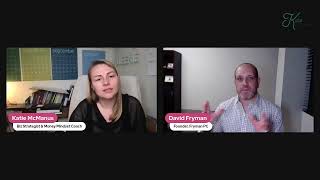
Katie McManus and David Fryman play a business improv game using random words to build metaphors and lessons. They explore how improv techniques apply to strategy, content creation, and public speaking.
Chapters
Yo, yo, yo, yo Words I can taste yo, yo, yo, I can taste yo, yo, yo, yo Words I can taste yo, yo, yo I can taste yeah. Hello and good evening. I'm Katie McManus, business strategist and money mindset coach. Tonight I'm with David Fryman, and we're playing a little game of business improv. Welcome, David. And just a little housekeeping. We are going live to the Facebooks, to LinkedIn, YouTube and Instagram. We will be keeping an eye on the comments in all places. So whatever you'd like to contribute to this. This game we're playing, I cannot wait to see. The only rules are. And we'll probably have to reiterate this a few times, David. The only rules are I have to be able to understand the word.
You mean it has to be, like, in English.
Yeah, but, like, it can't be, like, a technical chemistry word that I would have no frame of reference for. Right. Because I wasn't great in chemistry. So, anyway, so how this works is basically I'm. David's going to be giving me words. I will be taking words from the audience, and I'm going to take that word, whatever word it is, and I'm going to make a business lesson out of it and. Or create content with it. Like, talk through how I would create content with it. And yeah, we'll just. We'll see how this goes. This is all David's idea. So if this does not work.
This idea was born because Katie has a knack for improv and a knack for creating content that starts with, like, completely unrelated ideas and just turning it into some sort of magnificent business metaphor that you couldn't possibly have seen coming because it was just a product of her own imagination. And then I called her one morning out of the blue and I said, you got it. This is improv. What you're doing with your content is basically improv. And why don't we just have fun with that?
Yeah, well, let's try it. Let's have some fun.
I can't see the comments in Streamyard, so I'm going to go natively into the other places. So if you want to play the KD improv game, comment with a string of words that are understandable. That's the role in English. Yeah, English, understandable, no jargon.
Do you want to give a couple examples? Like, give me a few words so people know what we're talking about.
Oh, can you say that again?
Do you want to give. Do you want to, like, do one. Give me a Couple words, and we can give people an example of how this works.
Sure. So supermarket, umbrella, and.
Okay, well, let's. Let's stop with that. Okay. So supermarket. So how do you buy a banana? You know, one of the things that I train my clients on is when you're starting your business, you have to make it super clear how people can buy your services. And it has to be as obvious as going to the supermarket and buying a banana. Right. We all know how to do it. We walk into the supermarket, we get a banana, we pick whichever one we want, like, whichever levels of green and yellow. I know I'm kind of like just. Just out of the green phase. That's my banana of choice. And then you go to the cashier and you pay for the banana, and it's your banana. You have to be that straightforward with your clients. Right. Umbrella. Like, anything that can go wrong will go wrong in your business. All right? You can design a business that has, like, the best structural integrity. And also they're. There are going to be gusts of wind that are going to completely fuck you up. Right? And it's how you respond to it. You have to wear, like, a raincoat. You have to wear, like, rain gear underneath the umbrella. And that is going to be how you survive the tough times. Michelle commented. Sausage, disco dancing and science. I love this. I mean, I could absolutely go with my typical, like, stop being a weenie, but I'm not going to. I'm not going to. All right. Sausage, Sausage. You know, sausages are not for everyone, right? And. And there are certain kinds of sausage. Okay? So, like, the whole foods I go to, they have a mild Italian sausage, which is delicious, and they have a spicy Italian sausage, which I got accidentally once, and I made soup with it, and it was so hot, it just, like, burned your nostrils. Like, as you. As you had the soup, you know, your work is not going to be for everyone. There are going to be people out there who just. It doesn't resonate. It's not their taste. And if you try to taste good or. Or be, like, good for everyone, no one's going to buy it. It's just going to be bland sausage. It's going to be a bland brand and marketing, and no one's going to be interested. Right. Disco dancing. Okay, let's talk about how trends will fuck you up also. Okay? We're not starting businesses that are globbing onto trends that are going to die out really fast. Like, I don't know anyone in. Who learned disco dancing in music class. I didn't. I learned Cotton Eyed Joe. Right. David, what did you learn in music class? Did you learn any dances?
Dances? No, I was gonna play the recorder.
Okay, well, that doesn't help us, but anyway. Okay, you know, you want to start a business that will start stand the test of time, right? So, you know, don't create the disco dancing of business. It just isn't going to work. Science, you know, when you're starting a business, everything is an experiment. Everything. It doesn't matter how long you've been in business, everything is an experiment. There is no guarantee. And you can absolutely get super hung up on things working out exactly the way you want it or not and then freaking out. Or you can treat it all as a fun experiment. Like, you know, what is it? Elephant toothpaste? You know, sometimes it works, sometimes it doesn't. You know, if you do that, if you treat it like a fun experiment and just kind of like throw everything you have at it to make it work and have fun with it, you're going to be so much happier at the end of the day and you're going to have a much more fun time in your business. Oh, Chastity gave us.
Okay.
Professor Plum and candlestick. Chastity, are you. Are you playing Clue? I feel like you have the Clue game board just out there. It was Professor Plum in the library with the candlestick. Okay, okay. So one actually, this is funny. So I used to want to be a professor. I used to want to be a French professor. And one of the things that I really wanted to do when I wanted to be a French professor is I just wanted to, like, show people the world. I wanted to take students out on these excursions to France. Oh, it's game night there. I knew it. And I realized, like, what I was really wanting when I wanted to be a professor is what I wanted to have impact. I wanted to show people, like, and I want. You wanted to teach them another language. So I wanted to show people, like, what they were capable of. And. But I also got really fucking sick of the bureaucracy of being in college, right? Like, there's no easy way to do anything. And one of the beautiful things about starting a business is you can create bureaucracy if you like it, but you also don't have to deal with that bullshit. And one of the most beautiful things about quitting a corporate job and going full time in your business is that you get to say goodbye to all the bureaucratic bullshit that you don't want to deal with. You know, Plums, you know, Let's see. Plums business. Plums business. You know, there is a time for everything. When you. When you pick plums, you actually have to pick them, like, just on the verge of being ripe, right? They're not quite right. Like, you would absolutely wait until they're super ripe on the tree, but if you wait until that point, then all the plums you pick are just gonna go bad, right? You have to pick them before they're perfectly ripe so they can actually ripen on your counter, because that way you'll actually have plums for a long time. As a business owner, you're gonna have to start before you're ready. You're gonna have to start before you're totally ripe, Right? If you wait until you are so ripe and so ready, you know, you're not gonna have a whole lot of time to do this, because it's probably gonna be later in life, and you're probably gonna die soon.
I thought I was the one with the future in motivational speaking, so thank you.
We can be the motivational inspirational duo, David.
All right. Launching a new venture because we don't have enough things on our. On our plate. You're gonna die soon. You're gonna fail.
Oh, my God.
No one wants a job. Okay, I want to go back to improv in a minute, but, Katie, can you talk about your. Your approach to content? Because I feel like this is, like we're doing it improv style, but I firmly believe it's not that far from how you actually create content.
Yeah, this is exactly how I create content. I. When I'm, like, stumped for what I want to create, I'll be sitting here, you know, at my computer and, you know, kind of be beating my brain up against the wall. And then I'll just be like, well, wait a minute. Like, I have all around me. And so I'll literally go and walk through my house and just find. And. And it could be. It could be something that. Like a. A thing that I got while I was on a vacation. It reminds me of that time, and it reminds me of that person. And then I'll think of that story and think of how to relate it back to business. It could literally just be an object. It could be like, my plants. My plants. I speak to my plants. Right. You know, you can. You can always make a good plant metaphor for starting a business, like what you tend to and what you. Water grows. Right. But, I mean, anything can be created, can be turned into content. Does that answer the question?
Yeah, And I. I was I was trying to think about. I think it gets to what you try to do with content. Like, the goal is communicating certain values and certain ways of thinking that are literally true about anything. So if you're talking about, let's say, marketing, you can market anything. I mean, literally anything. Marketing is a particular skill that is not. Is not dependent on different contexts, sales, same thing. So I think that I. I think it gets at something a little bit deeper about the kind of service that you provide.
Yeah.
So it. It creates an opportunity. Like, it would be harder to do what you do, like, if you were, you know, a surgeon.
Yeah, yeah. You can't improv a surgery.
Yeah, that's harder.
You can't feel like, what's the vibe today? I just, you know, I'm feeling like the gallbladder's gotta go. You know, isn't driving with the rest of the body.
Just. As someone who's worked with you for several years, I. My sense, and correct me if you think I'm on the right track, my sense is that what you're doing when you coach clients is showing them a way of thinking and helping them apply that way of thinking to whatever it is, their set of values, their set of skills.
Yeah, 100%.
Right. And so if you think about it that way, then all you're doing when you create content is just little mini demonstrations of how you can do that.
Right, right. Well, I think the big struggle most people run up against is like, oh, God, like, I have to think of an interesting thing to say every single fucking day. And, like, sure, yeah, you do. But, like, I think people get hung up on, I have to say something new every single day. And you don't. You actually have to say the same thing over and over and over and over again, but just in different ways. Right, right. I mean, there are a couple of those that were very, very similar, you know, but I mean, it's. It's the same thing over and over again. Like, whatever it is that you do. I mean, you could do this with law. Right. You know, I mean, sausage. Use. Use sausage as a. As a prompt for describing something in the legal industry.
Right. You know how the sausage gets made.
Yeah, exactly. Yeah, yeah.
So with that, I have a set of improv prompts for you.
Okay, great.
For a. Three for.
Yeah.
Okay.
Hold on. Just in case anyone else has joined, we're doing a little business improv. I'm taking random words that people are throwing at me, and I'm using that word as like, a bouncing off point to create Like a business metaphor, business lesson, or some kind of content about starting a business. All right, David, go.
Okay. The ocean, bicycles and vacation.
Okay, Yeah. I mean, the ocean, when we think about selling our services, there are a couple ways you can look at it. You can look at it as you're going into shark infested waters and there's limited food, and you have to, like, really, really compete for whatever food is going to be available. You have to chase after that one fucking seal that just, like, is looting you, and you have to get it before the other sharks do. This is called kind of the red water approach to doing business. Now, you can also approach it as we have the whole ocean there. There's an ocean full of animals to eat. There's an ocean full of food. Food to eat. And there's enough food for everyone. You know, whichever way you choose to do business is going to be true, okay? Because you're going to be different when you do business as a shark versus if you do businesses like a bailing whale, which is one of the ones that goes and then filters, you know, the stuff out. That's my whale impersonation. Anyway, bicycle. I mean, this is an easy one because I use bicycles as a metaphor all the time in my business because, you know, you have to do something before you're ready. You have. If you're going to start a business, you have to start before you feel ready. You know, if I were to tell you to go and ride a bike for two miles to go to the store and come back and you'd never ridden a bike before, would you feel confident doing it? No. No. You'd be like, katie, you're crazy. I'm gonna hurt myself. But if I were to, like, say, okay, cool, you're gonna start riding a bike and you're, like, willing to do it before you felt confident at it, Chances are you're going to learn how to ride that bike. Unless something goes terribly, terribly wrong. And then, of course, vacation, you know, just like, okay, so I cannot stand beach vacations. You know, they're fine for like a day. And then I get so bored. Like, I want to go see culture. I want to go to museums, I want to see historical sites. I want to go and eat all the food and taste things and I want to drive around and I want to see cool places. There are many people out there who are like, that sounds miserable. I do not want that vacation. I want to go and hang out at the beach or I want to go on safari. I want to be like, in the wilderness with bugs and dirt. Not my thing. To the point, you know, whatever it is that you're selling and whatever personality you have when you sell it, like that is, like, something that some people will resonate with and others won't. You're going to be the beach vacation to me. You know, there are definitely people out there who I do not want to hire because they're just not my style, and that's okay. There are enough people out there who love going to the beach and who will love your personality and your way of doing things. You do not have to try to bring the museum and the Mona Lisa and the statues and the cheeses and all the things to the beach. Like, that can get gross and dangerous really fast. So, yeah, that's. You got more words for me.
Wow. That was. I'm impressed. I'm impressed. That is. You did actual improv training at one point, right?
Yeah, I've also acted before, so, yeah, I can.
You can tell?
Yeah. It's a lot of fun. If you're afraid of public speaking, this is why I did improv training. I was a terrible public speaker. I just don't believe David. I was so bad. There was. Okay, so there was this one time in college where a retired French professor. I forgot. I forgot how I know him. I think someone. One of my professors had introduced me to him. He lent me a bunch of, like, French novels so I could read them and practice French. And we kind of became friends, like buddies. And he told me that he was organizing, like, this literary luncheon, and it had all these authors that were all over New England. They were going to be coming together and having this luncheon, and people were going to speak, and one of the authors couldn't make it. And he was like, oh, I've already. I've said that you'll read their letter at the luncheon. I was like, ah, no, no, no, I'm not. I'm not speaking. He's like, no, no, you're gonna do it. You're gonna be fine. And because, I don't know, like, I was young, and I felt like I couldn't say no, I went and I had, like, practiced this letter. I had rewritten it. I had just, like. I'm sorry. Changed it so it had bigger font, everything. And I was. I was up there, and I was so bad. I was, like, stuttering and stammering and sweating and, like, like, mispronouncing words. I was so nervous. And it's like 300 celebrated authors from New England. I Was so bad that when I was done, people came up to me to apologize to me for how bad I was. It was so painful. Like, literally I left there. I did not say goodbye to him. I went to his house at 2 o' clock in the morning and I dropped the books that he lent me in a plastic bag on his doorstep and I never spoke to him again. So the only time I was ever eloquent speaking publicly was at funerals. Okay, that's, you know, I was just really good at speaking at funerals. That was it. But, you know, like, not like. It's not like I could be like, I need more people that I love to die so that I can get better at.
I was gonna say pretend you're at a funeral.
You took a time pretending. No.
I mean, if I just, like, you know, set up a casket next to the camera, you just go live next to. Would that help you?
Yeah, yeah, sure. Absolutely. I think that'll be a great look. Absolutely, David. But no. So I took improv classes and I got trained. I went to Toastmasters and I went to, like, own the room trainings and slowly but surely got better at public speaking. But yeah, improv helped a lot because I think the cool thing about improv is it makes you more comfortable screwing up in front of people.
Right.
You know, like, there's not that pressure to be perfect because it's improv. It's all made up. What else you got for me?
Okay, ready for the next three?
I'm ready.
Camels, cereal and iPhones.
Okay, cool. All right. So camels are an amazing mode of transportation in some situations, but they don't work everywhere. Okay. You're not going to take like a whole herd of camels and plant them in San Francisco and be like, cool, this is like the camel Uber. You people are really gonna. They're gonna absolutely love this. And, you know, you can ride a camel from the Richmond all the way down to the Mission District. And like, you know, you have a date, you want to go to dinner. Absolutely. Just order camel and you can ride it. But, you know, when you go to the desert, when you're in. And I've never been anywhere where they use camels. If you're in a desert environment and you need to go from point A to point B, an Uber is not going to get you there. An Uber is going to get, like, stuck in the sand. You actually need an animal that has been adapted to being in that environment for a really, really long time that can successfully traverse, you know, the landscape you know, when you're thinking about hiring a coach or a strategist or a mentor, you need someone who is kind of that camel for that environment you have. You need to have someone who understands the landscape that you're working in. You know, you can't. Like, it wouldn't make sense for me to, to hire, you know, a business strategist that helps farmers go to farmers markets and like, be successful. That doesn't help me. You know, if you're trying to start a business and you do not want to do your business on social media, I'm probably not the best coach for you. Right. Because a lot of what I teach has to do with creating content for social media and attracting clients there. You know, like, social media is my desert and I am that camel. Right?
That's a great slogan. Social media is my desert. I am your cap. That's exactly that. Rebrand instead of.
Yeah, yeah, totally. Stop, like stop the, stop being a weenie stuff. We're talking camels now. Anyway. Next we have cereal. You know, bad advice can be turned into a business. Bad advice can 100% be turned into a business. It can take off and it can do diddly squat for the market it serves. And that's why if you offer any valuable service, it is your duty to go out and actually sell it. Right. What is it? The corn flakes. Do you know why cornflakes were actually invented?
No.
Cornflakes. I'm pretty sure I'm right here. Cornflakes were invented by a religious group to help them suppress their, their sensual urges, if you will.
What kind of cornflakes are you eating?
No, no, no, this is actually cornflakes. Like they, they, they. It was a, a very early cult and they believed in a vegan diet and they believed sex was really evil and a bunch of other stuff. And one of the things, the solution.
To sex being evil was.
Yeah, they didn't want, they wanted you to suppress your, your urges. So they had you eat cornflakes because they believed that would like, dampen your libido. I'm pretty sure I'm quoting this right if I'm totally making this up, someone please tell me. But anyway, but it took off. Like they, they marketed it and they made this whole product line that know, took off and we still literally eat today and we've for. Completely forgotten about where it comes from. And yeah, if there are out there who are being successful selling something like that that has no nutritional value whatsoever, then you absolutely need to start your business. You absolutely need to Take your good or maybe medium good idea and just go out there and do it. Because there are people out there who need to buy from you. And, you know, they're. They're already buying from shitty people, like the Kellogg people. And. Yeah, they don't need to be. IPhones.
Oh.
I mean, this is kind of an easy one.
I'm sorry. They make it too easy for you.
A little too easy. I need something different.
Okay.
My iPhone all the time. It's just.
It's another set of three or just like a replacement for iPhone.
I'll do a set of three.
All right. Ready?
Yeah.
Ikea furniture. Pizza and Rome.
Okay, cool. So IKEA is actually one of the best models of coaching that you can ask, that you can point to and be like that. Because they trust their clients to be able to figure out. They trust their clients. They hand their clients. Here's, like, just a bunch of random doodads and planks and. And little wooden bits. And here are some pictures of really bad drawings of people, like, putting those things together. And you have to figure this out. Right? You have to. And we're just gonna trust that you can do this. You know, we're not going to assemble anything for you. You just. We're just gonna trust that you can do this. And also, like, they have this beautiful way of letting you kind of like, like, physically go into the dream of what your future life will look like.
Yeah.
And. And be there and, like, immerse yourself in it and really, like, sit back and be like, yeah, I could see this. I can feel this. I like this. This home right here. And try it on. Like, what an incredible. Like, could you imagine, like, if virtual reality became advanced enough for me to be able to do that kind of thing? Like, imagine you're making $3 million a year. You're booked on keynote stages. You're doing this, you're doing that. You just got a call from Oprah to be featured on her show. Imagine if you got to try that on and be like, yes, this or, ah, this actually doesn't do it for me. Right. I mean, IKEA is one of the best coaches out there. For people who are trying to figure out what kind of home they want to have.
That's amazing, because when you started, I. I was like, I should not be trusted to interpret images of what furniture is supposed to look like.
Yeah, yeah, yeah.
But, yeah, for. For other people. I can totally see why that's a perfect.
Well, it's always bad when you, like, finish. You're like, oh, I have some parts left over.
No, but. And then I found that they sometimes give you, like, extra screws. They don't tell you how many extra screws is like. No, you really should.
Yeah, I know. Anyway, pizza, I mean, again, like, pizza, like, there's so many different styles of pizza, and they all have different markets. You know, people who come from New York don't want anything except for New York pizza. Okay. If you go to Naples, like, the. The people in Naples aren't accepting any other kind of pizza. Right. You know, like, you as a business owner, get to figure out what your niche is. You get to figure out, like, what your. Your loyal pizza fan base is going to be, and you get to come up with a style that is going to be really resonate with them. And you don't really have to worry about marketing to other places, because if they want to, they'll come over. You know, people will go to Naples and hopefully, like, hold onto their purses and not get robbed or mugged or whatever, but they will travel there and have the pizza. You know, Chicago people go to Chicago and have deep dish all the time.
Not really pizza.
What?
That's not really pizza.
See, you're from New York, though. Exactly.
It's a, like, casserole. It's a casserole. That's sort of. Yeah, I know what you mean, though. I'm gonna stop.
Totally, totally. But like, that there's like this die hardness that some pizza groups have about their pizza.
Yeah.
You know, and you can't say anything bad about it. Like, if I were to diss New York pizza right now, you wouldn't speak to me anymore. That would be an end of a friendship. I won't even go there. I won't even joke about it. Right. I was on a food tour with my parents in New York. I took them there for a Christmas present once. And we went through the Greenwich Village food tour. And the guy who was like, we went to one of the pizza places in Greenwich Village, and he's like, okay, everyone gather round. And we were like, oh, do you have. Like, are you going to be quiet here? He's like, no, no, no. Like, you have to gather around and create a wall around the pizza because literally people walking by would steal a piece of pizza from the food tour. That has nothing to do with business.
I just think that I love New York.
Just drive by. Pizza theft. Yeah. Lastly, Rome. I love Rome. Rome is one of my favorite places of all time. You know, when you go to Rome, everyone thinks that you have to go to the city center and you have to be around all the touristy and, like, you just have to put up with it to be able to experience this really incredible architecture and culture and everything. And actually where you experience a lot of that is just from the outskirts where you get to see, like, old ruins that, like, really don't get a whole lot of airtime is in the outskirts of the city and where you get to go where. And that's also where you get to go where they don't speak English. Like, it's. It's proper Italian. You know, you're just. You're there and you get to immerse yourself. You know, when we start businesses, we think we have to go, like, big. We have to do the. The big. Like, if we're going to start a store, it has to be the target. Or if we're going to be a coach, we have to be Mel Robbins. Or if we're going to be an author, we have to be Brene Brown. You don't. You don't. You don't have to be the big flashy person in the center. You can go and give a really good experience if you're just on the outskirts. You know, if you are. If you're true to who you are, there will be people who want to seek you out and experience you. Right. You do not actually have to have that mass appeal of all the touristy sites in the center of the city. And actually, like, you know, oftentimes you go to those places and you don't actually get to experience it. Like, if the beautiful thing about working with a coach who isn't famous is you actually get access to them, you know, versus if you were to hire Mel. Like, you can't hire Mel Robbins, you know, she's. She's so high up in her organization right now, you just can't access her. You know, it's the same like the Trevi Fountain. Like, you can barely get in to throw a coin in and make a wish, you know, but there are so many fountains on the edge, on the edges of Rome, that you can absolutely throw a coin in, you know, and you get to empower that. That coin to be a magic wish coin. Right. Because you're empowering it with the Trevi Fountain. Like, you can empower it somewhere else as well.
I like that.
Yeah, I love Rome. I wish I could live there.
I remember you. You spent time in. Oh, you spent time in. You lived in Paris. You lived in Rome.
I lived in Rome. I lived in Montpellier in The south of France, and then I lived in Rome.
Got it.
I love both. Just gets really hot. I would only want to be there in the winter. I don't like the hot weather.
Yeah, I'm with you on that. I'm not thrilled about global warming for that reason.
I know. I know the case.
Destroying the planet. My personal comfort is.
Yeah, yeah. I mean, it's just really inconsiderate of them. I mean, I just don't like sweating. That's all.
I know. 100%.
Yeah. Yeah. I'm also, like. I like when it's, like, even slightly warm out. I walk out of my house and, like, I. I build up my. Or my heart rate goes up a little bit, I just start sweating. I'm just a sweaty person.
I. I'm with you. My air conditioning is on currently, and it's like, 58 degrees here.
Oh, yeah. Oh, Michelle. Michelle says on Instagram that she's immediately signing up to improv classes.
I was thinking that also.
We do one or two more.
Yeah, let's do another. Another trio.
Okay. Beautiful.
Video games, hair salons, and California.
Mmm. Okay. Beautiful. So video games, you know, you can actually start a business that serves no, like, functional value to society except for pure enjoyment. You know, during the pandemic, one of the things that people really started looking at is, okay, is now the right time to start a business. And everyone started looking at, like, past recessions, Right? And one of the things. And I started doing this also because, like, you know, obviously it serves me to, like, have people also want to start their business during recessions, because my business doesn't stop during a recession. But what was fascinating to me is that Disney started during the Great Depression. Like, and here's a. Here's a company that is purely around not just enjoyment, but children's entertainment. Right? That is something that is, especially back in the Great Depression, was such a luxury, and yet people still bought it. People were still spending, like, whatever the money they had on going to see the movies and then eventually, like, going to the theme parks and all the stuff. If you are selling an experience, and it's an experience that, like, makes people feel something that they don't normally have access to that they're not having access to in their normal lives. Like, that is a valid business that is about, like, there's a reason why, like, there are cuddle salons.
Wait, what?
You didn't know this?
No.
Oh, my God. Yeah, there are legit cuddle salons. Salons where you can go and, like, pay for, like, a 45 minute cuddle with someone.
Are you sure that's not a euphemism for something?
I mean. No, I mean, I'm sure in some.
Scenarios actually just like snuggling up and cuddling.
Just snuggling. Like they have like body shaped pillows. Like you're. But you're snuggling with a person, you know, but like the person's wearing like a sweatshirt and sweatpants. They're not like scantly clad, like they're dressed for, for cuddling, you know, but people who are buying that don't have access to cuddling. Like, that's an experience that they're not getting that they want access to. So anyway, so video games to cuddling. There we go. You know, hair salons. Whenever I think of hair salons, I think of the relationship that you have. But you, I mean, maybe you don't know, Stephen, but the relationship that you have between yourself and, and your hairstylist.
Wow. Thank you.
You're welcome. I know, But no, it's like a. There has to be trust. There has to be. If you don't trust your hairdresser, like, it's never going to work out. Well, you have to be able to communicate clearly what you want and the hairdresser has to be able to ask the right questions to get you to the point. And here's the, here's the kicker. Like, the best hairdresser will actually push back when you're, when you have a shit idea. Like, my hairdresser will push back whenever I say I want something that he's like, that's not going to work for your face shape. Or, you know, you don't like styling your hair. You're lazy. You curl it for maybe three days in a row and then you get bored of it and then you don't do it again. Like, no. Also, like, I use a certain shampoo that just has a little bit of lightener. Like nothing that colors. But I apparently can't cannot color my hair or else my hair will start smoking because of that chemical.
What?
I know, it's wild.
Wait, but don't you wash. I don't know a lot about hair. Don't you wash it?
I do, but it's the shampoo and conditioner and there's just like. But the chemical leaves a residue, I guess, in your hair.
Your hair will just sit on fire.
It won't set on fire. It'll just start smoking and then it'll fall out. Yeah, yeah. But imagine, imagine if I went to a hairdresser who didn't ask these questions, who didn't push back on the stuff that I wanted. Like, I would be so unhappy all the time. And so as a business owner, like, there's this whole belief that the customer's always right, and that's bullshit. That's bullshit. You, as. As the expert, get to stand firm and say, like, this is not going to work for you, and here's why. And also, let's consider these other things that are going on, these other conditions that are true for you, Your life, your routine, whatever, and let's create something that'll work for all of that. Right. At the end of the day. Like, you're not giving your client exactly what they're asking for, but you are giving them something that they'll be really happy with. Right. So, like, do not be afraid to push back on your clients. I mean, you have to do this all the time as a lawyer.
Yeah.
I mean, how many times do people come to you like, I want to sue this person. You're like, but they didn't do anything wrong.
I mean, you know, the customer always right is one of those things that just is perennially misunderstood. I think the original expression, the customer.
Is always right in. In scenarios, matters of taste.
Yeah, yeah, like that. It was about, like, thinking something is cool. And like, from a marketing perspective, like, you know what I mean? Like, you could see some. Somebody say, yeah, but that's ugly. It's selling to customers. And so the customer is always right when it comes to things like taste. Not about, like, you know, good. Especially if they're coming to you for advice.
Yeah, yeah.
I mean, you don't need a lawyer to just affirm what you already decide to do. That's like the clients who come to me having signed a contract, and now they just want to make sure that it allows them to do the thing that they already did. Right. I was like, I could tell you, but who cares, right? You did it already. It's not much I can do for you.
Right, Right. When I was a sommelier, like, one of the things that people get so hung up on is like, what's the best wine? And it's like, well, what do you like? You know, if you're like, well, I like yellowtail Sureaz. They're like, great. So you like really juicy things. You'd probably like a Zinfandel. You'd probably like other New World Siraz Shiraz. You might like a nice Grenache blend. And maybe, maybe if you're feeling a little spicy, Some merlot. Right. But you know, what I think is the best and what you think is the best are gonna be completely different. Yeah, right. I don't really like yellowtail shreyas.
I can tell.
Little too juicy for me. Okay. California, you know. You know I lived there for more than half of my life, right?
No kidding.
Yeah, I was born there. Shut up. Okay, let me see. California. All I can think of is living in San Francisco and like the different stereotypical people, like each narrative, each neighborhood actually had a stereotype that went along with it. Like, no, no joke. Like, you know, you have like the tech bros that live in north beach and then you have the marina girls and guys that live in the marina and they're all kind of like ex sorority, ex fraternity. Except for me. I live there, but I had a rent controlled apartment. You know, as a business owner, you know, here's, here's the thing. It's like as a business owner, one of the things that's so important for your success is to find your tribe. And I know I'm totally appropriating that term, but to find your business besties, find the people that like, you fit in with that. No, not that you fit in with, but the people that like, you get to belong to yourself, around, you know, you get to 100 be yourself and, and be happy and be accepted for who you are. You know, one of the things that people didn't like about the marina is it got kind of clicky if you weren't that type of person. You know, you just didn't feel like there was a group that you could belong in. You know, if you lived in north beach and you weren't a big partier, it was really hard to live there and like, you know, feel like you belonged there and you had a good community around you because there's a bunch of, you know, guys who made a lot of money and just like drinking on the weekends and, and every night of the week actually.
It's like being an introvert on the Upper west side.
Yes. Yeah, you can't. That doesn't work. Yeah, I would love to live in the Upper west side, but I would thrive because I'm an extrovert. You know, when you're starting a business, you can, like so many people join masterminds and coaching groups that just do not fit them, that, you know, they have this idealized version of who they're going to be and like, they think this is going to be the key to getting them there. And it's not, you Know, they like, when you want to start a business, you have to start a business based around who you actually are and who you want to be in the future, you know, and it's very much like picking a neighborhood to live in.
Well done.
That was a hard one, because I know so much about California.
I saved the best for last.
Okay, ready?
So you ready? Now that you're all warmed up and I can really challenge you. You ready?
Yeah.
Drugs, Star wars and Donald Trump.
Oh, no, don't make me talk about the Orange Man. Okay, Okay. Okay. So much like drugs, often so many of us have a service that people are ashamed to love. We have a service that people, like, don't want to admit that they need it. You know, I. I can't tell you how many clients I've had who didn't want anyone to know that they had a business coach. You know, I was like, their dirty little secret. And, you know, but it's the same with drugs. Like, maybe you really, really love marijuana, but it's not something that's socially acceptable or you think you're going to be judged about. So you. You're not open about your marijuana use. You know, maybe. Maybe you. You experimented with something else in college. Won't name anything else, but, you know, it's not. It's something that you attach tabooness to, right? And so, you know, you don't name it, you don't talk about it, you don't out yourself as that. Especially in the coaching world, you know, we're asking our clients to be incredibly vulnerable by, like, coming and booking a call on our calendar and saying, hey, I need help, and I'm. I need this help, and I'm. I'm vulnerable in these ways, and I'm screwing this up. You know, we. We have to make it easy for them to come to us. You know, we have to be vulnerable first. We have to, like, name that. Like, hey, we like pot too. You know, hey, we struggled with this earlier in our lives. We needed a business coach to get started. We needed a relationship coach to keep our marriage together. We needed a coach to help us navigate, like, job loss or figuring out your next career step, right? To take the stigma away from it, for the. Take that stigma away from needing help. You know, there. There are 100 people out there who really, really want to. Want to coach much, much like, they really secretly love drugs, but they're not going to openly state it. So you. You legitimately cannot just, like, go around and, like, try to find your ideal clients. You have to Just be visible and name like, this is who I am. This is what I do. This is who I help. This is what I help them with. And here's my story. Here's my vulnerable story as well. Right. Because they have to be able to come to you. They're never going to out themselves first. What did you think I was going to come up with? With drugs?
That. That's. That was good.
Thank you.
I figured you had a few different angles there, but that, that makes a lot of sense.
Yeah. Okay. Star Wars. I've never seen Star Wars. Just. Just gonna say that. And I probably never will at this point. Like, it's just become one of those things on my to do list that is just stresses me out. I don't, I don't derive any level of enjoyment at the idea of watching Star wars. And I also get a little bit of enjoyment at all the people who are frustrated that I haven't seen Star Wars. Right. Are you not talking to me anymore?
I. I'll get over it.
Okay.
It still hurts a little.
Yeah, I understand. I understand. You'll. Yeah, that's fine. But, yeah, you know, whatever it is that makes you weird, though, is not necessarily the thing that's going to scare people away. Like I just said, I hate. I'm never gonna watch Star Wars. Right. And you're still my friend and.
Yeah, that's actually. That's one of the most impressive things about you, to be honest.
How weird I am.
No, that, like, despite not liking Star wars, that we're still friends.
Yeah. Right. Yeah.
Super. I don't think. I don't have. I don't know if I. I wouldn't put up with very many non Star wars fans because, like, you would need so many other good qualities.
Yeah. And also, like, you know, I know all the characters, like, they're, they're just such a part of our culture, like, knowing who Obi Wan Kenobi is, I can kind of bullshit it, you know, but, like, I don't. I'm not going to, you know, but, like, whatever it is that, like, you don't, like, you get to name that and it's not going to scare people away.
Right.
And if it does scare them away, they weren't meant to be your clients anyway.
Yeah.
Yeah. And then with Donald Trump, there are morons out there who are just super confident what they're saying, who are making. I don't know that he's actually making any money. Let's say he is, like, who are making money just because they have the balls to get out and start talking with no integrity. And the fact that you're just holding yourself back from starting your business because you're afraid that people will see you as greedy or liking money too much or whatever is actually doing an incredible disservice to the world. Because instead of getting to spend money with you, they're getting suckered by people like DT who are more than happy to take their money and not deliver anything in return. So there we go.
Fascinating. That was, you know what the Star wars one was the most. I was wondering how you were going to take the Star wars one and turned it into like a business metaphor of not having watched it, which was. That was very strong way to take it.
I see that you were trying to stop me though, because you know that I haven't seen it.
I look, I gotta make it challenging. It was too easy at the beginning. It was like walking through these like it's nothing. So my guess, it was going to be some version of Hero's Journey.
Oh, yeah, yeah, yeah.
That's how I thought maybe. But, but, but, but no, you, you unpredictable as usual.
Thank you.
In the best way.
Thank you very much. This is fun. We have to do this again.
This was a lot of fun. I want to say that, like there's. I had this thought before and I mentioned it in passing, but there's something about the way you show up that is very improv, like in a way that's super helpful to your clients and you doing it, doing it in your content. It like showing people how to do the thing that you're doing. Like you have your method and then you, in your content, you walk your clients and your audience through your method. So like you post about coming up with ideas to post.
Right?
And this improv is a great example of what you do. You're talking about ideas and you're talking about ways of thinking and ways of taking information and turning it into something business related. So it's just kind of fun to do it explicitly.
Yeah, yeah. You know, I think, I think so many people, especially when they're starting a business and they feel like this post has to get me a client, they get so crunchy about it and you forget that like your job as a content creator is to have fun post because people can't give you their money if they don't know that you exist. And if you, if you're having fun, likely what you're posting is going to be entertaining if you're an expert at what you do. It's also Going to be educating. And that combination is enough to get started.
Yeah.
You know, and really, like, once you get started, once you start creating stuff and you start, you know, building a following and really connecting with people, you get better at the sales stuff. Creating sales content is hard and it takes some time to get good at. But, you know, half the battle is getting comfortable posting.
Yeah.
And coming up with shit to say. And it doesn't. It doesn't have to be, like, you know, super smart or intelligent or. Those are two words for smart.
Take a challenge from this. Take one of the improv, one of the prompts and turn it into a post and tag us. Would be super fun to compare and see what people come up with. So if you're watching and it triggered something in you and you want to run with it, make it your own.
Yeah. 100%. And maybe if you want all of the words, DM me. And I will give you all the words so you can have some fun.
Awesome.
Awesome. All right. Thank you, David.
Thank you, Katie. It's a lot of fun.
This is so much fun. And Javi. Oh, no, you're missing this. Go back and watch the rest.
Yeah.
Go out.
It's worth it.
Want to say thank you to Alec and Michelle and N Cal Most Heaven. Okay. I don't know who you are, but hello, Chastity. And again, Michelle. Thank you guys all for being here. I hope you had so much fun. I know I did, David. I hope you did too. This is your idea. I think it was a good one.
Me too.
Yeah. And we'll do this again.
Absolutely.
All right, so everyone do some homework. Find words that you think will stump me, and we'll have a whole lot of fun.
Oh, I'll make it harder.
This was just like. I, I. Yeah, you're easing in. I get it. Yeah, yeah, yeah. All right, everyone, I'm Katie McManus, business strategist and money mindset coach. And this is David Freyman from Fryman PC. He's a lawyer. He helps entrepreneurs like me. We will see you next time in our business improv show. We need to come up with a name anyway.
Yeah.
Bye.
We'll improv it next time.
Exactly.
Have a good night.
Good night.
More from Katie





How to do self care right now, so you can do what needs to be done, for yourself, your business, and

How to do self care right now, so you can do what needs to be done, for yourself, your business, and

#greenscreen How to build a consulting business that makes you $200,000-$700,000 a year

#greenscreen How to build a consulting business that makes you $200,000-$700,000 a year

Maybe we’re not the imposters…? #businesscoach #startup #entrepreneur #smallbusiness #consulting

Maybe we’re not the imposters…? #businesscoach #startup #entrepreneur #smallbusiness #consulting
