BYOB Advanced Group Call 2024 07 04
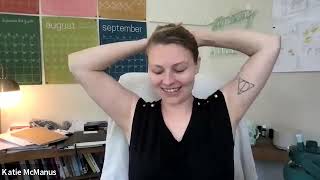
Transcript of a BYOB Advanced Group Call (Katie McManus) on 2024-07-04. Conversation between coach Katie McManus and a participant covers: practical struggles with European banking/customer service and business setup; financial anxieties and payment logistics; mental health (ADHD, anxiety, shame inventory, CPTSD/trauma themes); embodiment and emotional-regulation practices (body scan, vagus-nerve activation, grounding actions); manifestation framing (masculine vs feminine approaches, trusting the universe); business growth tactics (LinkedIn posting, referrals, networking, outsourcing DMs/assistant, partnerships). The participant celebrates improved self-checking/regulated behavior and leaves with concrete action steps (shame inventory, body-based regulation practices, outreach to specific connectors, social posting strategy, housekeeping/outsourcing).
Chapters
Hello. Hello. How are you? Good.
How are you?
Good, good, good. I want to tell you because I meant to tell you the other day, I am going to pay you.
Oh, I know.
It's. So I had to move money around and then I think I told you I closed out some, like, shares. I was selling some shares and I. I don't know, since you speak French, if you've been to France, but the French are not really known for customer service.
No. Added to.
So you basically have to fight with the bank to get money. So already when I was closing the shares, I had to fight with them to close it because she kept wanting me to keep it in there. And then I just had to get a bit nasty. And then I went over her head because Thomas uncle is kind of high up in the bank. So then I just said, she's. Well, she's dumb anyways and rude, so I'm gonna go over her head. Even then, with him getting involved, he was like, we have so many processes that I can only make it go so much faster.
Yeah.
And then on top of this, I guess my counselor, the lady that's in charge of my bank account, because that's how they do it. You're always assigned to a person. She somehow missed that. My limits. So I cannot spend more than €1.
Yeah, that sounds about right.
And so. So I wrote to her and I was like, what the. Why do I. Why can't I spend? Like, I cannot use my card. Like, I cannot take money from the atm, like, and it. I cannot transfer money to my other account. It's like, no, no, your limit is €1. So I said, am I going to do a big billion transactions of, like, you know, 99 cent? So then I wrote her. Naturally, she ignores me because this is always as it is. So nonetheless, I'm about to try it again because she finally has told me that she's fixed it now.
Yeah. Yep, that sounds better.
I mean, how does. How does this seem normal? Like, my limit. How can the limit even be set to €1?
Like, yeah, that's honestly one of my biggest hesitations about moving to Europe because it's something I've always wanted to do. But, like, every time I go, there's something like, there's just not this sense of, like, oh, we can make this convenient for people, you know? Like, I was in Italy for the month of October in 2019, before the pandemic, and I rented a car for a weekend to go up to Tuscany and to Umbria, and it was, like, beautiful and Like, I wanted to extend and it was like Sunday at 3pm So I call the Enterprise Rent a Car place and they're like, cool, yeah, you, you're gonna have to come back to Rome to extend it. And it's like, but like, what? Can't I just extend it? Can I go online? Can you send me a link? I can set up a new thing. And they're like, well, you could go to an Enterprise Rent a Car place near you. But the next day was a holiday, so everything was closed. And it was Sunday at 3pm, so everything was closed. And like, they're giving me options that aren't even options. And I'm like, yeah, get it. Like, I just wanted to give you more money. But forget it. I will just return it when I wanted to, when I originally planned.
But that's the thing. It really is this. Anything outside of the box, they don't know how to deal with it.
Yeah, yeah, it's wild.
You do get used to it. Because now I realize for most things I just don't expect good customer service. And whenever you need something to be done, you just know it's not on your timeline, it's on someone else's timeline.
Yeah.
And then it's always that stuff, though.
It's so hard.
It's so hard. I mean, I'm. I'm surprised I've adjusted. I think that's because, yeah, I was never a big fan of how we do a lot of things in America. So then I just said, I gotta get out of here. So I had to make my peace with all the things here.
Yeah.
And I think we have this idea that in Germany it's more efficient and better. Oh my God, they're actually worse than the French.
Well, and it, there's like this, like they're enamored with their paperwork and they're ready and with like all the different stamps you can use to do any fucking thing.
Just, just to close these, these like mutual funds that I have, I had to sign individually 14 physical pieces of paper. Physically.
That's insane. Yeah.
And technically, if it was the real case, I. I would have. They would send those to me. I would have to sign them and send them by post back. But I told to my uncle, I was like, fuck that. Like, I'm not doing that. That's ridiculous. I said, just bring home the documents. And because they live next door to Tomas parents, I said to bring the documents home. And when I'm at the parents, the next day I'm going to come and sign them and give them back to you because I'm not gonna post 14 fucking pages.
Right, right.
Ridiculous. But it should be in process. And now also I'm able to transfer and use the money I have in my account since my limit has been increased over a euro anyway.
Well, I think, I think my, my business account is only allowed to take 100 transactions, so please don't try to pay me in €1 at a time.
I mean, honestly, I just was like, the stupidity of some people, like, in their job. But it, it's just a different mentality because we go above and beyond in America, but we're also afraid to be fired. Right here, people do not get fired. So they're like, like, I'll do what I'll do the minimum and I'm good. And so there's no incentive to go out of their way and be good at their job. And.
Yeah, it's. I, Yeah, I.
Some.
It's something to. I'm glad you reminded me of it because it is a consideration in my plans of where I want to live. So. But don't it. I. Thank you for communicating about payment, but don't stress about it. I know you're good for it and I know, like, you know, it's one of those things.
If you do want to live here, though, to be honest, I don't like Macron, but he made it super easy for freelancers, like, for people who have their own business. I mean, really easy. I set up my business online within 30 minutes.
No way.
And that's it. Yeah, because he really wouldn't. When he started to be president, he really wanted to bring in external money and encourage people to grow more businesses in hopes that they hire more people as well. So, yeah, no. 30 minutes to register your business and you're up and running. And even then, you don't even need accountants. You can, you. You keep your own documentation and your own declarations. And the declarations you can do yourself. I do. You can do it monthly or every three months. It's only because I'm dyslexic and I have ADHD that I hired someone because I just can't be bothered. And with the dyslexia, I mix numbers and do it backwards. And obviously you shouldn't do that. But. But it is really, really easy. And like other people, when I, When Tomo was doing it for me, he would do it in. In five minutes every three months because it's so simplified. So that's the benefit. But in general, customer service is a nightmare.
Yeah.
But. But yeah, everything on the business side. And even then, like, I don't. I'm sure you probably did the same. Everyone I know has to use a tax person in the US or at least some kind of tax service. Like HR Block or some kind of, like, service. No, no. And in France, I was shocked. You. You can do your own taxes. I mean, French is not my native language, and I do. That's, like, my job with Toma and I. I file our taxes, and it's not in my native language, and I do it, and I can do it within an hour.
That's awesome. Yeah. The tax code, HMR Block, and all those companies here, they legislate for the tax code to be so complicated.
Yeah. Because they benefit from it.
Yeah.
So there's some benefits, but healthcare, wonderful. And it doesn't break the bank.
Yeah.
And I feel like they. They spend more time with you and listen to you more than in America. I felt like it's like five minutes in and out because they want cha Ching. Cha Ching. Cha Ching. Yeah. And my doctor is like, how are you? And I'm like, yeah, I'm fine. I just need these prescriptions. And she goes, no, really, how are you? And I'm like, yeah. Like, are you sure everything's okay? When I first moved here, she said, oh, you're from the south in the U.S. i know that. That gets a lot of sun. We're in northeast France. We don't get a lot of sun. You need to take vitamin D. I'm writing you a prescription for vitamin D. That's so thoughtful. Yeah. But they're really, really thorough here, and they're really, really about preventative health. So I got in the mail. They sent me. They sent me a letter that said, hey, women between the ages of 28 and, like, 40, we're now having them go for preventative screenings for HPV and for, like, cervical cancer. So they said that you should go once every two years for this. And they sent a. A letter telling you that you just go to this website and book an appointment with whatever doctor you want to do this, because. And even when I didn't do it, because, again, adhd, I went and did something else. They even send you a reminder, one that says, hey, we know that you didn't do this yet. Please go check yourself. It's the government that does.
That's so cool.
So I really like that. I feel like they care about people. Whereas in America, we seem to be very capitalistic, a little too much into money and not people so, yeah, yeah, yeah.
Well, it's. We'll see what's in the cards, especially after November. So, besides, is there.
Is there any good choice?
I know. Well, I mean, democracy or dictatorship? I think democracy wins every time.
I mean, in my. I mean, yes, yeah, of course, but still.
Yeah, yeah, but still. Like, there's no other option. Like, you have to vote Biden at this point. There's no other option. You know, unfortunately, like Trump, if he gets. If he gets elected, it's like he's literally just going to become a dictator, especially with what the Supreme Court just did. And of course, any Democrat that gets in, they're not going to use all the. All the things that they can do. They're not going to assassinate people.
But don't worry if. If. I mean, you know, I didn't expect Trump to win the first time. Timo honestly, was like, what's your problem? I think I, like, cried chronically for two weeks and was like, this is the end of the world. But if it happens again, by some really scary, weird chance, I will adopt you as my extended child or something. Like, we bring you as a refugee.
Thank you very much. I appreciate you. Oh, man.
Awesome.
Well, should we get to work?
Yeah, sure. So what.
What are you celebrating? Let's start with that.
I am proud of myself because I've been. Last we talked, like, you know, my anxiety was really, really bad, and so I really had trouble working and focusing. So now I've been really good about every day, like, kind of just checking in with my emotions and my body and saying, all right, what am I feeling?
Yeah.
And realizing, if there's a problem, let's take care of it now so that I'm not hindering myself all day.
Yeah.
And then I noticed that I was doing, like, unhealthy behaviors, like revenge, bedtime, procrastination, because I didn't want to go to work the next day because I would have to, you know, write these LinkedIn posts that stress me out so bad. And again, it's weird. I hate my job when I don't have money, when money's coming in. I love my job. I'm not stressed. But it's just behind the entrepreneur life is so. For me, because I. It's so freeing. I do what I want to do. I don't give a. About other people. But when money goes down and I do have, like, I do have money trauma, which is obviously why I hired you to help me with all this money trauma, then I tend to feel so much pressure around My job. And then it doesn't become fun anymore because I'm just so pressured. I have to get clients because I need money. I have to get clients. I need money. It's not, this is fun. Like, I love talking to new people or this is fun. I love being able to support people on their journey. It really is looking at it like I need money for survival. And especially when I live with a partner who is, yeah, that is very money oriented and can somewhat feel like I told him, like, I feel like you're like a debt collector breathing down my neck.
Yeah.
And so I keep saying I don't want to be in these positions where I borrow money from him anymore because it's super uncomfortable because he has this relationship with money where, yeah, he wants his money back ASAP because he doesn't like his money to be far away from him. Whereas I look at it like he's radon and like, why? Like, you have enough money to live. Way enough money to live, like, stop breathing down my neck.
Right.
And he knows I'm good with it. But anyway, so I'm celebrating. That's a really long witted, very ADHD answer to say that I'm proud of myself for or checking in with myself, kind of regulating myself, like getting right with my. And trying to. And then I've been reframing my mindset to be more positive this week for work.
So, yeah, awesome. You know, something just came up for me and I've had to do this with like three other clients this week, so it might just be in my world. So let me know if this feels on par for you. You know, when we're thinking about manifesting money and like we start noticing that. Okay, well, it's really easy in this case, but it's really hard in this case. One of the things that I find is really helpful is doing a shame inventory and figuring out what's the thing that you're holding shame around right now. Because here's the thing about the universe. It doesn't know the difference between love, attention, forgiveness, money. So if there's anything that you're holding shame around in any of those fears, it's actually scaring away everything because the universe is all the same thing. So do you want to do that? We can spend. We can spend the next 10 minutes on that and then get to work on some stuff.
Yes, let's please do that because I think that's an issue.
Okay, cool. So what I want you to do, I'm going to set a timer for three Minutes. When you do this on your own, I recommend setting a timer for five minutes and writing a list. It just takes longer to write when you're doing it.
I.
But we'll do it for three. You're going to just be word vomiting at me. I'm not going to react to anything you say because, you know, it's either true, not true, it doesn't really matter. But I'll be taking notes over here and then we'll identify which one feels like the most relevant to you right now and it might have nothing to do with your business.
Okay.
Okay. So. And how. I want you to say this, this is very important. And this is important for you to do it here and when you do it on your own. We're not saying I'm ashamed of. We're not owning it as an identity thing. We're saying I have shame around or I have shame about. It's something that you have that you can either keep in your possession or you can give away. Okay. So everything you say, I want you to say, I have shame about. Blank.
Okay, Deal. Got it.
Okay, I'm setting the timer. What do you have shame about?
So I have shame about not being able to manage my money better. And I feel shame about having to ask my partner to spot me money.
What else?
And I feel shame about. Not doing enough for my father, who's sick and is in the US and obviously I'm here. And I feel shame about being a shit friend because my mental health has been a bit in the dumps and so I tend to isolate. So. So not responding very well to people's messages or. Yeah, being a good friend. I feel shame about just doing this LinkedIn campaign and not having, or feeling like I have mental capacity to respond to all these people that I've reached out with in the campaign. It's been great in the sense of the amount of people that respond back and are ready to engage with me in a conversation. But I feel, Yeah, I just feel shame that I don't feel like I have the mental capacity on top of the other things I'm doing for work, to do this. And I feel shame about how I'm parading around on LinkedIn. I think this is why it's so hard for me to write these, these articles, the posts, whatever you call it, because I really feel like it's like parading myself and I feel. Feel like ashamed of myself to show off like that. I feel ashamed that I have mental health struggles, Which is. Yeah, it's very hypocritical. Because I'm always telling people I'm like, a safe space to see person to talk to about mental health. And I'm so, so empathetic, but not when it comes to myself. And. And I. And I realize I am hindered a lot in things that I do. And I sometimes think, yeah, what could I do if I didn't have mental health holding me back? So I feel a lot of shame around having this because I feel like I don't achieve. I don't know what I should achieve.
Right. So the timer went off. Is there anything else you want to add to the list?
No, I think that's the main things.
Do you want me to send you a picture and we can go through it, or was there one that just stuck out to you that you really, like, activated around?
Not too much, less just we're fighting over food.
Oh.
Huh. Okay. But I don't eat till later. That's why I have a snacky. He was taking the box of peanuts, nuts, cashew, so I was like, oh, my God, leave that. I didn't like. I haven't eaten in a while. I'm gonna starve. Yeah, I would. One of the biggest ones maybe is the shame around my mental health and then the shame around parading on LinkedIn.
Well, which one? We can work on both, but which one do you want to start with?
I think the mental health is the first priority.
Okay. So the process here is we want to understand where it lives in your body, that shame. And unlike a lot of other, like, coaching stuff is we're not trying to eliminate it. We're not trying to get rid of it. We're not trying to, like, make you perfect so that you're then deserving of all the things that you want. Right. You're actually perfectly deserving, just as you are right now, shame and all mental health struggles and all right. And so what we're going to work on is a little practice to integrate.
It.
And just see what. What comes up for you throughout process. Okay. So I want you to close your eyes and just do a body scan and see where this shame around your mental health lives.
I very much feel it in my chest, but almost like. Almost like around my heart. And I feel almost very much like this shame is almost making me turn inward and it. It's this. Yeah. This pain and discomfort, and I'm turning inward.
Okay, cool. So I want you to just focus in on that sens. And as you focus in what's here now.
More like awareness. Like, I didn't know it was there. It's almost like something that was hurting me, but I didn't. It wasn't conscious. It was impacting me, but I didn't. Yeah. So it's more like now a conscious awareness of. I see now knows that I see it.
Yeah. And what's happening with the physical sensation around your.
It's still there, the feeling. But I would say it's not so much of a tightness and hurting. It almost feels like a panic. Like the heart and the area around is like. Yeah, thank you. And yeah. It's almost like the heart is like. This is what the main feeling is now.
Yeah. What's the message in it?
I think it's almost a little bit of fear that I see it actually.
And what's. Tell me more about the fear.
I think it's fear because. Because it's noticed I have to or will do something about it. But it's weird. I don't know if like a part of me internally wants to hold on to this feeling because it. Obviously it's not self serving, but. And it's not panic around because before I've had like, I had to work in therapy and I was like, God, why do I always have so much that I have to deal with? And it's not this kind of feeling where it's an additional to work on. It's almost like this feeling is scared that I'm now aware of it because I will make it go away. Because I work on it to make it go away. Which means a part of me must still want to hold on to this belief and this feeling for some reason.
Yeah.
But then that confuses me because then I don't know necessarily why.
Okay, so let's. Let's play with the fucked up side of you. All right. Let's come up with some reasons why the fucked up side of you would want to keep this around.
Well, I guess it's a good excuse for failure. Like, so at the end of the day, if I feel shame about mental illness, I can still use mental illness as an excuse for failure.
Mm. And let's imagine the up side of you actually enjoys it to a degree. Like get almost gets off on. Oh, well, what was. What was me. I'm struggling with my mental health. And you know, what's the enjoyment there?
It's almost like being seen. Like, I like the being seen part. Being able to identify as someone that has mental health issues. And the reason why is because I think that validates what has never been validated before. Which is that I had a really, really fucked up childhood that neither of my parents will not even apologize but acknowledge. So at least by having mental health issues, this validates that. Yeah, I had a really up shitty childhood and as a result I have mental health. Yeah. Problems.
What's coming up for you now that you've said that?
I guess it's that. I mean, I've always known that I want validation and I know I will, I will die without this. Like there's no way I'm going to get this validation. And so I need to come to terms with this on my own. And it's not about being negative. It really is just realizing I'm putting the ball in my support and I'm not gonna let someone else dictate like how I see and continue to live my life. But I. Yeah, I guess I don't really know how to go like how to go from there because.
Well, I wanna, I wanna pause you. I want to pause you because, like, you know, your brain is going towards. I have to fix this. Right.
Always.
Right. So I want you to tune back into that space around your heart as I say this. Okay. Feel into whatever's feeling, whatever you're feeling there. Know that you're allowed to struggle with your mental health. It doesn't make you any, any less worthy of getting everything that you. Know that you struggling with your mental health doesn't make you less worthy of the love and respect and loyalty from the people around you. And know that you struggling with your mental health, absolutely you have full permission to use that as proof to point to all the people who've always gaslit you that you should be fine as proof that you're not fine. And know that you don't. Do not have to do that. Anyone who requires you to provide proof that you had a tough childhood is not actually someone you want to have in your life. And you have full permission to enjoy that part, to relish in it.
Strap.
It on like a badge and use it for all it's worth. That also doesn't make you any less worthy of getting what you want. I want you to take a big deep breath into your belly and I want you to sigh it out. One more time. What's your now?
Acceptance.
What does acceptance feel like?
That one thing doesn't have to equate to the other or one thing doesn't have to to impact another. So for me, I can have mental health struggles, but that doesn't impact my worth as a human. But it is also true that, yeah, I have mental health issues because of, because of my struggles in childhood.
Yeah.
It's okay to, I think it's okay to feel and I think this is maybe one of my biggest issues is that being on this journey of like obviously the combination of therapy and then, and learning about coaching and, and just learning like learning about the self, that feelings come and go. I mean, they're feelings, but my instant reaction is when I feel an icky feeling is to get rid of it. And I think it has a lot to do with that. I didn't have a lot of happy feelings as a child or any like security or safety. It was a lot of icky feelings as a child. And so now as an adult, I'm so conscious that I want to make my life better now that I have control of my own life. So the minute that I have an icky feeling, I'm trying to make it go away.
Yeah.
And that's, that's not realistic. We all will feel icky at different points because we will feel stressed or we feel sad or we feel uncomfortable in a certain situation. But just because I feel it in one moment doesn't mean that I will keep feeling it on a long term level like I did as a child. Because now that I am in more control of my environment, I can do things differently and I can, you know, calm myself or remove myself from an anxiety ridding situation or remove myself from an uncomfortable situation and I can do things that make me happy. If I want to drive to Switzerland tomorrow, I can do that. That's going to make me happy. Like so it's just realizing that, yeah, feelings are feelings. I don't need to fix feelings.
Yeah.
Yeah.
You know, and there's a thing that happens with ADHD people also is that like we have all these feelings and the whole neurotypical community around us often like doesn't understand why we feel that way. You know, so that sensation when you're a kid and you are like, or have a tummy ache and you're trying to communicate to your caretakers that you have a tummy ache and you don't want, you can't go to school and they don't believe you. Right. And we didn't have the vocabulary to say, no, I'm having anxiety and it's showing up in my tummy right now and I really don't feel well. And so we have to start putting on that. My throat hurts, can't do, my head hurts. Like, and we have to like really amp it up to prove that we feel terrible because people don't believe us.
My mom, to this day says I'm a hypochondriac.
Yeah, exactly right. And on the flip side, the trauma side, you know, mental and emotional abuse, unfortunately, doesn't have bruises. There's no cuts. There's nothing that you can point to and say, see, I was hurt. You know, and there's. There's a. I mean, there's a whole bunch of up that happens there. But, like, the reaction is, no, no, no. See, I have this proof. Like, see? And it's a completely normal human reaction to being hurt, having people not believe you, you know, and also protecting yourself. And then, of course, as a reaction, anytime you have an interaction with someone that activates any of those feel your ptsd. CPTSD is probably reading that and being like, oh, my God, red alert. This is bad. You know, they can't tell the difference between a genuine red flag that this is a harmful person, or they just did something that was similar to the behavior of your caretakers early on.
Yeah.
Yeah. And all of this doesn't mean that you're not deserving of all the good things and all the money that you want.
Yeah. This is like, I think a work in progress. Like, I think that. Yeah, I think I still struggle with this a bit.
Yeah. So I want you to tune into your heart, or you go back into your body. And be aware of the sensation of the shame. But we're not focusing all of our attention on it. We're really focusing into your heart center. And your. Your heart center is so tuned into the intelligence of the universe. It understands everything you're capable of, the depth of your creativity, the endless resources that you have available to you, and it also knows all the things that are already on their way to you. What is the thing that your heart wants to remind you about right now?
Calm. This is really the overarching thing that just comes through as calm, like.
Yeah.
And I think it has a lot to do with how I've been feeling in the last several weeks, which is just lots of anxiety.
Yeah.
Lots of stress, lots of bad sleeping, lots of. And lots of worry.
So. And what does the calm look like?
It's letting go. It's. Not religious at all. But this is very funny. This is what comes to mind is my mom, who was really close to her grandma. She passed before I was born, but she was so close, and I know so many stories about her because they were so close, that my mom always said that her grandma always told her there was no sense to worry because God would take care of it. Again, not religious, don't necessarily believe in a God, like, but I believe like in a, like the universe, the power of the universe, the spiritual aspect. And I think it's about letting go because I trust myself, I'm doing what I can do. I do have the power to manifest what I want, to bring what I. I want into my sphere and to take care of myself. And so this is anxiety, stress, worrying is only hindering me. It's not, it's not serving any purpose except to make me more tired in the morning. So it's harder to work or, you know, making it where it's harder to focus because I keep thinking on things that are just. I don't need to stress or think about. And so I think by just calm, like letting that go.
Yeah.
And then just trusting myself and doing what I do.
Yeah. Yep. It's. It's funny, I've been doing a lot of reading on different manifestation practices lately, and there's this school of thought around, like how we're taught to manifest, where we get really specific is actually a very masculine way to manifest. You know, it's like you send a man to a store, you have to give him basically pictures of all the things that you want so he doesn't it up versus women. Like, if you're like, oh, we need to make a really nice dinner tonight, the woman does all the thinking, there's a lot of planning, like, comes up with something even better, like, really takes into account, like what everyone kind of likes and make sure that they find something that everyone wants, you know, and so there's, there's, you know, the masculine way to manifest, which is like, here's my laundry list of exactly what I want and how I want it to come to me. And then there's the feminine way of manifesting, which is like, here's the problem I have and here's the thing I want and I don't care how it happens. Right. And it's vague and it's messy and it's just like you trust that this person knows you so well, they're going to give you something better than you could have even ever imagined.
Yeah. And I think it's like trusting the universe as well. When I do this, and I've always done it like this. I've been very, like, I don't always manifest, I think different ways I've, I've manifested things in my life, but I've always kept it vague. Not necessarily intentionally, but it is the assumption that the universe knows what I need in that moment and will send that to me as long as I am open and available to it. Because there is, when you just are not there that like the universe could be trying to bang down your door and you're so focused on the closed door behind you that you're not going to see things arriving. And so it's also being in the awareness and headspace to accept these things that, that come to you.
Yeah. And you know, like when you do get triggered and your mental health actually does need some attention and you're taken away from it and you see the results in your business or the impact on your business, it's really easy to be like, oh my God. See, See, like this is what's keeping me from being successful. And then you get so wrapped up in that one little boulder that was in the way of a few things, that massive wall. Right. Rather than oh cool, like this boulder needs some attention right now. I get to give myself full permission to feel into this, to take care of myself, to let this happen and not let the meaning leak over into other stuff. Not let the impact really become evidence that like everything is wrong.
I think that's like. My question now though is because like you said, I think in different circumstances you can have somewhat of emotional regulation by other people, like by colleagues or by boss or. And I think to. I didn't like, I even now don't necessarily how. Know how to do emotional regulation. And I think it's a whole nother animal when it's someone that is neurodivergent.
Yeah.
And how. This is like a huge question like how can I do that? So maybe there's, and I'm sure there's different schools of thought, there's lots of tips and tricks, but maybe where should I start to learn how to self care? Like, like emotional regulation? Because this side. Yeah.
So what I notice with a lot of minor divergent clients and with myself is when we're, when we're not regulated, we're not in our bodies, we're just, we're not in our bodies, we're in our heads. And like it's almost like we don't feel connected to our own skin. Right. And so not in a masochistic way, but like some kind of physical discomfort can put us back in our bodies. Right. Doing a wall sit for as like as close to 60 seconds as you can. Taking a bowl of ice water and dunking your face in it, you know, doing things to activate the vagus Nerve jumping up and down, doing jumping jacks, shaking your body. Right. When we're not emotionally regulated. And also noticing like what is causing the emotional dysregulation. You know, there are moments when Luna's having a fucking freak out and she's, you know, yipping at me and whining and she's being the most annoying. She wants all the things and I start feeling like shut the upper and it starts emotionally dysregulating me and it's like, oh wait, she's. She's emotionally dysregulated, so her emotional dysregulation is leaking onto me. Interesting. Okay, cool. So like no noticing. Okay. That this is that impact, you know, noticing. Oh, I'm emotionally dysregulated because I'm hangry and I haven't eaten anything. Interesting. Oh, I'm emotionally dysregulated because I'm actually really tired and I could use nap. I'm emotionally disregulated because I saw someone else else's post on LinkedIn. It made me feel so insecure about my own work, You know, and pairing it with getting back in touch with your own body. So what brings you back to your body?
That's a good question. I think I actually have to explore this because it really is usually when I'm emotionally deregulated, my goal is to numb, to tune out.
Yeah.
And so I do activities that allow me to tune out. I pick up a fantasy book. I always joke, like with Timon, I tell him because he's. He will make a comment like, hey, you're reading too much. And then I'll say, but this is healthy reading because there's healthy reading because I'm into the book and it's great. Or there's unhealthy, like I'm trying to escape emotional deregulation where I'm just off the walls and I can't get out of my head. And so I need an escape.
Yeah.
So I think that I'm. I still feel detached from my body and I'm still very much in my head and I'm just using escape methods. So yeah, one thing that I. Yeah, yeah, the dissociation.
I know disassociation is sometimes necessary, you know, especially where there's trauma. Disassociation is not necessarily bad. Sometimes we do need to disassociate. I forgot to take my anti anxiety meds for a week and was just having like all kinds of feelings and I was numbing all over the place because I'm like, I don't Understand where this is anxiety, this anxiety is coming from, and that's okay. Sometimes anxiety is so high you have to just disassociate. So here's what I want you to practice is. I want you to practice, um, like, before you get to emotional dysregulation, I want you to practice, like, just pausing throughout the day, noticing, am I in my body? Do I feel comfortable in my body? Do I feel like my skin is, like, covered in ants? I want to crawl out of my own skin. Do I feel like my brain is floating somewhere three feet above my head? Right. And note. Notice first how you're feeling. And then play. Play a game where you're like, okay, cool. I'm feeling a little disconnected from my body right now.
Cool.
Let's just try some shit. Let's do some jumping jacks. Let's sing a song and dance along to it. Let's dunk our face in some cold, You know, let's stretch our body. Let's. Let's see, like, where there's tension and really try to, like, move into whatever that is and get back into it. Or even going for a walk without your phone. Yeah, let's. Let's treat it kind of like a game where you're just kind of learning, you're exploring, you know, it's all. You move to a new town, you don't know the roads yet. You know, every afternoon you're just going to go and explore a new area. Because here's. Here's what can happen is that if you're constantly telling yourself, like, things are not safe in here, like, safety is one of those things that the universe also doesn't know the difference between that and money. Right. You get to give yourself the sense of safety. And you. Giving yourself that will tell the universe green light, send more safety and more money and more love and more attention. All the other things. What does that feel like to you?
Yeah, it makes sense. And it really is that. Yeah, I just. It. And it really is simply about not knowing and just doing. Doing something to get out of my head. But obviously something that is. It was self serving as a child because I couldn't really. I had very limited ability to have control over things. But now as an adult, it's. The disassociation isn't as helpful always. And it is important, I think, to kind of get back in touch with my. Myself. And I like the idea of. Of really shaking it up and just saying, yeah, okay, I'm. I'm realizing that I feel this way. Let's. Just do something.
Yeah, yeah, yeah. I mean, honestly, the hardest part about this in the beginning is noticing. You know, you're gonna get your. You're gonna get yourself into a whole worked up fit and then you're gonna be like, I should have noticed like an hour ago that I was, I was being dysregulated. Okay. Like, and then you just kind of back. Have to back up into it. You're not gonna know this right now and then become perfect at it by tomorrow.
Yeah, right.
Like, so just know that, like, this is, this is kind of like a. I mean, it's too bad we can't install like a little, like, light on our neck that, like, starts, like, going when we're emotionally dysregulated.
Not really. And I, and I notice I'm very sensitive to other people. And so, yeah, I pick up whatever they have.
Yeah. Can you hear me?
Yes. Can you hear me?
Yeah. Well, and that's also an ADHD thing, is, you know, you tend to mirror people, you know, and so that's something also to check in on with yourself when you're out, you know, in and in the world and socializing is. Oh, cool. Like, am I actually just mirroring their energy? What's my actual energy in this moment? And kind of like pull your energy back into whatever that is. You know, we. We spend so much of our lives before we're taught any of this reflecting how other people are being. Because we think that's what's going to make us safe. Right. Because as children, that's what made us safe. That's what kept us from getting yelled at in class. That's what kept us from getting in trouble with our parents. You know, it's absolutely a protection mechanism. And also as an adult, we don't necessarily have to do that. We can if we want to, but for the relationships that we want to have in our lives, like, we need to bring our energy back and make sure that we're grounded in our energy, not everyone else's, so that we can have those really healthy relationships. Anyone who needs you to reflect them back to them is not a healthy person for you to be around. Right. That's. I mean, that's just a narcissist.
Yeah.
Yeah. I'm curious, how did this impact how you show up on LinkedIn?
This. What specifically?
This, this shame that you have around mental health?
I mean, I'm honest about mental health, like, so. And I have no problem talking about it. I think it's more almost. It's a mix of Imposter syndrome sleep. This really, like, toxic way of looking at things about, you know, being humble, not bragging about yourself, not calling attention to yourself. This very, like, humble roots thing that my family very much does and believes in.
Yeah.
And that I. That I told you about even having the conversation with my mother when I was back in the US and how she sees. Sees it, it sees my cousin's business, that it's only for the luxury people. And I was like, yeah, good for him. And she's like, yeah, because clearly he doesn't want to help the everyday man. And I'm like. So I. I feel almost like I'm parading myself around and bragging about myself on LinkedIn. And I'm. I know it's not bragging about myself on LinkedIn. Like, I know I'm posting things, but it's just even calling attention to myself.
Yeah.
I never liked attention on me ever. Like, I hate birthdays for that reason. Like, don't sing to me. Don't look at me. And, I mean, I sometimes wonder if I was not diagnosed, like, if I sometimes wonder if I'm just trying to. I notice myself with everything, but sometimes I'm very. I do have Aspie tendencies, so. But, yeah, I. I don't want to be the center of attention, and I feel like I don't want to talk just to talk. So many people do blah, blah, blah, like, random blah, blah, blah. And I don't want to contribute to blah, blah, blah. If I'm gonna say something, it should be something worthwhile and meaningful, not just. I'm another person vomiting out there on the Internet. Remember when the Internet came out and it was just super cool? It was this super cool space where you just found so many cool things. And it was. I don't know, I'm now glorifying the old days like scary old people do. But. But it's just. I almost feel like there's so many people on the Internet and it's so many people that have things to say that I don't want to be Almost a bit narcissistic, I think. Like people that are loving to hear themselves talk. And I know that's not the way to look at it because I know great people who are posting things because they like. Because they're social and they like to share. I know other people who do it as a content strategy because they're building their business. And it's like, kudos to you because I know that this is great for you. So it's not that I think that they're narcissistic. It's. And I don't necessarily care what people think of me. That's really the good thing about me is I, I really don't give two flying, but it's always how I view myself. And again, I'm always been super hyper critical of myself.
Yeah. So what I'm actually hearing is, you know how you were saying, like you had to always bring your energy back and just reflect what was safe already in your environment as a child. You're kind of recreating that in yourself.
Online.
Because on one hand you don't give a fuck with any what anyone thinks about you. And yet you seem to have like these imaginary figureheads that are not wanting you to be too big, that are not wanting you to get too much attention. They're not wanting this, they're not liking that. And you know, there's this sense that like anything you do is just calling attention to you. When have you ever been like done anything just to get attention?
I don't know, long time probably when I was a teenager. You know, always as teenagers you're like trying to be cool.
But was it an everyday thing?
Oh, no, most of the time I was hiding. I don't want people to look at me.
Yeah. So I mean the fact that like that's, that's your, that's your mode of being is you don't actually want the attention. So you posting is not just for you to get attention. It's genuinely for you to grow your business and help people.
I guess I'm still like. Like, I know everyone says I have to do this, but why can't I just have people come to me and I help them? Like, why do I have to do this?
Like, yeah, yeah, yeah. You know what, that part of you absolutely gets some space here. You know that like, what was me? Like, I should be different. It should be, it should be easier for me. Or it should be this for me or like, you know, like I'm really good at what I do. Like people should just know about me.
Yeah. And I mean this is. Yeah, I'm glad you, I'm glad you did it over the top and you said it like that because I'm like, I don't expect it to be easy, but it's just like, I guess it's hard because I hate. I mean that's with every business though, if I'm thinking about it. Like, I mean every business people have to know about you one way or another. And I was just thinking like, how do back in the days, like, how did people do it? Well, they ran an advertisement in the newspaper about their local company. And then I was thinking I wouldn't have even felt comfortable probably doing that because I was going to say about posting on LinkedIn, but maybe I could do a newspaper ad and feel more comfortable. Just kind of test to see how I'd feel. And yeah, I don't feel better or comfortable about it. I think it's just in General, it's not LinkedIn. It's just putting myself out there and maybe I need to kind of analyze more why I don't want to do that. Yeah.
So let's go through the options for you to promote your business about LinkedIn. You could rent a office space on a main street that people walk by that has a big sign. You could stand on a street corner with a sign just saying that you help people and like wave at people and try to like talk them up. You could also rent one of those, like noodle people that like, goes next to you, you know, like that. What else? You could buy a spot an advertisement in the newspaper. You could buy advertisements in magazines. Those are all expensive. You could pay for commercial, you know, where you're like, hey, do you want a new job I got you hit me up.
Just thinking when you were saying like commercial, I instantly thought of, you know, been in a car wreck and it's like one call. That's all.
That would actually be a really funny reel if you were to like make your own version of that and do it like intentionally awkwardly.
Oh my gosh. That would be really funny.
Yeah. Yeah. You could go to every single networking event, even if it's not relevant to you, and schmooze everyone.
I do do that now.
Yeah. And you can post on social media. They're all options. Social media is where you get the best reach, though.
Exactly. And it, and it also has to do with. I have more chances for my ideal client because when I'm. You're limited by geographical area, when you're out going to networking events or if you have a space, like if you have an office on a busy street or you know, these kinds of things. So I am aware that this is the better method. I guess it's more so. I mean, this may be a bigger, a big word, but I just want to have my own business. I don't want to be famous and, and maybe it's like a little bit of being scared of becoming famous. I just, yeah. Want people to know about me, but I don't want to become like an influencer, like.
Yeah. So, okay, so what does being famous feel like to you?
Scary.
What's scary about it?
I don't want to be in the spotlight. I don't. Again, ask me. I don't want people to look at me. Don't look at me. Like, just mind your business. I don't want. I just. Don't want a lot of people around or a lot of attention. And I'm also scared that that brings too many people, and then I'm overwhelmed because I tend to be overwhelmed by people.
Okay, like, you're overwhelmed by your DMS right now?
Yes. Yes.
Okay, cool. So what this points to for me is a big glaring sign saying post on social media. Because you can hide behind a post.
Yeah.
You know, you can hide behind a post. People can go and book on your calendar. They're already interested in booking with you. You don't have to like, put, like, throw yourself into the deep end with all these conversations all the time.
Yeah. But then I'm just. Again, it goes back to the, oh, my God, I don't fucking have money. I. It's. It is good to do two different strategies. Absolutely.
Absolutely. For right now. But over the long term.
Oh, yeah. For the long term. I just keep hoping that more people will find out about me and I won't have to like, go seeking people so much and I'll just continue with the social strategy because I'm super. I started like, I hired the assistant. Now I have heard you. Not that she responds to them, but she helps at least to organize my DMs, because I'm just very overwhelmed when I go in there.
Yeah, yeah.
So.
Couple things. I want you to start reaching out to Lauren Lefkowitz, Roberto Sif, who else is in the job change. Start with those two. They're other clients of mine. They charge a lot more than you do. And they don't actually like doing the job interview coaching bit. They like working kind of like a higher level. Not higher level, but like in like the leadership development kind of space.
Oh, good. And I don't want to do that.
Yeah, yeah. So. But like, anyone that they get who actually wants to change jobs, they can send your way and you can send other people who are looking for more executive development their way.
Cool.
Are they on me to send you a intro so it's. It's less of you reaching out?
Yeah. If you could, that would be nice.
I will. Okay, good.
Good, good. Because. Yeah, yeah. And I can just network from there once I have an introduction. I'm fine. I mean, I could reach out, but it's nicer when it's.
Yeah, yeah, yeah. Also, if you come to the Friday call, they tend to come to those.
Yeah, yeah. Lately I've been. I mean, I'm gonna get back on this. Lately it really was that again, I think with all the stress and anxiety, I was like, no, I can't go to listen to other people. Like, I have to, like, I have to finish this. And pushing myself to do something that I wasn't even being productive in. And I think it's now, now with these tips about, like, emotional regulation and kind of really with the new idea of, like, letting things go and trusting in myself that I will be more. More. Stable, I guess repeat the word. More available.
Yeah, yeah. Well, and it's. It's easy to think that we're gonna, like, you know, do this work and then just be perfect and have everything be great all the time, you know, and it's not necessarily about that. It's about, like, how can we recover more quickly. Right. Because there's always going to be that just like, takes us out, you know, and like, oh, cool. How do we recover back to that? Grounded, like in our energy, in our body space as fast as possible. Right. So we can just figure out, like, how long is it taking you now? Okay, cool. And like, where do you feel like you could be catching yourself a little earlier, you know, and then how long is it taking you in a few weeks? And where could you catch yourself just a little bit earlier? Right. And giving yourself the grace. Right. Because when you don't give yourself grace, the universe isn't going to give it to you.
Oh, yeah, yeah, yeah.
Like, you don't want to.
I'm the. That I'm the worst on myself. And I mean, people could tell me that, like, I don't know, that they murdered someone and I would be like, you know, you did that. It's in the past. Like, I'm so just understanding. And then with myself, oh, my gosh. Like, I just woke up five minutes late this morning and I should have woke up earlier because I needed to get done and I'm berating myself all day.
Yeah, Yeah. I will also say for adhd, like, we don't have the ability to just have a routine that we just follow all the time. Everything takes, like, step by step coordination and thinking through and, like, thinking all the things. So when we create a morning routine and we miss a portion of it, it's devastating to us because we now have to rethink the whole day over again.
Yeah, exactly. And it's exactly that. Do we have, like, I'm a little bit overwhelmed by all the resources out there and there's so many people that say stuff, but it's more so also trying to be a little bit more clear to people, especially my partner, who's very, very like, neurotypical. Like, he's just. After lunch, we went for a walk because we're trying to walk after we eat lunch every day. And I was like, yeah, a quick walk. We have to hurry because, you know, with ADHD we suck with time. And so there's. There's two camps. There's the people who cannot do anything for 10 hours because they have a meeting later, and then there's those people who, bless their hearts, they're always late. My mother undiagnosed adhd, really insane ADHD is always late. Me, I was so embarrassed showing up late to everything. So I'm in the camp where no, I will sit for 10 hours before the call. So I had a call coming up and Tom, I was like, that's fine. You have over 45 minutes. We're just gonna go for a walk around the block. I was stressed the whole walk. Like, I have to get back to the computer. So. Main thing is, I know some things that I do are adhd, but there's also some things that I don't know, I don't are attributed to adhd. And maybe it's good to know more of what ADHD shows up as. And I know obviously it's not a one size fits all. We are all different and it is from. But is there, like a particularly good resource that you found?
I'm actually in the same exact camp as you. I haven't found any particular resources that are good for this. But what I have found is using my alarms, especially in situations like that. You know, if I'm. If I'm going to go for a walk and I have an hour before my next call, I'm terrified that I'm going to miss the call or that I'm going to be late. So, like, I really try to figure out, okay, like, what's the point that I would need to turn around to be back like 10 minutes before and I set an alarm for that. So for me, like, if I know I'm walking around my neighborhood and I have an hour until my next call, I'm like, cool. So I want to be back by in 50 minutes. So I'm going to set a timer for like 22 minutes. Because the 22 minute mark, wherever I am, I know I have to turn around because even if I'm walking slower, my dog slows down a little bit. Like, I'll still get back in the same amount of time.
Mm.
You know, and so designing. Designing with your partner, you know, hey, listen. Yes. Want to go for a walk, but here's what I need to be able to relax into it and not have a panic attack about potentially missing this call.
Yeah. Because even told me he said, oh my God, I need to go do meditation after walking with you because I just feel so stressed now. And I was like, well, I told you it's going to be a short walk because I had a call. You should know me by now that when I'm like, have something coming, I'm stressed.
Yeah.
And so. Yeah. But it is, I mean, it is, it's annoying to be stressed like before something. And it really is just about the time element. It's not about the call itself. It really is just. Am I going to miss the call? Like, oh my God, I'm going to miss the call. Yep.
Yeah. And also, like, if you, if that's your plan to be able to go for a walk after lunch, like you're your bill, your own boss, if you want to block off like an hour and a half, two hours after lunch so you can go for a leisurely walk and not have a panic about it and not cause, you know, Tomas to have to start an anti anxiety medication of his own for this, like, healthy practice you're trying to do. You know, you're the boss. You get to choose that.
Yeah, yeah. Maybe it is just setting more of a buffer. Like. Yeah, yeah.
People will find time on your calendar. If they want to talk to you, they will work it out. Someone's not going to not become your client because you weren't available at like 1:30 in the afternoon and that's the only time they could talk. You know, they're going to be your client if that's the case.
Yeah. Yeah. And it weeds out those people that aren't serious, hopefully.
Yep. Yeah.
Good.
Nine minutes left. What else you got?
Do you have any resources or tips just for, I don't know, general healthy living with ADHD kind of thing? Because I, I often. It's not until actually I realized by living with Tuma, who's so neurotypical, how neurotic I am. And I think that's because I always had other neurodivergence around me, like my old Roommates and. And things. And then I started living with Tama. And so whenever you're in close quarters with neurotypicals, you're like, wow, I'm really, really different. And I realize I am neurotic. I'm super neurotic. So it's more so. Not that I'm trying to get over being neurotic. That's fine. That's who I am. But it's more. So how do I not, I don't know, lose my mind over some of this random like. Like random things like us of misplacing all the time and having this weird blindness where we don't. We don't see. Like, I can't tell you how many times that Toma tells me to clean. Why do I. And don't clean my dishes, but I honest to God, don't see the dishes I've left in on the counter. I do not. It's like, it's a weird thing. Like, so it's more so. Yeah. Like, are there things out there that can just not to change us? Because obviously this. This cannot happen. But it's more so, like, I don't know how to become more aware and. I don't know, not hard. Maybe it's about my attitude with myself not being hard on myself or.
I think you just answered your own question. Yeah, I mean, it's essentially, how are you treating yourself when that happens?
Yeah.
Because there. There's no way. I'm sorry. Like, like, unfortunately, there's just not a way for us to see stuff. Like, you know, I'll walk into my own bedroom and every drawer is open. I'm like. And I'll notice it once. Like, that's weird because, like, I'll go and open a drawer and I got the T shirt and that's done. Cool. I, like, mission accomplished. Closing the drawer doesn't even occur to me. It's like, not been like, on the list of sequence of events that I should be doing.
Yeah. I was talking to my. I, Like, I made a new friend now. Like, but we've really clicked really, really fast and really easily. And it's. We also realize she's neurodivergent. Like, she has ADHD and she's now trying to live with this. And she's like, my partner's always so angry about me, about. Because, you know, our house is a wreck. And she's like, But I don't. I don't see that the house is a wreck. And I'm like, I know. Like, me too. Like, and. And I think it's really. I don't know. Yeah. It's maybe me having to just accept and give myself Grace on some of this.
Yeah. Grace. And a housekeeper. Maybe a housekeeper named Grace.
Yeah. So we fought over this because Tuma didn't think that we needed a housekeeper, and I hired one when I went to America under the guys. It was to help him, but I thought, I hope he really likes the housekeeper so we can keep her. And then I convinced him, like, let's just keep her, like, a little while while I get caught up on work stuff. And even then, he was like, I don't think she's needed anymore. I was like, at least once a month. And then he said, maybe we'll do once a month. And I was like, I. I can't not do. Like, she has to come once a month. Like this. This. Yeah, yeah, yeah. It's.
There's no reason why you have to become better at something that your brain is not setting up to do. Well, You know.
I'll just be still me giving fun facts at parties because I stayed up till 4am reading Wikipedia about something random.
I think that's so much more fun than you being home worrying about the dishes.
Yeah. I mean, I definitely have a lot of weird antidotes that I can share about weird.
So what's funny about my clients with ADHD is women are always so pressured to be tidier. Men don't give a fuck. And so a lot of it is that that, like, gender norm that we have internalized our whole lives that, like, how we keep a home reflects back on our worth.
Do you cook? Yeah. Like, do you like to cook?
Sometimes. Depends on how I'm feeling, because I.
Don'T know if that's an ADHD thing. I'm so overwhelmed cooking, like, I feel like it's too much like, just like you were talking about. Pulling out the drawer is one task. Closing the drawer is not a part of that task. That's something different. We'll leave it open. I feel like that is the worst with cooking.
Yeah.
So cooking is a nightmare for me.
Cooking when I have people around who are cleaning.
I. And I'm the opposite. Like, I tell Toma, like, now we. Because I. In the beginning of our relationship, I tried to be the homemaker because I worked less hours. So I thought it would be fair if I went ahead and cooked dinner for us every night. And I hated it.
Yeah.
And now we've reversed roles, and I'm happy to clean after him because I see. Because we just Finished dinner, so I'm just taking the whole stock and I have nothing else going on that I can then clean kitchen. But to me, it's the cooking that is because it's on a time, basically because it has all these ingredients and because there's so many things that I. I'm so overwhelmed.
Yeah. Yeah. It depends on what I cook. I tend to cook things that, like, don't require a ton of that categorization of, like, this sequence of events, but in, like, stuff that I can do part of it ahead of time and then not have to do it all at once.
Okay.
Yeah. You know, so, like, oftentimes I'll batch cook like, a bunch of chicken before, and then I'll just, like, make it into different, like, tacos and salads and. And so on and so forth throughout the week. So I'm only doing, like, a bit at a time.
That makes more sense because. Yeah.
And I've also gotten into doing, like, Buddha bowls or my. My bastardization of it, where you're just kind of like, pre cooking some vegetables and some rice or. Or quinoa and some kind of protein, and then you just kind of like, throw it together with different salad dressings and throughout the week. Okay. You know, but also like a rotisserie chicken, like, I get that most of the time, too. It, like, it mitigates all the. All the, like, actual, like, oh, crap, I don't want to overcook it, undercook it kind of pressure, you know?
Okay.
Yeah.
Yep.
But, you know, like, as you're thinking through this stuff, like, question A, is this something I actually care about, or is this something that, like, the world wants me to care about? You know, because you can absolutely fix it if it's something you care about, but if it's just something that the world is telling you you need to be better at, like, why do you care? You know, if it's having impact on your relationship, cool. Then that's when you get to play, you know, problem solver. You either can figure out if you want to be better at it, if you don't want to be better at it. Like, what's something you can do? Bring the housekeeper in more often.
Okay.
Right. Cool.
Yeah. Makes sense to me.
Yeah.
Yeah. You're.
You're working on building a business. Like, you don't have to be focusing on a whole lot more. That's a lot of work.
I feel like that, too. Thank you. I feel seen. Yeah. I feel like a lot of people don't understand that, and a lot of people just think that you're just, like, chilling.
Yeah, yeah, it's. It's the biggest mind fuck. Because, like, we go from working in a job, we're working around 40 hours a week, and, like, we know exactly what we need to do, and so we're just kind of, like, working on it. Of course, we're not working 40 hours, but, like, you know, we're. We're there and we're present. We don't take. We completely take for granted that there's someone in a room who's doing all the thinking about what you should be focusing on, and they just tell you.
And then you're just a little minion who does.
And it's when you start a business, like, you're that person and you're the 17 people under that person who has to actually action the stuff. Right. Like, you need time. You need that, like, empty space. Those hours where you're just sitting and thinking, like, what do I need to do? Yeah, right.
And then you feel like, I'm not, like, sitting here writing out a strategy. This isn't productive because now I need to still do all this work.
Exactly. Sometimes you get to the end of the strategy and you've used up all your spoons and you're tired and you can't. You don't have the energy to go into it. And at that point, you know, everyone expects us to hustle and go above and beyond, and the ADHD brain is done. At that point, if we try to work more, we're not only going to end up in disassociating, we're going to end up completely depleting our dopamine stores so that the next day we can't do anything either.
Exactly. And that's what I think I never realized as an adhd, because other people push, then they finally go to sleep and they're fine the next day. And it's like, no, I'm out for the next three, four days, like a zombie, just laying there. I just can't. I just can't. And so I'm trying not to do this anymore. So. So I tried. The minute I realized I'm done, I try to say, you know what? I'm giving myself grace. I'm done for the day. The brain has said, nope. So I said, I'm just gonna say enough and then move. And this has been nice because now at least I'm way less, like, out for three days kind of thing.
Yeah.
Okay, good. Well, I'll proceed with this and we will see how it goes.
What's your main takeaway from today?
I am in control.
Yeah.
Like, feelings are feelings. I can deal with them. Whatever happens, happens that they like. Everything will work out. Yeah.
I. I just want to reflect to you from when we started the call to now. Your face is softened so much.
No, honestly, I already feel, like, really, like, I, like, my body felt so tense when I got on the call, and now I'm just like, oh, God. Like, it really does. It's just. Oh, this been so great.
Sense. Good.
So, yeah, very. Yeah, very relaxing and a good way to. To round out the day because. Yeah, now it's just. Yeah, I finally. I, like, I really feel at peace and I've been feeling.
Good. Well, I will see you tomorrow, hopefully. And, yeah, have. Have fun with this. Like, the. The work, the. The playing and seeing what brings you back in your body. Like, don't. That's arduous and hard, you know, just to have fun with it. Like, try weird things. Try weird hot sauces. I don't know. Like.
I think first up, I will try some kind of weird rave dance party in my living room.
Love it.
Yep.
Amazing.
Cool.
All right, well, I will see you tomorrow.
Yep, see you tomorrow. Thank you.
Bye.
More from Katie





How to do self care right now, so you can do what needs to be done, for yourself, your business, and

How to do self care right now, so you can do what needs to be done, for yourself, your business, and

#greenscreen How to build a consulting business that makes you $200,000-$700,000 a year

#greenscreen How to build a consulting business that makes you $200,000-$700,000 a year

Maybe we’re not the imposters…? #businesscoach #startup #entrepreneur #smallbusiness #consulting

Maybe we’re not the imposters…? #businesscoach #startup #entrepreneur #smallbusiness #consulting
