Do it afraid
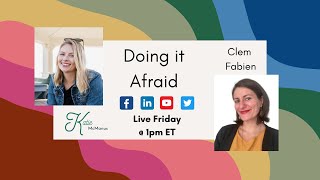
Katie McManus and Clem Fabian discuss doing meaningful work when you're scared. They separate real intuition from your inner critic's sabotage, and offer concrete moves: fact-check the scary story you're telling yourself, know your why, take small steps, find people who get it. Clem shares leaving a successful nursery to start coaching.
Questions this video answers
www.coachclaim.com
Katie McManus and Clem Fabian
October 29, 2022
Chapters
I can taste.
Good afternoon and happy Friday. And I shouldn't say good afternoon, it's good evening and good morning to wherever you are in the world. I'm Katie McManus, business strategist and leadership coach. And I'm here today with Clem Fabian, who is a coach. And I'm just going to let you introduce yourself.
Hello everyone. It's so cool to be on the show. Thanks Katie, for the invite. I'm really, really pleased. Yes, indeed I am. I am a coach and I work more specifically on your mindset and that's why I'm super excited about this conversation today. So going to be talking about the fear and how to do things even when you're, when you're afraid. So yeah, coming to you from, from the uk where it's evening here and yeah, very, very excited to, to, to, to have this conversation together.
Yes, yes. And being afraid is such a huge part of being human. Like not even in starting a business, not even in doing anything. Like we're constantly afraid of, of so many things. Yeah, really, if we listen to that fear all the time, where would that get us?
Yeah, yeah, absolutely. I completely agree with you. I think it's probably an illusion to think that at some point you can be like fearless and not experiencing fear. I think it's more being able to do things despite the fear and even like embracing it, like being like, bring it on. And I think you recognize as well when you're where something is very dear to you. And I would probably like even invite everyone listening to us, like think about what scares you the most. And I bet you that it's probably one of those projects that are the most important for you, that triggers the most fear. So they're also like an indicator of. Okay, okay guys, this is important here. This needs your attention and this means something to you, right?
Yeah. Well, it's funny, you know, I um, you know, I'm a business coach, right. And so I help people get out there and start their businesses and ask for money for their services and promote themselves and show up on camera and things. And I also used to be a knitting teacher. Uh huh, right. I used to teach people how to knit. And like it's so funny because the level of fear shows up in both areas. Like a simple hobby that no one really cares about. Like the fear of making a mistake. And what do you do when you make a mistake and oh my God, this is the end of the world. And also, you know, promoting yourself to.
People who've known your whole life yeah, 100%. So it's funny that, like, it's not so much the outcome. Sometimes we think like, okay, this is because this outcome is like so big. But the example is such a great example because, no, actually it's the power of your mind and what your voices and your heads are telling you. I like to call them the saboteurs voices because they try to sabotage you. They're here for you, they're here to try to help you. It's like this survival brain kicking in and, and telling you, okay, you should worry about this and what if and the worst case scenarios and type thing. But if we were to listen to those voices, first, you'd feel miserable. Second, you probably won't achieve anything and you stay under your blanket, cuddled up under, under your, under your duvet all day. So they're serving up to a point and after a while they're just sabotaging you. So it's really important to have, to have tools to move to move. Transcending them. Yeah.
So I'm curious, where do you have the most fear for yourself and how have you overcome it?
Yeah. So for me, it's definitely been one of the most experience. The biggest experience of fear that I've had was to actually get into my coaching business. So starting my coaching business, I was already an entrepreneur. So I had my first business, which was a bilingual nursery. And that was going amazingly and it was thriving. But really quickly, when, when we started running that with my co founders, I started having people coming to me being like, okay, I, I want what you have. Can you help me become the highest version of myself and can you help me work on my mindset? So started sort of naturally, sort of organically coaching people and enjoying that so much. And at some point I came to the realization, right, this is my calling, this is what I got to do. And I had so many people around me telling me that you're crazy. You've worked so hard and you're finally making, you know, good money and you, you're not going to do that, are you? And I was like, I am. So that took a lot of courage to, to listen to it, like, it like, listen to this calling inside of me and being like, I know it probably doesn't make sense from the outside, but this is what is right for me and this is what I, I need to do.
Yeah.
So that's one of like, maybe one of the past fears that I managed to overcome. One of maybe of the most present fears for me are about a future project as yet to happen around starting a family and having. Having a baby. And I can see so many things kicking in, you know, so much of the conditioning being like, oh, you have to be perfect, and what if this happens and. And this and that. And it's. It's an amazing dance. It's very, very interesting. But. But yeah, it's really about. Yeah, yeah. You're going to feel the fear, you're going to feel the emotions. But how do I. How do I move on? How do I keep going and how do I do it anyway? Right.
Oh, 100%. And I love those examples because really, I mean, the core of it is you're changing what you're doing and you're changing who you're being while you're doing it.
Yeah. Yeah. Right.
That's really scary for all of us to kind of reckon with. I mean, even moving is really scary for some people.
Yeah, yeah, yeah. It's said to be one of the things that can be very traumatic, actually. Moving house, getting married, having children, etc. One of those big life milestones. And. And yeah, you're absolutely right. It's the way I see it. And I like the analogy of a dance. It's. It's dancing with it. It's not like thinking, I'm going to get rid of it, because I think that's an illusion. I think it's normal that it's here. It's part of the human experience. Like you were saying. More like, how do I learn to dance with that? Right. To tangle with it and to go whichever dance you like. Well, yeah.
Can I. I want to dance with that metaphor because I love that. Because imagine you're at like a wedding and everyone's on the dance floor and you're like, so in your head and you're thinking, okay, I have to plan out in my head exactly all my moves. Yes. That I'm gonna do once I get out there and I find a partner to dance with. Yeah, you do that, you're gonna end up elbowing someone in the face and you're probably gonna hurt yourself.
Right.
You kind of just have to, like, trust yourself that you're going to find the rhythm and you're going to find someone who can work with you. And if you don't, you're just going to have fun.
Yeah, exactly. And being. Being in that flow of action rather than being in. Into the story of what the voice is telling you. Right. Because it's. It's a story. And actually, the louder the voice and the more attention you put on to that the worse it's become, right. Rather than like the example of the dance floor, right. Like, oh, should I go, should I go and dance and what should I do? And should I do this move? Is it more like a disco song or it's more like a groovy sound? What's like the best dance steps? And you're like watching this dance floor and creating all this story and making it 10 times worse that it would have been just going, taking that step and just going on that dance floor and getting along with the flow. So it's, it's really, I found that really, really important, like recognizing there are those voices, but even like choosing not to trust them, not to, not to consider them as truth. This is not true. Yes you can. Yes you can and yes you should. Yeah, absolutely.
Yeah. Well, one of the things I always like to remind myself when I do have those voices running because it's so easy because they're an internal voice that you know, just naturally happen. It's so easy to believe that they're your intuition. Right. And so I like to always check in with my body. It's like, because when that voice is going, I know like my, my shoulders are up to my ears and I'm really tense and all this stuff. And that's not how intuition feels.
My body, right.
Intuition feels like it's like in my, in my abdomen. Like I feel really grounded. Like this is what needs to happen next, even if I'm not sure of like the next step after that.
Yeah, yeah, that's absolutely a great way to describe it. First, what I like about what you said is the contact with your emotion and how your body feels. And whenever you are experiencing a very intense negative emotion such as fear, such as anger, you're pretty sure you're being triggered by the saboteurs, those voices in the sabotage. While if you're in the flow, if you're feeling great, if you're aligned with your intuition, you're going to have a very different physical and emotional experience. So they're a sign of like what's, what's going on there. So it really helps to, to describe those different voices because we've talked about those, this inner critic and those voices that are here to like to tell you stories and make worst case scenarios, etc. What's, what's the alternative to that? Ah, the intuition. Isn't it like when you align, when you're strong, when your base is there. And that's really what helps to, to have this grounded Stability inside of you. Right. That enables you to actually go, do you know what? I'm going to take that first step, even if I'm feeling this movement of fear, because I can connect to this, to this intuition, to this, to this place that feels more grounded and secure.
Yeah, no, 100%. Well, and I think there's also this. This belief that, like, if we're gonna be fearless, we have to be fearless about everything.
Yeah, right.
Like, I used to have. There are a couple things. I'm terrified of tarantulas, and I used to be terrified of public speaking.
Right. Public speaking.
But I really wanted to do public speaking. I really wanted to be in front of people. I really wanted to be comfortable on camera and do all these things.
Yeah. Dog. Thanks.
Meanwhile, I'm terrified of tarantulas. Never come across them. I'm never going to be in a situation where I have to deal with them. You know, you're allowed to be afraid of some things and not deal with it. Yeah, right.
100%. Absolutely. And I think what's the. What's the difference? There as well was your. Your desire to do public speaking. So that's. That's very different, isn't it? Like, I. I feel afraid because that's. That's really important to me. Like when we were talking about, like a bit earlier as well. Oh, this is. This is going to be something major in my life. Scary. Which is normal because it's a mixture of excitement as well, isn't it? And recognizing that, I think makes a difference, as you say, in between. Okay, what do I want to work on and what can I just, like, have that in my life? And it's. And it's all right. It's not having a major impact.
Right, right.
So what.
What has really helped you learn to deal with fear as it comes up?
So it's again, like, I love the analogy of the dancing. So it's really like learning to dance. And what's helped with me is like, first start to recognize what the facts are. Okay. What are the facts? I hear all these stories and all the voices telling me this and this and that. What are the facts? What can I see and what can I approach on a very, like, sort of objective ways? And that really enables to. Instead of going into. Into the story and going like. It's like a downward spiral and you're. And you're sometimes taken, like going back to. Okay, what is actually here that I can. I can see and I can measure.
Yeah.
What. What else is. Is really helpful is to be super clear on your why, like going back to your example of public speaking, I think you've probably naturally done that. Yes, I'm afraid. But why is that important? Why is that something that I so want to do? What is this desire? Because until. And that's what I found as well in my coaching with my clients. Until this, why, this motivation, this desire. It's extremely clear for you the fear might still be stronger than that.
Yeah.
So giving more power to why you want to do it and what meaning it's got and how it's going to be wonderful and what it's going to bring to your life. Oh, we're starting to, to unbalance a little bit those, those voices of the saboteur.
Right.
And being a little bit, a little bit more into like, ah, all right, maybe I can believe in that, make it. Maybe I can trust my intuition onto, onto this. No.
Yeah. I mean the why. Why do make. Why do people make any decisions to get away from pain or to go towards pleasure?
Yeah.
Right. And so I love that it's really tying into, you know, what is it that you want? And also like, let's, let's fact check. Let's like myth bust.
Yeah, yeah, yeah, exactly. Because it's a very different thing to live your life in condition to fear. Like, okay, so I'm not doing this because of fear to doing something for a motivation.
Right.
It might be the same outcome, but the energy into it and the way you do it and the solutions that you're going to find are totally, totally different. And sometimes it also influences the decision also very strongly going back to maybe the example of a career. Right, right. I'd love to start my own business, but, oh, it feels so scary. I think I'm going to stay in this job. Right. Well, it's always been there and I meet so many people. In this case, I'm imagining it's a same for you. I've wanted to do that for years, decades, etc. Yeah. So why didn't I do that? Why? Well, I can. I can tell you that most of the time it's the fear, the fear that's been blocking it. So that thing, that's something probably another thing important to reflect on is am I deciding, is decision influence? Is fear influencing my decision or is my motivation, my desire? And there are really two different, really two different spaces from which to take your decisions.
Yeah, well, 100. It's. It's the difference between a powerful decision and a powerless decision.
Right, Right. Yeah.
Have you ever seen the movie Exit through the Gift Shop.
No.
Oh, my God. You have to see it. It's actually done by Banksy, the street artist.
All right. Oh, brilliant. Okay. All right, you got me here. I want to. So good.
So it's about this guy who, like, goes around to all these other street artists, and. And he's not a street artist at the time, but he's recording them. They're like, what are you doing, dude? Because they. They're all super secret, right? They don't want to be caught. And he's like, oh, well, I'm making a documentary on street art. And so he comes across Banksy and he, like, forms this friendship with Banksy. And Banksy's like, dude, like, when is this documentary coming out? And so this guy was like, oh, yeah, yeah, like, I'll put it together. And he gives it to Banksy, and that's. And Banksy says, that's when I realized he wasn't actually a documentarian. But because it was awful, it was so bad. It was like two second clips, and it had just the worst noises ever. It was like you were on the worst kind of drugs and you mixed them all. Banksy was like, hey, listen, give me all the footage. I'll make the documentary. You go and become a street artist.
Okay. Okay.
Gives him all this stuff. And like, his first show, he made over $2 million. But this guy, literally, there's like, I. I wish we all had the ability to tap into this guy because he had not one voice in his head that doubted himself.
Yeah.
He was just set in a direction like, oh, cool, I'll go try that. And even though it was a complete show, the whole way, it was just. It was just completely crazy. And at the end, it's really funny because Banksy's like, you know, I want to try to find a lesson here, but I can't.
Yeah. Yeah. Well, I think. I really, really believe that. That you can discover so much more from. From not listening to those fears. Even if it takes, like, unexpected turns and it takes a completely crazy path. But I'm really, really convinced that it, you know, the. The openness of the horizon and actually the surprises along the way, and the progression might be even beyond the craziest things that you could be imagining. Yeah, that's true. Truly. Yeah.
Well, the cool thing about this artist, and I'm forgetting his name, like, his art was used on a Madonna album. Album cover.
Yeah.
Think if we all did our version of what that is and just went for it.
Yeah, yeah, yeah. 100 so, so sometimes it's, it's sabotaging you in terms of stopping you from doing something. And also sometimes I found it, it makes you like sort of play small. So like you. You starting something. And for going back to example of, of. Of starting a business, I've seen that as well a few times in. I'm sure you have as well. Rather than going for the business that I really want to start I'm starting with something that seems a little bit more in my control. I know that the market's a bit safer. So you know like, I'm like feeling too scared to go for the, for the real game, for the real deal. So I'm like, you know, I'm going to start with this. And, and what happens usually in my experience is that those people arrive after a while and they're like do you know what, you know that's successful? That that's. That's worked out. But what I wanted is actually this over here. So I think now I'm, now I'm gonna, I'm gonna do that. Does that, does that also happen in your experience? Oh.
100 I, I can't tell you how many incredible coaches I come across who like have a very specific niche in mind that they really want to pursue. Like, like how I'm trying to think of a anonymized version of this. I'm not outing anyone like working with, with teachers who are facing burnout. But they're like oh well instead of doing that I'm going to only work with like high level executives because they have money. And it's like the world doesn't need another generic executive coach out there. The world needs people who have super niche down.
Yeah.
And are making a difference in an area that really matters to them.
Yeah. Right.
And there's a way to formulate your business so that you're making money doing that versus the other thing. Also.
100 and there's also. I really believe as well that there's also this unique thing that wants to come out out of you. Right. And, and, and that's, that's who you are. That just wants to shine through you. And that's why I love as well when, when people like that are, are also looking at creating their own business because that's also the way for them to express that what's unique about them. But usually, usually it's themselves sort of like there's this, this kind of censorship. Like oh no, no, I'm not going to show everything just yet. And I'm going to Conform or look at what, what others do. And I'll copy that for now. So it's fascinating to see this. And that's also fear based.
Oh, 100% I think. I think people get really attached to that outcome though, like it working and it delivering a certain amount of money when really, you know, the two things that matter is that a, there's a need out there in the market. There are people who are struggling with the problems that you help solve and also you enjoy talking about that. Yeah, right.
Yeah. And, and also like when, when you start something like, like a new business for yourself, there's, there's most of the time as well a, a research for fulfillment for something more like making sense of your life or finding that meaning. So don't forget that you're going for that. Don't let that out of the equation because that's really easy to do as well, isn't it? Like. Oh no, no, no. It's business, you know, it's serious, it's professional. Professional. And which I really believe everything is connected and I love, I love working on, on the mindset for that because it's, you can't fragment yourself. You can't say that there's this part of me and this part of me and I'll treat them separately because that's not, that's not the reality of, of life and our things, our things work.
Totally. No, totally. And it's. Well, the example that I love to point to is there are so many coaches, for instance, who really have a spiritual side to what they do. Like it's either nature based or it's kind of witchcrafty or it's, or it's actually their religion and when they're kind of afraid of sharing that because they don't want that part of them to be rejected.
Yes, right.
But actually when they do share that, the people who buy into that, who like are, are part of that club, there'll be so much more invested in that work because they'll be like, oh my God, this is so perfect for me.
Yeah, yeah. I think that's one of the parts of going back of the different type of fears that we have as well. I think it's part of the, the fear that makes you so. Because there, there is this exposure. You're going to be very exposed. Right. Like when you're. I've had that quite a lot as well with artists that I've been coaching. Like I'm presenting my work. It's so personal. It's, it's, you know, It's. It's my life, it's my heart. It's. I'm really, really. I'm really feeling exposed by presenting that. And it feels very hard actually to do so, because if I'm judged and not approved and. And I'm still like, sort of counting at this stage on external approval, I fear to be destroyed. Like, something in me is going to be completely destroyed while it's actually remembering that you're going to be presenting this side of you to exactly the right people that are going to be resonating. The rest might not be resonating, and that's absolutely fine. There's all sorts of flavors and taste in the world just exactly for that. But you're not trying to talk to everyone. You're trying to talk to these people there that want that and looking for that, waiting for that, and that helps you. I found that it's really helpful to remember that it's not about you. It's, again, going back to an egoic thing. Oh, I'm scared of. Of being hurt. Forget it. It's about you. Think about the service and the people you're going to be serving. Right. That's. That's what matters. And that's as well, why we take these steps, these fearful steps of getting out there. Because we want to make a difference and we want to serve those people. Yeah.
I mean, you're talking about this, and I'm just thinking about my clients and how, you know, usually they have this massive fear of getting on a sales call, call with a new client because they're so terrified of being rejected. And we have to remember that people really don't reject you. What they're rejecting is this idea of who they'll become on the other side of working with you. Right. So if you're a meditation teacher, and I have never imagined being a meditator, and it doesn't really matter to me, and I don't have a lot of anxiety. I don't really care about what you're offering.
Yeah.
I don't need to become like, you know, a meditator versus someone who sees that. And it's like, oh, my God, I would love to be able to sit in silence for that amount of time. Like, I want to imagine about, you know, who that would make me become. Like, I really want to invest in this.
Yeah, yeah, yeah. That's so true. It does not resonate with where they're at. And. And again, I think it really helps to sort of make the distinction between they're rejecting me. I am being judged, I am not being approved. And that's not, that's not where they're at.
Right.
And they're on a different path. They after something else then, and that's absolutely fine. So I think it really helps to transcend actually this, this judgment and having like, okay, this person is doing this and doing that and we've, we've all seen that, that you know, like some, some approaches resonates and some don't and we're not necessarily going like, oh, terrible. That's, that's really, it's just like, no, that's, that's not me. Yeah.
Well, just back to what you said earlier, how when you started your coaching business, your friends and family were like, are you nuts? What are you doing? You know, we do that happens to all of us. You know, we have people in our life who genuinely care about us and also have no idea how this is ever going to work. We have to remind ourselves that they're not our ideal client. They're not. Their opinion really doesn't matter when it comes to that.
This. Yeah, right.
The position of saying, oh yeah, well you know, I have an interest in a need here. I would definitely sign up for that.
Yes, yes, absolutely. And what, what, what's really helpful for me as well to remember because of course we know those people around us love us and our family and of course it does matter what, you know, what they, what they want for you and etc. But we have to remember that, that they also are suffering from the same perspective of having those voices in their head going oh, what if and worst case scenario and et cetera. So what they're sharing with you when they do that is this. So it's not even them, we would say it's not their intuition speaking, it's the saboteur voices, you know, the inner critic and the what if and the worst case scenario and the all don't take too much risk, et cetera, et cetera, which is a part of, of the survival brand again. So remembering that it's not them speaking, it's just those voices of, of fear. Okay, right. I, I hear you, I see you. But I don't want to leave a fear based life. So sorry, but I'm not going to listen to that.
And what a beautiful gift that they love you that much. Their saboteurs get activated on your behalf.
Yeah, they do. At the end of the day, it's a proof of love. You're 100% right. They do love you. They do want what's best for you. And yeah, it's not that they want to because I know for a lot of people when they start their business, having people around them going, are you sure? Or that sounds really risky or you shouldn't invest in this or in that is very stressful and actually adding on to their experience of fear. So it's important to maybe not expose yourself too much to those voices, like sort of protect yourself, especially if you feel like your fear levels are quite high. Because what happens is the saboteurs and others are going to be triggering your own saboteurs and that's not going to be helpful for you to come back to sort of a calm space and connect with your. With your intuition as you. As you were saying. So. So you need to maybe protect yourself and not having too much of being in this type of environments. And for those people, I also recommend finding then their tribe who are experiencing something different, who are also wanting to being uplifted to being encouraged into becoming the highest version of themselves looking for this growth like they are, because that's going to be a lot more positive and a lot more encouraging in what they're doing and also counterbalancing the other voices of people surrounding them that might not be in business and might not be able to help with these aspects of fears and mindset.
Oh, 100%. And you know, it goes back to you are the sum total of the five people you spend the most time with.
Absolutely.
Right. And you know, do you ever play tennis?
Nope.
You know, so this is interesting. I'm really bad at tennis. But it's really interesting that they say that if you're like a medium level at tennis and you play with someone who's better than you, you actually get better. Like you, you perform better even in that one game. The same is true for that person who's better. They start coming down.
Absolutely.
And so when we do go to our loved ones and we're like kind of presenting our ideas and asking for advice, we're. What we're doing is we're asking them directions to a place they have never been.
No, no. Right.
So it's one of the gifts of working with say a coach or a mentor who has been there and has, has faced their fears and like knows knows what typically comes up and can guide you differently.
Absolutely. Absolutely. A coaching mentor is amazing for that. What I also recommend is having accountability buddy or buddies if possible too. Because what happens as well also can be quite encouraging is also having the dynamic of sometimes helping someone else. So that makes you see as well your progress. So having a peer, sort of a relationship or in a group can be amazing for that, because we all have strengths and some things that we need to improve and seeing maybe where. Maybe where I'm great and where I need improvement and going, okay, how do I get there? So not only looking up to someone and being like, okay, I'm not there yet, but also being able to go like, oh, I can help you with this. So that means necessarily that I've been working and improving, and I've come quite a long way to where I was previously. So this sort of having this balance between the two are very important in there. And they are, in a way as well, an alternative to those voices, to those fears. And we need different tools. We need, like, I mean, in coaching, we have so many tools in our toolbox because the fear might come back, and it might come back, and it might come back. And again, that's why I love the analogy of a dance or the wave of the ocean. It's like, okay, you try another tool and then another one, and. And you never, you know, you never quit on yourself. Never quit. Yeah, you'll just find another solution. That's it. And it comes back. All right, let's deal with it.
The best reminder I ever got from coaching was that the fears come from our own brains. And so this fear of voice is just as smart as we are.
Yeah.
Right. So, like, it's going to keep coming back with, like, better and different ideas of things that we should be afraid of.
Exactly.
And it's so important to have different ways to deal with it.
Exactly. And one of the biggest triggers for everyone is money. Money is such an important part of our society, of how the world works. Right. It's one of these resources that you need to do things in your life. It's an enabling and amazing resource. And so exactly as you say. I can see in my clients, but also in myself, how it gets triggered in a different way. So you deal with one aspect and then, oh, it comes back from a very subtle other angle and being. And it feels very convincing. Initially. You're like, oh, yeah, sure, I should worry about that. I mean, that feels so true. And then you work on it and you be like, okay, that is exactly the same thing. It's another way of the fear. And, no, I don't want to live from that space. Space. And it's not serving me. And so you keep on improving and breaking the next glass ceiling in that way. But money is such a good One for fear.
So we're coming up on time. I would love to hear what's the final piece of advice that you want to leave with our audience today?
So really, one of the last things that maybe we haven't mentioned that I found really important to remember about fear is how much action becomes a great answer to anxiety. So in coaching, we've got different ways to approaching that. Sometimes it's looking at baby steps. What can be the next baby step? Maybe if I'm having a big fear of public speaking. Yeah, I'm not going to go and talk to an audience of 200 people straight away. But what can be the next baby step that can make me, you know, like, sort of face the fears on a level that's comfortable for me and I can access the next thing and be like, okay, do you know what? It's actually worse fearful, but also exciting. So I want, I want more and I want to move to next level, et cetera, et cetera. So remembering that action is one of the most powerful medicine against anxiety and fear I found very, very empowering. And I would say instead of focusing on Mount Everest that you can see so high up there, focus on that next very little step and put 100% of quality, 100% of motivation, be all your energy into this and that's how you actually get to one step further. One step further and one step further.
Yeah, yeah, 100%. I can't agree more, Clem. If people wanted to get in touch with you and learn about your work, how do they do that?
Yes. So they can connect with me here on LinkedIn, that'd be amazing. They can follow. Follow what? What I post regularly. There's more information as well on my website. It's www.coachclaim.com and yeah, always open to have a free discovery session and have a conversation. See if I can be helping you in your. In your situation. With great pleasure. Beautiful.
All right, well, thank you so much for being here today. This has been so much fun. I'd love to have you back in the future. And to everyone who has tuned in, let me just say our goodbyes. So we have Asher, we have Kristen and her pink toed tarantula, Diggle. Shout out to Diggle, please stay with us. And of course, Tommy. Thank you all for joining. And if anyone commented, and I'm not calling you out, it's not you. Sometimes the technology gets a little wonky and I can't see comments from everywhere. But anyway, thank you all for watching. I hope you have an amazing weekend. And Coach. Clem, thanks for being here.
Thanks so much, Katie. It's been a pleasure.
All right, we'll talk soon. And bye, everyone.
Bye, everyone.
More from Katie





How to do self care right now, so you can do what needs to be done, for yourself, your business, and

How to do self care right now, so you can do what needs to be done, for yourself, your business, and

#greenscreen How to build a consulting business that makes you $200,000-$700,000 a year

#greenscreen How to build a consulting business that makes you $200,000-$700,000 a year

Maybe we’re not the imposters…? #businesscoach #startup #entrepreneur #smallbusiness #consulting

Maybe we’re not the imposters…? #businesscoach #startup #entrepreneur #smallbusiness #consulting
