How to ask for big money!
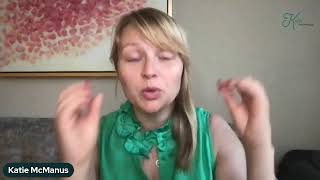
Katie McManus shares how to confidently ask for higher fees. She charged $6,000 for six months of work, then developed five techniques: practice saying big numbers aloud, identify money beliefs holding you back, offer payment plans, check what peers charge, and stay quiet after you name your price.
Chapters
Foreign. Hello, I'm Katie McManus, business strategist, leadership coach. Good evening, good morning, good night, wherever you are in the world. Hello. I am so excited to be going live with you this evening. This is day 15 of going live every day in the month, September, it is also the 15th. Funny how that works. Today I'm going live to the Facebooks, to LinkedIn, to YouTube and to Twitter. Hi, Twitter folks. I don't know if anyone ever watches me on Twitter. I'm not there. I have an account that I've had for, I don't know, 12 years and yeah, I've never really been active. But anyway, if you are logging in and you are asking questions and commenting and I'm not calling you out, sometimes Streamyard just doesn't show me all of the comments. Okay. I do love this to be interactive. So as you join, please say hello. Well, I mean if I. Yeah, if you join, you're not gonna hear that part, so never mind. Anyway, today I am talking about how you can charge big money without vomiting. It's a very important step in starting a business is learning how to not throw up when you're asking for more money than you've ever asked for in your life. I want to share that my very first time really pushing myself on pricing was when I was starting out in business strategy and really showing other people how to do what I was doing. I've been charging a little less than this previously for my executive coaching. I, I decided I wanted to charge $6,000 for six months. I charge more than that now, just FYI for my one on one coaching. But yeah, I just decided, you know, it, like I have to up my rates. I did the math and like, for me to make a living doing this and really do well on top of my corporate training and leadership development, I needed to ask for this from one on one clients. And it felt really scary because this was money that someone would be paying me out of their own wallet. This was what their hard earned cash that they would be paying me to do this work. And let's be honest, that's frightening, that's very nerve wracking. But. And like, honestly the first time I asked for it, I thought I was going to throw up. I was so nervous and I did the sales call over the phone and literally I put the number out there along with the payment plan and I just held my lips shut, just kept my lips shut and I waited for this person to basically say no. And they didn't. They said yes. They're like, okay, great, that sounds good. And I almost fell off my chair. I almost fell off my chair. That they said that was fine, like no big deal. That's a lesson, though. Just want to throw this out here. If people don't have to think about how much you're charging, they either have already decided to become a client of yours before talking to you, or you're charging too little. And I'm going to be talking a little bit about that later today. So I wanted to talk about how you, if you are a coach, a consultant, charging for your work and charging big numbers and having a hard time getting those numbers out of your mouth when you're on a sales call, how you can get better at that, right? Because we're used to being the employee, right? We're used to being paid an hourly wage to do work, to show up 40 hours a week and do work. We forget that our companies are having this conversation. They're the ones that are having the sales conversation on our behalf that gives us work, right? They're the ones charging big money. And we're just basically subcontractors under that company. When you work for yourself, you are the sales team and the marketing team and the delivery team. And it's really exciting. But it can also be very nerve wracking if you've never asked for big money before. So I want to dive into this. So say your program. Say. Okay, so I'm going to, I'm going to give two examples because this is really relevant for coaches and consultants and people who do a service, right? You're doing a, like a load of work, you know, in a, in a project situation or as a retainer, you're doing a lot of work and you're charging a big sum for it because it's a lot of work, right? I want you to practice with bigger numbers, meaning I want you to stand in front of your bathroom mirror and if Your program is $10,000, I want you to practice saying, I charge $30,000. I charge $50,000. My program is $70,000. I want you to just keep climbing, keep climbing and just practice saying it until you sound confident, okay? And if you have to say it to someone else, that is the, that is the best practice in the world because you're going to break, you're going to start giggling. You're going to be like, I charge $60,000. I want to point out some things that help you sound more confident than you may feel. When we're more confident, the tone of our voice actually lowers A bit, right? When we're more confident, the tone of our voice lowers. We also slow down our speaking. We slow it down. And when we're more confident, instead of like the end of a sentence going up, you know, I charge $60,000. The tone of her voice actually goes down at the end of the sentence. I charge $60,000. It sounds so, so much more confident when you just play with tone and your speed and bring it down at the. At the end. Okay? So I want you to practice with bigger numbers than you actually charge and do it in front of the mirror in the bathroom and in front of people who, you know and trust and like and you know, who won't, like, think you're a weirdo for telling you that. Don't go up to, like, random people on the street and just practice this at them. That is just welcome, you know, inviting weird situations to come up. God. What. What might they think you're offering them for these high prices? Hi, Steven. Welcome. And I love. I love the clover. So, okay, so that's. Number one is practice with bigger numbers when you're trying to learn how to ask for big money. Number two is you really have to clear your money beliefs. And this points to. Most of us have a shitty relationship with money, okay? So if you're having a hard time charging enough for your work, you're not alone. Most of us have a hard time with this, okay? You have a hard time believing that anyone would pay that much. Often it goes to the worth of your work, the worth of your time, and oftentimes it goes into what is your personal worth and what is your belief around this for your things? And this is where things get a little heavy. This is where we bring therapists in coaching and a lot of mindset work because you are priceless. There's not a price that could be put to you. Okay? Your time is priceless. You're never going to get that back this second and this second and this second. You're never going to get back again. Okay? So I better make the next few seconds really interesting so that it's worth it for you to. To have spent this time here. So you have to clear your money beliefs. If you ever want to charge more money, you have to really reckon with what is it about charging more money that has you all twisted up in knots? Is it that you think people who make a lot of money are like screws, Scrooge McDucks and they're evil and they're not nice and they're bad and. And all these negative connotations are associated with them. Is it that you feel guilty? Like you assume that your clients can't afford to work with you? It's assuming a lot of things. You know what they say about people who assume, make an ass out of me and you. Right, they're out of you and me. Whatever. There's a, there's a pattern that it goes with the word anyway. There's also beliefs that were handed down from our families. You know, I don't know about you guys, but my family, you know, had poverty. I mean, let's, let's talk about it. Our relationship with money is not just handed down from our parents or grandparents. It's handed down from like two centuries ago. And two centuries ago, my people were dealing with famine and being broke and having to live off the land and really be proud with making it with what they've got. You know, there is a, there is a poverty pride that went along with it. You know, to be proud of feeding your family from one potato, like you only got one potato. Like the human spirit cannot exist, cannot throw, thrive when it feels like it's failing. Right? So our ancestors, you know, bless them, they did everything they could to keep their spirits alive and their families alive and to make a living. And the belief systems that they created got handed down through the generations to us. Unfortunately, we're in a much more abundant world now. We have a lot more opportunities, there's a lot more stability, mostly depending on where you are in the world. And we don't have to worry about as much survival stuff. All right? So really breaking down what your beliefs around money are is going to be critical. And this is one of the reasons I work on this so, so much with my one on one clients. It's so critical to being able to ask for the money that your work deserves. Okay? And here's the thing. Your work is, is warranting that money. You are not. You are priceless. You couldn't charge enough for your time. And for you, it is your work that your clients are getting, okay? So you have to do your money work. Number three, break it down into a payment plan. You know, if you're asking for big lump sums of payment for your work and you're assuming people can't pay that or you're getting sticker shock responses. Okay, cool. Break it into a payment plan that works for you and them, okay? It's easier to ask for a payment plan when you feel like it's easier on them versus asking for all that money up front. Okay, so that's a super simple one. I'm not going to flesh that out more. If you're not sure how to break down your work into a payment plan. Tomorrow in Brave Biz Labs, I'm actually talking about this topic and I'm going to be doing some group coaching on it. So if you have any questions about what I've been talking about so far, practicing asking for money, doing your money work, or how to break it down into a payment plan, come to that, there's the link in the this post. I never put links in posts. It is that cool. It's so I'm so excited to be talking about this tomorrow that I put the link in the post. So number three, you have to, you know, assess the payment plan option. Okay. Number four, I want you to go and talk to your comrades. I don't believe in competitors. I think everyone does something like unique with their own personality. But go and look to see what your comrades in the space are doing similar. Okay. Look to see what they offer in their programs, how much one on one time they give, what kind of outcomes they typically get with their clients, and look to see what they're charging. I'll bet you you'll find, you know, a couple dozen, depending on how, how, how deep you dig, couple dozen who do less than you do and charge far more for it. I can pretty much guarantee that people out there who are doing less than you offer for your clients for more money. And you can compare apples to apples. You could also take that as inspiration to beef up parts of your program or your offering to help you compete, you know, not compete, but, you know, be at the same level of what they're up to. But really, I mean, there are people out there charging way more with less training and a whole lot more confidence than you, than you are. I guarantee you that. And number five is my favorite. Just shut up. Shut up. Just ask for the money. Ask for how much you're charging and shut your mouth. This is one of the reasons when I'm training holistic selling, when I'm training new business owners on how to run a sales call, I tell them, if you can do most of your sales calls on the phone, because if I'm on the phone, you can't see me go, I charge $10,000. You can't see that if you're on zoom, like I'm on video right now. You like a trick that you can do is you say how much you're charging and take a sip of water. And if you really, really, really need to, like, learn how to fill a silence. Just act like you're a camel and just chug some water. So thirsty. It gives the other person some time to think. It gives them some time to figure out what credit card they're gonna put this on or see how they're gonna think about how they're gonna propose this to their boss. Oh my God, that was so much water. I just drank. I just drink almost. I just drink a lot of water. Guys. When we name how much we charge and we immediately start talking to justify it, what's actually happening on the other side? This person just learned how much this is going to cost. They have to think through some things. You're throwing more information on it. They actually can't even process how much you charge. They actually can't even get it secure enough in their brain to even make a decision because you've just piled more information on them. Right? When you say the price, what your clients are going through is, oh, that's expensive. But it seems worth it. Okay, so, so I could pull money out of my savings. I could also open a no interest credit card to put this on. I also so and so still owes me money. I wonder if I could call in that loan and then pay it that way. Oh, but I get really good miles on that one credit card. I wonder if I could put it on there and then pay it off. If you interrupt that process, it's going to be really hard for them to say yes to you. If you jump in with oh, but like, here's what you get and you're adding more information. You're just confusing them. Okay? So shut up. You've asked them the money and shut up with love. If you need to drink, drink some H2, okay? It's always a solution. Just if you have a lot of like sales calls back to back to back to back, make sure you plan in some bathroom breaks in between. Anyway, if you have questions on this, if you need help with this, if you're trying to figure out how you can charge more without throwing up, without jumping in and discounting your services before they've even objected to it, I'm gonna be going into this in my life. Biz labs in my BizLab live tomorrow or Brave Biz Lab. Sorry, I'm getting my names confused. Brave Biz labs tomorrow at 11am Eastern Standard. There's a link to register in the body of the text for this live, wherever you're watching this and all you need to do is you need to go. And you have to register using that link. Okay. And then you're going to get some emails from me with the zoom link closer to the time tomorrow. And then you have to join. It's so easy. When you do join, you can either participate and ask questions and bring anything that's happening in your business vis a vis pricing, sales, marketing, money, mindset, whatever. Or if you're shy, if you're an introvert, you can hang back. You don't even have to have your video on. You can just listen to the conversation and learn. I'm totally game for all of that. I hold space for it. And, yeah, I think that's it. Anyway, thank you for coming live with me, Steven. Thank you so much for joining anyone else. I look forward to seeing you in Brave Biz Labs tomorrow. And tomorrow I will also be going live again because this is going live every day for a month. We're halfway through, people. And like I have said in previous lives, if you have any questions or any topics you'd like for me to go live on, please DM them to me. I would love to be able to talk about something that is super relevant to you right where you are right now. Anyway, I'm Katie McManus, business strategist and leadership coach. Hope you have an amazing Thursday and I will see you all tomorrow. Bye.
More from Katie





How to do self care right now, so you can do what needs to be done, for yourself, your business, and

How to do self care right now, so you can do what needs to be done, for yourself, your business, and

#greenscreen How to build a consulting business that makes you $200,000-$700,000 a year

#greenscreen How to build a consulting business that makes you $200,000-$700,000 a year

Maybe we’re not the imposters…? #businesscoach #startup #entrepreneur #smallbusiness #consulting

Maybe we’re not the imposters…? #businesscoach #startup #entrepreneur #smallbusiness #consulting
