How to do a successful live
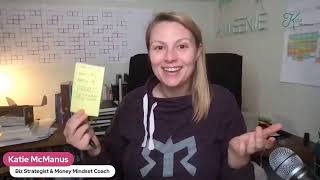
Katie McManus breaks down five practices for hosting live sessions: use an outline instead of a script, prepare a story to illustrate your point, repeat key messages since viewers arrive late, invite engagement without relying on comments, and lean into mistakes. She covers common tech problems like Streamyard cross-posting and why authenticity matters more than perfection.
Chapters
Words I can taste yo, yo, yo I can taste yo, yo, yo, yo I can taste yo, yo, yo. Hello and good evening. I'm Katie McManus, business strategist and money mindset coach for ADHD business owners who want to make more money in less time with fewer distractions. Welcome to my live. Tonight I am going live on The Facebooks, on LinkedIn, on YouTube and on Instagram where. So exciting. We can now go live through Streamyard and let me just see over here. A little delayed though, so I can't actually really see what's going on over there. It's okay. It'll all work out. Anyway, today I'm very excited about the topic. So I was training my BYOB build your own business beginner group this afternoon on how to go live best practices, you know, showing them exactly how to use Streamyard, talking through the arc of what you're supposed to talk about. And you know, actually this live that I'm doing right now was really, I was showing them how to schedule something and I thought, okay, well if I'm scheduling something, I might as well just schedule it. And I asked them what topic I should do it on and they're like, can you go over, you know, best practices for lives so that they can get like a re up? So welcome you as a viewer. Right now you are a, a guest in the BYOB program. Okay, so I'm going to be going over some of the tips and tricks that I like to teach my clients because let's face it, okay, going live is really scary when you've never done it before. It's basically public speaking, but to an audience that you don't know how large it is. You don't know how many people are watching all over the world, it's saved. Like, it's like it's video that's captured. You know, this video will be captured on my Facebooks, on LinkedIn, on YouTube, and if I choose to save, save it on Instagram. It just takes a couple more steps, but it will live on forever on the interwebs unless I do something about it. And so the stakes can be very high. Okay, So a lot of people, when they think about going live, they, you know, are afraid that they're going to screw things up. They're terrified that people are going to judge them for not being good enough. They're gonna like, they're worried that they're going to be boring. So some people also worry that like accidentally something that's going to be cancel worthy is going to come out of their mouth hole. Which unless you're like a racist, a bigot, a terrible human being probably, there's nothing that's going to come out of your mouth that's going to get you canceled and even that. Like, there are some assholes out there who say terrible things on the interwebs and you know, they don't get canceled. So, like, you could, you, like, who knows, you could slip up and say a weird thing that gets misconstrued in a weird way. You're probably not going to get canceled. And also, let's remember, okay, there are very few mistakes that you can make in this life that are unrepairable, okay? Or irreparable, that would be the word. There are very few mistakes you can make in this life that are irreparable, okay? Killing someone or unaliving them, probably one of them. You know, doing really damaging illegal things also. Those are things that you can't do on a life, okay? There's nothing you could do here that's really going to crash and burn everything. But, you know, here's the thing about going live. It is one of the best tools that you have as a modern digital business owner. Hell, if you are in sales, if you're in marketing, you work for a company, going live is absolutely incredible. If I still worked for a company, you know, I did a lot of lead gen, I was a closer. If I still worked in sales, I would be going live twice a week to my prospects and I would absolutely be doing a live show talking about my product and my, the services that I was repping. It is absolutely incredible. Um, I've had people get onto sales calls with me after I've done like, you know, I used to do like months and I haven't done one in a while, so I might, I should do that soon. Um, you know, I used to do like months where I would do a live every single day. I've gotten on sales calls with people who not only showed up to the live every single day, didn't comment, didn't like, they were just kind of there in the background. But they told me when they got on the phone with me for a sales call that they had watched every single live, which at this point is impossible. Okay? There's like 500 hours worth of lives that are saved on YouTube. Please don't watch them all, okay? For your own sake. You don't need to watch them all. Watch like a handful. And if you want to talk to me and work with me, we can, we can Talk about that. There's nothing I covered in my life that I don't tell my clients when they work with me. All right? But, you know, they've got. They got on the call with me and they said, hey, listen, I listened to everything you said. I watched every single life you ever did. And I didn't get on the phone with you to say, no, I. I got on the phone with you because I need to work with you. And that is the power of going live. All right? Now, there are some guardrails, there are some, like, you know, the, the training wheels, if you will, of going live, first and foremost. And I see I've had a couple clients who've gotten stuck into this rut, and it's really hard to get out of when you start. Start doing it because it kind of becomes your style. You know, going live by yourself can be very nerve wracking. Okay. It took me time to be comfortable doing this. Okay? During the pandemic, especially in the very, very early days of the pandemic, I would go live on Facebook and I was terrible. I was absolutely terrible. I didn't really know what to talk about. I didn't really know, like, where to look. Should I look at the comments? I look at the camera. My coach at the time told me to, like, just go on walks and, like, go live while on the walk. And like, I don't know. It wasn't good. All right? It wasn't good, but it wasn't good. And I didn't die. Like, I, I got through the pain of, oh, my God, this is so bad, and I didn't die. And that's really the magic of starting it, doing it, practicing it, and just putting yourself out there the first, like, especially as you're. You're just starting out and you have a smaller audience. I mean, the beautiful thing about marketing yourself online is that no one's paying attention, right? No one's paying attention. So if you screw it up, no one's likely to see it. Also, like, if you're bad on your life, if you're not entertaining, people are going to watch for a second, be like, never mind, I don't really want to watch this. So that's fine. No one's going to see it. But what's going to happen is your nervous system, which is going to go absolutely haywire in the beginning telling you, oh, my God, like, death, like, this is going to, like, be the end of everything. People are going to, you know, pick at your house and, you know, exile you from Your town, and you're gonna have to live in the woods, and you're gonna starve, starve. And maybe your kids and your dog are also going to starve with you. Your nervous system is going to go into the live by yourself and expect that, and it's not going to happen. And it's gonna take a deep breath and relax, right? And then you're gonna do it again and again. It's gonna feel like life or death. And then you're gonna do it, and nothing bad will happen. And again, you're gonna relax until you get to the point where, like, you're still relaxed from last time. You know, it just. It feels natural. It feels. It feels fine. It feels just like another day in the office. All right? But you can't get there unless you start practicing doing lives from the get. From the get go. I can speak now. One of the ruts that some of my clients have in the past have gotten sucked into is, you know, it's really nice when you first start out to do a live with someone. Like, you do an interview, you have a guest, and sure, I mean, those are helpful. Like, it's nice to have someone to talk to. You can, especially if they have something useful to say to your audience. However, what typically happens with that is they bring a guest onto their live and they ask them all these questions, and they're basically playing reporter, journalist, and this person's able to share all about their, like, their mission, vision, values, who they work with, the impacts they have. And that guest tends to get clients, that 10, that guest tends to get people dming them from your audience, saying, oh, my God, I saw you on so and so's Live, and I loved what you had to say. I want to talk to you now. The person who is doing the live, who had the guest, after a while of this and after a while of not getting clients, they start wondering, what am I doing wrong? It's like, well, what you're doing wrong is you're highlighting someone else and you're not highlighting yourself. One of the scariest things that business owners have to do is promote themselves. And there's the gross way to do it. Absolutely. Where you can rent out a private jet and do, like, a whole little photo shoot, and you can get, like, piles of fake money and just, like, make it rain and, you know, drink champagne and like, spray it all over. Although the cleaning fee on the private jet would probably be a little expensive for that. You know, you can rent fancy bags. You can make yourself look really, really Successful. And then you can tell everyone, hey, I'm the greatest person in the world, or you can do what I train in my build your own business group program, which is called empathetic marketing, where you're basically saying, hey, you, I see you, and here's what you're afraid of right now. And I know this because I talk to people like you all the time who are struggling with this, and they really, really want this. And I think you want that, too. And by the way, if you want help getting it, then that's what I do with my clients. You know, come. Come and book a call with me. It's gentle, it's kind, it's empathetic. You're not playing doomsday. You're not saying, if you keep doing it this way, like, your life is going to crash and burn. No, you're just saying, like, here's how you're feeling right now, and if you're ready to make a change, that's what I do with my clients. And you also don't have to brag on yourself. You don't have to, you know, bang your own drum, which. Which to. To that end, like, it's not wrong to brag on yourself. Kind of a side note, like, bragging in its purest form is simply telling the universe, thank you so much for what you gave me. I would love more of it. Right, that's it. That's it. That's what bragging is. I think bragging gets a bad rap because some people do it in a way that they brag in order to make other small. That's not bragging. That's being an okay. It's different. All right, now. Okay, so going live. There are so many things that can go wrong on live. So first and foremost is technology. Technology is flawed. Technology can go wrong. Sometimes. Sometimes you're on streamyard, no one's commented, and sometimes. And that might actually be happening right now, sometimes the comments just do not come through. And, you know, in that case, you're just kind of going live to yourself in what you think is an echo chamber. The interesting thing about streamyard, also, and this is specific to Streamyard, I'm not sure about other streaming platforms, but the little I in the corner for me at least shows zero. And that's because streamyard can't read the viewership from multiple platforms. So I might have a bunch of viewers on Facebook, on my private page, and on my professional page and on my LinkedIn and on YouTube and on Instagram. Streamyard can't read it occasionally. It'll show one. Maybe it's reading from. I. I think it's probably reading from YouTube because I have the smallest following there. But that feels really weird when you're. When you're going live and you feel like no one's watching. All right, deep breath. Okay. Maybe no one's watching, but that's fine. Okay. They're gonna watch it later. Okay. This video can live on as long as you want it to be up. Okay. You can always go and delete it later. Likewise. You know, there's a bunch of shit that can happen. You can forget what you're talking about. You can stumble over your words, you can stutter, you can stammer. I do those things all the time. Something in your environment could happen. Your dog could have, like, their stomach meltdown on the floor next to you, and, like, you either have to, like, end it and go clean it up or just kind of deal with it, you know? Like, we're humans in a world that doesn't always go perfectly. There's so many things that can go wrong. No one's holding you to the standard of this being a TV show. Right. If this were the news and the news anchor was like, oh, my God, my dog just threw up. I have to go deal with this. We think, well, this isn't very professional. You should probably have someone in the background who's taking care of the dog. You going live from your home office, from your living room, from your kitchen, from your car, wherever you're going live, no one's holding you to the standard of it being glossed up, of it being perfect. Right. It's just, you also, like, it doesn't have to be scripted. This is actually something I advise against with my clients. I'm gonna be going into the five tips about, you know, how you can do this really well. But when you script yourself, it gets really crunchy because you, like, feel like you have to follow along perfectly. And when you. When you fail at the script, that's when people start getting really freaked out. I have had numerous clients who were terrified of going live. And when they started doing it, when they started doing consistently, they started getting clients from it. They started getting a following. They started getting people who really believed in them, who trusted them. Because the beautiful thing about doing something live where you don't have a chance to edit it, when. Where you're going to make mistakes, where things can go wrong, where you have potential people commenting and asking questions and you're interacting with them is people get to See who you are. Right. And they. And if you do it more often, they get to see who you are and see that it's consistent. Right. It's one of the best ways to build trust. All right, so you can build trust this way. You can get clients. But one of the ways I get clients is how a lot of my clients get clients. And it's also a great way to improve your public speaking, because it is public speaking, essentially. You know, it's public speaking on the fly. Right. The best part about public speaking on live is you get to wear pajama pants. It's amazing. It's very comfortable. Okay, so I want to go over the five tips that are going to help you overcome a lot of your fears, a lot of your hesitations. That what if monster that likes getting up in your grill and telling you all the things that can go wrong. You know, there's one more thing that I didn't. And this is just so, you know, like, this is the. The most amount of notes that I usually do for a live. Usually I just do like three words that kind of cues, like, different topics in my head. I don't go live on things that I don't know a lot about. All right. I highly recommend if there's like three things you know a lot about, go live on those three things over and over and over and over again. All right. Remember, no one's paying attention, right? So if no one's paying attention, you have to put yourself out there even more to get their attention. But one thing I forgot to put on my notes is like one of the most nerve wracking things. And this happens to me. One of the most nerve wracking things is you'll be in alive and a guy you dated or a girl you dated or a person you dated will show up in the comments while you're there. And you just kind of have to like, be okay with the fact that they're watching. I don't know if you guys can ever tell when I'm. Because I. I love it, being interactive. I love when people show up in the comments. But I don't know, you probably can't tell when I like, see a name and I'm like, oh, hey you. You know, it's just part of putting yourself out there. Like, the people on the news are so lucky that they can't see who's watching. Anyway. The five tips of how to make live go. Going live easy. How to overcome all these fears, all these little challenges and things, potential things going wrong. I'm going to go over them right now. If you have any questions. Like I said, I love this to be interactive. All right, so pop them in the chat. I'm not seeing your comment. It's not you. Sometimes the technology just does not work. Hi. Rest and relax, Boston. Hi, the Gazelle. Welcome. Hi, welcome. I just have to switch over to Instagram, I guess, to see you guys, because it doesn't show up. I'm just going to rearrange my whole little desktop here so I can see stuff. All right, beautiful. So, okay, so first and foremost, I kind of already touched upon this, but do not script yourself when you're going live. You're going to be live. Okay. Live doesn't work when you're like, so then this happened and, oh, shit, where did I go? Like, that doesn't work for you. That's not going to work for you. It's not going to work for your audience. It's not going to be engaging to watch. Right. So what I always like to recommend is give yourself an outline and just trust yourself to riff on it. If you're not comfortable doing that, something that you can do to get, like, prepare yourself for it is take an improv class. Honestly, yes. And the crap out of yourself. I've taken a ton of improv classes. They're a lot of fun, and they help you just kind of like, you know, dance on your feet, essentially. So you want to outline basically what you want to say. And I'll break this down for you. So humans are really weird. We don't like even numbers except at the number 10. So if you were to, like, create a lead magnet or put out a webinar or put out a live, people are more likely to watch it or try to download it or sign up for it if it's an odd number. Okay? So someone is more likely to download a thing that's like, the three top tips than they are the four top tips. So when you think about your outline, I want you to think of, like, an odd number, three or five, and go through, like, what are, like, three pain points that your clients go through? What are three big goals that they have? What are the three benefits to working with you? Or the five. And then you want to go through and you kind of want to explain them. So if it's a pain point. So for instance, you know, a lot of. I mean, all of my clients basically have a pain point that they struggle to get clients. Right? And so one of the big pain points here is. Or I'm Sorry. Yes. So that's. That's the overall overarching topic. But one of the pain points can be, you know, how do you explain what it is that you do and that you're doing well when you're not actually doing well? Like, you start feeling this major imposter syndrome in social environments. Like when you're out to dinner with friends and they say, hey, how's your business going? And you have like one client that's paying you 50 bucks an hour twice a month. You know, it's only 100 bucks a month minus credit card charges and any other expenses you have for the business. You know, telling them it's going great when it's not going great really eats away at your soul. It makes you feel like you're being dishonest. It also, because you're like kind of benchmarking yourself and saying, oh, yeah, it's going great, huh? And then you kind of slide back mentally into, oh, my God, I'm crashing and burning. This isn't working out for me. The distance, like, it feels so dissonant in your body. You can actually start self sabotaging from that place. Right? So, okay, so that's a whole little, like one portion of the live is you can start self sabotaging, right? And it's triggered by when people ask, how's it going? And then you come up with two others. Right. The key is you want to relate to the person who's watching. You don't necessarily have to fix their problem, because remember, like, the person who's watching is probably watching it while they're doing their dishes or eating dinner or they're playing with their dog or they're on a walk. You know, hopefully they're not driving. That's not safe. If you're driving and watching, please don't watch. Just listen. But that's to say, like, they're not fully paying attention. So if you were to, like, give them a whole lecture as to, like, here's exactly how you do this, this, this, and this, they're not going to capture it. Like, they might think it's useful in the moment, but it's not actually going to help them. One of the things that I've learned through doing lives for years is that the thing that helps people the most is simply knowing that they're not the only one who's fucked up. That's it. Like, we want to know that we're not the only one who's struggling with the things we're struggling with. And if you can just Point to someone, say, hey, you like what you're going through? You're not alone. I deal with this all the time. Like, that's what a relief because we all get in our own heads thinking, oh, my God, I'm the only person who has a problem with this, right? We're not. Everyone has the same problems, okay? We're not that creative, right? We're really boring animals. We all have the same problems. And it's. Yeah, but we forget. And so you. When you go live, you just get to remind people that they're not alone. And not only in the problems, in the desires, in the goals and the things that they want, they don't think is right for them to want. I can't tell you how many people I talk to who feel so much shame around, like, naming that they want to make $150,000 a year in the United States. Like, that's just like a notch above middle class, right? You know, if you want to have, like, a decent life and you're living in a major city, like, that's what you have to make. And. And yet, like, people feel so much shame. So when I name it, I say, like, everyone has this shame around naming that big number for themselves, especially if they've worked in, like, nursing or teaching or something that, like, there is some kind of pride attached to getting underpaid and working. More people hear that and, like, oh, my God, I thought it was just me. It's okay. Like, it's okay to want to make $150,000 a year. Okay? Like, it's great. Let me see. Jessica Yeti, welcome. Hello. Okay, so you. Back to the point. You want to outline. You want to outline what you're going to say. You don't want to script it, right? Give yourself permission to ditch the outline, though. I can't tell you how many times, like, I've had an outline, I've gone on here to do a live, and I'm. I have my little outline, my little, like, you know, three to five things that I'm going to talk about. But then I start getting these incredible questions in the comments. And, yeah, sure, I could stick to the outline, but I have actual humans who are here, who are right here, who want my advice, who want my take on certain things. You know this. I'm gonna throw it out, okay? You get to dance in the moment, you get to go follow your outline, or you get to really be with your people. I always vote be with your people over sticking to the plan. Okay? So that's Number one, outline, no script. Okay. Number two, I always love preparing a story. And it doesn't have to be an elaborate story. It doesn't have to be a story where you're divulging any information about your clients. It could be a metaphor story. Okay, so, like, I make up metaphors all the time. I find some of them are more successful than others. Let me see, what's an example of a metaphor? So, okay, so, like the pool party metaphor. All right, so here's a story. So there are three types of people who go to a pool party, all right? They're the Katie McManuses. Hi. Who show up. They are wearing their bathing suit under their clothes. They kind of wave and say hello to everyone as they're kind of like stripping down to their banks. They're not dripping down naked. Stripping down to their bathing suit that's under their clothes. And they dive into the deep end, right? They. They're like, they're here to swim. They love swimming. They want to be in the pool. It's a hot day, you know, like, after they get wet and like, after they're in the water for a bit, they'll come out, they'll have a snack, they'll have a drink, they'll, like, hang out with people, but then they're back in the pool, right? These are the people who will see your post on social media and think, I need to hire them. And then they get on a sales call as fast as humanly possible. And the only thing you have to do on those sales calls is not it up, because they've already decided they've hired you. All right? Yes. We all want the Katies of the world. That's how I buy stuff. Ask my podcast producer. That's exactly how I hired him. We all want the Katies in the world. Most of your clients won't be that way. All right? The second type of person who goes to a pool party, never getting in the pool. They didn't even bring a bathing suit, okay? They came for the snacks and the company and to sit in the shade and maybe stick their feet in the water, but they're not getting fully in the pool. These are the people who will be in your comment section. They're going to be cheering you on. They're going to be so invested in your success, they may recommend you to people or refer potential clients to you. They're going to show up to all your webinars. They're going to sign up for all your stuff. They might download all of your freebies but they're never going to pay you any money. They're not your clients. They are your cheerleaders. They are incredible. We love these people because they are butts and seats. When we do webinars and. And when you start doing webinars and only, like, three people show up, you're really grateful for those two people that are never going to buy for you because they're a button the seat. Hi, Motherlicious. Welcome. Anyway, so there's that kind of person. They're never going to buy from you. So we have the Katies who are going to buy just from your post. They're just going to make that decision and you don't have to really do any work. They're the people who are going to show up. They're never buying anything. The third type of person is who you have to design your business for. All right? You have to design all your marketing and your sales process for. For this person. So they come to the pool party and they have their bathing suit in their bag and they're going to say hi to everyone and they're going to get a snack and they're going to get comfortable. They're going to get, like, acclimated to the environment. And then at some point, they're going to go into the little loo, the little like, changing room or bathroom, and they're going to change into their bathing suit. And they're not going to dive into the deep end because they just had a snack, right? And like, if you jump in after you have a snack, like, you could throw up and they don't want that. So. And they also, like, don't know if the water's too cold, right? They. They like, need to ease their way in. They get it on the steps, right? And they get their feet used to the temperature and then their ankles and then their knees and then their thighs until they're like, waist deep and eventually they'll make it to the deep end, right? Those are the people that you need to create, like, an experience for, right? You need to come up with lives and webinars and ways for them to experience. Experience you that are low pressure, right? Because otherwise they're not going to buy from you. Okay? These people will never see a post that you've written online and think, I need to just buy that thing. No, they need more time. They need more courting. They need to be wooed. They need a safe way to get into the pool that feels more aligned to them. All right? So, like, that's a metaphor, right? I'm talking about pool parties and marketing. That's the kind of story that you can tell in your lives. You do not have to. And of course, like, you're not actually sharing, like, the how while you're doing it. You're just kind of like painting a picture of, like, here's how the problem is set up, right? And people are going to listen to it and be like, oh, my God, you're so right. Like, I've experienced both sides of this. Or maybe I'm this person or maybe I'm that person. You know, it's a way to, like, keep people entertained and also make a point at the same time. You can always also do this with client success stories. You can do this with, like, your own personal story. But it's really, really helpful to have a story prepared for when you go live. You know, if you're good at coming up with stuff on the fly, absolutely. But if you need to, like, write it down, go for it. So, okay, so number one, just going to reiterate, don't do a script. Use an outline like this. Number two, prepare some kind of story to tell in the live. Number three, perfect. Repeat yourself. Repeat yourself. Okay, so you have people coming in and coming out and they're listening to, you know, their toddler crying in the other room. They're picking up socks from the floor, they're making dinner. Their spouse is asking them a question. Maybe their dog, like, just poop. They have to pick it up because they're on a walk. They're not tracking every single word you, you said. Okay, it's not a lecture in a classroom. This is something that, like, you need to repeat yourself. What are you here for right now? Welcome. We're talking about the five things that can help you be successful in lives and overcome all the problems and fears that can happen when you think about going live. You can. I should be saying that way more often than I am, but I'm noticing the time. We're already at a half hour and I want to get through this because, you know, sure, you love watching me and listening to me, but you know, I want to get to bed at some point anyway. Repeat yourself. Repeat yourself. Especially when you're going live on platforms like Instagram and TikTok. Repeat yourself. All right, number four, this one is actually really interesting engagement wise. So, like, invite engagement, but don't depend on it. This is one, like, I've recently had to stretch myself around because I've just started going live on TikTok, not going live on TikTok right now, because I wanted to do it this format. So when you're going live on platforms like LinkedIn, YouTube, Facebook, Instagram, having, like, things prepared to talk about and then, like, encouraging engagement, people commenting and asking questions and, like, giving their two cents is great, but it's more about the thing that you've prepared to talk about, right? It can go off the rails and into, like, a conversation directly with your people. However, like, you want it to be very firmly in. Here's the topic. All right, but, like, you can. You can't depend on people commenting. Right. Right now, like, no one's commenting. I don't know if it's. It's a. A technical issue or if people are just, like, putting their kids to bed or if this is just a weird time or, you know, maybe the post that I wrote really short because it's not my norm, wasn't enough to get people to come and watch this live. You know, any number of things could mean that people aren't commenting. That's fine. Maybe I have a bunch of, like, ex boyfriends who are watching and I just called them out for commenting and told them it makes me nervous. Hi, guys. Oh, God, I hope it's not that. Don't. Don't comment if that's the case. But anyway, you cannot depend on engagement. I'm going to throw that advice out the window. When it comes to TikTok, TikTok is a different animal. The good news about TikTok is you can't go live until you have a thousand followers. If you're just starting your business, you probably don't have a thousand followers there yet. Okay? So don't worry about that yet. This is very firmly in the LinkedIn, Facebook, YouTube, Instagram world. All right, so that's number four. So let's reiterate, we're going to repeat ourselves. So number one is use an outline, don't use a script. Okay? You want to be able to be versatile and, like, you know, banter with people. Number two is you want to prepare some kind of story. Could be a metaphor. It could be a client story. It could also be your personal story. Number three, you want to repeat yourself. Right? Because people are coming in and out and they might have missed the point. And if they missed the point, they may not know what you're talking about. Like, right now, we're talking about going live. And these the top three tips to help you be successful here and overcome your fears. Number four, you want to invite engagement, but you don't want to rely on it. Okay. It'd be really hard if I went live and I just, like, sat here and I'm like, so what? What do you guys want to know? Which is kind of the tick tock thing. It's. It's really challenging. But here, you know, you want to have something prepared, right? And. But you also want to be willing to throw it out the window if people are engaged and asking questions about different things. Right. You know, number five is the one that I love telling people because no one believes it. No one believes it until they do it. And nothing blows up and they don't die. Right. Number five is know that mistakes actually make you relatable. They don't hurt your brand. Okay. I'm actually funny. Like, I normally, when I'm talking about stuttering and stammering, I tend to stutter and stammer more. It's not something that I do all the time. But when I get nervous when I'm talking about something or if I'm talking about being nervous, I somehow, like, get like, intrinsically nervous. It's just. It's a weird reflection thing. But whenever I do, I know it makes me relatable. There have been times when I've gone live where I've completely forgotten what the point was. Like, I wrote it in the description and I forgot to write it down on a little note cards. I was just trying to do it for. From memory and literally just forgot what I was going to talk about. And the chat just erupted in this, like, wild goose chase for whatever it was that I was gonna say. You know, it was so much fun when you misuse a word. Like, I do this all the time. I use, like, the wrong word and I know it's the wrong word, and I stop. I'm like, that was not the right word. And then I. I think of the right word and I say, shows that you're human. Okay? When. Especially when you provide a service to clients, like coaching or being an attorney or being an accountant or being a copywriter for their business, you're representing their business for them. Those are very vulnerable things to reach out for help on. Right. You have to have a lot of trust in this person. Like, won't judge you for, you know, things that you think you've done wrong up until now. One of the easiest ways to build that kind of trust is to screw up in front of people, right? Screw up in front of people, show that, hey, I'm human, I'm fallible. I screw up all the time in small ways. And I don't get bent out of shape about it for myself. So if I don't get bent out of shape about it for myself, I'm probably not going to judge you for doing the same thing. Thing. And what's wild is showcasing that you're okay with mistakes. Hi, David Fryman. Welcome. Showcasing that you're okay with mistakes allows for people to make mistakes around you. It lets them feel like mistakes are welcome in your world and that, you know, they can get on the phone with you and you're just going to be a normal human. You know, if you think about it, you know, if you have a goal of losing weight and. And looking, like, really good all the time, but, like, you're just kind of a cozy girl or a cozy guy and your skin breaks out sometimes and you really like cookies, and, you know, you always carry, like, an extra, like, 15, 20 pounds, whatever. Are you gonna want to talk about your body image issues and your struggles to, you know, adhere to this beauty standard? To someone like Kim Kardashian, who always looks so perfect, like she's airbrushed all the time? Probably not. Okay. Probably not. Like, she openly criticizes her sisters for their weight. Okay. She's probably not going to be a safe person for you to talk to. Amy Schumer, on the other hand, Amy Schumer is constantly, like, open about, you know, her being accepting of her body and, you know, being accepting of the flaws that come with it. And she doesn't try to. To cover it all up. She just kind of like, here I am. This is me. Take it or leave it. And we all take it because she's amazing, you're probably going to be more comfortable talking to someone like her. You know, if you're a new mom and you're trying to. And I'm just on that fitness kick, and you're trying to, like, get back into a body that you feel really comfortable with after having a baby, because a lot of stuff gets moved around, right? You're not going to want to work with someone who's like, 100 pounds, you know, dripping wet, who's never had a baby, who doesn't understand what your body's going through. You want to work with someone who maybe doesn't have a perfectly fit body, who maybe, you know, has had a couple kids, and, like, her body shows, you know, the stretch marks and all this stuff, but she gets what you've been going through. Right? We get to be imperfect around each other. Okay. It's one of the best ways to build A business, because you don't actually have to hide anything about yourself, okay? When you're open and honest about, like, here are my flaws. Here's. Here's how I've kind of screwed up here. And, like, here's how I mess up all the time here, you become so much more relatable and so much more approachable. The last thing I want anyone worried about when they think about going live is I want. I don't want you worrying about potentially making a mistake. Mistakes are gold. Mistakes are gold. And, you know, there's that voice in your head that's like, probably telling you at some point you're gonna accidentally say something that's gonna come across as, like, racist or bigoted and you're gonna get canceled. And it's like, are you a racist? Are you a bigot? Probably not. If you're. If you're in my world, I doubt you are. You know, you absolutely, like, you could absolutely say, oh, so sentence weird, you know, with the wrong emphasis on the wrong syllable. And people may take it in a weird way. Doesn't mean you can't clean it up after the fact. Right. You can always reach out to someone and apologize if you came across sharp, if you gave them advice that wasn't great. There. There's all different kinds of ways you can clean things up. But, yeah, you're not going to get canceled for anything that you do on live if. If you're not, like, a heinous, awful person, which I don't think I have anyone in my world. He's a heinous, awful person anyway, so recap. Okay? To go live, to have it go well, to build trust with your audience, to get clients and to really, you know, showcase what you've got and to get better at public speaking. You want to remember these five things, all right? Number one, you don't want to deal with the script. Use an outline. You know, something that's pretty simple. Know the topic you're talking about, okay? If you don't know the topic, like, an outline is not going to do crap for you. Number two, you want to prepare a story, all right? Prepare a story to tell. It could be a metaphor, could be a client story, of course, with their permission, or anonymizing some stuff. Or it could be your own personal story. Number three, repeat yourself like I am. Okay? You're doing a live. People are busy. They're not sitting there and, like, watching it like this, okay? They're not sitting there like, oh, God. Taking notes on everything that you said. They're busy, they're doing stuff around the house. Repeat yourself. People are also coming in and out. Okay, so for people who are just coming in, they need to get caught up on what you're covering, right? Or else they're gonna have no idea what's going on. Number four, invite engagement, but do not depend on it. And I want to say hi to Marilyn Crouch and let me see. In sublime 60s welcome. Hello. You cannot count on people engaging. You know, sometimes 8pm is like the magic hour that everyone's online and everyone wants to engage. Sometimes 12pm is sometimes it's completely flipped. You just can't predict it. Right. There are busier times, there are slower times, but it all changes, it fluctuates. You want to make sure that you have like the bulk of your life kind of outlined so that you can stay here talking for however long you want to talk. And lastly, make mistakes. Lean into the mistakes. If you grab. See, I'm garbling my words. I can't even say the word garble. If you garble your words, just roll with it. No one cares. It actually builds so much more trust for you to garble your words or mess up in some way. And it's highly unlikely that something you say in a live is going to get you canceled unless you're truly a hateful person, in which in which case, please do not go live. We don't want to hear what you have to say anyway. I've been talking for 41 minutes. It is bedtime for me. So I'm gonna, I'm gonna piece out. At this point I want to thank. Let me see. Rest and relax. Boston, the Gazelle Jet set Yeti Delicious. I love that. Username David, Marilyn and Sublime 60s for joining and to everyone else, I didn't see any comments come through. It might just be a problem on stream yard. So if I didn't call you out and I didn't see your comment or question, I'm so sorry. I'm not ignoring you. I just didn't see it. Anyway, I'm Katie McManus, business strategist and money mindset coach for ADHD business owners who want to make more money in less time with fewer distractions. If you are wanting to grow your business and you're ready to start attracting high ticket clients in a way that feels aligned to you, works for your adhd, then DM me or go to the link in my bio and book a generate income strategy call. Okay. I would be so excited to hear what it is that you're building. And if there's a way I can help to tell you how we could potentially work together and any. Either way, have an amazing night, and I will see you all soon. Bye.
More from Katie





How to do self care right now, so you can do what needs to be done, for yourself, your business, and

How to do self care right now, so you can do what needs to be done, for yourself, your business, and

#greenscreen How to build a consulting business that makes you $200,000-$700,000 a year

#greenscreen How to build a consulting business that makes you $200,000-$700,000 a year

Maybe we’re not the imposters…? #businesscoach #startup #entrepreneur #smallbusiness #consulting

Maybe we’re not the imposters…? #businesscoach #startup #entrepreneur #smallbusiness #consulting
