How to hack your mindset
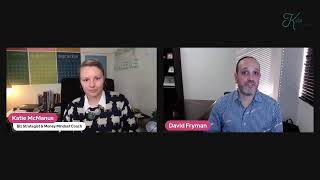
Katie McManus and David Freyman argue that mindset alone won't scale a service business past six figures. You need a validated model, tested offers, systems, and a team. They push back on mindset-only coaching and explain why delegating non-core work matters.
Chapters
I can taste yo, yo, yo I can taste yo, yo, yo, yo I can taste y. Hello, and happy Wednesday. I'm Katie McManus, business strategist and money mindset coach, and I'm here today with David Fryman, who is a fabulous, like, brilliant attorney out of New York and one of my business partners now. And I'm super excited we're working together.
I am also super excited. Hi, everyone.
And just a little housekeeping. We are going live on The Facebooks, on LinkedIn, YouTube, and on Instagram because it's now possible to do that as well.
Is it really Instagram integrated?
It is.
The weird thing with the. Your camera on the side.
I know, I know. Now I can just do that with TikTok, but I'm not doing that right now. It's kind of hard with a guest because, like, you have to figure out, like, what's muted and what's not, like, all the things.
Although I'm not cool enough to go on TikTok live yet.
I mean, well, you need a thousand followers, so I don't think you have that. No offense. Yeah, yeah, you're. You're just 900, what, 86 away.
I love that. That's. That's. That's an example of a good, positive business mindset.
Yeah, yeah, yeah. Mindset. Mindset. Well, I'm really excited for our top today because I know we talk about this a lot. There's, like, the mindset queens over on Instagram who are super expensive business coaches, and they seem to, like, bang on about how, like, mindset is the key, and it's kind of like a gaslighty way to get people to spend money on your thing. And mindset's so important when you're scaling a business from multiple six figures into seven figures. But it's. It's not the whole thing. And really, the only way you can have, like, a mindset that you actually believe it's going to happen is if you have, like, logistical also set up. Right. Like a good legal strategy and a solid marketing plan and an offer suite that's actually going to get you there. And a rollout strategy.
Yeah.
And it's. Yeah. I mean, a, like, I'm super excited for what we'll be announcing in the coming weeks in this space, but B, I think there's this point where a lot of business owners hit that level in their business. They start plateauing and they assume that there's something wrong with them, that they just, like, can't grow further. And maybe they've made some mistakes in the past and maybe like, like this is the most that they can do with the tools that they have. And I'm curious, you know, when you see someone in that space, like, what are the top three things that they're struggling with?
You know, it's a great question. And I think mindset, I mean, I think with the problem with a lot of the mindset business coachee marketing, is that it is. It's true. Mindset really does make a big difference. But it's very easy to say.
Right.
And it doesn't make a difference in this, like, magical rags to riches kind of way.
Right.
It's a difference on the margins. It makes a difference when you're on a sales call and party really doesn't believe that your offer is worth the money. And so it affects your tone and your attitude. It affects the way you might hesitate when you get an objection and, and cost you a sale. So it matters. But that doesn't mean that you fix your mindset. Clients are just going to be lining up and like compulsively entering credit card information, right?
Oh, 100%. But. And I want to say, you know, to my point, so, but to the point we were having before this, is that, you know, to be convinced of your value and convinced of how much you're charging, like a good strategist, like a good marketer, will help you really see the value of what you do.
Oh.
You know, and I think a lot of the times when you lean too far into mindset, it's like you jump over those, those pieces which are so important if you're building the value of what you're doing.
Yes. I think that the, the reason I emphasize the mindset pieces, because I think part of the reason it, I think it in a lot of cases is sort of slimy, is because it jumps over, like, really basic aspects of what you need to build a successful business, any kind of business.
Yeah.
And you need a business model that's validated. That's also an important step. Just because you have your marketing lined up and you have a set of offers perfectly priced for your audience. Then there's the step of making sure your thing works right, that the service that you're providing solves the problem that your clients have, which sounds like that's pretty obvious thing to check. But a lot of business owners will kind of rely on their intuition to get that far. And when you have somebody that has been in the world, in the world of providing that service, and they've lived and breathed that service, and they know their clients or they think they do. Sometimes it takes an outside perspective, somebody that's not invested directly in the business to like tap you on the shoulder and being like, have you tested that? Does this work? Are your clients actually seeing the results that you think they're seeing? Have you implemented any kind of system to check? Are you, you say you know your ideal client. Do you really know your ideal client? What are some ways to kind of validate that and get people out of their intuition? When you're a solopreneur especially, it's very tempting to, you know, be in the silo and put on tunnel vision and focus on, you know, the three or four aspects of your business that you've been taught are going to move the needle.
Right.
And when you have a team, whether that team is, you know, you have co founders or partners or, or whether you have a fractional team that you put together, it's really important to have someone who's going to kick those tires.
Right?
With my team, my, both my internal team, my associates and, and my fractional operations team, something I emphasize all the time is like one of my mantras is that like I need, I need you all to prevent me from drinking my own Kool Aid.
Right.
I know that I have a tendency to get really excited by an idea.
Yeah.
And sometimes when you have a leader that is super excited by an idea and passionate and ready to run with it, everyone else is kind of like, should we tell them, Like, maybe it's a good idea. Right. Like, I go out of my way to like encourage my people to like kick me in the nuts if you have to, like make sure that like I say, you know, level and humble and open to.
Sorry, sorry. I just imagine Sarah kicking you in the nuts and you just gotta excuse me, I'll be right there. Well, so I love where you're going with this because it's so true that like you can get super excited by all these different ideas. And I see a lot of people, especially when they've reached a certain level of success and they kind of know what works, when what's worked to get them to that level of success that they get so mired in it. And this is kind of where I, I personally was kind of in this because I know what works on LinkedIn, you know, like so like I know how to get business from LinkedIn and I'm very comfortable with posting there and going live there and I know all the actions that will lead to me getting one on one clients and group Clients and all that stuff. And like, I don't know what I don't know on other platforms, or at least I didn't. Like, I'm learning, but I think when someone gets to that point in their business where they're really confident in some areas and they've been so dependable, they have a really hard time leaning into other areas that are new and kind of scary and they're more unfamiliar with because they, they don't have that level of confidence. And that's kind of what they've gotten used to. Right. Like, it's like they're, they're no longer the newbie in their business, but like, they're a newbie in this new way. Like maybe like a marketing strategy or a legal strategy. And it's just like it's outside their, their zone of genius and it makes them really unsure and they, they get into fight or flight sometimes and they make bad decisions and then they think, oh, well, fuck it all. It's like, it's no good. I just have to, like, burn it down and back up.
Yeah, I think that the number one, if, if I had to. Now this is going to be. I want to be careful how I say this, but if I was forced to narrow down the skills that you need to be successful in business into like, one most important ability, I would say it's the ability to identify as quickly as possible what you don't know and how to know it, how to get to the place where you know, either by hiring or reading, and to speed up that process. Because if you can do that well, you can accomplish most things because even what you don't know, you'll figure out either how to learn or identify. It's not realistic for me to learn this. I have to outsource or some combination. And that to me, if you don't have that skill, you could be super talented at marketing, you could have a great product, you can have a lot of money, but at the end of the day, there's going to be some gap there and you're going to have to fill it in and grow and grow into it as an entrepreneur and having a team around you, a team of advisors who can do some of that for you. It's like it's a game changer. It's a game changer because you have somebody who's going to tap you on the shoulder and say, you sure about this? Have you really thought this through? What else is the other new thing that you didn't think about? But you're about to walk into. You can't possibly do that on your own. Doesn't matter how much experience you have. It doesn't matter how smart you are or how resourceful you are. You can't compete with, like, multiple brains.
Right.
Like, you know what I mean? You have the. The addition of people who care about your business, who know your business, who have related but different expertise. You're gonna be in a position to. To grow faster. Or if you're going to fail, fail faster and rebuild and fail, rebuild and go through that iterative process.
Well, question, you know, like, when you're kind of, you know, becoming an adult, did you have a group of friends that did, like, a separate club?
A separate club?
No. A supper club?
A supper club? No.
So, like, every month, one person hosts a dinner, and you kind of switch around to different people's houses. And, like, the point is to meet new people. So, like, everyone is expected to. To bring a guest to, like, introduce them into the group. And, you know, there. There comes a point in a separate club where it has to, like, become almost a catered event. Right. Because if you're inviting too many people, I like, if. If it gets out of control. So you might start with five friends, and they each bring a friend. Like, cooking for 10 or 11 people plus yourself or including yourself is one thing, but when it grows up to 50, like, it really becomes that question of, am I cooking for 50 people or am I contacting a restaurant and having them put together some catering for me?
Yeah. So, yeah, we didn't have clubs, but we had, like a. A shot. Dinner and holiday meals.
Yeah, yeah, yeah. But you get to that point with your business too. Like, okay, cool. You can really consistently, like, churn out a dinner for, like, 11 to 20 people. But when you want to upgrade it to, like, 50, 50 people, like, there's so much more involved at that point.
Yeah.
You know, and you have. You almost have to also reconfigure, like, what is the purpose of the dinner? There. There needs to be more structure, because it's not like everyone is going to naturally, like, find their groove within the group, because that's a lot of people.
Right.
You know, you might have some introverts, you know, like, oh, God, a lot of strangers. What the is going on?
Yeah, Walk in the door, see 50 people sitting there and being like, you know, my stomach's bothering me. I'm just a little tired.
Yeah, see everyone.
I just want to stop by.
Yeah, yeah, yeah. Have a good one. I drop. I dropped off some cheese but it's the same thing when you're to your point. Like, it's the same thing when you're running a business. It's like you can get up to a certain point, but then you have to start figuring out, like, what are the other brains that I need to bring in?
Yeah.
What's going to be really helpful here? And I just want to see. Justin, that's a four hour work week kind of dilemma. Unless cooking is part of your love language, which case the time saved isn't as important as the effort to make the meal. Yeah, 100%. Yeah. Yeah. But like to, to the point, like, if you're wanting to scale your business, if you've gotten up to say, a half a million dollars a year and you're working a good solid 40 hours a week, the. I mean, the choice is really, do you want to work harder or do you want to work smarter?
Yeah, yeah. You can't work harder. Meaning.
No.
If, if hard work is your measure, you're gonna max out.
Right.
Pretty quickly. I'm all for hard work. I work hard. I believe in hard work. I don't think there is any way around hard work. Anyone that's pitching you some sort of success by claiming you're not gonna have to work hard, I think, you know, you should run in the other direction. But hard work is only going to reinforce what you already know.
Right.
Only work hard at what you know how to do. So if you're, let's say your marketing strategy depends on cold calling or cold DMing people you just met on social media.
I hope not.
Please don't, don't connect with me. If that's going to be your strategy. Yeah, but if, if that's what you're doing, then you can work really hard. You'll just do more of it. And if it's not working for you, you're going to spin your wheels.
Yeah. Yep. Yeah. Well, also, I mean, I'm a firm believer that if you build a business that requires you to work hard for it to be successful, you're. There's never a point where it's going to get easier.
Right.
You know, like the hard work should be in setting up the systems that allow for it to be easier down the road.
Yeah, you're the. If providing the. I mean, every, every business is going to be a little bit different here. But to sort of simplify a little bit, if providing the service to your clients, whatever service you're providing is just you personally engaging in some activity for your clients, being on Calls writing documents, preparing copy, designing, marketing, whatever it is you, that is not a scalable business. And you will, other than marginally raising your prices, which you can do. And if you're starting out way too low, you can get a lot just by bring your prices up to, to market rates, but you're gonna cap and there's no way it's gonna get easier for you.
Right.
Unless you redesign the business in a way that allows you to either scale it if you want to, or to just provide you with a lifestyle that allows you to delegate what just isn't the best use of your time.
Right? Yeah.
In my experience working with, with coaches and service providers, no matter how good you are and how the high level of service that you offer, if you are honest with yourself and you kind of audit your own service, you can probably find aspects of the service you're providing that somebody else can do just as well, if not better. Right. So if you're teaching, let's say you are training clients on social media or media, that's a common, relatively common business, you're training people on social media. So your service is going to be involve writing copy, maybe filming, maybe content pillars, maybe designing strategies, identifying your target audience, things like that. Right. And you might be phenomenal at all of those things. Right. But most likely you have like a narrow zone of genius that sets you apart where you really are a difference maker compared to your peers and everything else somebody else can do. Right. It doesn't need to be you teaching somebody how to use canva. It doesn't have to be you. It doesn't have to be you teaching somebody on how to use Facebook ads.
Yeah.
And so when you start thinking that way, you start narrowing your zone of genius. The activity that you do for your clients that's difference maker for other things, either outsource or hire employees that can do for you, however you do it and come up with a business model that allows you to niche down even further while also expanding the service you provide.
Right.
Clients and that when you start thinking that way, I mean it opens up whole new areas of growth 100%.
And I really, I firmly believe, because I've seen it time and time again, this is where, like when, when a business owner starts operating in this way, where they start identifying like, here's a part of my brain that I no longer need to use anymore, I'm going to hire this person and here's another part of my brain that I'm going to hire someone to do this. And that's when they stop being a business owner. And that's really when they start moving into CEO territor, because they're thinking strategically for the whole business and for the greater impact they're going to have with their clients. And they're really taking themselves out of the day to day equation of running the business. Of course they're still going to be involved in a lot of things, but, like, it's not going to be bottlenecked with them. And that's where, like, back to the mindset. Like, if you want to hack your mindset into believing that growth is possible for you, you do need to do some actions to get yourself transitioned from just business owner, not just business owner, but, you know, from business owner into that CEO territory. Because that's the point where, like your day to day is going to start informing your nervous system that, oh, wow, like, everything is fine with me stepping back and with me focusing on these higher level things. Cool. Like what? And. And at that point you're going to have like this capacity to get creative and see about, you know, different ways that you want to grow.
Yeah. I just noticed on the bottom of my screen, it says next to my name, you're in the show. Everyone can see and hear you.
It's true.
But for some reason, seeing it just flash before me was like, almost like everyone.
Did you think that you were in the show? That it was just me talking, having a conversation with someone? Everyone's just like, is Katie lost? Are you just sitting here like, going like, huh? For like, wants to be your friend?
That's a new service I'm thinking of offering. Fractional imaginary friend. I'll appear side by side on video, but not as part of the show to make it sound like you're hallucinating.
Oh, my God.
But turns out you can see dead.
People, so I hope you're not dead.
No.
I mean, speaking of magical powers, do we want to tell everyone what my magical power is?
Whenever I'm gonna say that I'm gonna out Katie, it turns out in addition to being a coach and a wonderful human being and friend, Katie is a witch. Specifically a money witch. And in the three years that we've known each other, I have received a crazy amount of money, literally, while on calls with Katie. Like, a half hour ago, a half hour ago, we're just like, you know, sitting on a call, talking about going live, planning some things, figuring out what we want to talk about. And I got an email that like, I got another. Another payment went through, I think.
Well, last Monday. Last Monday, when We were in our, our planning session for the company we're launching which everyone stay tuned. It' to be so cool.
Yeah.
And it all relates back to this. But anyway, you got a payment for like $73,000.
Yeah, yeah, yeah. There's an entire like multi six figure business that I've like that literally just happened on calls with Katie.
Right, right. I remember there was, there was that month because this started like two and a half years ago, something like that. But there was a month where like every time we talked you got either a payment for like 30,000, 50,000, 35,000, like back to back to back. And they were all unexpected. They were all from clients who like hadn't paid their bill a while ago and was like following up and closing the loop. Wild.
I just want to add, if the FTC is watching this live right now, this is not a promise that just make that clear just in case anyone's investigating this.
I mean, unfortunately this magic doesn't work for everyone.
What?
Yeah, unfortunately like this magic doesn't necessarily work for everyone.
I'm special. It's only for me and maybe some other choice clients. But it is definitely not a guarantee. As Katie, as your lawyer, I'm just gonna giant disclaimer. But. But yeah, thankfully both of us are, are far on the, the safe side of the FTC standards that they've been really aggressive in the last couple years in finally going after basically scams like marketing scams, coaching scams. Yeah. So.
Thank God they're going out.
You know what? Because when you're trying to pitch honestly and trying to be realistic.
Yeah.
You have competitors essentially competitors that are going on social media and saying things like sign up with me and you will be making tens of thousands of dollars within, you know, three months implementing this new mindset strategy. Right. It's not just garbage, it's also, it muddies the water for everyone.
Right.
And it either makes it harder for you to sign clients because people just have unrealistic expectations, or they get burned. And now they just think that all of these service providers and consultants are full of crap.
Right.
So they're just going to be turned off from the industry. Either way, it's a lose. Lose.
Yeah. Yeah. And I mean the saddest thing about it all is that there are people who are genuinely talented who need to be in business because they need to be able to help the people that they can help and because they're signing up for bullshit programs that just sell fluff and don't actually have any like strategy or like how, like broken down, how tos to like, action on their business. They're going out of business. They can't. They are not making any money. They fold. They have to go back to a job. Which not hating on the nine to fives. Nine to fives are great for a lot of people. And also I'm convinced that a lot of the people who sign up for this shit, like, they could be so incredibly successful and have such an amazing impact on the world if they just knew what the hell they were doing. If they just worked with someone who could show them how to do it.
Yeah. And unfortunately, it's becoming harder and harder to distinguish yourselves. One of the good ones, someone who is really trying to help. And to me, I think one of the big differentiators is customization. I can tell when I'm looking at some consultant or coach or guru of some sort. And they're pitching a generic strategy. Right. And a lot of them, it comes from a place of, I did this thing in my business, right. I got wildly successful. Let me teach you how to do it right. There is a trend that you sometimes see in the coaching world that you can. You don't actually have to know what you're doing. All you have to do is be a few steps ahead of your clients, which, like, no, you should actually know what you're doing. You might be a few steps ahead of your clients because you got lucky. You might be exceptionally talented in ways that you don't know how to teach. Those are different skills. Being really good at sales and being really good at teaching sales, they're related, but they're not the same thing.
Yeah, yeah. No, 100%. And it's. I think, I think a lot of, like, the good advice that that happens in the business building world comes from, like, a good place. Like, it's like that you just have to be a few steps ahead of your clients. Comes from a place of like, people having imposter syndrome, of like, I don't know enough, I'm not qualified enough and all this stuff. And they're actually like, extremely qualified.
Yeah.
You know, but. But then it gets turned into like, oh, no, like, pay me your tens of thousands of dollars for my program. And let me tell you, you just have to be a couple steps ahead of your clients. Even though you have no training, you have no background, you have no idea what the hell you're doing. But the fact that you've just signed up for this thing, like, that's the couple steps that you need.
No, it's always the wrong people that have imposter syndrome.
I know.
It's always. It's always the wrong. It's the people that are, like, actually talented. But I mean, like, there are some industries when being just a few steps ahead of your clients is obviously ridiculous. For example, if you're new to the gym, you've never worked out before, and you want to work out when you go to the guy who six months ago was new to the gym, and he just, like, looks like he's in, like, slightly better shape than you, he must know what he's doing. Why don't I hire him to train me? Don't you? That's.
No, no.
Hire someone who, like, knows how to train you.
Right.
Whether they've been in the gym for five years or 20 years or six months. But they know what they're doing.
Right.
That's a skill. Right. Knowing how to train someone to get them into shape is not the same thing as just being in shape.
Right.
Terrible workout strategy. They're just like, you know, they've been gifted the. The genes to, like, just get into shape quickly.
Yeah.
I mean, yeah.
It would kind of be like saying, hey, Katie, can you be my lawyer? Because I know you were in mock trial in high school and you killed. You were so good at your closing arguments. Because I know you're channeling the guy from Law and Order and forgetting his name. What's the character's name? Jack McCoy. Thank you. Yeah, I was, like, obsessed with him. I wanted to be him. I had, like, really, like, funny idols when I was a kid. Anyway, it would be like, me, like, hiring me to be your lawyer. You don't want me as your lawyer.
Yeah.
Even though I did, I do deliver, like, a really good closing argument.
I mean, you're. I mean, public speaking. Right. That aspect of lawyering is.
Well, this was back when I was terrified of public speaking, too, you know.
You've said that before. I find it extremely hard to believe. I mean, I believe you.
Yeah.
You don't seem like somebody who's uncomfortable.
Well, I'm not now.
Yeah, no, I know.
I did a lot of work. There was one talk I gave. I got voluntold by professor at my university to be at the literary luncheon. Like, he just told me I was going to be reading a letter. And I was like, no. And he blew past that and was like, no, no, you have to. And I was like, okay. And I wasn't even in his class. I think he'd retired at that point. But, like, he just like, was very bossy. And so I showed up and I. I had the letter and I practiced and I retyped it up so it'd be bigger font and all the stuff. And I stuttered and stammered and sweated through this. This reading of this letter to 300 authors, English professors, like, I think book agents. Like, it was a really serious literary event.
Every time you tell the story, I.
Get like, yeah, I was so bad, David. I was so bad that people came up to me afterwards to apologize to me for how bad I was. That's how bad. And I literally, like, at the, like, that night, I think I stayed up until, like, 2:00' clock in the morning. I was, like, beside myself. So upset. I borrowed some books from him, some French books, and I literally, like, grabbed. Put them in a plastic bag, shopping bag, drove by his house, left them on his front porch, and I never spoke to him again. Professor Yokin? Yeah. Yep.
If you're watching this Professor Yokin, Katie's come a long way. She's phenomenal.
I wonder if he's died. I don't know. He was pretty old back then.
Hopefully not from the pain of watching you speak.
Professor Yogin. Are you alive? Anyway, but I don't need to look that up right now anyway.
But, yeah, I mean, go live. Anything can happen.
I know, right?
Yeah.
But, yeah, I mean. But I mean, to the point, like, I used to be extremely uncomfortable public speaking. I was bad at it. I was so nervous. I would stutter and stammer and sweat and, like, just lose. Completely melt down and lose my. And. But I worked on it. I worked on a few different things. I worked on, like, the tactics of it. So, like, I. I took training through Toastmasters and Own the Room, and then I just practiced a ton. And I got guidance from people who did a lot.
Yeah.
You know, it was. It was kind of a combination of practicing desensitizing myself to the trauma of it, and also, like, understanding the mechanics of what made it good. That really helped me go from really bad to. To fine.
So to bring it back home, whether it's public speaking, your business, your. Whatever else you're trying to do in life, there's a million people that are selling you, like, a magic formula.
Yeah.
And even if they're a money witch like Katie that can seemingly manifest cash out of nothingness, it's still. Right. It's, it's. It really.
I just have to show this is my money bowl for myself. I. My money witchiness doesn't necessarily work for me. All the Time. But it works for David. But I'm, I'm determined this year. Start working more for me.
I'll take it.
Yeah, yeah. Maybe blow on it, David. I don't know.
You know, the crazy thing is that, that from a lot of, a lot of, a lot of the content you see online about this stuff, like the money witching, like could pass for a serious point. That's the level that we're talking about.
Yeah.
And I think that there, and there is a temptation to say, forget it. All these people are trying to take your money. They're not going to help you. Just kind of do the best you can figure out along the way. And you can figure, you probably can, but you're going to fail a lot more. It's going to take you a lot longer.
Yeah.
And there are really good advisors and business people who can teach you and guide you and kick the tires on your business. Challenge you in ways you're not going to think of because you can't. This is your baby, this is your idea, this is something that you came up with. And all the business training in the world is not going to give you the ability to like take a step back and see it from a different place because that's not you. Somebody else that's not invested that didn't build this thing is going to have all sorts of insights about your business that can really help you completely transform your business. And very possible. The answer to the thing that gets you unstuck to the next level of the plateau is right in front of your face. But you can't see it because you're one, it's yours, it's your baby. Two, you're busy. You have a full time job running the thing and just might not have the background and the skill set.
Yeah. And I mean to the point, like even if you do have the background and the skill set, like I can't do business strategy for myself. Yeah, I know you can't. You can't do business like lawyering for yourself for your own business. Like content creators, like content managers, social media managers, they have a very hard time doing social media marketing for themselves often even if they're brilliant for their clients, you know, so even if you do know what you're doing, you probably need an outside voice or an outside opinion to like come in and, and help you kind of see like what the path forward is going to be and how you need to augment things. David, I know you have a call in like five minutes. I want to be really respectful of that. So any final words of wisdom?
Final words of wisdom. If you're on a call with Katie, just keep an eye on your bank account.
Not like in a bad way. David, that sounds terrible. She's gonna drain. No.
All right, again, if the FBI or the FTC or the CIA, anyone watching this video, Katie is a lovely buff, Definitely not a criminal mastermind. What.
I said, that sounded so. For both. I forgot where you're going with that.
But anyway, final words of wisdom. I think that there are really good, high quality business advisors out there on the fractional level as potential co founders or partners or employees. Katie and I are going to be launching or announcing our launch in a little bit. But don't be discouraged by the garbage you see online. Instead, just, you know, send memes to your, to your friends making fun of it. That's how I cope.
Yeah, same, same. Yeah. And I would, I would add here that, like, you can be so good at so many things and also, like, don't expect yourself to be good at everything. That's never going to happen.
Yeah.
And like, it doesn't make you dumb because you're not good at everything. I think, I think that's one of the things that you and I, we attract clients who are so used to being good at. Most of the things they try that when they hit something that they're not very good at, they like immediately back away from it.
Yeah. And by the way, this is much easier said than done.
Oh yeah.
I struggle with this. And I know a lot of people, it's very easy to say out loud. Still true though. And even when you're. You're going through it and you're struggling with it, you are not good at everything. Definitely not 100. It's never happened in the history of the world at anything. You all, if you're you, you can get to a point where you're like mediocre at everything, but that's not even that good. You want to be like, excellent, brilliant, in fact, at like a couple of the things you can provide. Yeah. And then either get help or learn what you have to learn and build a team around you to keep you in check and keep you honest.
Yeah. I mean, let's look at Genghis Khan. Amazing military mind. He had the first, like, so, yeah, he had the first government that had freedom of religion. You know, he had, he had the first government that was created with people in a meritocracy. It wasn't just like family members being appointed to, but also he was really bad at training his family members not be. And so everything fell apart after he died.
Yeah.
Don't like, don't like. If he brought in maybe like a family psychologist to, like, train them not to be, things probably would have been better.
That's a great way to end this.
Thank you. All right, with that, you have a call in a couple minutes. So we're going to go. Everyone, thank you for joining. Thank you, David. Thank you for being here. And I'm Katie McManus, business strategist and money mindset coach.
I'm David Freyman, attorney for startup founders and entrepreneurs.
And we will see you all soon. Bye.
More from Katie





How to do self care right now, so you can do what needs to be done, for yourself, your business, and

How to do self care right now, so you can do what needs to be done, for yourself, your business, and

#greenscreen How to build a consulting business that makes you $200,000-$700,000 a year

#greenscreen How to build a consulting business that makes you $200,000-$700,000 a year

Maybe we’re not the imposters…? #businesscoach #startup #entrepreneur #smallbusiness #consulting

Maybe we’re not the imposters…? #businesscoach #startup #entrepreneur #smallbusiness #consulting
