How to Price your offer!
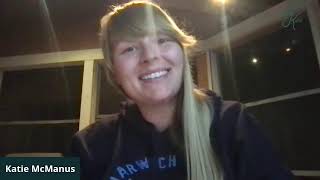
Katie McManus walks through pricing coaching offers by starting with your target income and working backwards. She breaks down a $150,000/year goal into one-on-one clients at $10,000/year each and group programs at around $2,000 per person, then explains why a specific niche and measurable outcomes let you charge more.
Questions this video answers
$150,000 per year.
$100,000 per year from one-on-one clients.
10 clients paying about $850 per month (≈ $10,000 per year each).
Four group cohorts per year × 8 people per cohort → each person pays about $1,562 (Katie suggests rounding up to ~$2,000 depending on delivery).
Chapters
And I'm just going to introduce myself again. My name is Katie McManus, business strategist and leadership coach. I'm getting used to trying to go live on the Instagram, on the linkedins and. Welcome. Tia Fit. Welcome. So good to see you. And for those of you who are seeing me through LinkedIn, Facebook, YouTube, welcome. I am doing this through Streamyard, so sometimes the comments don't all get to me. Me. But if you do have a question, I love this to be interactive. And tonight I'm going to be talking about how to price your offer. This is one of the most important things in your business. It tells people how to value you. It tells people how confident you are, and it allows for you to either pay the bills or fail miserably. So it's really important. And it's one of the most common questions I get from new coaches is how do I price my offer? Because here's the thing. We've been raised by a world and. Hi, Jason. Hi. Dropship Automation Pro. Welcome. We've been raised in a world that tells us that we exchange our time for money. Okay? So we all probably have internalized an hourly rate that was given to us at some point. Some point. Hello, Jason. At some point. And we think, okay, cool. That's what I'm going to be charging for coaching. No, no, no, no, no. Because let's talk about a coaching business model. Okay? So oftentimes, if you're running a coaching business, you are not doing 40 hours of paid work per week. No. You say you have 20 clients who all meet with you twice a month for one hour. Very typical in the coaching world. Those clients will fill up about 10 hours each week per month, which means that each week you'd be making about a thousand dollars if you're charging a hundred dollars an hour. Right. Some people make a hundred dollars an hour at their job anyway, so you would only be making a hundred dollars an hour times 10 per week. That only equals about 52,000 at the end of the year. I don't know about you, $52,000, but I cannot live on that. Okay? I need more money to live on to have a nice life, to have a sustainable life. So I can save for retirement, save for vacations, treat myself sometimes, you know, buy nice Cape Cod sweatshirts and stuff. The other, the other part of this. Hi, Sharon. Welcome. And if you guys have any questions about this, please do pipe up. I want this to be as interactive as. As you want it to be. And if anyone wants to come on camera with me on the Instagram. Actually, I take that back because it's going to be weird if I'm doing live. We'll do that another time. But anyway, so no one is going to believe that you can help them if you're charging too little for your service. Okay, thank you. Thank you. Jason. Yeah, I love the hoodie. It's my only hoodie, actually. I'm very excited about it. Anyway, no one's going to believe that you can change their lives if you're only charging 200amonth for it. And hi, Rick, welcome from the Facebook. So you have to figure out a rate that people are going to believe you when you say, hey you, I can change your life in X, Y and z way. They're going to have to have some skin in the game. They're going to have to pay a certain amount for them to even believe that you can do this work with them. Okay. So if you're charging too little, A, you're not gonna be able to pay the bills. B, you're not gonna get clients even if you're charging cheap because, you know, clients are gonna wanna go for someone better who will get them results because they equate quality with price. And also, it's just, you'd be working way too hard to try to make ends meet. It's just not worth it. So let's talk about the math. Okay, we're gonna be talking about the math about how to price your offer. Okay? If, if you are on your phone, I don't want you navigating away, but take out a pen and paper. If you're on a computer screen, pull out your phone. I want a calculator. Okay, so let's play with math. So say your annual income goal is just $150,000. Okay. This is what I typically hear most of my coaching clients want is just $150,000 a year, which is a completely reasonable income. Okay. And say you want to have a blend, you want to have one on one clients, and then you also want to have group clients, okay? So you want to run like four groups a year that has maybe eight people in it. And you want that to be kind of like a lead in so that, you know, two or three of those people become one on one clients of yours. So let's look at how we're splitting up your $150,000 income goal. Okay, so let's say $100,000 is going to come from one on one clients and 50,000 is planning on coming from that group program. That you're rolling out. Okay, so let's play with your one on one offering. Okay, so if you're going to be rolling out a group program, those take work. It's not just you roll it out and people magically sign up. You're going to have to spend some time promoting it. Okay, so let's say you have 10 clients at all times in your one on one coaching practice. Okay? So I've done the math, I've written it out because I'm on my phone, I don't have access to a calculator. Okay? So a hundred thousand dollars divided by 12 is $8333, etc per month. So if you have 10 clients, they all need to be paying around $833. I always like to round it up 850, just have that buffer. Or if they wanted to sign on for the year it'd be 10,000. Or for six months it would be 5,000. Okay, let me see. Jason, such a great point. Especially the hoodie. I'll send you an Aspire hoodie. Yes, I would love an Aspire hoodie. And you want to make $10 million. Yeah, right on, babe. I love it. So anyway, so that is your one, that is your one on one coaching business. Okay, so just 10 clients paying around, you know, 850amonth will get you to that six figure mark. Okay. It takes work. And here's the, here's the thing I want you to know is that if you do not have a specific niche, and when I say niche, I don't mean like the typical niche of like clothing brands where we work with, you know, women between the ages of 25 and 37 and they are professionals and maybe go to court once in a while because they're lawyers. No, I'm talking about your niche as a coach is a different definition. It is a, a person with a set of problems, A group of people that all have the same set of problems. Okay, so maybe they're going back to work after a really long time away. Could be new moms, it could be people who had an illness, whatever. You could even niche it down even further. Say you're a dating coach. Now, being a dating coach for everyone, it's a little general, but you could literally be a dating coach for lesbians who are divorced, who have kids and are trying to co parent with their ex spouse. Okay, that is super specific because the problems, the things that they worry about are all going to be the same. Okay. And of course you're not just going to get to that demographic. Other people are going to message you and say, hey, I saw your post about that thing and I'm having the exact same problem and I really want to work with you. Do you ever accept people outside of your niche? That happens as well. So to be able to justify this, you do need a specific niche. If you do not have a specific niche, what I want you to do after this is over is I either want you to go to my bio on Instagram and I want you to click on the link, the link tree and go to book generate income strategy call. Because we will get on the phone and we will start working on your niche together. And if you're looking at this anywhere else, I will be posting the link in the comments of this after this finishes. Okay? So. Okay, so that is your $100,000 goal. I'm also going to be talking about how you're supposed to deliver this so people are happy. So stay tuned for that. Next, let's look at that $50,000 a year that you want to generate to be generated from your group programs. Let me see. Oh, Jason, that's such a great question. I'm going to get you in a second. I just started the math thing in my mind though, so I have to go there. So the $50,000 that you want to generate from your group programs, okay, so say you want to run four groups a year, okay. And you want eight people in each group. Okay. So it's like a small, intimate group setting where you can do some, some one off coaching. You can lead people through a journey and it saves just eight weeks. So that way you have like a month off every quarter where you can, you know, generate leads and sign people up for the next round and also just have a break and maybe go on vacation. So for that. So if you're dividing 50,000 into four, that's 12,500. Okay, divide that into eight. Because you have eight people, each member of the group needs to be paying around $1562. So you could even round that up to 2000 depending on how often you are meeting. Okay. And how much stuff you've prepared for this. Okay. So, Jason, I love this question. How do you maintain motivation towards your goals? So here's my belief. Everyone get ready. Hold on to your socks. I actually don't believe in motivation. I believe motivation is a cheap parlor trick that, that people sell people sell. But the people who get it, they're motivated for like 30 minutes and then they move on with their day and things stress them out and Then they get back to the daily grind. Okay. I actually don't believe in motivation. I think if you try to do stuff with motivation, it's never going to happen. I instead believe in momentum. Doing something every single fucking day, Tuning in even when you don't feel like it, because you've created 36 days of momentum, where you tuned in, you did the thing. And I'm getting a lot of people agreeing with me in the comments. I love it when people agree with me. So you have 36 days of. I. I did the thing every day. Are you going to want to drop that ball? So I have to tell you a story. So when the pandemic hit, I'm on Cape Cod, thank God. I just happened to be an amazing daughter. I bought my parents a peloton the year before, and a friend of mine on Instagram. It was her bicentennial ride. So she. This is her 200th ride. Right. Hi, Sabino. Welcome to the show. Um, so it was her 200th ride, and so we all jumped on, and her sister and I actually connected on Instagram, and we. We kind of made a pact. We were like, how cool would it be if we. We rode our pelotons together for 10 days? And then we got to the end of 10 days, and we were like, do we want to go for 20? Yeah, let's go for 20. And then we went for 30, and then we went for 50, and then all of a sudden, we went for 100 days in a row. Unfortunately, peloton doesn't give you credit for that kind of a streak. But the thing was, is that the further along you get, the. The less you wanted to drop the ball. Okay. It would become like a compulsion. Like, I haven't ridden the peloton today, and let me tell you, in the deepest, darkest moments of the. Of the pandemic, when it first started, April, May, those times, especially in Massachusetts, where it's, like, muddy and gross and cold and depressing, it got me through. It absolutely got me through. If I had tried to do that on motivation, it would not have happened. Absolutely would not have happened. Okay. So, Jason, to answer your question, I don't believe in motivation. I believe in momentum. Interesting. I see inspiration linked to motivation, which aligns to momentum. Jason, there is a whole philosophy in there that you need to develop. Okay, we'll talk about this at some point, I'm sure. But I mean, that's. That sounds like the foundation for your book, kind of. So. Yeah. So just keep that in mind. Write it down somewhere Maybe put a post it note. Okay, so, so here's the thing. So if you are building this business, I'm going to get back to the point of this whole thing. But that was an excellent question. Hi, Moon Growth company. Good morning from India. Oh my gosh. Hi. It is night here. It's so funny everyone. There are people around the world watching this. That's, that's wild. Anyway, so let's, let's get back to what you need to have a really solid offer. Okay. So you figured out your pricing. We just figured it out together. Okay, perfect. So your one on one clients are paying about $850 a month. They're signing on for either six to 12 months. Okay. So you have that locked in your, your sure that the income is going to be consistent with those 10 clients. Fabulous. Okay. You also have this group program and it's priced very competitively for the market and you only have to enroll eight people per session. And if you did want to raise the rate from 1500 and change to 2000. So that way it makes up for you only getting six or seven people. You can absolutely do that. By the way, the group program, people who go through it and experience it and experience you will often at the end of it be like, okay, cool, how do I continue working with you? How do I continue working with you? And you just create that as the follow up end of that of that program. That is just expected. You know, some people will continue on as one on one clients. Okay. So it's a great lead magnet or a great lead generator. So, but how do you structure these things now that we've figured out the pricing and how much money you're going to be asking for, how do you position it in a way that people will see it and think, yep, that's worth it. I absolutely want that. This is where knowing your niche is super fucking important. Okay. If you do not know your niche, if you're not in touch with their, what their problems are, what they're frustrated with, like the stuff that they go and bitch and moan to their best friends about after they've had a glass of wine. And if you're not in touch with what they want, what they want, like on a soul level, not just like, oh, I'd like a raise or I'd like, you know, to have some time off, you know, the, the nice to haves then need to haves. Okay. That is what you need to know to be able to design these programs in a way that they will just fall over themselves to Sign up. I'm just making sure I'm catching up the comments. Jason. Sorry, I took it all off. Pizza. All good. That's part of the show here. Hi, Sharon. There's a lot of math in this life. I know I wanted to keep, I felt it was important, but I wanted to make sure we're just touching upon it. This is the meat and potatoes of it, okay? So if you know your niche and if you don't know your niche, remember what I said, go to the link in my bio and book a generate income strategy call we can dive into, you know, what your niche should be or at least send you in the right direction anyway. Number one, the first thing you need to have a solid offer, okay? A solid offer to attract clients who'd be compelled to sign up with you is you need to have a set of problems that you solve. Solve through your one on one coaching or through your group program, okay? And I'm going to go into what it looks like for either one differently. So your one on one coaching, as you're describing their problems, you are describing also that you do a bespoke, a custom program that helps them go from those problems that they have to whatever goal it is that they want. Okay? Now and this can be very broad if you're attracting a one on one client. It's a little different for clients who are enrolled into your group program. Because a group program, you don't have as much time with them and you know, you may be meeting with them every week for eight weeks but there's only so much content you can shove down someone's throat in that time. So you're going to have to narrow it down to a more specific problem that they have in that time. So for instance, I coach one on one clients, clients on how to build their business. And it is bumper to bumper, okay? We start from finding a niche all the way through. Here's how you get your first wave of clients, here's the next stage of that after those things stop working. Here's how your back end systems, all the things, how to market yourself, everything. And it's all custom to each client, okay? You don't have that availability in a group program, okay? Especially because of the time, but also because you have eight people that are listening to you. You can't customize everything. So for instance, one of the programs that I roll out, rolled out last year was become a thought leader because one of the things about starting a business is that you have to market yourself and marketing yourself is really hard Unless you know what you're talking about. Unless you know what, what's the thing you're leading with? Okay. And oftentimes it's, it's. It takes some bravery to step into thought leadership. Not oftentimes, it does all the time. It takes bravery to step into thought leadership. And as you know, my whole motto is stop being a weenie. Okay? So we've got to be brave around here. If you're going to start a business, you have to be brave about it. So you see how I took a portion of what I could be working on with a one on one client and I created it into an eight week program. It was fucking fabulous by the way. I actually, now that I'm talking about it, I want to do it again. I just don't have the bandwidth for it right now. But it will be coming. Leave me. So anyway, so you need to pick out a specific problem that people are having. So for me, I pick, I picked entrepreneurs who are having a hard time getting their voice out there and being seen for who they are, what they believed. And I took that thing that I do with my one on one clients and I applied it to a group and boom, filled it up. It was fabulous. So you have to have that set of problems that they have. Next number two, you have to set them up to have small wins early. Okay. This is, you can design this for each and every one on one client that you sign up. It's going to be different for everyone in that scenario. But in a group program, you have to have more curriculum behind it. Okay. You have to have more of a container that they can have some wins in. Jason, data is great. We've been talking data all day. I love this. Sharon. I'm re engaged now that we're talking about niche and pain points. Oh, good. I'm glad, I'm glad you stuck through there with us, Sharon. I really appreciate it. So back to small wins early. Okay. So if you have a group program, you need something that is small but still allows for your, your clients to feel like they've made a leap forward. Okay. So it can be as small as figuring out what it is that they want their life to look like. Okay. It could be as small as making a decision about if they're going to stay in a job or quit their job. Okay. If you have a group of, of people in a job transition group that's, that's absolutely perfect. It could be, if you're doing like a fitness group, it could be that they all went for a run that was 10 minutes longer than they have ever done before. 5 minutes longer. Everyone gets a win early on. Okay. If you don't do this, if you don't do this, you're going to be frustrated. They're going to be frustrated and it's just going to take a lot more energy to get everyone back on track with what the program is. Okay, so let me see, Jason, Such a key point about finding a win. Yeah. So you know, an early win, you know, for one on one clients, it's so much fun because you get to create whatever that is for them. Right. This is what I love doing with my one on one clients is when we first start, depending on where they're starting from, if they're at the ground level, they don't have any clients, then we start off with, with research, getting interviews, okay. If they have like a bustling side hustle, then the name of the game at that point, name of the game at that point is to restructure their business so that what they're already doing is bringing in more money. Okay? That is the name of the game. So but again, for your group program, it has to be kind of a one size fits all. Okay. So that's number two. And number three, to enroll clients into your offer that they're paying a sizable chunk of money for, you need to have a measurable outcome that your clients are working on achieving by working with you. Okay? So for instance, in my business, my clients, hopefully by the end of our working our work together, they have increased their income, they've gotten more clients, they've enrolled people into their group programs. If you are a fitness coach, hopefully your clients have reached their fitness goals. Be it get stronger, lose weight, get faster, be more flexible. If you are in a relationship like romantic coaching scenario, I want you to think maybe they've been dating, maybe they have a clearer idea of who they want to call into their life. Maybe they actually have a relationship. Measurable outcomes that your clients will work on achieving. And this is not to say that you're guaranteeing that outcome, because that's impossible. Okay. As coaches, we can only hold someone's hand and guide them and show them what's in their blind spot as they're doing the work themselves. Okay. This is why it is so critical to charge enough money for your services because you want your clients to be committed to doing the work. And you know, if they're not paying enough money, they may slack a little bit, which means that they're not going to see results, which means you're not going to see a killer testimonial at the end of your work together. And that's what we're all after, right? Jason, how do you measure success? Or how do you celebrate the small wins that keep you motivated? This is a great question. I think you're asking this just as a business owner. How do you measure success or how do you celebrate small, small wins? So one of the practices that I absolutely love and I get on the wagon and I fall off all the time is practicing gratitude and listing literally writing down my wins each day. I am just terrible at giving myself credit for all the things that I do, all the things I've accomplished. If you're. And it depends on, you know, how you're driven. Are you driven by relationships? Are you driven by money? Are you driven by crossing things off? Whatever. Whatever that is for you. You need to have a daily practice where you check in on the thing. Okay? So if it's money, check into your bank accounts and check on your daily sales reports and maybe have, like, a big graph on your wall that you get to, like, fill in every time you make more money. So, like, it just climbs and climbs and climbs relationships. You write down every single conversation that you had that day and something special that you took away from it. It just. It's. It. It gives you more of a dopamine hit when you see it all written down, and you give yourself that moment. You can also give yourself stickers. I have a client that they weren't great at giving themselves credit, and so I assigned for her to go and buy herself stickers, and she gives herself a sticker every time she does something. That's a lot of fun. But really, I mean, checking in with yourself and having some. Whatever practice it is for you to show where you've come from and where you are right now, and here's what you've done and. And you're on the right track. Working with a coach is a great thing for this because your coach is usually going to give you credit and tell you to stop and give yourself credit for this stuff. Sharon Promotions. Better places to work, launching their own thing, meeting a financial goal, having more capacity for fun and connection. Yes. Great examples of measurable outcomes that your clients might be after. Jason, you are a rock star. Thank you. But you do not want to hear me play any music. I'm awful. Yeah. This has been so much fun. So those are so. Remember, I just. I just want to recap. Okay, so you have to start off with the math. How much money do you want to make? And don't be scared by those big numbers, okay? So your clients are in it to change their own lives, okay? It takes an investment. It takes an investment to change your life, okay? And it's energetic. They have to have some skin in the game so that they can do the work, okay? So they can see the results. Okay? Don't be afraid of that big number. When you're creating your offer, it has to be based around a set of problems that your niche. And remember what I said about niche. It is critical based around a set of problems that your niche has. It has to be specific. Okay? Jabbing at you with my pen. And then you need to set your clients up to have small wins early, okay? So for your one on one clients, you can customize this as you go design it with them. For your group clients, you have to manufacture it in the beginning portion of the program in week one or two, okay? And then finally, number three, it has to be geared towards measurable, specific outcomes that your clients are dying to have in their lives, okay? That, my friends, is how you price and create a compelling offer. Anyway. Oh, God, Jason, you're asking my karaoke song? I don't know. I'm gonna have to think about that. I'm not a singer. Like, literally, I say that I'm not a singer. I think, like, children would probably cry if they heard me singing. And I don't know what I did to a group of drunk people in a bar if I were singing. I don't know, maybe. Maybe something from, like, the Little Mermaid. I don't know. But on that note, we're gonna be ending this live because I am getting a little uncomfortable with all this singing talk. But anyway, Sharon, Jason, friends in India. Bhakti. Hello. Thank you, everyone. And Rick, anyone else who's watching on Facebook, LinkedIn, YouTube, thank you so much for joining me this evening. I hope this was useful. And like I said, if you find yourself, like, hearing this and thinking, oh, wow, well, that sounds easy, but I don't know how to do any of that. Like I said, just shoot me a DM or go to my bio. Find the link to. To a generate income strategy call. We'll get on the phone or on Zoom and we'll work it out for you. Anyway, I'm Katie McManus, business strategist and leadership coach. I'm off to do a little bit more work before I wrap up for the evening, but I hope you're having a great end of the week, and I can't wait to see you all soon. Bye. Okay, now how do I end on Instagram? Oh, God. End. Broadcast the awkward end.
More from Katie





How to do self care right now, so you can do what needs to be done, for yourself, your business, and

How to do self care right now, so you can do what needs to be done, for yourself, your business, and

#greenscreen How to build a consulting business that makes you $200,000-$700,000 a year

#greenscreen How to build a consulting business that makes you $200,000-$700,000 a year

Maybe we’re not the imposters…? #businesscoach #startup #entrepreneur #smallbusiness #consulting

Maybe we’re not the imposters…? #businesscoach #startup #entrepreneur #smallbusiness #consulting
