How to replace your 6-figure corporate income
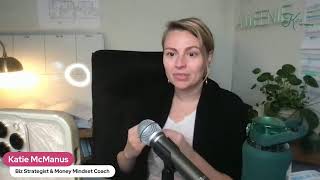
Katie McManus shows coaches and consultants how to replace six-figure corporate income by validating market demand, designing offers around one-on-one clients, and pricing by value instead of hourly rates. She breaks down the math: $240k/year means 10 clients at $2k/month. Her clients land their first high-paying client in about 2.5 months and see an average 11.1x return over three years.
Questions this video answers
Target $240,000/year → $20,000/month → 10 clients → $2,000/month per client.
About 2.5 months.
Average 3-year ROI ≈ 11.1×.
A 23× return on investment within one year (for a highly successful client).
Chapters
So welcome. Welcome to my world. Hello. All right, I'm going live in a couple different places. Just a little housekeeping, first and foremost. Hi, I'm Katie McManus, business strategist and money mindset coach. Welcome. Today I'm going to be talking about how you can replace your six figure corporate salary with a coaching and consulting business. I will also be answering any questions. So any questions you have on how to get started, how to market, how to sell your services, how to figure out pricing, all that stuff, I'm going to be going over. And also if you have anything super specific, pop them in the comments. All right. And just a little housekeeping. I am going live over here on my phone on TikTok. First time here. I literally just hit a thousand followers last night and super excited. It's been a big goal for me since I started in January. So know that it takes time. And then I am also going live on Facebook, LinkedIn, YouTube, Twitter, on my computer, behind my phone. But anyway, so gonna be jumping right into this topic. And like I said, if you have any questions, if you're starting a business and you are feeling stuck, if you just don't know what to do, if. Let me see. Hi, Nemo. Hello, everyone. Oh, my gosh. So great to see you. So anyway, anything you feel like you're stuck on, I'm going to be covering here. Okay, so let's talk about how a lot of people end up getting started. Okay, so typically when someone wants to start a business, they. Let me see. When someone wants to start a business, they can get sucked into doing a lot of busy work. All right, this busy work can look like a number of things. It could mean like coming up with ideas for programs that you're going to launch. It could be coming up with a ton of content that you put online that gets crickets, doesn't get any reactions. People don't sign up for your stuff. They just don't understand how you're useful to them. Right. It can also look like buying a ton of courses, which I did. I spent thousands of dollars, tens of thousands of dollars on online business building courses. Which, by the way, if you have adhd, if you're not. Not neurotypical, most of those courses aren't going to do you any good. All right? Because they have. They are very standardized. And what do we know from public schools? Standardized stuff just does not work for us. We need stuff that is going to be flexible to our neurodivergence. It needs to be customizable. We need to Feel like it really fits our personality. Nemo has ADHD and ocd. Yeah. So you'd absolutely need stuff that is going to kind of scratch both itches. So anyway, so it feels really good to do this busy work. Okay. It feels incredible because you have all this stuff that you get to do, and you get to feel like you're in your business. But the only problem with this busy work is it doesn't get you clients, it doesn't make you money, it doesn't launch you into the world, because what is it? It's busy work. Okay, so what do we do instead? So when you're building a business, you want to check in on a couple different things. First and foremost, what is it that you want to do? Like what. What are you talented at? What. What are you passionate at? Can I write prescriptions? Nope. I am not a doctor. I can write pretend prescriptions for, like, you know, prescription to go and be a badass, but that is the. The furthest I can do with prescriptions. Anyway, funny questions over on the tick tock. This is my first time, so thank you, guys. So you have to figure out what you want to do, and if you don't know what you want to do, then I want you to think about, who do you want to help? Like, what's the impact that you want to have in the world? Right? Then I want you to go out and you need to figure out if there's actually a market for it. All right? I joke that, like, you know, you could be really passionate about galoshes and tennis and think, okay, well, cool. I'm going to completely revolutionize this sport of tennis, and I'm going to create galoshes for tennis. And. And then you create all this product and then you launch it, and no one. No one buys because people who play tennis don't wear glosses. You don't wear glosses on the tennis court. They're not great sportswear anyway. So you have to make sure that there's a market for it, and then you have to talk about what your clients want. You have to talk about what they're struggling with. Um, I hate to break it to you, we all feel. Hi, Justin. Yes, I made it. We talk. I talk about how, like, when you're an expert at something and you are determined to. And you're determined to get clients, most experts, they make the mistake of going out there and talking about how. How cool they are and how smart they are and. And really trying to prove that they know their stuff. And this is where this goes off the rails is that your clients don't understand that. They don't understand your expert speak. Like, they don't care that you're an expert. Like, literally, your clients do not care about what it is that you do to solve their problems. Okay. If you were a magic belly dancer and you could just belly dance and solve people's problems, then your clients would absolutely sign up and just say, dance, dance. Throwing money at you. Like, dance, solve my problems. Okay, what you want to talk about? Let me see. Oh, being told there are filters. Okay, let me see. Questions I was going to ask. Do you ask you to do me a script for that work? Which works. Nemo. Nemo hose. There's a lot of work that you can do. Absolutely. But give me. Give me a specific questions as. Yeah, a specific question, because then I can answer it. Like, what kind of work do you want to do? Who do you want to help? You know, what kind of business do you want to start? All super necessary for me to answer the question anyway. Yeah. So your clients don't care how you're going to fix their problem. What they care about is the fact that they have a problem and all the problems that that problem is causing in their lives. And then they care about the outcome. They care about that desired outcome. So I want you to imagine, you know, I'm signing up for a personal trainer. Okay. I want to lose, like, 20 pounds. I have a beach vacation coming up. I want to look hot in a bathing suit. You know, maybe I feel a little jiggly right now, and it's uncomfortable. That's the kind of stuff that I want to see in marketing. I want to see someone who is saying, hey, listen, here's where you're feeling, how you're feeling in your body right now. Here's where you feel stuck, and here's what you ultimately want it to look like. Here's what you want this experience of being on the beach to look like. And that's what I'm going to sign up for. I'm going to sign up to go from where I am to where I want to be. I'm not going to sign up for a personal trainer. And just for the sake of being in a room with a bunch of other sweaty people and being uncomfortable and picking heavy things up and putting them back down, which is ultimately what personal training is. Right. It's like, unless you have, like, a private gym, then you're just in a room with your personal trainer being sweaty and uncomfortable. Right. People don't Sign up to be sweaty and uncomfortable, they sign up to be hot, they sign up to get in shape, they sign up for that desired outcome. So. So when you're starting a business and you're promoting it and you're checking to see if there's a market for it, you really want to identify what are the problems that my work solves and talk about that in a high RO heat welcome. And then you also want to talk about what the outcome is that they're going to get. I am not in College Park Atlanta. I've actually only driven through Georgia once. Lovely state. I went to, actually. It's so funny. When I was in Georgia driving cross country and I was driving from Massachusetts south and then going straight across, like going to California and I'm driving with a girlfriend and we're driving like through rural Georgia and, and it was so funny because there is a sign for like wine tasting, which Georgia is not a wine area. They don't have a good wine region. But we went wine tasting and it was awful and so fun at the same time. Anyway, that's my experience in Georgia. I, I kind of love tick tock. It's like scratching all of my ADHD, like, brain itches. This is so much fun. Oh, my God. Hello, welcome. What do you have emojis as a name? I can't. Anyway, so you really want to understand how your clients describe their problems. The other thing that people get really stuck on when they're starting a business is pricing, right? Because we're used to negotiating a salary. We're not used to figuring out, like, how you're going to get paid by people outside out of their own pockets, right? So the big mistake that a lot of new business owners make and a lot of coaches and consultants specifically, is they think, okay, cool. Well, If I worked 40 hours a week and got paid for 40 hours a week by my client, and you know, at the end of the year, like, you know, wanted to make the same amount of my salary. Say, say you typically bring home $4,000 a year before taxes. You know, that's a hundred dollars an hour. A hundred dollars an hour times 40 hours. That's $44,000 a week. And so what do they do? They start their business, they go out and they say, okay, cool, I'm going to charge each client $100 an hour. So maybe you're a coach and you work with clients and they get two sessions a month. So it's $200 per client, which seems like a lot. But here's the Thing. There's a lot of free work that you're doing, right? You have to market and you have to sell and you have to market some more, and you have to sell and you have to deal with your clients, and you have to try stuff and you have to fail at it, and you have to try it again. Like, there's so much stuff that can go wrong in starting a business and so much stuff that you're going to be unpaid for. You're never going to be able to do 40 hours of paid work. Okay. Consultants are a little different because typically there are a few different ways you can be a consultant. Right? You can be a consultant. You can go in and you can consult with the company and. And like, work as an employee where you're getting. You're doing 40 hours of work a week. You can absolutely do that. You know, let me see. Entrepreneurs need to learn. They are hr, sales, marketing, customer relations, all that. Yes, yes, Justin, absolutely. Yeah. You are all that and more. You are also the janitor. You have clean toilets, everything. And you're not going to get paid for all that because your clients don't care that you're doing the marketing. Your clients don't care that you are cleaning your own toilet. Okay? That just doesn't occur to them. What they care about is paying for the outcome you're delivering. Right. So, yes, it seems like a lot to get paid a hundred dollars an hour by a client, but if you only have 10 clients and they're all paying you for two hours a month, that's not going to cut it. That. That's $2,000. That's not enough. Right. I think that's. Yeah, that math works out anyway. So you need to base your pricing on the outcome that your clients want and also on what you want to be making. Okay. You can't focus it on, like, how much you feel is, like enough per hour. That's just not gonna work. Oh, and thank you for the rose, Justin. Thank you so much. Anyway, you have to focus it in on how much money you want to work you want to make. Right? So, and let me give an example of this. So say you want to make like $240,000 a year. And I'm doing. I'm saying that number for the sake of math because it's divisible by 12. So you want to make. Let me see, Justin, this is why TikTok is greater than LinkedIn. Yeah. Well, I don't know. This is my first time live on TikTok. So we'll see, the. The only problem with Tick Tock at this point is that it's on my phone normally when I'm trying to do math. You know, examples, I have my phone with me. You know, the teachers lied. Our teachers lied to us when they said that we wouldn't have calculators with us all the time. But the only problem is when you're using your phone, your calculator, as a live implement, you can't use it to do that. Thank you for the gift. Thanks, Justin. Oh, my gosh. Oh, my gosh. I'm getting. Thank you. Oh, this is so much fun. Okay, so say you're. You want to make $240,000 a year from coaching, okay? And say you want to work with busy executives who want a promotion in their job. And you. You want to carry, like, 10 clients at all times, right? Because, you know, you want to have time for yourself. You want to have time to market, you want to have time to, like, enroll new clients. Maybe you have a goal of spending speaking. Like, you want to be on stage, you want to get booked as a speaker and get paid as a keynote. That's all possible, totally possible. So let's reverse engineer it. So if you want to make $240,000 a year, you're going to have to make $20,000 a month, right? And if you want to carry 10 clients, then each one of those clients is going to have to pay $2,000 a month, which is totally doable for the coaching space, Right? Especially if you're working with director, VP level, and above. Okay? That's what they expect to spend on a coach. When I worked, when I did executive coaching and leadership training, that's what I charged for my. My executive leadership clients. And the beauty of that is that if you have 10 clients and they have two to three sessions with you a month, that's. That's 20 to 30 hours a month of coaching time that you're going to be doing. All right, that's amazing. So you could basically do, you know, five to seven hours a week of coaching. You have time to do marketing, you have time to do sales. You have time to put together your. Your keynote talks so you can go and speak on stages. Let me see, Nelly. Thank you. Yes, I had a thousand. I'm so excited, too. This is my first time. I'm just learning everything. So if I'm screwing anything up, please tell me. But anyway, so that's completely doable. That's absolutely doable. But a lot of people start off thinking, okay, well, what would people pay me per hour? And that's the wrong question to ask. Thanks, Nellie. I appreciate it. What we want to ask is, you know, what's the problem they have? And also, what's the thing that they want? And what would they pay to accomplish that? What would they pay to overcome those problems and get to that? Oh, my God. Thanks to the donut. Oh, my God, I want donuts. So I'm on Cape Cod right now, and they're like, there's not a good donut place. There's this place called Mochi Nut, which is like a donut made out of, like, rice flour, which is good. It's good, don't get me wrong. But you know when you just want, like, a classic fresh from the fryer jelly donut that's like, you know, tossed in sugar and you don't have it, it's just like, ah. It's like that itchy. Just can't scratch. So frustrating. Big T with adhd. Yes, hello. I love your content. Thanks for the corn, Justin. Anyway, my LinkedIn watchers must be like, what the is going on if you're watching this on LinkedIn. Hello, welcome. I got a thousand followers on TikTok, which I'm doing on my phone. You can see the cracked back of the screen right there. And I'm practicing. I'm being. I'm over here with them, and I'm over here with you. The topic. Back to the topic. And if anyone has any questions as to how this could work for them. If you're starting a business, if you want to leave your corporate job and you're just not sure how to do it, or you're getting stuck with marketing or you don't know how to sell, then please, please pop your question in the comments. Let me see. It gets trippy when you have guests on at the same time. Yeah, I can. I bet. I. I haven't figured out how to do guests both on Streamyard and on, like, Instagram or here on Tech Talk. That sounds like it'd be a lot of fun, but also a lot of things. Also the sound reverberation, I think, would be kind of a mess anyway. Okay, so we've covered kind of the pricing bit, so you need to charge a lot more than you think you do. Okay. You just do. And most new business owners, I'm just. I'm naming this across the board, have to work on their relationship with money. All right? I had to. Every single client that I've had has had to work on their relationship with Money, Right. Because we have been trained from a very young age. I don't know about you guys. Like, I started working when I was 14. Actually, I had an illegal nanny job when I was 13. Okay. So I've been working for more than half of my life. And I was always told, like, here's what you can can ask for. Here's the amount of money that, you know, you're justified to ask for with your experience, you know, with the job market, with, like, what employers expect to pay for someone in this role. And so I was like, you know, you go through your life and you. I saw the Halloween insurance. Oh, my God. Oh, my God, the Halloween insurance. So amazing. Oh, Nelly, you have a question. How can you correctly possession yourself in the market when you're multi passionate and have many skills? Oh, that's such a great question. Okay, okay. Well, correctly positioning yourself in the market and creating a business that addresses all the things that you're multi passionate about. Two separate things. Two separate things. So whatever it is that you're multi passionate about, like how. What are the thematic connections? That's my question for you, right? Because, like, if you're really passionate about woodworking, and maybe you also are recovering alcoholic, and maybe you are also like a yodeler. Like, you are just a really good yodeler and you're really passionate about it, and you want to, like, lead other people who are overcoming addiction to do so in creative ways. Like, you could actually create a whole program that shows people who are trying to overcome their addiction how to get into woodworking, you know, and how to use woodworking as a channel for them to work through all the feelings. Right. You could also, you know, incorporate yodeling. Like, who knows, There might be a lot of people out there who, who want to work through their. Their mental health issues, especially with addiction, through doing some yodeling. I can't yodel. I think it's very hard. I also, I'm not really a fan of yodeling, but, like, whatever it is that you're multi passionate about, you can find a way to tie them together to serve your clients. Whatever. Whenever I work with someone who has like a lot of passions and they want to do a bunch of things, I try to find a way to make them all kind of fold together. Right. Because I want you to remember this, and I'm going to say this a gazillion times. A confused buyer doesn't buy. So a confused buyer doesn't buy. And the best way to confuse people is to give them Choices. So if you do this and you do this and you do this and you do this and you do this, and you have too many options for how people can work with you, they're going to be like, I don't know, like, this is too much. I like. I like you, and maybe I'll hire you sometime in the future, but I'm going to move on now. Let me see. So, Nellie, I'm a published author, getting ICF certified in adhd, coaching, do Reiki, and an operations whiz. Oh, like, that is incredible. So, yeah, I mean, Nelly, you could be, like a fractional COO slash coach. You could. I mean, you could do a lot of healing. You could do adhd, Reiki, you could do a whole bunch of stuff, but you'd want to fold it together and you'd want to maximize on the things that you can charge more money for. So, unfortunately, like the healing arts, I'm a big fan of Reiki and qigong and. And all that healing stuff. And also, unfortunately, the market just won't pay a lot for it. So I would actually push you towards doing more certified coaching stuff and incorporating that operation stuff into it and have the Reiki be, like, just a part of the package. Like, it's something extra that you offer your clients. Yeah. And don't worry, like, if, honestly, if you want to book a call, I do generate income strategy call. And we just talk about, like, what are your goals? Where are you stuck? And if you want to hear about, you know, how to work with me at the end, we can save time for that also. But honestly, building businesses like that is my specialty. But, yeah, you. You get to figure this out. You get to tie them together. You get to make it the package. But remember, it's not actually about you. It's about the people you want to work with. So if you want to work with people who have adhd, who need to get their lives in order and who, like, really struggle, like, maybe they have some, like, big T, little T trauma that they, like, need some healing through, that would be really powerful. But you want to talk about what they're struggling with and what they want, it's less about what you do for them. Right. Because generally people don't care. Unfortunately, I think what I do is really cool, and people generally don't care about it. Andrea, can you talk more about your experiences starting out? What were the five things you would go back and do differently, knowing what you know now? Oh, that is a great question. So when I started my business, I Actually started off as a dating coach for men. I got certified through the Coactive Training Institute. I, I, you know, got ICF certified, all that stuff. I'm. No, I'm actually no longer an ICF member because of what I do. I do a lot of business strategy. I didn't find it was serving me very well. You know, being ICF certified if you're doing peer coaching is a great thing to do. But just a side note there, I don't want anyone to think I'm ICF certified anymore because I've dropped, Let me see. But the things that. So I think one of the reasons I got, I decided on that as my niche, you know, dating coaching for men, is because I encountered a lot of men who had asked me for dating advice. I lived in San Francisco. I worked at like a very high end fitness club. I was surrounded by like single guys all the time, right? I was working out with them, I was being friendly, I had a lot of guy friends. And someone pointed out to me after the fact that the reason they thought I was getting all these questions about dating from these guys, the single guys, is because they were fishing to see if I would date them. So I took it as, oh, they really want my advice around dating. When, you know, in hindsight it's like, oh no, they were fishing to see like where I would want to go to dinner and they were fishing to see if I was interested in them. So when you're picking a niche, you really want to decide, discern between like, what are the things that people will actually come to you for advice on and like, what are the alternative ulterior, I can't say this word, ulterior motives that they might have behind asking these questions. So I, you know, I would look at that, but also I don't know that I would change anything because how I ended up here, like, I wouldn't have started off as a business coach. I landed here accidentally, honestly. I started off as dating coach for men, got one dude and eight women as clients, right? And then I was a dating coach for women. Except none of my female clients, except for one of them stuck with the dating topic, right? And so like I wasn't actually dating coach for women and all the other clients, what they needed was they needed coaching on how they were setting boundaries at work, how they were being leaders, how they were delegating tasks, like all this stuff that had to do with leadership. So I went back and I got trained as a leadership coach and I started a leadership coaching practice and I was actually pretty successful. I got some corporate clients. I was heavily referred around Dropbox and companies like that. And it was funny because I was, like, sharing about the clients I was getting and how good my marketing was working and all this stuff. And my colleagues that I'd been in coach training with started asking me, like, how did you get clients? How did you do that? And how are you marketing, and how are people, like, actually signing up with you? And I started showing them, like, here's the system I set up. Here's how I run a sales call. Here's what I'm doing my. For my marketing. And I'm like, I started teaching them and they started doing the stuff and it started working for them, and they started wanting to pay me for my mentorship. And I started, you know, taking them on as clients. And I realized I like that a lot better than doing leadership coaching. And so my. My business very naturally evolved. But I wouldn't have gotten here if I hadn't started off with the wrong niche. Andrea So I hope that this is a very roundabout way of saying, like, you're going to get the wrong niche. I kind of regret it, but I also don't. You know, I probably wouldn't have spent as much money on online business courses. But I say that, and I know that I'm the personality type that, like, once I buy something that's meant to fix a problem, even if I don't use, takes away that stress for me, even though it was a massive waste of money, in my mind, it wasn't right. And, like, maybe we can make fun of me and call that girl math, but, like, genuinely, genuinely, I think buying those things made me feel like I was supported. I think the one thing that I would have done differently is I would have hired. I would have hired someone who is more of a business strategist and not just an executive life coach. You know, early on in my business, I, When I was going through coach training and I was going through the certification process and I. Excuse me, I needed to have a mentor to go through certification because you need to, you know, have someone to turn to as you're. As you're learning all this and getting clients for the first round. And I was working with someone who was a teacher at the coactive Training Institute. And my. My second coach was also a teacher at the Coactive Training Institute. And I remember asking them about how they built their business, and how they built their business was very different from how I could build my business. Right. Because they were teachers at a Coach training program. Right. They had a captive audience every single weekend that they could sell to. Right. And so their advice was just go and give free coaching sessions, go and do this, go and do that, go and do this. Which does not work. Giving away free sample sessions does not work to get people to pay you for your stuff. Right. Because what are you doing when you're giving free sample sessions? You're basically like putting a big sign on your forehead that says, my work is for free. Right. And once people know that your work is for free, why would they pay you for it? Right. They're just not going to. So I probably would have done that. I would have invested in working with someone who's kind of like me early on. You know, I was really fortunate that I came from a background in sales and marketing and especially the type of sales and marketing that I had done. Working in the fitness industry is very similar to working in the coaching industry. Right. Because it's like you're signing on for an extended period of time of working together. Like a gym membership and also a coaching relationship are very similar. The kinds of objections that people have when they sign up to work with a fitness coach and a business coach are very similar. It was interesting. So when I was in sales, I worked at Equinox Fitness. Michelle agreed. There is no value in free. 100%. Yep, exactly. No value in free. Precisely. Well said. But anyway, so when I worked at Equinox Fitness and I was selling memberships and I was selling packages of personal training, sometimes someone would come in and they'd say something along the lines of, okay, well, this all looks great, I really want to join, but like, I'm going to go away and try to get in shape first before I sign up for the thing. And you know, in fitness, you know, we were trained to be a little more pushy than I am in my business. So in fitness, like you kind of call out the, not the hypocrisy, but the, the faulty logic there that, okay, so nothing has changed about your day to day life. Nothing has changed about the equipment that you have at home. Nothing has changed in like, how you're going to accomplish your goals. So what's going to change in the next two months with you working out at home when you've already told me you don't do that for you to join two months from now, like, wouldn't it be better to just join now and have the support and have a personal trainer who can show you exactly what you need to do and do all the Thinking for you, it's an appointment that you go to. You also have the accountability to go to the gym because you're paying for it. You know, it's funny. So oftentimes I get this. I get this objection from, from potential clients who want to work with me as their business strategist. And I charge a lot of money to work with me. You know, like, I. I keep a very small client list. I have a lot of group programs that are more affordable. And I totally understand wanting to make some money first to invest in the business. But like, if you already don't know how to start the business and you don't know how to get clients, like, saying, okay, well, I'm going to get some clients first and then invest in it later is. It's faulty logic. It's faulty logic, however, saying that I generally don't push back on people when they're inquiring to work with me in business strategy. And that's the thing that they're thinking, thinking they want to do. Because I know, I know that if they hear it from me, who benefits from them signing up with me that it's faulty logic and they should be signing up with me. I know that that's going to undermine the trust that we have together when they ultimately work with me because they always, always end up working with me. I also know that I'm a. Let me try it on my own first before you show me kind of person. And I tend to attract that, you know, like, you will. I just want to, like, tell you, you are always going to attract you. You are your ideal client. Okay? So whatever, like, whatever ways you are difficult in the world, like, get ready for that to come into your business. Right? So, you know, whenever a client tells me that, I just say, okay, great. You know, here are some pointers. Come and see me in a few months. And generally a few months later, they've given up on trying to get the clients right away before they can sign up with me because they realize, like, there's a reason why they need to be working with me because they don't know what they don't know. David. Hi. Yeah, I do this with personal training all the time. I'm sorry, David, I don't mean to laugh at you, but I know you, Justin. A biz coach reduces the learning curve and saves time and money on the front and back end. Yes, yes, 100%. You know, it's funny. This past year, I really dug into all the success rates that my clients have, like, you know, because I will loosely track when they tell me, oh my God, I hit this much money this year or I just signed, you know, three more clients at this rate and you know, I'll check in with them from time to time to see, you know, how much money they made each year after working with me. And what's really interesting is my one on one clients on average, and this is including my clients who never did a damn thing, who never did any of the work I assigned it assigned to them. Like they showed up, they want to talk about their feelings and I'm totally here for that. Like there are a lot of mindset obstacles when you start a business and we have to work through them. I get it. But throughout the course of working with me, these clients never saw any results because they weren't doing the work to get results. So in looking at them and my clients who've been massively successful, like had a 23 time return on investment within a year successful, which is wild for me to think about. It's like, I'm so proud of these humans. My average client, the ones that kind of fall in the middle, typically make like sign their very first high paying client two and a half months into working with me. That's the average. Okay. And my average return on investment over three years is 11.1 times. So for instance, if you were to spend $30,000 to work with me for a year, then over three years, if you were just average, you know, that would turn into 11 times that. And I'm not guaranteeing that. Obviously, you know, David's my lawyer, he's not, I'm not guaranteeing that. But like that is the average of how effective my work is. But yes, Justin, like, you know, if you want to speed up your start into success, if you want to speed up the money, if you want to speed up the clients, working with a business strategist and coach is going to just amplify all the work that you're doing. Let me see, what are your thoughts on someone using sbdc? I'm not sure, I'm not familiar with that acronym. Sbdc. What's that? Sbdc. I'm trying to remember. Sorry, I'm terrible with acronyms. Every time I got a corporate job, I would be sitting in meetings for like months after starting and just be like, just writing down the acronyms that I had no idea what they meant and they were just normal acronyms that we use in everyday life. I just, my brain doesn't think in acronyms. So yeah, as soon as you tell Me what SBDC is, Justin, I will tell you what I think of it. Let me see, what are the questions? Do we have? And if you're just joining us, welcome. I'm talking about how you can replace your six figure corporate income with a coaching or consulting business. It's easier than. I mean, it's simpler than you think. It's not easy. It takes a lot of bravery to start a business. It's one of the reasons my tagline is stop being a weenie. Because oftentimes you know that those fears are the things that we get in the way that get in the way of us. In my intake form, when someone books a call with me, I asked, like, what's the number one thing or the top three things that are getting in the way of you succeeding? And it's 85% of the time, verbatim, they say, me, myself and I. Oh, Small Business Development center funded by the S. Yes, okay. Yeah, okay, I know what that is. All right. Yeah. Small Business Development centers funded by the Small Business Administration. I think they're good. I think they're good. And I also think that they are inaccessible in their language. I think that a lot of the people who go to the Small Business Development Centers, they're wanting to start businesses that don't require a lot of capital. You know, like, maybe you're trying to start a cleaning business or a consulting business, whatever. You actually don't need a business plan for those things. I think the Small Business Development centers, they are perfect if you're trying to get funding, if you're trying to get bank loans and you need help to do so. If you want grants, like, if you are a woman or minority and you are like able to get grants, definitely go and do some of that stuff. But here's the thing, like, you're gonna go to one of these lectures and it's gonna sound like alien talk. It's gonna sound like it's in a completely different language. It's all like, you know, language that you would learn if you were getting your MBA or degree in business. It's not accessible to the everyday person. It's one of the reasons why I stay away from the expert talk of, like, business. Like, I like. It's not accessible to my clients. I would rather my clients understand what I'm saying to them than use, like, the accurate, like, business terms. Cough. Run by boomers. Cough. Yeah, I think it could be a lot more helpful. I genuinely do. It's funny because I paused when you asked, when you clarified and said the sba, because one of my dreams would be to be appointed as in the sba, to help them. Because I think there could be absolutely some changes they could make that would completely transform the support that they give to small businesses. Oh, Andrea, thank you. I had a bunch of people on LinkedIn clarify what the acronym was. Let me see. Jenny, what was your transition from hospitality restaurant into coaching consulting? Like, oh, God. So I was in hospitality and restaurants from the age of 14 to the age of 25. So I was in it for 11 years. I worked at everything from like fish shanties on Cape Cod to five star resorts to Michelin star restaurants to like really cozy mom and pop places in San Francisco. I was a sommelier, I worked in wine. I did a whole bunch of that stuff. And then from there I transferred into sales. So I kind of had this buffer time between my hospitality career and my coaching career that was, you know, sales marketing that I had a little stint in acting in there. I taught knitting. I did a whole bunch. I've done like more careers than, than most people. Let me see. So I mean, the transition, when I transitioned out of hospitality, I had no confidence, I had absolutely no confidence in my ability to do other stuff because I couldn't see how the skills that I had developed in my hospitality restaurant career applied anywhere. El it wasn't until I actually got like, you know, poached to do sales for Equinox Fitness that I realized everything that I had learned in hospitality actually lent itself beautifully to a sales role. Right? Because you're used to working long hours and you're used to being pleasant to people even when they're being awful to you. And you have to be really good at communicating, right? Because you have to like, communicate differently with your guests than you would with the host, than you would with the chef. Chef than you would with your colleagues. You know, oftentimes you're working with people or you're serving people who don't speak the same language, especially if you are in a restaurant that is in a, in a tourist area like Cape Cod or in San Francisco. And so I, when, when I got into sales, I realized that I actually had a lot more to offer in corporate settings than I had ever given myself credit for. But I'm, I'm a huge advocate for people transitioning from the hospitality industry into anything else because they're not taught it. But the skills are so transferable. Let me see. Justin, having been a consultant in the sbdc, trust me, I don't, I don't want to be an sba. Okay, fine. It's more political than politics. Yeah, I don't want any part in that. So thank you. I'll just run like a little nonprofit arm of my business and maybe you can help me with that. Justin, you know, transitioning. Jenny, to answer your question, transitioning from sales into coaching consulting. One of the things that I got really tripped up on because, you know, when you work in sales for a company, you have a quota every single month, right? Because the company's been in business for enough time that they can. They can accurately kind of predict how many, like, how many sales each rep should be able to make in a month. And when I started my business, I kept wanting to do that to myself. I kept wanting to set a quota for how many new clients I'd get. And I kept, like, not reaching it because that's not how brand new businesses work. Like, when you start a business, you don't have any data to go off of and you also don't have any proof of concept. You also don't have any testimonials. Like, there are a lot of things missing that you can't predict, like how the business is going to go. So I think that was like a big learning curve that I had going from sales into coaching consulting. I'm five and a half years into my business now, and I'm still learning. I'm still learning the predictability. I think for a lot of us who work for ourselves, the pandemic was a very, like, it was an anomaly, obviously, but it changed what we kind of predicted in our business. So some of us are having to kind of recalibrate afterwards as we're going back to normal to like, oh, this is how this works. You know, I mean, the. Andrea, we need more inclusivity in business counseling for neurodivergent communities. Perhaps this is the reason why some ADHD entrepreneurs abandoned Chip earlier on. Yeah, you know, the reason I think ADHD entrepreneurs abandon ship is because the advice that they're seeking out and the advice they find online is advice from neurotypicals. It's advice for neurotypicals, and it's from neurotypicals. And it's very prescriptive. Like, it. It tells you, like, here's the right way to do it because I did it and it's right for me. And we all know, like, as someone with adhd, when you're in school and you were given really specific instructions and they were a little too specific or they weren't specific enough, like, they didn't give you enough instruction. You just got paralyzed. You just got stopped in your track. Like you couldn't move past that one part. And because you couldn't see how you were going to finish the whole thing, it just all felt inaccessible to you. And so you, at that point, hopefully you went to the teacher for help or you went to a classmate. Unfortunately, when you're running a business, going to a teacher is like, it's going to cost you money if you want to. If you want to work with a business strategist or a coach like me, it's going to cost you money. And a lot of people are really terrified to invest in themselves that way because they just, they don't trust it. They don't trust that they're, it's going to pay off, you know, because maybe they've tried stuff in the past and it didn't pay off. The, you know, other bit is that it just doesn't feel like it fits. Like you, you have this idea of what you want your business to be and how this person is telling you to start the business. Just, it just doesn't fit you and you don't have a way of describing it. It's just like, but it just doesn't feel right for some reason. You know, this is my favorite part of working with my clients because, you know, like will be at the point in their business where they need to start doing webinars. And there's a gazillion ways to do webinars. I don't, when I first start working with them on it though, I don't show them the whole menu. I want them to like try on one. Like, here's one way to run a webinar. We talk through it and I let them kind of play it out in their mind and if it feels good to them, then they go off and they do their first webinar and we fine tune it from there. But if it doesn't feel good to them, if you're like, that doesn't feel good, like I don't want to do that, then we workshop it. We, we find a way to make it better for them. Because my goal always, always with all of my clients and my group programs and in my one on one is to always like co create how this business is going to work for them, not how like they can work for this business. Okay, we're not trying to create a job for them. We're trying to create a business that will support, support them in creating this ideal life that they want to have for themselves, massive difference. But when, when it's effective, when they do get it, it is just a complete game changer because this is a business that works for them. There's a great book. I have it somewhere. Am I allowed to swear on? Yeah, of course I am. There's a great book by Derek Sievers called you want. It is short. It is short. Sweet. You can literally read it cover to cover with a cup of coffee. And I like it because he talks about some really creative ways that he made his business work for him. Right. That he added his personality and he also like, you know, made it easy for him to run the business because. And I. What I love about the book is it gets your creative juices flowing around like how you could do something differently. But if you are curious about like, like incorporating an element of creativity into your business, I highly recommend that book. Mary, thank you for the follow. Oh my gosh. Let me see, what other questions do we have? And just if you're just joining us, I am talking through how you can leave your six figure corporate job and repeat, replace it with a corporate. I'm sorry, with a coaching or consulting business. You know one of the things that I love talking about because I come from a sales background is how selling your services is so different from selling something that is separate from you. Right? So like I've sold luxury yarn. I've sold. I really did. I worked at a really high end yarn shop and sold San Francisco. I was a really good salesperson there. Anyway, I also sold premium gym memberships to a high end fitness club. I sold wine, I sold Internet security, I also sold solar energy. Like I've sold everything. And all those things and thing that they have in common is that they weren't me, they weren't my time, they weren't the gift that I have to give to the world, right? They were separate. It was a thing. And if the person said no, no to the thing, they were saying no to the thing. They weren't necessarily saying no to me. Right. That was one of the best things I ever learned early on in sales is that when someone says no to you, they're actually not saying no to you, they're saying no to the thing that they want to buy right now when I started selling my own services, ooh. Like it got a lot harder, right? Because when you're selling your time and your gifts and your expertise, it feels like you are just getting rejected on a soul level and it hurts and it's uncomfortable. And those first Few times that you hear no from someone saying that they don't want to work with you. Guarantee you're going to need, like a bubble bath. If you're into bubble baths, I need a chocolate and wine. Like, you just need to lick your wounds because it really does feel like someone didn't want to go out with you. What I always like to remind my clients of and anyone who I'm talking to about this topic is that when someone says no to working with you, like, imagine you're a consultant or a coach and you're helping them go from one point to another, they say no to working with you. They're not actually saying no to you. Okay? They're not actually saying no to you. They're saying no to who they have imagined they would become after working with you. Right? So they've talked to you on the phone or they've been on a zoom with you. They have an idea of how they would be in business with you. And, you know, there's something about it. Maybe it was too much money. Maybe they weren't willing to spend that much money. Right. Like they didn't want to make that big of an investment for the image or the dream that they have of who they would be on the other side of working with you. Maybe that that goal just isn't big enough or juicy enough for them. And that's fine. They're not your client. They are not going to do the work. They are not going to show up like you want your clients to show up. Okay, perfect. But they are saying no to that future version of themselves. Say you're. You're working with corporations or businesses. Again, you know, they're thinking through what will this person's service transform our business into? And is that worth the investment? And is it an investment that we want to make? And if it is, they will make the investment. But if it isn't, they're saying no to that future version of the company and themselves that they actually don't want. You know, dealing with rejection in your business, I mean, it's one of the hardest things, especially for those of us with adhd, Right? Because we have rsd, which you, if you don't know what that is, it's rejection sensitivity, dysphoria. Right? So we all know that feeling of like, calling a friend and wanting to chat and they're just not interested. Like they might be in the middle of something or they're distracted or like they're in a rush, like there's something going on there, but they don't explain it to us. And so we're, we're calling and we're talking and we're like trying to be chatty, and they're like, uh huh, yeah. Oh yeah. And then they get distracted. They're talking to someone else and we start getting weird. Like, are they mad at us? Did we do something? Did. Did I do something to upset them? You know, whatever. Our, our minds just start running, running, running, running, thinking that they hate us for some reason. And then they have to hang up. And then later, like, we have to kind of talk ourselves back from it. That's rejection, sensitivity, dysphoria. They never at any point in that conversation said, I'm pissed at you. Never at any point did anything that would really indicate that we had done something, something wrong. Right? But like, our brains, like, we just assume that people are mad at us. They're not like, super excited and warm and happy to see us. It's the same thing in our business. And it'll show up in your sales, but it'll also show up when you're on client calls, right? Because I can tell you for sure, there have been client calls that I've had with clients who love working with me, who've continued to work with me for years and years and years. And like these, like some of these phone calls that we have, these sessions we have are like fights. Like we're fighting about something and it's, you know, like, and it's uncomfortable work for them. So of course they're like, getting activated and all this stuff, and they're like, frustrated and all this stuff. And you'll walk away from those sessions thinking like, oh my God, like, did they get anything out of this? Did I just piss them off? Are they gonna dump me? The best lesson I ever learned from a mentor was that you don't get to decide what's valuable to someone. Your clients will find value in what they get with you. And if they're not getting it, they can ask for it. You want to train your clients to ask for what they need. But I remember there was one client, we had like a battle about her pricing. You know, I was like, telling her she needed to be raising her rates and all this stuff, and she's getting really frustrated with it and she was scared. And so we're, we're working on her money mindset. And I asked her this one question. She's like, she's like, I don't want to go there. And I'm like, okay, well, what part of you doesn't want to go there. And so we're talking through, talking through it and she was not happy. It was just, it was not a fun coaching call for her. And I remember getting off the phone be like, well, she's going to fire me. That did not go well. And just thinking, okay, well it's out of my hands. Like, if she, you know, needs something different for me, like, I will address that with her next time and all stuff. And I'll never forget, like, five days later I gotta, I got a text from her and she's like, oh my God. I, I, it just clicked. Like, what, what you said, the question you asked in that call, it just clicked for me. And I realized that the thing that I'm hung up on is this belief I've carried around from childhood that like, my parents taught me and, and all this stuff and like this completely changes the game for me and my business. Like, now I see what you mean on this, this, this and this level. Like, and I remember that just like that feeling of relief. Like, oh, thank God. Like, you know, so you're always, always going to reject rejection from people. You just have to be able to check it at the door. Andrea, there's no such thing as asking too many questions. I want to train everyone here. If you're, if you're new to my world, we don't apologize for taking up space, okay? There's no apologizing for asking too many questions or taking up space. You know, like, if I can't get to all the questions, like, I can't get to all the questions. But I never want you to apologize for having the questions. Right? If you're watching me, it's because you want to do something extraordinary with your life. Okay? You want to start a business. You want to, like, own your time. You want to freedom and flexibility. That only happens when you can shamelessly ask for what you want. So, Andrea, never so never a thing as too many questions. I'm going to read it so that people on TikTok can hear it. Try not to ask too many questions. I think you made a very salient point regarding pricing according to value. As a new ADHD entrepreneur, I struggle with pricing my programs and marketing. When you offer a free beta program and it still gets rejected, it hurts especially deeply. Like you, I also come from a sales background where I excelled. How did you return from a rejection and turn hesitant people into a yes? What would you recommend as an alternative to a free beta test? I never offer free sessions. I never offer free versions of Anything I do a sales call. I do, I do like my generate income strategy call. It is a sales call. It's, you know, because like, people, you're not a pair of pants, you know, like, if I want to buy a pair of pants, I need to try them on. I need to make sure that, like, they, they fit my thighs and my ass. Right. I need to make sure that they're not too long. And if they are too long, like, are they. Do they look good enough on me that I'd be willing to get them hemmed. Right. You're not. That your work is not that, like, there's nothing you're gonna do in a free session for someone that is going to convince them, like, this is what I need. And actually, you know, in a lot of what we do as, as like coaches, consultants, trainers, the results only happen after a day, a good chunk of time. Right. And when you do, like, alleviate whatever, like, small pressure they have in the mid, in, in the beginning, you know, it just, it alleviates the pressure for them to buy. Right. Like, if you solve a small problem for them that doesn't actually solve the problem for them, they're going to feel good about it, but it's not actually going to move them forward. The other thing is that, like, beta tests, like, I'd rather you just sell a program. I don't want you trying stuff. I want you just to sell it. You know, you can charge less than you normally would. That's allowed. But I don't want you doing a free beta program. If you, if you're comfortable sharing, like, what is the program? Who are you targeting? What are you doing for them? That would be really helpful for me to know. But ultimately you want to understand on a deep level what it is they want. Like, if they were to sign up for you, what would they want to, like, get to at the end? Like, what would that desired outcome be? And also, like, where were they frustrated along the way? You know, you come from sales. The hardest thing when I jumped from sales into coaching was like, remembering that I came from sales and to go back to what I had learned in sales because, like, it felt like that's something that you do for things that are separate from yourself. You know, every time I've offered something free, people don't jump for it. And the people who do jump for it are just freebie chasers. Yeah. And you don't want them. They're. They're never gonna buy from you. They're either freebie chasers or lonely lose, which you know, I know there's a loneliness pandemic in the world, but also like, your time is valuable and you don't need to be that person for people because they will take up your time. But do a sales call. Do a sales call. You know, oftentimes when people start a business and they're starting a coaching consulting offer, they think, okay, well let me start a group program first. Because that'll be like easier, it's lower cost, people will be more willing to sign up for it. But actually that's one of the hardest things to sell, right? Your fastest path to cash is always going to be one on one clients. Okay. Signing one on one clients is always going to be your easiest way to get money in the door. Okay. Like digital products, like low ticket stuff. If you're really solving a problem for someone, those can sell, but you're not going to make a lot of money from them. Group programs like, you have to have a fairly solid offering for people, I'm sorry, a fairly solid following for people to sign up for it. And you have to be very clear about like the problems you solve. Like, you have to have been impeccable in your marketing for like the last six months. And even then the first group program that you run probably not going to sell out. It's probably like if you're lucky, you're going to get a few people in it, right? And then the next time you launch it, you're going to get more. And the next time you launch it, you're going to get more. It's really like you have to just keep going and keep going with it. What a lot of people do, especially in the coaching consulting world, is they want to go after the corporate clients, they want to work with companies, they want to get signed on for those corporate contracts which, like, to be fair, those are big paydays. Okay? I used to work for Cisco Systems and they used to like bring in communications coaches to work with their engineering teams. They expected to pay anywhere from 30 to $40,000 a day for a communications coach to work with a team of 12 to 20 people, training them how to communicate better. All right? That's an amazing chunk of money. The problem is those contracts take anywhere from 6 to 12 months to come to fruition, right? Oftentimes they're starting that conversation a year before they're ever even going to think about spending a dime with you. Right? Because there's budget involved and there's multiple decision makers and there's HR reps that you have to clear things through. And maybe you've already delegated the learning and development budget for. For this calendar year and you have to wait until you have more budget next year. Or maybe you have to, like, get it clear that you can up your budget for this for next year. So. Yeah, so like, selling. You want to have the right expectations when you're selling something. But Andrea, I would. And I'm sorry I'm calling you Andrea, but you have a hyphen. Is Andrea. Celeste, I'm. I hope you don't mind me just calling you Andrea, but if I'm wrong, correct me and you know, it matters, but I would recommend just doing a sales call and enrolling people into a one on one program if that has any relevance to what you do. If not, like I said, like, book a call with me. I also do a group call that's free to my community every last Friday of the month. It's called Brave Biz Labs. And if you're more comfortable in group, then you can come to that too. I'm forgetting where I have that link, but if you want it, just DM me and I will send it to you. Let me see. All right, what other questions do we have? And like I said to Andrea, like, there's no such thing as asking too many questions. If you have a question about starting your business, growing your business, marketing your work, selling your work, getting clients, any of that, please ask. Let me see. Okay. Another area that people tend to get really crunchy about. Like, and I just want to give you, like, you know, I understand why you do this. I understand you're an expert. You spent a lot of time learning everything that you've learned. And, like, maybe you were in law school, or maybe you're a doctor, or maybe you are, like, really a really good coder, or maybe you've been in executive recruiting for a really long time. There is a set of vocabulary that you learned as an expert, right? And because it is your vocabulary, because you've been in this for so long, it is just first nature for you to go and create content using that vocabulary. The worst thing you can do, it's one of the worst things you could do. You could absolutely do worse things. But anyway, it's a bad thing to do for marketing because your ideal clients don't understand that vocabulary, right? If they did, they wouldn't need to hire you, right? That vocabulary that you have, you only have it because you're an expert, right? You know, I train a lot of my clients on how to get clients through LinkedIn I don't train on cold DMing. I hate cold messaging. It's not, that's not what I'm talking about. But creating content that you post and people like and follow and then, you know, DM youOR book a call with you. Like, it's, it's, you know, inbound marketing. When you're creating content, your goal should not be to make yourself look smart. I know, it's like you want to show everyone, hey, I know what I'm talking about. I'm legit, all this stuff. But that's actually the last thing you want to do. You want to create content that makes other people feel smart. Okay? You want to create content. So like, if you're writing a post on LinkedIn and Justin, it's the instant glassy eyes look and they start counting the tiles and in the ceiling. Yes, exactly. Anyway, you want to write posts and you want to create content where when people watch it, they're able to very quickly understand it and they're able to comment on it without looking stupid, right? So like, for instance, if one, if even one of my clients writes a post and they refer to someone or something that I don't know about, I can't comment. You know, I like, I like, I don't know what that means. So, like, I don't want to post something that looks stupid in the comments, right? You need to, you need to write and create content that everyone can engage on in a way that, like, they feel like they're part of the conversation. What this does is it creates a lot of trust that you're never going to make them feel stupid, right? Like, you're going to communicate in layman's terms. You're going to always communicate in a way that they will understand and feel supported by you. It also just makes them feel really understood by you. If you're speaking about, like, one of the things that I train on is empathetic marketing, right? Which is essentially like, I'm not out here just giving advice, right? I mean, here I am, but like, in my normal, like, static content, I'm really not, you know, but what I am doing is I'm saying, hey, you. I see you. And not like in a creepy way, but, like, here's where you're struggling right now, and here's what you're stressed out about, and here's what you're stuck on. And by the way, there are a lot of people who are stuck with this. It's why I have a business. And if you want support, here's a link. You can book a call with me. Right in there. I did not offer a single. Here's how you fix X, Y and Z, right? I just made the person feel like they weren't uniquely up, you know, and you'd be amazed how valuable that is. You know, we, we don't need fixes just shoved in our face, like, you know, just randomly at, at all different times. We need to know that we're not screwed up. We need to know that like, what we're going through is not the big scary thing. Like, I want you to imagine you have like a scary mole and you go and you to the doctor and you're like, I have the scary mole. The last thing you want them to do is be like, oh my God, that's terrible, this looks frightening. Ah. Like, no, that would terrify you. You'd have a panic attack. You'd probably run out of there and like go to an attorney and get your will in order, right? You'd be like, oh my God, I have cancer. What? You want your doctor to be like, oh, yeah, that's an ugly looking mole. Cool. You know, people come with these all the time. What we'll do is we'll do a little biopsy, we'll send it off to the lab. If it's anything to work, worry about, then we'll talk about it. But, you know, probably not. You know, like that's. You want them to be kind of blase about it. You want them to say, hey, listen, this happens a lot, right? Because then you're gonna be like, oh, okay, like you'll, you'll at least be able to breathe in that week where you're waiting for the lab results. Whereas like, if they freak out, you're going to be freaking out for a week, right? You know the other thing I talk about, I made up this story. So like, I want you to imagine there's this mom with like a three year old, right? And you know, every day around 11:00am they go to the park and there's this pond and in the pond there are all these ducks and fish. And the little girl just absolutely loves going to the pond. It has like this wall around it so it doesn't fall in. And she likes feeding like bread, which you're not supposed to give to ducks. But we'll just say it for the story. She likes feeding them bread and all stuff. To like feed the ducks and like see the fishes and all stuff. And every day that they go, the mom notices there are two old men that sit you know, on opposite sides of the pond. And they don't talk. They're not friends, but, like, you know, she notices them. And one day she just says, you know, we come here every day. I should be saying hi to these people, right? So she goes to the first old man, introduces herself, and he, you know, introduces himself back and invites her to sit down. And he's like, you know, telling her all this advice, like, if you ever have a leaky faucet, you need to, like, tie a string around it and draw down to the thing until the plumber can come, because then at least the dripping won't drive you crazy. And also, WD40, that's really good for squeaky doors and this and that and the other thing. And by the way, like, I saw your kid having a temper tantrum the other day. Here's how you could have handled it better. You know, like, he's giving a lot of helpful advice, but it's unsolicited, right? And it's a pleasant conversation. Right? But it's just, like, a lot of advice that she's getting constantly by this person. And so the next day, she goes to introduce herself to the other old man, the second old man across the pond. And, you know, he introduces himself back and he invites her to sit down, and he asks her about her life, and he shares about his own children and his grandchildren. And he mentions, you know, I saw your daughter have that meltdown the other day, and I just want to say you handled it like a champ. You know, those are the worst moments in parenting because you just worry that everyone around you is judging that you're a shitty parent, and you handled it with grace and patience. And I know you probably wanted to chuck her in the pond, but you're doing a great job. You're doing a great job, like. And then he goes on to tell about, like, his grandkids and how they have meltdowns over the silly his things and how his kids used to do it and all the things. And he just normalizes everything that he's observed happening to her in the time that they've all been at the pond together. Who is she going back to the next day? And the right answer, she's going back to old man number two. Because she felt seen by him. She felt like he normalized her experience. He was kind of. He didn't like, the advice that he give didn't come across as judgy. You know, there was connection there, right? Versus old man number one. No connection. Maybe. Maybe, like, you know, Helpful stuff. She might remember something that he shared with her, but she's not going to remember that connection with him. That, like, we are not like automatons that are just out there, like, scanning the world for the most bland version of the person who can help us solve our problems. We. We are humans who like being in relationship with other humans. Right. You, as a business owner, you have to show your humanity. You have to show that you can have that connection with your ideal clients. Right? Because that is what they're going to sign up for. That is the thing that they are going to invest in you for that's going to make the biggest difference. Anyway, I hope that helps. Let's see, I. We're about an hour and 12 minutes in, and I will give you a couple seconds more to ask a question, and then I'm gonna wrap it up and get ready for dinner because I'm going to my favorite restaurant for dinner tonight. Do we have any final questions about how to get started in your business? How to market, how to sell. Sell, how to do your pricing, whatever. Speak now or forever hold your peace. Well, I mean, not forever. Until the next time I go live. Any other questions? No? Okay. Beautiful. Well, then, everyone on TikTok, thank you for joining me. Thank you for the roses and all the things. Oh, my God. And for those of you who join me on LinkedIn and Facebook, Facebook and YouTube and Twitter or wherever you're watching from, thank you so much for joining me for this. I hope this is super helpful. And like I said, if you feel like you are stuck in your business, like you want some support and you just don't know how you're going to move forward, DM me. I will send you a link and we will hop on the phone, we will talk about your goals. We will talk about where you are getting stuck. And if, and only if, it's a fit between both of us, us, and you're curious about working with me, then we can talk about different options for that. Anyway, I hope you have an amazing Tuesday, and I cannot wait to go live with you again. All right, bye, everyone. Have a great night.
More from Katie





How to do self care right now, so you can do what needs to be done, for yourself, your business, and

How to do self care right now, so you can do what needs to be done, for yourself, your business, and

#greenscreen How to build a consulting business that makes you $200,000-$700,000 a year

#greenscreen How to build a consulting business that makes you $200,000-$700,000 a year

Maybe we’re not the imposters…? #businesscoach #startup #entrepreneur #smallbusiness #consulting

Maybe we’re not the imposters…? #businesscoach #startup #entrepreneur #smallbusiness #consulting
