It's a 2 way interview
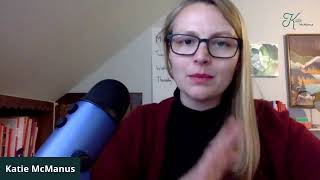
Katie McManus, a business strategist and leadership coach, explains how to vet clients and why saying no to the wrong ones matters. She covers charging appropriately, setting boundaries, and growing a sustainable business without taking every deal that comes.
Hello everyone. I'm Katie McManus, business strategist and leadership coach, coming to you on Friday afternoon. Happy end of the week. Welcome. You made it, I made it. We all made it. It is Friday. Hopefully you get to have a weekend. I wanted to talk to you about something that came up in my being brave call this morning and also came up in a bunch of other conversations that I've had with clients and with colleagues and with business BFFs. By the way, if you don't have a business BFF, I highly recommend that you got one. They are lifesavers in moments of panic and self doubt. Anyway, so I want to talk about this topic of vetting your clients and interviewing them because I know how this goes when you start a business. Oh, and by the way, I'm doing this on Streamyard. And you know the thing, imperfect technology, sometimes the comments don't all come through. So if you comment and I don't respond, it is not you, it's just the technology. As you know, if you've ever watched any of my lives, I love for these to be interactive. So if you're tuning in, please say hi. And if you have any questions, please, please ask them. I'm happy to cater this to what is useful to you. Okay. So when you work in this in well for yourself, basically, it can feel super scary to not have clients, right? You know, because if you don't have clients, you don't have money coming in. And I remember feeling this way when I first started out. Started off as a dating coach for men, you know, ended up getting mostly all female clients except for one dude. There were a few clients in that bag that were not a good fit for me. Weren't a good fit personality wise, weren't a good fit on what they wanted to work on. Values, you know, awesome people, but they just weren't right for me. And the bad thing is that when that happens, you don't enjoy your work with them and you're honestly pretty thankful when they wrap up with you. And that is the best case scenario. That is the best case scenario. The worst case scenario is that you have someone who is not a good fit for you, who is very demanding, who asks you to overstep your bounds with your time, with what you're willing to do, the scope of your work, all those things. And it can be miserable. And it feels so weird to say no to business when you don't have a lot of business. But let me tell you this, every single thing that you say yes to Every single client that's imperfect for you that you say yes to means that you're saying no to another thing in your life and in your business. Okay? So if I'm in my business and I'm interviewing a prospective client, it is so critical for me to see if it's a fit for both of us. Am I going to enjoy working with this human being? Because if I let this person take up a spot on my client list and they're not a good fit for me, guess what? That spot's gone. I can't offer that to another person who is a perfect fit for me on my client list. I was on this panel for Simply Start yesterday, and Marita. I'm forgetting her last name. Oh, my gosh. Marita, who's the CEO of CRR Global. I don't know if any of you who are watching are familiar with ORC Organizational relationship systems coaching. I'm throwing a lot of jargon at you. I apologize. Anyway, she had this. This story that she shared about karmic theft, and I really hope I don't butcher this. So I want you to imagine you have your business, right? Well, don't imagine it. You have your business. It is your business. You're running it right now. There's you. But imagine there are a hundred clients out there that are meant for you, okay? They are already yours. You just have to go out and find them, run into them. They are yours. They are going to have the best experience working with you and you with them. And imagine someone next to you is also running their own business, and they also have 100 clients out there that are meant for them. If you go out there and you take a client that is not perfect for you, you're actually robbing that client from that other person, okay? That is karmic theft. It creates just a wonky energy in the universe, okay? This goes for hiring people in your company. This goes for accepting clients, partnerships, all. All of the above. It is so important to be discerning with this. Life is short. None of us know how long we've got here. So why would you waste your time with imperfect clients? Let me tell you some ways that you can vet clients to make sure that they're going to be proper for you. First and foremost, charge enough. Charge a lot of money. Charge exactly what you need to build your business to the level that you want it to be. You want to scare away everyone who can't afford that and the people who really want to work with you who can't afford it. Believe you me, right? I said that, right? Yeah. Believe you me. Such a weird phrase. Believe you me. They will tell you, I really want to work with you. I can't afford it. Can we find a way to work it out and you get to play let's make a deal as a business owner, knowing whether or not this is the right client for you. Okay, so charge enough. That is one of the ways that you can allow for people to sort in. If you know anyone in common or if they're reaching out to people that you know, you've worked with, you can ask them your opinion. Someone reached out to me today, even asking me for a referral for Leah Turner, who you all know, I talk about all the time. She's a badass LinkedIn coach. Okay. She's the reason that I am so successful on LinkedIn. She really helped me crack the formula. I can't say enough good things about her. Like, honestly, if you're watching this, go book a session with her. She's amazing. And this person was not a good fit for her because I could tell in the questions that she was asking me and how she was talking about her success up to this point, she wasn't open to coaching. Absolutely not open to coaching. So I actually, I messaged Leah and I said, hey, so and so reached out to me. It doesn't sound like they're very open to coaching. I don't know if it's going to be a good use of your time to accept this person as a client. Okay, that is absolutely. And Leah could have reached out to me and asked that thing as well, you know, if she saw that this person had reached out. There is what's another way, you know, and this is something that I do on my. On my enrollment calls. If I'm talking to someone who's a potential client, if I'm not laughing with them, if I'm not having a good time and we're not joking around, they're not the right clients. Client for me. It's just. It's not gonna work. I like having fun during my day and I try to make my work with my clients and their work in their business as fun as possible. And so if we're not having a giggle here and there, it's just not going to be a fit for me. There's also the question of knowing what lane you are in. Okay, here's an example. So say you're a lawyer and you specialize in real estate law. Okay? And then someone calls you saying that they're getting a divorce and they need some advice. I mean, you're a lawyer. You could probably, you know, give them some advice, but if you tried to take them on as a client, it wouldn't be a great fit. And guess what? You'd have to actually spend so much time prepping for that case because you're not in divorce law or family law all the time. It's not something that's top of mind for you. So it actually robs you of time, energy, and focus for your other clients. If you try to split your attention too much to go towards other people. What else? What's another way? Well, and let's look at the cost of this. So if you're allowing for people to be your clients who aren't ideal for you, they're going to ask for more than you can provide. Often they're going to ask for greater scope. They're going to ask you to do stuff that maybe is not your expertise. You get to be very, very clear about what it is that you cover in your work. Okay, if you're a sales trainer and you go into companies and use train on sales, and they're not an ideal company, and they don't have a good sales structure, but they also need some help in their marketing, and they start trying to ask you about marketing. Ooh, you know what? You don't want that on your responsibility list. Because if you're not an expert in marketing, guess what? They're still going to judge you as if you are. So that testimonial that you hope is going to be raving good at the end of your work with them. If you came in to do sales and then also tried to advise on marketing, and that's not your forte, and it didn't go well, guess what? That's on you. And as the customer, you know, they're within their rights to write a bad review for you. So you get to be very clear about what it is that you cover and what it is that you don't cover. Patricia, I totally get this. You're so right. Well, thank you, Patricia. I love hearing that I'm right. Common sense, right? But here's the thing. Yes, it is common sense, but it also. I have so much compassion for people just starting out in their business because we get excited for one, like we want to have clients, we want to be paid for this work that we love doing, you know, and we want our business to actually get off the ground. And also, when I started my business, I was desperate for clients because I needed the Money. Okay. I had just invested all this time, money, and energy into becoming a coach. You know, didn't have a whole lot of savings to go on. So I really needed the clients, and I get the large take money that's offered on the table. But let me tell you, every single time I've taken a client that was not the right fit for me, who was not at the right commitment level to the work, who I compromised with on some kind of thing, it never ended well. It never went well. I delivered the service the best I could, but I was so happy when that relationship came to an end. Okay. You get to be discerning one of the things. How do I want to say this so you can tell, so you don't have to have, like a whole question list or checklist to figure out if these clients are the right ones for you. I want you to, literally, when you're on that enrollment call with them, just feel into, how am I feeling? Do I feel good? Do I feel like I'm hanging out with someone that I could actually talk to that I'm relaxed with? Are they open to things that I'm advising that they do? That's a big one. Are they even coachable? And I say coachable not just to you coaches out there. I'm saying it to anyone who consults, who advises on legal, on accounting, on copy. Because if this person is not open to your input on that initial sales call, guess what? They're not going to be open to anything that you provide during your paid work with them. The other thing that I want you to think about, and I know I say this all the time, I'm going to go back to it right now, is you need to charge enough to scare away the people that aren't right for you. Okay. Because, you know, if you're just. If you're a coach and you work in careers and, like, I might want to change my job, I don't know. And you don't charge that much, then it's not much skin off my back to, like, go and pay you and have you as a coach for a while doesn't mean I'm going to get anything out of it. Okay. But if you're a career coach who helps people relaunch their world, like Lauren Lefkowitz, she's an incredible coach. If anyone's looking to relaunch their career, I highly recommend that you reach out to her. You know, if someone is, like, down to do that work, they need to do it. It is critical to their happiness. Yeah, they're going to absolutely sign up with her and then do the work. It would not serve someone like Lauren to charge less and allow for more people to become her clients, because guess what? She doesn't have the bandwidth for it. And she wants to make sure that she has clients that are committed. And as do all of us. Not just. Not just one coach everyone. We want to have clients that are committed to doing the work that they sign up to do with us. For instance, I'll use this as an example. So I have been talking about writing a book for years now, and I finally ponied up and paid a ton of money to someone, Karen Strauss, with Hybrid Publishing, to hold me accountable, basically, to writing a book. They're not writing it for me. I have to write it. And literally today I'm looking at my calendar for the weekend, and I'm like, oh, God, I owe her two chapters. I owe her two chapters a week. Okay? I have to get that in. Honestly, I would not even be caring about it if I hadn't paid that much money. Okay, what else do I want to say here? Know that your clients are out there. Your clients are absolutely out there. I want you to think right now, for those of you who are watching, if you can in the chat, tell me, of a crazy product that you're just astounded has a market base for it, or a service that you're just astounded has a market base for it. What's an example that I can think of? I mean, just hiring clowns for parties. There are literally clowns out there. People who dress up as clowns and act like clowns who make a living by being clowns, by going to parties. Maybe not now in Covid, but that is actually a market. Okay? If someone can do that, then there's gonna be a market for what you're doing. You just have to figure out how to speak to your ideal client and get them to sort themselves in. I had a thing. Where's so many stickies? There's this question, Patricia. Funeral celebrants. That's a thing? Yeah. Funeral celebrants. Am I making this up, Patricia, that you hire people to show up at your funeral to. To emote in some way? I think I'm reading that correctly. Yeah, I. What's another example? So a few years ago, I took my parents to New York for a week, you know, as their Christmas present is around East. It was around Orthodox Easter or something. I'm bad at holidays. But we were staying in Brooklyn near the the neighborhood where a lot of. There are a lot of Orthodox Jews. And I noticed the. The men all wear these really, really furry big hats. Really furry big hats, which, you know, I've never seen in stores before. You know, they're ginormous. And I just. I just imagine there's some Paul Bunyan, like, furrier out there in the wilderness who's, you know, capturing, you know, woodland creatures and making these hats like that is literally a business. Okay. In this day and age, and not in Arctic Circle areas. It is in New York that. That is actually a market. Patricia. They read the eulogy. They perform the service. Yeah, absolutely. Okay, cool. Yeah, you can hire people pretty much for anything. And so if you can hire people for pretty much anything, then your service, whatever it is that you are offering your people, is absolutely needed out there in the world. You just have to find the right people who will buy it. Okay, what else did I want to say? There's so there's something else about this. So when you're running a business, it's really easy to get into the habit of doing the thing. It's really easy to get sucked into. This is just my to do list for the day, and I'm going to commit to it and I'm going to keep at it. Well, if it's not drawing in your ideal clients and it's not getting people to inquire about working with you, you need to stop doing that. It is not serving you. Oftentimes, people get attached to things that don't work because there are vanity metrics attached to it. Okay, so for instance, I'm on LinkedIn, I'm on Facebook, and I'm on YouTube. LinkedIn has a few metrics by which you can gauge if a post is successful. Right. There's likes, there is comments, and there are views. Right. The likes and comments are wonderful. Great. You have people engaged. They really want to be involved in your world. Awesome views. I don't know anyone who's ever figured out, like, what views actually mean and how effective it is in actually getting people to view your stuff. They're not engaging on it. I don't care about that metric. The metric that really matters, though, is are you getting clients? Are you actually getting inquiries from your ideal clients? The people who are ready to throw down some money to actually work with you? Because if you're not getting that, guess what? You need to change your approach. Because if you're not getting that, if you're only getting people who are your imperfect clients, guess what? Your messaging is wrong. Your approach is wrong. All these things are wrong. They need to be changed. And there is hope you can fix this, but you have to be willing to release that thing and, and change it up a little bit and be open to feedback. Yeah, I'm trying to think. I had another thing I wanted to say and I can't remember it, but I'll be going live all next week as well. So if I think of it, I'll let you guys know. Anyway, I've been on oh my God, I've been talking for 20 minutes. It always surprises me me when I've been on here for about 20 minutes and like I've just been talking at my computer. Anyway, I'm celebrating that I have not once yet whacked this new microphone that I have and hurt your ears. So yay me and wish me luck because I have to go and start writing chapters of my book and writing. I haven't done a lot of that since college. Anyway, Patricia, thank you so much for joining me and joining in the in the comments. I appreciate your input and for those of you who are watching and not commenting, thank you for, for giving me your attention. I hope this was useful and I hope you take what I said to heart because starts it's so important to start saying no to things because when you say yes to something that's not meant for you, when you say yes to something that's going to be a time suck on you, think of the things that you're going to have to say no to. You're going to have to say no to spending time with your family. You're going to have to start saying no to things that you really enjoy doing. You're going to have to say no to clients that are perfect for you. Have faith that they are going to find you and have faith that you are creative, resourceful and intelligent enough to change your strategy to make sure that they can find you okay. You just have to be open. Anyway, on that note, have a great weekend. If you are celebrating Ramadan, I don't know if you're supposed to say happy Ramadan, but I hope you're enjoying or yeah, Happy Ramadan. I'm going to say that. And then if I got that wrong, please correct me. Leslie Martinez, I can't wait to read your future book. Thank you, Leslie. I can't wait to read it either. It should be ready. I think we're planning on a launch date in September, so stay tuned. I will be talking about it a lot as I'm writing it because I'm sure I'm gonna get stuck. I'm sure, you know, I'm gonna need a boost at some point and come on here and go a little crazy, you know, throughout the process. So stay tuned. It should be a lot of fun. Anyway, Ramadan Mubarak. Oh, Patricia. Okay, so that's what you say, Ramadan Mubarak. I hope I'm pronouncing that correctly. To those of you who are celebrating right now or observing. Anyway, that's all I have to say for tonight. Have a great weekend. And I'll be going live all next week as well. So stay tuned. All right. Have a good one. Bye.
More from Katie





How to do self care right now, so you can do what needs to be done, for yourself, your business, and

How to do self care right now, so you can do what needs to be done, for yourself, your business, and

#greenscreen How to build a consulting business that makes you $200,000-$700,000 a year

#greenscreen How to build a consulting business that makes you $200,000-$700,000 a year

Maybe we’re not the imposters…? #businesscoach #startup #entrepreneur #smallbusiness #consulting

Maybe we’re not the imposters…? #businesscoach #startup #entrepreneur #smallbusiness #consulting
