Lessons of Boaty McBoatface
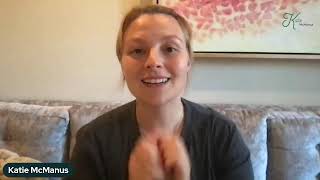
Katie McManus (business strategist and leadership coach) delivers a ~15-minute live YouTube talk using the 2016–2018 "Boaty McBoatface" internet naming incident as a metaphor to teach entrepreneurs about where to seek feedback. She warns against asking well-meaning friends and family—who often lack relevant expertise—for strategic input on branding, content, pricing, and positioning because their responses reflect personal taste, not ideal-client fit. McManus gives practical advice: acknowledge the helper's intent, briefly explain your strategy and ideal client, and politely decline further unsolicited feedback to set boundaries and build confidence. She uses a cooking/soup analogy (chefs offering conflicting recipes) to illustrate why too many uninformed advisors produce an incoherent result.
I can taste yo, yo, yo, yo Words I can taste yo, yo, yo I can taste yo, yo, yo, yo I can taste yo, yo, yo I can taste yo, yo, yo, yo I can taste Y.
Education. Hello, I'm Katie McManus, business strategist and leadership coach. Happy Monday, everyone. I, for some reason today remembered this thing that happened in the Internet a few years ago, don't know if you remember, was the Bodie McBoat face fiasco of, I think, 2018. And I was thinking about it and it reminded me of a conversation that I have with my clients all the flipping time. And so I wanted to go into this and learn the lesson and really wring the lesson out of this story because it is so valuable when you're starting your business to know who to ask for advice, feedback. Okay, so if you don't know about voting McBoatface, let me tell you. Let me just grab a little drink of water before I do. Okay, so I'm going to tell you a story where I forget some of the details. Hi, Gabriel. Welcome. I forget some of the details. I might get some stuff wrong, but we're fine here. Because it's not like I'm saying anything scientific, even though it is a scientific research organization that did this. So an agency out of the uk, they do scientific research. I'm not really sure of what. They created a boat, a very large boat. They invested hundreds of millions of dollars or pounds into it, and they needed to know what to name it. And so they did what they thought was a good idea and they turned to the Internet and they took submissions. They asked for people to submit ideas of what the boat could be named and to also vote on which idea they like the best. And it started off pretty good, I think. I think they, like had submissions of, you know, different scientists and, you know, other things that are science related. But then someone, I think his name was Hand, his last name was Hand. I always thought that was weird. He submitted that the vote should be named Boaty McBoatface. And everyone voted for that. Everyone. Everyone and their mother. Like, it was insane how many more people voted for Bodie McBoatface versus anything else on the list. And so then this organization was left this problem because the vote closed. And the winner by ton was Bode McBoatface. And they couldn't actually name it Bode McBoatface. Okay. They had spent too much money on this, I think, and I might be getting this wrong. If you remember this and you can tell me, or you're gonna fact check this, I think they ultimately named it after David Attenborough. You know, the. The naturalist who narrates all the natural videos. They did, however, name, like, a small, like, support boat, Bodie McBoat Face. But the reason I wanted to bring this up here is that when you're starting a business, it is so natural to want to turn to people who know you love you, care about you, want you to succeed, to ask them for help and feedback. Okay? It is natural. You want to go to your spouse, you want to go to your siblings, your parents, close family members, friends from high school, people who've known you a really long time. And I. I'm here to tell you it's natural. And also, do not do that, okay? Because you're going to get your life's version of Bode McBoatface advice from them. Unless they know what they're talking about. Unless they have the exact same business as you, unless they have. They know the strategy of what you're up to. If they're an expert in branding and marketing, sure, ask them for advice. But what I see happen over and over again, and this. If you're doing this and you've fallen into this, know that everyone goes through this. I went through this myself, is we're feeling a little insecure in our business, right? We've just started out, and we want someone to, like, reaffirm us that we're doing the right thing. And so we turn to our loved ones and we say, hey, can you read this thing? Or can you check out this branding guide that I put together? Or can you take a look at my offer, like, how much I'm charging and all this stuff? Can you just tell me how. How it is? And hi, Stephen Doyle, welcome all the way from Ireland. And our friends and family, or whoever it is that we're asking, they really want to be helpful, and we're asking them for feedback. And so we want reaffirmation that we're doing the right thing. They don't realize that that's what we need. They're thinking that you actually want them to give their advice on what you're doing. And so how this works is say you're asking for content. This has happened with a lot of my clients. You know, they're writing content for their audience, and they get feedback from family members who say, oh, you're swearing in that. I don't think you want to swear. It's not very professional, you know, or, you know, like, oh, that was a really interesting story, but you should tell this story instead. The problem with getting feedback from people who don't understand what your strategy is with your content is that they're. They're just basically telling you, here's what would be more interesting for me to hear. And that's not helpful if they're not your ideal client. Okay. Your content is not for everyone. Your content actually should kind of piss people, some people off. It should be polarizing a little bit because that means it is more tuned into your ideal client than anything else. Okay. We're not. I loved. There was a comment today by Tommy Merced Parrish about, you know, unless you've just visited Madagascar, no one is bragging about the best vanilla ice cream that they've ever had, okay. Because vanilla is made, is grown in Madagascar. But it's so true. Like, no one wants vanilla. And when you ask for feedback on your content from people who don't get it, you're not going to get good feedback. Okay. Likewise with your branding. Okay. So when you're. When you're trying to figure out your colors, when you're trying to figure out your brand, asking other people for feedback, not always the most helpful place to go. Okay. Because they may not have any experience branding or they may have heard, oh, well, there's a blue that everyone clicks on. Let's just go with that. Or Target. I really like that store. And their color is red. Maybe you should have red. It gets. Catches people's attention. Your offer, you know, what you charge for the work that you do. Someone who is not your ideal client, who doesn't have the pain points, is going to think you're nuts for charging as much as you do. They're going to think, oh, my God, that's insane that people pay you that much. No, I would never do that. You should lower your rates. Okay? What this ultimately does to you is it kills your confidence. It really does. It kills your confidence, it hurts your ego, and it makes you second guess if you can actually do this because you're getting conflicting advice everywhere. And I want to give you a couple ways that you can handle this when it happens so that you don't feel like you're burning bridges with people you really care about and so that you don't let it affect you. Okay? Sorry, I'm still rehydrating from that Ragnar race in the woods. I've been drinking so much water. So first and foremost, you want to acknowledge the person and acknowledge them for how much they care about you. Acknowledge them for wanting to help. Acknowledge them for, you know, having your best interests at heart. But you get to say, hey, listen, I see you. Thank you so much. I see that you really care about me and you want to help, but here's why I'm doing this. Here's, like, a little insight as to the strategy. And so my clients actually care more about X, Y and Z than the A, B and C that you're mentioning. And so I'm gonna actually stick with my strategy here. But I so appreciate you caring enough to give me some feedback. You know, the key here is you do not invite further feedback. You do not do it. Okay. Very simply, you say, thank you. You are well intentioned. And also, here's why I'm not paying attention to you. I'm saying it this way, and it's coming out rude, but when you're. When you're actually forming the words, it's not rude. What, what it trains your world on is, hey, I know what I'm doing. I know what I'm doing. I know what I'm about. I have a plan. This plan isn't for you. And I get that you care and you want me to be successful. And also, I got this. It's amazing when you have this conversation a few different times, you go from feeling like, oh, my God, I don't know what I'm doing. They think I don't know what I'm doing, blah, blah, blah. And even if you're not 100% confident when you say this, the more you say it, the more boundaries you set around your business, the more you affirm that you have a plan and a strategy in place. You basically train your brain to be more confident in what you're up to. It's a magical process. It really is. It's magical. But here's what I don't want to happen is I don't want you taking so much advice from so many different people who don't know what they're talking about and having it turn out the way it will turn out. Because here's the thing. If you are learning how to cook time, I'm gonna read this. Ben Alabaster, I love your last name. It also teaches you a lot about the British sense of humor. I mean, who could have predicted Bodie McBoatface? Yes. Yes. I think we all learned a lot about the British sense of humor. Except maybe the British. Yes. I think you guys already knew it. Us Americans just went crazy for this story, the Bodie McBoatface thing. But what was the point I was going to make? I had a point. Where'd it go. And I hate it when this happens. I had a point. Where did it go? It was about setting boundaries and affirming. I don't know. It was a point. And then I got distracted by voting my boat face again. Thanks, Ben. No, what was it? Oh. Oh, yeah, yeah. It's my metaphor. My metaphor. Okay, so imagine you're learning how to cook soup, okay? Like, you've never cooked soup before in your life. You've never made it, and you've decided that you want to make New England clam chowder. Okay? So you're in the kitchen, and you're. You have all the ingredients, and you're cooking, and, like, three chefs come in, and one is Indian, another one is from New Orleans, another one is from New York, and none of them know what you're up to. Okay? So it's okay, Ben. I got. I found it. I remembered what it was. You're good. Thank you. So the Indian chef is going to come over and be like, what are you doing? This is wrong. You need to put these spices in. You need to put this curry in. I don't really know how to make curries, but I'm just going to make it up. You have to do all this. Why are you putting so much cream in here? Where's the coconut milk? Again, I don't know how to make Indian food, so I'm just guessing. Clammy McClam face. Yes, exactly. So the Indian chef is going to come and show you all the wrong ways to make clam chowder, right? So it's going to start being really gross. And then the Creole chef is going to come over and be like, whoa, what are you doing? This is wrong. Where. Where is the sausage? Where's this? Where's that? And naming a whole bunch of stuff that is common in Creole cooking. And that chef is going to have you throw all that in the pot. And then the New York chef is going to come over and be like, oh, I see clams. I think you're making clam chowder, but that's not how you make it. You make it red. So we need to put some tomatoes in there. Now, I want you to guess if you have. If you've blended an Indian curry soup, clam chowder. Does that sound good? Because to me, that does not sound good. That sounds busy. And it sounds like it's going to be a lot of things happening, and they're probably not going to work together. It's the same thing in your business. Okay? So. But if all those chefs walked in and they understood, hey, what are you making? And you told them very clearly, hey, I'm making clam chowder. New England clam chowder. So it's going to be white, it's going to be cream based. They'd be like, oh, great. I can't give you any advice on that because that's not what I make. So keep at it. Good luck. I'd love to taste it when it's done. Okay. In our businesses, we get to set those exact same kind of boundaries, okay. Because we're not looking for too many cooks in the kitchen. What we're looking for is to have our business be successful. Okay? That takes boundaries. That takes saying thanks, no thanks. And know that you are not, I repeat, know that you are not a bad person for not taking advice from people who love you. Okay with that? That is my short message. Well, shorts like 15 minutes. My short, shortish message for this Monday. I hope it is useful. Ben, I thank you for joining. Hope you're enjoying some clammy McClam face soup at some point. Soon, Soon. Stephen, thank you for joining. And Gabriel, thank you for joining. And for anyone who didn't comment or whose comment didn't come through, thank you for tuning in. I'll be going live a few more times this week. I'm probably not going to plan it out. Stay tuned. I have a couple more lessons for you. Have a good night.
More from Katie





How to do self care right now, so you can do what needs to be done, for yourself, your business, and

How to do self care right now, so you can do what needs to be done, for yourself, your business, and

#greenscreen How to build a consulting business that makes you $200,000-$700,000 a year

#greenscreen How to build a consulting business that makes you $200,000-$700,000 a year

Maybe we’re not the imposters…? #businesscoach #startup #entrepreneur #smallbusiness #consulting

Maybe we’re not the imposters…? #businesscoach #startup #entrepreneur #smallbusiness #consulting
