Live with Kerry Jones
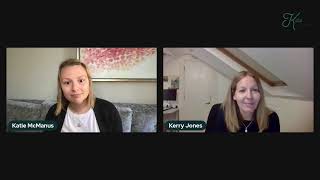
A recorded live conversation between Katie McManus (business strategist/leadership coach) and Kerry Jones (executive coach) about bravery, career pivots for professional women, overcoming barriers (fear, money, visibility), and practical tips for marketing and getting visible. The session mixes personal stories, audience interaction, and a brief description of Kerry’s 12-week coaching program and contact channels (website, LinkedIn).
Chapters
I can taste yo, yo, yo I can taste yo, yo, yo I can taste yo, yo, yo I can taste yo, yo, yo, yo I can taste yo, yo, yo.
Hello, I'm Katie McManus, business strategist, leadership coach, and I'm here today with Carrie Jones, who's an executive coach. And, Carrie, do you want to give our audience a little more flavor of what you do?
Yeah, sure. So I am a coach and mentor. As Katie said, I coach professional women. So those who are currently in corporate or professional organizations or those who have left, and my coaching is all around helping women figure out what it is that they'd like to do with their lives. Yes.
Which is so important because you only get one.
You only get one.
Make the best of it. I just watched the. The Very Best Exotic Marigold Hotel last night, and there's nothing more. You haven't seen it? No, it has. Like, Judi Dench and Maggie Smith and pretty much half the cast from Love actually and from Downton Abbey. I hate to say it, but it's like an end of life movie kind of. But it talks about legacy and, like, you know, what have you done and, you know, what are you proud of? And what do you still have left to do? And. Yeah, like, time's not waiting for us.
No. And as you get older, you go through different phases of life and you suddenly have those moments. I think as I hit my 40s, I definitely have those moments of, like, what am I actually doing with my life? What should I be doing instead?
Right, right, right. Yeah. Well, I'm super excited to talk to you today. Just to design with anyone who tunes in. We love this to be interactive. If you have any questions, please pop them in the comments. We are going live to my Facebook page, my Facebook profile, LinkedIn, YouTube, and Twitter. Even though I don't really have any followers, But sometimes not all the comments come through. So we're not mad at you if you're. If we don't see your comment, we don't put it on screen. It's just that we're not seeing it. But please comment through. I am excited for our conversation today. It's all around bravery and how you get to be more visible and what it takes to put yourself out there and to change, make big changes in your life.
Yeah.
So I'm curious, Carrie, like, how have you been your most brave throughout your career?
Oh, my goodness. You've gone to the big question to start with. Well, my background's in corporate, so I've most of my background's in corporate, in large financial institutions. And I would say that when I was in corporate, I wasn't very brave at all. And we'll probably come and chat about that a bit later. And that's why I stayed in a job that I really didn't enjoy for so long. My biggest, a kind of brave moment, although I probably say courageous rather than brave, was starting my coaching business. So after leaving corporate, I started a marketing business. That was a jump, but it wasn't brave because I knew it, but coaching and starting setting myself up as a coach, complete pivot. That was probably my bravest moment.
Yeah, I love asking this question. What is the difference for you between bravery and courage?
Yeah, I think bravery for me is something which is kind of has an element of danger and not just fear, but kind of. Yeah, like a danger to it. Whereas courage, I think, is more around confidence. So it's kind of that inner confidence to be able to step forward and there's still an element of risk, but it's not like a physical kind of danger.
Right, right, right, right. Oh, beautiful. And so you made this shift and, like, what were the moments that you really had to muster up that confidence?
Oh, my goodness. There was so many. I think when I was in corporate, I didn't really have to really have the confidence to make a move, even though I was unhappy because I didn't really want you to. Do you know that feeling like you kind of. If I knew what I wanted to do, then I think I could have done it, but because I didn't know what I wanted to do, it felt so huge. I think that when with coaching, because it was such a intuitive and I was so convinced that it's what I wanted to do, it didn't feel quite so scary. I mean, it's still a big thing, isn't it? Like, for all of us starting their own businesses. And for me, this is my second one. It felt a big thing to do because I still didn't quite know what I was doing. So I think for me it was more mindset. Yeah, that good old mindset which gets you every time when you're starting out a new business. Is it going to work? Am I going to be successful? Can I do it? Can I be visible again?
Yeah, yeah. You know, as you're describing that I, you know, I hate the saying, it's better the devil you know than the devil you don't. Because it really does instill that, like, you have to settle even if you're miserable here. At least you understand all the Misery, like it would be worse anywhere else. And it makes us afraid of that unknown.
It does make. It does make you afraid. And I think that's what it comes. But for me, that that was why I didn't jump is because it was so safe where I was. You know, in corporate life, you've got a safe job, you've got a lovely paycheck that goes with it. You've got people who respect you and. And you know, and think that you are amazing at your job and out there, although you think you can do it, you don't really know, do you? But I think for. I would sort of say to my clients as well, the thing that you kind of need to do is that desire for what you want has to be bigger than your fear of. Of jumping.
Yeah. Yeah.
Which for me, when I started my coaching business, definitely was. I don't think I would have done it otherwise.
No, totally. And it's. You know, there's the desire. People make decisions for two reasons. Either because this has gotten so bad, I can't do this anymore, or I want this so much and it's so hard when you're in that spot where. Well, it's not that bad. I mean, bad, but it's not that bad. And I have no idea what I want. So why would I go towards something I'm not even sure of?
Yeah. And I think that that has to be like a tipping moment, doesn't that? Like, if I. Again, if I think of the clients I've got, some of them left really great jobs with nothing to go to because they just, like you say, got to that first point of. I. I just. It's so bad. I don't want to stay anymore. I'm so unhappy. But there comes a point where it's like, I really can't take anymore. Whereas at the others do it because they know that they want to do something completely different.
Yeah. Well, my mom. My mom is like a fountain of wisdom around this. She's a big believer that it's usually like three things that push you out of something.
Oh, okay.
Like one, one bad thing will happen and it like, frustrates you, and then another bad thing will happen. You're like. Then you start paying attention and then third thing will always, like, tip you over.
Yeah, yeah. The good old three list. Yeah.
Yeah. And just don't stay beyond that.
But I think loads of people do, though.
They do. Absolutely. And that's.
I think you can have hundreds of those, can't you, and still refuse to do anything. About it if you're really stuck.
Yeah, well. And that's typically where they start working with the coach.
Yeah, I think so. Or like you say, you get to that point where physically it affects you so deeply that you feel like you have no other option but to leave, you know, and that's obviously a really sad place to be in. And, you know, I'm sure you've come across people like that as well who have left roles and because they just. There can be no option. They can't see any other option, but they know they can't stay.
Right, right. It's interesting. I'm doing this certification right now for trauma of money. Oh, it's interesting. Like we have trauma from things that like, we wouldn't credit with being traumatic, you know, and that being stuck in that feeling, like that's the choice that you have to make, like that's a trauma response in many ways.
Yeah, it is. And I think money's a big one, isn't it? That holds most of us. Well, many of us can get stuck. Especially if you have worked in a corporate environment or, you know, in a well paid kind of environment where you work your way up.
Yeah.
Hold on to you. Because that, you know, that kind of. I remember I was talking to a client a few years ago and she's like, I don't believe I will be able to earn the same amount of money somewhere else as I do at the moment. So, you know, that belief is just becoming grained because you've been in the organization so long. Of course you can if that's what.
You want to do.
But it really holds people back because money has such a hold over them.
Yeah. I saw this meme the other day and it was literally, humans are the only species that paint pays to live on Earth.
Yes. I saw that as well. Really recently.
Must be going viral somewhere. But it's true. And it's, it's. Yeah. And that is your, your livelihood. Like, that is what you depend on if money becomes this anchor to whatever it is that you're in at that moment.
Yeah. And I think, and I think it's really important to recognize that that's really valid for people, isn't it? You know, it's like. And, and that's why for me, and I couldn't just jump into the unknown, you know, And I think a lot of people are like that. Like, I couldn't just leave a really well paid job with nothing lined up or any idea what I was going to do. Right. Like, you know, that's where kind of structure and planning and, you know, process. Because I'm that kind of girl kicked in. I could, I mean I'm, I'm somewhat in awe of women who can just say no and shut a door with nothing to go to. To me, I think that's really brave. I don't think I personally could have done that. But hats off to them that they've been able to do that.
Yeah. It's interesting. I work with a lot of clients who we build up their business as kind of a side hustle while winding down this career.
Yeah, yeah.
Because they feel that same way. And I get it. Like if you're a sole provider for your family, that's what needs to happen.
Yeah, yeah. And I think for me, do the same where they, they will move their kind of like five day a week job to like a four or three day a week and then spend the other couple of days starting to build out what they think their side passion might be. Because it is too much of a jump, isn't it? You know, if I think about that, for me, like I said, I have my marketing business, which I've still got my first business and I probably could have shut that down maybe, maybe should have shut it down two years ago when I launched as a coach, but I couldn't because I wanted to run the two together until one was really booming.
Right.
And that's just financial security, isn't it? You know, that's just feeling like you, you know, you're not kind of, you're just not too exposed financially. Which I guess is what a lot of your clients are saying as well, isn't it? Like, I want to make sure something's a success before I give up my security.
Totally. Well, I love that you use that word, exposure. Are you feeling exposed? Because part of what we were talking about discussing today is like putting yourself out there and marketing yourself. And I know you felt this. I know I felt this. And many of my clients feel this. Where they are so scared to put themselves out there on social media because it is so exposed. Yeah. And like, what if people disagree with what you say? And that ties into am I ever going to make money from this? Because if they disagree with what I say, they're probably not going to pay me for anything.
Yeah. I mean I, I think for most people when they start their business, I know definitely for me, being visible on social media, it was really tough. I mean I'm, I'm, I'm not bad now, like, but I am a lot more I don't do it half as much as some of the other people around me. You know, there's a wide variety, isn't there, in the coaching world? There are those who are out there every day. I'm not really one of those, but I think what I found hard was just. It was a different. Almost like a different skill set.
Right.
If you've been institutionalized and worked in corporate, you know, and then jumped to be self, you know, set your own business up. We don't know how to sell ourselves because we've never had to because, you know, we're promoting the business. And even though my background's in marketing and communications, I found it really tough to kind of shout about what I thought I was good at, you know, initially.
Yeah.
In a kind of, you know, you don't want to be kind of too in people's faces, do you? So I think I'm getting better, but it's. It's definitely still something I struggle with.
Yeah. I mean, what you're saying is like, what I hear all of my clients say. It's exactly that. It's. Well, because we're told from a very young age, especially us women, that you shouldn't brag about what you're good at. You shouldn't, like, put in other people's faces, like how you're either better than them or whatever. So we feel like, oh, my God, this is something that's counter to how I'm. I'm a kind human being. Yeah, right. This is something that could be actively mean to someone, and it also. It's so much easier to promote, like, a thing that's separate from yourself.
Oh, yeah. Promoting your own brand is totally different, isn't it?
Oh, my God, it's so different. And, you know, like, I have clients who come from sales, and it's like, so different from selling your own service because when you get rejected for, like, the house or the car, that you're. No big deal. They didn't like the house, but they didn't like me. Oh, my God.
Yeah, I. I'm. I can absolutely relate to that. I think you have to. The things that help me over time, and like I say I'm still on my own journey is. I can't remember who said it to me. Someone said, you know, like, no one will hear you if you're. If you. If you're silent or if you don't speak up or something like that. You know that thing about, you know, like, no one knows that you. You can really help them unless you tell them. And I thought, oh, yeah, do you know what? It's not about me.
Yeah, it's.
Yeah, I kind of need to go over myself a little bit. Otherwise they're never going to know that I can be somebody who can really help them with this. Totally. That service, isn't it?
Yeah.
Lead with service. And, um. But that's. It's still, you know, I still have to take a few deep breaths when I'm doing lives and stuff. It's not easy.
No, no, no, it gets easier.
Oh, good.
You have to do it a bunch to get to that point. Well, and you know, a restaurant wouldn't get very far if they didn't tell people they had food and drinks and all the things, you know. Yeah. Photographers wouldn't get very far if they didn't tell people, hey, take pictures.
Exactly. Exactly. And you know what? I think, you know, being able to be clear what it is that you're offering really helps. You know, I'm quite lucky in some way that my background's in marketing, so I know how to niche. I know the importance of messaging, but I do see that you probably see it all the time with your clients of, like, when they're trying to step into something new, that their messaging is all over the place. It's quite hard.
Yeah.
To be visible if you don't really know what you're saying. Yeah.
It's funny you say that because the number one question I get and we keep like my clients, I feel like the first five months we work together, we keep coming back to this question of how do I describe what I do?
Yeah. Yeah.
My clients hate this answer where I'm just like, no one gives a fuck. Like, no one gives a fuck. Like, they want to know what problems you solve, results you help them get.
Yeah.
Like you could belly dance in front of them. So long as the belly dancing solves their problems, they're not going to care that you're belly dance.
You know, use that analogy.
I wish I could. I wish I were a magic belly dancer. That would be like, a good exercise for one. Be so much fun. And what a fun thing to market.
What do you find to be kind of. That the easiest things to do when it comes to visibility. Then, Katie, what are your kind of. Because obviously you love doing the live thing, which I struggle with a little bit too.
Yeah. You know, and it's funny, I've just. I'm starting another certification around, like, sacred money archetypes. And one of the archetypes that I fall into is the celebrity, which is like, I'm okay being the center of attention. You know, something that I actually had a lot of shame around from my childhood because, you know, you don't want to, like, you know, other kids are kind of mean, and teachers like, oh, stop calling all the attention to yourself. See, I think it's important to find ways to amplify what you do in a way that feels natural to you. Yeah, this feels very natural to me. I'm actually far more comfortable on video live in front of people than I am recording video beforehand or doing audio only, which is making, you know, launching a podcast kind of interesting.
Yeah, yeah. I mean, I guess, because, you know, obviously, as coaches, where people. People aren't we. So, you know, we love talking, we love listening. So this is quite easy. I might try this a little bit more.
Oh, this is so fun. One of the things that I find really great for me, when I was getting started and I was, like, worried about talking about myself and that I trained my clients on is empathetic marketing, where you're literally just talking to your ideal clients, asking them what they're struggling with and what they want more than anything, and then you just go and talk about that.
Yeah.
And just say, my clients are really struggling with this, and my clients really want this. And if you're in the same boat, come talk to me, because this is what.
And then I saw you do a post about that, actually. That was really helpful.
So, yeah, we are. We are getting, like, essay comments in this. I have to read some of them. Okay. So Nora is saying you. You can't worry about the people who don't agree with you and what they're going to do, I think do. As a result, for every one person that's not into what you're offering, there are probably 99 others that find value in it. A hundred percent.
Yeah.
Lee Markham. So this leads to being averse, to being described as an expert. It can be strange to hear that word applied to you at times. Yeah. And I think we all get to own that we're an expert. Yeah. You know.
Yeah, absolutely.
Yeah. And then, Hussein. The most difficult moments are the beginning. Then the fear goes away. Then everything becomes normal. But practice and rehearsals may help eliminate the problematic structure.
Start.
Some put a picture of another topic that makes viewers think about something other than their main topic, which allows skipping the starting moments. Yeah, that's an interesting point.
Like a diversion at the beginning.
Yeah, yeah. It's like. It's like a little bait and switch, but you do it for yourself so you can, like, get yourself into the cake.
I think, you know, I think there's definitely, like, some. Some tips and techniques that you can use to become more visible, can't you? Like, obviously, nailing your messaging is great, so you know what you're talking about and know who you're talking and all that stuff. And, you know, that kind of, you know, getting in the right mindset and physiology before you do something so you're in the right state, you know, all that kind of thing. But for me, the biggest thing that has helped me be visible is that sense of knowing what I'm trying to do and knowing if I don't get visible, I'm not going to be able to do it. Yeah. There's been so called by the. By a kind of your own call and your own vision of what you want to do with your business and how you want to help people. And if that. Well, for me, that's so compelling that it kind of makes me think, well, it's so important to me that I can walk into that networking room with 80 people that I don't know and start conversations. Because. Because I want that. I want my business to grow and expand, and that's so. I'm so passionate about that. That kind of overrides some of that kind of moments. Do you know what I mean? So that has been my main driver. If I don't do it, then I'm not gonna grow.
Yeah. Yeah.
Well, it's.
It's that. It's making your work bigger than yourself.
Exactly.
And making it, like, selfish. Like, if you don't give it, then you're being selfish.
Yeah.
I mean, you and I. I mean, you could. You could absolutely end up coaching someone who works for. For an engineering firm that develops, like, a tool that helps nanotechnology to go in and prevent heart attacks. Yeah. Right. And the fact that, like, this person wants to move into that industry, but hasn't, but maybe has that brilliant idea that helps them, like, who. Who are you to know what your part in everything is?
Yeah. And I sometimes think that, you know, like, sometimes when you see your clients move into new jobs as a result of working for you, you think, oh, my goodness, that is, as, you know, amazing. Like, almost bigger than anything we could have imagined together when we started working together. And I think, where is that going to lead to? You know, what are you going to do next? Yeah. So it isn't about us, is it? You know, as coaches, it's about, like, expanding them.
Yeah.
So kind of our Work is kind of bigger than us.
Right, right. And here's the thing. Like, there are billions, like an infinite amount of problems in the world. One person cannot solve. Like more than two. Like if, if they can solve one at all. So you might as well just be a tiny, tiny piece in the puzzle that supports other people to actually solve the problem. Yeah, yeah, yeah, yeah. I mean, when it becomes about that, like, going like, it's not as scary to go on alive and talk about how you help people. Yeah. And that is the goal.
It is. And you know, I think I've been quite lucky in that I haven't had like a whole load. In fact, I can't think of one negative comment that I've had now. Whether that's because I just choose not to engage in things, which I just think I'm just not gonna go there with people. But generally comments on social and interactions on social have been really positive. Now I don't. I know that's not everybody's experience and I'm not sure how I would feel if that wasn't my experience. I mean, how is, how has your mixed experience of that been?
You know, I'm a big fan of the block button.
Yeah.
I like. And I might overuse the block button. Let's just be real. I. If someone annoys me more than three times, then they're blocked.
That's it. That's it.
Like, I, I just don't have the, the bandwidth in my energy. Like handle annoy being annoyed. If someone's negative and mean in my comments, they are blocked.
Yeah.
Even if I see them showing up badly in other people's comments, like they're blocked for me, they will never be able to see my content. I don't like their energy and I don't want them in my world. I know as my business grows, like, this is going to be harder. Like I'm not going to be able to block everyone. But. Yeah, I think, I think who you engage with on social media draws in more of that type of person. Right. So if you're working with really positive, happy, kind human beings who are supportive. Supportive of other creators on, on that platform, that's what you're gonna get back. Yeah, I think so.
I see a lot of trolling and I'm, I just, I just completely stay clear of it. That's not a, that's not a vibe or a kind of energy that I really want to be near.
Yeah.
Particularly on social. Yeah.
I have to admit here, though, I do enjoy like a Saturday morning troll Myself, but it's like someone's. Yeah, no, like, this is. I haven't ever admitted this, so I'll like. And it's not like I plan it, but, like, sometimes I'm like, scrolling Saturday morning, I have my coffee. I don't have anything on that day. Or not I'm wearing clothes, but, like, I don't have anything on my schedule that day. That sounds weird. And I'll see someone post something that's like, massively racist or just, like, outsmart as a bigot. And I will go in and I'll, like, put my comment. But what I'll do then is I'll go and I'll support everyone else's comment that like that post and I'll connect with them. And then anyone who likes my comment, I'll connect with them. So I'm actually, like, bringing more good people to me. And then at the end of the day, I shut it down. I just block the person.
Yeah, but it's, you know, it's a really interesting point about that kind of like being positive and encouraging others on social as well. Like, you know, particularly. I mean, you kind of got to be careful, haven't you, with your current clients that you don't like and comment too much on their stuff because, you know, because of the confidentiality thing. And so I'm very careful not to kind of like anything positive that a current client might say in case someone says that it might be a link with me. But building up other women and building up in particular, because I think that's my heart and supporting them is particularly when they're starting to be visible on social. It's just. It's so precious, isn't it? Because we're all there at some point, you know.
Yeah. And it's not pie. I think people think like, oh, well, my engagement is pie, and there's only so much. And no, like, you get to be as generous as you want.
Absolutely. Yeah. I mean, when I started out, just having even a few friends and people that I knew just like. And comment just gives you that sense of. I mean, it's not affirmation exactly. It's just that sense of encouragement that let's be real, we all need sometimes, don't we? On we're plugging away, trying to be visible, doing our best.
Absolutely. I mean, this is kind of reminding me my first few webinars. Have you done webinars in your business?
I haven't. Well, not in coaching business. In my marketing. Yeah. Okay, cool.
But like, my first two webinars no one showed up to. And, like. But I remember sitting there, like, what do I do? Am I expected to still do this? Like, no, you're not. My third one. Like, my marketing guy showed up and that was it. And I paid him. And so he got, like, a very intense, you know, webinar all to himself. And then, like, I think it was like, my fourth or fifth one. Two people registered and then confirmed that they are coming. And I'm like, oh, shit. You know, like, I have to get more bodies and seats. But it did feel good. Like, it's. It's hard in the beginning because, like, you're not getting that feedback of, like, am I doing this right? Like, what I'm supposed to do? Is this what I should have posted about it? How do you promote this? It's like this guessing game, and when you do have people come in and engage with you, it's just like, oh, thank God. People are blowing up.
Yeah, I. I'm totally there, you know? Like, I've just recently launched a new program as well. And it's that kind of sense of, like, who's. Who's gonna. Who's gonna buy? Who's gonna sign up? Like, and you only need a couple, don't you, to start with, especially if it's a beta. And, like, just to get the feedback and. Oh, yeah, it is actually quite good. Oh, yeah, I do know what you're doing. I can certainly see that on. On social as well. Right, Exactly. Same thing. Right, Right.
It's funny. Sorry, pronunciation thing. You said beta, B, E, T, A. Yeah, okay. It's so funny you said that because you used it in that context, and I heard beta pronounced that way. And I keep thinking you're saying beater or someone else is saying beater like it's a beater car, which means, like, it's kind of a shitty car that's beat up, you know?
Oh, okay. I didn't beat Akara.
Yeah, but. And so I've heard people talk about beta programs before, and I'm like, why are you talking about your program that way? Like, I'm sure it's great. Yeah.
Be threatened, trial.
American English. We. We say beta.
I can get that in mind, actually.
I didn't know. But, you know, you just finally connect the dots on something you've been mishearing for too long. So talking about your program, I'd love for you to tell the audience, you know, what it's about, who is it for, and how people can get in touch with you if they're Interested?
Yeah, sure. So, like most coaches, I only niche in one particular area. So say I support professional women. I have a 12 week program which is been running for, Gosh, yeah, a couple of years now, which is fantastic. So it's basically for women who want to pivot in a completely different direction. So they're kind of completely stuck. They don't know what they want to do next. They might have already left corporate or they are literally on the brink and they just don't know what to do. And so I walk them through a process to basically find what they want to do and then put a plan in place. So. And sometimes that's starting a new business, sometimes that's staying where they are, sometimes that's going freelance. It could be all sorts of things because obviously everyone is very unique. Um, yeah. And details about that are on my, on my website, which is kerryjonescoaching.com okay, beautiful.
And if anyone has questions, they can connect with you on LinkedIn. I imagine.
I live on LinkedIn. I'm not really, I'm not really a Facebook girl, but I live on LinkedIn.
Yeah, yeah, no, same, same. I think people on LinkedIn know more about my life than anyone I actually know on in Facebook world. Can you tell us about an embarrassing situation and how it was handled? Oh, I mean, do you want to take this Carrie first or should I?
Oh, you go. Well, I try and think of one situation.
Here's an embarrassing situation, and I don't even know if I handled it. I think they just had a really good sense of humor. I was interviewing for a job when I was 19, and it was at a, like, private hangar at an airport, you know, so like private jets would come in and, and it was like a, a front desk associate job. So I'd be basically, you know, talking to the pilots as they came in, payments for gasoline and, and arranging like any like, logistics. If they needed a car to a hotel or they needed a hotel booking, like, I'd be helping with that. And because it was on, like, on an airport that actually had functioning like consumers going through, they had to do all this, these background checks to make sure that I didn't have anything shady in my, in my history. I was like 19, right. And so they're saying, like, they're gonna need my passport, my Social Security card, and they're gonna have to do a Cory check on me, which is basically they're gonna have to call and interview some people who know me. And I meant to ask, ask. Do you also need to see my birth certificate.
Oh, no. What did you say?
I asked them if they needed to see my birth control.
What did they answer?
They. They looked very confused for a second. And I just like sat there and I'm like, waiting for an answer because in my brain I had said birth certificate. And then they started cracking up. And I'm like, why are they laughing? And then it dawned. It took like. It took like a legitimate, like, 25 second gap where I'm just like, why are they laughing? Then I was like. I meant birth certificate. I meant birth certificate. Yeah. I mean, I don't know if I handled that.
No, that definitely. Classes. Yeah, I think you handled that beautifully.
Thank you.
Yeah. The only one I can think of that comes to mind right now is I was. When I worked in my last corporate, I was taken out. You know, you kind of get taken out by suppliers, you know, like fancy dinner sort of thing. And I remember the guy who was an account manager for something took me out for dinner once in this, you know, picked me up in this very, very expensive, swanky car. You know, I'm not a car girl, but I knew that it was a very nice car.
Right.
And we went and took us to some really beautiful restaurant. And I remember coming out, getting out the car and saying to him, oh, this is such a lovely Porsche. And he looked at me in disgust and he went, it's not a Porsche, it's a Lamborghini. I was like, My husband, when I told him that night, he was mortified. He's like, how could you not? I was like, I don't know. I didn't know the difference.
Well, and it's funny, like, car guys at that level, like, they. They care.
You could tell that he. He was quite crushed that I didn't. Didn't know the difference.
Right. Yeah. Right.
Yeah. Yeah.
I don't know if that answers the question, Hussein, but, you know, I hope. Yeah. I think honestly, you just kind of have to laugh things off.
Yeah.
You know, and also, if you embarrass yourself in a way that, like, you owe an apology to someone, then you obviously apologize.
But, yeah, I think he was more embarrassed than I was, to be honest. It obviously mattered more to him than it did to me.
Oh, man. Well, with that, I mean, is there anything. Is there like a final word of wisdom that you would leave for someone who is watching right now? Yeah.
Do you know what I think about that? And I think for me, if I look over my journey, obviously I was in corporate for 16 years. I then pivoted to something that I knew because it was safe.
And.
And then when I realized I didn't really want to do that, I remember feeling really guilty that I wanted something else. Something else that lit me up. And so my. And that's why I moved into coaching. And I think that that would be my kind of advice to somebody. It's like, you don't have to stay in a job because you're good at it. It's okay to move. And even if you move and you still find that you're good at it, but it doesn't light you up, it's okay to go and find something else. Like you said at the beginning, you know, we've only got one life. It's all right to. It's okay to give yourself permission to. To find something that you're really excited and. And driven and. And feel is purposeful for you. So that would be my. My advice.
Yeah. Beautiful. I think I'm gonna take that advice today. Yeah.
No. Yeah.
And there's so many support systems out there. You know, if people are scared, like, coaches exist, therapists exists. You know, there are better groups of friends that you can get. Just try old ones, get some new ones.
But.
Yeah. Yeah.
Don't they stay stuck because you feel. Because you feel guilty that. Especially if your life is really great already.
Yeah.
You know, that thing of, like, why, you know, people would feel, you know, cut the right arm off to have my life. Why. Why would I want, you know, why do I feel so bad that I want actually something more?
It's okay.
You're okay to have. You're allowed to have something more. It's okay.
Yeah. No, it's the. That. The whole messaging of just be grateful for what you have. You know, it's like the gratitude messaging just gets completely warped into. Yeah. Of like, just be grateful for what you have. And also, like, other people suffer worse, so your suffering doesn't matter.
Oh, my goodness. Yeah, I've heard that a lot. You can still be grateful and be driven.
Right.
Still be grateful and be ambitious. It's okay.
Right? And you can still, you know, live in the first world and suffer. And other people suffering worse doesn't invalidate your suffering.
Yeah. Yeah. Listen to us.
I know. Well, with that pep talk, I think that's great. A great lead off to the weekend.
Brilliant. Thank you so much for having me on. I've loved it.
This has been so much fun. I hope to have you back soon.
Great. It's been lovely to see you, Katie. Thank you.
Thank you. And if anyone wants to get in touch with carrie, your website, carriejonescoaching.com. yeah.
Okay.
And on LinkedIn, to Lee, Hussein and Nora. Thank you for joining and commenting and for anyone else to join. Thank you. Happy Friday, everyone. I'm Katie McManus, Business Strategist, Leadership coach. This is Carrie Jones, executive coach. We will see you all soon, everyone. Bye.
Thank you.
More from Katie





How to do self care right now, so you can do what needs to be done, for yourself, your business, and

How to do self care right now, so you can do what needs to be done, for yourself, your business, and

#greenscreen How to build a consulting business that makes you $200,000-$700,000 a year

#greenscreen How to build a consulting business that makes you $200,000-$700,000 a year

Maybe we’re not the imposters…? #businesscoach #startup #entrepreneur #smallbusiness #consulting

Maybe we’re not the imposters…? #businesscoach #startup #entrepreneur #smallbusiness #consulting
