LIVE with Lauren Lefkowitz!
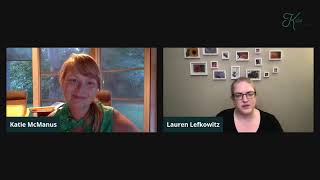
Katie McManus talks with executive leadership coach Lauren Lefkowitz about her transition to full-time coaching, setting boundaries, and owning your achievements. They share personal stories about how coaching changes the way you work and live.
Chapters
Hello, everyone. I'm Katie McManus, business strategist and leadership coach. And I'm here today with Lauren Lefkowitz, who is an executive leadership coach as well. And she has just launched into her full time coaching business. And I'm so excited to be talking to you today. Thank you for joining me.
Hi, Katie. I'm so happy to be here. Thank you for having me.
Of course. And I. Congratulations. You just got granted LinkedIn Live.
I did, yes. And I was nervous to try it. And so you have been kind enough to bring me on with you as a trial run. I can a little bit hide from my own audience and just, you know, sort of see how it goes.
Well, yeah, that's one way to look at it. I'm looking at it. I want to, like, promo you to all the amazing people who follow me so that they can see you and be like, oh, my God, I have to watch this person's lives.
Absolutely. Thank you. That's a way better way to look at it.
Like, the thing that I want to normalize, and I love that you went there, is that it's okay to be nervous. It's okay to, like, be hesitant to do stuff because it's new and you haven't done it before.
That's.
That's all part of starting a business, being brave and stepping up into what you want.
Yeah, it's true. And I am brave in a lot of other areas of my business. I'm a natural writer. So writing on LinkedIn is no big deal to me. Doing a live training feels like no big deal to me. And for whatever reason, going live on video and talking just out to the air felt really overwhelming to me. But so far, so good, right?
Yeah. So far you're doing great. If you're watching. Welcome. We're going to live to the Facebook, LinkedIn and YouTube. We love this to be interactive. So if you have any questions for either Lauren or myself, please do chat in. Or if you just want to say, hi, there's no selling your bitcoins here. People, people have tried in the past. I shut it down real fast. But yeah, welcome. And I had a point there and it went off somewhere else, so never mind. But, Lauren, you just started. This is your first week full time running your business.
This is my first week full time running my business. And it feels crazy to say that because when I met you back in December, I told you that my dream was to like, in one to three years, maybe make this a full time business, but probably part time, probably not. For a while. And in six months, you helped me get from a dream to, like, this is now what I do. I no longer collect a paycheck from an employer. I'm no longer responsible to anybody but myself and my clients. And also, I feel really good about it. Like, it doesn't feel scary to me, which is, I think probably the most surprising part of it is that I feel really secure about what I'm doing.
Right.
Yeah.
Right. Well. And I want to reflect back at you. Like, even though you had like this, it was almost kind of a pie in the sky, someday, whatever. You gave yourself permission to even think about the pie in the sky, whatever. So you had a very clear vision of what you wanted.
Yes. Yeah, I definitely did. Um, I always felt like, So I have 20 years of HR experience and HR, you may know, is like a very reactive job, especially if you're a department of one or you're a generalist. And you see all. Oversee all of the things, everything that comes first is the risk management, the problems, the issues, like all the things that have to be solved and have to meet deadlines. And so I always felt like I was like sneaking in coaching and sneaking in leadership development. And it had never occurred to me until a couple of years ago that I could do anything more than side gig, that I could do this as a career. And it's actually so cool that all of the reactive work is off my plate now.
Right, Right.
Yeah.
I've never been in hr. I, you know, have friends who work in hr and I admire anyone who's willing to take on that role.
To take on that role, like it's a martyr ship. I actually loved it. I really did. I. I would say for, I don't know, 17 of the 20 years I've been in HR. I thrived in it, in the reactive work, in the proactive work. And then a few years ago, I was like, let me look for another job. Let me look for something else. I need. I need, you know, something new. And every. Something new I looked at felt like what I'd already done.
Right.
And I decided if I was going to take another HR job, it was just going to be positive, proactive hr. And it's very hard to find that job. Yeah, it's, you know, HR comes with highs and lows. It comes with reactive and proactive. And I've gotten to do some really cool proactive work as an HR pro. But I always side gigged on the positive stuff, resume building and career coaching. And that eventually evolved into, like, how Do I manage my career, life coaching. And that was what I really loved and now it's what I do, which doesn't sound surprising to anybody I talk to. They're like, of course that's what you do. But it felt surprising to me to realize that that's what I could just do all the time.
Right, right.
Yeah.
Yeah. And it's so much fun to be a leadership coach and you know this. To be able to go in and work with someone individually.
Yeah.
And have them just see them grow and flourish and not have to deal with all the reactionary stuff, I'm sure.
Yeah. Not have to deal with all the reactionary stuff. And also when you're inside of a company, no matter how positively you're focusing on somebody and their future, you're thinking about how does this affect the business and who else do I need to talk to and what other managers are going to come into play here. And when I'm coaching someone directly, whether I'm coaching for like a corporate client and I'm coaching their individual employees or whether I'm coaching one to one with an individual, there's a freedom to that where I get to just work with that client and not worry for myself how that's going to look across the organization, worry for them what the impact is going to be because they get to be the expert. They get to think about how they approach situations and who they need to talk to and how they strategize to find better for themselves. Right?
Yeah, yeah. I mean, that's, I mean, that's my favorite thing about coaching is that we get to be there for an hour, two hours, three hours a month. But our clients are fully capable. They're creative, resourceful and whole and they have ownership over their life. Right. They can take what we, what they want from what we discuss and put it into action and, you know, make their life whatever they want. Pretty much what you did during our work together.
Right.
You know, that's the other part of it is like you had a very clear vision and you also did the fucking work. You like, got to it.
Not every week. There were weeks when I called you and I said I didn't do any of the work.
That's internal work. That's.
It'S, it's funny, I was, I was talking to someone over the weekend and, and I had, you know, a certain financial goal before I left my job. I had a certain number of clients goal and I met that goal three minutes after I handed my computer in at my job. And so I was, like, so pleased that it all came together. And I was talking to someone over the weekend about that, and she said, sorry, did you say it all came together? And I said, yeah. She was like, did you not make it happen? Oh, yeah, I guess I did. I made it happen. Yes. Yeah. It's hard to. It's easy to take blame. Right. And it's so hard to take credit and say, like, I did that. That's my success.
Yeah. No, lesson I learned really early on. I kept saying, like, oh, I'm so lucky I got this job and I'm so lucky this happened. I'm so lucky this happened. And my best friend stopped me at one point. She's like, no, you're resourceful and you build relationships and there are all these things that you do. You're not lucky. You create it.
Right? Yeah.
If you're watching this, take credit for the. That you do.
It's true. It's. We are so quick to hand off credit and feel lucky or feel like somebody gave us the opportunity, and then when we do something wrong, we're like, it's my fault. I ruined it. I'm the terrible one here.
Right.
You feel that? I can see that. And I am learning, and I've learned after, over the last couple of years that when I accomplish something, it gets to be mine. I get to own that I did it, that I accomplished it, and it's not, you know, like, smarmy or creepy to say, like, yeah, I'm really proud of that.
Yeah. I wonder if it. If it comes from. As a society, we kind of idolize martyrs, and yet. And then also the people who do self promotion, like, yeah, like Kim Kardashian and Gary Vaynerchuk, like, I, you know, my feelings, aside from them, you could read them as, wow, they're really good at what they do. Or, like, they're really self promotion. Right. And I don't like it. And it puts me off because, like, I'm over here martyring myself. Right.
Right.
Not following the rules.
Right.
There's also, like, a comfortable medium where you take ownership for the stuff that you do.
Right.
You know, but you also own all the stuff that you do.
Right. Yeah. I've learned that too, through my engagement on LinkedIn, that when I started posting on LinkedIn, I did a lot less about me because I felt like I shouldn't be the spotlight. Yeah. And then when I had successes, I almost was like, oh, gosh, I can't believe it, you know? Which almost feels like a humble brag. But it almost, you know, for me, it felt like, I don't know, should I really be bragging about this? And. And now I, now I own it. You know, I posted today, I got published in a magazine that was pretty cool.
I missed that post and I posted it. Yeah, yeah, yeah. And you know, my feelings on humble bragging, I think it's bullshit. Like, just brag, right? You know, and I think you get.
To be surprised one time, right? Like, one time you're like, holy cow, I got recognized. I can't believe it. Then after that, it's like, hey, look, I did something cool.
Yeah, yeah, absolutely. Well, and my philosophy on bragging is that it's. It's really, the word that's coming to mind is like communion with the universe, saying like, thank you so much for this thing and yes, please, I would love some more of it. Right. You know, I'm giving you the green light to send more things this way.
Mm.
You know, and the people that you communicate it to, they see that, they're like, oh, cool. Oh, you write for magazines. Oh, interesting. My friend is an editor at a magazine. They're looking for writers. Let me connect you.
Yeah.
You know, it's manifestation in the real world.
But you have to pay attention to that stuff, right? Because when I decided to be a coach, I didn't really decide it. Like, a few people came my way and a few different opportunities came my way and I was invited to observe a coaching program and it had sort of never occurred to me, like I said, that it could be a full time gig and. And each time I heard about it, I was like, oh, yeah, sounds really interesting. You know, like, maybe it's something I'll get training on and I'll add it to the docket when I work in my full time HR career. And I had to finally start listening, right, right. To all the signs and all the people and start really thinking, like, maybe this is a possibility for me and figuring out how to shape that.
Right.
Because I think the. I think there are signs everywhere and you decide whether or not you're going to pay attention to them and take them.
Totally. Yeah. Hi, Gabriel, welcome. Welcome to the chat this evening. Well, so funny because, you know, manifestation, like we think, okay, cool, I'm going to focus on something. It's just going to appear in my life. But, like, there are a few things at play there. Like, if you decide that you want to get a yellow Jeep, you're really flipping a switch in your brain telling your brain to be on the lookout for yellow jeeps. So then you start seeing yellow jeeps everywhere.
Yes.
Right?
Yeah.
And it's just. It's your brain telling you, okay, cool, here's the opportunity. They have a yellow jeep. Can you buy it from them? Can you buy it from them? Can you buy it from them what you want?
And.
But to get it, you actually have to take action on it. Right, Right. But it's amazing when in your case, like, you were just. You were realizing, I think, on the subconscious level that this isn't really what I want. There's something else I want. Right. You know, and you're open to whatever that might be. Oh, God, he's got dog. Yes, we have a dog. Her big octopus toy that has like a million squeak. Hold on, I'll be right back. I'm just gonna, like, get her out of here. Luna. Come on. You're too loud. Come on, Amy. Go. Go get it. Close the door. Okay.
That's amazing. My dog is often featured in my LinkedIn posts, and she's taught me a lot of life lessons. And when we first were at home from the pandemic and we were all getting used to having zoom meetings, we had a staff meeting, and I had about a half hour presentation, and my dog decided it was time to speak up. And she doesn't do it a lot, and she would not be quiet. And so after the staff meeting was over, I had her send an apology video where I. She has a. She and I have a thing where I ask her questions and she gives me answers in her dog voice. And she apologized. And some of my team members did not think she was sincere.
Poor puppy.
But everybody appreciated, you know, that at least there was an effort to apologize.
So why haven't we seen these videos on LinkedIn? That's my question.
I. You've seen more pictures than videos. I think of Puppy, but, yeah, I think she's ready to be featured.
I think so. Yeah. My whole post today was about my puppy and how she got her butt stuck under the bed last night.
Oh.
At like 5:00am I woke up, like, in a panic because she's, like, yelping. It sounds like she's yelping in pain.
Yeah.
And so I hop out of bed and, like, where is she? And she was, like, half wedged under the bed. And my bed only has, like three and a half inches between the platform bottom and the floor.
Yeah.
And I realized that the carpet ends right next to my bed. So, like, she wedges her butt in to get on the hardwood floor because it's cooler but like she's growing so that in the past and been able to like out. She can't. I like got her out and she was absolutely fine but she just like we were both just shaken.
Oh man. So puppy is 13 years old and she's a, she has short legs. She looks like a corgi. She's not a corgi, but she looks like one. And so I have steps to go up to the bed and I have a travel set that I bring with me and she is just very much anti this travel set and she already feels humiliated having to use stairs at all. And now we're in a new place. We went to a hotel. She, you know, has to go up the stairs so she takes this running start and again 13 year old dog, so it's like not a fast run. And she goes to leap up on the bed, she gets her front paws up and then she starts to fall backwards and you see this like wide eyed surprise look on her face. She just falls right off the bed. And then like begrudgingly, head down, tail down, uses the steps to get up.
My Luna, who's a sheepy doodle, four month, four and a half month old puppy, she's like growing like a wheat. She's, she's 15 pounds when we got her two months ago and now she's 40 pounds. And she's just a long way. And sometimes she'll just be on the bed and she'll back up and she won't forget. The edge is really close but like butt is further and further out. She'll be close to the edge and she'll back up and then you'll see her eyes just go.
That's so surprising for them.
You know where Mufasa's like.
Yes. Yeah, he's a good analogy.
I mean there's just so many, so many metaphors that you could use towards business, towards being brave, towards any, any life lessons. Like be aware of your body, be aware of like what's behind you.
Right, absolutely. And sometimes you take the help. Yeah. And you use the little steps. Totally.
Didn't someone steal the steps?
Yes. So we stayed in a hotel for about three weeks visiting my family for the first time since the pandemic started. And I left those steps behind and I called the hotel. I didn't realize for a week because you go up to visit your family, you're there for three weeks. I had work stuff, I had home stuff and I had parents who gave me stuff. So I had a lot to bring back. And I forgot the steps, and I didn't realize for about a week. And I called the hotel and they said they didn't find them. And so I thought, I'll just replace them. You know, shame on me for leaving them there. I guess they threw them out. Right. And I went on Amazon to get them, and they were a little pricey, so I checked ebay to see if I could get them for cheaper. And those stairs, not like, just the style, like that actual set of stairs was for sale on ebay for pickup about 20 minutes from the hotel. Oh, my God. So I called the hotel back and I said, you know, when I lost them and I thought they were thrown out, I thought, shame on me. But somebody from your hotel is profiting from them.
Right.
And now I want to be reimbursed.
Yeah, yeah, yeah.
So the first offer from the manager was for me to buy them from the seller and then get reimbursed for buying my stolen steps from the seller, which I declined. And. And then he said, well, maybe we can go and get them. And I said, you know, I'm not really looking for, like, a episode of Scooby Doo where the whole gang hops in the van and goes to find out who's under the sheet and who the real ghost is. Like, I really just want to be made whole for these steps. So they did end up reimbursing me, and I actually put a poll on LinkedIn to see what people thought if I should stop there because I was made whole, or if on principle, I should contact the hotel. And, you know, I come from a rules and policies background. I'm an hr or I was anyway. And. And so the majority said I should contact the hotel on principal, so. Or the corporate office. So I said email yesterday. So solution funding. I'm not looking to be made any wholer than whole.
Right.
But I do think if there's a, you know, a problem with people profiting off what others leave behind, then you want to know about that.
Right?
Handle it. Yeah.
Right. And, like, the differences between you and me, I definitely would have sent that manager to, like, go and do it. Yes. I'm going to make your life a little difficult today. Like, you're. You're going to buy them and you're going to ship them to me. It's going to be overnighted. Like, here we go. Then I'm gonna contact corporate offices.
It was suggested to me to set up a sting operation. So, like, go back there, purposely leave stuff behind, try to buy it, bring the police.
Come On Scooby Doo, let's go. Oh, my God, that's so funny. And I just imagine, like, he'd get there and be like, karen, Karen from housekeeping. You're selling these? Like, problem solved. Yeah, of course. Like, you know, if someone leaves something behind, it's been three months and it's been lost and found, then like, who cares? Donate it, sell it, whatever. Yeah.
And I did ask them if they had a policy, and they do have a lost and found policy. It was supposed to be turned in and they were supposed to call me and all the rest of it. So the manager, though, clearly did not know how to investigate an employee issue because his response to me when he finally, you know, responded about me reimbursing me was, you know, I asked everybody if they knew anybody in that town where the, where the stairs were being sold, and everybody said they didn't. I said, okay, well, that's not, that's not really how you investigate an issue.
Like going through cleaning logs of who.
Over those rooms and when I checked out.
Yeah, yeah.
So, you know, it gave me a little bit of comfort in the value of the work I've done in hr.
Right, yeah. So. Well, I want to get back to your coaching business because, you know, stolen puppy steps are very entertaining. But you're, you're here, you're doing this full time, so who should contact you?
Yeah, so I work with people in the middle of their careers who wake up every morning, go to work again, work too hard, say yes to too many things, have trouble setting boundaries, and then sleep and repeat. Right. So it's like work, sleep, repeat, work, sleep, repeat. And it's this cycle of, you know, you're good at things. You're stuck somewhere between here and there. Maybe you're a hand raiser, people pleaser, achiever, and so you can never do enough. You're just doing more and more and more. And none of it feels satisfying. None of it gets you up leveled. A lot of my clients know they're not making the money they should be making or know they're saying yes to too much stuff, aren't finding balance, and then their family and friend relationships start to suffer. They don't have hobbies. And so I work with those clients to get out of this cycle of just doing and doing and doing. Start, get them started on thinking about who they want to be. Right. And how they want to show up to life and get out of that spin of just doing and pleasing and really think about what serves them, what's going to Help them up, level in leadership, gain the respect that they're trying to gain. Maybe get the next job they're trying to get. You know, my. My title is career and mindset coach. And sometimes that leads people who want a resume writer or a job hunt coach to come to me. And while I know how to do that. And I did do that for a while. Where I found my real success with clients and my real connection to clients is in working with those people who want to get out of a cycle of just doing and doing and doing and not getting anywhere with it.
Right.
Yeah.
You know, as. It's funny as you're describing that. You've seen the movie the Devil Wears Prada.
Yes.
Okay. Just Andy. Andy and Emily, the two assistants to Miranda Priestly. Like, they're in it. They live that job.
Yes.
And there's no gratification. They're underpaid for it. They're underappreciated. They don't say no to anything. Granted, like, Miranda Priestley is scary as all hell.
But, you know, Emily, who was really just the do whatever Miranda says.
Right.
Not coachable.
No.
Not coachable. Going to be the rest of her life, was just serving this executive person who was really difficult to please, for whom nothing was going to be good enough.
Right.
And he was going to keep doing that. And then you see Andy evolve.
Yeah.
Into this person who says, like, wait, there's more, and figures out how to get the more.
Right.
Yeah.
Right. And even Nigel. Nigel, the guy, the. You know, the. I forget. I don't even know what his role was. But, you know, he just.
He was like the fashion closet guy.
Yeah. Yeah. I would love to be friends with him, but granted, I probably wouldn't fit into anything in that closet.
Yeah. But he was a great example. Now that I am a coach, I look at every movie from the aspect of coaching. But he was a great example of. Of a cheerleader.
Yeah.
For Andy, who was like, there is more. You can have more. I've gotten my version of more.
Right.
And really demonstrated for her that, like, she didn't have to settle for that for the rest of your life.
Right. And you also pointed. I mean, you and I talk a lot about choice.
Yes.
We demonstrated, like, you have a choice. You don't have to work here.
Right.
Like, that's a choice. But you could also, you know, make this work for you if you do these things.
Right. Yeah. I. My, like, core value is that everything is a choice and including not making a choice.
Right.
So if you stick to that Grind of work, sleep work. You're making a choice not to get out of that.
Right.
And for a lot of people, that pattern feels like this, like, warm, cozy blanket. Right? Because you wrap yourself in it. It's what you know. You know what your boss's quirks are, you know, what your coworkers expect from you, you know, that you've accomplished, you know, enough of a stack of stuff that people trust you and they. That they know you'll get the work done. And so you're in this warm, comfortable blanket, but, like, it's wet. Like, you don't really want to be in it anymore, but it's what you're used to, Right. And so when you start making powerful choices to go towards something new or to set new boundaries or to set new expectations for yourself or new goals, you give yourself that opportunity to get out of this sort of formerly comfy blanket and see what else is out there for you.
Right? Right. Yeah. Yeah.
And it's hard to make that choice, though, because you have to get uncomfortable before you get comfortable again.
Right. I'm thinking about back when I worked in corporate and it really took, like, I wanted to be a coach for so, so long, like, from the moment I found out that coaching was a thing. But I made up all these excuses, like, I'm too young. No one will tell me, like, whatever, it's going to be too hard. I don't have the security, whatever. And it really took me getting into a very serious car accident and getting a mild traumatic brain injury and having to be off work for eight months to be like, oh, shit, like. Like there may not be a chance if I don't do it now.
Eight months, That's a long time.
Yeah. I had the hr. I have full respect. I had the best HR person who is so supportive and helpful throughout the whole process.
That's so lucky.
Oh, my God, I was so lucky. But it really, like, I mean, it's so easy to stay in that comfort level, though, because, you know, I had a very good salary. I had co workers. I had snacks in the kitchen every single day. Right. There were beers in the fridge for happy hour on Friday.
And they were nice to you and.
They were nice to me. Yeah, absolutely. You know, and the commute wasn't bad. It was in a cool part of town. And they did like, like the. There were so many reasons for me to stay in corporate America. Like, I had a 401k. I had this, I had that. But it's like in the back of my mind, the thing that I always wanted to do was coaching. Right, Right.
Yeah. So what gave you the push?
The car accident? Honestly, I had a concussion. And one of the things they don't tell you about having concussions is that you make financial decisions that maybe don't actually work with your actual finances. When you're on disability, you only make like 66% of what you made previously. So I was making less. And also I was in a commission based job, so, like, I was making less than I even was making. And so I signed up for this very expensive coach certification program and miraculously, like, money just can't showed up whenever the next payment was due for the next class.
That's nice.
It was just like, you know, it was like a commission check from the year before showed up that I had. Like, it was like, oh, sorry, we had an accounting error and you didn't get this, oh, wow. Or here's a dividend thing. I'm like, where did this come from? Like, I didn't get dividends from someone. It worked out.
Yeah. That's amazing. I a great job figuring that out, like, from that accident. Yeah, I, you know, I had an accident as well where I broke both of my shoulders chasing a Roomba vacuum.
Right.
And.
The preamble to this live is right?
Yeah.
Yes.
So it's two and a half years ago. I was. We were working from home, which was unusual for us at the time, pre Covid days. And it was a snowy day. So of course everybody assumed that I hurt myself slipping outside. But no, I'm even less graceful than that. And my Roomba was going across the floor. I thought it was going for a lamp cord, and I ran to catch it and slipped in my socks and launched forward, reached out my arms above my head to try to catch the dining room table, which was like, definitely farther away than I anticipated, and broke both of my shoulders. And then the Roomba turned because that's what it was supposed to do. So it didn't hit the lamp cord because, you know, robots know how to do their jobs. And. And so I broke both of my shoulders. I ended up living in hospital, two rehab centers, and then having home health care for almost four months. And my work was so nice to me. Yeah, I mean, I, you know, I left my job to do this full time. I really worked for a really nice place and, like a nice group of people. And when I went back, instead of going back to my before thoughts about, you know, what else do I want to do with my life? What might I want to be when I grow up, what do I want my work and life balance to look like? I just like doubled down on work. I wanted everybody to know that I appreciated how nice they were to me. And so I took on my job. Plus plus plus I was the interim everything at this organization in between vice presidents, when people would leave, I would interim manage the departments and I just doubled down. I was working 80 to 100 hours a week. I know boundaries. I said yes to everything anytime. There was silence in the room. When my boss said, who's going to do whatever? I looked around and me, I'll do it. And one of my co workers joked with me when I broke my shoulders. Like you have literally just learned a lesson from the universe that you should not raise your hands. Both of them don't raise right now. And yet I came back and I doubled down and I, and I kept working. And it really took until the pandemic for me to realize I just didn't want to continue on this path. And so I hired my own coach and realized that this is what I want to do. And seeing the transformation in my own life and the ability to set healthy boundaries, stop volunteering for everything, stop being everything to everybody in an organization really gave me the opportunity to see the impact that coaching can have and helped me realize some of the people I had helped along the way. And when I decided to launch, I reached out to some people for testimonials and they just came flying in for all the people I've helped with their career choices and their balance choices over the years. And so for me it was like so natural then to, you know, once I'd set my own boundaries and once I'd realized this is what I wanted to do, it was a great next natural step for me to side gig in more formal coaching programs. And now here I am on day day two of my full time business.
Day two or day three? Are we counting Monday as a holiday?
Well, Monday was a holiday. So yeah, I, you know, fair, fair, fair.
You have to, you have to give yourself yourself days off. I understand.
Absolutely. I decided to be a good boss to myself. Start off on the right foot.
So I have a couple questions. So you stopped doing all that stuff. What did besides seeing the transformation you and what was possible with coaching? Like what did that open up in your life?
You know, it's interesting because when you decide to change your life, it's not like this magical switch where you're like, oh look, I've set boundaries. Now I can do whatever I Want so for me to go from working 80 to 100 hours a week. And there was a point where, like, I'd worked 150 days in a row. And, you know, the, the martyr in me was like, I do everything all the time, you know, so when I started setting boundaries, and in fact, I had a conversation with my boss to tell him I was going to stop raising my hand for things, he congratulated me. He said, I would have let you keep doing it. You do great work. Whatever you, whatever you put your hands in gets done and gets done well. But if you're ready to let it go, I'm ready to let you let it go. And so I pretty quickly went from working so many hours to like 6:60, which is still a lot. But I all of a sudden had time on my hands and I had no hobbies. And so it wasn't better. It was like, now what? Right? And. And there is that time period that you go through, and that's why you don't do coaching for a month.
Right?
Right. Because if you go, if you do coaching for a month, you may learn to set some boundaries, you may learn to have some conversations you couldn't have before that feel like braver conversations. Then what? Right. And so if you drop it there, and that's why most coaching programs are like six months or longer and minus six months, because you really need that time to sort of tear down all of the barriers you've built up when you've made work, everything. And then you need to time to figure out, well, what else.
Right.
So I started reading and learning Spanish and coaching courses and seeing friends, you know, virtually, of course, this past year, but meditating, just, you know, there were, there was a whole bunch of new stuff that was out there for me that I just had never taken the time to look at. I see somebody just posted advise against basketball as a hobby. It says LinkedIn user. But I actually know who this is. This is Jack, who I recently met on LinkedIn, who also had a broken arm situation, and he and I connected over that.
But no worries, you're speaking to two very non sports.
Yeah, sports are none of my business anyway, so basketball is not in the cards for me at all. We'll be lucky if I get a good walking program going.
Well, Lauren, I just want to, I want to stop on like, what you said about like, you filled up your time with all this work and then you started cutting back. You're like, what now?
Right.
You know, because I think so many people did that during the pandemic because their normal social life was gone. They're like, you couldn't go to the gym, you couldn't do any of the normal things that you normally do. And so like naturally. And then of course, you switch to virtual work mostly from in person. Right. You have the ability to work from home. Right. Or to live at work, as most people ended up doing.
Yeah.
And now it's like, how do you even dial that back? How do you set boundaries around that? How do you make time again for your loved ones, your hobbies, for going out and all that stuff?
It's true. It's funny. When everything started opening up again, my first thought was like, I have a really busy at home life. I don't know how I'm going to find time to go out. But the nice thing was that over this last year, year and a half, I had filled my at home life with hobbies that can be translated to going out for me. Something that felt really important. Living at work and really having the ability to wake up, start working, finish my day at my desk and move my laptop over to the couch was setting boundaries for myself. So one of the first things that I did when I realized I needed to set some boundaries was I bought a separate computer for my personal stuff and for my coaching business. And I would put my work laptop in a drawer at the end of my workday and just decide not to look at it again. I also had sort of an obsession with checking in.
Right.
And making sure everything was okay. And so I would wake up in the morning and since I broke my arms, my phone comes to bed with me. So it's right next to me on the nightstand there.
Just in case you break your arms again.
Just in case I break my arms again. Sure. You never know. And I have it on do not disturb, so I'm not getting alerts all night. But I would wake up in the morning and the first thing I would do is look at my phone and check my work email. I realized if I was going to change that, that I needed to replace it with something and find something else to fill the time. I made a commitment to myself that for the first 15 minutes of the day, I would read before I even get out of bed. Fifteen minutes of reading, don't touch the phone. And that turned into 30 minutes. And then that turned into morning meditation and I wouldn't check my phone until after that. And that was really powerful. And it got me in the mindset that I could separate the moment I woke up from my Work day.
Right.
But it was. It was training, you know, training myself to do something different. And it was also, you know, creating a mindset and then verifying it. Right. So I created the mindset that there was absolutely nothing important enough that I had to check it the second I woke up. And then the verification was, I was right. Fifteen minutes or 30 minutes later, nothing had exploded. Nothing terrible had happened. Everything. And everyone was fine. I didn't have to check my phone. And when I work with clients and when I work with my own coach, you know, something that we as humans tend to do is we think of the place we want to get to, and then we think it's so far away, there's no way I'm going to get there, so I'm just going to stay here. And so something that I really talk about is, like, what's the first step? And so often when you ask what the first step is, you actually, like, the first thing that comes out of your mouth is like, step 10. Right. So you heard my progression of my morning. My first step originally was I need to stop checking my phone at all before the workday starts. Well, that wasn't step one, because there was no way I could go from waking up to two hours later.
Right.
You know, from. From having been in a place where I checked my phone the second I woke up. So I had to take baby steps. So step one actually ended up. It took me a couple of tries to get there, but step one was 15 minutes, right? Just 15 minutes. And when you break everything down into a step one, and then the next thing wasn't step two, it was the next step.
Step one.
Right. Like, you've already built this habit. Now you were. You wait 15 minutes. What's the next step one? What's the next start to get you to the next level?
Right. Two things are coming to mind. First of all, like, what about Bob? You know, baby steps onto the elevator. Baby steps I love.
What about Bob sailing?
And then two, my coach calls me on this all the time because I'm very good at being a human doing. Yes, very good. Like, give me a to do list. Give me tasks, I will get that shit done. Being a human being, however, I. I forget to stop sometimes.
Yeah.
And like that. I mean, you have to slow down to fee. To speed up often. Especially when you're starting a business.
Yeah. And you have to slow down to feel things.
Right.
Because with all the doing, you can just keep doing and doing and doing, and then eventually you're exhausted. And one of my Personal challenges is stopping to celebrate. Right. It's like a typical achiever thing. Right? You do the thing and then you finish it. Great. Next thing. What's the next thing I have to do? And so I am learning to stop, acknowledge a good thing that I did or a good thing that happened and. And live in it for a moment and find a way to celebrate and find a way to acknowledge a milestone. And when I can't, I just pull out my handy dandy sticker book that my business coach had me buy and I give myself a sticker if I can't figure out what to celebrate. Like, it's just a tiny. I'm not a sticker person. I'm not. Sparkles and rainbows. Like, the. This particular sticker book is like the most ridiculous thing I could have bought for myself. But I just love that there's some symbol that I'm stopping, recognizing and being in it before I do something again.
Right?
Yeah.
Right? Yeah. No, that's like the most fun homework I've ever given. So we're coming up on the 45 minute mark.
Yeah.
I would love to hear from you. What do I want to ask? What is a piece of advice that you think anyone watching this could benefit from?
Any piece of advice? Wow, that's a big question. Things to say. I think that my biggest piece of advice, and I think that comes from this celebration thing that we just talked about and acknowledging, is we as humans always think we're not doing enough. And we will continue to do and do and do. And nobody ever really thanks anybody enough or appreciates anybody enough out loud. And so sometimes it's after you leave a thing or finish a thing that you realize how much you've accomplished. And so my advice is to start knowing your value and to start really thinking about who you want to show up as who you want to be more so than all of the things that you want to do.
Right.
And a great way to do that is to look back at your accomplishments and really try to give yourself credit for the things that you've done and. And know that you have been of value.
Yeah, yeah, yeah. It's. It's so funny you say that advice, and it touches me because last week I was off, I took a vacation, and I found myself on Thursday being like, I'm a fraud. Like, I don't do anything. I just talk to people on the phone all day. And then, you know, I had to stop and remind myself, like, no, you've had this client who works full time for themselves now you have this client who is on their way. You have this client who went from 5,000amonth, 10,000amonth. Like, you actually do it. But it's so easy to get, like, you have these. These voices of doubt in your head that want to convince you that you're not good enough.
Right.
All the time.
Right. And then most of us do more.
Right.
To convince ourselves we're worth it.
Right, Right. And instead of, like, just pausing and looking back and just saying, no, I actually am good at this. I'm just taking a break right now.
Right.
I'm just not actively doing it. That's why this voice is popping up. Because I'm not actively. And getting the feedback.
Yeah, absolutely. Right. And taking that break refreshes you to keep adding the value that you add.
Yes. Yeah, yeah. Cool. Amazing advice. And when is your first live?
Ooh. I haven't committed to it yet, but next week. Sometime next week. I'll have to look at my calendar, but I will set it up for next week and I'll announce it a day in advance.
Okay, beautiful. And you're going to tag me in it?
I will.
And you're going to let me know so that I can go and comment and make sure that people see it, right? Yes, yes, absolutely.
Thank you so much, Katie. This has been great fun.
This is so much fun. I always love talking to you.
You too.
So, anyway, everyone, this is Lauren left with. Be sure to go and follow her. She's going to be going live next week, and you don't want to miss it. She'll be going live beyond next week. I know because I'm going to, you know, if she doesn't want to, I'm.
Going to have you in my corner.
She's a brilliant coach. If you find yourself overworked or just not having time for yourself and wanting some time for yourself, you need to reach out to her. She's incredible. And I'm Katie McManus, business strategist and leadership coach. Thank you, LinkedIn user. Very well done. I appreciate the compliment. Thank you. I'll hand that compliment to Lauren as well. And tune in. I'm going to be going live tomorrow and on Friday. I slacked off at the beginning of this week. That's okay because I was coming back from vacation anyway. Hope you all have a great weekend or. Weekend. What day is today? Today. Wednesday.
Today is Wednesday.
Okay. We're only halfway through the week, so have a great rest of the week and we'll see you all soon. Bye.
Thanks. Bye.
More from Katie





How to do self care right now, so you can do what needs to be done, for yourself, your business, and

How to do self care right now, so you can do what needs to be done, for yourself, your business, and

#greenscreen How to build a consulting business that makes you $200,000-$700,000 a year

#greenscreen How to build a consulting business that makes you $200,000-$700,000 a year

Maybe we’re not the imposters…? #businesscoach #startup #entrepreneur #smallbusiness #consulting

Maybe we’re not the imposters…? #businesscoach #startup #entrepreneur #smallbusiness #consulting
