Making GINORMOUS Life Changes
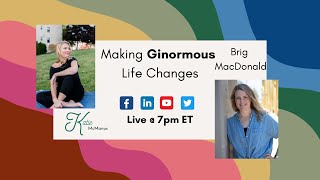
Katie McManus and Bridge McDonald discuss leaving stable careers: Bridge left law after 10-11 years to become a coach and moved her family from South Africa to Boston to Sacramento; Katie became a sommelier then executive coach. They cover the emotional toll of uncertainty and identity loss, plus practical tactics like small experiments and design thinking.
Chapters
Katie McManus, business strategist and leadership coach. And I'm so delighted to be here today with Bridge McDonald, who is an executive leadership coach out of Sacramento, California. She works with clients who are making big changes in their lives. And today we're going to be talking about the ginormous, big, life altering changes that we've both made and what's got us through them, how we did it and what the results were. Fridge, thank you so much for being here today.
Yeah, thanks for having me. I'm excited.
I am too. So I know your background because we've known each other for a really long time, but I would love to start off with what is the biggest, most ginormous change you've ever made in your life?
Well, I mean, I think I've done, I think there've been two, to be honest. Excuse me. I think they've been two. The first one, the first one was when I left, I used to be, I used to be a lawyer in my previous life, where I left, I left legal practice. That was, that was a huge one.
Well, which is such a big deal because when you are a lawyer, you've invested a lot of time, money, time and money in schooling and in becoming a lawyer.
Yes, absolutely. So that, I think there's even an identity thing, that kind of crisis that comes up with that. So, yeah, that was, that was huge. I mean, I did that about like, I left legal practice about 10 years, maybe 11 years ago now. So it's, it's kind of in my past, but I remember it very, very clearly. And yeah, it's kind of like almost this, the sun cost fallacy that you spend so much time, so much effort creating this career and, and then you go and leave it. And I mean, ultimately I didn't end up leaving it completely. I left it completely. And then I kind of came back in a different way. And then after about 10 years, 11 years, I've ended up, I've ended up coaching. But yeah, it's been, it's been a real process.
Yeah. Well, I love that, you know, you're framing this up, is that there's, there's changes in that. Like you can just give stuff up and say no more, but you can also. There are other kinds of changes where you're like, no, I'm moving towards something I really, really want to.
Yeah. Yeah. And I mean, sometimes you just don't, you don't even know. I think a lot of, a lot of my clients in particular, and I mean at the time, myself included, you don't you want to know where you're going towards? Like, you want this big goal, this big aim, like, to have this amazing clarity about, oh, I'm going to be this or that, and you feel like you can't leave until you know what that is.
And I.
That. That just doesn't happen. It's. Well, in my experience, it doesn't happen. I mean, maybe it happens to the lucky few, but it didn't happen to me. It's more of a sense of this is not it, and let me start exploring what maybe it is. And yeah, looking backwards, it makes perfect sense, but you can't join the dots forward, you know?
Right. Right.
Yeah. Yeah. So. So at the time, I had no idea. I just knew that I didn't. I really wasn't flourishing in what I was doing. I mean, I was. I was actually relatively good at it. It wasn't like I was bad at it or anything, which was almost worse. And then I just knew deep down that this wasn't for me.
Yeah.
Yeah.
There's almost this trap of being good at something. I was a really good salesperson.
Yes.
I. I overachieve for. In most of my sales roles, with a couple exceptions based on how the company was set up and most of them failed, but anyway. But, like, being really good at something that also makes you a fair amount of money is really hard to leave. Even if it makes you absolutely miserable.
Absolutely. It's actually just the harder. All of those factors make it harder and harder. I mean, listen, if you doing something that you hate and you're not particularly good at it, you know, you might get. You might get told, like, this is not for you.
Right.
But if the. If the world is not doing you that favor and you've actually got to make a conscious choice like that, this is not for me. That's. That makes it more difficult. For sure. Yeah. Yeah. So that was my experience. And with the first shift, I mean, I don't regret it for. For a moment. But I'm not saying it wasn't scary at the time. I mean, there was all kinds of stuff that came up.
Yeah. So what. What did come up for you when you're like, okay, it's not this. I just need to quit this so that I can figure out what it is. Like, what. What were the, like, emotional thoughts that came up as you were making that decision?
Yeah, I mean, I think this sort of idea of uncertainty, I think I craved some degree of certainty. So I was trying. And. And then also my day had been very Very structured around this career.
Yeah. We have Stephen Doyle joining us.
Nice. Yeah, I. I had been like, you know, my day had been very structured around this, and then suddenly there was like, nothing.
Right.
And I had to kind of recreate this life and this. This rhythm myself. Whereas beforehand there was a very. There was a structured ladder that I just had to climb.
Right.
Kind of boxes I had to tick. So I had to completely recreate it myself. That was big. Also, like, you know, quite honestly, you. You have. You get quite a lot of people. I don't even know how to. How to explain it, but, you know, if you're a lawyer, people are like, okay, great, you're a lawyer. You might, you know, you must know something and not be idiot. You know what I mean?
Right.
So, you know, you get that you have that sort of built in. Whereas when you're going off on your own, that kind of disappears a little bit.
It's like, built in credibility.
Built in credibility and legitimacy.
Yeah.
You know, so that's. That's also a factor. I mean, so. So many things also, like financial security, like, how are you going to do this? Because I think inside an organization in particular, you kind of taught that this is the way to do it and it's the only way to make money.
Right.
And you forget about the rest of the world and all these other possibilities.
Right.
So, yeah, things like that.
Yeah, yeah. No, it's so funny, you know, you're describing this, and it. It feels so reminiscent of every big change I ever made in my life, you know, where I was in a sales job and, like, working my butt off and really good at it and burning myself out constantly and not knowing. Not even having the. The brain space to be like, okay, I need.
Yeah.
You know, and there were a couple times where I actually just quit without having another job lined up because I just needed to get out of there because it was no longer serving me.
Yeah. And I think that that totally happens. I think I was also, at that point, I think I was burnt out, and I didn't actually have the energy at that point to really apply myself to what is quite a creative process, like figuring out what's. What's next, or at least what the next step is. So I was so burnt out that I actually. I knew I also needed that time just to go.
Right.
And, you know, had some sort of faith that I would. That I would figure it out. Yeah, yeah, yeah.
Okay.
This.
This was the first big change. I think I know the second big change. But I want you to Tell the story because it is so incredible. It's so brave. And it required, like, your husband and your kids to be on board too.
Yeah, yeah. So, I mean, to have a say in it, but.
Yeah.
Yeah. I mean, we. We had just. We had just done a big renovation to a house. We had bought, like an old. An old house. We'd done this big renovation, honestly took 18 months. And we were living with my parents at the time. I. While this was going on, I had actually had my second child while living with my parents while doing this renovation. Yeah, yeah, so. So it was a kind of crazy time. But anyway, after all of this, after all of this work and energy, we ended up in this sort of big house in. In this particular suburb in South Africa where. Where we from. And we kind of looked at ourselves. I mean, at the. At the time, we were about 38 years old, and we were like, nah, I don't know. This is not really this. You know, we put all this work again into this creating this life and doing all this stuff. And my husband had always really wanted to go to grad school and do an mba, right at the time we. He was a little bit older than most. Most MBA classes, so he found. He found a course in the US at grad school. And we actually just ended up packing up our lives with our two young kids and just moving to Boston in the US and having this incredible time where he studied. I wasn't able to work, but I did all kinds of amazing design courses and things that I'd really been interested in doing after looking after the kids while he did that. But, yeah, it was a huge shift. That was the second one, so that was a massive change. Yeah.
Yeah. So, I mean, I. I just love the bravery that it took to do that. And then you. You ended up in Sacramento in California also.
Yeah. So he ended up getting a job in Sacramento, which we had actually never really heard of.
Yeah, Well, I guess if you're in South Africa, Sacramento is probably not on your awareness.
So, I mean, we kind of heard of it, but I remember Googling like, he's like, yeah, I think we gotta go to Sacramento. And I remember sort of Googling Sacramento and thinking, okay, well, you know. Yeah. And my parents came from South Africa, looked after our kids, and we went for a weekend to check Sacramento out before we moved here. Yeah. And now. Now we live in a. We live in a lovely neighborhood, but our house is tiny and str. Strangely enough, we just feel a lot more aligned with. Even those parts of it are quite Challenging, like, being so far away from family and stuff. They just. Aspects of our lives that just feel more aligned. And I think when you. When you make changes, even though they're difficult, if. If it. If they resonate with you more, it's the kind of. Right. Kind of difficult, if you know what I mean.
Yeah. It's like making. Making tough choices about stuff that you're excited to make the choice about, rather than stuff that you're just like, oh, like, this is so annoying. I don't want to deal with this.
Exactly. So. Because they resonate. They really resonate. They. I don't know. Is that a very coachy word, resonate? But.
Yeah, I think. I think it resonates across the board, though.
Yeah. Yeah, yeah. So it's been quite tough in a lot of ways, but just the right kind of tough. So it's been. It's been great. And I'm interested. What are. What are the big changes? What are your big changes that you've been mean. I know you've had. I know we've talked about this between us, but, like, sort of big career. Career shifts and life shifts.
Yeah, I mean, I think my first one was when I was really young. I was in college, and I was pretty determined to be a French professor. That was what I ultimately wanted to be. And so I went to my first college, and I actually didn't do a good job of sorting the colleges. They had, like, a whole. A whole page on their website about their French program, and so I just assumed that they had a French major. And I applied for the French major, and I get there, and there was no French major. So I was like, okay, so this isn't gonna work. So, like, why accept me if I wanted to be a French major and you don't have a French major program in the college. So I kind of made a plan. I was like, well, screw this. I'm just gonna move to France and live there for half a year and learn French. And I did, and it was amazing. It was magical. And, like, really, really helped me affirm, like, how I get to be independent and individual out in the world. And then I came back and I had applied to another university for an actual French major program. And I got there, and they had lost half of their. Their French faculty before I got there. And what was left, like, they were nice, but, like, it wasn't the French program that I wanted. So I added philosophy to my major and, like, was trying to piece it together. And I remember having a conversation with my French advisor. And she was like, so what do you want to do with your life? And I was like, I'd like to be a French professor. And she's like, okay, great. So here's how much I made last year. And she made less than I did waiting tables that summer.
Sure. Well.
And, like, one of my values is like, like, security and money, so I wanted to, like, make more money than that. She's like, if you want to make more money, you have to be in a tenure track job. And for each tenure Track job, there's 360 published PhD candidates. And I. I love French. I love the language. I'm not that passionate about it that I want to compete with 359 other people.
Yeah.
You know, so I was like. I literally went home that summer, and I was like, okay, cool. What else do I like? And wine. I, like, developed this love of wine. So, like, I went on the Google machine and literally in 20 minutes, I looked up different careers in wine, found out that there's a word called a sommelier, which is a wine steward, and then looked up programs to learn how to be a sommelier, applied to one of them, and the next day I was. I was accepted. So moved to California, became a sommelier, did all that. And my life has basically been a series of me of being like, okay, cool, I'm gonna build this up. I don't like it enough. Drop it. Build this up. Don't. Like enough. Drop it. Yeah. Every time I've done that, it's amazing. It's like you jump. You jump off a cliff and you don't know if there's a net. But, like, you always land somewhere better.
Yes. Yes.
You have to have the faith that you can do it and that, like, it's really the momentum with which you jump that lands you in that better place.
Yeah. And I think. I think I fear. And maybe you can relate to this. I think I fear being stuck in something that I don't like more. More than I fear the new thing and the possibility of the new thing.
Oh, absolutely. I. I don't understand people who are afraid of the devils that they don't know. Like, if the devil here is bad enough, I don't want any part of it.
Exactly. I think I'm the same.
Yeah. Like, I'd rather go to a new devil and try to make my way with them.
At least. A new devil interest.
Yeah, exactly. At least it's some variety, you know.
Possibility. It's not so bad, right?
Oh, one. And I think, you know, with with folks who really need to make these big changes to really find their place in the world. This is a muscle that constantly needs to be flexed, is just facing the unknown.
Yeah.
You know, it's like, I think, I mean, I imagine you had that moment when you're a little kid where you were either afraid of like monsters in the closet or under the bed. And there was that one night where you're like, you know what? I'm not going to call my parents to come check. I'm going to look myself. And like, you look under the bed and like there's nothing there. And you're like, oh my God. But like, you're so proud of yourself that you looked under the bed and there was nothing there.
Yeah, yeah, yeah. And we make up, I mean, we make up these stories in our heads.
Oh.
About, you know, what it's gonna be like. And a lot of my clients have this fear, like a real, really common fear is the next thing is going to be worse. I mean, this is definitely the devil you know. The devil you don't know. Like, right? Then what if, what if it's worse? I mean, how awful would that be? I've put in all this. I've changed. I've like completely changed my life. I'm doing this new thing and I hate it more than I hated what I was doing or I dislike it more. And that is, that comes up a lot.
Yeah. Well, I can say from experience, because I've done that, I've like switched and like hated it even worse and then switched and hated it moderately the same. And it's like, well, you've already shown yourself that you can change it once, you can always change it again.
Yeah, exactly, exactly. And it's. I suppose it's about noticing which aspects you like and which aspects you don't like. So sort of breaking it apart as opposed to sort of seeing it as well, it's law, you know, you're practicing law.
Right.
Well, there were parts of practicing law that I loved.
Right.
And one of them was, was my colleagues and, and working with these people who were really smart and really kind of often self deprecating and funny.
Yeah.
You know what I mean? I, so, so I've got great like lawyer friends. They're still like my best friends. And there were just parts of it that were really, really still actually I loved. And to just note that. And note what? Note what I didn't love. What I was missing as well was creativity. I knew that I was more of a creative person and I, I Didn't feel like practicing law was particularly creative.
Right, right. Well, you were also in a big firm. I mean, maybe there. There's a version. There's like a alternate reality where you started your own firm and you're able to like, exercise that creative muscle and you were perfectly happy.
Exactly. And. And in a. In a way, it's kind of what I ended up doing because I ended up consulting back to the firm that I was working for in a different role where I was doing these sort of legal innovation projects internally. And it was so creative. Plus, I didn't. One of the things I didn't like about practicing law is you have to be ansible at any moment to your clients. So you had no. I had no control of my time.
Right.
It was like, oh, okay, now you've got to draft these crazy documents and do this and do that. Yeah. In this very limited amount of time. And you can't plan things. So that really, I really didn't enjoy. So. So I ended up doing this internal project where I had way more creativity and way more control over my time and sort of slowly moving in this incremental way towards. Towards work. That actually really made sense to me.
Yeah. Yeah.
Well.
And I love that. I'm sure that's really reassuring to your clients also, is that you don't have to like, burn it down, like kick to the trash the way out, like telling one everyone to f off and like completely bridge. Just step a step away and then come back to the parts that you do want to do and have it be a very amicable relationship. Ongoing.
Exactly. And I think it's also. Absolutely. So I have. I have lively relationships with so many of the people I worked with. And also, you're not starting again. I think there's this. This feeling like when you're doing something new, you starting again. And in one sense you are, but in another sense you never are because the stuff you've learned is super useful.
Right. And it's.
I think it's a creative process around figuring out what those skills are that you've actually have gained in this process and how you are applying them now. I mean, I can imagine. I can imagine, like with you all at sales experience, it. It has huge value for the work you're doing now and for your clients.
Yeah. And honestly, it became part of my business accidentally. You know, I think, you know this, like, when I started my business in coaching, I was going to be dating Coach for men.
Yes.
Based on my experience of dating men in San Francisco, it was Miserable. I was like, I'm gonna go out and fix them. You know, I'm gonna make it better for every woman here, including myself. And got, like, more clients. Only got one dude. I got. I got, like eight female clients out of it.
Yeah.
Coaching. And then most of them wanted executive leadership coaching, so I started doing that with them instead about their presence and their boundaries and all that stuff. And then all my coach friends were like, wait a minute. How'd you do that so fast? And I was like, oh, right. I've applied everything I learned in my marketing and sales background into this business, and that's really easily shareable. I started sharing it. I just loved it so much more. So it's like the. The process really evolves. It takes on its own life.
Yeah.
You just put yourself out there and decide you're going to do the thing and kind of like, let it take you where it will.
Exactly. And there's. There's so much faith in that. In that. There's also so much fun in that. You know, it's like there's just so much possibility.
Yeah.
Yeah.
Hi, Chris. Welcome. Talking about making big changes. So what's the big change that you have on your horizon, if any.
Now?
Yeah. Do you have any that are, like, in the works? It's okay.
You know, I think I will always have changes going on because I love change and I love progress and I love that feeling of, like, things moving at the moment. It's not really a big change, but I'm trying to, like, radically simplify my life, so I'm finding that really helpful, like, just getting rid of all the stuff. All the things that are taking up my time and just really, really getting clear on. On. On what, you know, and also just digging deep into. Into this coaching, this coaching life and business that I'm. That I'm building.
Yeah. Yeah. I mean, there's plenty of work to do in all those fronts, and I kind of want you to fly out here and help me simplify my life and. Hi, Tanya. Welcome.
Good to see you.
Okay. Amazing. And what. So if people want to work with you, who. Who's like, your ideal client.
Yeah. So I'm. I'm very interested in. In working with people who very. They've kind of decided they want a big shift. They don't. They might not know what it is. They just know that it's. It's there and they probably overthinking it.
Right.
They're stuck in their head and they're trying to figure it out. So I love that kind of person just working with them to kind of get out of their head, get into the creative process that is trying to figure it. Figure. Figure it out as much as one can. And. Yeah. People who've, Who've maybe been in a. In a professional background and who wanting to try something else as well.
Right. So I'm hearing there's like a lot of ideation, design and then almost implementation and project management for them to actually take care of it.
Yeah. So I've. I've dug deep into. I go down huge kind of rabbit holes and one of. One of them has been design. Design thinking and creative problem solving. And yes, I love using those kind of methodologies. Using the other side of your brain, if you're very used to using your left brain to. Let's try and see what your right brain has to offer and kind of seeing this as a creative problem, a design problem or challenge.
More than.
Yeah. More than. More than a crisis. Yeah. Right.
Right.
So.
Okay. So do any of your clients ever come to you? Like, I think I'm having a midlife crisis because I just don't like my life right now and I want to burn it down and I need something new.
Yes. I mean, they don't necessarily call it that, but I think I love working on this sort of like, going from living. Going from living a life where you've just sort of ended up in the place that you are to like, really taking, you know, agency of your, you know, control of your life and making intentional choices around it. So I love that process and actually, like. Yeah. Taking them through that process, you know, consciously designing what your life, your unique life can look like. Yeah. But the mid. I mean, I'm kind of confused exactly what midlife is. I mean, I'm assuming I'm probably in midlife. I'm in my early 40s. Yeah. But I'm not. I'm not even sure anyone really knows exactly what it is, but I, you know.
Well, it's so funny, you know, I'm. I'm in my early 30s. Right. And so I remember, like, seven years ago, all my friends who are mid-20s were like, I. I know I'm not old enough, but I think I'm going through a midlife crisis because, like, they. Everyone got out of college, they'd gotten their degree, they started working, were buying all the stuff they were supposed to buy, and they were just miserable.
Yeah.
And they were having these awful relationships and miserable. And they had good friendships, but they didn't really get to spend time there. Or there was just something not clicking in their life, and they're like, am I allowed to say I'm having a midlife crisis in my. In my mid-20s? Like, is it a quarter life crisis? Am I going to have three more of these in my life? Like, how does this go on? I think. I think it's any time. I think midlife crisis gets attributed to any point where you're, you know, you're on the path of your life and you're like, no, no, like, this path just sucks and I don't want to be here anymore.
Major course correct needed. I mean, I always joke. I always joke with my husband that I, you know, he had this sort of midlife crisis doing his mba and, you know, we. We moved to the. To the US and kind of re restarted our lives in some respects. And I'm like, well, I'd rather have that version of the midlife crisis, you know?
Yeah. Getting going back to school is a great midlife crisis.
Yeah.
Instead of buying a sports car, maybe getting a mistress and all the things. Yeah.
Rather this version.
Well, I think that's why the midlife crisis gets a bad rap, is because it's stigmatized with all these things that, like, are seen as, like, cheesy or bad or harmful to others.
Yeah. Like, you're gonna blow up your life.
Right.
Right.
And maybe. And I think that's. That is what ultimately happens when the midlife crisis goes on for too long without you making the changes that are necessary.
Yeah. And you get to keep the parts of your life that you really love. I mean, I kept my family, so I might have had some degree of, like, midlife crisis. But I mean, we all went together, Right. Like two young kids. I mean, shame. I. It's. It's been quite. But they've learned so much. They've learned how to adapt, you know, they've learned a lot about a lot of different cultures and things like that. But, yeah, they've come along for the ride. I might have to start a savings account for their. Their sort of therapy later.
Well, I think.
Okay. At the moment.
Well, I think, like, everyone needs therapy for some part of their life. And I think, you know, you get to be like, cool, I'm. I'm gonna cause some damage here, you know, but also, I love that, like, so South Africa, I'm sure, has a completely different culture to the uk. Right. And then you move to Boston, which has a completely different culture to California.
Yeah.
And Northern California, which has a completely different culture to Southern California.
Yeah.
Really Going to be able to like, jump in and out and really fit in wherever they want to go.
Yes. And I think, you know, to me, I mean, they might disagree, but to me, I just find it so interesting, you know, rather than I. Yeah, for me it's been a really fascinating and interesting process and they have been unbelievably resilient through this all. And then, you know, just six months after we moved to California, Covid hit.
Right.
And so the schools closed and everything closed down. And that has also been a challenge, like being in a new place when something like that hits. Yeah, very lucky for us. We just happened to live in amongst the most amazing community. So we had these friends and we formed this little pod and all the rest been. That's actually really worked out well. But. But yeah, so things like, things like that. But I. I don't regret it.
Well, and I think, you know, when you brought up the pandemic, it's hard not to talk about the pandemic. It's, you know, still kind of ongoing. I think that was a wake up call for a lot of people too.
Yeah.
Because like going to the office and being social, doing the job, you kind of hate making the good money and then going to dinner at your favorite restaurant with your friends that you can afford because you have the good money from the job, you kind of. A lot of the benefits that made that, like, sufferable went away. And all of a sudden you're at home trying to like, struggle to do the same work in a different environment that's not set up optimally for you to do the work, and it's that much harder. And people were just realizing, like, oh my God, like what I was willing to suffer through there, I'm not willing to suffer through here.
Yeah. The upside is gone. The upside is gone.
And the upside still, like, hasn't come back a hundred percent. Also, like, some people have made the best of it. Yeah. But I think that's, that's. You're seeing a lot of people, a great resignation, starting businesses, switching careers, and it's like the, like. Not. This is like. No, this. No, absolutely not. This. This is terrible. I can't do this anymore.
Not for another minute. Yeah. So it's kind of forced people into a bit of a crisis for sure.
Right.
And I think there's a difference between sometimes life circumstances kind of force you there, you know, and then that stuff you have very little control over. I mean, that. That sort of happens. And then there's this other stuff where you realize that you actually have choice.
Right.
And then you've got to make that choice consciously. Even if the choice just ends up being the way you. The perspective you have on your existing job or your existing career, you know, you get to decide that you're not necessarily going to see it as, like, this worst. The most terrible thing that's happening to you or whatever. You're going to have a different perspective. And even that perspective, you know, change is a choice.
Right.
Yeah. Which kind of leads me to, you know, not all of my clients will necessarily make this huge choice. They might kind of really want to, but what actually ends up happening is they end up being. Realizing that they have more. They have this control. They could change if they wanted to, and that helps. Right. And just they. They needed a perspective change around it. And coaching can really. Can really help with that as well.
Yeah. Well, it's the difference between, like, being a scared animal, cornered, you know, with a predator trying to eat you and realizing that there's an escape hatch. And actually this predator is not that scary.
Yeah. And you can leave exactly whenever you want.
Right.
And you might even choose to stay for a while or choose to stay while you, like, figuring out the escape route.
Right.
So there's just so many options. It's not like if you do coaching, you just have to completely blow up your life. I think some people fear that with coaching, you know, that I'm going to be coached, and coaching is going to result in my. My life being completely blown up. And that's not. You get to choose.
And if you really want to blow up your life.
Yeah.
Some people do, but most people don't. It's like small shifts that make the biggest difference.
Exactly. What's an aspect. Exactly. It's an aspect of their life they're wanting to blow up, not the whole thing.
Right.
Yeah.
Yeah. Okay, well, what's. What's your final. We're coming up on the time. What's your final piece of advice for someone who's, like, facing a big change, that they're. They're like, just on the precipice of wanting to take the leap. I think.
I think that you're not going to know. It's a complete illusion that you're going to know what you're going to be doing next.
Right.
So don't wait for some amazing clarity to dawn on you out of nowhere. It's very unlikely that that's going to happen.
Right.
You can't really join the dots going forward. In retrospect, you will see how things Panned out. And, you know, like, looking back, you can probably join the dots, but you can't join them forwards. So you've actually just got to try stuff. And, yeah, it's a creative and very interesting process. And if you can have a kind of experimental mind mindset rather than a this is me blowing up my life kind of mindset, it's more helpful.
Yeah, yeah. It's less scary, too.
Yeah. And it's totally possible. I mean, you can basically do whatever you want.
Yeah, yeah. I'll remember the, like, the biggest change I made when I was, like, in a job that wasn't lighting me up was my New Year's resolution that year was I'm gonna get eight to nine hours of sleep and I'm gonna have a bedtime. And I did that for five months. And, like, that was the key to me realizing this wasn't for me. I needed to change. I need to do this. I need to, like, blow up certain things so that I could be a lot happier.
Yeah. Yeah.
But, yeah.
Cool. So you never know what it's gonna be.
Yeah.
Right. And putting this huge expectation on yourself that you're gonna sit in your. Whatever present situation you in or state you in and kind of project forward into this perfect reality.
Right.
Is. Is really probably going to get in your way.
Well, it's kind of like the depressed person who's trying to, like, paint a happy life, you know, it's like they're not living it, so they don't know how it is.
Yeah, yeah, yeah.
So cool. Well, Bridge, thank you so much for being here today. This is so much fun.
Yeah, thank you.
And for anyone who's, like, wanting to change their life in big and small ways, if you're curious about working with Bridge, reach out to you on LinkedIn.
Yeah, I think that's the base. The best way.
Okay, fabulous. And I'm Katie McManus, business strategist and leadership coach. This is Bridge McDonald, executive leadership coach out of California. Thank you for joining us today. I hope this has been informative and helpful and all the things. And I look forward to being live with you later this week. Nothing scheduled yet, but it'll happen. Bye, everyone. Have a good day.
Thanks so much. Bye.
More from Katie





How to do self care right now, so you can do what needs to be done, for yourself, your business, and

How to do self care right now, so you can do what needs to be done, for yourself, your business, and

#greenscreen How to build a consulting business that makes you $200,000-$700,000 a year

#greenscreen How to build a consulting business that makes you $200,000-$700,000 a year

Maybe we’re not the imposters…? #businesscoach #startup #entrepreneur #smallbusiness #consulting

Maybe we’re not the imposters…? #businesscoach #startup #entrepreneur #smallbusiness #consulting
