Our Two Cents: Live with Katie McManus and Lauren Lefkowitz
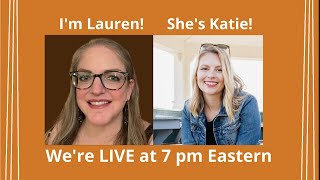
Lauren Lefkowitz and Katie McManus discuss money mindset and how coaching transformed their careers and businesses. They share personal money stories, offer practical exercises like gratitude practices, and answer questions from the live chat about investing in yourself and becoming more coachable.
Chapters
And welcome to day five of my 21 days of going live. I am Lauren Lefkowitz, executive leadership coach, and I work with clients who are executives, rising executives, someday want to be executives, and are caught in the trap of being fine and stuck in the work sleep, repeat cycle. With me tonight. I'm so excited. You probably heard me gushing about her two nights ago is Katie McManus, who is my business coach and who helped me get my business launched full time from going from a long time, many years hobby to an actual business that I can live off of. Welcome, Katie. So glad to have you.
Thank you. I'm so excited to be here. And I just realized I spilled chocolate ice cream on my own shirt earlier.
Well, you wear your dark shirt. We can't tell exactly. You can't see it.
It's fine. But now you're not. No secrets here.
It's so funny because I. I'm, you know, I'm in my mid-40s. I'm still learning how to do my hair right, because whoever actually figures out how to do their hair. And this morning I got, like, great curls, and I was really excited about it. And I turned, I went, I had a zoom meeting this morning. And I was like, oh, they look the same on video.
I hate that. That's so frustrating.
I know, I know. Oh, we've got Kelly here with us. Hi, Kelly. So glad to have you here.
Hello.
I gave a brief introduction. Tell us a little bit more about who you are and what you do.
I mean, I'm a business strategist and coach. And, you know, my. My saying is, stop being a weenie and start your business already. And I work with clients very much like you. I mean, you are my client. And basically, I work with clients in a few different ways. You know, people who are just starting out and they're an expert at what they do, but they don't really know how to turn into a business yet. And then next level, people who have started the business, gotten some success, but then really hit a wall and don't really know how to grow. Grow further. I love both. They're just so much fun. And they're fun in different ways. So I have a lot of fun with it. And I have this core belief that anything can be accomplished with just five seconds of bravery. And we need to stop. Stop really just being a weenie about the stuff. Stop being like, those little fears that we might do it wrong or whatever. Like, they're the things that prevent us from greatness. And I don't Want that anymore because I work with kick ass people like you and you just change the world.
So yeah, you, you changed my world so I could change the world. I appreciate that. We've got some more folks with us, which is awesome. We've got David Breiman with us. Hey, David. Dale Young, my friend Dale. Good evening.
Hello.
And we've got Slow Bodonka with us as well. Good evening to you. Amazing.
Pronounce it.
Hopefully.
I'm like, wow, I was looking at that.
Let me know if we're wrong. I, I really work hard to try to get names right.
Me too.
And so anytime I see a new name, I go to, I Google how to pronounce. And so I've learned some of, some like different languages, how sort of the phonetics of names are. So if I got it right, Slobodanka, let us know. And if I didn't, let me know and we'll get it right.
Yeah, no, I'm the same. I, I lived in France for half a year and I had a ton of Dutch friends and they have some weird sounds in their names. And I remember, like sitting in my room, like practicing and practicing and practicing because I know how, how important is to feel at home in someone and have people around you pronounce your name correctly.
Yes, exactly. We've got Jen, I went to middle school with. We're back in touch after all these years. Oh, I did it. We got it right. Yes. Thank you for letting me know and I appreciate that you're being that you're here. And we've got a wave from John Spears. Hey, John.
Hi, John.
Thanks for coming. So I'm so glad there's already an active chat. And just as we get started, I just want to invite everybody to continue chatting, ask questions, let us know what you think. This is so much fun, just us chatting, but it's even more fun when we have community participation and it feels like we're all in a conversation. We've got Catherine too. Hello. From southeast Michigan. Hello, welcome.
Where is. I guess it would be down here.
What's that?
So I used to have a roommate from Michigan and I'm from Cape Cod. So whenever we'd go out to the bars, people like, where are you guys from? And I'd be like, I'm from Cape Cod. She'd be like, I'm from Michigan.
That's funny. I don't know what shape to make. Maryland.
I know. It only works with a few different shapes.
Yeah, I'll practice. I'll come back to you.
Yeah.
Amazing.
Well, I have to tell you, so I had a moment today that I thought was so funny. And I'll say it, because John. John is here. And I thought of him because my dad called and he got invited to go to the White House for Easter for the egg roll. And the stipulation was that he had to bring a child that was 13 years or younger. And this is like the biggest. Like, you know, shame on me for not having kids because he doesn't have any grandkids to tag along and he's too busy to go anyway. But I was like, oh, my God, maybe I have. I know someone in D.C. who has kids. Like, maybe you could take one of their kids to the house. Like that wouldn't be weird at all.
Yeah, not weird at all. John, your business coach's dad is coming to take your kids to the White House.
Just one of them. Only wanted.
Oh, just one kid. Which kid you love more. Sorry. This is what it comes down to. That's amazing.
Oh, my God. Well, I'm.
I'm sorry. We've got. Good evening from LinkedIn user. Let us know who you are. LinkedIn user. If you haven't given permission to restream to use your name, then you come up as LinkedIn user. But we're still glad to have you here. Got it. That's Michigan. You got Michigan. Got a hello from Donna and Tamika. Got great advice from Tamika.
Oh, and John saying my dad can.
Take one of you. Can take one of mine. Amazing. Amazing. Ruining families one family at a time. Zito. So glad to catch you literally sitting down to write my about page for my website.
Oh, man.
In there. Yeah.
All right. Yeah. So as you're writing it, channel this money conversation into it.
Yeah.
Deserving more money channel. I'm attracting all the high paying clients to work with.
Yes, exactly. So awesome to have so many of you here tonight.
Oh, man.
So Katie and I like feel all squishy and icky about it and also my money mindset has shifted a bunch over the last couple of years. Doing some of my own work, some work with you reading and sort of figuring out and so I'd love to talk about a little bit about money mindset tonight. Well, a lot about money mindset tonight. But before we get into that, I'd love to hear, like, how your money mindset has shifted and like how and why you decided to invest in your personal and professional development. Because that's something I think you and I come across a lot is people reaching out to us and Saying, like, I think I want to do something, but I'm not sure. And I don't want to spend a lot of money. I don't have money. I don't want to spend money.
Right.
And so that's really the mindset stuff. But like, where did you start from and where did, where have you gotten to in your money mindset?
Yeah, yeah. Well, let's just acknowledge that younger Katie was really bad with money. I was really good with money when I wanted to save up for something. So, for instance, my 15th year of life, I worked at a restaurant and I was a bus girl. And so I get tips at the end of the day and I get them in denominations of one dollar bills and five dollar bills, you know, depending on how good I was for each waitress in their section. Right. And so my, my goal for the end of the summer was to buy a computer. And so I literally save every $1 bill that I got and then everything else I could play with or I'd put in the bank. And I finally, at the end of the summer, I think a Dell computer that year was like $839. You know, it's an odd number. We'll talk about that. But so I saved up $839. I'm pretty sure my parents paid the tax because I didn't understand that. But yeah, I. Everything else, like, kind of went to spending on things. You know, it's. And here's the mindset that we're kind of trained in our, in our Western culture is you save up so you can buy things, right. And so you can buy the house and so that you can buy the car and so that you can do all these things. And there are some of us, like younger me, who is like, oh, well, I'm going to use credit cards for that stuff because it's basically like free money, obviously, and I want to keep up with all my friends who make more money than I do. And that got me into a lot of trouble, if you can imagine. There are a couple other things that happened along with that, you know. But long story short, I found myself in these situations constantly where I was anxious about money, looking at my bank account and being worried because it wasn't matching up to what my credit card balance was, having all this stuff and not feeling any happier. And I was really good at quitting things. I was really good at like, quitting jobs. That didn't make me happy. I was really good at like, quitting relationships. That didn't make me happy. And it Wasn't until I was like, wait a minute, like, I keep doing this. I keep, like, burning down my life and changing everything and moving and, you know, new job, new relationship, and nothing changes. I'm the common denominator here. And so I think my first. My first business coacher or career coach that I hired was this guy in San Francisco. And I think I was making like $30,000 a year at that, like, that point when I hired him, and it was $550 a month. And I made it work. I absolutely made it work. And by the way, like, if you don't know the cost of living in San Francisco, like, all the money I had was going to rent, you know, like, food was going on a credit card. That was it. I was just making it work. And it was the best decision I ever made in my life. And it really trained me to, like, trust the universe, that, like, I could jump and, like, find something better and also to believe that I deserved better for my career. So that's kind of where I started.
From, you know, he's throwing in a right hook.
Yeah. Lauren, what about you? What was your. What was your, like, starting point with all this?
Yeah, so I. I grew up in a. In a scarcity mindset. My parents both worked really hard, and my dad worked for startups and worked on new technology, new hardware. He's an engineer. And so every few years, whatever patent they going for would get approved last and then run out and the company would fold. And so he was often in a new job or looking for a new job. And my parents kept everything going, but there was a sense that, like, you need to save and you need to save for a rainy day. And they were good at that. We lived a very nice life. And I also remember my dad saying to me when I was, like, young, like, I hadn't. This is going to age me. But I had my savings account, passbook, and for those of you who don't know, was a paper, it looked like a passport. And they. You would go into the bank, take out or put in money, and they would take your passbook from you and print on the next line what your new balance was. This is before computers were used for.
Before we had these, these little guys.
Right before the whole computer was in a phone. And I remember when I got my first checking account, my dad, I think I was maybe 15 or 16, my dad said to me, never bounce a check. And for whatever reason that stuck in my head as you will absolutely ruin your financial life if you ever make a Mistake with your bank account. Slow Mo Dang is still has one. So I was always afraid to spend. I was always afraid to not have money in my savings account. I was always afraid to bounce a check. And I did when I was 22 and I was like, well, that's it. Now I'm never going to have money now. I'm never going to buy a house. My credit's ruined. I know. And then in my early 20s, I was sick and I spent a lot of money on health stuff and I had to take out a credit card to pay for that. And I had some interest that I was paying on it, got control of that. And I sort of reinforced for myself then, never again. Don't. Don't spend money you don't have. You know? And so for me also being a person who helps other people as my job, as my living, I also had this mentality that, like, I don't need help, I help other people. Yeah. Like it sounds. I mean, it is a little like ego driven. Right. But it was more like it was more from a place of being scared, of feeling like I can fix everybody else's stuff. If I can't fix my own stuff and I'm smart enough to fix everybody else's stuff, then maybe I just can't be helped. And, like, maybe my stuff can't be fixed. So coming in with those two mentalities, that money mindset and that, like, if I can't do it, I'm not good enough and nobody else is going to be able to fix me. So here I am, alone on my island, holding on to my dollar bills. You're screaming down my face, right? Beautiful picture. And. And then I hit my wall. I hit this professional, personal wall where a lot of you who are here know my story, which is I was working 80 to 100 hours a week and I was like dying a slow death because it was breaking me and I didn't know what else to do. And at one point I moved jobs. I was working 60 to 70 hours a week. And then I moved jobs and I was like, this will fix it. And then it turned out I brought me with me to the new job. So I did the same thing, except I increased. And then I worked 80 or 100 hours a week. And so I hit this breaking point at the beginning of the pandemic. I was working way too many hours. I was covering another department. I was working on a construction project because our office was moving, which, you know, was planned before the pandemic. Of course, they give you A hard.
That's my question. Did you have.
I never got a hard hat. I'm still bitter about it. I know.
I know.
And the pandemic started, and everybody turned to me, and they were like, what do we do? And I was like, I don't effing. No. I can't do any more things. Yeah. And I started joining some communities and met other coaches. And by the way, all this time, I'd been coaching, consulting, training on the side in my spare time, and I met a bunch of other coaches who were smart, capable people who said, like, of course I have a coach. And I was like, really? Tell me more about that. And I realized that there are coaches who are smarter than me and coaches who are more clever than me and coaches who know aspects of things I don't know. And I realized that I had to figure out my money stuff in order to allow myself to hire a coach.
Right.
I also realized I didn't have to figure out everything.
Right.
You and I have talked about, like, when you think about joining a gym or getting a trainer, you're like, all right, I'm gonna get in shape. First. I'm gonna go to the gym five days a week, first get myself, lose X number of pounds. Then I'm gonna hire a trainer, and I'll come in showing them I can already do stuff.
Right. Right.
That's not what trainers are for. No.
No. And it also doesn't work that way. Like, if you. If you were able to do that, then you wouldn't need the gym and you wouldn't need the trainer. Like, you'd already be set. Right, Right. If you already knew all the things to do and you can hold yourself accountable and actually see them through. Amazing. You don't need the gym, and you don't need a trainer. You're just fine.
Yeah.
Yeah.
And so I actually didn't even start out in talking to coaches thinking about getting a coach. I talked to a. An acquaintance who's now a very good friend, who is a coach. And in the interest of, like, oh, can I add another certification to my bucket and become a more attractive employee. And in the middle of our conversation, I realized I don't know how I'm gonna have. Hey, Chris. Welcome. Glad to have you. In the middle of our conversation, I realized, like, there's no way I can fit in becoming a coach. Like, I'm in a very messy personal situation, and I don't know how to escape from working all these hours and trying to please everybody all the time. And, like, continuing to not be happy. And so in the middle of that conversation, I said to her, could you be my coach? I had no idea how much coaching cost. I had.
No.
But I had hit my point. I had hit my point where I realized I just couldn't do everything by myself anymore. And I needed support. I needed someone who could look at me a different way with me.
Right?
Yeah.
Yeah, yeah.
So.
Well, I love that we're coming at from, like, two different ends of the spectrum. Like, you know, you were like, never bounce a check. And I'm like, you know, my friend from. My roommate from Michigan and I were like, we will. We will be paying off margaritas four years later rather than admit that we can't afford to hang with the crowd that we want to hang with.
Right.
You know, completely different.
Yeah.
And yet here we are, we both invested in ourselves. And look at us now.
Yeah. Last year I had you as a coach. I had a coach through a certification program. I had the certification program. I got myself a therapist. I was like, I'm doing all the work now. Right. And I've. I've been a good coach this whole time. Now I'm like, I'm really good at it because I got out of my own stuff.
Right.
And I don't hit these walls where I'm like, ooh, I don't really want to delve into this with this person because it's my stuff too. And now I know how to do that in a different way. But I'd love to talk about the part where we talk to clients and they're like, I don't have the money.
Yeah.
And I've been that person where, like, I've heard how much something costs and I'm like, oh, that's nice for you. You know, and. And I think, like, I don't have x thousand dollars or, you know, whatever it is. And John Spears, if you're. If you're paying attention, please respond to Chris so he doesn't feel bad. He wants to know how you're doing. Chris and Katie were my bouncers the other night. In the comments when come when someone came in pitching their marketing services.
Oh, my God.
They're invited to every live forever to help help bounce and control the crowd. And you know what?
Anyone can be a bouncer in the virtual.
Anyone can be. Yeah. Something inappropriate.
Call it look scary. You don't have to be wearing like a ripped up T shirt. You know, you're not judging people based on their clothes or anything. It's just, you know, call people out when they're being inappropriate.
Right, right. Yeah, exactly. Yeah.
You too can be a counselor.
Yeah, exactly. So, you know, last year was. Was my big spend year. My first big spend year on. On coaches and coaching and other support. Right. And where I had been a person who wouldn't have even thought about buying an extra business book. Right. Because I was keeping it even.
Maybe you might have to. Oh, I'm looking at Slavadanka. I don't want one for John.
Yeah, John. John will be okay. I think. I think we're okay. But you know, I'll reach out to him after this live, just to, just to make sure. Hey, we were talking about you.
He's actually, he's picking out an outfit for one of his kids to go to the pool.
Right. He's. He's deciding which child he likes better.
Yeah.
Ye.
You see how much one can roll an egg across the living room.
Yes. If you missed the beginning of this life, Katie's dad was invited to the White House with one child for Easter Sunday.
There are no children in our family.
There are no children in the family. And John Spears lives in D.C. and has kids. And so now we're asking him to decide which kid he likes better. There we are. Now you're caught up.
Yeah, There we go.
So I hate missing a joke that becomes an insane.
I know. Beautiful. Refreshing the room.
Yeah.
Good job.
Yeah. So. So last year was, you know, my big spend year and I had to really decide like what, what to do with my money for the first time instead of just like squirreling it away. And you know, I, I always did like, nice things. I went to dinner and vacations and stuff, but I never just decided to get support and pay for support. Right. And so for me, I've always been really good at the no interest credit card.
Yeah.
And, and I, I kind of knew what my income was going to be for the year and I calculated that I could, you know, pay off what I would pay off before the interest compounded and went all the way back to the start. And that worked for me and, and also was just a different way of being for me. But I realized that I wasn't, I couldn't just keep doing what I was doing because I was just going to keep spiraling and just going to keep working insane hours. Yeah.
Right.
Yeah.
It's funny. So you wouldn't have even bought a book to help you do the thing?
Well, I wouldn't have bought a book because I. And, and I have a philosophy on books. I love books. I love reading, but if you're going to. If you're gonna buy a book and then you're not gonna do the thing that the book says, you're going to feel worse about yourself. Right. So I just read Atomic Habits, which I loved. And if I had read Atomic Habits two years ago, I would have just felt bad that I can't build Habits because I wouldn't have done any of the work in it. And now I read it and I'm in a different place and I'm. I've, you know, done some of the things. I haven't used it to its full potential. But I also, like, talk about it and think about it and, you know, and so I went through a period where I read some. Some business books and some growth and development books. And then I didn't do the stuff and I was like, I wish I never read the book. You know, like, it made me feel bad about myself.
You say that like that's everyone. It's not me. That's not how I buy books. I buy books because I want the option to be able to either read or do the thing. I'm. I'm a firm believer that buying books and reading books are two separate hobbies. I'm really good at both in different ways.
Oh, that's interesting.
I buy books on, like, I bought a whole book on house plants on running marathons. I don't even want to run a marathon. I just wanted to read a marathon to like, see how people train for marathons.
Months.
Never gonna feel guilty about not running a marathon after reading actually two books on it.
Wow.
You know, but it's like I almost. I also buy online courses and this is kind of my point that I'll make later is that like, I'll. If I see an online course and I'm like, I want the option to have that information, I'll buy it. No thought, no second thought. Because I wanna, I wanna at least know that I have that in my bank of knowledge that I can access later.
Yeah.
And this is kind of where I see a lot of people who are like me and their spending habits or in their former spending habits where they have a really hard time investing in a coach because they've bought a shit ton of books and they've bought as many online courses as they could possibly find on how to change their life in a certain way. And they've never seen any of it through because how often does a book actually change your life and change how you live your life? You spent 13.95 on it. It's not going to do that.
Right.
And then an online course, like, it's not. There's no accountability built in. Honestly, most of the time the videos are way too long and don't, like, don't get to the point fast enough. So you get bored and you print up all the. All the PDF documents that they have and then you're just like, oh, they sit around your house for like years. You feel guilty about it. That's the part that you do feel guilty about. But I see that being for the. For the money types that are like, me.
Yeah.
Go to hire a coach, they're like, oh, God, Like, I've already proven to myself a million times that I'm not the kind of person who finishes stuff. I'm not the kind of person who sees things through because I did all this. I spent all this money on these things and I never saw them through. Let me just go back and see if I can finish the online course. Let me just go back and see if I can finish the book. And then they can't. And then it just reaffirms this whole story they have about themselves being bad at finishing.
Yeah. Thanks, Kelly. Yeah. It's funny that we come from such different money mindsets and yet we got to the same place where we were like, I shouldn't pay for a coach.
Right? Right.
Yeah. So, you know, I know. And you know that, like, practically nobody just has thousands of dollars laying around.
Right.
And coaching with a good coach costs thousands of dollars.
Right.
And so what do you tell people? Like, how do you talk to people about investing in themselves, investing in coaching? And before we do that, we have a comment from. From David. I'm so like this too. I'll pay to just have this knowledge accessible in case I decide I want it.
Yeah, you're buying options at that point.
We'll never join a pretend book club together, the three of us. You two can have your own club. But what do you. How do you talk to people? I know you love this topic so much.
I love this topic so much.
That shift.
And here's the thing. It's. We talk about investing in ourselves and it's such a. Like a high level, kind of airy, fairy idea. It's not like we have like a little piggy bank next to our heart. We're like shoving dollars inside. Right.
I mean, maybe you do.
Maybe you had that surgery. Interesting. I don't really want to see it, but cool. You know, it's. It's more. It's so much more about. Do you like the life you have? Are you happy with it? No. Okay. What do you want to change about it? What is the thing that will make it like, worth living if we're getting a little dark about it and can you get there on your own? Have you been able to get there on your own? No. Okay. What has stopped you? Okay. You need accountability. You need someone to show you the way all this stuff.
Cool.
If I do that, it just makes sense that you'd want to hire me. Right. It's more about the thing that they want or the thing that they're in pain and they want to get away from. Then it is about, I'm just going to invest in myself.
Yeah.
You know, it's, you know, I always say to my clients, and I know I've said this to you so many times, people only spend money on three things and it's getting laid, getting paid, and living longer.
Fair. Yeah.
We invest in college educations because we've made up this story that you're more likely to find a viable mate getting laid. If you're college educated, you're going to attract another college educated partner and then you're going to get paid more because you have that college education and you're both going to get paid more. So you're going to be like, you know, double income, you know, maybe no kids, who knows? And then because you're making more money, you have a partner and you love each other and you're going to take care of each other and hopefully you're like cared about and respected in your society. You're going to live longer because if you trip and fall in the woods and break your leg, someone's going to make sure that you get out and get medical attention.
Right.
If you get. People are going to bring you some soup. It's. We attribute all that to a college education. And a college education is essentially you investing in yourself.
Right.
You know, and there's just been this huge case, you know, throughout history that a college education is that, is that formative way of investing in yourself.
Yeah. And we also learn that like then you graduate from college and you go do stuff, you work really hard so you can have stuff so you can later be happy.
Right. Right. When you're old and then go travel with your, with your walker and you know, your friend like also can't, can't do anything. And then you go to sleep at 6pm and you miss most of the stuff.
Right. So you do. And then you have. And then you do, and then you have, and then you do, and you're climbing this mountain of, like, more things to do and more things to have so that someday you can be happy.
Right?
It doesn't work. I mean, it works. It's, you know, if you want to be happy when you're 74 for the first time, awesome. Good for you. That's the life I was living. That's. That's how I was doing stuff. I was. I was working and working on the side and working more so I could prove myself, so I could make more money, so that later I could have stuff. And then I, like, woke up one morning and I was like, I'm in my 40s. I don't want this to be it. You know, I don't want to just keep doing this. And that's a lot of the people I run into in, like, on LinkedIn and just out in the world are people who get to the middle of stuff, and middle could be 30s, 40s, 50s, 60s, whatever. And they're like, yeah, I don't want this. Yes, Dale, thank you. I talk about fine all the time. Happy.
If you haven't heard, Lauren, it is a trap.
Yes, it is a trap. Yeah, it's a trap because we, we keep doing stuff and we convince ourselves it's fine to do it. And I don't really want to do this, but it's fine because I'm making money, but it's fine because I'm going to get my bonus. But it's fine because I like my coworkers, but it's fine because what else am I going to do? I'm not qualified for anything else, but. Which is total lie. You're qualified for other things. Whatever you're doing right now, you're qualified. And. And so we stay and we just keep, like, doing so we can have. And doing so we can have. And my philosophy is, like, let's figure out who you want to be.
Right.
And what you want being to look like.
Yeah, well, I, I love that we're going this direction because, like, think about it. Our. Our whole lives were kind of, like, raised watching, like, other people's parents and people on tv. And, like, they're the kind of person who goes fishing on the weekend, or they're the kind of person who, who drives a fancy car. They're the kind of person who has, like, a high powered job, right? And so we think, oh, well, if we want to be that kind of person, we either have to have those activities, you know, buttoned in, we have to have the fancy car, we have to have that high powered job. But we forget, like, we don't separate the person or the qualities. Like maybe the person who has a really high powered job is also just a really caring and tuned in person. You know, we're like, oh, cool. I want to be a really caring and tuned in person who takes care of everyone. This person, this iteration of this person just happens to have a high powered job and that's not actually going to be our way in.
Right? Yeah. So we have to decide what we want our whole lives to look like.
Right.
It's not just about like keeping on doing stuff because that's what you know how to do. So just keep doing it. If you're waking up every morning and the first like sound out of your mouth is like, that's not. Yeah, that's not, that's not how you want to be. And if you go to work every day and you're like, how many minutes until 5 or 6 or 7pm and do I have to take my laptop home tonight? And am I going to be, you know, watching the game while my kids are playing around me while I'm on my laptop finishing up that day's work? For some people, that's what they thrive on and they love it. And I loved it for a long time until I didn't and then I really didn't like it. But that's when coaching can be so impactful. Right. To really be able to step back and look at yourself objectively and get asked all kinds of questions that you don't know how to ask yourself.
Yeah.
And kind of like get called out on it. Yeah.
Right.
Like there have been times when you and I have been talking and I've said like, I don't want to do that. And you're like, okay, you don't have to.
Those are my favorite conversations.
It's the way to be a bigger business owner. And you're really kind about it. But like, you know, my brain is like, that feels different. It's not going to work. Don't do it. And I remember recently texting you after one of our sessions and saying like, I'm sorry. I argued with you the whole time, saying is right. And I'm gonna just reflect and reassess. And now I'm doing things that you told me were gonna be for me to do.
I'm sitting in a corner and I'm thinking about what I've done.
Yeah. Yeah. It's like, you never have to punish me. I will take Care of that myself. I know disciplinary action. I know what to feel bad about. And I also know now how to get over it, because I've been to therapy.
Right.
But it's. It's really, like. It almost makes me giggle at how much impact being coached has had on me as a coach, as a leader, as a human, as a person who, like, I. I had to learn how to have fun.
Yeah.
Because all I knew how to do was work really hard and, like, squeeze in a friend here and there. Squeeze in a brunch here and there. And I wasn't a big canceler of plans, but I was always slow to make plans. So if I had plans for dinner one night during the week, I wouldn't.
Make plans a second night during the week.
I couldn't take a class. I took a painting class, and I missed. I took a painting class, and I missed half the classes because I just couldn't commit to going there. Very important question to interrupt with Katie. 35 minutes and no barking.
Come here. Come here. Your fans. I want to see you. I've had this in my pocket because I was like, she's going to.
Just in case.
She's been to the dog park twice today. You got to come here.
Come.
Come see your fans. You got to get all the way on the couch. All the way. You want it? You want it? You can see her.
Just your nose.
She's so lazy right now.
She's so tired.
Oh, it's so tasty. So good.
Leading by example.
It's mine.
Katie's behaving on the couch and has a bone. And if Luna gets on the couch and behaves, she'll have a bone, too.
You can have it. Here we go.
There you go. There she is.
Like, I'm one of those, like, animal trainers that has, like, a seal who's pa. Good paw. I didn't train her that. My friend John did.
Nice. That's amazing. Yeah. My dog's always on the floor asleep. She's earned it.
We could have a treat, too, if she were here.
Yeah. I appreciate about a quarter of Luna's size. She would make sure to get on the couch while Luna was on the floor so she could be eye level with her and bark at her wings just to show her.
So. Yeah, yeah. Obviously, just dominance.
Yeah. Yeah.
Well, speaking of having fun. Well, and I just want to jump in here because it's so critical for a coach. They don't necessarily have to have a perfect life, but they have to have a life that they enjoy.
Yes.
They have to have a life that they're like doing mostly on purpose because good coach can only take you as far as they, as they've gone themselves.
Right?
Right.
Yes.
And so if you are not having any fun in your life, if you're like still just so miserable, it would be so hard for you to, to really hold for your clients that you deserve to have fun. You deserve to go to that art class and show up every single one. Unless you.
I don't deserve it. But you do.
Totally. Yeah. Right?
Yeah.
I mean, I love that moment when you're on and I still have these moments because, you know, there's so many things you can do in a business. Right. Get off the phone with a client, I've just like laid out a whole plan for them. I'm like, I should be doing that. Like I don't have time, but I should be doing that. That's a great.
Well, when I, when I was coaching before, in the before times, I was mostly coaching people who wanted to change jobs and helping them get confident to do that. And my, as my life shifted, I became, I had more capacity to coach people who just wanted to find balance and fun and joy. Because I found it and I knew how to, I knew how to use it right.
And.
But when I first started, you know, when I was first working with a coach, before I was even thinking about my own, my own full time business, I, I went from 80 to 100 hours a week, down to about 60 hours a week over a couple of months time. And it wasn't fast and it was, it was very deliberate and there was some stuff coming to an end and I didn't raise my hand for some new things and I didn't know what to do with myself because I didn't have any hobbies in the middle of the pandemic. So it wasn't like I could just like start going out to happy hour. And I strongly considered just going back to working 80 hours a week.
Right.
Because it felt easier than figuring out what I wanted to be.
Well, you kind of did. You started a business.
Well, yes, that's true, but when I started working with you, I was still working on getting myself down to 40 hours. And I did. And you said to me, don't add this as time, let's work it out so that as you're weaning down your work at your job, you're also ramping up what you're doing for your business. And that was really helpful for me because it, it was an indicator for me that I really could handle 60 hours. I was comfortable with it, but I had to work down from, you know, getting to. From 80 to 60. I had to work down from 60 to 40 so that I could focus on my business and also, like, still have headspace to figure out what I wanted to do.
Yeah.
And to choose my time.
Yeah. So, I mean, well, to. To talk about, you know, what it means to invest in yourself. You know, one of the reasons coaches charge so much, I know we talk about this a lot, is because, say you do work 60 hours a week. If you're not paying enough for the coach to help you change your life, are you actually going to bring your hours down so that you can focus on changing your life? Probably not. You don't have enough skin in the game. Right. There's like, this. I mean, I've bought things that I'm like, as I'm paying for it, I'm like, they don't. They're not charging enough. I'm not going to see this through. And I never do. I never do. They don't charge enough and I don't see it through. I blow it off.
Yeah.
I'm the worst client for those, but, like, if they only charge me, like $5,000 more, I'd be the best client. They'd get the best testimonial for me.
Yeah. Yeah. And it also is a way of saying to yourself that you're. I know we talked about this earlier as sort of like the woo, woo, high level factor, but that you're willing to put this time, energy and money into yourself.
Right.
That you're. You're creating value for yourself and for who you are.
Yeah.
Kelly says lawyers feel the same way. Yes. Great job, lawyers. Yeah, yeah, yeah. So I work with corporate people. You work with people who want to build their own businesses.
Yes. Ellie, I'm so glad to hear that.
Yes. Just raise your rates. So I work with. With corporate people who want to get out of this trap of being fine. You work with people who have been in corporate and want to start or re restart their own business. What's your advice for people on how to make the decision to hire a coach to help them get to the next level of whatever they want or get out of the pain that they're in and build the life that they really want to live.
Yeah. I mean, this is such a great question. Let me think of something around the spot. So, a, Are you coachable? Like, are you able to tell someone the truth about the scenario that's going on? Whatever's going on. Get asked some uncomfortable questions and be set in a direction that may be uncomfortable for you to do. Are you. Are you coachable? Are you able to be coached? Because if you're not, the answer is, heck, no. Do not hire a coach. Do not put you or the coach through that, please. I love all the potatoes in the world. The next bit is like, can you. Have you done, like, do you want to do this on your own? You know, because some people can actually do stuff on their own, you know, but if you've tried long enough and made a little headway and then kind of bailed or like, failed for some reason, or you just keep hitting a wall of, like, this is too hard, or there's something like, I'm the common denator, denominator. I'm the problem, and it's still not happening, then probably you need a coach.
Yeah.
And then, I mean, if you're just someone like me, like, I'm add. I am the biggest procrastinator. I really need someone to hold my feet to the fire on some stuff, you know, and also there's something energetic about, like, ponying up and spending money because it's like, okay, I'm actually doing this. I'm actually going to do this. I'm actually going to see this through. Rather it's changing your career and your life or building a business because it's so easy to buy a $300 online course and so easy to buy 17 $95 book or to go to the library and take one out.
Yeah.
But to spend thousands of dollars on a coach, shit gets real, real fast.
Yeah.
This is my experience. When I was like, I was on the verge of declaring bankruptcy, I, you know, had like, my own personal money meltdown. And I realized that I was never going to get out of it if I didn't pony up a little bit more. And I invested $20,000 in my first business coach. And that's really what it took. It took for me to like, hit six figures and then multiple six figures, you know? But that was, for me, that was. That was the thing that I needed to do to be able to see myself as the kind of person who could make that money.
Yeah. Yeah. I love, I love that you have thoughts about, like, what you need to spend in order to take something seriously. And you have, like, sort of a threshold for that. I. I think I. I love. I don't know if you know Andy foote. He's on LinkedIn. Super active.
I recognize the name. Yeah, His.
His headline is Something like reassuringly expensive. And I love that sentiment, that it's like you're investing enough money in this that like, you're not going to forget that this money is coming out of your bank account or came out of your bank account. You're not going to forget that you took out a no interest credit card or you took a loan from your brother or you sold an antique or whatever you did to decide to spend this money. Right. If it's enough money, you're not going to forget you spent it and it's not going to just like get tucked away. And the difference between a coach and a course is like, if you're taking a course and you don't show up, nobody's going to be like, hey, I noticed you didn't watch the prerecorded online course that I sent to you. No, there's no accountability. And what I love about being a coach and also being coached is that while all the work is for yourself, there's somebody out there who cares about it and who cares about you succeeding and who is like firmly standing for you and firmly believing in you that you can be this person that you have this like, little inkling that you dream of being.
Yeah.
And like a lot of my clients come to me with I don't know what I want, which is sort of goes back to that trainer at the gym analogy. Right. Like, you don't necessarily go to the gym with a trainer for the first time and say, like, I really want to work on the inner blah, blah, blah, muscle. Like, you don't know, I don't know what muscles are called. Right. You just don't like the way your butt looks. So, you know, and so a lot of people come to me not knowing what they want, but knowing what they don't want.
Right.
And once you can clear all the cobwebs of like all the stuff you don't want, then you're giving yourself the opportunity to think about what you do want and what you're capable of.
Right.
How to be with yourself in a different way. Yeah.
Well, I love, I love the, the personal trainer analogy because a good personal trainer is not only helping you grow that muscle that you want. So, you know, like your gluteus maximus also saying, okay, cool. So if we're growing that muscle, we also need to work on your lower back strength and your core, because to grow that muscle, those need to be in line because you're doing a lot of really heavy weightlifting and those like, you can mess your back up really Badly. And we don't want that because then you're never going to have a good, a good butt. You're going to have, you know, just a broken back and you're going to be miserable for the rest of your life. And then we have to work on this and we have to work on this and we have to work on this so that the whole body is actually taken care of and protected. You know, it's a coach and a personal trainer. A good one will say, yes, I want that for you. And also let's keep the bigger picture in mind, right? Like, like let's not be on the highway and just changing lanes willy nilly. We have to look in the blind spot. We have to look in the, in the, in the side mirrors.
Yes. And thanks to Chris for the emoji. Yes. So as we're starting to wrap up, huh. I'd love to hear from you. Like, I'm not really sure how to word this question. Like, what is the self talk that a person can have with themselves if they want to stop being a weenie and start their own business, if they want to get out of the trap of being fine. And if they need to like psych themselves up to decide to hire a coach for themselves. What kind of advice would you give people?
I mean, this sounds so basic but it. Start with gratitude. Start with some kind of gratitude practice. Start with being grateful for what you have. Start being grateful. Like if you have a really crappy relationship with money. I don't care if your bank account is in the negative. I don't care if you're massively in debt. I want you signing into all of your accounts every single day and just being grateful for whatever's there. Right? Because whatever is there is still an opportunity. You're still in the game there. Right. You know, as you're going through work and you're like, this is miserable. Start looking to the things that you are grateful for because it's not going to change the shitty situation you're in. Right. But it is going to give you some clues as to what you want more of.
Yeah.
Right. So it just starts, it starts your brain on that path of looking for what you want. Not just. Not this. Right?
Yeah. Yeah.
There's this thing that happens, so I heard once and I, I haven't very. I'm the worst at like referencing stuff that I didn't like make sure was properly referenced and I don't even remember who said it.
Trust you. That is true.
Yeah, exactly. Like you can reference me, but I. I heard once that, like, lawyers and accountants have really, really high divorce rates. And I apologize to the lawyers that I know are in the audience right now. And one of the things that are cited is that they're really negative. Like, they're very nitpicky, and they, like, pick at things. You know, they always see what's wrong. Of course they do. That's what their job is.
Right.
All day, every day, they're reading things and they're going through, and they're looking for mistakes, and they're looking for what's wrong. Like, their brain is literally programmed. And if you do that 60 hours a week, of course you're gonna get home and be like, this is wrong, and this is wrong. And this is wrong, and this is wrong.
Yeah.
You know, that's not a great place to start off, working with a coach. Like, you kind of want to have a little more of like, a. Oh, that's right. Like, I really like this part of my day.
Mm. Yeah.
You know, I love this thing, and this thing makes me really happy.
Yeah.
Gratitude practice is just a beautiful way to just start you on that path.
Yeah, I love that.
What about your advice? Be here.
Yeah. So two things, actually. One is I created a tool about. But it's a fine as a trap inventory.
Yeah.
And you can use this tool. It takes, like, five, 10 minutes. You can use this tool to figure out what's wrong. Right. So you were saying, Katie, you got to figure out what's wrong, and then you have to pick out the pieces you like. Yeah. So this tool helps you evaluate work and, like, what's terrible, what's fine. That's really not fine. And what you actually do, like, so you can pick out these pieces of what you like. And. And if you do this, let me know. I've gotten some messages from people who've done this, and it's been really eye opening. And the other thing is to, like, sit down with yourself. I always say, set a timer if you're going to do, like, a writing thing or if you're. Or you can also, like, do a voice record and talk to yourself and talk to. Like, if everything worked out and you got to the place you wanted to get to, what would you be telling me your day is? Like, in a year? Right. Right. Like, how would you describe your day? And if you can get all the noise out and figure out. Do the. Do the inventory and figure out, like, what it is you actually don't want, what it is you actually want. And Kelly wanted. Great word Kelly, you must have taken a different inventory. We've got a laugh from Danielle. I'm not a relationship coach, but, you know, once you can get the noise out and figure out, like, what you do, like, if you can then dream if you were just doing the stuff you really enjoyed. What does a year from now look like? What kind of freedom do you have? What does that feel like? How does your, like, height of your shoulders change? You know, I always. I always thought about that because I used to sit like this. That was my. That was my way. And I notice now that my shoulders sit all the way down, which is really nice.
I know. It's like your neck got longer.
Yeah, exactly. I can wear earrings now. Yeah. And so, you know, it's really. Take the opportunity is my advice, to really think about what you don't want and what you know, even if it's just a little inkling of what you know you do want. And that's the time to reach out to a coach so you can really explore what's next and get some help getting it and not be just sort of sitting in your house late at night, falling asleep while you're leaning on your laptop, sort of imagining that, like, someday you'll retire and then you'll have fun, because it's. Have fun now. Your life should be awesome now. You shouldn't. You shouldn't. And I don't like to use shoulds and shouldn't, but I do feel really strongly about this one. You deserve to have a happy, fun, joyful, impactful life and career. And if you are going to work every day and filling your entire day with fine or less than fine, you are not getting what you deserve. Yeah.
Underline, exclamation point. All. Yeah, Highlight all that.
All the things. Katie, thank you so much for being with me tonight. This has been so much fun having me.
This is so much fun. And thank you.
Keeping the comments lively, everyone. It's been really awesome. Have a great night, everybody.
Good night.
More from Katie





How to do self care right now, so you can do what needs to be done, for yourself, your business, and

How to do self care right now, so you can do what needs to be done, for yourself, your business, and

#greenscreen How to build a consulting business that makes you $200,000-$700,000 a year

#greenscreen How to build a consulting business that makes you $200,000-$700,000 a year

Maybe we’re not the imposters…? #businesscoach #startup #entrepreneur #smallbusiness #consulting

Maybe we’re not the imposters…? #businesscoach #startup #entrepreneur #smallbusiness #consulting
