Screwing up with a client
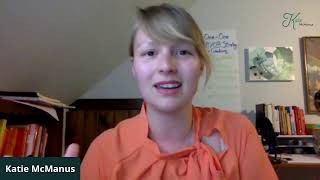
Katie McManus on what to do when you mess up with a client. Set expectations upfront, check in regularly, apologize for the impact not just the intent, and never skip over someone's hurt feelings to get back to business.
Chapters
Hi, everyone, Katie McManus here, business strategist and leadership coach. Wow, it's been a long day. Not over yet, but I wanted to go live about a very important topic to me and important to my clients. Current, future, past, all around. One of the fears that oftentimes people have when they are starting a service based business, or any business really, you could be selling widgets. I don't care. What it is is that, what if I screw up? What if I screw up with my clients or customers and it completely ruins me? And like this, this sounds crazy if you're not an entrepreneur, but if you're an entrepreneur and you're serving clients, oh my God. Because the fear around this is if I screw up, I'm going to lose my income. Because that client is paying you a portion of your income. It also plays into, oh my God, well, what if that client talks to and ruins my reputation? Then that further destroys your income in the future. It also can be taken very personally. You know, if you screw up with a client and they get upset and have an emotional reaction at you, which happens, you can internalize that and think, oh my God, I suck. I'm so bad at this. I suck. I'm the worst. I should just give it up now. If you don't have a lot of confidence in what you're doing, that one is like, gosh, I mean, that's the most harmful out of the three, honestly. And, you know, loss of income, let's be real, the world is abundant. You're gonna find new clients. It's fine for your reputation. You know, there are clients out there who will go and bash you online. Hopefully they're few and far between, but there are always ways to make it right. This is one of the things that I work on with my clients is we design ways for you to prevent this from even happening. I train on basic customer service and some coaching skills that are really, really helpful when it comes to preventing unhappiness with your clients and creating a safe space. They know that they can air this with you and tell you when you've screwed up and how to make it right. And then of course, I want to talk about how to fix it. You know, there are some really simple fix it and some ways to be with, I screwed up with a client and I just want to set this expectation. If you're in business and you are serving clients, you are going to screw up. Okay? That is just a given. It is part of being in business. Further than that, it's you're A human. You're a human humaning with other humans who are also humaning. Okay, I don't have to tell you that that gets messy sometimes. Okay? So if you are a human, you're not a robot or a sociopath, which, you know, sociopaths can screw up to just own that screw ups are going to happen. Just be prepared for it. Know that it doesn't make you a bad person. Forgive yourself in advance and retroactively for any times you've screwed up with clients in the, in the past and in the future. And just know that there's a way to clean it up. Okay. I like to talk to. I like to tell my clients that when you screw up with someone, really like the worst way you can screw up with them is like if they accidentally die. Okay, if you screw up that bad and they die, like, sorry, you can't clean it up, but oftentimes you can clean it up. Maybe that professional relationship will come to an end, but it doesn't mean it has to be a negative ending experience. Okay, so I want to go into talking about how to prevent this from happening, because it's going to happen. But there are ways to make sure it doesn't happen that often. The very first thing that I want to talk about is you need to design your relationship together. Now, in coactive coaching, this is called designing an alliance. Okay, so what this looks like is in the beginning of your working relationship with this client, you want to sit down with them and you want to design exactly how that relationship is going to go. How do you deal with scheduling meetings, rescheduling, cancellation? And then you also design, like, what happens if I step on your toes? What happens if I say something that pisses you off? How are you going to tell me if I've crossed a line with you? Is it safe for you to name it when I've crossed the line with you? You actually get to plan all that stuff right in the beginning. One of the things that I like to design with my clients is, hey, if I ever cross a line with you, I've only done one or two times and I've cleaned it up. So I'm really happy. I had this training early on in my career. But if I cross the line with you, I know for myself I'm an emotional processor, okay? So I get super emotional. I don't know how to name the thing that upset me until hours and hours later and I've processed it and intellectualized it and then I can name it. So what I like to Design with my clients is like, if I do something that upsets you, whatever it is, and you don't know how to name it in the moment, just tell me, hey, I'm upset. Something happened, I don't know what it was. Can we check in tomorrow? Totally fine. You can actually design that in the beginning of your working relationships. And I don't care if you're doing life coaching, if you're a spiritual healer, if you are a construction worker, you can do this with all of your clients and it makes a huge difference. Okay? Designing that beforehand, because guess what? If you're doing your job, oftentimes it happens, okay? Especially in coaching. Because in coaching, we're trying to push people to go beyond their comfort zone to do things that are scary. You need to plan for that. Okay? So you want to design the relationship beforehand. That is key. Next, you want to check in. You want to check in from time to time, see if it's working for you. What about it is working for you? What could do better? Where? Like, is there any area where I'm activating you in a negative way? Those little check ins and being open, this is the key. Being open to the feedback with this client doesn't mean that it's true for all your clients. One client may feel very pressured if you try to do like a timeline with them and hold them accountable to deadlines. Like, that might just cause them too much stress. Other clients may really, really want that. So be open to the feedback. And you kind of need to compartmentalize for all your different clients. And then of course, when, if and when emotions happen, don't lean away from them. Okay? So someone may be upset about something. If you jump over their emotions in that moment, guess what? That something that's external that they're upset about then gets kind of directed at you because you're not holding the space for them. You're not saying, whoa, you're upset. Okay, what are you upset about? It. Let's just talk about it right now, okay? You never want to jump over emotions, okay? I mean, if you work at a restaurant and someone walks in and they're all upset because someone cut them off in the parking lot and almost caused an accident and all this stuff, you don't just say, oh, great, blah, blah, blah, maybe you do. That's not good service. You want to empathize with them. You want to stop and say, oh, my God, that's awful. I'm so sorry that happened. So sorry that happened. You know, let's make sure your experience Right now is excellent. And let's. And let's get you settled. What would settle you right now? Oh, you want. You want a glass of wine? Let me get you a glass of wine. You know, you really tend to that emotion. And in coaching, what this looks like is someone is upset that something's not going well. Something's not going well. You don't try to, you know, be all sunshine and daisies and super positive with them. No, you sit down, you're like, oh, my gosh. Okay, cool. What is it? Just talk to me. And, you know, depending on what you're a consultant, a coach, or whatever for, maybe you're trained to handle the emotion, maybe you're not. But what you want to do is just listen. Just listen and listen and listen some more. Okay. Ask the person what they need. Our instincts. Because we are generous humans who want to have an impact and help other people, our instinct is to jump into fix it mode. Fix it mode, which means I'm going to come up with a solution and I'm going to shove it in your face while you're having emotions at me. I don't know. For the women in the audience, like, when you're upset about something and you're venting to your partner and they start trying to fix your problems. I love Alison Armstrong's definition of this or her description of this. It's like you're throwing up and someone's trying to shove the vomit back in your face, in your mouth. It doesn't feel good. Like, don't try to fix anything. Allow for the emotions to come out. And then ask, hey, what can I offer in this moment? Do you need a fixer? Do you need someone to problem solve? Do you just want me to listen? Other options, you know, whatever, and be ready to dance with that. And then you can also design in that moment, hey, I don't know how to handle emotions very well. So can we design that? I can hold this for you? And then maybe there's someone else you go to to handle the emotions as well. That is totally okay. You also get to handle your boundaries around this and your qualification levels when it comes to handling emotions. Okay. That is perfectly reasonable. Okay, so what happens when you screw up with a client? And I want to just own that. I've screwed up with clients before. Okay, One that sticks out to me. One of my clients who's been with me for a while now, oh, my gosh, she feels like a family member, and it got to the point where her package had ended or is coming to an end. And I had raised my rates during the time that she had started working with me. And I felt so weird about presenting, like, the next options if she wanted to continue, and I sensed she did that. I sent her this email, and it was just void of any acknowledgement of all the things that she had done. It was void of any plans for the future, any excitement. It was just numbers. It was just numbers. It was the grossest business email I have ever sent in my life. And thank God for my designed relationship with her. She was comfortable enough to say, hey, I wish you hadn't sent that email. That made me feel really bad. And I really. I want to talk about it. And I was able to apologize and clean it up and own the fact that I was feeling, you know, like, oh, my God. It was. For me, there was this worry that I didn't want her to feel pressured to continue with me, and I wanted her to be able to make the decision. But you're, you know, especially in coaching and consulting, when you're working closely and emotionally with people, you're allowed to be excited for them. You're allowed to be excited for them and present the things. And one of the things that I love about coactive coaching, I feel like this is a coactive coaching commercial, is that we hold everyone naturally creative, resourceful, and whole. Meaning I get to be excited for you. And if you decide that this is not the thing for you, then you get to make your decision. It's totally perfect. I wasn't doing that in that moment. I was trying to manage everyone's stuff. Didn't go well. So what do you do in this moment? First and foremost, you always apologize. You always apologize, even if you don't think you did anything wrong. Okay? Because you didn't intend to do anything wrong. But whatever it is that you did had impact. Okay? So when you're walking down the street and you bump into someone and actually step on their foot and hurt their foot, you did not mean to do that. Okay? Forgive yourself for that. But you're kind of a jerk if you don't stop and apologize for it, right? You had impact on this person. It's unintended impact. It's, again, coactive leadership language. It's brilliant. They do amazing things if you haven't checked them out. If you're thinking about coaching, I highly recommend it. So you apologize. And an apology is not. Let me just say this. An apology is absolutely not. I'm sorry you feel that way. I've gotten that from a Few consultants that I've worked with this past half year. Not an apology, not an apology whatsoever. Just erase that from your brain. It is not acceptable. What it does is it tells them that you don't see anything wrong with your actions. You just think that there's like an emotional problem over there. You want to say something along the lines of, I'm so sorry that happened. I'm so sorry that's happening. I'm so sorry I had that impact. It wasn't my intention. How can I clean it up? I'm sorry, like you want to just do that. Because you can't jump over the emotion, okay? When you're trying to prevent screw ups, you can't jump over emotion. And when you're fixing screw ups, you can't jump over emotion. If someone's telling you I'm upset, you cannot go at them with a bunch of positivity. It just doesn't work. You have to acknowledge that there is, there are bad feelings in the space, okay? It doesn't make you a bad person to apologize for it. It just means you're owning your impact even though it was unintended. Okay? And here's the thing I want you to think about because remember all the fears we have when we think about losing a client because we screwed up with them. We're afraid our income is going to take a hit. We're worried about our reputation. It's going to mean that we suck all those things. I'm sure there are more fears. And if you can think of more fears, please put them in the chat. It gets so easy to get wrapped up and I'm gonna lose money. My business is gonna go kaput. They're gonna ruin my reputation. Just. I just blew thumbed something off my desk with that deep breath out. Okay? I mean, to set that aside, okay? Don't. Don't focus on the results of this. Don't focus on the results of this. Don't focus on them staying a client with you. Do not focus on what they would get out of working with you continuously. Don't focus on where they're wrong and where you're right. Okay? Not helpful. Prioritize the relationship. Prioritize the relationship with this person. You don't even have to say it. It's not something that you have to name. But you want to prioritize relationship over results, even, even if it means ending your professional relationship together, okay? That is sometimes the best solution to fixing this. The beautiful thing about humans is that we are varied. We are all different. We have diversity. We have a million different personalities. The downside of that is that not all those personalities work well together. There's absolutely nothing wrong with that. It doesn't make you a bad person. It doesn't make them a bad person. You know, sometimes it just doesn't click. And sometimes, sometimes like chemistry can be good on like a friendly level. But when you get down into the dirt with someone and you're trying to work with them, that's when things start to break down. Like there might just be something that one of you does to the other that activates something and doesn't work well. So always prioritize that relationship over the results that you want. What this will do is even if your professional relationship with them ends, you're still going to have someone who is a supporter of what you do and just thinks that it wasn't a right fit for them. That's absolutely fine. If you end it positively, then you don't have to worry about your reputation, you know, because even if that person is like a dickwad and goes on social media or onto Google and bashes you and says all the things you can say, hey, listen, you know, we tried working together. It wasn't a good fit. We dissolved our relationship and it was really clean. You know, I'm so sorry this all happened. But you can, you can speak your side of it, having done the correct thing for the relationship. And let's be real, if you're running a service based business, if you have a client who is miserable working with you, it's probably miserable for you too. Like, why would you want to stay in that misery? That doesn't sound fun for anyone. And that's not a client who's going to refer people to you. That's probably a client who's going to, you know, not have nice things to say if you're keeping them in their contract and all that stuff. So if it's just not a personality fit, if it's just there's something about the work that isn't working for them. You're the business owner. You're the business owner. But for me, my philosophy is always tend to that relationship. I don't believe that the customer is always right. I don't. But I believe that emotions have to be acknowledged. My mentor, Rick Tamlin, he, when he was younger, he used to work at the Cheesecake Factory when they first started. And the customer service training that he got there was very similar to the customer service training I got when I was a college student working at a four Star Resort on Cape Cod. It's that if someone's upset, you get down on the level with them. Like, you literally kneel down to be on their level. And you just listen like, oh, my God. Oh, that's awful. And you just. You just relate with them. You get. You get upset with them. You, you know, become. You kind of ally yourself with them, even facing, like, the same direction so you feel like you're on the same side. Really? I forget which airline does this as well. They do it very, very well. You know, you show them that you're on your. You show them that you're on their side, okay? That's all that's needed. And then you always know when someone's, like, had enough. Like, they've. They've gotten it out. They go, there's that big sign again. I just blew another piece of paper off my desk. Big size today. They take that big sigh. That's when you can go and say, hey, I know this really sucks. What can I do to fix it? And they may name something that you can't do, and that's okay, because you're a reasonable human being. You've just talked them off the ledge of that really, really hot emotion of being angry or upset or sad or whatever. That's where you can say, hey, listen, I'm not sure I can do that, but here's what I can do. And then you get to design with them again, designing their relationship of making it better, okay? But in all of this, the number one thing that I want you to take away from this is you can never jump over emotion, okay? If you jump over emotion, you're gonna have a bunch of people who think that you're tone deaf and who just don't want to be in business with you. That's it. And they may walk away with a much further, much worse perspective of your service than they would otherwise. And if you have any questions about this, I know this is a weird topic to comment on because no one really wants to admit where, like, I screwed up with a client. What should I do? If you have any questions about this or if this is one of the things that's holding you back from starting your business, I want you to contact me, okay? Because this should be the last thing that is holding you back from starting your business, okay? This should be something that is just so easy for you to overcome. And this is one of the things that I do with my clients. You know, it's just so easy to overcome once you know how to handle it. Once you know how to prevent it once you know how to fix it. Okay? And hopefully just listening to this video has helped you fix it or prevent it or any of the things. But if you have any questions, please feel free to DM me or if you want to, I host my Being Brave call every Friday morning at 11:00am Eastern. Come there. It is a safe space. We are judgment free. It is a free group call for anyone who's doing the brave ass thing of starting a business and has any questions on how to do any of it. From money mindset to dealing with clients to selling to marketing, the whole shebang, it is available to you. It is one of my pride and joys of what I do each week. And full disclaimer, I'm getting my second moderna shot tomorrow. So this Friday, if I'm a little under the weather, I apologize in advance. But it's every Friday. But anyway, I hope this was useful to you. I know it's a little earlier than I normally go, but yeah, just know, just know that you're going to screw up with clients. It's going to happen and there's always a way to take care of it. There's always a way to make it better. There's always a way to fix it. Okay? You too are naturally creative, resourceful and whole. Meaning you can tap into your creativity, your resources and you don't need to be fixed. You don't have to be a different person. You just have to do some things differently. That's fine. And if you do lose clients throughout the way, like remember the world is abundant. How many billions of people are on the planet and how many millions of people speak your language and how many hundreds of thousands of people are in the industry that you cater to and how many tens of thousands of those people are your ideal client? Literally, you would not be able to serve everyone in your sector in your life. Okay? You just wouldn't be able to. One dentist cannot serve the entire state of Massachusetts, much less the entire country of the United States of America. Okay? So don't freak out. There's abundance there. More clients coming to you. Take care of your clients. Don't step over the emotion. I'm just reiterating everything I just said. You take whatever is useful and then I actually, I like this recording. So I'm going to save this for my clients and put it in their client portal. So hi clients. I hope you enjoyed this live turned valuable learning asset. Anyway, I'm Katie McManus, business strategist and leadership coach. DM me with any questions. And I hope you're having a wonderful week so far. We're halfway through. And wish me luck tomorrow because I'm getting my second moderna shot and I should be immune in two weeks. Exciting. Anyway, love you all. Hope you're having a great week, and I'll talk to you soon. Bye.
More from Katie





How to do self care right now, so you can do what needs to be done, for yourself, your business, and

How to do self care right now, so you can do what needs to be done, for yourself, your business, and

#greenscreen How to build a consulting business that makes you $200,000-$700,000 a year

#greenscreen How to build a consulting business that makes you $200,000-$700,000 a year

Maybe we’re not the imposters…? #businesscoach #startup #entrepreneur #smallbusiness #consulting

Maybe we’re not the imposters…? #businesscoach #startup #entrepreneur #smallbusiness #consulting
