So you want to start a coaching business?
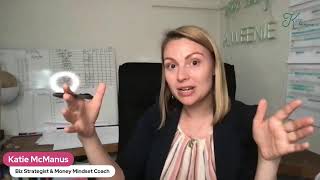
Katie McManus, a business strategist and money mindset coach, walks through what it actually takes to start a coaching business. She covers the unpredictability of client enrollment, why marketing matters more than most new coaches think, and how ADHD affected her own operations.
Chapters
Hello and good evening. I'm Katie McManus, business strategist and body mindset coach. Coming to you live on the Facebook's LinkedIn, YouTube, Twitter, which I don't what what is even now also, is it Twitter and you tweet or like what do you do? Do X sounds violent. And also Instagram, which has threads now, which I think is the last thing I went live on. Anyway, so I'm going to be looking at this camera and this camera. I hope it's not confusing. Just. Just a little home or housekeeping. That's the word. Hello. Zoom party. Oh, gosh. Okay. Anyway, so good evening. Tonight I want to go into topic about like. So you want to be a coach? Because I wish someone had had this honest conversation with me when I was planning on being a coach, when I was going through training, when I was going through certification, and when I was starting my coaching business. Because it is not what you expect it to be. It is very far from what you expect it to be. You know, when I started, I had a lot of assumptions around what would work and what wouldn't work. And some of it was because the expectations were set for me by my coaching school that were incorrect and partially it was, you know, my own naivete. Right. You know, whenever you start something, you kind of have rose colored glasses on and you can be very easily taken in by the glitz and the glamour of what you think it's going to be like. And I also want to acknowledge that my, my evolution and my business had a big old pandemic, right? Smackdown. Happen the middle. If you're starting coaching business right now in this climate, hopefully that is not the case for you going forward. But as we know, as we've learned over the last couple years, you really can't predict anything. Right? So I want to share. When I started my business, one of the things that I used to do is I used to plan out exactly how much money I was going to make in the future, how many clients I was going to enroll. Every single month, I would do all the math. I would figure it all out. I would reverse engineer everything into my plans. And let me just tell you, nothing, nothing ever went to plan. Okay? The thing that you want to remember whenever you're starting any kind of business, not just coaching, but any kind of business, is that when you start, you are starting a brand new business. And I know it feels like I'm just repeating myself, but let me, let me just reiterate this. If you ever worked for another company, which A lot of us have, by the time we start our businesses, you know, that like the sales team, whether you're on it or not, has a budget every single month, every quarter, every year. Right. They have a number that they are supposed to hit in those time periods and if they don't, then they get in trouble. Right. And the reason they have those quote those quotas is because the business has been consistent enough over the last several years or the last couple decades for the company to be able to look at, you know, what they have, how many people they have working where they are spread out and say, hey, I think we can probably get to this number. You know, let's push a little bit and add, you know, a couple more units on here just for fun to really make their lives wonderful. Right? I know that's how we did everything when I worked in sales, but that is not possible in a new business. Right. First and foremost, you don't have any data to go off of. Right? You have no data to go off of to say to yourself or anyone that, oh, this is the number that I expect us to be able to do this month. No, that's not how that goes. Like, you can set an intention and a goal for yourself, but you know, it's not going to be consistent. Like, consistency comes later. Like, you have to, you have to really work at building consistency in your business. You know, the other element here is that those businesses that already exist, they have brand recognition, they have built an audience, they have spent years and years establishing themselves in whatever community that they're in. You were just starting, right? And you may have an amazing network and if you do, like, there are so many incredible ways to tap into that without feeling gross. I know it's really hard to tap into your network, especially if you don't want to come across as salesy. It's one of the things I train in a lot of my group coaching programs. But you're still not going to have consistency for a couple of years. And I want you to know that if you're in year one or year two of your of your business and you don't have any consistency yet, it's not you. You're not broken. There's nothing wrong with how you started this. This is normal, okay? There are a lot of things that you can do to encourage, like a normal influx of clients. And you can absolutely be the pen holder of your own story. You can write your own story when it comes to this, it takes a lot of work and you're a human and sometimes humans can't do that much work that consistently. Okay. And that's fine. It's one of the reasons that when I work with clients, we really design their businesses. So they get to be a little lazy. Right. Because you have to be really realistic about how much time and effort you can put in every single day. Right. I saw a post by someone a couple weeks ago saying that like to hit a million dollars in their business next year, they're going to get up every morning at 3am and my first reaction was like, whoa, that's bad, Badass. It's like, you know, the 5am Club on steroids. And then my second thought was, oh God, that sounds like self punishment. That sounds like, like they're making themselves pay for something. Right. And sure, we can absolutely plan on doing work at a neck breaking pace. Right? But it's a neck breaking pace, like a pace that breaks your neck. Like that's not sustainable. Right. So we have to, we have to come up with systems and strategies to put in place and to act on that. Allow for us to create normalcy in our client acquisition and then, but also still be human and not die. Right. So that's the number one thing that I wish people had told me when I first started my business. You know, the other thing that I wish people had wished I wish they had told me when I started my business is that I, yes, I was coaching, but that I was now in marketing. Like when you're starting a business, your number one job in the very beginning is marketing. And marketing. And marketing and marketing. Right. Sales comes later. Right. Doing the thing for your clients comes after sales. Right. When you're starting, you have to remember no one can give you their money if they don't know that you exist. Okay. Your number one job is to make sure that everyone and their mother and their mother's mother and their neighbor's mother knows that you exist and knows exactly how you can help them with their problems. Right. If they don't know that they can't hire you, they can't give you their money. And if you don't have people hiring you, you don't have a business, you have a subsidies, well, hopefully subsidized hobby. But if you're not making any money, you have a hobby that's costing you a lot of money and a lot of time and no one wants that. But yeah, like most of your work will be around marketing every single week. And I'll be honest, you know, I probably spend a good three to four hours a Day, four to five days a week, doing stuff for marketing for my business and getting to the point now where I will be offboarding a lot of that stuff and outsourcing it. But there's some stuff that I can't do. I can't, I can't delegate going live. It's not like I can hand off a Katie suit and a script to someone and have them go live for me. That's not going to happen. That would be really creepy also if that was possible. And also, I don't know, I know everyone's like talking about AI right now and how we could have AI do stuff for us and you know, be on video calls, whatever, or, you know, the whole strike with sag, AFTRA and the Writers Guild. I don't know if I want, you know, like my image, just a computer speaking through my image and people not being able to tell whether it's me or not. Like I would just like it to be me all the time. That takes time. It takes me being present, me having that space in my business. And the reason I bring this up it's because when you're starting a coaching business, it is real tempting to think, okay, cool, I'm going to get 40 clients, I'm going to work 40 hours doing coaching hours, you know, like eight hours a day, five days a week. And that's going to be my job. And I understand where that comes from, right? Because we come from jobs, jobs that paid us an hourly rate that we had to work 40 hours doing productive work that had some kind of value to the company. And also, like we're looking at, usually when a new coach is starting out, they assume that they can't charge much, right? Because they're a baby coach, they're a beginner coach and they can't justify charging enough to live. And so they look and see, you know, here's my calendar and here's how many hours I will have to do of coaching to be able to pay the bills. Also, we have this 40 hour week mentality in our brains, which was invented by a person who ran a business that benefited from people working 40 hour work weeks. Just so you know. And it takes a lot to break out of that 40 hour mentality, right? You actually do not, do not need to work 40 hours a week of productive work where you're serving and providing value. You do not need to work 40 hours a week to make a full time income. No ma', am. No siree. You can actually work a hell of a lot less, you know, There are companies that I've seen that do about five hours of productive work, like client serving work per week. They make a lot of money. You can absolutely do that too. Now that doesn't factor in the marketing work and the sales work that you're gonna have to do in your business. That's a client facing work though. But absolutely you can make that happen. It just takes you getting creative and maybe having a business strategist and hey, that, that's what I am. So if you have any questions there, I'm more than happy to chat. But you are now in marketing. Like when you start a coaching business, when you start any business, your job is now marketing. That's it. Okay, welcome to the club. And then number three, the thing that I wish someone had told me was that just, and I know I said this before, but like, nothing goes to plan. Nothing. You can plan the most incredible email campaign and something's gonna break or one of the rules that you have set up is gonna fail and your emails are gonna be sent to the wrong group of people. Nightmare. Likewise, if you're doing like a social media strategy, I know it's so tempting to be like, okay, cool, I'm going to post about this every single day for two weeks and I'm going to get X amount of clients out of it. No, you, you can never, can never count on the results that you're going to get from something, okay? All you can do, the only thing that you have control over is your action, right? So you showing up every single day, that's the only thing that you can count on, right? And I hope you can count on it because it's the only thing that will get you results at the end of the year. And you know, if you are tying yourself to the results. I know a lot of people get hung up on how many likes and how many comments and how many views they get on social media, on Instagram, on LinkedIn. You're just going to drive yourself insane, insane with that, okay? And it's not going to be good for your mental health. Because here's the thing. We are at the mercy of all the algorithms. We're at the mercy of the news cycle. If something insane happens out there in the world. And even if you wrote the most clever, like to the point funny post that draws in your ideal clients, makes them laugh and gets a ton of people to comment. And like, if something catastrophic or just like incredibly newsworthy happen that day, no one's going to pay attention to your post. It's Just, it's like it's never going to happen. It never happened. They're going to be paying attention to something else. There's something else that is like wrapping the world up and they have to get that, like the whole alien conversation right now. There's a lot of people talking about aliens right now. If you can find a way to jump onto the bandwagon without it coming across as, like, super, like, taking advantage of, go for it. But nothing will ever go to plan. Hi, Marilyn. Oh, my gosh. Good to see you. Yeah. So. So the three things. Just want to reiterate the three things that I wish someone had told me when I first started my coaching business is that your client enrollment will be super unpredictable for the first couple years. Like, you just, you need to build consistency over a couple years. And if you have high expectations for yourself to have that, that regularity in client intake, you're going to be heartbroken to find out that's just not how it goes. Number two is that your job is now marketing. Yes, you do this thing, but mostly you're doing marketing because people cannot give you their money if they don't know that you exist. All right? And number three is that nothing will go to plan. I want to acknowledge also this. Nothing will go to plan maybe amplified by the fact that I have ADHD and a lot of my clients have adhd. Right? Because, like, you know, when you have adhd, you're really good at starting the projects, not so hot at, like, finishing the projects, and especially not so great at, like, going back and like, you know, you know, checking all the nitty pitty, the nitty picky work that, like, makes sure that things go well and full permission there. It's okay. It's why we want to make a lot of money so we can hire people to do that stuff for us. Right? Tomorrow or the day after. I do want to go live talking about the different ways you can grow your business if you've started a coaching business already. I had a great conversation with a guy to the UK last week who was really had his heart set on, on starting a coaching agency, you know, where he was going to be the head coach and he was going to create a program and he was going to hire a couple other coaches under him and he didn't want this agency to be massive, but he did want it to grow so he, like, he wouldn't have to work as much in coaching, but he'd be able to, like, have other people working under him. One of the things that we talked through it, and once he kind of understood what was involved in that, he changed his mind. Right. Because it's a really hard thing to do. I'm going to be going into that and a whole bunch of other stuff tomorrow or the day after, depending on my energy levels tomorrow, because I'm being very sacred to my energy levels because I'm working on a lot of other things right now. But if you have any questions, if you're, if you have a coaching business that you're just starting or you're scaling it and you're feeling stuck in some way or there's something that you're just not getting about it, then I want you to shoot me a DM with your question because I would love to answer it in my next life. Anyway, I'm going to leave you with that. Thank you so much for joining me. I'm Katie McManus, business strategist, Money Mindset coach. Marilyn, thank you for tuning in. And I think. I think I might have actually turned off the comments on this accidentally. Anyway, oops. I'm Katie McManus, business strategist of Money Mindset coach. Happy Tuesday, everyone, and I will see you all soon. Bye.
More from Katie





How to do self care right now, so you can do what needs to be done, for yourself, your business, and

How to do self care right now, so you can do what needs to be done, for yourself, your business, and

#greenscreen How to build a consulting business that makes you $200,000-$700,000 a year

#greenscreen How to build a consulting business that makes you $200,000-$700,000 a year

Maybe we’re not the imposters…? #businesscoach #startup #entrepreneur #smallbusiness #consulting

Maybe we’re not the imposters…? #businesscoach #startup #entrepreneur #smallbusiness #consulting
