The Art of Follow Up
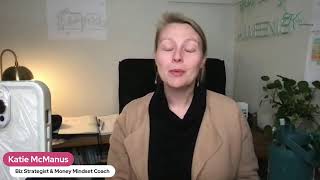
Katie McManus (business strategist and money-mindset coach) presents a live session on practical and mindset-oriented approaches to following up with potential clients. She covers emotional barriers to follow up (feeling desperate), concrete channels and scripts (email, text, call, snail mail), strategies to re-engage (offer value, refer others, empower the 'no'), scheduling tactics to avoid missed follow-ups (book next touchpoint, buffer time after calls), automation use-cases (abandoned-cart and mass sequences) and cautions about over-automation for high-touch sales. The talk includes personal anecdotes (lost proposal, pandemic-era sales), ADHD-aware tips (being transparent, using buffers and VAs), brief discussion of tools (HubSpot, Calendly, Acuity, ChatGPT) and a closing CTA to book a Generate Income strategy call.
Chapters
Hello and good evening. I'm Katie McManus, business strategist and money mindset coach, coming to you live this evening to talk about the art of follow up, which if you're in your own business or you've ever been in sales, you know, is like the worst, the worst thing that you have to do in either one of those situations. Before we get into that, though, a little housekeeping. Okay, so I am going live on Facebook, LinkedIn, YouTube, Twitter, and, and Instagram over here on my phone. We're no longer doing TikTok simultaneously. It just, it's too messy. I've been noticing lately that I think some people's privacy settings are set so that, like, if they comment from LinkedIn, it actually doesn't show on Streamyard. So if you're commenting and I'm not calling you out and I'm not like, answering your question, know that that's what's happening. And I will try to keep an eye on what's going on over on LinkedIn. Um, but if you shoot me a DM, it's a little easier for me to sort for it. Um, but otherwise, like, if you want to be involved, change your privacy settings. You know, it makes it easier for everyone. Um, but anyway, I love this to be interactive, so if you have any questions, if you have your two cents to add, then please do. And let's get this party started, shall we? It's been a long day. I've been talking all day. So if I'm speaking gobbledygook a little bit, forgive me. Like, I can feel like my voice box is like, please, please, not too long tonight. Anyway, yeah, so follow up. Let's first and foremost talk about what it feels like to follow up with someone who you've had like one sales call with. When I first got into sales, like that follow up cadence, like needing to email them, call them, remind them, hey, we had this conversation even when I wasn't running my own business, even when I was selling something separate from me, it felt like I was like chasing after them, being like, no, please come back. Like, please give me your money. I will do anything. It just felt so desperate and grasping and like, not powerful. It just felt like you're begging this person to turn around and give you some attention again. And that's, that's normal. Like, that's, that's just part of how it is. Unfortunately, I am going to be offering some mindset shifts that are going to help you with this, and I do train my clients on how to avoid for the most part, doing follow up, which is absolutely incredible. If you want more information on that, then you should probably book a generate income strategy call with me. But for the meantime, um, let's talk through, like, how it feels and what you can do to kind of take your power back in these situations. Now, there are a few different ways that you can follow up with people. First and foremost, there's email, there's texting, and there is calling. You could also do snail mail. I've heard some. Some companies do this really cleverly, but it does take budget. You don't want to chase them down in real life. Like, that's creepy. We're not stalking people. Right. Good rule of thumb, generally when you're sending emails. So it's really tempting when you're sending those emails and those texts. Be like, hey, just want to follow up and see if you had any more questions. And sure, sometimes that is the email you need to send. But it comes across as, like, very hesitant, doesn't come across as powerful. And I know it feels like, okay, well, at least I'm touching base with them. You know, you can be a lot more forward. I know it feels like you're chasing this person down, asking them for money. You know, if you've been chasing someone down for a while and following up with them and following up with them, you can literally just send an email and say, hey, listen, like, let me know. Either way, I want to close the loop on this. You know, have you decided to move forward on this project or have you decided it's not the right time? You give them the out. You can absolutely do that. It's a lot cleaner. I think where a lot of people get stuck from doing that is that they think that if they just keep following up lightly, that this person will like, magically decide that they want to buy the thing. You need to remember about the whole sales process is that, like, sales is an emotional process. When people go to buy something, like, yeah, they have logical reasons for buying it. But generally on that call, like, they're talking about this problem they have, they're talking about this thing that they want to happen after potentially working with you or buying your thing. You know, their emotions are driving the show then, right? So you pushing them later to like, get all riled up about this thing again may not be effective. And so, like, if you get lukewarm responses, then know that it's not you. It's just natural, it's psychological. They're not all riled up about this thing anymore. So Instead of getting all weird about it, instead of getting all timid and not following up at all, you want to re engage them. You want to reach out and offer them something. This could be. Hey, I'm hosting this webinar. I wanted to make sure that you saw this because it addresses this and this and this problem that you mentioned having. Hey, I saw so and so is doing a workshop on this. Wanted to put it in front of you. I know you were considering. We were considering working together on this project, but this may also be another option for you if you've decided that, like, my service is not a good fit. Like, this is a great way to say, like, that you're not attached to this, like, going your way. This is a great way for you to provide a little more value. Get them, like, hooked back into what you offer, but also give them kind of an alternative. Right? And the beautiful thing about referring them to other people after the fact, that might be a better fit for them or just may, like, call their bullshit if they're just not following, like, responding to you, is that if they do end up signing up for that other person, you get a referral fee. You know, lots of businesses do that. I do that. The thing to remember, and I love telling the story. Okay, so a few years ago, back in, like, the pandemic days, I did a sales call with this woman who does Facebook ads. And it was back when Facebook ads weren't as expensive as they are now. It's not really worth it anymore. But anyway, so we did a sales call. She put together a whole proposal, and we went over the proposal, and it was just really complicated. As many, many pages. I kind of wanted to review it. And she said, yeah, absolutely, review it. And just let me know which. Which program you want to go with. Because, you know, we kind of decided to work together. And I went back to my email to find it. I couldn't find it. I couldn't, like, a few days later, I went back to find this proposal. I couldn't find it in my email. She had, like, the most generic white lady name. No offense. If you're watching, I hope. I hope you're doing well. And I'm so sorry I ghosted you. I literally, I could not figure out who she was in my inbox. I couldn't find her email. And because I couldn't find her email and also her, like, there was no calendar invite that had her, like, a name. Like, there were a lot of calendar invites for ambiguous things, and none of them came from an email that sounded like potentially her name or what she did. And to this day I feel so shitty that I ghosted this person who put together this massive proposal proposal for me. But literally, I could not find her. I couldn't. I couldn't follow up with her. I couldn't get back to her because, like, I couldn't remember the critical information that I needed to be able to suss out who she was in my inbox. I share this because I want you to know it's important to follow up if, if you've left an open loop with someone. Like, one of the things that you can assume so that you can get out of this fear that you're being annoying is assume that they're like me and they forgot, like they, they just forgot to get back to you. Or maybe they forgot what your name was or maybe they, they couldn't find your thing in their inbox. And then, you know, it got busy and they got distracted and now they probably feel bad about it. Okay? You don't know what's going on in their life. Okay. It's really easy to project and assume that we know exactly what's happening for people and that, like, they're just ignoring us more often than not. They're not. They're just busy. Right. You know, we're also worried that when we follow up, people get mad that we're following up too much because, you know, like, we've, we've all had the spammers and the telemarketers calling us for during dinner. I had a telemarketer call me at 11pM last night. I was just. I just fallen asleep and I was so mad. I was so mad. Anyway, but I want you to know, like, you're not going to call them 11pm at night. Right? You're going to follow up like a reasonable amount. You're not going to be annoying about it. You know, the fact that you're worried about being annoying means that you're probably not going to be all right. You know, the other thing to consider here is that, like, sometimes people are like, they have this call with you. They think it's incredible. Like there's some big block that they have, however, around working with you and maybe they're not comfortable sharing it with you. Maybe it's something that, like, they're not comfortable talking about with anyone and they kind of have to work through that on their own. Following up with them on regular cadence at a rate of, at a regular cadence is going to help them remember who you are. Remember, oh, my God. This is the person that I want to work with when I'm ready. I've had a few experiences in following up, like, we assume. So we're, we're always afraid that someone's going to respond and be like, how dare you follow up from. With me. I, I'm sick and tired of your emails and sure, yeah, that happens. Absolutely happens. It's happened to me once. Like, once I was like, I was texting a bunch of people who had booked sales calls with me in, like the previous year when I was first launching my build your own business group program. And I think I was texting through, There were like 3:30 people who I was like, this is going to be perfect for. Like, this is going to be such a game changer for their business. They, they like, just need to be aware that it's coming, right? And so I texted through, I want to say, like 30 people, like 60% of them responded saying, oh, my God, thank you so much for telling me about this. I either want more information or, you know, I wish it were the right time. It's not, unfortunately. But, like, please follow up with me again in the future because this sounds like something I absolutely need to do. Of the 30, only one person was like, hey, I prefer not to get text messages from you, please. Like, I just don't want. I don't like text messages in this way. Totally fair. One person responded saying, oh, my God, did you read my mind? I have been struggling so hard to get this thing up and running to do this thing that you help with. And you've reached out to me at just the right moment and yes, I need to book a call with you. Like, following up. There's a reason. So in sales, like you generally, the numbers are insane. They used to be you had to follow up between like 7 to 10 times for someone to actually become your client or to buy your thing. It's now because people are, you know, getting spammed. They got a lot of emails. It's now 12 to 15 times. It is an insane. Hello, hello, Tim McGraw, welcome or TJ. I know you don't like going by Tim McGraw because you don't want people thinking you're Tim McGraw anyway. But following up is absolute magic. You know, it's magic. And you know, you have to assume, like, you kind of have to approach it, assuming that they're waiting for you to follow up. Right? They're waiting for you to remind them that you exist. Right. You also get to think about, like, like you have this solution to a problem that they have that they have previously spoken to about, you know, like if you have like a new version of it or if you have maybe a more affordable option or maybe just like a free webinar or resource, like they're going to be grateful for this thing that you just gave them, that you were thinking of them. You can also assume that they forgot. They just genuinely forgot. Now you can also do some strategies that will help you avoid doing follow up at all, which is exactly what I train in my group programs and in my one on one programs. I know it's not like I gatekeep stuff in my group programs for my one on one clients who pay a lot more. But the number one thing that I train in there and I go into deep detail in the programs and with my one on one clients is you always want to schedule what your follow up is going to be with this person. Person. You know, I, whenever I'm training on sales, the number one thing is never hang up the phone without a plan of when you're going to talk next. Like without that plan in place, without calendar invites, without that kind of stuff, it is an absolute game changer. It hold A, holds them accountable to making a decision either way. Right. And B, it just closes the loop for everyone. Right. Because here's what happens when someone forgets to get back to you. Just like how I forgot this person's name and I couldn't get back to her. I feel like such an asshole. I feel like such a jerk. Like even if I did remember her name, like I would feel like I'd have to like rend my soul to her to like apologize for being such a jerk for not getting back to her. The tough thing about being like in a busy world is we genuinely do forget things. Things we generally do, like move on and like think back like, oh, I was supposed to get back to that person like a month ago and I didn't. They probably hate me. Right? So I want you to assume that they're also worried if you haven't planned to follow up, that they're also worried that you're gonna think that they're an. I see. Great question from Andreas last. What would be a strategy to follow up with a potential lead when you've forgotten to follow up? Pass the customary three to window from meeting them. Because adhd, I mean I would, I do this all the time. I'm, I'm very open about it. I will generally just say, hey, I have literally had emailing you, calling you Texting you on my to do list for a week and fires keep coming up or this keeps happening and my ADHD brain like is, is trying to prioritize and I keep meaning to do it and you know, here I am finally getting to this and I'm like, you know, if there's an apology necessary, so sorry for taking so long or you know, thank you for your patience. You know, you get to be open about it. You know, I do this thing sometimes and I actually owe someone an email back is like when someone emails me and they email me something that like for requires kind of a thoughtful like thought out response. Thoughtful and thought out, that's the same thing. It's been a long day of talking guys. Sometimes I'll in my mind be like, okay, cool. Like this requires me having like some time, the right energy. Like I really want to give my all to this response because I care about this person and I want to like address what's going on for them and all this stuff. And I can't tell you how many times it's like weeks later. Like I literally have one of these emails in my inbox right now that I have to get back to. And I keep thinking about it like when I'm in the shower, when I can't respond to email, when I'm driving, when I still can't respond to email, or like when I'm about to hop on a client call because you know, that's not a good time to write an email either. You get to tell on yourself, you know, because here's the thing, if you have ADHD and you're running a business and you're bringing in clients, like the last thing you want is that they don't understand that you have adhd, right? Because that's just a recipe for them to be unhappy. If someone's going to be upset that you didn't follow up right away, they're not the right client for you. You know. The other thing is that, and I did this today, I had back to back sales calls all day. It was incredible in amazing people that I'm so excited to work with. But you know, two of them wanted like just a breakdown of my programs and normally I'm like, yeah, I'm going to do that later today. And that's like, no, you're not like you're so bad at following up with that stuff. You forget half the time, you know, and soon I'm gonna have a VA who I'm like, hey, send this to them and she'll Be able to do it or. Or he. But, you know, I, like, I just did it right then and there, so I don't know if that helps, like, tell on yourself. Absolutely. But also, you know, set it up so that you can do this. When you're doing sales calls, I always recommend blocking off, like, a good 15, 30 minutes after this. Does a couple things. So, like, if you go over time with the person, you're not like, rushing and feeling like, you know, you have to, like, finish the sales call and land the client and then jump into your next thing. You have some breathing room. But also, like, if they need more information, you have time to send it to them. If they said yes, then you can just get their new client stuff out to them and have that be that. Yeah, it's. It's, uh, a great time management tool is just blocking off that extra time. And you can do that really easily with acuity and calendly. You can just have, like, a buffer of, like, 15, 20 minutes. It works great. Um, you know, the. The important thing to remember when you're following up with people is that they came into your house, okay? They came into your shop, they asked you about your stuff, okay? They did a sales call with you, they took up your time. All right? Now. Now, like, not that they owe you anything, but, like, the decent thing is to give you an answer either way, right? And it's totally okay if it's no. You know, one of the things that makes it easier for people to get back to you is when you empower the no. You know, on that sales call, you make it absolutely clear that, like, no is fine. If this isn't for you, just tell me so that I don't waste my time following up with you. I. You know, the way I do this with my clients, and it comes from, like, a genuine place. Not just, like, I just want. I just want to not follow up with you. It's like, I want you to make the right decision for you. You know, and if it's no, then, like, I tell me, and I will send you in the direction of resources or people that would be a way better fit for you. But, you know, oftentimes people are really weird about saying no. Like, they're really weird about saying that they don't want the thing or it's not the right thing for them. Oftentimes people say, oh, well, I have to figure out the money, and then they'll disappear you. You get to call bullshit. And if you don't know how to do this, this is all like sales training that I do in my group programs. And if you want to find out about those, then book a generate income strategy call. I put all the links in the description of this. Let me see. Newton Holt. Oh my gosh, Newton. Hi. Stuff like HubSpot and other tools that can use you, I can use to create repeatable workflows for things have really saved my ass more than once. Yeah, I love those tools. Have you used any automation tools for follow ups? It almost felt like I was cheating at first. Yes. So I definitely used a lot of those tools when I worked in sales. You know, up until recently I really only had one on one clients and you know, I could really only handle about 13 one on one clients at a time when, when that's all I did. So I really like there was no need for me to automate because I really wasn't doing that many sales calls as I roll out my group program. Stuff like that will be more helpful, you know. You know, the automated stuff, I like it if it's like mass stuff like you have people who are, you know, they abandoned the cart and it was like a $200 purchase. But when someone's spending tens of thousands of dollars with you, you know, if you're, if you're a coach, a consultant, if you're a lawyer, the automated ones, they don't come across as personal. They, they really don't come across as I'm here as being a human thinking about you, another human, and the problems you shared with me and the desires you shared with me. And like, you know, I'm just thinking how much I would love to help you solve the problems and get to the desire. You know, automated stuff like HubSpot and Salesforce, like, absolutely, there's a place for it. But you want to make sure, depending on what it is that you're selling and also what that relationship is like and what the price point is that you're not automating and trying to create relationships in that way. You know, one of the biggest turnoffs for me. Oh my God, the biggest turn off for me is when I book a call, book a call with someone who is like a high tier or sorry, high level service, you know, they're expensive and like I keep getting text messages from their salespeople and it's like I had talked to the person said, here's my timeline. And I keep getting text messages just like, hey, are you still considering this? And it's like, yeah, I've already talked to Amy. Like, please like check the notes, I don't need these reminders. We have a timeline already in place for this project. So. Yeah, so that's kind of my thoughts on automated stuff. Definitely useful. It has a place but like, here's where I would use it. So I have, I'm relaunching it because like we were on mighty networks and it was absolutely terrible. I also really didn't like the landing page for it. Holistic Selling, my digital course on how to sell. And it's a great program for people with ADHD because it's really consultative and it teaches you really how to listen and how to deal with the whole conversation. But that is like a $350 program. Okay. That's something that if someone like kind of got halfway through buying and then didn't complete, that's something that I absolutely would set up automation for. I would absolutely like have like an abandoned cart sequence. Like, hey, we noticed that you started signing up for holistic selling and then, and then you disappeared. Like, what happened? Did you, did you learn how to sell? How to sell stuff magically? Do you have elves doing this for you? You know, you can make it fun, you can make it goofy, but that's something that like, it's not, it's not a personal situation. Like they're not doing a sales call with me. You know, I would say also your marketing is going to do a lot of this for you. If you have a newsletter like, that is going to be a really like automated follow up that's just going to remind people that you exist. If, let me see. Oh, if you, you know, are launching new things from time to time, like those things are going to show up in their inbox. I always recommend whatever schedule you're using have it automatically put their email and their name into your email marketing. Now you do have to have a terms and conditions button for this. Okay. Because you don't want to do GDPR nightmares. You don't want to deal with that. Just not worth it. It's all coming to the United States at some point. Yeah, we're not, we're not hopping on that wagon of, of like dealing with that nightmare. But yeah, I, it's funny. This is completely besides the point, but it's related. My engagement on LinkedIn has skyrocketed in the last few months. It's absolutely skyrocketed. Rocketed. And I really haven't changed much about my content strategy except that I'm still writing my content. I have not outsourced my content to ChatGPT and I'm convinced that that is why my engagement's up, because my engagement is sticking out amongst the whole forest of other ChatGPT posts. You know, automation and using AI and those kinds of tools absolutely are amazing for getting you out there and being consistent, but they're not a replacement for you. They're. They're just not. Like, I would far prefer to sit here for three hours and do voice note after voice note after voice note to each person, like all personalized, really, like looking at their profile, doing some Facebook stalking, whatever, and just touching base with them. As a human, you know, we're not machine scanning the world for like the most bland version of the thing that can like help us with the thing. We're looking for people that we want to be in relationship with. And like, one of the coolest way that we get to be in relationship with each other is to do business together. Right. I can't tell you how many of my clients, like, I've become really close friends with and how many service providers that I've worked with, who I am, again, really close friends with. And I'm sure you have these stories as well. You know, I think the final point of this whole thing is at the end of the day, when you're following up with this person, you're following up with this person. Okay? It is in like a person who connected with you at one point and, and leaning into that human connection is going to be the best thing for you. Do I use chat GPT in any areas of my business? Not content creation, engagement? Oh, that's a good question. Do I. I Definitely pay for ChatGPT, like Plus or whatever. The four I. I'm embarrassed to say. I tend to get into like these information hoarding sessions where I'm like, oh my God, I want 20 content ideas for TikTok and I want 30 content ideas for LinkedIn. And I want this and I want this and I want this and I collect all this information and then I never use it. I think the most I've actually used chat is to like show off to my mom how smart robots are. I showed her how to use it to like write like an email to a client who hasn't paid a bill. She works for a law firm. But no, I really, I don't. I think it's a great place to go for ideas. But I really think like, I can tell. I can tell when people use chatbots in my comments and I delete them if it's someone who I like, who I've like Built a relationship with. I will DM them and let them know that I'm deleting their comments because, like, I'm not, I'm not building relationships with machines. Okay? I. I create my content to a. Attract my soul clients to me and to be. Create real, like, honest to God, like, human relationships with people on the interwebs. Okay. I'm not there to become friends with a robot who doesn't give a fuck who I am. Okay. If you want to comment on my post, like, comment on my post imperfectly as you are. You know, ChatGPT, I really just don't see it for me, I don't see it working, like, in the ecosystem of my business. Laura, one of my business besties. Okay. I've heard it's good for processing, but never. But never tried, I think. Are you talking about ChatGPT or HubSpot? We've jumped around. I don't know how long you've been watching and when that comment came through because sometimes there's a lag anyway. But yeah, you know, the important thing to remember is like, everyone knows that you're in business. Everyone knows that you're here to get clients. Everyone knows that this is how you make money and how you pay the bills. Oh, Laura. Chatgpt. Yeah. Okay. So, yeah, I know. I'm sure there are a bunch of processes that I don't know about, but I know, like, there are a lot of people using Chat GBT to. Yes, business besties. I know a lot of people are using Chat GBT to like, come up with like, social media plans. Like how, like, what is the. The content schedule? Here's an area that I'm actually using it. So I'm actually developing another company with a few partners, David Fryman and Jesse Cohen. And it's. I'm so excited. We're launching it very soon. I'll share the name. It's called Scaling Squirrels Advisory Board. We'll be working with slightly bigger small companies that want to scale, but they just don't know how to. Sorry, I'm hiccuping over my water. Anyway, we actually use Chat GBT to like, help us put together a business plan. It was really helpful and it like, obviously, like, we had to check the numbers. We had to like, figure out, go into our research and really check it against like, what are real world numbers that we know. But it was a great place to kind of bounce off of. So that's one area that I can see using ChatGPT. Let me see also, what is the generally Preferred method to follow up with potential clients via email or phone call Text With ADHD clients, out of sight, out of mind can land you in the forgot to reply graveyard. Yeah, I mean it really depends. I don't, I don't do a lot of follow up. I follow my own advice and I set things up so like I can answer either way. It's part of my process when I, when I have a sales call with someone we are scheduling when we're doing answers by. I found it's really helpful for me and my ADHD people. You know, I, I would ask your clients, I would ask them like if, you know, if we lose touch, how do you like to be followed up with by, you know, or how do you like to. Yeah, grammatically incorrect, but you know what I mean, you can absolutely design that with them. But generally, you know, the classic is you call, they answer, you have a conversation, they don't answer, you leave a voicemail and then you follow up with an email and then you do that. Depending on how aggressive you want to be, you could do that two times a week or one time a week until like you've kind of like done it enough and they haven't responded. But that's like in a classic sales environment for your business. You know, if you're getting clients, I would rather you schedule your, your follow up with them. You know, it saves so much time, so much time and you actually end up with clients from it. Anyway, like I said, I've been talking all day. We're going on just beyond a half hour. So I'm going to wrap it up here. If you are starting a business and if you feel like you're getting sucked into the fear of it, you just don't know how. And like this follow up thing feels really overwhelming and running sales calls and figuring out how to market yourself and you just, you don't know what you don't know and you're ready to commit to getting some help and to speed up this whole process and actually have like an actionable strategy that is designed around who you are, what your business is, who your ideal clients are and your whole industry. Then I have included a link to a generate income strategy call in the description of this live and if you're watching on Instagram, it's my bio. But I want you to go and book a call with me because you can absolutely stay frustrated and lost and, and work really hard with your smart brain and your capabilities to make this happen on your own. And also I know from experience that My clients, when they work with me, they speed it up a lot faster. And I'm a big fan of people making money. So I would love it if you wanted some support, if you wanted some help to help you make money faster. Anyway, Laura and Andrea and Newton, thank you so much for joining. Oh, Andrea, good question. Are we doing Tarot Thursday tomorrow? Oh my gosh. Yes, we are doing. We are doing a live tomorrow. I forgot we were doing Tarot Thursdays. Yes, I might. I. Tomorrow's like not my normal schedule. I've had to move everything around because like my one normal appointment had to change. I will be figuring that out tomorrow. I'm too tired right now. But yes, at some point tomorrow, probably midday, because I'm busy tomorrow night. We will be doing Tarot Thursday. Yes, great question. Hello. Welcome, Jacob. We're just wrapping up. You're catching the tail end. So anyway, I hope this has been super useful for you. Tj, Jacob, Andrea, Laura and Newton, thank you all for being here. I hope you found this super helpful. And as always, you know I am here to help you start and grow your businesses. And like I said, if you want to book a call with me, the link is in the description. Anyway, I will be live with you again tomorrow. If you have any topics that you want me go live on, then please DM me because I've been doing this and every day Monday through Friday for a while and I need ideas. Jacob. It's always a breeze. Well, I'm so happy. Anyway, it's been lovely and I hope you all have a great night. All right, bye.
More from Katie





How to do self care right now, so you can do what needs to be done, for yourself, your business, and

How to do self care right now, so you can do what needs to be done, for yourself, your business, and

#greenscreen How to build a consulting business that makes you $200,000-$700,000 a year

#greenscreen How to build a consulting business that makes you $200,000-$700,000 a year

Maybe we’re not the imposters…? #businesscoach #startup #entrepreneur #smallbusiness #consulting

Maybe we’re not the imposters…? #businesscoach #startup #entrepreneur #smallbusiness #consulting
