The Wakeup Call
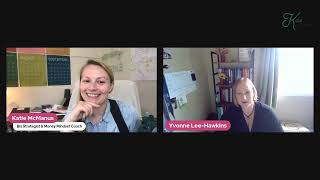
Yvonne Lee Hawkins, a burnout coach for HR professionals, talks about the decision points that lead to burnout. Health scares, mental-health crises, and overcommitment after layoffs are common triggers. Recovery starts with sleep, exercise, and social connection, then moves to values-based diagnostics and delegation.
Questions this video answers
Usually three months.
Over 80%.
Chapters
Yo, yo, yo I can taste yo, yo, yo, yo Words I can taste yo, yo, yo I can taste yo, yo, yo, yo Words I can taste yo, yo, yo I can taste yo, yo, yo, yo I can taste yo, yo, yo.
Hello, everyone, and good afternoon. I'm Katie McManus, business strategist and money mindset coach. And I'm here today with Yvonne Lee Hawkins, who is a burning burnout coach for HR professionals. I knew I was going to trip over words, but I didn't realize it would happen that soon. Anyway, it's been a long day so far. How are you, Yvonne?
I am fabulous. Thank you for having me, Katie.
Thanks for. Thanks for being here. Really excited to talk. Talk to you about this topic of wake up calls. Because I think you and I both had. We've known each other for a very long time. I think we have to, like, you know, acknowledge that. But also, we've kind of seen each other through a certain amount of wake up calls. Yeah. In our professional lives and our personal lives. And then it's a big part of what we do with our clients.
Totally.
Yeah. So I'm curious, like, when you hear the term wake up call, what comes up for you?
I mean, they're like, there are moments in your life that you have, like, a decision to make, Right. It's like, oh, something's either not working or you want something changed. And you, you know, you go one way or another. That's kind of the wake up call. You can decide to continue to go on, but I've often found that if you continue to keep going on, then it's just going to get worse.
Yeah, yeah. No, 100%. And it's. It's funny because, like, I know the wake up calls that I've had in my life were either I realized something about myself, like, I gained another piece of information, or I got another piece of the puzzle and I'm like, oh, that explains it. So I should go this way or something really bad happened. And I'm like, I can no longer do this this way. This is just not working for me anymore.
Yeah.
What's your favorite flavor of wake up call?
You know, it's funny, I always think back to, like, Oprah. I think it was Oprah who said it was like, you first get a whisper and then you get a shout, and then you get a brick. And if you still don't pay attention, there's like a brick wall. And I feel like I've had all of those at different times. I'm starting to get better. At listening to the whispers because I hit the brick wall so many times. Yeah. But I think especially like earlier on in your career, you actually have to hit the brick wall because you don't know it's coming. Right. Like those, like, especially when it comes to burnout, everyone. It's not about if someone's going to reach burnout. It's like when there are always signs. And some people naturally course correct. They leave a job, they do something. But most of us actually have to hit like a brick wall before we're like, oh, I don't want to do that again.
Yeah, right, right. And so what, at what point do people usually reach out to you?
There's a few different, similar flavors. Usually a health scare, high blood pressure, heart attack. I actually hired someone a few years ago and I said, why are you changing industries? So this wasn't necessarily coaching, but he said the two people that were in his position before him both left the position due to heart attacks. One actually died at work and he's like, this job is important. I felt good about doing it, but I don't want to die at work.
Yeah.
And so it's usually, it's usually a health scare. Sometimes it's a mental health scare. Like, yeah, my anxiety is so high I need to take a mental leave. And the people who reach out to me know I've been in hr. So we talk through the benefits of like taking a leave while you're at work or leaving the role or just switching things up.
Yeah.
And some people have like a. I like to call it the nuclear option. They're like, I just want to blow up my entire life. I want to run away.
Yeah.
I used to have these fantasies of going to live in a cabin in the mountains and chopping wood.
Why chopping wood, particularly?
I don't know, off grid dependent only on myself. Like reading books by the fireplace. Chopped. Chopping my own wood. Except I don't like to hunt or fish, so that doesn't really work for me.
So you'll be warned. You'll be hungry is basically what I'm hearing.
But I'll be hungry. And I. I can't make plants survive. So, like, I have no gardening skills either. So I'd have to like find berries or something.
Yeah, I'm really happy that you didn't go for that option.
Well, and here's the thing that was so nebulous about it is I would have these fantasies and then immediately feel guilty because I have a good marriage, I have amazing kids, and I'm Like, I'm not trying to run away from them. I'm just trying to run away.
Yeah.
And it was just, you know, it's a. It's actually, I learned it's a very common, like, fantasy to have some people want to go live on a farm or at the beach or whatever. They don't want to chop wood, but it's just a sign of overwhelming burnout.
Yeah. Yeah. It's funny. I'm in the seminar this week about adhd, and the teacher keeps saying, you know, the two best treatments are get the right job, get the right partner. Right. And the right job doesn't just mean, like, the right type of work. It means, like, the right environment means the right boss. It means right responsibilities, the right. The right activities you're spending your time on every single day. Yeah.
Support system. Right. Be surrounded by people who support you.
Yeah.
Be with a partner who supports you. Yeah. So important.
Yeah. Yeah. And it's so funny. I think a lot of us go through this phase where we acknowledge the parts that aren't being supportive, but we think, like, you know, we don't know how to adjust things in that kind of, like. Like, those small, incremental ways. We just know how to, like, throw the baby out with bath water. Yeah. Right.
And that's the thing. Like, people come to me and they think, like, I hate my job. They actually don't hate their job. They're just, like, stuck in this thing. They don't remember what they love about their job because they're an overwhelm.
Yeah, yeah, yeah. They're in overwhelm, and they're stressed out. And. And if they're close to burnout, like, their brain is not able to recognize patterns for, like, what is causing certain situations to happen.
Oh, yeah. They're in total flight mode. Right.
Yeah. Fascinating. And. And, you know, I know. I know you have some background and burnout as well, personally. You know, what is it that inspired you to turn around and help people from your own experience?
You know, I think the first time I experienced burnout, I thought it was a problem just with me. And then, you know, ultimately, what fixed it the first time was changing jobs, changing companies. I moved from the Midwest to the, you know, Pacific Northwest. I changed my entire life. Kind of the nuclear option.
Yeah.
And I was like, okay, this is better. And then. But after, you know, several years, it started to happen again.
Yeah.
So, you know, a big part of it was like, ooh, first I thought it was situational, then I thought there was something wrong with me. And it wasn't until I started to like really be like, okay, what are the common denominators here? Part of it was me with boundaries, things that I had to learn. And part of it was getting myself in situation where I'm over committed or I have a manager who over commits me or. You know, I think what's happened most recently is really interesting, especially in the HR space is because there's been so many layoffs, but most teams aren't deprioritizing work. So what's happening to everyone who's left?
Right.
So there's like a huge, huge burnout epidemic happening.
Yeah. It's so funny because, like, I feel like people either acknowledge the burnout and they start to work with someone like you, or they see these things play out over and over and over again and they're like, fuck this whole situation. I just need to like, be my own boss. And then they call someone like me.
But here's the. Here's the other thing is I'm starting to get some entrepreneurs too.
Yeah, right.
And they're like. And I actually joked about this. You, you know, I said this to you. I was like, man, I'm going to be the hardest boss I've ever had. Because, Because I actually. It's different now. Right. I'm responsible for me. I'm responsible for my family in a whole new way. So there are definitely some things that you have to learn of. Like, ooh, what are my limits?
Yeah, yeah, well, and that's a big thing, I think with entrepreneurs is especially if they've never run a business before and they've only ever been an employee who clocked in for like 40 hours a week, they're still expecting themselves to clock in for 40 hours a week and, and take action and like, do things for 40 hours a week. Which, like, let's acknowledge we don't actually do that when we work a job. Like, there's a lot of water cooler time. There's a lot of like, you know, transitioning from one meeting to the other, but we forget that when we're working for ourselves and then we discredit the amount of time that we have to take to like, do the thinking behind the doing, like strategizing and figuring out what the plan is and like what the goal even is.
I think the thing that's even harder as an entrepreneur is all that office cooler time that you got paid for.
Yeah.
You still have to do that. You just have to go out and find it. Right. Like, yeah, people aren't Just hanging out around my one person business. I don't get to like, you know, socialize and network with people.
Yeah.
The way that I used to incorporate, so, like, I have to like actively seek that out now and put myself in those positions. Positions. And sometimes that's a lot of work.
Yeah, no, it's, it's very lonely. It's very lonely running a business. It's one of the reasons why I have so much group stuff in my, in my one on one programs and in my group programs because it's like, you know, having that connection is such a, like, it feeds the soul so much and it feeds your energy to really, like, keep going.
Yeah. It's one of the reasons I love your group program because I like, you all are my new co workers.
Right.
We have our, you know, our check ins, we do our, our Sprint calls and it's like the relationships I used to have with my co workers.
Yeah.
Like.
Yeah.
And that's so important.
So important. So important. I think that's one of the beauties of really, like kind of not fixing, but adjusting how you're showing up at work so you can keep yourself from burnout. Because, I mean, those relationships are so rich.
Yeah.
You know, and like, sure, you can burn it all down and go somewhere else, but like, you know, you're gonna have to rebuild everything from scratch there as well.
Yeah.
Yeah. So I'm curious, where's the first place you have your clients start when they, when they start working with you and they realize, okay, well, this has to change. I'm not really sure what to do first.
Yeah. I mean, it depends on what kind of what stage of burn I burnout they're in. But, you know, the first thing is like triage. It's like the emergency room. Let's stop the bleeding.
Yeah.
And so sometimes that's, you know, simple things like learning how to breathe and calm yourself down. Because if you're in fight or flight the entire time, you can't even think straight. And you just, you're like, I have people come to me, they're like, I want to quit my job or, you know, I want to go on medical leave. Or like just, they're. They're just in panic mode. And so we have to kind of get the, the panic down a little bit. So it's a little bit of mindfulness focus, work. Like, let's focus on one thing at a time.
Yeah.
Probably stuff that ADHD work. Right. There's some overlap there a lot.
Yeah.
And, you know, often I'll See clients who then they don't even know what they want to do. Right. They're just like. They just know that what they're currently doing is not it. Um, so once we kind of stop the panic, then we go into looking at some of their values, like, what's. What's working in life and what isn't working. Sometimes it's work, sometimes it's a bad marriage, sometimes it's, you know, other relationships, sometimes it's finances. And so we kind of try to narrow it down. I'm sure you've done like a Wheel of Life exercise. Right. Like, that is super helpful. Like, let's get the right direction going, and then we start to, you know, action plan. So then there's a. Lots of tools in the toolbox of self awareness and awareness of what's going on. There's some goal setting that might happen, so it really depends on how the client comes in. But usually the first one is like, let's get your finger off the nuclear button.
Yeah.
And let's figure out, like, what's going on.
Yeah. It's kind of diagnostic.
Yes.
Yeah.
And then we can get to root causes, and then we can set some cool goals. And most of my program is usually three months. It's amazing how much can change in three months.
Yeah.
You know, people either think this is going to take a really long time, and it actually doesn't take that long. It's just it. If you're truly in burnout, though, it's going to take some time to, like, get your body back.
Yeah.
Into, like, a calm state.
Right. Well, and I think people think that because it took them so long to get there.
Yes.
Right. It's like, as I've been working for 15 years, and they. They feel like it took 15 years to get to this point where they're about ready to rip their hair out. Yes. And then they. They can't imagine that it's gonna. Not gonna take another 15 years to just kind of redo it.
Yeah.
Yeah.
Well, though I would also say so it's surprising how quickly things can change, and it's surprising how long it takes to come out. Like, if you're truly in burnout. Like, one of the things I work on with on my clients is, like, sleep patterns. And if you have, like, good sleep trackers, like a Fitbit or a ring or something, it's amazing how long it can take for your sleep pattern to go back to normal. I mean, it can take months, really. It can. So it's a little bit like so.
I'm really, really interested in the topic of sleep. So I'm curious, like, what is the difference between the sleep patterns of someone who's healthy versus the sleep patterns of someone who's in burnout?
So someone who's in burnout either has problems falling asleep or staying asleep. So, like me, I used to joke, I haven't had a problem falling asleep in 17 years. That's how old my oldest child is.
Yeah.
I have. Like, I'm in such sleep deprivation that, like, I have no problems falling asleep. But when I was in major burnout, I would wake up in the middle of the night in a panic, and I, I couldn't get back to sleep. And then your sleep's already disrupted, and then the next day is worse.
And.
So it usually depends. Some people get insomnia, like, where they can't.
Sleep. Sounds really good, right?
And some people just get insomnia where they're so tired they can't actually sleep. I hate that it's such a foundational health metric. That's one of the things you really have to figure out. And it's all the things you don't want to hear. Don't scroll before bedtime. Don't drink alcohol. It may feel like it's relaxing you, but it absolutely wrecks your sleep. I hated this so much. I did so many tests on this with my aura ring and glass of wine. Not a glass of wine for years.
Yeah.
And I mean, the data is conclusive.
Yeah.
You know, the best time, if you're going to have a glass of wine, maybe right after work. But make sure it's like two or three hours before bed.
Yeah.
Because you feel like you're resting and you're about to go to sleep, but what's actually happening in your, in your brain and in your sleep is not good stuff.
Yeah. It's interesting. Alcohol for ADHD brains is also absolutely terrible. I, I, not completely, but I basically gave up alcohol over two years ago, you know, and I'll still have a sip of someone's cocktail if it sounds interesting. And I think I've had, like a couple, like half glasses of wine here and there. But it's amazing, like, when you, when you realize the impact it has on your system and then you cut it out and then you have just a little bit and you can see how, like, just even the tiniest bit can mess with your sleep pattern. Not just for that night, but for multiple nights afterwards.
Yeah.
You know, it's. It's heartbreaking because, you know, wine is Delicious.
Well, it's other things, like putting your. Like one of the things I always recommend is charge your phone outside your bedroom. Like, put it in the bathroom or at least six feet away from your bed.
Yeah.
One. So you don't, you know, you don't feel the urge to grab for it. But something that I learned in school, like back way back in college, a long time ago, that always fascinated me was the effect of light during your sleep. Even just like a flash notification. If your phone does those, by the way, if it does, don't, like, turn that off because, like, one flash of light will absolutely dive your melatonin.
No kidding.
As you go to sleep, your melatonin at night, like, starts to naturally. It's like a bell curve.
Yeah.
And, you know, it works inversely with your sleep. The deeper you go into sleep, the higher the melatonin. And then it kind of evens out in the morning when you're ready to go to sleep. But one flash of light will absolutely just. You can see it, like, it will die and you won't be able to get it back. It will try to start coming back, but that at that point, your sleep is disrupted.
So even so, for people like me who fall asleep with the TV on. Not good.
Not good. It's the light. Yeah. And even though your eyelids are closed.
Yeah.
You know, your body perceives the light.
Oh, that's why that's so disappointing. But also, that makes so much sense. Wild. Okay, interesting. So. Okay, so. So people start getting better sleep when they're recovering from burnout and they stop getting woken up in the middle of the night, they have an easier time falling asleep. Anything else that happens.
Well, I mean, once your sleep starts getting better, you also. You have less brain fog, you feel clearer, you make better decisions.
Right.
You know, so it's not just sleep. And it's funny because, you know, it's all the simple things. I feel like as humans, we're like house plants. You know, we need sunlight, we need water, we need nutrients, and we need our sleep houseplants, I guess.
Sleep.
But, like, they're really simple things, but none of us are doing them on a regular basis. Right. I mean, I know lots of coffee is not helping you hydrate.
Yeah.
Scrolling before bed is not helping you sleep.
Yeah.
The other thing that I think is challenging, if you work in an office or if you work from home, especially not right now. In the summertime, it's okay. But in the Pacific Northwest, come fall. Right. It gets dark early.
Yeah.
Daylight for months.
Right.
In an office or you're at home.
Right. Well, even during the day in the Pacific Northwest, you're not really seeing the sun at all.
I don't know, it's been pretty sunny here so far this summer.
Oh good. Yeah, that's, that's something that I really struggle with during the winter because it's so cold in New England that like going outside and like sitting in the cold for five minutes or going for a walk, it's just like your face is going to be frozen and it's not an enjoyable, you know, bout outside in the sunshine.
Yeah. Like is your mail on your house or at the end of the driveway? Because it's like a good excuse to go outside and get it, get a few minutes.
I mean it's like, it's like a 12 step walk from the front door. You can like jump out and come back in or you can like pull up really close to it on the wrong side of the street in your car and just like roll the window down and, and grab it. But, but yeah, thankfully I have, I have a dog so you know, I have to get the dog outside with her to make sure she doesn't get into anything. So. Yeah, interesting. Yeah, it's funny because a lot of that stuff, you know, in this, in this seminar I'm doing this week about ADHD with Edward Hallowell, you know, he's saying, you know, like sleep, exercise, healing your body and human connection. You know, those are the four that are really, really helpful for, for managing your ADHD symptoms. And oftentimes like ADHD symptoms do get exacerbated by burnout.
Yeah, of course.
Yeah.
So connection piece is super important. I mean even if you just think about like in a corporate setting, it's. Do you have good relationships at work? I mean your manager is one of the most important people when it comes to your mental health. Yeah, but you can't really control that all the time. But like who are the other people? Who are your coworkers? Who are your peers? Who are the people that report to you maybe that you can surround yourself with, you know, who can help you with things? Can you delegate? You know, I sometimes talk to my clients through like, okay, how do we ease up some of the things? Who can you delegate to? Who can you ask for help? How can you move some projects or work around so that it's less on you? Like all that is important because none of us are an island of one.
No, no. Pretty miserable if we were, oh, 100%. And it's funny like I'm thinking back to the sales jobs I had as my last job, all working corporate, and there was never really anything I could delegate because, like, my pipeline was my pipeline. But having those relationships that I could turn to and be like, oh, my God, I just talked to the worst human being on the. In the world on the phone, or the funniest thing just happened, and having that little reprieve of human connection and. And, you know, joke about it or have someone that I can turn to and be vulnerable in the moment or even cry to them, you know, that's really what helped me get through the day and be successful. Successful.
Yeah. Someone to validate your experience, right?
Yeah, exactly.
They're like, you're right. That guy is a jerk.
Oh, my God. Like, oh, my God. I talked to them last quarter. They were terrible. So sorry they ended up in your pipeline, you know? Yeah. Yeah.
Cool.
And then, you know, what are the warning signs if someone's nearing burnout and they just feel like they're going absolutely insane? What are the things that you would point to that would be good signs for them to realize that they're in burnout?
Yeah. I mean, very similarly. How's your sleep? Have you been doing any exercise? What are you doing for fun? That one's an interesting one because people are like, fun. What is that? I don't even remember what I used to do for fun. And with some clients, I actually have to figure out what fun is anymore because they're so far into burnout. You know, what are your relationships like at home and at work? Because burnout will absolutely affect both. You know, one thing, when you're in burnout, everything is hard, and so that's also the relationship with your partner. It's a relationship with your kids. I tell this story once in a while where I was. I was nearing burnout, and I could tell because the simplest thing set me off. I was, like, pouring my cup of coffee in the morning, and I spilled the coffee, and it was. And it was like, the worst. I. I literally threw my mug down on the ground with the coffee and had, like, a toddler tantrum.
Yeah.
Like, it was more than I could handle.
Yeah.
And that's a pretty sure fire sign that you're in burnout. Like, if. If the smallest inconvenience kind of sets you off and makes you either want to cry or throw a temper tantrum, that's a pretty good sign that. Yeah, things are not okay.
Yeah. You know, you're describing that. I'm. I'm imagining that Instagram reel that was going around for a really long time of, like, the dachshund. He gets up on the couch and, like, his bone falls off the couch and he just howls like, ah, no.
It'S all too much.
Oh, my God. Can't. Can't handle this.
Yeah.
Okay, cool. So, like, the toddler temper tantrum. What else?
Usually there's, you know, this feeling of exhaustion that just, like, looms over everything. No matter how much coffee you drink or how much sleep you actually get, you can get 10 hours of sleep and still feel exhausted.
Yeah.
Brain fog. Decision fatigue is a big one.
Yeah.
Again, from my personal experience, one moment that I had. This was over a decade ago, when I knew something was really wrong, is I was getting ready for my corporate job in the morning, and I opened up my sock drawer to pick out a pair of socks, and I literally stood there for 10 minutes. I could not decide. And I remember, like, even in my head going, this is crazy. Like, pick a damn pair of socks. Like, just. It's not a big decision, but I just couldn't do it. So decision fatigue is a major sign as well. This one happens a lot around dinner time. You know, you're so exhausted from work, you're like, I don't even want to make the decision around dinner. Like, let's just get takeout. So that's. That's usually, like, a precursor. You find yourself eating out a lot just because you can't decide what to make.
Yeah, that's.
That's a sign.
Yeah. It's funny, a lot of this is ADHD also, so I. I imagine there are a lot of people who have lived with ADHD for a very long time, and then they get burnt out and they just think this is just more of the same, but it's probably just a little bit more severe in a lot of senses.
Yeah. I wonder what the. I wonder if there's been any research now. Now I'm curious. I'll have to look into it. Of, like, what the cross section of ADHD and burnout is or the likelihood.
Yeah. Yeah. Because a lot of it, a lot of it is, like, especially choosing what to eat. Like, I know I'm the queen of meal prepping in the beginning of the week and then, like, two days, well, it doesn't bring me joy. It doesn't offer enough stimulation. But then at that point, like, I'm hungry and I'm tired, and, like, making that decision of what to eat becomes such a huge decision that sometimes I'll just opt out and like, like have a smoothie or, or what? Like just have what girl? Dinner. You know, just like a collection of snacks on a plate and then have that be that.
Yeah.
Exactly. Right? Yeah. Like string cheese and chips and, and you know, peach. Something like that.
Yes. Smoothies is something that, that's always a good smoothies or a protein shake is, is often like the healthy version that we'll ask for. Things are really bad. My kids are having cereal for dinner.
Yeah, right. Which they probably think is great. Breakfast is really good. They love it.
Right. They're like, breakfast for dinner. Sweet. They don't have to eat broccoli. They're happy.
Yep. Yeah, no, I'm a big fan of breakfast for dinner, actually. So if someone wanted to explore working with you, how would they do that?
I mean, the best thing is just to schedule a call, you know, on my LinkedIn profile or on my website. Book a call, let's have a chat, let's see what you're dealing with and see if working with me is the right thing to do. Sometimes it's not. Sometimes I, you know, send people or refer them to other people. It all depends on the situation. It's just like any coach or therapist or professional, like, there's got to be some, you know, connection. Otherwise it, you know, there's many choices out there. So you want it to be a good fit?
Yeah, yeah, 100%. And just because you mentioned it, what is it that you like to do for fun that you've discovered since you've been burned out?
Oh, I mean, like the magic pill for me is get out in nature. I actually learned that for me, the word rest. Rest is a loaded word. I don't know how to rest. I'm not a sit still kind of person. And so I've had to reframe it as recharge. And so, like, going on a six mile hike in the mountains is my rest.
Yeah.
You know, I mean, don't get me wrong, I binge watch Law and Order just like the next gal. Right. Like, and you need that too. And there's no shame around that. But like, I like to get out in nature, get some stuff. Like I said, I'm a plant. I need some, some water, some sunshine, some fresh air. Like that recharges me a lot. If I'm doing it with friends, even better. Yeah, like social situation, you know, have lunch on a, on a mountaintop somewhere.
Yeah, that sounds amazing.
Well, you need to, you need to come over and you're here. We're going on A hike.
I will. I love that. But not when it's raining.
Yeah, I mean, luckily it doesn't rain nearly as much as everybody thinks it does. And when it's raining, it's like sprinkly. My, my husband calls it seattling. It's like misty.
Right?
But you're right, it's pretty miserable if you're like hiking six miles in the rain and you're so.
I don't, what I just don't like is when my shoes start getting wet and I start getting blisters on my feet. Like, I don't mind, like, if I could have like, waterproof, like, lower leg feet situations, I'd be good to go. But that's the only thing I absolutely hate when I'm out walking.
I'm picturing you with grocery bags tied around your shoes.
100. Yeah. I mean, if, if the grocery bags had any traction on the bottom and wouldn't slip and like, also could, you know, not rip into pieces walking on rocks. And 100. That's a look.
But I'm with you. Wet shoes are no bueno.
No, no, no, no. Awesome. Any final words for our viewers?
I mean, the big thing again is, you know, there's no shame around burnout whatsoever. It's not really of a, you know, a character flaw. At some point in life, over 80% of us are going to experience burnout. So, you know, just. Yeah, again, like I said, no shame. Just. There is help out there. You don't need to suffer alone. You also don't have to push the nuclear button or, or end your career in order to do it. I mean, if that's what you want to do, awesome. But there are other, other options available.
So let this be your wake up call, everyone. Get it. Anyway, I love a circle back. Anyway, Yvonne, thank you so much for doing this with me today. I can't wait to see you go live on your own. I know that is in the cards for you coming up. And I can't wait to like hear all the takes that you have and, and life lessons and all that.
Yeah, this has been a lot and thanks for, for lighting the way here.
Of course. Anytime. So, everyone, this is Yvonne Lee Hawkins. She is a burnout coach for HR professionals. And really, like, if you're not in hr, she's not going to be like, you're not allowed to talk to me. So reach out to her on LinkedIn and at her website and if you're, if you can't find any of those things, just DM me and I'm Katie McManus, business strategist and money mindset coach. Thank you for watching. I hope you have an amazing day, and I hope this is super useful for you. And I hope you're also not burned out. But if you are, reach out to Yvonne. She can get you. Anyway, have a great day, everyone. Bye.
Bye.
More from Katie





How to do self care right now, so you can do what needs to be done, for yourself, your business, and

How to do self care right now, so you can do what needs to be done, for yourself, your business, and

#greenscreen How to build a consulting business that makes you $200,000-$700,000 a year

#greenscreen How to build a consulting business that makes you $200,000-$700,000 a year

Maybe we’re not the imposters…? #businesscoach #startup #entrepreneur #smallbusiness #consulting

Maybe we’re not the imposters…? #businesscoach #startup #entrepreneur #smallbusiness #consulting
