Trading Joy for Money
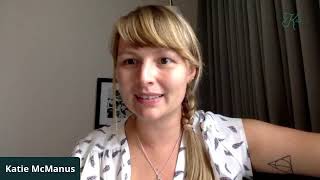
Katie McManus and Mega Bradley argue that trading joy for money is a false choice. Doctors and corporate workers burn out chasing paychecks, while salespeople who perform from genuine happiness actually earn more. They recommend identifying your purpose, setting boundaries with draining clients, and rehearsing worst-case scenarios to overcome fear of leaving secure but joyless work.
Chapters
Foreign.
Hello, I'm Katie McManus, business strategist and coach, and I'm here this afternoon live from Nashville. We're both actually Nashville with Mega Bradley, who's an incredible money healer. Mega, it's so good to see you. Like, so shortly after actually seeing you.
I know, it was like we huddled up and there we were, and then we're like, all right, see you on the show.
I know, right? So everyone who's watching, Megan, I actually just met for lunch. It was our very first time actually seeing each other in the flesh. And just as we were getting ready to go live, I'm like, oh, my God, we forgot to take a picture of us having lunch or just together, because, full disclosure, we made friends over the interwebs during COVID So, you know, silver linings, you know, gifts in disguise. I don't know what you want to call it, but so grateful that the universe brought you into my world.
Yes, likewise. It's always great to use this technology for positive in a world where it sends out so much other stuff.
Absolutely. And. And for those of you who are joining us, we love this to be interactive. So if you have any comments or questions, please do comment them. And just to remind you, we're using streamyard, which is an imperfect technology, just like much of the Internet. Sometimes it shows us all the comments, and sometimes it doesn't. So if we don't call you out or answer your question, it is just the technology failing us. You did nothing wrong. We're not mad at you. But I want to jump into the topic for today, because we were talking about this at lunch, and it is super juicy how people trade joy for money because they believe they have to. And I know I've done this in the past.
I think if anyone says that they haven't, I think that they must not have worked a job or done something that they would have rather have done than no my money.
Right. Right. So I. Well, I want to hand it to you first. What comes up for you when you think of trading joy for money?
Well, I think that many times I've had people say to me, oh, I, you know, I really don't care about making money because I really just want to be happy. And. And it was like, it's not an exclusionary conversation.
Yeah.
And I think that's the start of the conversation is, where does that come from? Where do we. Where do we collectively agree? Like, we don't stop people usually when they say that to us. Right. If anything, you know, we're applauded for sacrificing our joy to make money. Or I know some very wealthy people who are incredibly unhappy. So that's the conversation is the exclus. The exclusion of one versus the other.
Right. And I'm just thinking of how many movies are there where the person has to give it all up so that they can live a happy life. You know every Hallmark Christmas movie where a young woman leaves the big city in her well paying job to live in a town and she gives up all the money so that she can live a happy life.
Yeah. She's out with two chickens.
And you know, my dad loves movies, by the way.
Oh, I think we all do. Because there's. That's part of, you know, it's like, oh gosh, why? Because we're more drawn to joy than we are to money.
Yeah, truly.
It's also why people go into debt because they are to money and it does not matter. I think the thing about money is that because it flows like it truly, truly flows. That if someone has, you know, sometimes I think that with money, the more it flows and the less you absorb it, it's like, it's like a rain. It's like a flash flood over a dry desert.
Yeah.
And you could have tons of it and none of it sinks in.
Right.
To actually create growth.
Right, right.
How's it shown up in your life or your experiences across the clients you work with and things like that?
Yeah, well, it's funny, you know, people start working with me because they realize that they've been trading joy for money all their lives and they're over it. You know, I, I can't tell you how many clients work with me because the goal is to give up the venue where they have just been getting money and not joy. You know, working in hr, working in sales, working in any kind of capacity for corporate overlord where there's not joy built in. Not to say that those jobs can't be joyful. You know, I know lots of people are in those jobs and they find so much joy and fulfillment in them, but they're like something always happens. It's like the last straw to break the camel's back. And they're like, I can't do this anymore. I need an exit strategy. What is the thing that's going to get me out of here?
Right.
We have someone agreeing with us. Angela. Hello. Yes, totally. Thank you. Thank you. Yeah. And. And I love this. There's no appreciation, you know. Totally. Yeah. I think it's a lot reflection back as to like what you're giving into the system.
Well, I think there's also oftentimes escalating demands. We go into something with joy lovingly. We start a career or a path. And many times it's the very thing we spent years, like people toil over the profession that they have to go to get a master's degree or a doctorate or. Or, you know, like, high level. Like, you didn't just whimsically fall out of a tree and become whatever. And yet it becomes the thing that, you know, I like to say that I think doctors, because I know personally, I know doctors who have ended up in severe, like, addiction cycles, which many times nurses and doctors. And this is a common thing we know, it's not a secret. Many times these people end up the most addicted and the most strung out. And I believe that part of that is they went into serve healing people. They're healers. And what ends up happening to them is they trade the joy of healing and facilitating transformation in people's lives with how many beds they have to run and how many things they have to check and how many times they have to worry about being sued for what they're doing or. Or all those things. And it takes the joy. They trade the money, be making 150 bucks an hour. They are numbing with that addiction that gets created because the joy is gone.
Right, right. Yeah. And it's, you know, can you see a doctor smoking? How often do you see a doctor eating fast food? How often do you see a doctor just living an unhealthy lifestyle? And it's. I love this, Angela. The politics versus the role.
Yeah, that's a good point. Yeah.
Yeah. What does it take to actually stay in that role? There's politicking to happen with dot, and this happens not just with, you know, jobs where you're saving people. It happens in sales. It happens. I know some salespeople who just love sales. They love talking to people, they love helping. They love that feeling, that rush that you get when you close the deal. And yet there's a lot that goes on that's extraneous to that.
Yeah. The quota checking and the reading the script. And what did you mean to go off the script? One of the things that I. I do because I. Because of the work I do with people relating to life, purpose and identifying.
Oh, did we lose you? Oh, no. Or do we lose me? I don't know. We're in Nashville, and for some reason, the WI fi has been a little funny since I got here. So, Maggie, you with me or am I with you? I don't know what's happening. Okay, everyone, we're having some technical glitches. This has been happening more and more of the last month. I don't know what is going on. Yeah, do you there?
Yeah. Okay, good.
Sorry. We lost for a second. I don't know.
Techno. Here we are.
You started down the path with a beautiful point, and we never got to hear any of it. So can you repeat what you just said.
Requires me remembering what I just said. I said. I. I help people identify life purpose. And many times I think the thing is, is that we, if we ever, ever went to the counselor's office or, you know, went to the high school career path or, you know, we had parents that decided what our career was going to be or whatever the case might be, and we got. We signed up for something. We. Oh, you have a hurricane coming. Oh, that doesn't sound. The many times people take their passion and they put it aside, like. And I mean by passion is. Is not just something that you wander aimlessly through the woods for. One of the people we both know, he says, you know, be careful with passion because, you know, it can be an uncontrollable emotion, right? And there's also a spark of joy in doing something that you get pulled forward to. And the thing that I. I experience in working with people is they're like, oh, my gosh, does this mean I have to trade professions? If I found my life purpose and it's different than what I'm doing, and I believe that you can find your life purpose and line it up with wherever you are, because when you become aligned to your life purpose, and you know what that is, then joy becomes the natural state of being. And the fun thing is that's where money comes to, because unlike our ideology, that money is mutually exclusive to Joy. I think that the two of them come together as the apex of maximum abundance when you actually do things from Joy.
100%. And I can't tell you how many times I've heard someone say, I took on this new hobby and I became more successful at work. Like, I used to teach knitting, and I can't tell you how many of my knitting students would be like, oh, my God, I had this brilliant idea for my job while I was knitting, and I thought of a really fun way to do it, and now I like my job so much better. Like, it just. It just comes together because you're mixing something that, like, taps into, like, a spirit strength that you have creativity. Right. Or I have a former co worker who is an incredible musician. He plays music that. I'm not a huge fan of Death metal, but there's therapy in death metal. Yeah, no, totally, totally. Like it's good rage music. But you know, he takes that joy and he channels it through his work and it just becomes he. I mean it just, it feeds into his success and his ability to generate wealth for himself.
Yeah, well, and I think that the thing is, is that you can tell you if you're in sales or in a profession. I think we're all in sales. Right. As we all have that conversation. But like you're not sitting in the, in the office where maybe someone doesn't interact with you to make a purchasing decision. But if you are in any sit where you are the front face to make the purchasing decision, joy leaks out. You cannot box joy. It is the one thing you can hide. Money. You can't hide joy.
No. I have to tell you, my most successful sales day when I worked at Equinox was the day before. I was going on vacation for like two weeks. And I. Every single appointment or walk in that I had that day, I wasn't even talking about the gym, I wasn't even talking about. About membership. I was talking about my vacation, how happy I was. And I think I made six or seven sales that day. And it was just like everyone wanted to be on the joy wagon with me.
Yeah.
You know, it didn't matter. They like, they got their, they kind of figured, okay, this is what I want. I came in here to buy and this person seemed super happy. I want what she has.
Yeah. Well, I think, I think the thing is, is that, yeah, I can relate because the highest paying week I've ever had in business was I was literally standing in a retreat site in Costa Rica on a negative edge pool, watching one of the tallest mountains, watching the clouds float by. The tallest mountains, Costa Rica. I was like, I was at peacocks walking by me. It was five star Balinesian carved. I mean it was the ultimate. Right. And I was there to facilitate the retreat. But it was literally my highest grossing sales week I have ever had. And I was like, this is kind of funny. This isn't what we're told when we're told to work hard. And that's where the part of slaving for the money as a prime point comes in. Yeah, no, I didn't work hard enough for this. So it must not. It, you know, I didn't look away. I can't possibly make Enough money.
Right, Right. Well, and there's this talk about, you know, Ramit Sati is one of the, the gurus that I follow in the business space. He talks about sometimes when you move to a more expensive place that has more amenities, that has a lot of things that light you up, you actually end up making more money. This is why I'm trying to find the exact perfect place.
Yeah.
To live. Because I know when I'm there, I'm gonna have this higher vibe. I'm gonna be joyful. I'm gonna be able to attract just the right clients who, who want whatever it is that I am serving.
Right. You know what I find interesting is that many times as well is when we are coming from that place versus like trying to prove why someone should pay us whatever they pay us. There is a, there is an ease. Going back to what you were saying, like, people will come to you and ask you like, what can they buy from you? Like, it's really funny. Like I, my, my, my website sucks. I know it sucks. It's on the back list of things I need to take care of. And it does because I live by referrals. Because people keep referring people to me or people like, literally will like go, oh, I've been following you and you know, stalked you for several years on the Internet and I'm going to hire you. And they're like, what can you sell me? We have. Funny thing to have a sales conversation about, but many times that's how I end up. Like, I want to work with you. What's the. Which way can I pay you? What's what serves me? But that, like, I know I want to work with you. And so that completely changes how you serve number one, because you're really like, how can I save? Or how can I serve this person versus how can I sell them? Whatever the agenda is.
Yeah, no, it's. Well, when you're feeling joy, let's just talk about what that feels like in your body when you're feeling joy. Like you feel so connected. Not just to like the earth, we're getting a little woo woo, but to the space, to the people around you, to the experiences, to the taste, to the smells. Like you're grounded.
Yeah.
You know, and it's so easy for someone to be like, wow, this person's super grounded. Even if they don't really know what that looks like or feels like, they, they're drawn to it.
Yeah.
And I'm sorry, go ahead. I was. And I want to just clarify for everyone watching that we're not talking about that whole toxic positivity thing where you're like, you know, showing a bright side and pretending like everything's hunky dory and like only doing good vibes. That is not what we're talking about here. That actually repels money. It repels joy because you're not actually being authentic. Like when you are in your joyful life, when you're accepting that both joy and money come to you like as much as you want because you deserve endless amounts of both.
Yeah.
You know, there is going to be pain and suffering because of life. Like those. That is part of the experience of life. And you can't experience joy to the full fullest if you don't know the contrast of it.
Yeah.
And you don't have to hide either side of it.
Yeah. And I've mentioned this in the past and so ever heard of the Hawkins scale of vibrational frequency scientists? You know, especially in this day and age, we're in a Can you prove it with science time? Right. And they have actually hooked people up two electronic monitors and found out that there was a different frequency for joy than there is for all the other emotions. And joy is actually a high side. Emotions. We use that word for a reason. Because even if you don't hit joy and you just get to neutrality and general happiness, you're going to be ahead of the greater balance of collective humanity, which is actually vibrating frequency wise. Now you think about frequency and the, the frequency of joy and why money goes to it. There's no accident. It is because of the polarity that exists. I mean, you're talking about like people that do take, you know, that try to act all happy. Sunshiny. No. You know, if you're mad, be mad. Be like, no, I'm not having a good day today. You know what, could we do this call another day when I'm in a better mood? Or can we do this in an hour after I go take a walk with myself? You know, the thing is, is we own emotion. It transmutates the process. And this is what I think. Napoleon Hill talked a lot about this and many times we all go to the glossy Napoleon Hill things. And you know, I know we're streaming to LinkedIn and I know that many times in the business and professional world, it's like, oh, no, it's inappropriate. You can't act like this. You'll get fired. And I just want to say that there's a, there's a balance and there's a gift and there's a way to own those emotions and say, you know what? I'm not in the proper present space for this time for me to go take a bathroom break. Or it may be the time for a mental health day. And, you know, if you have a boss that's threatened you, like, it's not okay to take one of those, then that's where you should be looking for another place to work.
Right.
And if you're an entrepreneur, that's the day you say to your clients, you know what? I need to take a day so that I can serve you better.
Yeah.
And then it'll all. It eases up. It rises. The whole thing rises. The sales volume rises. The clients interest rises. The results of the clients rise.
Yeah. Yeah. Well, I love that you're pointing there. It like, I work with this model of congruence. So I'm a highly congruent person. My words, my actions, and my emotions all have to match up. So if I'm lying and saying I have a headache because I don't want to do something, I will actually get a headache because my. My body and my mind just don't know how to be incongruent without trying to make it congruent. You can tell when someone's being incongruent. So if they are coming into a meeting with rage and they're trying to hide it and they're trying to cover it up with, like, happy words and happy actions, you actually. No one in the room will actually ever be able to focus on what you're telling them because everyone is going to be going like this on the edge of their seat, like, shit. What is about to happen here, it gets communicated through energy. It's the same thing when, you know, we try to hide joy sometimes.
Yeah.
You know, we don't want. We don't want to, like, rub it in other people's faces for some reason. And joy is not something that can ever be rubbed in someone's face, but we try to stifle it. And again, it sows distrust.
Yeah.
And so all a person has to do is when they walk into the room, they don't have to have a whole rage fest or have a whole joy fest. They can say, hey, listen, like, I know I. I have, like, some simmering anger in me right now, and it has to do with, like, something else that happened before. This has nothing to do with this room. And that's all it takes to get the room on board and be like, oh, oh, cool, okay, so it's nothing. That's gonna happen here.
We're good.
You know, the same thing with joy. If, like, someone's walking into a room with joy and. And people pick up on it. They're like, what's gonna happen here? And it changes the expectations of the room.
Yeah, it. It. One of the things that we do and one of the processes we do in a. I'm a certified facilitator. And. And it's an. It was a New York Times bestseller long, long ways back. It's been around for, gosh, since 2006. 5. Somewhere in there, we have a conversation. And this is a really good tool to use when you're up in the face of something that maybe isn't that great, but, you know, it's really impacting your revenue path. And it's to come into the room with someone and say, what's up for you? And. And what's up for me is very different from how are you doing? And you keep asking, what's up? What else is up? What else is going on? And it allows the unpacking of that bag so that you can be like, you know what? You know, somebody cut me off in traffic, and I used every letter that you can use in an Alphabet multiple times, and I'm still not over it. And I still think every human being is, you know, stupid. And that's where I am right now. And it's like, that's what's up for me. And the person's like, thank you for sharing. And so the thank you for sharing is as important as the what's up for you. Because when someone tells you something, you don't have to come back with the editorial, right? And the reason I share it in this is because when you're. When you're in the whole, I got to keep a stiff upper lip, and I've got to, you know, make sure I meet my sales quota and all this other stuff, and, boy, my day really, really sucks and all this other things. And meanwhile, you're like, hi, how are you? It's like, instead, have someone ask it to you. Get. Get a partner that you're like, can you just ask me what's up with me? And like, and thank you for sharing. Thank you for sharing. And sometimes if someone's really on a rant, they get really mad when you say thank you for sharing, because they realize you're not picking up whatever they're putting down.
And you too, right?
Because then they're like, damn, I hate all that person's joy. And you're like, I'm not. I am not gonna mess with my joy because of your anger, because of your whatever. And then just like, okay, yep, I see you, I see it. Okay. And they're like, but that's not the response I was looking for. You're like, apparently not. And that's exactly why that's my response.
No, it's. I mean, and I think this is for anyone who's a healer or helper or a coach in any way, shape or form. This is a lesson that you need to learn, is that you have to be able to be with people in whatever emotion they're experiencing without taking it on. Because if you take it on, you're just running this roller coaster. You're not being the best for your later clients. And it's exhausting and it's taxing on your. On your body and your mind. Yeah, Yeah. I can't tell you how many times my clients come to my call, come to a call with me, and they're like. And I'm like, let's just clear whatever's going on, because we're not actually going to be able to get into the work until you clear it.
Yeah, well. And I think that's also where people think they can buy joy, right? Which is. It is the thing you cannot purchase. Like that MasterCard commercial, which actually MasterCard totally capitalized on that.
Yeah, totally.
Yeah.
Yeah.
This cost this much. That costs that one. This is priceless. And that is like, I wake up every day and ask, what is the priceless experience? And some days, especially if your wallet happens to be a little thin or your friendships happen to be a little thin, that's why they make a sky and trees so that you can go out and see something priceless in the beautiful world around you.
Yeah, no beautiful point there. I know. We have a time limitation. We're coming up on it. You just mentioned something that people can do to access joy in everyday environments. So going outside and just looking for things that are beautiful. Appreciation, appreciate appreciating nature. If I can say the word. What are some other things that you recommend?
You know, I have gotten out of this habit myself. But the gratitude journal thing, like, even if it's the wake up and go, I have eyes, you know, my friends all are. Well, like, however many things, you gotta, like, immediately go to the really obvious before you open your Facebook, right. Or whatever social media channel. Like, get the gratitude before anything else gets to your momentum. Because every day we start with fresh momentum. So make sure you start your momentum off right. And it's not going to be that whole, I do it. I, I've, I've also done challenges on it. And if you're looking for a really cool way to engage your clients, do a detox, a social media detox challenge and, and have people like habituate for an hour before they do anything, not pick up their social media or their email.
Yeah.
Changed your life. Sometimes people ask me, they're like, Megan, you, you just disappeared for three days. And I'm like, I did and I didn't miss any of it and I had an amazing time. I'm really happy. And they're like, yeah, sometimes you have to tune out. So that's the other thing is this serving me and my highest and best interest. Always ask that question. Every circumstance, every interaction, every client, every transaction. If you're going to make a sale and it's a selling a part of what you do, if you're an entrepreneur, especially if you're an entrepreneur, I think you have to say, does this person cost me my joy? And fire them if they do.
Yeah. Yeah. Don't let the fear, the fear of missing out in any way, shape or form, missing out on money, missing out on experiences, missing out on whatever's going to happen. Don't let that be the thing that holds you in a space of low frequency and not joy.
Yeah. I think if I would have learned that years back in business, I would have made much more money and I may have a few less gray hair. But the thing is that we are so afraid of trading the sure thing client or the sure thing business or the sure thing job because what would happen? The sky is going to fall if I actually step. And as long as you are doing that, holding your breath in that way, you are trading out some level of amazingness that the universe is waiting to give you because you are too afraid to look on the other side of the bridge.
Yeah. So 100% to that point. The thing that I would add is nothing is ever a sure thing. Even the job that you are just suffering through because it pays really well and like, you'll have a good retirement, you'll be able to experience joy. Then nothing is guaranteed there. And so like, to experience joy, you kind of have to look into the dark places, like, what are you most afraid of happening? And almost play like the, well, if this happens and then this will happen, then this happens and then that'll happen. It's like, and then all of a sudden your home is on the street, living out of your car, and then your car gets Repossessed. It's like, well, look at what you've done in the past. Look at how you've come back from. Everyone has had a crisis where they've had to rebuild their lives in some way, shape or form. So really, like, play the what if game with yourself, look at the worst case scenario, and then make a. See how you would actually climb your way out of it. Because I guarantee you, if you did it once, even in a small way, you're going to be able to do it again in a big way if it ever does happen. And when you do that, you know, having crashed and burned my life and rebuilt it in my own magical way the other day, that it just. It frees me up. I'm no longer afraid of losing it all. It's like, because I know I can recreate it, you know, it's. It's like realizing that you can ride a bike without the. The safety wheels. Right?
Yeah. I. I use my. My kids in that example. You know, like, one of them came up and decided to do something really unenlightened with, you know, human beings. And we're, especially when we're young, love to experiment with this. And he stomps on his brother's LEGO construction project. And I was.
Oh, no, no, no. We want to hear about the Blejos Mega Maga. Can you hear us? Everyone's gonna experience my singing. But at least your face is frozen in a very pleasant facial expression. I just want to say that, like, whenever my face gets frozen, like one. One eye closed and looks like my tongue is sticking out. Okay, yeah, no, I have you. Your face is a beautiful expression.
Oh, it wasn't like.
I know. But anyway, so he came up and he was stomping on his brother's LEGO construction set, and then we lost you.
He was. He was so upset. And I said to him, I said, you know what the great thing is? Now you get to rebuild it again. He was. That's the way I looked. He looked at me like, that is not the answer I was looking for, Mom. And I'm like, well, learn it early, son. You're seven. You can handle it. It's. It's better to learn it now. Someone will come and stomp on your lego.
Yep. No, we're resilient and we're creative and we're resourceful and we can do things many, many times. And. Oh, no, we lost you again. I think this is the universe's way of telling us we have to wrap up. Are you there? Hello, Houston? Can you hear Me. Angela. Yes. Okay. Am I. Am I frozen? Or is it just Mecca? Hello? Bueller. Bueller. Oh, you moved a little bit. Okay, well, thank you for sticking with us, everyone. For. With all these technical glitches we're experiencing today, apparently there's a guy named Fred who is coming through and causing some trouble. He's a hurricane, apparently, and he's headed our way. Oh, no. Okay, so we've lost Mega completely. But if you are trading joy for money, I need you to cut it out right now, okay? It is not worth it. It's not an either or proposition. You can have both, okay? And it's magical when you actually do step into your power and own that, you deserve to have both. Okay? So go and get it. And if you need any business strategy to help you figure it out, I'm here. If you need some money healing, please reach out to Mega. She's incredible. I've worked with her. You know, whatever. Whatever stories you've made up or baggage that you're carrying around and belief systems, there's a way to unpack it and to throw out what no longer serves. So, Angela, Truth. I gotta find my new compass. Anyway, Megan just texted me. She's rebooting, but she's short on time, so I'm going to let her know that we're just wrapping up now. Thank you all for joining us this afternoon. I hope this was useful and stop trading joy for money. Anyway, love you all, have a great Monday and I will talk to you all soon.
More from Katie





How to do self care right now, so you can do what needs to be done, for yourself, your business, and

How to do self care right now, so you can do what needs to be done, for yourself, your business, and

#greenscreen How to build a consulting business that makes you $200,000-$700,000 a year

#greenscreen How to build a consulting business that makes you $200,000-$700,000 a year

Maybe we’re not the imposters…? #businesscoach #startup #entrepreneur #smallbusiness #consulting

Maybe we’re not the imposters…? #businesscoach #startup #entrepreneur #smallbusiness #consulting
