What's your business idea?
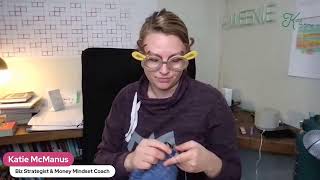
Katie McManus reviews viewer business ideas and explains how to turn skills into profitable ventures. Focus on existing demand instead of waiting for the perfect idea, iterate fast, and invest in coaching and copywriting. She shares examples like Ms. XL's Excel teaching business and a Christmas-decorating service that found their niche.
Chapters
Good afternoon and a happy Christmas, everyone. If you celebrate, if you don't celebrate, Happy Sunday. Today I'm going live because partially because I needed to finish this hat that my mom asked for for Christmas and tomorrow's Christmas Day. So I am down to the wire and also I wanted to answer your questions that you have about your business ideas, because I know a lot of folks are thinking about the businesses that they want to start in the new year. And, you know, some of those business ideas are good and some of them are bad. And I would rather you not waste your time with bad business ideas. So as I sit here knitting, I'm going to be answering any questions you have. You can do this any number of ways. You can. Hi. A welcome. You can put your business idea in the chat and hi, Ahmad, welcome. Or. Or if you're not quite sure what your business idea is, you can give me your full name or Give me your LinkedIn profile link and I will go and cyber stalk you for a minute and give you some ideas of what you could do based on your past experiences. Because I think a lot of us, I mean, I know I did this. When I first started my business, I completely took for granted what my past experiences had been. And I didn't understand that, like, not everyone knew how to sell. Not everyone knew how to market themselves. Not everyone knew how to create a package that would make it really easy for your clients to become your clients. And it really wasn't until I started doing it for myself and being successful at it that people started asking me, like, wait a minute, what are you doing? Like, how did you do that? How do you have clients? How are you making money doing this? It wasn't until then that I realized that I had a piece of the puzzle that others didn't. And I'm sure I don't know what. Obviously you're a stranger on the Internet and I haven't interacted with you yet, but whatever your experience is, I guarantee you there's something in that experience that could make you a really good consultant for something, or you could start teaching it, or, you know, whatever. So whatever business ideas you have, please pop them in the chat. I will be kind. But if the idea is bad, Hi, Gail. Welcome. If the idea is bad, I will tell you because I do not want anyone wasting their time in the new year on an idea that doesn't have any chance of making money. And so it does take bravery to show up in my comments. But what do we say about that here? Don't be a Weenie. Stop being a weenie. Ask the question. Ask for what you need. Figure out what you're going to do. For those of you who already have a business idea and you are just feeling really stuck in coming up with, you know, a plan, how you're going to make it work. Hi, Apollo. Welcome. Merry Christmas to you. But anyway, so back to if you have an idea and you just have no idea how you can make it a viable, profitable business, on the 28th, I'm hosting my, for my first time ever, a 90 minute workshop to help you strategize a custom plan to get you to six figures in 2024. Okay, so if you want to go and grab a ticket, they're 97. And I do have kind of a fun bet going. So if you sign up and if you create the plan, and if you work the plan all year long and you make six figures, all I need you to do is show me your receipts from your credit card processor to prove that you made six figures and I will refund you the full $97 by the end of next year. Because I want anyone and everyone who feels stuck in their business, who isn't really sure what they should be doing, I want you to have a plan. I want you to know exactly what you need to be doing. And like, if you can go and make your six figures, I want to give you that back. I want you to, I want you to bet on yourself in a small way to show yourself that you're committed for the new year. And so if you want to grab a ticket to that, it is the first link in my link tree. If you go to the profile, if you're watching this on TikTok or over on, on LinkedIn. But of course, any business idea that you have, any question you have, if you aren't sure if it's going to be a money maker, then please pop it in the chat and I will tease it out for you and tell you if it can make some money. Likewise, if you're not sure what your business idea is, but you know you want to start one, then share with me the link to your, your LinkedIn and I will go through your experience and I will tell you exactly what I think you could start. Hi Vivi, welcome. We're just going to share this over on Z. Tick Tock. Yeah, I, you know, I kind of love going live on Christmas Eve. I've hosted like webinars on Christmas Eve before and on Christmas Day. Not like webinars where you're selling something. Hi Lauren, welcome. But just, you know, kind of just let's be together on in an online setting. I think a lot of us felt really lonely during the pandemic. Hey, it's me. I'm not a reindeer. It's Katie. I know because you said hey with a question mark. Anyway. But you know, like, I love, I love creating a little bit of community on days like this. Oh, you use the wrong punctuation. Okay, I understand. I do that all the time. Yeah, just even having a voice, even just having like someone in the background who's chatting at you. I know, I, I know it can really help you feel not alone, you know, so I'm so excited to be here and. Hello, Lily. Hello. Yes. So anyway, any questions you have on your business idea, if you'd like to pitch it to me and get my 2 cents as a business strategist and money mindset coach, then please do pop those in the chat. Likewise, as I said before, if you aren't sure what kind of business you could even start because you've never started one before. Hi, Bibi. Thank you for the likes. Oh my gosh, thank you. Then please just share your link to your link, your LinkedIn and I will go and check it out. Let me see. Thank you for the likes, guys. Oh my gosh. I haven't gone live on tick tock in a little while. I'm really getting need to get back on the wagon here. You know, some of the things that I look for when I'm, when I'm teasing out what a business idea is, is a, is there actually a market for it? You know, a lot of people, when they think of a business idea, they think, oh, well, it's already been done. And then they shy away from it because they think they have to come up with something completely new. Guys, that's not what you want to do. That's not. When you're starting a business, you want to make sure there's already a market for it. Right. If you have to go and train the whole world on like, that they have a problem and that you have a solution to the problem and, and they have no idea about any of it. Like, why, why would they, like it's going to take so much time for you to just train them that they have this problem and that they need your thing. And by the time you get a few people convinced you're gonna be broke, it's, it's not worth it. What you really want to focus on is, you know, what are people already spending money on? What Are they, what are they already trying to solve? You know, what's a problem that they have every single day that you could potentially help them with? You know, the last couple days I've had a ton of people reach out to me about Ms. XL. And it's so funny because you know how when you start focusing on one thing and then other people start focusing on it as well. I had done like this really deep dive on her business model and, you know, her TikToks and like the history of what she did. And it's funny when that happens. It's like the universal, universal consciousness kind of ties in and everyone gets curious about the same thing at the same time anyway. But I found it really interesting to look at what she was doing because she took something that people are low keyed, annoyed with all the time. Okay, I don't use Excel in my business because I don't know how to use Excel at all. And there's nothing in my business that's forcing me to learn how to use it. If I worked for a company like there have been companies that I've worked for in the past where I had to learn Excel to a certain degree, right? And I had to use it, but I didn't know how to use it. I would just follow the steps that they taught me. Um, so Ms. XL, during the pandemic, when she had a lot more time at home, she started making videos, teaching people different things about Excel. And it was enough of a problem for a lot of people that, you know, they started following her and they started asking her for courses and they started asking for her to do trainings at their companies and all this stuff. She had a solution to a problem that was widespread enough and frustrating enough to enough people that they really wanted to solve it. And she became their go to person. And by the way, she made $5 million last year. $5 million teaching people how to use Microsoft Excel. Like, you'd fucking think that Microsoft would have figured this out by now, that people need training to use their thing, but no, they're legit hiring her to teach their customers how to use their product. Absolutely insane, right? So, you know, it's not necessarily like a wake up in the morning problem. I don't think anyone was so stressed out about not knowing how to use Excel if they were staying awake at night. But maybe it was long hours, maybe it was, you know, feeling inadequate compared to one of your colleagues who knows how to use Excel really well and gets the work that you're supposed to do done. In a third of the time. Maybe it was that insecurity that it brought up that really made this a hot need for people, you know? So as you're thinking through business ideas, I want you to think about what is the problem that you hear people complaining about all the time? What are the things that people ask you for help on? Those are the kinds of ideas that can really turn into something in the long run. And a lot of folks, you know, when they're thinking about starting a business, they get really hung up on this idea of, okay, well, I have to get it right, right? Like, I have to have the right idea because it has to work. Yeah, sorry, that's likely not going to happen. You know, when I started my business, I picked the wrong niche. I picked the wrong niche. I thought I was going to be a dating coach for men. I went out and I marketed that I was a dating coach for men everywhere. Everywhere. I thought like, oh my God, this is my identity now. Like, I'm, I'm telling everyone that I, oh my God, we're almost at a thousand likes. Thank you guys. You're amazing. Thank you. I hope your thumbs aren't getting tired. I was so sure that, like I was going to be a dating coach for men and I was going to take off and all this stuff. And I got pretty much all female clients. I got one dude, that was it. And yeah, like, the problem was not like the men didn't see themselves as having a problem. They didn't care. They didn't care that they were miserable to date. Women cared because they were the ones having to suffer through it. Right. And then what, what turned into dating coaching for women turned very quickly into executive leadership coaching for women. Because how my female clients, my women clients were showing up in relationships was that they couldn't because they had really bad boundaries at work. And so they had to learn how to communicate better, how to hold their ground, how to learn how to say no to their boss. And so I turned into an executive leadership coach. And then I started getting some corporate clients, got several one on one clients as well. And all my coaching friends were like, wait a minute, how are you doing this? You got dating clients when you did, when you did dating coaching, even if it was the wrong niche. Now that you've changed to leadership coaching, you're getting clients, what are you doing? And I kind of took for granted that I knew how to sell and like, I'd spent most of my career selling different things. I also took for granted that, like, through, like how I was involved in my sales roles often. I was kind of involved in marketing as well, and that I find marketing fascinating. I read marketing books for fun, and I have for a really long time. Even in college, when I wasn't even in a marketing class, I should have taken business, done a business study instead of philosophy. But what are you gonna do? It's too late now anyway. And so I started showing people, and that's really what evolved into being my business today. So as you're thinking through your ideas for your business, long story short, don't get hung up on having the right idea. It's probably going to be wrong, and it's probably going to be wrong the second time and the third time, and that's okay. It's an iterative process. I will say what I love about the program that I've developed for my clients is that it's designed to help you get clients at every step. So even if you're in the wrong niche, like, if you are focusing on something that's an actual need for people, you're likely to get a handful of clients in that in those first few months because you're in front of them. Like, that's. That's part of the process. You're going to be in front of them anyway. And you can always evolve it. You can always change your mind. It's one of the bravest things that we get to do as humans, as is change our mind about stuff. Like, I'm about to change my mind about these glasses because I can see them, and I feel like I'm going a little cross because I can, like, see the rims from this side. Oh, my God. But yeah, whatever questions you have, any business ideas you have, please pop them in the chat. I would love to help you tease them out and get you super clear on what you can start in the new year. And don't be shy. We don't. We don't have any weenies here. So if you're afraid that you're going to be judged, like, stop that. You're not gonna be judged. I'll tell you if it's a good idea. I'll tell you if it's a bad idea. That doesn't mean anything about you. It just means that you're a human that has ideas. And that's a beautiful thing because to get to good ideas, we have to get through a bunch of bad ideas. Okay, thank you again for the likes, guys. Oh, my gosh. Oh, my God. We're at 1.4 thousand. Thank you. So on TikTok, if you guys are watching on TikTok, and those of you who are watching on other platforms, if you want to go follow me on TikTok, go for it. I will be doing the full two hours of the live over there. I know. Long time. I know. Anyway, on TikTok, one of the cool things is that the more likes you get in the first, like, I don't know, 10, 20 minutes, the more your life will actually get pushed to other people because the algorithm's like, oh, cool, this creator is doing a live, and it's interesting. We should show more people about it. So I really do appreciate the support over there. Yeah. So it's funny, you know, as I think through this, one of the. One of the business ideas that I had when I lived in California and I was, like, really interested, I had all these really creative hobbies. I was teaching knitting at the time. I had just gotten into screen printing, but I also just, like, had a very, very small portion of a very small apartment, so I didn't have a lot of space, and I thought it would be a great. Oh, you have glasses like these. You never knew that. What is it? What is it that you never knew? I lost track of what I was talking about. Oh, thanks, Lauren. Thank you guys so much. But anyway, so I had this idea that it would be so cool to have, like, an artist. An artist. Like, not commune, but, like, co. Working space where you. I basically rent out, like, a whole industrial space that had, like, a lot of windows and set up, like, different little workspaces that people could rent out for all their creative endeavors. And it could be, like, professional artists or it could be just very serious hobbyists like me. And, you know, I actually think it would have worked out, but it was something that was just kind of one of those passing fancy ideas that I was excited about for five minutes, and then I moved on. I think that's the way of those of us with adhd. Oh, I think you said you never knew that in regards to the likes on live. Is that correct? Yeah, I think that's what you were saying. So. Yeah, but I mean, like, if you were to start a business like that. Let's talk through it. Oh, yeah. Okay, cool. Thanks, Vivi. Yeah, so, but if you were to start a business like that, you'd want to consider a few different things. You'd want to set it up in a place where people generally don't have space to do that stuff in their home. So you're talking, like a city or City adjacent, where probably cost of living is pretty expensive. Because like, if people could afford to do it on their own, like they would, they would, they would get the space. You'd also want to connect up with like the right, different kinds of organizations because they will know the people who could rent your spaces. So not just art schools, not just art schools. Not just like galleries where artists tend to go and sell their stuff. You'd actually want to go to like a bunch of different craft stores. You'd want to go and find out like who the people are who are teaching lessons. Right? Because those are the people who are dead serious about this. They're the ones that will do this, like seriously and want to have a dedicated space for it. You also want to get very clear on what the regulations are for the space. Because what you don't want to have happen is there's like a sweet like 75 year old woman who wants to go, oh my God, 2000 likes. Thank you. A sweet like 80, 75 year old woman who wants to do like serious quilting in your space. And then you have someone who is designing dollhouses and using your like really, really toxic glue putting stuff together. You don't want grandma getting high on the, on the glue. That's not what we want to happen. So you need to figure out like what kinds of crafts you're allowing in the space and what kinds of chemicals and things you're allowing. And then you have to figure out what the security is going to be like. Is everyone going to have a locked up space or are you going to have to do background checks on everyone who's going to have a key? Are there going to be open hours? Do you have to open the space? You know what happens if someone wants to work late if they're in the middle of something and you're trying to shut down? Like you have to figure all that stuff out. Oh, God. Oh God. It's stuck. Oh, no. There, that happened. Apollo, you are wonderful. Oh my gosh. Thank you. I'm getting my yarn tangled on my antlers right now. I don't know, I think this is a, this is an omen of, of the day to come. It's gonna be pretty much this. Oh, no. I'm getting a call from my friend. Okay, I will call her back in a little bit. Oh, that was funny. So, yeah, so like all these different things, you know. That sounds like a pretty. It what? Sounds like a pretty passive business at first and I'm sure it could turn passive in the long run. Would take a ton of footwork, a ton of, like, thinking of things from different angles, iterating. Like, you'd have to figure out a lot of that stuff from the very beginning because it would determine what kind of space you'd want to rent and, like, what your budget is for a lot of stuff. Right? Because it's very different if you have, like, an open concept where people can kind of like, leave their stuff out versus little cubicles that people get to do work in. I mean, that, like, maybe you're gonna have to spend a ton more money on lighting and electricity because some people are gonna have windows and some people won't. I mean, it's just. You really want to think about all those things. So when I. I take my clients through, like, the idea process of figuring out what kind of business they want to make, we're not just looking at what their skill set is. We're looking at what the need in the market is. Is there actually, like, a population of people in your designated area who would actually spend money on this? And if so, how much money would they expect to spend? It's very, very different depending on the. The industry. Happy early Christmas, by the way. Oh, you too, Vivi. Thank you. Thank you so much. Oh, my gosh. Someone just commented, saying thank you for your honest review, I think. Trying to remember what I reviewed. Don't remember. So for Christmas, I don't know. My parents. My parents are so funny. Like, my mom doesn't like spending money on stuff that we're not going to use because she loves, like, that moment on Christmas day where everyone opens their present. They're so excited. And that's really hard when you have adult children who make their own money, you know, because, like, they can buy what they want all year round, you know, like, and the things that we really want that we don't buy for ourselves are just stupid expensive, you know? And, like, my parents don't need to be spending that money on us. And so she came up with this rule about seven years ago where she doesn't pick out our presents anymore. She starts getting on us at. Around, like, late September, early October to order presents for ourselves and have them delivered to her house, to us, so she knows that they're for us and she'll wrap them up and then we get them on Christmas day. But what's funny is that, like, when she first started this, she got so stressed out about us doing this kind of mid fall because she wanted us to forget what we ordered for ourselves by the time Christmas Came. So it was still kind of a surprise. We never followed that timeline. Just forgot and ended up ordering like last minute. So that's kind of our thing. Like we give ourselves little gifties and then our parents wrap it up for us. Hold on, let me see who's messaging me. Hello. Oh, speaking of family, getting texted if I need anything from the supermarket. Okay. Yeah. Happy, happy early Christmas, everyone. If you're celebrating New Year's or Christmas Eve, you know, thanks for hanging out. And yeah, I, I'm really happy to be here with you. I hope, I hope you get everything you want this year. And maybe, maybe it's not all going to happen tomorrow, but I genuinely want everything you want to happen this year to happen. One of the things that I'm doing this coming week is I'm doing a workshop, how to hit six figures in the next 12 months, where I am walking you through my process to design a customized strategic plan for you to reach six figures in the next 12 months. One of the things that is really hard for me to scale in my. Oh my God, these, the antlers. This is a problem, guys. Why? I didn't do that on purpose. I didn't, like, I'm just used to being able to like pull the string up and my face is just right there. Anyway, one of the hardest things for me to scale in my business is the fact that I don't have a one size fits all plan for my clients. It doesn't work that way. My clients are building very, very different businesses. They have different, different values they want to honor. Some people want to work 40 hours a week and they love that and they feel that it's really fulfilling. Oh my God, 3,000 likes. Thank you guys so much. And then of course, other people want to work less and they want to make a ton of money and they want to be able to kind of be passive. And there's no one strategy that works for everyone. Just there. It doesn't exist. So on the 28th of this month, I'm doing a 90 minute workshop where I'm walking you through exactly the steps that I take to help my clients create a customized strategy so that they can hit a certain money goal. And because six figures is really that first benchmark for success in a business, especially in the United States, because it's so expensive to live here, especially if you're in a city, I am making this workshop all about hitting that first six figure. So if you want to go and grab your ticket, they're 97. But here's the deal, I'm making it a bet. I want you to bet on yourself. So if you join, if you come for the workshop, it's 97. You pay your ticket, you do the work, you create the strategy, you follow the strategy. If and when you hit six figures, if you hit six figures by the end of 2024, if you show me your credit card receipts by December 31, 2024, I will actually refund you your $97. And I know that's like a drop in the bucket if you've made six figures, but, you know, it's. It might just be enough. I'm trying it this for the first time this year. It might just be enough for some people to have some skin in the game, to like, get started in January, to keep going in February, to like really stick it through in March, and then start seeing some, some like, business coming through in April and in May and then maybe through the summer, but really in that, in that fall time, because that's really what. What that's the time that is most busy for new business owners. Because it does take time to ramp up, you know, but anything that can make you feel like you have some skin in the game, like, let's do this, let's do it. So if you wanted to sign up for that, the link is in my. The link in bio. And if you're an existing client of mine, you get free access to this. So don't sign up for it that way. I just DM me and I will send you the link with a special coupon code anyway. But yeah, any business ideas you have, anything that you want to start, even if it's just something you're playing around with, you don't have to be fully committed to it. I gotta go try and come back later if you're still alive. Oh, thanks, Vivi. Oh, you can stay. Awesome. Vivi. Where are you based? Where in the world? Like, you don't have to tell me your address or anything, but, like, what state, ish or province or country? And Apollo, you as well over here on LinkedIn. Thank you. You live in US oh, in El Paso. Okay, cool. Awesome. Central time. I'm on the east coast, where it is not that cold. Actually, like, we're not. We're not getting a white Christmas. Oh, God, knock stuff over. We're not getting a white Christmas. But it's, you know, winter. I read this article this morning that someone on Cape Cod, where my parents live, this woman, decided that she was no longer going to celebrate Christmas with her family. Lauren, you don't care where I live. Jk I already know you. You do have my address. Yes. Yeah, Lauren, I know. I know where you are. I could tell your address to the whole world if I wanted to, but I won't. I won't. Random strangers from around the world could send you cheese, and it would be my fault. Anyway, so this woman decided that she no longer wanted to celebrate Christmas with her four kids, who all had kids, because it just got to be too stressful and she would resent it and, like, everyone would fight and bicker and it was just, you know, not a fun situation. So she canceled Christmas and she came up with her own holiday called Seagull Day. And so the day after Christmas, they walk down to the beach with all this, like, stale stuff from their cupboards, and they, like, bring, like, a rickety old branch and they decorate the branch with, like, pretzels, stale pretzels and Cheerios. And they litter crackers around the bottom and they take a picture and, like, they have, like, a seal or, I'm sorry, a seagull statue that they bring with them and they take a picture and, like, that is the whole thing. And. And like, it's evolved over the years. They create a whole playlist as they walk down to the beach. They listen to. They've made up songs, like, all this stuff, and I think that sounds like so much fun. I will take cheese however I can get it. Okay, well, careful what you ask for. There's, like, cheese caves in the United States that have tons of. And tons of cheese. And it's because the dairy. The dairy industry is so subsidized that they just keep creating cheese that, like, no one's ever going to eat. So the government just keeps buying it and putting in caves and it just. It's getting aged. Anyway, back to the topic of starting a business and having business ideas. You could absolutely be a cheese maker. If you know anything about cheese making it. If you want to have livestock, you could absolutely do that. But there's a lot to think about. When I, When I worked for SolarCity, which is now Tesla, part of my job was I had to go basically to people's homes if they. If they booked an appointment and kind of assess. Like, if they could have solar on their roof, Lauren, I defo wouldn't have space for livestock. Yeah, no, you live in an apartment. That would be kind of hard. It's hard to grow. Grow grass in an apartment too. So they can eat stuff, and if you want them to produce milk, they Definitely need to eat stuff. But anyway, so I, you know, we. I had to go to all these people's homes and kind of like design a whole system on their roof and then submit it to the engineers. And I remember I went on a ride along with one of my colleagues. Colleagues, and it was this really sweet older couple in Petaluma, California. And Petaluma, if you're not familiar, is farmland. Farmland. Like, it is very pretty, but there's just cows everywhere. There are a lot of. A lot of dairies there as well. So, like, Cowgirl. Cowgirl Creamery, I think is just out of there or very close by if you've ever had their cheese. It's delicious. Anyway, so we get on the property and it's like a hundred acres and. And there's like this winding driveway that's like its own road through these beautiful green hills, and there's all this cattle. And so we're driving our little solar city car, you know, through these winding roads. And like, we get to a point and there are all these cattle just, like, in the road. And my colleague Jeremy is driving the car. And I'm like, I got this. I got this, guys. Like, let me. Let me. Let me get out and I will move the cattle. Like, I have any experience with cattle. So, like, I get out of the car and I walk in front because that's where they're blocking us, obviously. And I realized as I was getting out of the car that I had no idea what I was going to be doing. So I get out of the car and I'm, like, walking around. I'm walking up to these, like, massive, massive cows. Massive. Like, they have horns. Like they're. They're just ginormous. And he started, like, dancing at them, like, doing like, this whole, like, move cows. Move cows. Wrong. Wrong move. They flipped out. They all are. And they started charging off. I scared the crap out of them. But, like, they could have charged at me and I would be dead. That would have been the end. I never would have made it. BB4,000 likes. Oh, my God. It's so funny because it's showing for 4,000 for you. But I'm. I'm at 3K here. Here. It's so funny. Like, it tends to be, like, out of date sometimes. So weird. But anyway, so that's the time I almost got killed by dairy cows. So obviously I should not start a dairy farm. That's not. I might need some more. Some more training how to deal with livestock before I do that. But yeah, Jeremy was like, I just, he just wished that he had his camera on just to do that because he's like, it would have gone viral. Oh man. But then we had to go and have this meeting after that. So, so much fun. Like, hi, yes, would you like to buy our system? And also we just scared the out of your cows. Anyway, back to business ideas. If you have a business idea or if you're not sure what kind of business you can even start, then do, please pop that in the chat and I will tease out if it is a good idea, if it's something that you could actually turn into a full time income. There are, you know, there are a bunch of different models for things that you could do. This guy was not a client of mine. He was a client of my former mentor. But his name is Dr. Christmas and he was kind of a down and out actor, you know, didn't really get booked for a lot of parts, didn't, wasn't interested in anything, wasn't interested in doing like another job, really liked acting. But like when he went on his personal journey trying to figure out what he could do for work, he had no idea. And when he was asked by my former mentor, like, what do you like doing? He was just like, I just like decorating Christmas trees. Like legit. Just like decorating Christmas trees. That's all I enjoy. And lo and behold, he started a Christmas decorating company. He now does like Christmas decorations for the stars. Beyonce will bring him in to do all of her houses. Like the A listers of the A Listers. He goes in and he like does up a whole, whole theme for each and every one of his clients and they, they bring him in every single year. My mentor told this story about how when he was a down and out actor before he switched into coaching, you know, he was having a really hard time financially. And so Bob Peringa, who's Dr. Christmas was like, hey, you know, I actually have a couple jobs that we don't have enough workers for. Do you want to come and do some work with me? And he's like, yeah. And so he ended up at Carrie Fisher's house in the pouring rain outside, like putting twinkle lights on all these like, like reindeer statues out front. And Carrie Fisher is like waving from the front porch at him. Let me see. I remember when I was young, I had a slime business. My sister and we had a slime man named Mr. Clean. Oh, that's funny. That's so funny. Slime is one of those things that like, oh my God, why. Why do I keep doing this? Slime is one of those things that like older people, and I consider myself an older person at this point. I don't understand. Like, I see how it's cool, but, like, how people carry it around. I think I was traumatized by Silly Putty too many times. Like, Silly Putty, if you're playing with it and then you, like, forget you're playing with it, and you put it down and it kind of rolls over, like, under you. Like, you're sitting in it, like, on the couch, and it rolls under you. If you sit on it for, I don't know, 20 minutes, you're stuck. Like, it's. It sticks you to the couch. It'll melt by the heat of your body, and then it'll infiltrate the fibers of your pants and the fibers of the couch. And then all of a sudden, you go to stand up and you can't. Like, your. Your pants are stuck. Whenever I think of. Of slime, I think of Silly Putty like that. Oh, my God. One time that happened to me. Yes, exactly. So, like, I think the older people don't understand slime, and that's not the same thing. But still, every time I see it, I'm just like, nah, I like my freedom. I do not want to be. I don't want to be trapped to a piece of furniture. Oh, no. I messed up. I messed up. This is the problem with going live and knitting at the same time. Sometimes I screw things up. There we go. That was easy. So speaking of businesses and different ways to make money, I used to teach knitting, and if you notice I'm knitting, I don't have, like, the four. The four needles with the one that I'm moving around. I'm doing this in a very large loop, and this is called the magic loop. So basically, you create two lines of the things of the. Of the stitches, and you just go back and forth all around. It's really fun. You can actually doing this. This style of knitting. You can actually knit, like, two socks at the same time or two mittens at the same time. They have to be kind of small because, you know, you run out of wire space. You can't do two hats at the same time. But it's so much fun, and it's really cool to teach because people feel like they're doing magic when they're doing it, because typically, this is something that you'd have to do on either really small needles or on double pointed 5,000 likes. Oh, my God, baby, you're amazing. Thank you. If you want to make money, I advise you not to start editing teaching company. You don't make any money teaching knitting just is not, not worth your time. When I taught knitting, I think I made like, God, what was it, 25, 50 an hour? It wasn't much. Was not much. Did not like it. Well, I mean, I loved it. It was a lot of fun. But like, you could not make a living doing that. There are not enough people who want to learn how to knit for one, and a lot of them could learn for free and so they don't want to spend a lot of money on it. I did have this idea, however, that I pitched the woman who owned the yarn shop that I taught through that I would do like a coaching knitting thing. And I think she was shocked at how much money I would charge for the coaching bit. And it never, never took off. But what are you gonna do anyway? You know, oftentimes a really good idea, a really good business idea can lose its steam completely from go because the person who's running it doesn't know how to communicate it to their ideal clients. Like they don't understand how to market it in a way that their clients will understand that it's super hyper relevant to them. You know, I. Everyone feels really bad when they do this. Like they, they think, oh God, well, I suck at marketing. It's like, welcome to the club. Even people who train on marketing, who do marketing for other people suck at their own marketing. That's just the, that's just the nature of it. It's really hard to look at your own business objectively and really understand what it is that you bring to people. It's usually something that you need an outside person to help you identify. You know, like I have copywriting friends and I've had copywriting clients who really struggle to write any copy for their own websites, for their social media, all that stuff, because like, what they can do so easily for other people, they have a really hard time doing for themselves. So like, if you're a lawyer and you don't know anything about marketing and you've been marketing your services and not getting anywhere with it, but you obviously have an audience of people who could be your potential client because the legal industry isn't going anywhere, right? Like, of course you're gonna be bad at marketing. Of course you've never learned it. You. Like, it would be like me handing you needles and, and a piece of string and telling you to knit like a fancy sweater with, with braids on it. No, you can't do that if you've never learned how to do it. If no one's ever taught you, that's ludicrous. You know, we have this weird expectation of ourselves that because, like, we've been around businesses for so long or, you know, we are experts at the thing that we do, we have this expectation that we'll naturally know or be able to figure out the business stuff. And that's insane. That's absolutely insane. Like, unless you've learned the business stuff and done it before, how would you know? Right? It's like saying that you hang out with, like, a lot of fit people and then going to the gym when you've never been to the gym before, and then being frustrated that you don't know how to work out. It's like, okay, cool. Well, just your juxtaposition to people who work out doesn't mean you're gonna, through osmosis, absorb their knowledge and understand how to work out. That's not how it works. Like, if you want to, if you want to learn how to work out, you have to learn how to work out. That's just, that's how it goes. So if you're starting a business and you feel that level of, you know, frustration and you don't understand why it's not working, know that it's not going to work. Like, you're gonna be bad at this until you learn to be good. And there are a lot of resources out there for you to learn how to be good. There are so many, but you have to go for them. You know, a lot of. A lot of folks, when they first start their business, they're terrified to invest in it. And I get it. Like, you know, you're being presented constantly with all this messaging around the, the success rate or failure rate of businesses. And the failure rate is really high. But why is it high? Why. Why do people fail? Usually because they try to figure it out on their own. They didn't know what they didn't know, and they made poor money choices. They made, like, poor real estate investment idea, you know, commitments. They hired the wrong people, which, I mean, everyone can do, believe me. And they didn't set themselves up for success. You know, like, there's no guarantee. Like, I've had clients who started with me, did really, really well, and after a while just decided that they didn't want to run a business anymore. And that's okay. Like, that's personal preference. But if you're going to start a business, you know, it's one of it's one of the expenses of getting started is having someone teach you how to get started so that you can be more likely to make the best, best decisions and, you know, minimize the mistakes that you could potentially make so you can actually make some money and not go under. You know, I've been thinking a lot about this one guy that I went through coach training with, and I won't name him. I don't want to out him or anything. So let's call. Let's call him Sam. Right, Sam. There was no Sam that I went to coach training with. Anyway, he and I started at the same time. This guy had, I don't know, like, 25 years more corporate experience than I had, because, I mean, he was 25 years older than I was. Really kind, smart, capable man. We went through the. The coach training. We went through certification around the same time. We weren't in the same cohort or anything. And, you know, he kept waiting to feel ready to start the business. He kept waiting to feel ready. He's like, okay, cool. Like, I don't feel ready after taking this training, so I'm gonna go and take another training, and then maybe I'll feel ready to start the business. And I. Honestly, if I had more money, I probably would have done the same thing. Like, but I was broke, so I had to start making money. I had no money to spare, and so I had to just lean into the discomfort and into this feeling of not feeling ready but doing it anyway. And I started my business, and I started getting clients, and I started doing all the things, and I started working it out, and I started, know, investing in mentors and all this stuff as I was making more money. And he continued to invest in training and in more certifications and in, you know, like, meditation training and certification. Like, he. He spread himself in all different directions, trying to make him the most invaluable coach possible. And he. He ultimately had to quit. He had to go back and go back to his 9 to 5 job. He never made any money. Like, he. He. He must have spent, like, $100,000 on different trainings and certifications, like, easily from what I was following that he was doing, because I know how. How much a lot of those programs cost. And from conversations with him, I don't think he ever made more than, like, I don't know, $10,000 from the whole thing. That's really hard when you're starting a business. There's so much that you don't know that you don't know. And, you know we tend to want to stick to the things that keep us comfortable. Right. And for a lot of people, you know, being in training programs is super comfortable. We love being students. We love learning. You know, our love of learning does not necessarily translate into business success and taking more trainings on how to do the skill of what you do. I mean, sure, it's valuable, but it's only valuable if you actually have paying clients. If you actually have people, like, knocking on your door saying, hi, I would like to hand you some money for you to do that for me. Go, like, if you want to start a business, I've got. How do I scratch my eyebrow with these things? If you want to start a business and, um, you think that investing in more training on being better at giving your service is going to help you with the business side? No, that it's not. It's like those programs are designed for one reason and one reason only to get you good at what they're teaching you to do. Has nothing to do with business. But a lot of new business owners or a lot of people who, like, want to be business owners trick themselves into thinking, okay, well, this is an investment in the business. This is an investment in me getting clients and doing the thing. And it's not. It's not. It is you learning a new skill. Absolutely. But that does not automatically translate into, this is going to help me with my business. The only things that will help you with your business are things that are supposed to help you with your business. Like business coaching, like, business mentoring, like working with a copywriting coach, working with someone who does email marketing. And, like, you have to learn the things that you don't know how to do. Otherwise, you're expecting yourself to be able to do something that you've never learned like that. And then. And then you feel like a failure afterwards and you punish yourself for it. Like, that's. How ridiculous is that? It's like someone who's never even seen a sewing machine saying, okay, well, I'm going to make my own wedding dress and it's going to be beautiful. And like, I. I see, I saw this picture and I'm gonna make it a little different. And they go out and they buy the fabric and all the materials that they think they need, and they start trying to sew it. And, like, can we guess how bad it's going to turn out? And they probably would end up spending, you know, hundreds and hundreds of dollars on the fabric, and then God knows how much money, like, how much money worth of time they would Spend trying to like, figure this out. And it would. Bibi 6,000 likes. Oh my God, thank you so much. Oh my gosh. And thanks for the subscription, whoever subscribed. Oh my gosh. I will be going live until about 3:30 Eastern Standard Time, So. So anyway, so if you're starting a business and if you don't know what you don't know, like, just know that like you need to get help on figuring out how to start the business, that's, that's the only thing that's going to help you move forward. And likewise, like when you're trying to figure out how, like what business you should even start if you've never started a successful business before and you don't know what you don't know, like, you're, I'm sorry, but you're not a good gauge for whether this is a good business idea or not, right? You don't know. You don't know what the market is like out there because you haven't been involved in it. You know? You know, sometimes I do have to tell people that their idea is bad. And it's, it's a hard conversation to have, but it's a necessary one because I know in the long run it's going to save them hundreds of thousands of dollars, if not millions, right? Because, I mean, think about it. If you start a business that flops but you spend two and a half years on it, that's two and a half years worth of potential earnings that you've missed out on. And also imagine after two and a half years you're so burned by it that you just, you give up and you don't want to run a business ever, you never want to start another one. Versus like, if someone had told you early on that that business idea sucked and you shouldn't spend any time on it and let's game plan another business idea that's going to be better for you. And imagine that business took off. Like, imagine, imagine all the money you could have made if you had a good idea. If you had someone who was pointing you in the direction of this could be profitable. What you're wanting to do will not. You know, too many people are too afraid to ask for that kind of feedback. You know, they think that having a good idea is a measure of, of their intelligence, of their worth, and figuring it out on their own is a measure of all that stuff as well. Oh, Vivi, gotta go. Okay, bye. Good to see you. Thanks for being here. But like a measure of your worth, like there's no measure of your worth. You're human. You have intrinsic worth. And, like, there are so many different ways to measure how smart you are. Like, giving yourself a test to prove you're smart in an area that you have no training in isn't a fair test at all. Especially when there's this added pressure that this business has to pay your bills. You have to make enough to be able to pay your mortgage or your rent. I'm really happy I did that, and I didn't get it hooked on my glasses. That's a lot of pressure. That's like never, ever going to a single class in college and then going in for the final and then failing it. Like, of course you're gonna fail it. No one would do that. You have to study, you have to go to class. You have to learn the things. You can't just go in for the final and guess your way through it. And no, CHAT GPT is not gonna help you through that. It's funny, a lot of people have been asking me about how to use ChatGPT for your business. And, like, there's some really interesting ways you could have ChatGPT play around in your business and, like, create a business plan for you. But you have to know that ChatGPT is, like, just taking information that sees on the interwebs about what's worked for other people that's been published and taking that and kind of, you know, creating a plan based on that information. A lot of really successful businesses don't share that information online. So you are getting. It's. It's. It's glorified guesswork, essentially. Gonna check LinkedIn. Sometimes the comments don't come through from everyone. I have a couple of notifications. Oh, goodness. Okay. There's. There's this man who has been sending me very inappropriate messages who keeps coming through and commenting on my stuff, and I need to go and block this guy. Okay, there we go. Hmm. So, yeah, let me see. Yeah, I. So this person has been following me, sending me really inappropriate messages, and keeps changing social media platforms, so I keep having to figure out how to block him on different platforms. And, yeah, it's Super Sketch. Hopefully that did it anyway. Yeah. So anyway, why do people have to be gross? I don't know, Lauren. I don't know. You know, it's. You know, it's one of those things. I, like, my brain is going to all these places of, like, should I even say this? Because will that put me further in danger by someone? And I hate that that's part of being online. I hate that. Sometimes, like, you have to consider that because there are human beings out there who genuinely do not understand, like what's appropriate and what's inappropriate and, and some of them are harmless and some of them aren't harmless. You know, some of them like, are genuinely not well. And they create these attachments to people that they see online not understanding that it's a one way relationship. Right. Like, there's no way that someone who watches my stuff, like, I can't develop a relationship with them. Like, I, I don't know who they are. And I'm here for business. Like, I'm nice to everyone and I'm generally a nice person as well. But I am gracious on my social media to people who are, you know, complimentary because this is my business, you know, unless you're an outright dick to me, I'm going to be very gracious to you. And some, some men mostly misread that. And they don't understand that it doesn't mean that there's nothing more or that there's something more. Just they assume, oh, this person's really nice to me, like, and then they start developing, I don't know, I don't even want to call them feelings because it's, it's like an obsession. Yeah. And it's just those are, those are statistically the most dangerous people. And so you do have to be kind of worried about it. It's unfortunate. But anyway, but oh gosh, like that energy of like, oh God, like, here's someone who I've blocked in so many different platforms, like finding another way to watch my lives. Like not the Merry Christmas feeling that I wanted to have. But anyway, It's interesting. Back to knitting. I was talking to the lady at Whole Foods who's checking me out last time I was there and she was saying how she tried to learn how to knit a long time ago, but she's left handed. And that like knitting, knitting felt like knitting is a right handed sport. Like it's something like all the patterns are designed for right handed people. You know, really you're doing all the action with the needle in your right hand. And oftentimes when people learn how to do knitting, they learn the English way, which is like you have everything going on in your right hand and you have to like loop it. I can't even do it. You have to loop it with your right hand. So your left hand is just basically holding the needles. But one of the ways that I learned how to teach is Continental, where You're holding the yarn in your left hand and it makes it a lot more ambidextrous to knit that way. And I think if you are a lefty and you've struggled to learn how to knit, just to give a little random knitting lesson here, I urge you to try continental knitting. It is so much easier. It's actually a lot faster than English knitting as well. And if you're doing any color work, it makes that a lot easier as well. Yeah, just my little 2 cent knitting lesson built in here. But yeah, if you're just joining, welcome. I am answering any questions you have about your business idea. There's no judgment here. You know, if it's an idea that you have, I'm going to be very kind if it's bad, but I will tell you that you should choose something else. And if you have a business idea that's good, I will dig in and help you kind of understand how it could be better. And if you're not really sure what kind of business you should start, then please share with me your full name and I will go and kind of check out your LinkedIn and I will give you some ideas as to what you could do based on your work history. Because everyone, everyone in every single job learned something that could be taught to other people. I actually have this idea because I love being on the phone. It's one of my favorite things. A lot of my early jobs actually required me to be on the phone because I was like a reservationist for high end restaurants. I was a hostess, which also involves like a lot of dealing with the phone. Um, and there's, you know, like I worked for Michelin starred restaurants for a lot of that time. So like there's a certain set of requirements for, you know, how you have to be on the phone, customer service wise. And I honestly think like there could be a YouTube channel or a TikTok that's all about good phone etiquette and that, you know, a whole training program that teaches people how to have good phone etiquette. Because really, I mean, if you're just getting out of college and if you're wanting to get a job, one of the things that is going to set you apart from other people is knowing how to answer the phone and knowing how to behave on the phone. It's going to set you apart from your peers. It is going to give an amazing impression of the business that you're working for. And yeah, I mean, there's just so many ways it just sets you apart and oh, yeah. And like, if you're at all sales related and you know how to be good on the phone, you're gonna get more closes because people are gonna feel like you are on top of things and that you are professional and they're gonna trust you a lot more. You know, something as simple as that, that could absolutely be a business idea. You know, we don't have to worry about coming up with, you know, the next Facebook or the next Amazon. Unless you really want to focus on that. There are a whole bunch of things that you could do that have nothing to do with those things. I mean, you could get a franchise for a Laundromat if you wanted. That's a business. You can absolutely do that. Oh, let me see. All right. I think I was gonna go in live until 3:30, but I kind of have the heebie jeebies now after that, so I think I'm gonna end here. Thank you guys. Thank you, Apollo, and thank you, Lauren, and thank you, Vivi, for being here. And to everyone else who' hanging out but not commenting, thanks for hanging out with me. I wish you the merriest of Christmases and wish me luck on finishing this hat. All right. Merry Christmas and to all a good night.
More from Katie





How to do self care right now, so you can do what needs to be done, for yourself, your business, and

How to do self care right now, so you can do what needs to be done, for yourself, your business, and

#greenscreen How to build a consulting business that makes you $200,000-$700,000 a year

#greenscreen How to build a consulting business that makes you $200,000-$700,000 a year

Maybe we’re not the imposters…? #businesscoach #startup #entrepreneur #smallbusiness #consulting

Maybe we’re not the imposters…? #businesscoach #startup #entrepreneur #smallbusiness #consulting
