When you're being a weenie
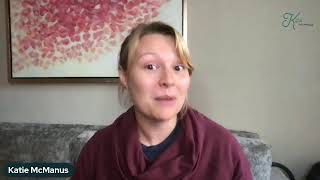
Katie McManus walks through four ways to push past fear and self-doubt: treat your anxious inner voice with compassion, reconnect with why you want something, imagine the worst case to shrink it down, and expose yourself to the thing that scares you until your nervous system stops freaking out.
Chapters
Foreign. Hello, I'm Katie McManus, business strategist and leadership coach. Happy Saturday, everyone. This is day 17 of me going live every day of September. I'm so excited to be talking about this topic. How to get over those fearful voices that go off in your head and, you know, shout the alarm over pretty much nothing. And even if they don't feel like nothing, I'm going to show you how you can, like, reveal them to be nothing. I'm going live to the Facebook pages, to LinkedIn, to YouTube, and to Twitter. I love this to be interactive. So if you would like to say hi as you come in, please do. And good. Good afternoon, good evening, good morning, wherever you are. Hi, Asher, welcome. Hi. Just heads up. I didn't plan timing right for this. I was like, oh, great. Time to go live. And then as I was going live, I realized it's past the time for dinner for the dogs, and I have two of them in my care right now. So I apologize in advance for any noises that have from the back. They're just waking up from their naps. Another housekeeping thing is sometimes I don't get to see all of the comments that come through from all the places. It's just the streamyard thing. But this is the best platform for. For streaming, so we're not going anywhere else. But if you're commenting, I swear to God, I am not mad at you. It's just I'm not seeing your comment if I'm not calling you out anyway. So I want to talk about something that we all deal with is when we're all being weenies. It's. It's my tagline, stop being a weenie and start your business already. And I'm a big, huge, massive believer that anything you want can be accomplished with just a little bit of bravery. Okay, so we're going to talk about how do you deal with that fear that holds you back from going for exactly what you. You want in Seattle today? Amazing. Asher. Okay. And Salim, I hope I'm pronouncing your name correctly. Hello, good afternoon, wherever you are. So I have four points I want to get through today. So the first thing I want you to remember about your fear, this is a survival mechanism. Okay? Our ancestors, when they walked out of the cave in the morning, they had to scan the horizon for tigers and lions and bears because they wanted to not get eaten. They had to look for danger before anything else. Okay? If they didn't, they were far more likely to die a terrible death and not be able to Procreate and pass their genetics on. Okay. So they could walk out of the, out of the cave and say, oh, beautiful flowers, and die. Or they could walk out of the cave and say, oh, cool. There I see tiger tracks. I think there's a hungry tiger around. I'm just going to stay inside today. Okay. So it is something that has been passed down because it is a useful survival mechanism. Now for most of us in the world, our society, the world, how we live our lives has evolved past that. Okay. We're no longer at the point where we have to worry about pressure, predators when we walk out the door in the morning, which I'm so grateful for. The only problem with this. Oh. Is that our, our brains have not evolved with society. Our brains have not evolved past the point of. I need to watch for all the possible dangers that could be around every corner. Which means, Asher, you stay inside and make a spear. Yeah, exactly. Which means that we see danger in a lot of different places. We see danger when we get an email with a scary subject line suggesting that someone important wants to talk to us. We see danger in, like, how many times have you, like, double checked that your doors were locked in your house at night because you saw a creepy thing on tv, maybe Criminal Minds or ncis, and you're like, oh, my God, something bad is going to happen. How many times have you been in a difficult conversation at work and your brain starts playing out the sequence of events of, oh, my God, like, this is going to result in me getting fired, and then I'm not going to have any money, and then I'm not going to be able to pay my rent or my mortgage, and then I'm not going to be able to pay my car payments. I'm going to lose my home, I'm going to lose my car. All my friends are not going to want to hang out with me anymore because I'm poor and I'm a loser, and I'm just gonna be destitute on the streets, like, trying to make it. And all of you know, all of my dependents are going to be there with me, just looking up to me, disappointed that I can't help them. Like, how quickly does that. Our brains go there? All right, so I want, for the very first stop. Oh, hey, Gabriel. Good evening. The very first stop I want us to. To go to when we're in this mindset of, oh, my gosh, there's something that I'm afraid of that is keeping me from taking action to get what I want is compassion It's. It's compassion for that fearful side of ourselves. All right? That fearful side of ourselves has to do a lot of work to keep us. To. To keep us safe in its own mind, okay? That fearful side of us is trying to protect us from getting kicked out of our tribe. It's trying to make sure that we don't piss people off and have them reject us. It's trying to make sure. Oh, Hank. It's okay. It's okay. It's trying to make sure that a whole slew of bad things doesn't happen to us. And. Hi, Jason. From a hotel bar and Arusha below Kilimanjaro. Oh, my gosh. From the continent of Africa after back to back summits. Well, I'm glad you made it. Hopefully you're not too sore. Hi, Jason. Oh, my gosh. It must be late there. So we, first and foremost, we had to have severe compassion for this voice, okay? It carries around a lot of fear all the time. And it has good intentions, okay? It has good intentions. It's. One goal is to make sure that we have shelter, that we have food, that we have people around us to help us and that we have, you know, drinkable water. The thing that this voice is not concerned with is if that shelter makes us happy, if we enjoy our home, you know, as long as we have a roof over our head, that voice is pretty happy, okay? Even if you're in a one bedroom with four. With four people. Not the ideal, okay? It cares that you have food. That's it. Not vegetables, not any specifics. It's just like, do you have sustenance to keep you alive? It cares that you have people around you. It doesn't care that those relationships are good. Doesn't care that those relationships treat you with respect or have the same emotional intelligence as you or be supportive in any way, shape or form. It just is going to take the bare minimum, all those relationships, okay? And water, I mean, I think water is pretty basic. But anyway, so we get to have compassion for this voice. We also get to say, hey, listen. And in coaching, we call this voice the saboteur, Right? We had to say that. Our saboteur is like, okay, cool. You're afraid of all these things. And I. I get that. I guess that's your job. And also, I don't have to listen to everything that you're afraid of, okay? Because a lot of the things that you're afraid of are ludicrous, okay? But I have compassion for you because this is your job. And you're doing a beautiful job coming up with things for me to be afraid of. Good. Like kudos, pat on the back. Okay. But we also don't have to listen to this. It's like we want to take this voice that is in the front seat giving us directions and we want to put them in the back seat of the car and we want to give them like a paper or maybe a tablet so that they can be kind of distracted and focus on other things because they're not great navigators for where we want to go. Okay. So that is the number one is you have to have compassion for that voice of fear for that weenie voice. Number two is really important to connect to why you want to do this scary thing, what's significant about it? What is it going to get you on the other side when you do this? What's that going to do to your life? What's it going to do for your relationships? What's it going to do for your relationship to yourself? How much more respect are you going to have for yourself once you've done this? What do you imagine your life is going to be like on the other side and what's important about that to you? It's critical that we stay in touch with our why. I know that's like a completely overdone statement, but it's overdone for a reason. Okay. We, if we're just working and working and working and don't feel like we're working towards anything, it doesn't really feel great. It just feels like you're on a hamster wheel. And when you're on a hamster wheel and you're like, what you're doing doesn't matter. Why would you do anything scary? Why would you do anything that's outside of your comfort zone? It's not happening. Okay? So you have to connect with what your why is. Number three is one of my favorites is you have to like play out the worst case scenario, like order or sequence of events. This is actually something that I got from both my therapist at one point and Tim Ferriss. He does this in the four, four week, four hour work week. Oh, hi, Luna. Anyway, I want you to literally imagine like what's the thing that you're afraid of? You know? So if you're the thing you're afraid of is like you're afraid of losing your job. Great. Imagine you've lost your job. What next? You have to figure out rent. Great. And even if you can't figure out rent, imagine you lose the place that you live. Imagine what happens then. Like what friends are you calling to ask for whose couch you can crash on? You know, what resources are you reaching out to to try to find that next role? You know, maybe, maybe we're really going worst case scenario. Maybe you have crashed and burned your career and no one in that industry is ever going to touch you again. Cool. What else can you do for money? Can you wait tables? Can you bus tables? Can you, you know, fill tanks at the gas station? Who cares? Figure it out. We are, we are all naturally creative, resourceful and whole. If we are naturally creative, imagine the solutions. We can come up for things if we are naturally resourceful. Like imagine, imagine you needed to. Imagine you needed to gather a thousand books to donate to a library. I want you to imagine how many people and resources you actually have. Wherever you are in the world, whatever your situation is, imagine all the resources that you could reach out to at this moment to call up and say, hey, I have this goal. I need to gather a thousand books to donate to a library. How can you help me? I bet my life that every single person who is watching this live would be able to gather a thousand books in a week or less. Okay? We're that resourceful. And that's, and that's even just someone doing it part time being kind of lazy. I think you could do it faster too. Okay? In your hole. You're not broken. You don't need fixing. There's nothing spectacularly, uniquely fucked up about you that makes you unable to do this. You've got this already, okay? You're fine, you're fully baked. Well, hopefully you're not like baked, but you're fully baked. You're fine, you're as good as you're gonna get. And that is just enough for you to go and get whatever you want. We have to be solutions focused. Everyone can complain and it has no value. Yeah, absolutely. You know, there's this woman that I kind of stopped being friends with and not, not in a mean way, but like, you know, I didn't go out of my way to hang out with her more because she was always complaining about being broke. She's always complaining about not having enough money. And she'd complain about this while she was spending way too much on dinner, you know, while she was buying things that she didn't need, you know, and it's like, didn't really want to be around that kind of energy because, you know, if you're watching, you're probably familiar with my money history, right? Having a Solid, healthy relationship with money is. Is critical to me and the people I surround myself with. You know, she's not really open to hearing it, but she's creating her own brokenness all the time. All the time. She's so creative and resourceful and whole that she's manifesting this broke life where she's constantly stressed out about money and she's. She's magnificently powerful. And also, I prefer to be around people who are powerful in the other direction. You know, more generative than lacking. So play out your worst case scenario. I guarantee you, if you play this out, even if you, like, imagine you lose everything you have right now. I guarantee you'd be able to make it back. I guarantee you'd be able to make a life that is good and fulfilling and wealthy and whatever you wanted, so long as you just put in the work and showed up and were willing to do some scary things. Okay, so that's. Number three is play out your worst case scenario. Number four is kind of some tough love, people. At a certain point, you just have to go and do the scary thing to show your nervous system that you can do it and you won't die. Your nervous system, when you're doing something that is really scary, it is going to go haywire thinking this is a life or death kind of situation. Life or death kind of situation. And it's going to continue throwing that up for you until you go and do it and it turns out to be a life situation. Oh, we survived that. That wasn't so bad. You want to do it again? Okay, like, let's. Could still be life or death. Like, let's, let's still have the alert system up because death may still be an option, right? And then you go and do it again and the system is like, huh, that's so weird. You know, in our systems we've been. We've been predicting this would result in death, and this is actually resulting in life. And in some cases, like, really good improvements to life. Interesting, right? Yes. Immersion therapy. Exactly. Asher. I'm just acting it out because I'm bored on a Saturday. So you have to do it. You have to just show yourself that you're not going to die. I had to do this with public speaking, guys. I had to do this with public speaking. I used to be so bad at public speaking. I had to read a letter at a literary lunch in college. And it was a lunch. I think there were like 200 people there. And one of the authors couldn't make it. And one of my One of my professors, Volun, told me, like volunteered me, but I didn't really have a choice to read their letter in their absence. And I. I said no. And he completely ignored me. And I ended up on stage behind a podium. And I was so bad. It was so bad. Let me. Let me just tell you how bad I was. I was so bad that afterwards people came up to me to apologize to me for how bad I was at reading a goddamn letter in front of them. They apologized to me. It was so bad. They wanted to apologize to me for how bad I was. I left there sobbing hysterically, crying. I never spoke to that professor again. Professor Yochan, never spoke to him again. He had lent me some books. I wasn't in any of his classes, but he had lent me some books. And that night at 2am I drove to his house and I had them in a little plastic shopping bag and I left them on his doorstep. And I never spoke to that man again. That is how bad I was at public speaking, okay? Until I did immersion therapy, until I got myself up there. I got in Toastmasters, I started training myself, I went to own the room. I signed up for every public speaking training and bought every book I could possibly get my hands on. And I just start kept doing it and kept doing it and kept doing it and showing my nervous system that it wasn't life or death. And you know, I'm talking publicly here. I tell me I'm very comfortable here. I actually have a lot of fun doing this now. This is the one of the least scary things that I can imagine doing in my business. And you can tell me if I've improved. I don't know, maybe. Maybe I'm still pretty bad, but who knows? But it's no longer that life or death. Fear no longer drives this part of my life, okay? Fear has nothing to do with me speaking publicly. Whatever it is that you're afraid of doing, if you're not doing it, you're letting fear determine your life. Like you not doing something because you're afraid of doing it. It's bigger than that little choice. It's far bigger. It actually indicates that fear itself is running your life. If there's stuff that you are not doing because you're too afraid to do it. So I don't care what it is. It is Saturday, tomorrow, Sunday. There is some small step that you can take this weekend, I guarantee you, that will move you closer to overcoming this fear by just doing some small incremental part of it. So that's my Challenge for you is just go and do it, whatever it is. And oh, sorry, the dogs are distracting. And show yourself that you're not going to die. Show yourself that your alarm system is just a little over touchy and it's a little dramatic and you're going to be fine. Okay? Oh, and thanks, Asha. I appreciate that and I'm so glad you love the conversation. Oh, and you did it with heights. Yeah, yeah. Heights is one that I still haven't really tackled. It's one of my next ones. Although I don't really have a lot of situations where heights are a thing for me, so I don't know, it's probably not. It's not a thing that like, is holding me up in any area of my life. So it's probably not that necessary. By the way, fear. I'm talking about fear that is getting in the way of your dreams. General fears, like if you're very to spiders. I really don't care about you getting over that unless you have a deep seated desire to become a spider specialist. Okay. You're allowed to stay afraid of spiders. Okay? That's not what I'm talking about here. Okay? If you're afraid of heights, unless you want to be a rock climber, unless you want to do something that involves a lot of heights, you're allowed to stay afraid of heights. It's not a big, big deal. Oh, yeah, you were in carpentry, so there are some heights involved in carpentry, so. But you got this. I just want to remind you, you've got this. You. You are creative and resourceful and whole and you don't have to be fixed. And you have all the resources that you need right here, right now at your fingertips. And you are massively creative. You can think of of solutions to problems that haven't even become problems yet. Okay. I know you can because you have so far. With that, I'm going to release you back to your Saturday. I gotta feed these doggos before they start chewing stuff. And let me just say thank you to Asher and Jason and Gabriel and Saleem and I again, I hope I'm pronouncing your name correctly. And everyone else who has tuned in and not commented, or at least whose comments I haven't seen. Thank you for joining me this Saturday. Like I said, I'm going live every day in September. So tomorrow I will be going live the next three days. You'll hopefully see me a little more absent from social media because I am working on my book. I have been working on this book for like a year and a half and there's no book yet. So obviously I needed to carve out some time to actually devote to it. So I will be working on that and hopefully not procrastinating too much on social media. So if you see me on social media, kick me off or yell at me or smack my hand virtually, I will appreciate it. Otherwise, I can't wait to see you all live tomorrow and have an amazing weekend, everyone. Bye.
More from Katie





How to do self care right now, so you can do what needs to be done, for yourself, your business, and

How to do self care right now, so you can do what needs to be done, for yourself, your business, and

#greenscreen How to build a consulting business that makes you $200,000-$700,000 a year

#greenscreen How to build a consulting business that makes you $200,000-$700,000 a year

Maybe we’re not the imposters…? #businesscoach #startup #entrepreneur #smallbusiness #consulting

Maybe we’re not the imposters…? #businesscoach #startup #entrepreneur #smallbusiness #consulting
