In this instructional video, sports nutrition coach Kelsey challenges the common belief that athletes can't gain weight because they have a "fast metabolism." She argues that the real issue is insufficient calorie intake and provides a concrete, step‑by‑step system for athletes to increase body mass. The system begins with calculating a daily protein target (weight in kg × 1.8 or weight in lbs × 0.8), then establishing a baseline by weighing oneself for seven days without changing eating habits. If weight does not increase, the athlete adds a 500‑calorie “muscle meal” – either a low‑protein carb/fat meal (e.g., oatmeal with peanut butter and banana) if protein needs are already met, or a 500‑calorie protein shake (milk, banana, peanut butter, oats, protein powder) if protein is still low. Kelsey then outlines a plate‑balance framework: half the plate should be healthy carbohydrates, a smaller portion healthy fats, a protein portion, and one cup each of fruit and vegetables for micronutrients. She reinforces the importance of consistency, using a case study of Ben, a 6'2", 155‑lb college pitcher who gained 15 lb in 12 weeks after adhering to the system and staying consistent. The video concludes with a promotional call‑to‑action inviting viewers to join Kelsey's coaching program for personalized meal plans.
Chapters
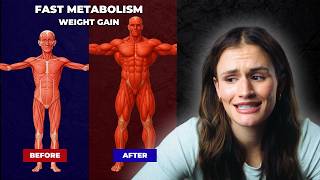
Athletes, you can't gain weight because you have a fast metabolism, right? Wrong. The reason why you guys can't gain weight is not necessarily your metabolism, but a very different problem you're dealing with. So in the next few minutes, I'm going to be giving you the formula that you need to follow to gain weight, even if you feel like, or if everyone in your whole entire life has told you that your metabolism is too fast or broken. I'm Kelsey. I'm a sports nutrition coach, and one of the hundreds of athletes that have gone through my coaching group was going into his junior year of college. Ben was a great baseball player. His entire life he wanted to play college baseball. Baseball. So he did it. He was there. He was living his dream. But the issue he ran into is he wasn't necessarily playing in college. He was kind of sitting the bench in college. Ben was a pitcher. He was 6'2" and 155 pounds, and his coaches kept telling him, if you want playing time, if you want to see the field, we gotta have you put on weight. Mass equals gas. It's really important for pitchers. You've got to put on the weight. And Ben was trying everything he could to put on weight. He was trying mass gainer and creatine and new bodybuilding programs and trying to meal prep and in and pounding protein and doing like anything and everything that he possibly could. He felt like he was doing everything right, but the scale wouldn't budge. He wasn't seeing any progress, and naturally you get pretty frustrated. So at the end of the year, going into the offseason, he came to the conclusion that his metabolism was just too fast, that nothing else would work for him, that his metabolism was broken, and that his body just must be different. And then we met, and then we started working together. Within 12 weeks of him dedicating himself to the nutrition systems that I was teaching him— he was still doing the same training, was still doing the same practices, his Activity level remained the same, but the one thing that changed were the nutrition systems that he was following. He put on 15 pounds in that 12 weeks. All of his lifts in the gym went up. His performance was improving. His coaches were taking notice, and he was feeling confident going into his next season of college baseball. And he learned that his metabolism wasn't actually broken. Metabolism is kind of this buzzword that people throw around, and I hear older adults say, "My metabolism is broken and it's so slow," and younger people say, "It's too fast and it's broken that way." Your body doesn't have a switch inside of it that just says, "Mm-mm." Fast metabolism, mm, slow metabolism. I want you to think of your body kind of like a car engine. A car driving to run errands every so often throughout the week maybe needs to fill up once every other week. But a race car driving 200 miles an hour around the track, lap after lap after lap, needs to refuel fast and it needs to refuel often. Athletes, you are this race car. You need a lot more fuel than the average person does because your engine is running a lot more and a lot faster than other people's. The only way that you guys can put on weight is by consuming more fuel Then you're burning. So I hate to break it to you, but if you think your metabolism is too fast or if it's broken, it really isn't. You're just not eating enough food. And I know you're probably thinking to yourself right now, but Kelsey, like, you don't understand, I'm eating so much food. I get it, you are eating a lot of food, but if you're trying to put on weight, you're not eating enough. So here's the formula that Ben and I implemented to help him gain weight, and you can start doing it today. Okay, step number 1: protein. You gotta have the right amount of protein. You don't want too much, but you don't want too little. Take your weight in kilograms. And multiply it by 1.8. If you're doing it in pounds, then multiply it by 0.8. This is how much protein you need to be eating every single day. So pull out your calculator and do it with me. If I weigh 150 lbs, I'm going to multiply it by 0.8. That means I need roughly 120g of protein every single day in order for me to put on muscle mass. If I was 67 kilos, I would multiply it by 1.8. Same thing, 120g of protein per day. Now that you got your protein dialed in, fantastic. Step number 2 is tomorrow morning I need you to get on the scale and write down your weight. Don't change the way you're eating for one week. Eat the same things that you've been eating, the same amounts of the same things. And then 7 days later, get back on the scale in the morning and see if your weight had changed. If it does not change and you are trying to put on weight, that just means you are not eating enough. So if that's you, the next step would be to add in a muscle meal. With the athletes in my program, their personalized meal plans will often include a muscle meal. Oftentimes, breakfast, lunch, and dinner and a few snacks is not enough to get you the fuel that you need to put on weight. So typically we have a muscle meal at the end of the day to allow us to get the extra food that need to put on the weight that we want to put on. There's typically two types of muscle meals that I would prescribe to an athlete in my program. The first muscle meal is when they've already hit their protein for the day. This meal needs to be 500 calories, and you want it to consist of fats and carbs and be low protein because you've already hit your protein for the day. An example of this could be oatmeal with a little bit of peanut butter and some banana on top. The second muscle meal would be if you have not hit your protein allotment for the day. If you need to hit 120 grams of protein but you've only hit 90 for the day, this would be a perfect solution. This is going to be a 500-calorie protein shake. One cup milk, a banana, a tablespoon of peanut butter, a fourth of a cup of oats, and then some protein powder in that protein shake. This will also be 500 calories. Both muscle meals are 500 calories. It just depends— do I have enough protein or do I need more protein for the day? You got your protein dialed in. If it's been 7 days and you haven't gained any weight, now you're going to implement the muscle meal. And step number 3 is going to be we need to make sure that everything is balanced on your plate. You guys need to make sure that you're getting all the pieces of the puzzle. This is protein, this is carbs, this is fats, and fruits and vegetables. Every single one of these categories does something different in your body. Carbs are the gas in your tank. Your muscles have little energy tanks in them. If they are empty, you're gonna hit a wall. If they're full, you're gonna play like a freaking beast. It's simple as that. Fats— fats give you healthy hormones. Fats do not make you fat. Please remember that. Fats do not make you fat. Fats give you healthy hormones. They help your body function properly. They're very, very important. Protein— protein builds and repairs. You cannot build muscle without protein, and we've already talked about that. Fruits and vegetables— these have little micronutrients in them called vitamins and minerals. This is going to help you from getting sick. This is going to help keep your bones strong, and this is overall just going to help you keep a healthy body. You cannot overlook any pieces of this puzzle. In an ideal world, you're going to have the perfect percentages of fats and carbs and protein and everything like that. I get it, it's overwhelming, it's confusing, it's hard to do on your own. So here's what you can do to get started. Make sure you're hitting your protein goal. If you need to weigh it out on a scale, weigh it out on a scale. The protein goal needs to be hit. I would say for breakfast, lunch, and dinner, you want half of your plate to be full of healthy carbohydrates. This could be brown rice, potatoes, sweet potatoes, quinoa, whole wheat pasta. You want healthy carbohydrates on half of your plate, especially if you're training multiple times a day. A smaller portion of your plate, you want healthy fats. This could be cooking your meat in olive oil. This could be adding avocado to your plate. This could be having some almonds or peanuts on your plate. Some type of healthy fat is really important to focus on. So you have your protein, you have your carbs, you have your fat, and now we just want to focus on adding two colors to the plate. I would recommend one fruit and one vegetable. You can choose which one you want. I would just say a cup of each. I get it, guys, it's confusing. This is a lot. It's overwhelming sometimes. That's literally why I created our coaching group for teenage athletes. I just do it for them and I tell them exactly what they need to be eating for their body, for their sport, for their goals, etc. So you've got your protein, you've got your muscle meal, and you know how to balance your plates out. So remember, Ben gained 15 pounds in 12 weeks. But what I did not tell you is that Ben and I worked together for 6 months. The first 12 weeks, he gained about 3 or 4 pounds, not very much. The second 12 weeks, he gained 15 pounds. The first 12 weeks, he didn't take it as serious. He was busy. He wasn't really committed to it. Therefore, he was not consistent to it. Halftime of the program, we had a little bit of a chat and we said, do you actually want to do this? Do you actually want to gain the weight? And he said, yes, I'm all in. I'm committed. And he committed himself to the systems. The systems didn't change from the first 12 weeks to the second 12 weeks. His attitude and his consistency did. So the second 12 weeks, he followed the exact same systems that we talked about in the first 12 weeks, but he gained the 15 pounds because he was consistent. Which means if he didn't do super well one day, he was not going to let that turn into two days. He was going to get back on the horse that second day. He was going to meal prep his food. He was going to be consistent. He was going to follow the rules that we were giving him, and it paid off. I promise your metabolism is not too fast. Do not put that limit on yourself. It is possible. I promise you that it is. This is not just like my woo-woo knowledge and saying like, no, this is fine, you need to do— no, this is science. So if you're sitting there feeling a little overwhelmed, feeling like this is a lot to kind of apply and do, maybe you don't have time for trial and error, maybe you don't want to be guessing Come join my group. That's why we have it. We've, we've done this for hundreds of athletes before. We're gonna give you a personalized meal plan. We're gonna show you how to use it. It's gonna help you gain weight, and ultimately it's gonna help you play better. Click the link in the description to join.