In this persuasive presentation, Kevin Law outlines the detrimental effects of excessive social media use, explains the psychological mechanisms that make platforms addictive, and offers concrete strategies and resources to help individuals curb their usage. He begins by highlighting four major problems: distracted walking leading to increased pedestrian deaths, erosion of real‑life relationships, impaired sleep quality due to blue‑light exposure, and heightened risk of anxiety and depression. Each claim is supported with recent news and research citations (e.g., CNN, BBC, CDC, U.S. News). Law then examines why social media is so compelling, focusing on dopamine‑driven reward loops, social comparison that fuels envy and insecurity, and the fear of missing out (FOMO). He cites MIT, Addiction Center, and other sources to illustrate these mechanisms. Finally, he provides four actionable tips—turning off notifications, using productivity‑blocking apps like Freedom, seeking accountability partners, and accessing professional counseling (e.g., Restart treatment center, Pasadena City College counseling). The speech concludes with an encouraging quote urging conscious choice over mindless scrolling.
Chapters
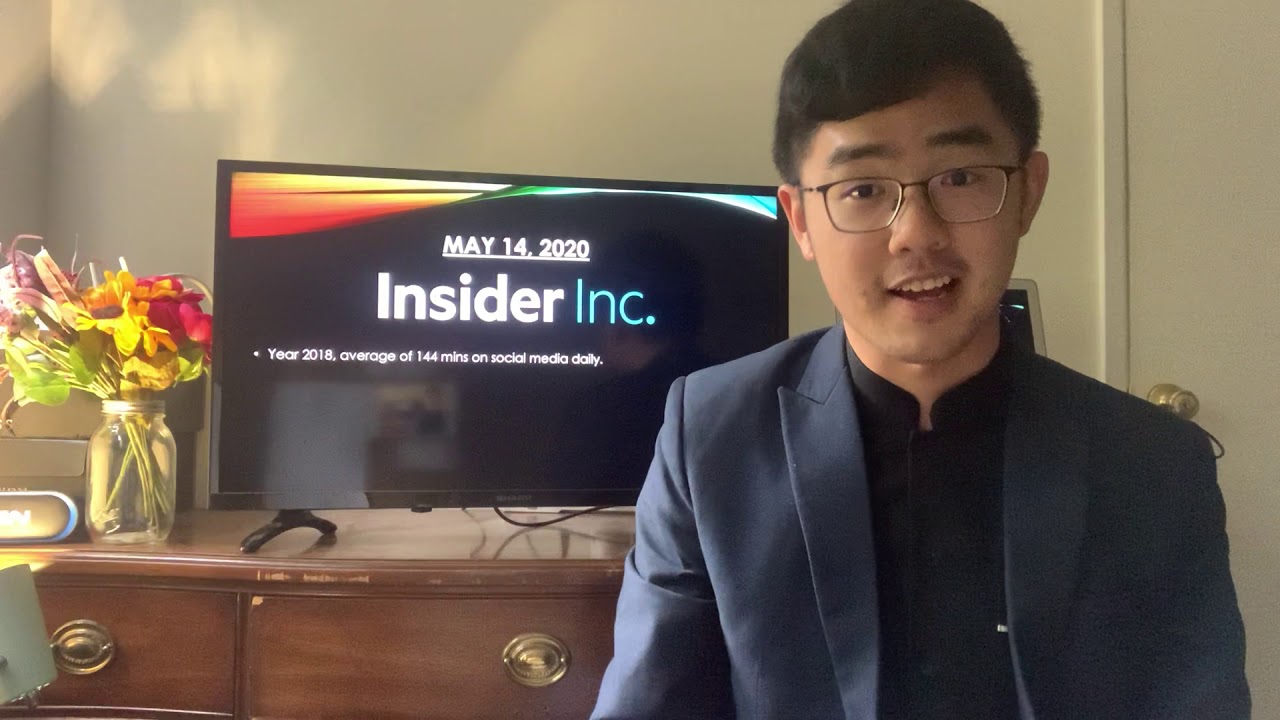
10 years ago, nobody would think that social media can be so appealing. And how appealing is that? Look at this picture. Somebody can choose phone over sex. Wow, if this is the case, we definitely should stop social media. But look at the fact that according to The Guardian on March 19th, 2019, Facebook has more than 3 billion users. which is impossible to stop. So instead of banning social media, we should make good use of it to improve our life. Today we'll take a closer look on the problems of social media, how people are affected, and lastly, what are some of the resources that can help us stay away from it. Social media has infiltrated many aspects of our life, both in positive and negative way. And today I'll focus on the negative sides of social media. The first problem, which is distracted walking, has become the major road safety issue because of social media. CNN News on February 3rd, 2020 said that the death rate of pedestrians has increased because people pay attention to their phone while walking on the streets. Governors Highway Safety Association on February 28th, 2019 said that in year 2018, there are 6,227 deaths, which is the highest for nearly 3 decades. The second problem is that overuse of social media can erode our real-life relationship. BBC News on January 4th, 2018 reported that there's a research that tests 34 pairs of strangers talking to each other for about 10 minutes privately, and half of them have phones in their eyesight. The result was out showing that those who have phones in their eyesight showed less meaningful conversations and felt less close to their partner. The third problem is that overuse of social media can affect our sleep quality, and for people who suffer from it for a long time are prone to major chronic diseases. This is the news published by CDC on April 15th, 2020. On January 4th, 2018, BBC News said that the blue light which is emitted by our cell phone can restrict our body's production of hormone melatonin, which can worsen our sleep quality. The last problem is that overuse of social media can affect our mental health negatively. According to U.S. News and World Report on September 12th, 2019, people who use social media a day for more than 3 hours, they are prone to mental illness such as anxiety and depression. Social media is like a Pandora's box, which is prosperous on the surface, but there are many hidden implications that can ruin our life. Now let's take a look why Social media are so powerful. The first cause is that social media plays with our dopamine systems. Dopamine, the functions of that is mostly related to our behaviors. Addiction Standard on April 29th, 2020 said that when someone experiences something rewarding, their dopamine level rises. According to MIT News on April 1st, 2020, When the dopamine rises, it is suggested that there is a longer response to the reward, which means reinforcing people to do something rewarding over and over again. And for people who receive likes and positive comments from social media, their dopamine release drives them to keep using social media. The second cause is that social media reinforces our dark side of nature. According to US News and World Report on February 10th, 2020, people who spend more time on Facebook are prone to negative states such as envy and insecurity because they frequently check, compare themselves to other people. There might be a wrong assumption for them is that they think people are more happier and more successful because they have more likes and and positive comments. The third cause is that social media reinforces FOMO, stands for fear of missing out, which is one of the— one of another social anxiety. Addiction Center on April 29th, 2020 said that this is an extreme fear of being left out by other people. And for example, if you are being left out by your friends And you see it on Facebook. That's when FOMO kicks in. It stimulates your self-esteem and forces you to keep using social media so that you are not being left out again. Insider on May 14th, 2020 gave a statistic that people who have internet access use social media a day for an average of 144 minutes. Research indicates that limiting the use of social media for up to 30 minutes a day is optimal for health. So today I'm going to give you 4 tips that can help you decrease the time on social media. The first tip is to turn off the notifications. Insider on May 14th, 2020 said that when you don't see the icons when you pick up the phones, you're less likely to go there. Also, if you turn off the notifications, you become the one to control yourself instead of being bombarded and pulled by the internet. The second tip is to download productivity apps. Harvard Business Review on October 18th, 2018 recommended an app called Freedom. Some people might think this is impossible for you to block yourself. By just an app, but the good thing is this app people can use it. Your friends or your family can use it to block you by setting password without letting you know. The third tip is not to do this alone. Neha Chaudhary, a psychiatrist at Harvard whose works have appeared in New York Times, she said on the news from Insider on May 14, 2020. Breaking habit. Doing this alone is very difficult. It is suggested to find someone to do this together or tell your family so that they can check in with you regularly, because accountability plays a very big part in changing yourself. The last tip, if you still have trouble controlling yourself based on the 3 previous tips, don't be afraid to look for professional counseling service. According to the Washington Post on April 25th, On April 25th, 2018, there's a re— there's a treatment center called Restart located in Seattle which specializes in social media addictions. Alternatively, if you— Pasadena City College has offered free counseling service. You just have to call them at 626-585-7273 or email them at personalcounseling@pasadena.edu. Today we talked about 4 problems of social media, 3 causes behind it, and I provided you 4 tips to decrease your time on social media. At last, I want to share with you a quote from New York Times on February 23rd, 2019 as an encouragement. You are the one who pays attention to your life. If you want to spend a day on social media or Twitter, it is your business, but it should be a conscious choice. Thank you.