Happy Life Labs: Farm Boy to $1M+ Wellness Empire
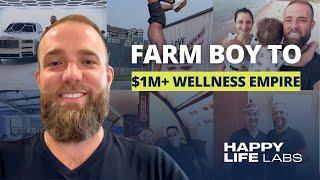
In this Executive Strategy Group podcast, host Kevin McCann interviews Brett Harmeling, founder and CEO of Happy Life Labs. Brett recounts his journey from a Dutch farm boy and former professional athlete who suffered a career‑ending brain injury, to a self‑taught wellness innovator who healed using red‑light therapy, adaptogenic herbs, and other natural protocols. He distinguishes "bio‑optimization" from the more sensational "bio‑hacking" by emphasizing clean, science‑based technologies that restore natural frequencies in the body. Brett explains how Happy Life Labs evaluates thousands of wellness products, battle‑tests them on elite athletes, and curates a vetted portfolio of roughly 70 high‑performing tools—including red‑light devices, infrared saunas, hyperbaric chambers, quantum‑energy wearables, and nutrition guidelines (e.g., avoiding seed oils). The conversation covers the company’s exclusive client model (limited to ten high‑net‑worth individuals per year, with notable clients like F1 champion Max Verstappen), the revenue mix of subscriptions, commissions, and consulting, and the ethical stance of avoiding paid advertising and only partnering with long‑term, mission‑aligned brands. Brett also highlights his involvement with the veteran‑focused nonprofit Hives for Heroes, his role in the GoBundance network, and his 500‑hour yoga teaching background, linking movement, breathwork, and mindset to performance. He shares his perspective on quantum‑energy concepts, the Hawkins consciousness scale, and the future of health tech—AI‑driven personalized medicine, wearable data, and the pursuit of extending healthspan to 200 years. The interview concludes with advice that personal growth is the foundation of any successful business and a call to align work with one’s deepest purpose.
Chapters
All right, so here we go. So welcome to Executive Strategy Group podcast. I'm Kevin McCann, and today we're thrilled to have Brett Harmeling, founder of Happy Life Labs, to join us. Brett's unique journey from professional athlete to wellness innovator has led him to build a company that helps elite individuals achieve peak performance through bio optimization. He'll tell us all about that in a minute. So get ready for an insightful conversation on growth, mindset, and the future of wellness. Well, welcome, Brett, to our first podcast for Executive Strategy Group.
Thanks for having me, Kevin. Grateful to be here and hopeful that anybody that's listening today will get a little piece of gold that they can take forward and make the most of.
Absolutely, I'm sure they will. So first question just to kind of like make it relaxing, is tell us a little bit about your journey, how you started in your career. I know you've got professional sports in the background. There's what led to your current role as CEO of Happy Life Labs? A little backstory.
Yeah. So I grew up in a small Dutch village on a farm, and I realized, like, pretty early on that I didn't want to trade time for money. I knew that as the world advanced that there's going to be a lot of ways to make a million bucks and to create a lot of value in the world other than sacrificing your time. And so I took a different path. And that entrepreneurial journey led me to moving to Chicago after a pretty. I got my degree in education. And so my first year out of out of school, I taught in a Title 1 school district. And I became a lot of people's dads, to say the least. You know, during the week. So. So it became overwhelming, exhausting, and I was the one. Then I found myself trading time, time for money again. And it was, you know, a pretty low paying job, 36 grand or whatever a year to be a teacher.
Yeah.
And so then I pivoted to Chicago, tapped into an IT role as like IT sales, technology, consulting sort of role, and then real estate. And that's where I kind of set myself free. That was why where I started winning financially pretty early on in my life. And so I started, I, I share all that because I literally got, I like just through pure resilience and passion and grit and doing whatever it took, I pulled myself out of this small village into like one of the most major cities and just, just taking risks and identifying key relationships that could get me there were some of the most important things that I could ever recommend Doing which is getting around the right people if you want to. You know, interactions lead to transactions, quite
frankly, exactly like your network is your net worth. I've heard said.
Yeah, I totally believe that as well. You know, you're just one conversation away from changing the future of your business. And so I'm really hopeful today, Kevin, that we can unpack some of what that means and just, you know, as my journey ended in Chicago, I took an opportunity in Houston and moved down here kind of blindly. And here we are. I've been here since 2012 and I founded Happy Life Labs to curate and bring the world's best wellness optimization tools and technologies into one place. And then we bring those products into different people's and places lives. So like four seasons, all the way up the ladder to, you know, Formula one racing. So.
Yeah. Yeah. Awesome. So. So when we, we talked last week, you mentioned a little bit about former hockey player, like borderline pro, ready to go pro, and then had a bit of a injury which you, you, you may want to share, but that led you down this natural healing path. Tell me a little bit about that. Like how did that influence where I. I gotta believe that has something to do with where you are today, now.
Yeah, so I probably, you know, growing up playing like super competitive sports and whatnot, any level, by the way, you don't have to like to be pro to have a brain injury, for instance. And so usually actually in the smaller leagues and things like that is where the injuries happen because you're not quite strong enough. You don't have like the, you know, you're taking big risks even though they feel small. As you get older and wiser, you take less risks, but you have more, you know, mental acuity to make better decisions. And so when you're younger, you're actually more vulnerable. So long story short, I cracked the back of my skull open. It was like career ending kind of injury sort of thing. And you know, I'd knock my front teeth out four times. So like I was a pretty aggressive skater and, and also just a number, I played a number of different sports like, you know, soccer, basketball, Go. And then anyway, this all led me to start playing golf because I couldn't play competitive sports anymore, really at the level that I needed to, to become pro. And so anyway, all that to be said, they put me on this kind of dangerous concoction of SSRIs, Adderall, different things to help my brain function normally.
Yeah, yeah, yeah.
I use parentheses because it's, that's kind of what Our system is hopeful for, unfortunately. And it's not a, it's not a broken system, it's a rigged system. They literally the, you know, the, the month they see a kid and, and they're like, man, the sooner, and I know it sounds morbid to say, but the sooner that kid can either have injury, whether it's through vaccine or sports or whatever, that's a, that's the highest ticket price item is, is treating sick kids. And so because you, once you're in the system, it's hard to get out, right? You rely on those drugs. Anyway, I broke the system. I said, I'm not doing that anymore. I found, started using red light therapy. I started using a different blend of adaptogenic herbs and mushrooms to really help with neurogenesis and helping heal my brain from a, like a true cellular level. And I did it. And so here we are. Here we are. I was able to like, not only heal parts of my brain, I was able to heal like my whole brain. So there's days where I'm still a little bit off, but for the most part I don't use any type of traditional pharmaceutical medication to rely, to focus or for energy or for, you know, creative thinking. It's all just natural now. So thank God.
Love it. Awesome. Well, you mentioned last week a little bit there's a distinction between bio optimization rather than biohacking. So I knew it as biohacking. I used biohacking like, okay, yeah, people do call it that, but I prefer to call it bio optimization. Can you elaborate a little bit on that distinction? May seem minor to most people, but you may have a different perspective on.
Of course, it is a minor distinction, but I like to keep dirty words out of a clean industry. And so when you're hacking something, it means like, you're kind of like, if I said I'm attack, I'm a tax hacker, you'd be like, whoa, you're like, you're committing tax fraud, basically. Well, you know, like biohacking life hacking feels dirty to me. So I, it's not that I don't like the word, I just, I'm just getting. I've never really related to it because it's like, no, I'm actually using science in its most pure form through technology. So I'm taking things that are like derived from, from science. So like specific wavelength frequency devices and I'm bringing them into my reality. Because I live in Houston, Texas, it's a concrete jungle. I don't have the opportunity to see this. The warm glow, sun Rising and setting every day. And so what I've done is I found tools that bring those experiences into my reality. So biohacking and bio optimization is just simply optimizing the things that are on you and around you and that you put inside of you to elevate your vitality and life force.
Got it, Got it. And in your journey, you've looked at like thousands. I think you even said something like 3,000 different wellness companies, products, services out there. And you kind of vetted down to like a top, we'll call it 70, I guess, or so out there that have meet your. Your, have met your rigorous vetting process. How do you, how do you, what's your pipeline look like that? Like, how do you vet or identify brands that truly are going to align with your needs, your bio optimization philosophy? And then what's the process you take them through? Do you act as a guinea pig for 100% of these? Or do you work with a network? Like, what do you do?
Yeah, I say it's battle tested. So we never work with someone without actually having the product in our own hands as well. And then we implement and integrate it into different networks with professional athletes and see how much it moves the needle. Because when you're working at the top of the game, like, people think like, oh, you must have done remarkably huge things to help, you know, Max win his first world championship. It's actually like the 2% stuff that makes the difference happen when you're working with, when you're working in the space of quantum energy, which is the field that I, that I've worked the most in, which quantum energy, for someone that's never heard that word, is just simply the energy behind matter. So if you look, if you looked at your cells under a microscope, you could immediately tell without having any scientific background that your cells are not connected. They're actually vibrating at a frequency and coexisting together, bound by the by, by the nature of our flesh. Right. And our fascial tissue. And so once you start to understand that, you have to understand that the body is influenced by frequency and resonance. And so when you start to focus on that cellular level training, you know, that goes with anything you can. So we can work with drivers, we can work with, professional athletes, we can work with. Really our number one clientele is peak performance, like entrepreneurs, like people that, like, have families, you know, have their own business, but are doing all the things like, I don't have enough time today to do all this stuff. Well, it's like implementing and integrating Energy and protecting yourself from all the energies that are robbing you from your health. Vitality is a. Is a really simple thing that you can do seamlessly. So, yeah, we've. We've added at least 3,000 companies. We have people trying to send us and products and sponsor us and do paid advertising. We don't do any of that. You know, we identify products that would be a meaningful fit for our. For our kind of niche. Niche client because we're not in the. We're not in the business to. Racing to the bottom. Right?
Yeah. Yeah.
So quite quite literally, here we are, like I'm actually sitting at Hives for Heroes headquarters where we bottle honey from all over the country and then ship it out. It's real, raw American honey, unadulterated, no additives, just literally pure honey, which is, believe it or not, a very rare thing.
And it's. And it's who. High res for honey.
Hives for Heroes.
Hides for heroes.
Hives like honey. Beehives.
Hives for her. Got it. Okay, Got it. And the heroes aspect, is there a veteran play there?
Yeah, the whole thing is a veteran 501c3 non profit. So 10% of the profit. Seeds of the honey goes back to the. Goes back to the non profit.
That's awesome. And then ship anywhere in the country.
Ship anywhere in the country.
I'll definitely be. I'll be. We. We need more honey right now, actually, so. And where, where are they located? Where, what's that? Where are all the hives?
The headquarters are in Houston, Texas.
Okay. They are there.
I actually serve on their advisory board. I met the founder, Steve, in, in B school. We did our MBA at Rice University together.
Nice.
And he's just a man on a mission. I was like, I'll be. I'm all about supporting this cause, you know, because when you work with B bees is a good example actually, because when you work with them and you put the bee suit on and you go into the hive, bees vibrate at a certain frequency. That's very therapeutic. It's kind of like one of those things you can't actually explain until you experience it. And so it's a very therapeutic healing process. Which actually saved my friend Steve's life. Right. Because as a combat Marine veteran, he was dealing with post ptsd.
Yeah, yeah.
Post traumatic stress disorder. And so. And that's also like, you feel that energy, but also like, it's amazing things. Like once you start to understand the science, like, bees are the neural network of anything above ground. Mushrooms are the neural network of anything underground. They literally, between mushrooms and bees, they connect humanity.
So out of curiosity, so from a PTSD standpoint, did he search out, like, did he find out, like, bees and their frequency is how I can solve my problem, or did he somehow just stumble upon it and said, oh, my God, I feel better walking out of the beehives?
Yeah. Someone asked him to do beekeeping. He was in a dark spot, and his. His story shared all over the Internet because it's a very beautiful and powerful story. But now the network of hives for Heroes expands almost 8,000 people across the country.
No way.
It is actually now the largest network of beekeepers in the world. So it's crazy. Yeah.
Are there other veterans? Is he attracting veterans to the. To the game, so to speak? Oh, yeah.
Yeah. Every single day, there's inbound increase. So we pair veterans to veteran beekeepers, meaning like beekeepers that have experience and they teach them how to build an apiary. You know, if you think about bees, if you take care of them and you steward them in a good way, they should almost double in size every year. Kind of look at them as capital assets, because if you can harvest the honey, you can actually create your own business model around the byproducts of bees.
Interesting.
Pretty cool.
Love it. Well, actually, so we're talking money. So my company, executive strategy group, helps companies accelerate revenue growth. So I'm just kind of curious from your perspective. Happy life Labs operates a revenue model that includes subscription fees from portfolio companies and commissions on the products that you represent or market. How do you balance these revenue streams to ensure both sustainable growth and also maintain your objectivity in your recommendations? So it's like, you know, of course, you look at the. You look at the medical industry today, it's like, can I even trust doctors anymore because they're trying to push pills on me? How do you stay away from that. That third rail?
Yeah. So I think we do a good job in bridging the gap between because, like, traditional healthcare and, like, how, you know, traditional doctors, like, take care of people is fine until they start, you know, prescribing them things that keep them in their practice. Right. Like, you really want to go root cause. So my philosophy and teachings are that nature holds all the frequencies and codes that we need to actually live the fullest life possible. Like if. If it didn't. Like, God wants to put beautiful mountains and streams and nature out there. We as humans have denatured ourselves and disconnected ourselves from nature, so we're ending up with all these problems. So to your point on how, how we kind of monetize and how we created the business success side of the story is that, you know, we sell everything from salt to saunas and hyperbaric chambers and, you know, stem cells. And so the list, there's a huge range. Right. And so each company is very specifically, is very different in terms of how you participate, in terms of like revenue and where we're actually extracting value. Because I am, I never also take on a partner that I can't create more value than we consume.
Right.
So if I'm like, if I'm like, Kevin, if it's not a one plus one equals at least three, meaning like you benefit, I benefit, and the clients benefit, then let's. We're not doing it.
No. That makes a ton of sense. So there was another stat that you dropped. I may have pulled it off your, your LinkedIn profile, but you achieved a 500 hour E R Y T yoga teaching certification and have taught over 2500 classes in 13 countries. And I just kind of like thought about that after we talked. I'm like, that's like, that's ridiculous. Like, how. So how do you leverage this deep personal experience and understanding of both your body and working with hundreds, I'd even say thousands of people at this point in, in your mind, in your business and your client engagements, like, how does this all manifest? Because we're talking like some people may think like just it gets into the woo woo space a little bit in some cases after being in the game for a while. I highly disagree. All this stuff is connected, like what you just said about bees and then mushrooms. There is a network out there. It's whether or not we're tapped into it and recognize it or not. It seems like through the yoga and all these other experiences, you're bringing the awareness to this stuff to your clients. Talk a little bit about that.
Yeah. So the yoga journey was part of movement is medicine. And so when you put the body into motion, energy in motion equals emotion. Okay, so once again, energy in motion equals the word emotion. The quality of your life is based on the quality of emotions that you're feeling most consistently. So if you're feeling good about things that are, if you're not feeling good about the way that your life's panning out or like a situation you're in, quite literally, maybe the one thing you need to do is unplug, do a digital detox, get, get into nature and, and hit reset. Because when you put the body into motion, you're Going to experience different emotions. Which is why like I found yoga to be so transformational in my self leadership journey because I got to become and know a different version of myself. And for all the entrepreneurs listening to this podcast, it's not actually the success of your business that's the sexiest part. It's who you become in the process and what you have to surrender and the fact that you didn't give up on yourself because you know, any business given a certain amount of time will succeed. Like just think about like Lamborghini, it started as a tractor company, it's now a supercar company. So you know, there's all these examples that exist and so, but the one common denominator is that the founder never gave up on themselves. Even Happy Life Labs has taken so many different forms, I bet. And now that we, you know, I used to have to beg companies to join our portfolio, pay them. I've paid companies, you know, to let me represent them in places, you know, now I get paid to speak on stages. Now I get paid a consulting fee to bring brands into major places and into professional athletes lives. And so progress is a process. The word yoga, you know, for those that don't know, just simply means to yoke. That's the root of the word, is to yoke or to connect. So my whole life, people like Brett, what's your super. I'm like, it's connecting powerful people. Like I'm the bridge, right? So when I see, because in every business that I've built, which is quite a few at this point, like my age, just because I'm, I'm just, I'm like if you, if, like if you're addicted to something, like my addiction is building businesses and connecting amazing humans to make exponential impact happen. I don't even, I don't care on the, on the industry as long as it's for, for, for, for good, for humanity, right? And so I say all that because like when, when you study and practice yoga, you literally, quite literally become the best version of yourself through depth, you know, depth and inquiry. Meaning like you get, you know, you surrender to yourself, breath work, which leads you to bringing more vitality into your body and then community and connection. You be more connected from the inside out.
Yeah, yeah.
And so, yeah, and then yoga is a very, it's a very globally, it's like a religion. It's like being Catholic, which I am also Catholic is like, it's a very accepted thing. Like people know, like it's a universal thing. You can go to yoga Anywhere and feel like, welcome.
Yeah, exactly. And then to play off Catholic Catholicism, if you don't do it, you feel guilty. How's that? That's.
Yeah. If that guilt is. If that guilt brings you closer to God, then. Then God bless, so be it.
Exactly.
Yeah.
Awesome. All right, let me shift over to F1. So working with high profile clients like F1 champion Max Verstappen, that might present some unique challenges and opportunities. You got like, guys that are at the top of their game that you're working with. How do you tailor your services for these types of demanding customers? What are some key takeaways that you may offer other business owners around serving a players, like elite athletes, High net worth clients, maybe where they feel like, gee, I'm not at their level, so maybe I'm not good enough to work with them. Like, does that ever kind of creep in and how do you. How do you handle that? Or how do you deal with that?
It did until I. It did creep in. Like the imposter, I'm a fraud syndrome. Did until I did it.
Okay. You know, like, what Showed up like, like, like right behind Jesus. I don't know if I'm good enough to talk to this guy or if this guy's even going to listen to me. Like, what? Right after that happened, you know, you.
You show up every day and you say, you. I just hit my knees and I say, God, show me how I can serve this person today. You know, they're already my client. Like, just show me the way. And like, every time, like, even when I'm teaching a yoga class, I don't really have a plan. It's literally just channeled energy flowing through me.
Yeah.
What's relevant to the energy of the room? So that I think, I think actually my yoga teacher experience globally is something that, that is really responsible for the, for the wisdom that I have in holding space for people. Because at the end of the day, Kevin, it's really you versus you. You know, like when you're already like untouchable, unmatched at the top of your game, it's your drive to becoming that next best version of yourself. Which is why like Ronaldo and Messi are the best, you know, because like, they play for great teams, but like they quite literally are. Are addicted to Kaizen, which is constant, never ending improvement. It's a Japanese principle that everyone should, you know, look up. But it's like, you know, Kaizen is like, you're committed to like no matter what level, no matter what trophy, no matter what title you have to exploring the next best version of yourself. Sometimes that looks like getting off the field, taking care of your family and family and doing humanitarian work, by the way.
Love it. So you also mentioned that with all this wellness stuff that you've been involved in over the last. I'm not sure exactly how long, but you've been part of the Maha Make America Healthy Again action committee, which takes you beyond just business. This is like, I want to do good things at scale, essentially. How do those initiatives contribute to the overall value that you're getting in your life and also the overall reputation for happy life labs and personally getting your brand out there?
Yeah, I think the movement is essential in moving the needle. Obviously, it's like a. It's like turning a cargo ship because there's so much money and power behind Big Pharma that it's just ridiculous. And like. Like, I can't even explain how hard it is because of the. It's actually dangerous. Right? Because you're. It's a transfer of power. And so I could not be more proud of, you know, Bobby Kennedy doing what he's doing because he's kind of like, risking his life, you know, death threats daily. But then if you think about it, you're like, yeah, why would I give my kid all these vaccines when in my point, from my purview, God made us perfect. And, like, I'm not worried about my kid getting, you know, a lot of these diseases, so why would I, like, basically poison a perfect kid? That's just level. Level one example. Right?
Yeah.
You know, the COVID The whole thing, like, we can go down deep rabbit holes on all this stuff, but those initiatives are important because it's, you know, like, at the end of the day. Same thing with helping with elite athletes. Like, you are responsible for taking care of your health. Like, I'm not. Unless you hire me to help you like nobody else is besides you. And so it's your. It's your job. It's your responsibility. And so the good news is it's actually really simple. At the end of the day, most of us need way less stuff. We need to get realigned with what's right for us. And if you just close your eyes and you imagine, what does that look like? It's whole, unprocessed, vibrant foods that are full of life. It's like, that easy. It's that easy. And we make it hard on ourselves. We've made it so hard on ourselves.
It's not sugar. That's not part of it. It's not booze.
Yeah. Seed oils, I think, probably, arguably the worst thing in the world for you. So just because linoleic acid, here's the fundamental teaching piece, has a shelf, a half. Shelf life of two and a half years once ingested. So highly processed seed oils will stay in your body and cause cellular inflammation for a long time, and it compounds. And so you want to stay away from seed oils because our bodies literally cannot process it. And the science is, is that nature does not make bad fats, only factories do.
Yeah, Love it. Yeah, that's a good quote. We're definitely peeling that one out. That's going to show up on LinkedIn or something. Yeah, we. I mean, personally, I've been. I've been through that whole thing. We. My, My wife and I stumbled upon E. Right, for your blood type. I had a naturopath doctor I started working with, and, you know, it was referred to me by. By someone, a good family friend of ours. I'm like, all right, I'll give him a shot. And this is like seven or eight years ago. And went over there and, you know, he gave me, like, I'd always. I'd always been healthy. I'd done, like, Ironman triathlons back in 2000. I'd done marathons. I grew up playing competitive soccer. You know, in your 40s, early 40s, starting to bleed into the 50s. Like, the wheels start to fall off occasionally. So I'm like, all right, I'm going to go get checked, see what's going on, and just put me back on, like, a simple diet that worked for me. And it's meat, it's, you know, vegetable, it's eggs, it's protein. Just like, I knew bodybuilding, right? It's like, it doesn't include sugar, it doesn't include that stuff. And within a matter of, literally, I don't know, eight days, weight just started dropping off me. And that's not why I went to it. It wasn't because I was, like, overweight or 50 or 100 pounds overweight. I just felt like crap. And when you don't put bread in your mouth and you don't put processed flour in your mouth, you don't put sugar in your mouth and you don't drink for a period of time. It's now been now I just got kind of addicted to feeling good. I just stopped drinking, like, six years ago, too. And. And I'll tell you, that's had some pretty good impacts, too, but it's just amazing. Like, people go through life just feeling like, well, this is just the way it is. Every time I eat that thing, I just know I gotta go stay close to a bathroom because stomach's gonna erupt. Like, that's just the way it is. Like, no, it's not. It doesn't have to be that way. So that was a huge eye opener for me. So thanks for sharing that. Like the seed oil thing. Even though going through this journey, I still didn't know the thing about seed oils until about a year ago. So it's just like that. Kaizen, you keep learning and hearing this stuff. It's mind blowing in a lot of cases.
Yes. No, it's. And that's the thing with AI and all these ways to measure and manage your health. Like for instance, like, I wear a whoop strap and I'm unattached to the data, but I like to know, you know. So like, for the people that are. Like some people, sometimes the data is too much. You know, There's a perfect example too. For those that are watching. This is like, it's called an ultra human. So it's a new ring, that technology that's coming to America. I know that people have heard of aura, but this is a more advanced one. And so there's all these tools that we have now to take control and take responsibility, take to really step into like making health decisions for ourselves and not relying on a doctor who knows nothing about you to tell you what to do. And so at the end of the day, it's really simple. It's my strategy. And my wife is a registered dietitian, board certified. And so she really does a remarkable job with all of our clients. At the end of the day, it's just eat real foods. Like, that's it. Eat real foods. E, R, F. Eat real foods.
Exactly. All right, so from how I'm jumping around because you got such an awesome, like, diverse background, so I'm going to come back to the network is your net worth thing. So you are an active member of GoBundance and have been for the last four years. And you also run the Houston chapter, from what I understand. Correct. So has that yielded significant returns in your personal life and your business? Number one. And then number two, sharing insights of how you've leveraged the network not just for a take, but also a give. Right. Because a lot of people will show up like, oh, I joined that to try to get leads. My impression on you is it could be more even the opposite. Like, I show up to see what I can give and what value I can I can provide. So with that in mind, there's a lot of maybe young entrepreneurs watching this, and, you know, frankly, maybe guys that have been around the block. How would you coach other people to build networks or to leverage networks like GoBundance or like, I'm an EO Boston entrepreneur. Organization Boston. What is your advice to people that are part of these networks? To maximize the value of it.
Yep. I think the most important thing to anchor into your head is that you are just, like, one relationship, one conversation, one interaction away from, like, changing your life. You feel stuck. Like, literally, it just might take one person that you meet in a different network that can say, you know what? Like, I believe in you. I'm going to give you a million bucks. Or, you know what? I'm sorry you're going through that. I'm going to give you a hug. You know, sometimes a lot of the things that we need are really simple. And so by joining GoBundance, it was very uncomfortable because, you know, I was like, man, I don't want people to know that I'm a millionaire. Like, I'm really like, I'm a farm boy. Like, I. I don't like to be flashy and showy and da, da, da. And so. But it became very evident very quickly that that was not what it was about, which is why I felt like I found my home.
Yeah.
People that are listening that don't have, like, net worth above, you know, like, $2 million, which is kind of the barrier to entry, to get in to go Abundance. For instance, the best advice that I have is join the most expensive gym that you can afford, like, where it makes you uncomfortable, because people there are committed to getting healthier. They have money because they're there. And, like, you're gonna learn. You're gonna become the best version of yourself. And so you go there with no intention of getting any new clients or friends. You just go there and you show up and you commit to being the best version of yourself. People will see that and feel that, and you will attract the people into your life that have been missing, and it'll be magic. And that is how the quantum field responds. The quantum field responds to who you are, not what you want. So it's really important, and it's like a couple hundred bucks to just join a nice gym. And so you get healthy. The people around you are healthy. You don't sell anybody anything. You just go in there, and then you, over time, build relationships, and you kind of gravitate towards the people that you end up liking.
Yeah, love that. So actually I'm going to slide a question right behind that with the whole quantum energy. So you mentioned or emphasized the importance of, of quantum energy and frequencies and wellness and life like this. Like you, like, it's kind of like the, was it the secret? Right? Like attract what you want in your life by putting it out there. Right. How do you integrate these less conventional concepts into your business model, into your world so that it appeals to mainstream high performing clients? Like, does it take anything to get them into this conversation or are they like, they're all in as soon as they hear you talking this way?
You build the trust with the person first because the quantum energy is a little bit hard to wrap your head around because like, for instance, once again, those watching this is a quantum infinity capsule. And then so I wear this on my person, on me. And this harmonizes and neutralizes energetic frequency that I'm exposed to. So whether that's 5G, Wi Fi, etc. I'm the best. Bio hacking tools are things that protect you from all of the stuff that humans have made that help us with our life, like wi fi and 5G and stuff. But they also are damaging us from a cellular level. Artificial lighting is a big one. And here's a, here's a real truth, Kevin. Like, I feel it more because of my brain injury.
Yeah.
Because I'm so too attuned to my own physiology. So the energetic state of my body. Yeah. A lot of people won't feel like if I put a quantum energy necklace on you. You're not, probably wouldn't feel it. But if you had it on for a day and I checked in with you, like, like, let's say we went to a Go abundance event. I gave it to you. I'm like, wear this for the next couple days. You're like, you know what? I actually do think I felt a little different. I felt more peaceful. I felt like my nervous system was regulated. I felt more focused. So part of it is the mindset. It is saying like, hey, by putting this device in my biofield, I feel protected.
You know, it's like putting a string around your finger or, or whatever. Is it, is there any like, is it like a magnet? Is it like what?
No. Inside of this device there's three titanium beads that are charged with quantum energy. So they're resonating and responding to any energetic frequency that they, that they come in contact with.
Interesting. Kind of like the bees, the, the frequency that they're, they're vibrating at.
That's right.
Got it.
If you look at the Hawkins scale of consciousness and frequencies, you'll see that's a really powerful scale to share with, that I would recommend sharing with people. Kevin, you're able to see, like, energetically, like, how love and gratitude and these things hold higher, legitimate, like, frequencies of energy, how, like, fear, anger, judgment are lower. And so you want to recognize throughout the whole day, like, where you're at on the scale. And it's okay to be down here, by the way. We're humans. We kind of drop down below the line of choices, which is what I call it. But if you make decisions from that place instead of up here in this frequency state, life's not going to unfold the way you want it to.
Interesting. So what is that? The Hawkins what?
Frequency scale?
Frequency scale. Okay, we'll find a link for that on the notes here. All right, so I'm gonna hop back to business. So you're selective about taking new clients, and you mentioned last time we spoke that you limit that to 10 new private clients per year. How does that exclusivity model contribute to your brand's prestige? Maybe, right, like scarcity, etc. But also growth. And then what are the challenges of scaling a business with such a. Such a focused client approach?
So, yeah, because. Because I have, you know, I guess, like tentacles or my. My arms in a lot of different ventures in right now. Specifically, I'm able to operate from a place of abundance versus scarcity. And so I know that I can only energetically give 10 people the ultimate package, which is a lot of time, attention, energy, focus. But the good news is, because we've established and curated this amazing portfolio of companies, I can bring that into people's lives, like yours, Kevin. And that's part of the journey about health optimization is saying is figuring it out and doing your research and understanding that, like, over the past decade, someone like myself, my company, had done extraordinary due diligence and testing on certain products to see, like, is it just a hype or is it something that's going to move the needle? In terms of my health span, yeah. A lot of people are focused on longevity, like, how long am I going to live? Why focus on health span, which is quality. Yeah, the quality of your life until you have a major health event, which, you know, we're all bound to have one someday, maybe not anymore because of, you know, science and science and advancement of AI. It helps with predictive aging. Right. So if I can figure out what's going to cause me to die early on, then I can, I can take action around.
Yeah, exactly. Love it. So, so with that you mentioned that, like, there's like, I think I may have brought up a podcast or a video or something I had heard and you said that there was a lot of, like this, there's some popular figures out there that have been touting these really frankly, long standing practices as like, this is the thing you got to focus on or whatever. And you're like, yeah, I, I knew that about 10 years ago could be red light therapy. Right, Something like that. But how do you. So in that regard, how do you stay not even ahead of trends? I guess ahead of it's one thing, but how do you stay connected to the trends, figure out what's, what's legit, what's not? I mean, some of it's going to be testing, but how do you stay ahead of those trends to make sure that you guys remain innovators and at the forefront of the genuine wellness innovation space as opposed to just being another me too that watched a TikTok and said, hey, red light therapy, check it out.
Yeah, I think a lot of the speaker heads, like, just wait for the, wait for a hot topic to talk about or comment on or bring, bring to light where we're actively pursuing and pushing the limits and like saying like, is this really the best red light? Or is, are we, are we missing like a frequency or can we add this? Or like, you know, is it. Why is this sauna better than that one? And like doing deep dive research into understanding the fundamentals, which all once again comes back to quantum energy. It's like, how many, like how deep is this heat of this sauna penetrating through my skin? You know, what's the S and S estimativity rating? Like how, like that's how deep that goes in the skin. You know, is this spectrum of light, you know, at what wattage, how deep does it go and, and how effective it is, as is it at healing and producing collagen and stimulating new neural pathways. Like, so we do all this research to determine which products, like, are real and like, actually you're gonna like, live with. Which is why if you look at our portfolio of clients, products and partners and brands, they're all like companies that are gonna be in the game forever. They're not gonna be like, oh, this is a hot topic right now. And then they'll go away.
Right. Fly by night.
We really have chosen, we're really pretty serious about companies that are in it for the long run.
Got it. All right, so A lot of what we've been talking about is belief and mindset and health reflection, performance and optimization. How. How do you see the role of those mindset, belief in health, performance, the optimization, not just biohacking. How is it crucial to your philosophy? And how do you translate this to your clients, to your networks, into actionable strategies so that they can grow personally and professionally and grow their businesses?
Yeah, I mean, we give people access to the best version of themselves through simplifying very complex science and fundamental principles of. Of nature. Right. And so I say that because a lot of every person that we work with, not a lot, every person that we work with doesn't have time to do what we do professionally. Meaning figure it all out and go through all the white papers and the research and Talking to the CEOs and the founders and the manufacturers and the sourcing. It's like, you know, people say, take magnesium. It's like, okay, like, where are you getting the magnesium from? How bioavailable is it? Are you. Are people, you know, being trafficked in the process of harvesting the magnesium from the earth? You know, like, are people being, you know, is the slave work involved? Like, you know, are you polluting the environment? Like, there's so many factors. And so we, once again, we just met. We simplify all of the fundamentals of vitality so that people can just immediately, like you said, it doesn't take a long time. It's usually, like, make these simple changes and you'll see your life unfold in a different way. We start by focusing on the places and spaces that you spend the most time.
Yeah.
Do you.
So, like, one of the things we do well in our consulting practice is we look at the business, we analyze it, we figure out where they are, where they want to be, what the gaps are, and then we literally put together, like, a blueprint that says, here's how you're going to close the gaps on strategy, your marketing, go to market, and your sales process, and literally, here's a list of things you got to go do, go get it done, and then in some cases, we'll even help execute those with them. Do you do something like that where it's like, here's your customized health playbook, and, you know, Monday, do this, Tuesday, do this. Or is that too granular? Like, how do you engage with your clients?
So this term bio individuality should be something that people should start getting used to hearing, because every client is very different and requires different levels of service and support depending on what they're trying to accomplish. You know, we have people all the way from like just trying to stay alive to winning world, you know, all the way to winning world championships. And so. And then you have everyone in the in between, which is a good place to be too. But it's also dangerous because you just, if you're not staying ahead of the curve, then oftentimes you get sold something that's going to be like just a fad product or diet or tool and it's like, no, just know the simple truths and follow these guidelines. Like boring and basic is usually the way to go. You know, 80, 20 rule. Like I probably won't give up like eating queso, but like I know, I know the impact that it has on my health. You know what I'm saying? Yeah, I'm conscious of that and I'm okay with it.
Yeah, it's fun. My son just made a wonderful cheesecake as part of a class project where he had to show like a super step by step thing and like made this thing, this Oreo cheesecake. We're looking at like that looks good. So it took a piece of it knowing my stomach is going to be ripped up. But you know what? It's like a one, it's a, it's a treat the way it's supposed to be. I think in a lot of cases treats have become staples for a lot of people and it's not, it's not going well.
All right, you get that I want to notate. So like treats like in different. So like that's the, that's the problem. People say gluten is bad. It's really not oftentimes the gluten that's, that's the culprit. It's the glyphosates and the pesticides and all the things that the wheat, AKA gluten was treated with. That's actually causing the cellular inflammation and so that's where things get a little bit sticky. Honestly.
That's a great point. Yeah, we were. My daughter just, she had a, a study abroad for her last year. She goes to Bentley or went to Bentley University and did a study abroad in Florence. It and she's, she's got gluten issues and she'll always go gluten free diet over there. The pizza, the like whatever she, she did like gluten. It still, you know, bothered her a little bit but didn't explode her the way that, you know, U.S. based pizza or gluten bread or whatever would. And you can't help but wonder, gee, why is that, you know, what is that being treated with over in Italy. So there's like, we've been starting to order food from Italy for her for that type of scenario. And it's, it's making a difference, you know?
Yes.
Yeah. So I love it. All right, couple more. So. So with new technologies like the ring you just showed for health tracking emerging, you got like, you got an Apple watch, we got all this stuff like everything's being tracked, right? I get. I liked what you said. You said I'm not attached to the data, but I just like to know, like, I like to know kind of where, where it's at. Where do you see all this stuff going? Like, I saw something. Actually, I think it might have been a gobundance guy. Brad was telling you about it earlier with. It was some sort of healthy tracking thing using AI, but trying to make the tracking part less invasive to people's daily lives, but still on the back end being a better enabler. Maybe like you said, a doctor with all of the universe's knowledge built into it based on your individualized scenarios, is that kind of where you see it going or what's your vision for where, where health heads in the future?
So I see this cross section of nature and medicine meaning, like when I say medicine, I mean like more things that are from earth minerals, mushrooms, things that occur naturally in nature that really help. And the reason why all these things that measure our life force are essential is because before you'd be like, take this, take this nootropic or this thing, and you'd be like, yeah, I felt great. But like, you'd have no idea like how that impacted your performance or your sleep or your heart rate variability or any of these biomarkers. And now we do. And so now it's like, oh, if I drink a glass of wine after 6pm and have dark chocolate, I'm, I'm, I'm not going to sleep good. And it's. So you may still choose to do that, but now you know. And usually when we know simple, the law of awareness. What you know, you can take control over what you don't know, you can't control. And so like I said, it's just these simple fundamental principles of nature and vitality and the universe putting them all together. It's actually really a simple strategy. People that have the hardest time losing weight, oftentimes it's a cellular inflammation issue. Right? It's or, or obviously eating the wrong stuff, but lack of movement and cellular inflammation from like mold, environmental toxins, tap Water. I mean, the list kind of goes on. And so once you remove all those toxins and get the body clean, the body literally can heal itself.
Yeah.
Millions of people have done this.
Yep. And you just help knock all those dominoes over, get them out of the way so that they can go back to their healthy state. All right, so looking ahead. Oh, go ahead.
Don't do something that we don't do. Is. I would never tell you what to do. I'd say based on. Based on what? I know this is what I would recommend doing. And then I empower my people to, like, you do it. Don't do it for me, you know, like, do it for you.
Yeah. But here's the evidence we've seen on our journey doing this type of thing. You're welcome to try it yourself type of thing.
That's right.
Got it. All right, so looking ahead, what are some of the biggest opportunities for growth you see for happy life in the evolving wellness industry? You know, the whole space we just talked about. And what steps are you personally taking to capitalize on?
Can you state the question one more time?
Sure. So there's a whole bunch of opportunities for growth as we look into the future for health and wellness. What do you see? Like, where. Where are you being drawn? Like, what are some of the things you're going after? And then what are the steps you're taking to. Relies on those.
Yeah, there's. There's a big shift right now in the integration of. Of data and heart. So like testing and integration of data. So. And AI and taking that information and then connecting the dots to what's needed. Personalized medicine plans, essentially. Yeah, that's more so for me, I get excited about bigger picture, exponential impact things. So I don't really. That's why. Another reason I only take 10 clients. Like, I love people, but I like helping businesses that can help a lot of people. And so for me, what I'm most excited about is work is stepping into more of the B2B space where I'm helping companies in different industries advance whatever it is that they're doing to bridge the gap between. Because, like, I actually believe that aging is a disease. And if we solve the, you know, if we. If we come up with the cure to the disease, we don't have to age, which I love crazy to think. But, like, that's where I framed my mindset. So, like something that triggered me, what you said before is like, oh, I'm 50. I'm like, Da, da, da. Well, if you start programming yourself Today. Yeah.
Yeah.
That you're going to live to 200 years old immediately. And you keep telling yourself the first couple years, you're going to think. You're going to even think you're crazy.
Yeah.
I've been programizing myself for 10 years now saying, I'm going to live to 200 years old. I'm going to live to 200 Years Old. I'm going to live to two hundred years old. Now my body's starting to believe it. And so although I'm almost 40, my body feels like it's 20. So at 50, you'll feel like you're 25.
That's perfect because I still act like I'm 16, and my kids know that too, so. 16. Awesome. All right, last parting question. So what's one piece of advice you'd give to other business leaders? Navigating growth and challenges and in today's environment. But I'd say, honestly, in any environment, big piece of. Brett, Brett. Mindset advice. Here it comes.
The you'll never build a business bigger than you build yourself. And your temple, your being, your body, your gift to the world is literally the most important project you'll ever work on.
Love that.
So if you're not an entrepreneur and you don't have a passion for, like, having your own business, make sure the job that you have is an investor of your dreams. Make sure that, like, what you're doing is in alignment with what your wildest dreams are. Because there's a lot of ways to make money in today's world. And so if you feel stuck, trapped, confused, just try something different. Like the worst case scenario is you end up right back where you were.
Yep. Love that. That's awesome. Try podcasting. Try creating a podcast. That's me breaking out of my normal path. So this has been awesome. Brett, thanks so much for opening up, sharing your background and some of your insights. I love it. Look forward to keep talking to you as we move forward. And thanks again for being on the show.
You're welcome. Thank you, Kevin.
Hi, Brett. We'll see you.