How to Fix Your Sales Pipeline Now - Step #3 How to Uncover The Decision Maker and Process
Kevin McCann shows how to identify who decides on purchases and how they decide. Map every stakeholder, understand their selection criteria, and ask discovery questions about timeline, committee structure, and what matters most: price, value, experience, or risk. This keeps your pipeline accurate and helps you tailor proposals to each person's concerns.
Chapters
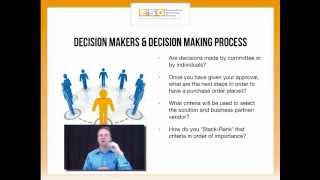
Hi, I'm Kevin McCann with the Executive Strategy group. And in this video we're going to discuss how to uncover the decision makers in the decision making process, which is the third quadrant of the sales Window of opportunity video series. So in this video we're going to talk about the decision makers decision making process. And this comes on the heels of already fleshing out what's the pain and the challenge that your prospect is faced with. Identifying the budget, the type of budget is it a capex OPEX expense budget and that they've verbally committed to paying to solve this issue. So now that we know that we have an issue, they've got money that they're willing to spend to solve this issue. Now we want to understand how do they go through that decision making process and who is involved and who are the stakeholders in making that decision. So, so in simple terms, your goal here is to uncover all the stakeholders or the people that are involved in making the decision and then also the people that are impacted by making this decision. In order to think of this deal from all particular angles, you don't just want to be in touch with the people that are going to ultimately sign off on it as a creative angle, if you will. If you know that there's a group that will be impacted heavily by this decision, sometimes it makes sense to get those people on your side as well. So who are all of the stakeholders that are going to be making this decision and who will be impacted by this decision? And find out what's important to them and how they go about making their decisions. So here's some of the questions that I'll tee you up with that you can ask either your sales executives if you're a sales manager, or your customers or prospects if you're a sales rep. So first question would be, can you describe the decision making process for this issue for me or for this project for me? And the way that we coach our customers to lay this out is to say, look, it sounds like you've got this challenge. We definitely have a solution to bring to the table to help you resolve this issue. You've budgeted or allocated X amount of funds to take care of this issue. So my question is, where do we go from here Once I provide you with the proposal and as long as we're within budget, you mentioned to us that things look good and that you'd move forward with us. How does the decision get processed? So do you make a recommendation? Does it then go to purchasing? I'll kind of walk them through the Scenario and say, does it go to purchasing? Or then do you have to put it out to bid or do you have to do a purchase wreck? Help me understand what's the process you do to go from where we are today to ultimately cutting a purchase order so that we can get to work helping you with this issue. So have them walk through that process and as they're mapping it out for you and going dot by dot, understand who has to be touched everywhere along the way. If they say, well, then it goes to purchasing and then it gets kicked out and Larry, my boss has to approve it. Find out who specifically in purchasing it goes to. Is it the same person all the time for your service? Is it just a round robin? Is it. They make a decision by committee. So those are the things where you want to be very clear all the way through. Because if you're a sales rep and you got to go and tell your manager, here's the process, you want to be clear and specific around what that process is because then that's going to keep your sales pipeline accurate and you know how long each one of those steps takes. And that's another point is ask how long each one of those steps takes along the way. You know, does Sally or Nancy only look at these on Tuesday, or is she constantly looking at these purchase racks every single day? So these types of questions really help you refine and dial in the accuracy of that pipeline. So next is help me understand the step by step process and order that takes place for you to procure this equipment or this service or whatever it is, the widget that you sell. You know, in our experience, and this is one of those sound bites that you can utilize, is in our experience, you know, the more we know up front, the better suited we are to help provide you with relevant information in a timely fashion. We, whether that be provide you with a revised quotation, provide you with references or case studies that are relevant so we can help you make your decision. So the more I understand their process, the better suited I am to put specific information in front of them or referral people in front of them to ultimately help them choose me as a vendor for this particular project. So next question we can ask them is are decisions made by committee or by individuals? So I would not ask the person you're dealing with right in front of you, are you the decision maker? Because typically ego will enter the room and they'll say, well, yeah, of course I'm the decision maker asking that you may not get the answer you're looking for. So instead I would ask, you know, how is this decision made? In addition to yourself, who else is part of this decision? Is it made by individuals, is it made by committee? How do you typically do this? Instead of putting them on the spot and saying, are you or aren't you? The decision maker tends to work a lot better. Next is once you've given your approval, say we're talking to Frank. Frank, once you've given your approval, what are the next steps in order to have this purchase order placed? So like I mentioned earlier, we want to map out all those dots along the way, every single step it takes until ultimately we've gotten the purchase order and now we can deploy our people, our software, our products or what have you. So every single step along the way you want to have them map out for you. Next, and this is super important, is what's the criteria that will be used to select the solution in the business partner or the vendor. So it's good to know that we have a project at this budget, we now know the decision making process and the steps tactically. But when it gets on the desk of each of these individual people, they all have different criteria perhaps, right? So the director level person you're talking to may have a different set of criteria than the VP title person that you're about to talk to or that it's going to get promoted to. And they may have completely different criteria than purchasing. So in some cases we've dealt with companies that you know, even though the IT guy or the VP of IT loves our solution, loves working with us, his hands are tied because purchasing gets to make all the decisions because they push everything out to bid. So it's important as a sales executive or as a company that's going to be a potential vendor to these folks to understand how that decision is made and what all that criteria is and how they stack rank, the importance of that criteria, and then that's the last question, is once this criteria has been established, who wins out? What gets SAC ranked higher or lower? Most people will say, well, price is most important, but in fact it typically isn't. Usually it's going to be the value, the experience that you have in this market. Because if they lowball the price but the project is a train wreck, that's not a win for them either. So sometimes price is not the most important. They're usually going to bring it up in the top three to five. But I want to know what is the most important criteria so that I can articulate our value to that particular need and that stack ranked order of importance. So those are some questions you want to ask around decision makers and decision making process. Thanks for watching this video. We'll see you in the next one.