In this instructional video, Kevin McCann of the Executive Strategy Group explains how sales professionals can effectively uncover a prospect’s budget, a critical step in qualifying opportunities. He outlines why simply asking “what’s your budget?” is insufficient and introduces a series of targeted questions to determine whether a prospect has allocated funds, the type of expenditure (CapEx, OpEx, or expense), approval status, timing, and purchasing processes. McCann differentiates capital expenditures (long‑term, committee‑approved projects) from operational expenditures (recurring SaaS or utility costs) and ordinary expenses (ad‑hoc purchases). He advises asking if funds have been planned, if they’re approved, and how long approval takes, followed by a trial‑close question that probes whether the prospect would still decline if the solution fits within budget. Finally, he stresses the importance of understanding the prospect’s historical purchasing workflow to forecast realistic timelines and avoid pipeline inaccuracies. The video is aimed at sales reps seeking to qualify deals more accurately and move prospects through the sales window of opportunity.
Chapters
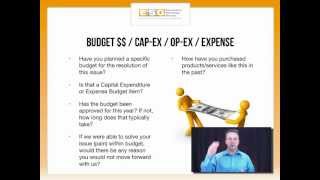
Hi, I'm Kevin McCann with the Executive Strategy Group. And in this video, we're going to discuss how to uncover the budget, which is the second quadrant of the sales window of Opportunity video series. So in the first video, we talked about industry events and pain. So fleshing out what are the challenges that your customers, or in this case your prospects are facing at a company level, at an industry level, and what are some of the consequences if they don't solve them? And. And what are some of the upsides that they will gain by solving those issues and dealing with that pain? So in the second video, we're going to talk about how to uncover the budget and understand what the nuances of that budget are. Now, of course, we could ask just a generic question saying, Mr. Prospect, what's your budget? But we're going to look at some more tactful ways to go about that. So here are some key questions that will get them to confirm that they're actually willing to pay to solve the pain that you uncovered earlier. So plenty of people have pain out there that they're unwilling to pay to fix the game here is to figure out, are they willing to pay to fix it. So one of the first questions that we typically ask to flush this out is have you planned a specific budget for the resolution of this issue? So we're not asking you how much is your budget or how much money do you have? We're just asking the first question. Have you set aside funds to deal with this issue? What do you. Or is this going to be a firefight scenario? See, at the top of the slide here, you see I've got budget, CapEx, OpEx expense. I'll take a second here to go through all of those. Capex stands for capital expenditure. Now, depending on the type of project and the type of service or product that you sell to your customers, they may have to budget for it well in advance, which typically requires a capital type budget scenario. Usually that means there's more than one person involved. There's going to be either committee or it's an annual thing that they have to plan for or, or quarterly even. But you want to be clear, is this a capital expenditure? Is it an operational expenditure? An OPEX type expenditure would be something like paying utilities or paying for SaaS software. Like, for instance, a lot of companies use salesforce.com or Systematic Revenue or Infusionsoft, and they pay every single month. And that would be an operational expense. A third way of looking or spending money from a financial standpoint is just the raw Expense category. I needed to get binders made for my sales team so I used my credit card at the local Kinko's and got it done. That's an expense account type item typically. So we want to understand is what we're selling capital expense. So capex, OPEX or expense and making sure that they've got some sort of a plan specific budget for that project that you're effectively working on for them. So there it is. Is that a capital expenditure expense budget item or is it opex? How do they plan for this? Next question is has the budget been approved for this year and if not, how long does that typically take? So in future video we're going to get into the time frame and time bomb scenario but this could start to set us up so well no, we don't have money this quarter or we haven't planned for money this quarter but for Q2 or Q3 or whatever quarter in the future it's looking good. Well, how long does it take for you to have the funds allocated? Is there any way we can pull those funds into this quarter to help give you the benefit of our solution earlier than Q3 or Q4? So we can start asking these questions to really round out the time frame. Next question is if we're able to solve your issue or pain within budget, is there any reason that you wouldn't move forward with us? So this is a bit of a trial close question, but it also gives us a sense that if we can come in within their budget, regardless of whether they've told us they have a budget or not, I just want to throw something out there saying look, if we address the issues, solve the pain and can provide you with that upside that you shared with us that you're looking to gain, is there any reason that if we come in under budget that you wouldn't work with us, then this will allow you to flesh out any other issues. Like they may say we want to work with a company that has a lot of experience in this area. Well now you've got the forum and the opportunity to share with them. Well yes, we do have a lot of experience in this area and here's why. So you can use budget type questions to flesh out other objections that may still be on the table and they just need to hear that you have a solution for them that makes them feel good when they roll it up to their management. Last question is how have you purchased products and services like this in the past? And I'll typically use this where if we're doing business with a new prospect that we've never done business with before. I want to understand that what is their process? So sometimes they have to go through a bidding process or a purchase rec process before cutting a po. But I just. If I don't understand what that is and how long that takes, then my pipeline is going to be inaccurate. And when I tell my manager, if I'm a sales rep, that I think this deal can happen in February or in March or April, but I'm not clear on what their process is to purchase services or products like this in the past, chances are great that my deal is going to slide to the next month solely because of their process and it takes longer than I expected it to. So we want to ask questions. How have you done this in the past? When you give the approval and you say that it looks good, I can work with you, Kevin. And your pricing is right. Where does it go from there? Does it go to purchasing department? Does it go to your management? How long does that process take? When you buy software, hardware, products, services in the past, how many hands does it have to touch? These types of questions will actually lead us into the quadrant, which is called the decision maker and the decision making process quadrant. So thanks for watching the video and we'll see you in the next one.