How to Fix Your Sales Pipeline Now - Step #4 How to Uncover The Competition
Kevin McCann breaks down how to identify competition in your sales pipeline: other budget projects, direct vendors, and channel partners. Use his question framework to rank the prospect's initiatives, understand their funding criteria, and uncover what truly drives their decisions beyond price.
Chapters
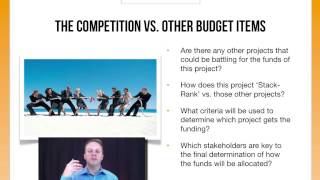
Hi, I'm Kevin McCann with the Executive Strategy group. And in this video we're going to discuss how to uncover the competition. And this is the fourth quadrant of the Sales Window of Opportunity video series. So in this video, as you, as you can see from the sales Window of opportunity, we've covered three the industry pains and events that your prospects are feeling and what's the challenges around that? The upsides if they solve it, the downsides if they don't, or the business consequences if they, if they don't resolve it. Next is do they have money? Have they allocated funds to solve that challenge? Yes or no? And what type of budget is that? And roughly what's the process to roll that budget out? Next is decision makers, decision making process. Who are the stakeholders, who makes the decision and who is impacted by the decision? And then what are the steps? Every single step along the way that that decision needs to go through to be completed. Now the final quadrant here before we get to time frame is competition. So when you look at competition, typically you're going to have anywhere from three to five categories of competitors on any one deal. And those competitors could be, you know, straight up other vendors, right? So we always think, well, we're competing against the other vendor, which may be true, right. So you've got that another thing that you're competing against or another group that you're competing against could be other items on the budget, right? So just like on the top of the slide here is other budget items and other departments competing for the same bucket of money or the same funds. So we definitely want to understand this because at the end of the day we could go all the way through our sales process only to have the carpet pulled out from underneath our feet when the prospect comes back to us and says I lost my budget, they had to use the funds elsewhere, right. And this is happening frequently right now in this economy. So our goal through our sales campaign and our sales process is to make sure our project is stack ranked higher or as high as possible against any other projects out there. And that's where the value strong value proposition comes into play. Another type of competitor could be channel partners. So for instance, if we're selling direct to end user customers, if we're a company that sells our product direct to end users, or or if in another model we're selling through channel partners, we could be competing not just against the other manufacturers of a product, but also against other companies repping a product. So not to get too convoluted, but you may have other companies Trying to change the mind of your buyer using a different product than we sell. For instance, if I sell a product manufactured by a company like Cisco and, and the other company sells a similar product manufactured by a company called Juniper, well, that other partner is competing against me selling a different product. So you want to be cognizant of all the players that are potentially going to come down and swoop and take your deal away from you. So other items on the budget, direct straight up competition and perhaps other partners or channel companies that are competing against you for a similar type of, of a sale. So how do we flush these questions out on the other budget items we want to ask straight up, are there any other projects that could be battling for the funds for this project? I'll just come right out and ask them because my job is to help them win that tug of war game that you see on the slide in front of you. I want to make sure that I give them all the ammunition that if they have to go in front of their board, their executive team, that they can share with them how, how I'm going to help their company either increase revenue or decrease expenses or minimize their business risk because of what I'm selling to them or what I'm helping them invest in. Another question, again we've asked this in previous quadrants is how does this project stack rank versus those other projects? So it's good to know that there are other projects on the table. But where are we slotted? Are we the next one on the docket to get done? Are we three down, five down? And, and then why, why have you organized them that way? Well, because the CEO always gets what he wants and his are the top three. So they're going to happen first. Well, great. How does he decide which ones happen first or which ones happen second, et cetera. I want to start getting into the psyche of all of those decision makers so that we can start climbing that ladder if our value proposition is strong enough. Next question is what criteria will be used to determine what which project gets the funding. So if it's the CEO gets everything he or she wants and that's just the way it goes. Well, great. Then I got to figure out what that CEO cares about and how I can get a meeting with them to really get the opportunity to share how our value is going to impact their business better or more than the other projects on the table. So criteria, what criteria will be used is important to know. And then also which key stakeholders or which stakeholders are key to the final determination of how These funds will be allocated. So there are stakeholders that may have no final decision making ability. They may just offer that, you know, I feel good about that solution or I feel good about that particular vendor, but they're not the ones that really have a vote, so to speak. We want to understand which ones have that vote and ultimately we'll have the final determination yay or nay. And then this goes to purchase rec for, you know, for us to become the vendor. So the other side of the competition I mentioned earlier was the competition versus other vendors. So here's some questions you can ask to flush out other vendors and how you stack rank against the other vendors. What other types of solutions are you currently considering for this issue, pain or event? So as I mentioned earlier, if we rep a product by Cisco and other partners out there, rep a product by Juniper, then then I want to understand are they considering something from Juniper or maybe Extreme Networks or what have you. And I'm using IT examples because I'm very familiar with that type of technology. So regardless of what it is that we sell, we just want to get an idea of what other options do you have to solve this issue and share with us what those are. So from our experience we can share with you how we compare, how we stack, what are some of the differentiators just so they don't go and find that information from someone else or online and and make a mistake when trying to interpret the differences. We want that opportunity to educate them. Next is do you already have an existing vendor for this particular product requirement software service? And if the answer is yes, then I want to understand what's worked well with that vendor, what are some areas where they could have improved and frankly, if they do have another vendor and they're talking to you about this project, chances are they're open to considering options because if they were completely 100% happy, they probably wouldn't even have taken the meeting with you on this particular issue. So keep that in the back of your mind, don't be arrogant about it and don't be cocky. But certainly ask the question, say, well, out of curiosity, why did you meet with me today if you already have a vendor? Are there some things that perhaps that other vendor is not able to provide you that we could share with you, that we do so things of that sort. Next question, what do you like about the current vendor? What would you change or make better about the engagement with them if you could? And this is where when I ask that open ended question, now I can start slotting in here's how we're a little bit different. Here's how we specialize in your particular market or industry or vertical. Here's, you know, we've got 286 customers similar to you that have that same need. And in fact I can provide you with 10 references today or tomorrow that would actually validate Everything I'm telling you is pretty much spot on. So these are some areas where you could start to slot in your differences versus other vendors, not in an arrogant way, but in a very helpful and thoughtful way. Next is what is the final decision making criteria that will be used to make this final decision? And I like to couple that question with, with this one here is if everyone hypothetically came in at the same price, how would you make your final decision or recommendation? So what we want to establish here is that they're going to have certain things stack ranked again, I like using that word, stack ranked around how they're going to make this decision. So ultimately, at the end of the day, if they see a very similar price, say for instance, the price is exactly the same, I got to get inside their head and ask them, what do you do then? Do you go with the vendor that you've worked with for the last three years who, you know, you basically just told me, misses out on this, that and the other thing, or do you give us an opportunity if we can make you feel as comfortable as that other vendor that we know the game, we've had a long standing relationship with the manufacturer or we have tons of case studies, things of that sort of. So if everyone hypothetically came in at the same price, how do you make your decision? This is a very powerful question because it forces them to tell you what they care most about other than price. So there's some questions for you to ask around competition against other vendors, against other items on the budget. And we'll see you in the next video where we'll talk about time frames. Thanks for watching.