If Not Now, Wen: 15 Years, 9 Attempts, $53M+ in Impact
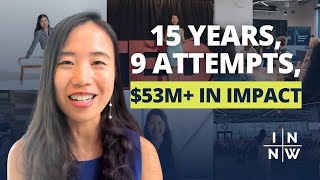
In this Executive Strategy Group podcast episode, host Kevin McCann interviews Wen Zhang, founder and CEO of If Not Now, When, a storytelling and go‑to‑market advisory firm. Wen shares her journey from a small mountain town in China, through multiple failed attempts to immigrate to the U.S., to earning an MBA at Duke, leading go‑to‑market strategy at Dell, and eventually launching her own consultancy. She explains why storytelling is the core conduit for helping technical founders translate deep expertise into compelling narratives that win funding, attract customers, and build personal brands. Wen outlines a systematic process—starting with the "ending mind," defining the audience, using the Hero’s Journey framework, and crafting authentic, problem‑focused stories—illustrated with a webinar that generated 67 qualified leads. She highlights common pitching mistakes (self‑centric messaging, lack of audience empathy) and stresses a mindset shift toward audience‑centric, authentic communication. The conversation also covers her philosophy on visibility, using LinkedIn (40k followers, million‑plus impressions) as a modern market‑day, and the responsibility to share one’s unique gifts. Cultural influences on visibility and identity are explored, as is the importance of personal authenticity for leaders. Wen reveals upcoming plans, including a high‑achiever leadership retreat for female leaders in Cancun. Throughout, the dialogue is conversational, enthusiastic, and grounded in personal anecdotes, offering actionable advice for founders seeking to amplify impact.
Chapters
All right, awesome. So, welcome to the Executive Strategy Group podcast where we explore bold ideas, battle tested strategies, and the stories behind real revenue growth. I'm your host, Kevin McCann and today I'm excited to welcome a force of energy, wisdom and strategy. Someone whose mission it is to help technical founders and business leaders show up powerfully and authentically. Wen Zhang is the founder of and CEO of if Not now, when, which is cool. And a storytelling and go to market advisory firm that helps founders win funding, land clients and amplify their voice. He brings a rare mix of big company rigor and entrepreneurial hustle, having led go to market strategy at Dell and earned her MBA from Duke before launching her own firm. She's also the host of if Not now when podcast and her LinkedIn thought leadership is has over 40,000 followers, which is phenomenal. Her secret sauce helping brilliant but humble founders turn complex ideas into clear, compelling business stories. And she does it with a mix of strategic depth and heart centered clarity. And you're going to see that in a minute. So, Wen, I'm glad to have you here. Thanks for joining me.
Wow, Kevin, where do you get a bio? Can I please have it on my.
You got it.
You'll share it every day because I need that hype. And thank you. And thank you, Kevin, for having me. And I felt so welcome. I'm super, super excited to be here today.
That's awesome. All right, so. So this is where we get to kind of settle down now that I gave all this high flute and prop stuff. So, so tell me a little bit about your. Your background, your journey. So you, you earned your MBA from Duke, which I'm sure was not easy. And then you've, you, you led go to market strategy at Dell before launching your own firm. What inspired the shift into entrepreneurship from those, those backgrounds?
Yeah, and Kevin, you probably already see that in my not just background, but backstory behind the backstory. I'm born, raised in a small town in China where most people live there, born there, they spend entire life there. And I just always see something different. And I think maybe that's when the entrepreneurship fire was still in me. And again, it's in a town where it's up in the mountain, there's no car, there's no Internet, really, literally is no any possible way out. And that to me was at the time that problem I'm solving is I have a vision, I have a big problem, and how can I figure this out? So for me, my first attempt is, you know, finding a cassette machine in the Corner of a library. And I using that to teach myself English. And the following four years attempt to come into America. And I failed. Not just one time, not just two, but not five, but nine times in four years when everyone all think I'm crazy. And that is how I come to United States to start my American dream. Fifteen years ago, what kind of machine was it? The cassette tape machine.
Cassette tape. Oh yeah, yeah. Okay.
Yeah. If you recall, it's just like ipod but a little bit less fancy. About this thick and this large. The first one is a silver color. I still remember. It's like, it's like my first secret, first treasure, first mentor. Let's say that first stepping stone will help me see a way out. And I think, to answer your question, right, that fire stole me just always, you know, thinking I can be the change I want to see in the world. That is a big about. That's that kind of defined who I am and how I see the world. And from there, right, I first actually in Chicago, I went to Illinois, abandoned champagne for my first master degree in advertising marketing and. And from there you can imagine a woman who in some way fresh off the boat, have no context about culture, the background. It's very difficult actually to fit in that business world. So I started my first business in Chicago, the tech space. So we run a business for two years. I learned a lot about what should and should not do. Most importantly, made so much mistakes and then just foundlier, just hop around. Different startups in Chicago mainly focus on go to market, sales, revenue, partnership. That's what my hat is at the time. So five years in Chicago, we have so much fun. All the amazing. You know how it is, right? In a startup where you don't make money, but who cares? You felt like on the top of the world, you're making impact. Above all, it's my first time live life that I want. That's not the same story that people in my village, in my hometown ever had experience. So for me I was like, this is awesome. But then I thought to myself, you know, when I was stuck in little village, I never thought I will have a chance to see the bigger world. And I make a promise if I ever get a chance to escape, to leave, I want to see the whole world. In that moment I felt I have seen a small world, Arda world, I want to see a big world. So when I'm going to a Duke mba, my Internet is religious. See the global business in that scale. And Dell technology gave me exactly that. And I could not Speak about how wonderful my time is there where it's just brilliant culture and people are so, so smart and yet so humble. I learned just so much. And at the time I was supporting go to market motion. About 400 sales things in North America, about $320 million portfolio. So all in go to market but a little bit different flavor that stick startup right where I was one person, 14 or five driving it while now it's a big a global effort which is just so fun, exciting and well, I really enjoy my time. Really. I have nothing negative said about my time, but I really just felt like that entrepreneurship fire that was stolen me such a young age earlier and I just felt this calling something more something big. And I think when I go to mba I want to see the whole world. And that moment I felt I did see the world. I see so startup world. I see corporate world. I have my taste, my favorite about what business, what entrepreneurship? What, what, what that go to market is what really is what I want on this planet.
So why did you use storytelling as like your conduit to get there? Like what what was that?
Say one more time, Kevin.
So how, how did you or why did you choose storytelling as the foundation for the business to get to these technical founders? Like why was that?
Yes, yes, yes, yes. That's a great question. So to me, as someone who loves sales, love business, love impact, I believe that storytelling is the oldest form of how we communicate how we connect. Because I mean Kevin, you probably know this more than anyone else. We do business with someone that we trust and like and storytelling have a ability to connect that two individual together in a way that. Do they foster trust and build relationships?
Yeah, exactly. Well actually that's a good transition to my next question which is how do you help them translate their deep expertise. Like could be technical, could be situational, that expertise into messaging that actually resonates with clients or investors or colleagues.
Yes, absolutely. First we start with the ending mind, meaning you have a message. Who do you want speaking to? Let's say your goal is to go to market. Your client is a customer that have a complete different flavor than maybe you are here to raising capital. You're here to scale your partner, your channel, practice. Right. That have a different again it's all about who we speaking to. So one once we figured out who he's speaking to, what is the goal is now from that point of view? Let's say I'm going to go to market. My goal is to speak new customers to scale. My practice now is you Know, we need to take a step back. It's not about what I want to say or what the founder, you know, expertise, what he or she want to share. It's not about what really the problem this customer is experiencing or some pain point that he or she couldn't, couldn't sleep at night or something that just given stress. And from that point of view, how do we truly solving the problem and that from that angle. From that point of view, right. Story now coming back to life. So personally I'm someone that, you know, I love performance art. I think story have such a, such a beauty. You know, you see it play out in movies, in books, in TVs and all that. But to me, my storytelling is grounded in the reality of truly solving a problem and then adding some sprinkle of art, some, you know, art of a story as you might heard that, you know, hero's journey bring that together. Now that the story itself having a leg to stand. It's not just a fancy fluffy story, but truly a story that's solving a tangible problem and supporting that business leader, that entrepreneur, that, that customer to really solving a big problem. To me, that's how I see a good storytelling.
So you and I have spoken a couple times in preparation for this podcast. And you know, I'm kind of a systems guy. So when I listen to you saying that I envision technical founders who tend to be, you know, widget kind of people. You know, here's my thing, here's my widget. Isn't it great all that? How do you take that type of a person and systematically implement a process so that they can get their story out? So there's, there's some sort, like you gave me an example. I think you mentioned you, you generated 67 or some odd qualified leads for one of your tech founders that was doing a webinar, right. Like everybody does webinars. But you did something special to get 67 people to actually show up to this thing, plus more. But like, what's that process that you, you take them through that can be replicated? Not just a flash in the pan.
That's a great question. And it's not just any webinars, a webinar that converts and connect. So there's a lot of artists that creating that webinar itself. But to that client that you mentioned, let's take a step back, right? So it start begin by really deep dive into his expertise. You know, he's a gentleman. So it's his, his story really is, you know, back to what I think is really seeing who he is supporting. Right. They are engineering consulting firm. They are supporting specifically our engineering type individuals who are by those issues individual have a very specific problems that they are dealing with every day. So we are starting with really laying out all the problems our customer are facing. And then from that point of view, all the capabilities this firm individual really, you know, how they see they sell fit in the sector, the future and innovation, all that, right. From that point of view, there are two things we do right. Number one here is we need to create a story for this firm to tell a story. Not just hey, my name is Wen, this is what I do, that's great, but a little story that tell little bit more about not just what I do, but why does it matter and why do I care, right? So that is an individual story that we first start creating in that by knowing who the customer is. Once we craft that story, it's almost a little bit like Hill's journey. Almost like you just heard me speak, you know, minutes ago how I tell my story. Right? Again, different people have different preferences about how they want to present, how they articulate, how quote unquote dramatic they like to be. And I'm pretty dramatic, so I have a different flavor than everyone, right? So to me the best storytelling is tell the authenticity in the, in the, in the light that really highlight that individual's their charisma authentically. So that's the innate story. Secondly, from the technical aspect, from the systematic perspective, now we do that little mind mapping, right? Looking at the problem they are solving, looking at their technical expertise. You know, this is one thing that we do is we do have entire marketing firm behind it to help do that mind map. And then in the meanwhile help them to amplify their message through a very. Again, if you look at my LinkedIn or any of our clients through those deep thought leadership. Again, my personal point of view is I give people a gift is to give before we get in. So it's almost like if I come your home tonight for dinner, me and my husband not gonna just come like empty, we're gonna bring a wine, bring a chocolate and say thank you, right? It's exact same idea is how do we bring that authenticity in life. Also duplic scale that online. Once we know that person's capability, we really help them crossing those gift or expertise and help them scale that online through a consistency. And we have a bunch of different. We call it vitals checkpoint nine of the virus, every single point. So that allow us to really showcase Our expertise, but in the meanwhile allow that to be seen to our exact target customers. We're going to do that consistently once we have that in place. The final point is now, right? You talk about webinar. It's not just any other webinar that I want to present. It's not a sales pitch. Not even. It's not just, oh, let me just talk about who I am, my company, what I do. Right. It's not that it's really, I don't want to say a secret, but it's a storytelling art to having that trust upfront, tell the credibility, having that life factor and ensure the impact we can support short and long term. And then closing with another. Another invitation to possibly collaborate. So it's hard to explain. It's really more of an art form. But that entire presentation was created in a way that really authentically connect. We are not here to sell, we're just here to collaborate. And if people file call and they will. If you call to say, wow, this is brilliant. Wow, Kevin, you are really passionate about what you do and you're so good at what you do. Wow, this is amazing. Hey, can we have a chat? I would love to learn the if something that I could be benefit from your expertise. So it is about the authentic invitation all the way and then holding their hands until we move into that sales call. Right. Even though it's not sales call, but we don't call it. It's a collaboration chat.
Got it. You've mentioned. I'm going to take a little sidebar here.
Yes, sir.
You've mentioned Hero's Journey a couple times. So for those of us that are students of marketing and you get the Russell Brunson's out there that talk a lot about Hero's Journey and the ClickFunnels guide. But in your, in your definition of Hero's journey, who's the hero in the Hero's journey? When you're working with a client, your client's is hero.
They are the hero. They are the ones solving the problem for sure. Not me or you or the clients. Is so client they solving a problem for their customer. Their customer is a hero.
Yeah, exactly.
However, everyone have a different take. I'm not going to say I'm the expert at that. For me, okay. I'm not Richard Brunson or all those fancy people. Russell Brunson, all that. Right. You talk about.
Yeah, yeah.
To me, my storytelling is rooting authenticity and using the data to back that. So this is not a frothy like that crazy Narrative that is people like, why am I. Do you ever meet someone, they just start talking this thing and then you're like, why am I listening? You have that question, why am I here? Right. I actually just met this gentleman this morning, super passionate, like running this incredible venture. He's raising $10 million and he had this like, he said, what? I'm going to give you a 5 minutes pitch and, and then into 25 minutes I'm thinking, why? Okay, this guy's a very dramatic guy. He was like, all right, there I was, he's like into it. And after 20 minutes I was like, I don't really get that. Right. So again, it's not about over engineering the story itself. To me, that losing the point. The story itself is just to connect, just to have, allow people to have a glimpse of your journey about why you are here, why you're so passionate about what you do. And why should I trust you or not? Why should we be friends? I think we all here to be friends first. And maybe we do business great or not great. Either way, it's wonderful.
Right? Yeah, actually that's a good point. So apart from this guy who takes a five minute conversation and extends it out 25 minutes, what are some of the most common mistakes you're seeing founders make? Yes, I would say a couple levels, like just prepping for the pitch, doing the pitch, and then maybe even following up on the pitch. And it was. Doesn't matter whether it's to a founder or to a. To investors or to prospective clients. What do you see going on?
Absolutely. So first I'm gonna talk about when they speak about their sale, when they pitching, let's say, whether it's to investor or customers. I think the number one mistake I see is they love to talk about themselves and they are not actually seeing who they are speaking to. To me, there's no point of pitching unless we know there's a problem, there's an invitation, there's a curiosity. In other words, I can just jump online and say, hey Kevin, my name's Wen and I just give you like a 330 minutes throw up on your face. And you're like, wait, hold on, I'm not even getting the word thing. So if I can say the true, and I don't like the word pitching because pitching have this feeling of oh, I'm going to pitch, I want to sell Kevin something. Like, I think they have a different kind of energy to it versus I'm just having the chat and maybe if I can say the number one Biggest problem I'm seeing or issue I'm seeing is that we don't oftentimes listen to what people really want. At the end of the day, my personal belief is nobody like to be sold. But people love to buy. People, people love to buy. So why not give them that opportunity to make purchase if they want to. So the biggest thing is, you know, rather than trying to say, oh, I have this perfect pitch crafted with, you know, with this person yesterday. This is a 5 pageant. Like if I thinking that I'm thinking about me, I'm not thinking about you now. There's no conversation. Our conversation is two way streets. It's not about your pitch per se. It's about how do we get point cross really answer question for this person who sit in front of me virtually or in person, how do we having that dialogue? And it's not about me or my product, but how do I solving your problem. Once I know what the problem is and oftentimes we think I know, I know Kevin's problem. I can know. Like I worked in her his section for last 20 years. I know. No, you do not. And it's so important to come with the open mind, with a beginner's mind to think, wow, you know, Kevin, this is my experience, but I'd love to hear like, do you see that challenge in your every day like having that curiosity and really allow individual to be heard. And from that point of view, we have buy in, we had report and then we can move forward with our relationship. Because I think there's no pitch, no story can ever trump a true authentic relationship, partnership, friendship.
So we do the same thing. Yeah. Like when we show up, we'll say, you know, if you're anything like this type of person, which is like their ideal buyer Persona or your ideal buyer Persona, you're likely experiencing these types of challenges. Now, I can't tell you that you're feeling them, but you know, are these some things that you are running against and you know, causing you pain, if you will, and, and that tends to be a better entry point than to say, hey, when I get you all figured out, I know exactly what's going on in your world. It's like, who are you? No, you don't.
I think everyone, you know, everyone want to be. We all want to be uni in some way. Right. Maybe you say, well, I met another Asian woman just like you. You I know exactly your type.
Yeah, right, Exactly.
People actually say that to me before I was like, what was my please tell me. But again, to me it's how do we, you know, Confucius have a saying that how do we show up? How do we be? How do we treat others the way how we want to treat it? I think we all wanted to be, you know, show up with kindness, with respect, reverences. Knowing that we all individually, you and me can live in the exact same neighborhood, but we might have a different flavor restaurant. So from all the level we also unique and really having the active listening to having that report, having that sincerity of I'm here to serve, I'm here to solving problem. But first I need you to really listen what you have to say. I think that that attitude mindset is already half of the battle when it comes to any conversation, any report buildings.
Yeah, yeah, exactly. So you shared a little bit about how you look at the situation when you're working with these founders and helping them craft their story. Is there any spec framework that you take them through or maybe set of principles that they they go through that you you'd be willing to share like you don't have to expose your secret sauce. But is there a framework or best practice approach that any of the listeners watching or listening to this podcast can say, all right, I gotta start thinking about things like that?
Yeah, we always speak about. It's always that hero's journey. However depends on the audience. If this is a pitch deck, it's a complete different context and customer sales pitch. Yeah. If it's the first meeting, would investor for the second meeting also have a different kind of land requirement? My personal point of view is if you have first meeting with angel, you likely should speak about three to five minutes and right. You have 30 minutes. Right. Think about how we managing the time. So then how do we walk through that journey in a way that really I tell people be short, be sweet and be gone. So how do we tell that story in that first gecko having a first impression rebuild report and really continue to. To you know, dance. It is a dancing journey to continue to like, you know, having that socializing to move move forward with our relationship. That is an investor pitch. Right. For the customer pitch. They're a bit different. Right. If you already have a demo day schedule, that means you have a four floor versus if you have that's before that maybe you do have just literally a quick coffee chat virtually or in person that have different context. Right. So it's all follow the hills journey. But because of the context, the format will look different and the way how we come across will be different. I think sometimes Being too formal is not always the nicest thing. You don't always say, all right, let me share my data. Let me walk you through from side one to 50. Like sometimes in the very first conversation you, once you know your superpower, wants to know how to, how the art of storytelling is coming across. Once we have that packaging for you now, it becomes so effortless. You just kind of speak quickly about who you are, what you do in two minutes or three, it's like you get curiosity, spark, that's all it is. Now we can move to the next round. So it's all about what round, what format, who we speaking to and that dictate how the framework, how the focus are. But at the end of days, we all here to solving a problem.
Yeah, exactly. All right, so let's shift it over to visibility and followers. So you've, you built a massive personal brand. At least I think it's a massive personal brand on LinkedIn, over 40,000 followers, a million plus impressions. What's your philosophy on visibility and influence and maybe a little peek behind the curtain on how the heck you do that.
First of all, I am so honored. Kind of crazy thing about 40,000 individuals, that's a lot of people. So thank you. I never think about that way, but thank you. Speaking of visibilities, I believe that when we share our gift, when we share our unique superpower to the world, that's how we'd be seeing and this is our responsibility. You know, I believe that if you think about this Calvin, for a moment, like just before technology, AI, Internet, let's say that long ago we were used to live in a village. Yeah. Maybe by the time back then I grew apple, maybe you make candle. She is, you know, making bread. No, you get idea, right? Everyone making different things. And once a month we do market day, we come to the market, we exchange our goods. Now that's why I go home with bread, with apple, with the clothes, with the candle, all the things for my family. We imagine some people who thinking, you know what? I don't think my bread is good enough. I'm not going to go to, I'm not going to go to the market. I just going to do it more. I'm going to just spend another three years, make it perfect. That means that month I got to go home without the bread. That is like my family going to not have bread for the table. So imagine that. That's how I think about visibility. Is each and every one of our job, our responsibility to show up, to share our gift. Share our expertise. When we truly show up in that marketplace, in that market day, I tell people selling is serving. When you tell them this, you are making this amazing bread, you are making this amazing Apple, you are now supporting another person across the table crossfung you to say yes. Oh my God, I was looking for that. Thank you. But visibility is our responsibility. And I do found a lot of technical leaders and honestly is something that I just always enjoy is they are so brilliant at what they do. They are truly have such a, I call it nerdy like energy around it, which is so wonderful. They just love the nerd out what they do and they just hope, you know what, when I don't go work, people gonna just find me and they probably will. They will at some level. So I do have some clients they scaling from, you know, maybe about 10 mil. Under that is all referral, all network, all conferences, which is nothing wrong with that. But I think got to the next level is now how do we bring our, the goods like the metaphor we speak earlier, that bread, that Apple to a global table. And that is what visibility is all about. And my personal philosopher is it's not about. And yes, my background is marketing, yes, it's about storytelling, all that, but it's really rooted in authenticity. In other words, you, me, her, him, we all have a different leadership style, different communication style, different way how we see the world, different way how we want to show up, support the world. And our goal is how do we capture that authenticity along with your superpower. And we package you in a way that allow the world to see you as who you are. As if this moment I can meet Kevin, just like, you know, if I come across, you know, your, your, your post, your thought leadership online, it's not much different than right now sitting here having the chat about customer journey, about right messaging. And that's our goal, our intent. Does that make sense, Kevin?
Yeah, no, it definitely does. So I get the impression that, so with all that, I get the impression that you want the founders and the CEOs, I mean to a certain extent, depending on the size of the company, but you want them to step forward and essentially become the face of the company. Because you're not doing posts as a company, you're doing posts as a human being, whether it's LinkedIn or whatever. So is that, is that, do I get that correct?
Absolutely. Because no one want to follow companies. No people want to follow people. And at the end of the day, it's people that make a difference. My personal point of view Again, you can believe what you want is I believe that when we show up authentically, people can see us for who we are. And maybe you might think, wow, Wenba, I'm just a shy person. I'm just not like, you know, some people might say, well, when that's just not me. I again, most our clients are, you know, they are, they are PhD, they are researcher, they are very, very technical in their space and that visibility might not be an easy conversation for them. But I want to invite you think about this. This is not actually about me, Wen, about Kevin, Eric, about Mark. It's not about that individual. It's actually about how do we bring that solution forward to solving that problem that your customer are desperate to looking for. Only reframe it that way. It's not about me. It's about then I'm here to serve now. The dialogue, the energy, the presence shift. When we have that shift now, we can really allow us to do the work, be authentic, tell stories, show up solving a problem and boom, voila.
How do you encourage them to make that mindset shift? So it's, it's one thing to say you just gotta shift your mindset, but it's another thing to actually do it. How do you.
Absolutely. That's the biggest. Yeah, no, thank you for that wonderful question. So, you know, along my journey where I at this moment, working with over 200 business leaders and collectively we tell stories, raising $53 million and so much more to count, if I can say, all the tactics, strategy, process, hopefully all sounds wonderful. But the biggest shift actually is their mindset. It's how they see themselves and how they see their impact to the world. Often I want the Tao founder especially a little bit earlier stage, early beginning when you're small, when you're less than say 200 people team your present, your leadership, your ability to, to show up directly refract to the success of your business. Yeah. Even though we all want to talk about go to market motion, like tangibly one thing I can do and I love all that. But oftentimes it is that mindset shift that really make a difference and the journey look different from everyone. It's not going to be all right, there's a three check coins. One, two and three. Boom. You're changing, right? It doesn't work that way because we all individual, we all have different, different, different stories. We have different, you know, in some sometimes we have those beliefs that my, you know, subconsciously hold us back. We don't even know about visibility. I know that for My culture for the longest time, when being seen were being too much, is. That's bad. So for me, I personally actually have overcome that for a long time. Because in my, in my, in my culture, being too much, being too ambitious, being too whatever fill the plan is not good for a lady, for a woman. And I grew up in a town where there's no Internet, there's no car. So really, if you imagine that world, let's say today I'm sick, I can't just go to the doctor. I had to call my cousins and call her cousins, Mom's second cousin. See, do you know anyone in the hospital that I can make appointment to? So in other words, the approval by others means survival to me and my family. And that's a very surreal experience. So for me personally to overcome that visibility, you think you know what I'm here to do? Not just me, it's not me being too much, it's me. Now amplify my impact, my vision to the world. Now reframe that story, that narrative.
Yeah, that's interesting. You know, you know what's funny about that is that we can, we can look at the exact same thing a completely different way. And I try to emphasize that to my clients. Like when you're giving your pitch, you're presenting your value prop or whatever, what you think you're saying and what they're hearing or what they're seeing, depending on whether they're like a higher ed facility or a health care or manufacturing could be completely different and you just hit the same thing, only with just like daily life. Like how you show up to daily life. We all think, oh, well, we're all in the United States, we see it a certain way. And you're like, no, no, no. Like my roots were, if I didn't get the approval, I may not survive. So I have to kind of adapt to that environment. And you had to basically dismantle that when you came here and see that actually there's a different way of looking at the exact same situation. That's unreal.
Thank you, Kevin. I believe that when we follow our heart, do the thing that just whisper in your heart and maybe that look like starting a business, maybe it looked like moving a new country, maybe that look like scaling this incredible business. You love whatever that desire is. When you actually step into the alignments they always fear because that is not just out of your comfort zone, that is your calling. And when you answer that call, you're going to meet a lot of resistance. And often clients coming from Our, let's say, quote unquote cultural background. And you don't have to be as dramatic as, you know, my, my day. But we all have that version of that in a different lens. Maybe someone else who just, you know, from a smaller town. Maybe they never, you know, they never, you know, maybe they see being, being famed or being seen as bad. Like again, we all have different story in the different point of our adulting journey and that we would take that into. That's how I am, I'll tell you.
Sorry, I'm interrupting. But like right now, today in the world, right now, you get AI, you get people that have been in commerce and business doing their job, doing their roles for the last 30 years. Their identity is this job I've been doing or this thing I do, all of a sudden that gets disrupted. Now what's your identity? It's kind of like my daughter just graduated from college and she's has some really good friends that play lacrosse and they're in sports. Right. For their whole lives. They're like 22 years old. Right. But they like everybody knows him as the lacrosse player or the basketball star or the whatever. All of a sudden college is over, sports are done. Now what am I? So it's, it's very interesting. So it's like, like and in today's world, like well, what's my, what's my identity? All this change is being shifted on me because of AI or because of robotics or whatever. And it's, it's going through that perspective and that mindset shift without completely imploding and seeing like what you said, you know, the core, authentic, true self.
Yeah. And as a leader, as we upscaling ourselves, whether it's coming from college, whether it's having the first job, second job, the business, another business, all that. Every step along the way we are keep up leveling ourselves. And I believe it's our ability to truly see inwardly having a self awareness, our ability to hold space for ourselves and reflecting the success, accolade, opportunity people we're going to be meeting. In other words, I think those important junctures in our life. Yes, the first job in college or the first business I started, so on and so forth. We are like this Phoenix. We are never done. We keep shutting our old self gained. And AI is a beautiful, you know, event, opportunity, catalyst for the next moment of revolution. And from there we have the change as well. Being a leader. I think one of the very important thing personally is beside from marketing, the visibility, the story, all that is how we See ourselves inwardly how we truly see ourselves again, the identity of maybe, maybe, maybe in your daughter's example, oh, I'm an athlete or Maybe I'm, I'm 23 years old. Maybe I'm a woman. I'm the strong woman. Right. Whatever she seeing that and seeing beyond that, who she really is. And then because we are not just like I'm not just a person wear a blue dress today. Where you're not just a person wear a red shirt. There's so much more within that. And as we adulting, as we growing up, as we have more experiences, we are going to be tested and we're going to try different water position. What is, what do I like, what do I not? And I know for your daughter example, she's, you know, quite young still, but once you get some couple experiences, you're gonna find out what is her superpower, what she love to do. And we have the conversation yesterday. Yeah, this is not just a skill set I acquire about who am I in. And I can tell like Kevin, you are such a system. Like I can tell you have a lot to process assistant, lots of love for people. I think those two are your core that who you are. And as someone that you know starting this business for last 18 years, you probably also that visionary that can see this future, this vision that you are. You know, you want to walk people through that. But at a core is that is your superpower. That doesn't define by when you were bodybuilding, what, 20, 30 years ago versus right. You are, you know, at a time you drive what was 16 to 16 million dollars in 18 months. Right. That quarter who you are have never changed. Actually that quarter who you are allow you to amplify those impact in a different, different, different spot. You are at the life journey and along the maturing process now you even more deeper. And I seeing you gift and owning. And now you amplify that through the business you do supporting your clients that you, you work with. And that's, that's how we all create.
Yeah, adulting, like you said, a doubting. All right, so if listeners take away one big idea from this 30 plus minute episode that we just did, what do you hope it is? What's the one big thing you want them to take away?
Yes, if I can say one thing is maybe knowing yourself, knowing what is your superpower? What made you take what is something that's so exciting for you and how do you solve the problem, how to use that skill set solving a problem in the marketplace. How do you Support your clients to overcome that challenge only you can do. And focusing on that one superpower and tell story, authentically connect, communicate, build relationships. And know it's never about you, it's about us. And when we win together. Win, win and win. Everybody win.
Yeah, exactly. Awesome. All right, so what's next for if not now, when? What's. What's your big future hold in the next, say six months?
Yes. There's a lot of things I speak to you right. Last five years. You know, we are running a consulting business. We support many leaders specifically to get visibility, to tell the story, to amplify their impact, which is so fun. And the biggest part, I think is that mindset aspect which, you know, we kind of briefly talked about earlier. So one of the things that I'm actually very excited about, it was kind of like a sign project, but now kind of, you know, getting more exciting for me. I'm launching a very first high achiever leader leadership retreat in Cancun. Yes. B15 leaders, female leaders who see themselves to really having, having a space to, you know, really taking that time to, to up level themselves, to step into their power, their alignments, their next chapter. So that's what I'm holding in my heart for the next six months. I'm so excited. Yeah. So that's what I'm working on.
Well, that's great. And this is totally fantastic. So thanks so much for sharing your stories, your insight, your energy, both like today and yesterday with me and last week in our conversation and for those listening and if you're a founder, a techn or someone just trying to turn your expertise into influence or visitors or engagements. Definitely check out wen's work@ifnotnowen.com Is there a better place or how else can people get a hold of you?
Yeah, that's perfect. And also my LinkedIn, I'm very active, so ping me, send me a DM. I'm honored to have a chat and learn more about your story.
Nice. Well, when I appreciate you, looking forward to seeing how our paths will continue to cross. I have some other people that I get to introduce you to based on today's session. And thanks again for being here. I really appreciate it.
I can't wait. Thank you so much, Kevin, for your generosity and kindness. You are awesome.
Thank you.
Bye guys.
See ya.