Mastersfund: From Moz Co-Founder to $100M+ to Redefine Equity
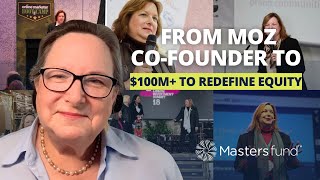
In this Executive Strategy Group podcast, host Kevin McCann interviews Gillian Moosig, co‑founder of Moz and founder of Masters Fund, a gender‑lens venture capital vehicle. Moosig recounts Moz’s origin—her role as the executor behind her son Rand Fishkin’s vision—and the lessons that shaped her entrepreneurial mindset. She explains her transition from entrepreneur to investor after witnessing stark gender disparities in venture capital (women receive ~2% of equity, with even less for women of color) and cites data showing women‑led companies deliver ~35% higher ROI over 30 years. Moosig outlines alternative financing structures—dividend/revenue‑share models, donor‑advised funds, and hybrid agreements—that can provide sustainable returns without the high‑risk venture equity model. The conversation turns to AI, where she notes that over 80% of Masters Fund portfolio companies leverage AI, and that women founders tend to adopt AI twice as fast as men. She shares trends she expects for the next 3‑5 years: growth of emerging women‑led funds, larger fund sizes, and more collaborative fund structures. Moosig offers concrete pitch advice for founders (focus on unit economics, clear exit strategy, and having a team member fluent in finance) and highlights traits she values: humility, grit, transparency, and a strong operational leader. She describes Masters Fund’s ambitious goal to launch 100+ gender‑diverse funds, scaling impact through varied capital‑deployment models. The episode closes with a historical nod to Sybilla Masters, the 18th‑century inventor after whom the fund is named, reinforcing the theme of women pioneering in innovation.
Chapters
Welcome to the Executive Strategy Group podcast where we explore bold ideas, battle tested strategies, and the stories behind real revenue growth. I'm your host, Kevin McCann and today I'm genuinely honored to be welcoming someone whose journey has not only reshaped how we think about SEO and startups and is now reframing the future of venture capital. So Gillian Moosig is the co founder of Moz, which some of you may know. We'll hear a backstory in a moment. But basically from the early days of digital marketing and founding a Moz, she then leapt into Founding Masters vc, which is a fund focused on unlocking outsized returns by investing in gender diverse founding teams. She's a trailblazer in every sense of the word and operator turned investor with a mission to flip the script on how capital flows, who gets funded, what true leadership looks like. And she's just awesome, an awesome person in general. So whether you're a founder, investor or aspiring change maker, this conversation is going to change and challenge the way that you think about equity and impact and roi. So Jillian, thanks so much for joining me today.
It's a pleasure. It's a mutual admiration society. Delighted to be here.
Thank you. All right, so let's, let's start with the backstory. So the beginning, what was the original story or the origin story of Moz? And what are some of those lessons that you learned from that early experience that are kind of shaping your approach to business today? Gender stuff aside, just like in general, what was that backstory?
Moz used to be known as SEO Moz. And Rand Fishkin, arguably the most famous name in search today, is my eldest son. And so I did what any mother does. I gave him wings to fly. Mother and son is an unusual business relationship. Usually it's, you know, fathers and sons and cousins and this and that. Whatever. Mother and son is still unusual. It was an honor and a privilege to just give him what was needed to launch and then he took off. So he was the wizard and I was the executor, the one who executes on the ideas of a wizard and builds a company around them. And today as an investor, I look for exactly that. Wizards and executors. Today, Rand runs a company called SparkToro. I left Moz in 2012, he left in 2018, and he elected to fund his second company, SparkDoro, with a dividend model. So that brings us kind of to today's conversation, to the many different ways there are to capitalize the growth of early stage privately held companies.
Got it. So that actually you just teed me up. I was going to ask the next question.
What.
What inspired the move from entrepreneur to venture capital investor? Was there a specific moment in time that made that shift? Sounds like you have it.
I fell in. Rear end backwards, right. So as I Left Moz In 2012, I was with a colleague, Ann Kennedy. She was in services. She built the world's largest consortium of digital marketing companies. And I was in the software end of it. So I was heart software and she was services in the world of search engine optimization. And certainly we helped to build the industry, not just our companies and so on. But in that process, we thought, well, you know, we've made friends around the world, we'd like to go visit them. We like good wine and good food. We'd like to share it with them. We were going to do something together and didn't have to do anything else. We were kind of set, you know, we'd had happy exits at the same time and it was cool. And then it was that time that opened the Pandora's box as we began to work with early stage companies, because many of our colleagues still had early stage companies in the world of search and then beyond that as well, we found out that women were getting 2% of venture equity. And. And so we came to the subject with some ire, with a crashing fist on the table, not on our watch. It was supposed to be better when the women of the next generation arrived, and clearly it was not. It was difficult to build scalable corporations as women of our time. It should have been better. So yes, we came to it with some social ire, if you will. But all I did and Ann did the same was to bellyache about the need for a gender lens investment fund. One must be intentional and then start working on the issues that change these numbers and why do they exist and all of that kind of thing, right? But as we moved forward, we began to research and understand why it was happening and what was going on and so on. The numbers around conventional venture equity and any kind of diversity are truly stunning. Women get 2% of venture equity, but of the 98% that goes to the guys, more than 2/3 goes to tall white Americans. Youthful, slender, able bodied males from Harvard or Stanford. Just two universities in the entire planet. With a baritone voice. Everything, including the baritone voice, that's points off if you don't have it. Now, the guys still get a chance, you know, 30% chance or you know, 1/3 chance to get back up on that stage. Women, not so much, right? And when we talk about the amount of capital flowing to women being 2% or a little over or under, we're talking about white women. The amount of capital going to women of any background other than Caucasian is less than one half of 1%. And now if we look at all these numbers around this, we look at the numbers around women, they get 2%. The Swedes did this work for us, by the way. They gave a deck to a guy in a gallon. They did it again and again and again. Sent them out the pitch all over, never crossing. So VCs didn't get the idea, and they collated the data. When a woman pitches a dick, she is offered 16%, 1 6% on average of the pre money valuation awarded to a man who pitches exactly the same dick. You just got told as an investor, you could get an 84% discount on your initial invested capital based on the human body standing in front of you. It's the same deal. You've got my attention. Women will raise an average of 44% of the capital that a guy will raise in the same industry to exit at the same number as investors. We just got told 56% less dilution. Every time an entrepreneur raises a buck, the investor gets diluted. Women will exit one to two years sooner than a guy will, depending on the industry. Again, in conventional venture equity, time is a risk factor and a cost factor. So we like it. But here's the killer one. For more than 30 years of data, the women at the helm of both public and private companies have been returning an average of 35% higher ROI to their investors. Now, I know that average isn't mean and correlation isn't causation, but, hey, after 30 years, I say we take a look. And that's how we got to Masters Fund.
That number blew my mind, honestly. So, like all the other stuff leading up to it is. Is, you know, I get it, but. But that one. Hamm, 35% higher after 30 years.
In. In the world of SEO Search engine optimization, we used to talk about interim conversions. Okay, they get to your page. Did they move here? Did they. Right. Everything else is an interim conversion. This is money in the bank. This is the conversion everybody's looking for. So, yes, it is stunning and astounding.
So. So why do you, like. You can't be the only one looking at this data. I mean, you're obviously data driven. You mean, you just. You've been, you know, showering me with, like, data points here. But why do you think this is such a blind spot? In the industry today for VCs and
investors out there, however phrased elegantly or not, the answer to why are you a good vc? Is so often I'm a good picker. I know how to pick them. I have the right gut feeling. And yes, the gut is an important decision maker in the human body. It is yet another brain. We get that at the same time it is informed by data that it doesn't, how should I say it, acknowledge that we don't acknowledge in the cerebral cortex. So getting clear on your data and understanding it viscerally is an important issue here. It doesn't mean that, you know, how should I say, these tall white guys in Silicon Valley that are replicating themselves. Right. It's not their fault, if you will. Right. They're doing exactly what they've been programmed to do.
Yeah, it's the playbook.
Yeah. Humans are comfortable with humans like themselves, there is a lack of pattern matching. There are not an insufficient number of women who lead these multinational companies who have launched them and been funded and succeeded. So now we have a chicken and egg problem. All of these things do exist. We have to stop shouting at the tall white men to stop doing what they're doing. Right. They're doing what they should be doing. Not only are humans comfortable with themselves, but again, think of it this way. If a humanoid infant had cozied up to a saber toothed tiger some 30,000 years ago, it didn't last long. It had to instinctively cozy up to its own kind. So now we're talking instinct. And it isn't only humans, it's all mammals and it's all the birds that fly in flocks and all the fish that swim in schools and even the plants on planet Earth grow in clusters. We're talking about a survival mechanism of a carbon based life form. We're not going to change. So now we have to come up with better solutions. And among those solutions are that the money must flow from different hands to get to different hands. And again, we have a chicken and egg problem. How much capital is being deployed by men versus deployed by women? Why are the women not deploying the capital even if they have the capital? You know, we're not teaching women to invest in, how should I say, the world they want to see for themselves and their children's children. They're being taught to write philanthropic dollars and often actively told not to invest their own money. All of these things do exist. And yes, there's some social things that need to change and so on. Understanding what drives this and understanding how to make an impact, to change it is the process. Stop sitting around and blaming. Look for the appropriate solutions.
Exactly. So how do you. So, so that's a great question that you put right on the tip of my tongue is how do you take those female investors and reframe their mindset from say, like you said, philanthropy to investing with real returns and looking at this opportunity, staring them straight in the face?
So a number of things. When you have high net worth individuals of significant capital, then they often have things called DAFs, donor advised funds, or they can open one quite easily. I mean, there are companies I don't know in Arizona and who knows where else and so on that will do it in a heartbeat for you. So it's no longer a complex thing, available only to very, very wealthy private family offices. Now, you know, average wealthy folks can do it. All right? So with a donor adv fund, one can invest a significant portion of the capital that's in that fund and put the returns back into that donor advised fund and then it does its philanthropic work with the money that's being thrown off from the invested capital. This also makes it sustainable as a foundation or a fund, right? So that you're not using the initial capital, you're using what it throws off. So you must invest it somewhere. It's a really good place to start.
So it's like, where do I put the dividends from this investment I made
into dividends, interest returns and so on? So that process exists and it's a really good place to start because again, high net worth individuals can establish these things. They do want to write those philanthropic checks and are comfortable with it. And now they're simply managing a chunk of capital that will be a foundation and so on. Right. Or a nonprofit fund. Okay? So in that that capital can be accessed. The second thing is, as we talk to the women about this concept of writing the philanthropic checks, they shouldn't be replaced. It is an important piece that we have. But we are writing checks that fill a rice bowl. Right. Or put a blanket on someone. If you invest in the world you want to see, there will be fewer rice bowls required. Right. That cannot be paid for. And there'll be fewer blankets required that cannot be purchased. Right. And in a sense, we're teaching them how to grow rice, if you will. Right. In that we're saying invest in the world you want to see. Don't simply donate to fix what isn't working today. Do both. And that's an important piece too. We align ourselves with the Concept, women are three times more likely to allocate significant portions of their capital wealth to philanthropic endeavors. We get those kinds of statistics from, I don't know, Alliance, Bernstein, from so many other investment management, wealth management houses, right? Morgan Stanley, Merrill lynch, they will all say things. So women are significantly more likely to do that. Even if there's a couple, the woman will advocate for more of that going to philanthropic efforts. And in guiding that, you can say, yes, that's an important piece, but make sure that the investment portion of that portfolio is also well guided.
Interesting. Love it. All right, so let's, let's take that and shift for a moment to AI. We're in 2025. AI is a huge push everywhere. How is AI from your perspective affecting the way that not only you're evaluating startups, but is it doing anything to determine which ones you actually ultimately invest in?
Yeah, AI is one of those cracks in the universe, very much like the arrival of the world Wide web. Color and shortly thereafter sound changes everything. So these cracks in the universe are coming more quickly and this one has changed everything. So I've been stating and writing since 2022 and so on spring of 2022 that, you know, anyone who is not leveraging AI is already behind the mark, right? And so even in its earliest phases, just as kind of chatgpt got out and similar kinds of, you know, uses of AI, right? It was a better search engine just to begin with, right? It had the chaff words as well as the wheat. You know, the wheat are the, the keywords that you had to search for. Now you could have conversations and it would learn from it and it would understand more common language. All of those things were useful right away. Now we have agentic AI and it can send agents out. Now we think of it as, I don't know if you were thinking in mathematics, you could have an equation or you could think in paragraphs of equations in mathematics, right? That's what agentic AI does. It collects massive amounts of data and then it begins to modulate it to serve new needs. In the banking industry, for example, 60 different APIs are needed to open a bank account or more. Right? If you can collect all of those and then agent can go out and take care of getting all of this data together, suddenly fairly large, time consuming blocks of work can be accomplished effectively. So all of these things are coming through. My largest overview is if you're not leveraging AI, you are behind the mark. And so more than 80% of all of our companies in the portfolio are Leveraging AI and did so very quickly. One of the interesting things I've noted, by the way, a very recent statistic I read recently, the women leaders are welcoming it and leveraging it more intensely than the guys are by a margin of more than 2x.
So why do you, why do you think that is? Are they more open to this new risky technology or are they.
Yeah, it appears that they are. I know that there's some maybe correlative types of data as well. For example, women are three times more likely to invest in any diversity on a leadership team in venture capital. They are more comfortable with what's different. And so perhaps this is similar. They are more comfortable. Right. It doesn't, you know, it's a glittering generality. It's not every investor, it's not every female, it's not every male. All of these things, you know, they mush through. Right. But it is notable that there are some significant differences and trends in how people are looking at everything from investment to welcoming new technologies and being comfortable with it. So the other thing I would say is that, you know, what part of 2% did you miss? Women don't have capital. They have to be efficient. This crack in the universe is all about efficiency.
Exactly. So with that. So as I had shared with you in our previous call, my business model is helping companies accelerate their revenue growth. Looking at go to market strategy, their marketing and their sales process. And in the recent conversations I've had, we have a lot of companies come and saying, hey, we got this AI thing. It's a service, it's a product, it's an app, it's an agent, it's whatever. And we need your help marketing it or selling it. And what we're starting to see is obviously it's just rapid commoditization of these types of things. And I think where a lot of these founders currently struggle is so what? Like what is the value to the end user? So I'm starting to hear the same thing. Like, oh, it's different. We're AI. Like you're not different anymore, you know, Note to sell.
One, you're not different. And two, it really is all about the wifm, as you say, Totally. Basics don't change. Not in sales, not in marketing, the messaging, what's in it for me? Why do I care?
So with all of that and like that kind of like rapid commoditization and now you don't need to go and hire a ton of coders to get a proof of concept out. You can use replit, you can use lovable. There's a million ways to do it. What opportunities in that or what risks are you seeing when these early stage founders come to you for funding? Are you saying like, you got to do better than what you would have even had to have done six months ago? Because now in three days, 10 other people are going to come to, you know, Jillian and her team asking for money for the same idea. Like, what are you seeing out there?
Yeah, there always has to be, if you will, usp. Again, it's the basics, right? The unique selling proposition. So in that we look for some kind of unique selling proposition. On the flip side, if there's nobody else in your industry, you probably, you know, really no competitors, you might not have a market. So. So we look for both, right? You want a healthy market. But in terms of what we're looking for with relationship to AI, it has to be a rational application that significantly improves the quality of the product or service to the consumer. Right. That means it's embedded into your product. Or it has to significantly improve how you run your own business, such that you can leapfrog months and months and go way ahead of the next guy simply because you have leveraged these kinds of assets or technologies, I should say, to create assets for the company and therefore it can succeed more quickly. Is it in your business process or is it in your product and figure out whether it makes a serious difference? Not simply. It's nice.
Yeah, exactly. Yeah, that's. That's neat to be. It's. It's nice to have. So before I leave on technology and AI trends, just kind of looking ahead into your, your magic, your crystal ball, what are some of the trends that you think? And I know there's a lot going on right now with AI, but what are some of the trends you think will shape the next three to five years of innovation and investing from your side of the table?
Well, I guess if I look at it from the gender lens, for example, when Ann and I announced our intention to form the fund, it was in 2018. We did not form it for two years, but, you know, we announced our intention and then went down the rabbit hole of all of our research to figure out what we were going to do. We found about 8 of our colleagues and that meant 10 of us met. We met in the east coast and so on. Today, I think the fact that we found about eight or 10 of us probably meant that there were scores, possibly hundreds. Right? Today there are thousands and tens of thousands. Now they're all emerging managers, right? There are very few who have decision making roles in very large funds. The world's largest funds have trillions of dollars of assets under management. That's a massive amount of capital control. But in terms of where we are, I think that this will one grow. There will be more emerging managers and many more will be women or those identifying as female. And then the second thing is those funds will mature and grow. So from fund one, a few million bucks. Fund two, maybe 30 or 50, you know, or maybe only 15 and 20 again, because the women aren't getting the capital. Whether you're a venture capitalist, whether you're an entrepreneur, or even if you run a nonprofit association, it's all 2%, just so you know. So with all of that, I think that the maturation of that market means there will be more of them, the funds will be larger. And as they possibly even kind of combine themselves, in other words, join forces and create larger firms, not just bringing in the assets themselves, but rather the teams as well, then we begin to see there will be difference. I see that as women are making more investment decisions, again, three times more likely to invest in any diversity on a founding team. I think that's an important element too. I think we will find a broader group of founders answering and solving, if you will, different, different kinds.
Love it. Love it. Awesome. Okay, so now we get to people coming to you for funding. So what's, what are some of the mistakes you see these early stage founders making when pitching to investors?
They focus on the product. Yeah, the pretty baby and the baby.
Exactly.
When it's pretty, it's not so pretty because it's, you know, it's, it's killing.
It's got green lights and purple knobs. Isn't it great?
It's wonderful. What was it? The line? So what? Yeah.
What's in it for me?
Right, exactly. What's in it for me? And so what? So I would say when pitching to a venture capitalist, remember that you're talking to the money people. When in Rome, speak to the Romans, speak about the money. Talk about the business or building a business. Tell them what you're going to do with your money. With their money. Right? What you're going to create, what benchmarks and milestones you will achieve and how you're going to get that money back. All right? Talk about the exit. Who's likely to buy you. In very rare instances, you get to go public. So who's going to buy you? Right. How quickly will you be able to sell this company and make some rational decisions about what the projections are going to look like. The first thing we do is take the rose colored glasses off and we rerun the financial projections. And often the entrepreneurs have not spent much time on the business building the business, but rather the business building the product. So we cut them some slack on that. But if you want to be ahead of the herd, learn about that business of building the business. Understand what the financials are, know the language of finance so that you know what EBITDA means, let alone how you come to ebitda. As opposed to gross revenues, gross margins, adjusted gross revenue, you don't get to net for quite a while, right? What is your free capital? What is your next capital, you know, available, your free cash flow for the next month, the next six months for two years, those kinds of things. Understand the cost per acquisition, right? In other words, get deep into the numbers. Nobody's going to be able to blow smoke in your face and you won't have to sit there going, that will put you ahead of the herd. Truly. We invest in founders who have at least one on that leadership team who understands that the business of building the business, get one on your team.
Love it. So that's a good thing on the team. Now, what other traits do you look for specifically in those founders that you back? Like, what is there, like if there was a theme out of all the companies other than maybe they're female, but you know, what are some of the traits of those?
We welcome gender diverse teams. Let's make it clear. Masters Fund looks for fun female founder in the team with a position of strategic and operational control. Duly appointed and compensated, please, with a board seat. Okay. Once we've got the kind of the basics, but we're not asking for the entire team, so. So that's number one. Number two, and we go for the gender diversity again because they're the highest performing teams on the planet and they continue to return higher roi. Right. Our primary concern at Masters Fund is to return capital to the investors. We're in the money game. Remember, somebody's handed me a box of money and they say, how quickly will I get it back and how large will it be? Therefore, I must do the same. I'm handing you a box of money. How quickly do I get it back? How large will it be? Let's make sure that we're talking the same language. Now. In addition, you'd say, what other traits do I look like look for? I look for humility, honesty, transparency. I look for, how to say, trustworthiness and for grit, which you could Say, is the ability to get through very tough times. But essentially, ideas are a dime a dozen, right? Products walk a dozen. Can you build a company around it? That's where really the rubber meets the road. And so, yes, we look for the executive, but we also look for the wizard as well to show up. This is the fortitude. This is the most difficult part. 99% sweat equity, 1% inspiration. I'll tell you a story. In the early aughts when Twitter first came to be, the SEO world was on it quickly, right? During those days, my son Rand wrote the Moz blog every day by himself. Seomoz.org not even a.com yet. And in those days, he did a serious amount of research. Every day he shared that which you would give your left arm to know about if you didn't know it and you were in the field because, boy, you needed that to succeed. I mean, intensely important information. So he didn't just telephone it. In one evening a few weeks after, maybe months after Twitter was out there, from his own account at Randfish, he said, I'm so tired. I don't know if I can get this post out tonight. A few moments later at Moz, or maybe it was at SEOmoz at the time, I don't know. Replied, don't even think about going to bed until you post that. About 20 minutes later, 30 minutes later, he posts, all right, done. I'm going to bed. Ma said, very good. In the morning, the Twittersphere wanted to know, does anybody else think it's a little weird that Rand Fishkin is talking to himself on Twitter? Right. Of course they knew whose fingers it was. The point is that he wrote that blog for more than three years every single day, in addition to everything else that he was doing to keep that company alive through very tough times, was not profitable for a long time. It took a lot of work. Right. He did that for more than the thousand and one nights of Scheherazade, as if his life took. Depended on it. And so it did. His reputation as someone who showed up was worth a fortune, and his ability to show up makes him successful to this day.
Love it. Yeah, that's great. That's. That's a great story. And I gotta be honest, I. I did not realize he was your son. That's awesome. I've been. I mean, I've been following him. We've been a HubSpot partner for about eight years. And, you know, ran. Stuff's always out there. He's tied to HubSpot everywhere. So that's that's.
Well, he and Dharmesh and. And so on. They're good friends and so on. And they've done work together as well. So yes, that, that's always out there. I am literally and figuratively SEO mom. Yes. Yeah, that's my Twitter handle. And. And I haven't used it since it became X.
But that's great. So for the, for the women listening, especially those that are actually gearing up for a funding round, what's the best piece of advice you could give them as they go and they walk into giving the ultimate pitch?
Yeah, you don't have to like reality, but you have to deal with it. You will be asked questions that are protection questions. You know, how do you keep the churn under control and I don't know all kinds of things like that. Right. As opposed to opportunity questions. Practice it. Practice an awful lot. One, get to know your numbers. Walk in with some command of what's going on so that you can command the room number two, continue to focus those protection questions and reframe them as opportunity questions and so on. And in that you have to answer the question, but you can do so tersely if you will, and then point out the alternate question. Every question that asks about protection also has another side to the coin. Flip the coin as well. Yes, answer the question, but flip the coin. Know that it will be there. It is difficult to raise capital as women today. It has not changed since 1946. So in knowing that, shoot for success. Go find the women who are making those decisions. Right. Women are three times more likely to invest in any diversity. Do that. Reach out to your colleagues. Community does make a difference. You can get introductions that way. One of the main reasons women don't get capital is they don't have these warm introductions to the folks who are handing up massive amounts of capital. Consider alternate ways to capitalize the growth of your early stage company. We talked briefly about that. Right? Venture equities are just sucks all the oxygen out of the room. Most people are not building unicorn companies. And 80% of every venture backed company dies in five years and more thereafter. Right. 16% will continue to function. But really 80% will do that. Only 4% has this happy exit. Now be careful with that, knowing that there may be better ways for you to do this. Right. Dividend models, revenue share agreements, royalty agreements, loans, all kinds of things are possible. Possible, right? Factoring so on, so forth depends on the kind of business you're building and where you want to go with it. Take a scalpel to these things. Not a hatchet. In Masters Fund we have such an instrument that's a kind of a hybrid, if you will. We can get onto the cap table, but we also have an off ramp. So you can read more about that over at Masters Fund and so on. Or I'm happy to share it with anybody here. Just email me Jillian Masters vc and
Jillian's with a G. Yes, I learned that. And it's not a hard G, it's
a soft G. Happy to share the document so that you can see how it looks. And again, in that we are transparent as well. But the thing is, think about those things. Even if you're just starting out and you're looking at almost friends and family and angels and so on, go to them with a proposal. Don't assume you must use a safe or a convertible note that will convert to stock. And it raises everybody's risk, if you will. Venture equity is the highest risk asset class out there, right? The early stage angel investors are going to have to wait 10 and 15 years on average for you to have an exit. Give them an alternate. How about I use your capital for five years and at such time as I. And that's our projection. But at such time as the company achieves X amount of capital, we will declare a dividend. As the largest stockholder of your own company, you will participate in that dividend. Right? But so will your investors. They'll see their 1x back and they'll see it back more quickly. And I refer again to my son Rand. He has on his website, Spark. He has posted this particular kind of investment model. There's a dividend model, so just look. Sparktoro plus investment blog. Right. Go take a look, folks.
Is it 1R 1R on Toro? Toro. T o R o or T o?
Correct. Correct.
T O R. Okay, got it.
Sprk like a Spark and Toro like the bull. Okay. Spark. Toro. Now he has published those redacted, appropriately, you know, documents right there. And he posted again three years hence. How did it go for his investors? How did it go for the company? Quite well. There are better ways to capitalize the growth of early stage privately held companies. And I say better because so many companies die, not because they're not good companies, but the very investment model forces them to grow at such rates or be discarded that it's inappropriate for almost all companies on the planet. Venture equity is the search for a tiny kernel, an absurdly tiny kernel of companies that could be a unicorn.
Exactly right. Quick question. Have you ever had to raise capital did you bootstrap Moz, or were you.
No, no, we bootstrapped for a while. We went through hell and back. Our first investment came in 2006, at the end of 2006, and then there were subsequent rounds from there, and then the company sold in 2018.
So you're not just speaking as an investor. You've gone through this gauntlet before.
Yes, and I'm now raising for Master's Fund. So, you know, it's. I've raised for a fund, and I've raised for companies, and I've helped other companies to do the same. Yeah, it's a tough road, whether you're a male, female, or otherwise. Truly, it's just a tough road.
Yes. Get with it with that. Tough road. Yeah, go ahead.
I said you would read so many articles, you know, on Medium and whatever, Reddit, et cetera, about people who said, oh, I pitched 100, you know, number of VCs, and then I got my investment. You know, those are common stories. Get with the program, folks. If you're 30 in and you're tired, go read about it. Right. It will help you have the gut to keep going. It's grit. It's grit that it takes.
Yeah. And you need reps. So obviously, you've accomplished a ton in your career. What would you say you're most proud of so far at this point?
I've raised three extraordinary children. Yeah. Truly, it all comes down to that. It's not about the amount of capital you've got or the paper you pushed or anything else. It really is about the connections of humans, those lives you've touched and those that have touched yours. So those closest to me make an extraordinary difference. But I think perhaps it would be kind of the breadth of what I was able to kind of give away, even when I didn't have any cash to give away or to invest. I think that if I died tomorrow and everyone showed up, there'd be about 3,000 companies that would say I had something to do with their ability to launch, grow, pivot, or thrive.
That's awesome. Yeah, that's. That's fantastic. I love it. So you. You just hinted that that Masters Fund, you're raising a couple, or you're raising money for a couple more funds, Any. Any things you want to share or any big goals or both visions on the horizon for the remainder of the year?
Absolutely. Even if I raise 100 million bucks, I don't kick a dent in this problem, so therefore, I have to raise a hundred funds at at least a hundred mil. And then 500 and then the billion. So one of the major goals at Masters Fund for Ann Kennedy and myself, funds to launch. We're about six or seven in already in which we have helped somebody else to launch a fund. They're not all like our funds. Some of them are conventional venture equity, some are venture debt funds, some are different. Whatever it is. The point is that there are women at the helm. Again, sometimes they are mixed gender groups, as are ours. But we feel that if more people of different backgrounds are launching funds and allocating capital, that concept of the money, money must flow from different hands to get to different hands. We do finally begin to kick a dent. Right. So our goal, 100 funds launched which are looking at venture capital, not venture equity alone, but venture capital in different ways.
Got it?
Yeah.
If you were to kind of frame, I talked to a lot of people. I'm sure the listeners that will ultimately listen to this have a bunch of different networks and contacts in those networks. What would you say is your ideal investor profile? Like, if I were to send you some people, I'd say, hey, you're a perfect fit for Jillian and you to talk to her. What is that business model type of person? Like, you already shared some of the insights of the people, but what's the business model that would be a good referral to you.
Right. So this is a razor's edge. The SEC says that as a fund manager, you must not talk about that. Right. That sounds very much like pitching. So I will give you some generic information about the kinds of folks who are attracted to that kind of thing. Right. Impact investors are attracted to funds that make impact investments in specific areas like healthcare or environment or water or whatever it is. Okay. They would also be looking at gender equity. So that's part of it. So impact investors will look at this kind of thing, and those are the individuals. But in terms of the larger groups, you get next to things like family offices, sometimes they have mandates. Right. And every fund manager will know that they'll go for someone who has a mandate that is looking for investments in that kind of sector. We bring some value to bear. Sometimes it's impact, and sometimes it's about our fund model itself. All of those things come together and then finally there's institutional capital, and that comes later in the game. It's rare to get institutional capital and even fund two, usually it comes at fund three or sometimes fund four. And in that they are not so concerned about, if you will, early returns. They're happy to park capital, their patient capital. They may also have mandates from the corporation that is managing the fund or from the wealth management group that manages such a fund or the retirement fund. All of those kinds of things. Right? This is institutional capital. There's so many ways and sectors in which it comes. Those folks. Again, mandates to invest in a particular area or region, mandates to support particular groups. So yes, if you're a woman leading a fund and they have a mandate to do exactly that, that, well, way cool, because you found the needle in the haystack. Right? But. And then finally, there are nonprofit organizations, massive ones that do invest the capital. Kind of like I was talking about at the daf. Right. So nonprofit organizations will do the same. Sometimes it's impact, and sometimes it has to do with the team itself. Sometimes it has to do with the sector. Again, it might be healthcare, it might be land management, it could be forestation. Whatever it is, is so in that that's how we identify those things. But it would not be appropriate for me to say Masters Fund looks for exactly this.
That's good. Good. Okay, perfect. I think that that helped frame it out a little bit. I'm eager to just try to get the right types of people connected with you because I think you're doing great things. So thanks for sharing that final question. So what's one thing you wish every leader or investor understood about building a more equitable and more profitable, profitable future?
They are not kind of side by side and mutually exclusive. They are actually entwined. Right. There are a lot of reports indicating that impact investing is actually returning higher ROI to their investors. So impact investing is not concessionary returns or philanthropic behavior. Turns out it's outsized returns. And that's where we came to it as well. The second thing is what do I really wish they knew? I think mostly that they have skills, not just hatchets. Throw the hatchet away. Carve an agreement that serves yourself as an investor and the entrepreneur well, and you will have created a mutually beneficial agreement. And in that, you do end up on the same side of the table. Far too often, venture equity is an adversarial relationship very quickly after the ink dries, and that should not be awesome.
Well, Jillian, thank you so much for sharing your story, your mission, your. I think you had shared last time we talked, your unapologetic advocacy for equity and entrepreneurship. I think that was awesome. Your word choice there. And then if. If you want to learn more about Jillian's work, check out Masters vc. Is there anywhere else they should go, Jillian, to. To get either in touch with you or Connect with you somehow?
No, just head right over there and. And all of the stuff, including how to reach us by email and so on. It's all there. We are, as I said, fairly transparent. One more thing. I should say that that Masters Fund was named after Sybilla Masters. Sybilla Masters was an inventor in the 1700s in Philadelphia. She invented a machine that would pound and cure corn into what was then known as Tuscarora rice and today is known as grits. She sailed out of Philadelphia harbor in 1712, leaving four children in the care of her spouse, Thomas Masters, and sailed across to London, lived there for three years and pursued patents. She was the first inventor in the colony, so in the Americas, to receive a patent. And it came from King George. Thomas Masters wrote back and forth to the King in support of it. And when the patents were awarded, they were awarded to Thomas Masters for an invention found out by his wife, Sibylla Ryton Masters. It was Thomas who insisted that her name be written there, and he made sure even her maiden name was listed. Thomas was the first ally, the first feminist, if you will, in the colonies in what became the United States. And she was not the first woman to receive a patent. She was the first inventor to receive a patent. Quite extraordinary. So to Sybilla Masters, this is the Sybilla Masters Fund, and it's now known as Master's Fund. Her second patent, by the way, was a process to turn palmetto leaves into straw hats, where she cornered the market in London.
No kidding.
Yes.
That is great. It's funny. I mean, I made the assumption Masters was what you would think. Masters of your destiny or whatever. So I love it. Thanks.
It could be all those things, but it's.
Yeah.
Sibylla Masters.
That's beautiful.
Yeah.
Well, fantastic. So if you enjoyed today's episode, please follow the show. Share with a colleague, Share it with your your network. Leave a quick review. I'd love to hear back from you. And then ultimately, until next time, just keep building, keep growing, and keep leading with intention. Thank you so much, Jillian. You've been awesome. Really appreciate it.
Thank you.