Sunrise AI: 3x VC-Backed Founder on the Future of Customer Success
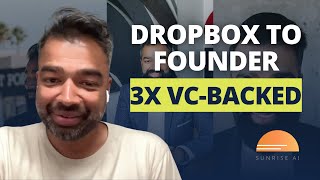
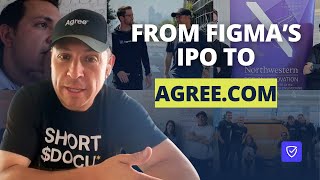
Deepak Srivastava, founder of Sunrise AI, explains how fragmented customer data across CRM, support, and billing systems keeps teams from spotting expansion opportunities and churn risk. His platform ingests a company's own data and surfaces insights through a Slack assistant called Sol, while keeping everything private and compliant. Early customers include OpenTable.
Chapters
All right, well, welcome to the executive Strategy group podcast where we dive into bold ideas, battle tested strategies and real stories from the front lines of revenue growth. I'm your host, Kevin McCann and today's guest is Deepak Srivastava, the founder of Sunrise AI, a company helping post sales teams like customer success and account management use AI to drive smarter decisions without compromising on compliance or data privacy. So Deepak's journey is incredible. He started in investment banking, helped scale Dropbox during its hypergrowth phase, and has since built and sold two VC back startups. And with Sunrise, he's now tackling one of the toughest problems in B2B, turning messy, fragmented data into action. So Deepak, great to have you here. Let's dive in.
Thanks Kevin. Appreciate you having me.
Yeah, no worries. All right, so when I was doing the research on you prior to setting up this whole podcast, I noticed you've had one of the more eclectic and successful founder journeys we've seen from, from engineering to M and A early Dropbox. Love to hear that. And then now a three time VC backed entrepreneur. So what I'm curious and probably the, the viewers are curious on is what's, what's the thread that ties all this together? Give us a little bit of your backstory on where you came from.
Yeah, yeah. I'll give you a little bit of background and context. And you know, I have definitely, maybe now because I'm in my mid-40s and I'm a parent and there's a lot of self reflection going on. So you ask a very appropriate question. What's common thread from a professional context? I sort of tied what seems to be very seemingly disparate experiences, right. Even from my academics and engineering to my banking experience, to startup experience, to becoming an entrepreneur. You know, the headline is that I think I've just always wanted to do things differently and not follow a prescription. But oddly I ended up on a prescribed path initially. And what I mean by that is I like to think of myself as the effervescent transfer student. And it's the first time I'm actually kind of this out loud. But as I think about it and I'm sharing in real time upon my self reflection, what I mean is that I've always done what I ideally want to do, but getting there has always been kind of a loop around. So what I mean by that is, you know, I grew up in Queens, New York. I ended up going to a specialized high school, but I transferred in. I didn't take the traditional path of Getting in from freshman year, I studied engineering. I went to engineering school at Columbia University here uptown in New York. But I transferred in from a different college. I went into investment banking, but my first year out of undergrad I had a very brief stint in consulting. So I then made my transfer into investment banking. I now have been for the last dozen years past, been doing my own startups in the founder space. But I kind of got introduced through it by working at Dropbox, you know, the rocket ship that it was. So everything has always been kind of an alternative route and path for me but somehow ending up with a place that I want to be or strive to be. It's just my way of getting there has always been very alternative. So you know, it's, it's been, it has been an interesting journey and there's lots of learnings and you know, you say I'm a successful founder, I don't, I'm not necessarily sure I agree with that. But one thing to note is that I think I've defined success in a very different way.
That's, that's interesting. It makes me think of a, of a joke. A baby is born in C section, always leaves a house through the window, never the door.
Yeah, yeah.
So, so, so what lessons from Dropbox, especially the scaling of a, you know, B2B motion, that rocket ship you talked about or showing up and how you're looking at Sunrise today and, and the, the process and the workflow and, and building the company the way, the way you have. Yeah.
You know, at Dropbox, you know, were a bunch of different hats, but where I think I really found my stride at the company and it was in its hypergrowed stage, this is going back a dozen years plus now was on the B2B sales side and you know, having an engineering background, even being in investment banking, where a lot of the work as a, as an analyst or an associate, even at the VP level is very much quantitative and analytical. I really learned to be a little bit more front facing, more sales oriented and all the cliches around what I thought sales was as a non salesperson turned out to be absolutely not true. And I had to kind of throw out whatever I thought or believed what sales was to be and have come to a place where I'm doing it almost 99% of my time now having my own startup. But a lot of the foundational kind of learnings or the skillset, and I do believe sales is a learned skill set came from Dropbox. And the biggest learning there was that sales is not about pitching. It's way more about listening and understanding what your customer is asking and ultimately what they need. And sometimes what you're offering is not what they need. And that's okay. But I think that honesty and authenticity is trumps all.
Yeah, yeah. Interesting. Yeah. So that, so it's funny you mentioned that in prep for this, I was thinking like, what was that moment that led you to create Sunrise AI? And I see like, from, from my perspective, we're working with a ton of companies that, you know, really tech companies are trying to grow their revenue. You know, a lot of them are showing up right now saying, hey, we provide AI to enable your business to optimize your workflows to, you know, stuff that's like 50,000ft. And it almost feels like it's creating. It's, it's a, it's a solution for a problem to solve. So like, was there like a moment in time and actually have you identified through that back story you just shared with sales and marketing and stuff like that, was there a moment in time where you said, this is it. I see it. And this is why we're creating Sunrise AI?
Yeah, I mean there's, there's, there are definitive inflection points. I wouldn't even say there was one moment. There were multiple moments. Right. I guess in traditional startup lingo it's, you know, those places of pivot or points of pivot and you know, it, it. I 100% agree with your assessment. There's so much noise in all things, quote unquote AI out there right now. A lot of them are extremely nebulous in their descriptions in terms of how they can add value. But I mean, my demarcation has always been, you know, if my seven year old daughter can understand what I'm doing, then, then I have, I have the pitch. Right? Right. Like, what I'm supposed to be conveying should be super simple, short, and really anyone, for anyone should be able to understand it. Right. So what we do is help our customers keep their customers happy, full stop. Right. So when my daughter asked me, hey, what do you do? What does your company do? That's literally what I said. And she said, okay, that makes sense. Done. Right now you can obviously go into how that happens, what we do, how it works, what's underneath the hood. But you know, for me it's like the shorter your description, the more of a grasp I think you have of what problem you're actually solving. And for Sunrise, it wasn't overnight that we came to that sort of very concise descriptor. It was a bunch of different pivots. And I'd love to say that, hey, I had this brilliant idea and then I went out there and, you know, got a team together and assembled a crew to build this awesome product and now we're out there selling and it's gangbusters. That's just not the reality. And I don't think that's the reality for most startups. I think what you have to do is just be in listening mode. What are your customers problem? And more so than choosing a product to build, I think you have to choose an audience that you want to build for.
Got it, Got it. So if it's okay for me to share this. I think it is. But you landed some early clients, like a big one, OpenTable, by tapping into your network. What's your current thinking around scaling, you know, to go to market beyond? Warm intro. So there's the my network thing or referrals come in. But how do you. And I'm kind of jumping a little bit ahead here, but how would you even like guide other founders and entrepreneurs around? What does a go to market strategy look like once you've tapped your little black book and you're out of context?
Yeah, look, you know, you have to look at your own unique advantages and where you can have an unfair kind of play. And for us, you know, between my co founder and I, we have, we're lucky and privileged to have, you know, 50 years of experience between us. So that black book, that Rolodex is helpful. It's great, right? But it's not sustainable in terms of growth. And for me it's pretty simple. I think your best advocates are happy customers. So if we can have our own customers serve as the mouthpiece out there in the market, make recommendations and referrals, that's the best way, right? That word of mouth, I think it's one, it's very hard to replicate and two, it's instant credibility. It doesn't require me to lace Facebook, Instagram or LinkedIn with tons of paid ads. It doesn't require me to put billboards up in the subway or in Times Square. It's real in the sense that I have a customer that's happy. They then become advocates and cheerleaders. And quite honestly, I think some of the best products out there, that's their most effective channel in terms of inbound leads and engaging with new sales prospects.
Got it. All right, so now I'll rewind a little bit. So for some of the Viewers out there, they don't know what your value proposition is or what the use case would even be for an open table or some of your other clients that you've already signed on. Can you give us a little, I wasn't going to go here, but can you give us maybe a little commercial on it to the extent that you want to, you know, share. But what's the value proposition of Sunrise? What's the key problem that you found? Like I get keeping their customers happy. But like what's the stopping point or the landmines that get in the way of these companies keeping their customers happy that you're taking on for them?
Yeah, you know, like I'll start with the problem, right. And you know, this is after speaking to and I keep a log of this and I think I'm at, I'll tell you real time. In the last six months I've spoken to 239 either CROs, CEOs, VPs of sales, VPs of customer success, from seed stage startups to Fortune 1000 companies. And overwhelmingly I've noticed a huge white space when it comes to all things post sales. Right. So post sales teams, I. E. Customer success teams, account management teams, particularly at enterprises, they're increasingly becoming more responsible for revenue, right. So it's less about blocking and tackling, answering support tickets, it's actually playing a lot more offense. But they're flying blind when it comes to this sort of initiative. Right. A lot of the times customer data, it's fragmented, right? It's across your CRM, it's across support logs, billing tools, engagement history. So the issues that these teams are dealing with are threefold. Expansion opportunities are consistently missed, risky accounts are misprioritized and ultimately there's no unified view of customer health.
Right.
And there's, you know, and we're at an interesting moment of time when all things AI are very prevalent. Large enterprises are facing immense pressure to integrate AI, particularly into high ROI functions like customer success. But data sensitive organizations, right, those that are handling pii, like personal identifiable information, mnpi, material Non public information, hipaa, right. They have deep concerns about AI security and transparency. So what we do is we have one single clear KPI that we solve for on behalf of our customers and that's to boost NRR net revenue retention. And we do that by bringing secure AI powered customer intelligence into their existing workflows of these post sales teams that we work with. So a lot of that is jargon based, but again, if there's one North Star metric for us we help post sales teams boost net revenue retention.
No, we, we say, I totally agree. We see. In fact, I was talking to a good buddy of mine a couple weeks back and we're talking around, kicking around the idea of. Of QBRs, right? So you go and you land the account. Like, everyone's excited. We do the initial implementation and then, you know, whether it's it or services or whatever, the. The relationship can either start to, like, kind of tail off. Or if those people that are traditionally non salespeople get engaged with this customer and provide an ongoing awesome experience, customer is never going to want to leave. Problem is, how do you teach non salespeople to sell and not even sell, but really just guide them and say, like, hey, you bought a great pair of sneakers. What about shoelaces? Or what about a nice bag or fries with that? Like, just basically helping to guide them to buy wherever their next problem lies. So we started talking about, like a QBR software that kind of lays over whether it's Salesforce or HubSpot or whatever. But software only takes you so far. Like, there's gotta be a process around how to get these people to be okay. Asking what they may perceive to be as an uncomfortable question. Are you. Are you kind of bumping into that? Or is your software solution kind of taking care of the whole thing?
You know, what's interesting is that, you know, I think software solutions traditionally, and I mean traditionally, in a sense, in the last, call it, 15, 20 years, when the SaaS type of model has really come into effect. And like, I get all the reasons why, right? You create one piece of software and then you get tons of operational leverage by literally just. I'm oversimplifying this, Kevin, but. Right, it's just copy and pasting for each customer. Now, I think those days are dead or they're about to die very, very soon. You know, it's to me, like having a tailored solution for each customer is the dreamland, right? Like you have, if you're a company, if you're a customer of ours, and you have 50,000 different clients, how can you provide the most tailored experience to each one of those clients? Now, the SaaS model, unfortunately, is very antithetical to that concept. It's literally copy and pasting the same solution. You're forcing everyone to fit their individual square pegs into your round hole. The huge unlock here, I think today, with today's technology, is AI the time to creation. People talk about time to value, yes, but the time to creation of new code, of new products, different Versions, allows or enables folks like me that are heading AI native companies to create something that feels very customized and tailored for each of our, each of our customers. Right. Iopalentier is a great organization that quite frankly I have tons of respect for. Right. When they came on board or came out in the market, a lot of the investor community, for example, had a lot of issues like, oh, this is a services based organization, it's not scalable. But I think they're all eating their shorts now. I think every AI native company has the ability and has the advantage over non AI native companies to be palantir like in terms of being service as a software versus the other way around. Going back to your question originally, you know, for us, the ui, the front end of the software that we have, we are completely agnostic around. Right? It's what's underneath the hood is where the meat or the special sauce is, right. When you unify your CRM, your support logs, your call transcripts, your data warehouses, you're getting true signal. Like I think of these as a very dynamic multivariable equation. And all these variables, all these inputs hold such precious information about your customers. So if we train a specific AI model and run algos that are only and exclusively fine tuned on that data, there's gold to be dug up. And that gold takes the form of different types of versions for each one of our customers because each one of our customers are different types of products, different types of customers themselves. So it's important to be very tailored and customizing those solutions. And I think the delivery of that is no longer a 36 month, $3 million Accenture consulting project and now can be delivered within 30 days because of the capabilities that we have in terms of development.
Yeah, it almost sounds like what I was envision when you're saying that it's like a hotel where in the old days, or today's day, I guess you could say hotel, all the rooms look the same. Maybe they flip the room around, but in your case it's a hotel. But every single room is its own adventure, if you will.
Yeah, Everyone, the core product. Yes. Everyone needs a room. You need a night to stay and a place to lay your head. Awesome. Yeah, but some folks want this type of pillow. Some folks want pink wall paint. Right. Some folks want a 30 inch TV. Some people, some people don't want a TV. But that's, that's the beauty of it. We have the AB to deliver so quickly now.
Hey, that's our next idea. We'll just go create a Hotel and do that.
There you go. There you go. I think supply chain will be a
mess, but we'll figure out a big warehouse out back. Like you said 30 HDB, right?
All right. Yeah, exactly.
All right, so the next question I had was. Oh, oh. So before I go to next question, something you talked about was data sensitive AI, right. So I think there's still a lot of companies out there that, that are intimidated by AI or they're really. Maybe it's not even intimidation, it's just where do I start? Like, like if I say, all right, I'm going to start today and if I pause it and then I, I turn everything on tomorrow, all of a sudden the whole game has changed. It's like, oh, there's like seven more tools you got to evaluate. So it's almost like where do they start? They're maybe intimidated about picking the. Right. It's almost like guessing what the market's going to do. Like do I buy it or do I sell? Now I got to, I got to sell. You know, when it's highest, et cetera, it kind of feels like that. So how are you, how are you helping your customers? Kind of just like let's just get started and this is the roadmap and then talk a little bit more about that, that data sensitivity that's freaking everybody out. Like yeah, HIPAA compliance, you know, government, financial data, all that stuff. Personally viable.
Yeah, it is freaking lots of folks out. But I think with good measure, you know, and let me be self deprecating here on behalf of a lot of AI native founders, unfortunately tons of my counterparts are extremely data hungry. Right. They froth at the mouth for more and more data. And I get that because the more data you have, the more powerful a lot of your models are. And the more powerful your models are, presumably you can deliver a better, better product, right? More accuracy, more precision. Now the issue with that is that if I am, you know, we work with a few fintechs, right? And if I'm a fintech company and I'm housing tons of private financial information on behalf of our customer, their, my customers, that I don't want that information leaving anywhere. I don't want to be sharing that information. So even, you know, there's a reason why there's such a huge red tape around info security reviews at large companies. And I'm actually a big fan of it. Right. It actually concerns me when there isn't a process that we need to go through, a true vendor review process or a framework around understanding if you're sharing data, arbitrary data, with a vendor like us? Yes. Vet me, test me, make sure that our security infrastructure is tight and it's acceptable. Right. We want to make sure that we're operating at the highest standards. Now, where that comes into conflict is with a lot of AI native companies because the goals are misaligned. Right. Typically, someone in my seat will want more and more data, but then use each customer's data to cross train, share data. Right. Now I get the benefits of that, but what you're also doing is breaching security, quite frankly. And that's one of the reasons why tons of C level folks at traditional or legacy companies have been slow to actually deploy AI on Mosque. Because there's a real and I think valid concern around that that led me to believe that, okay, as we're developing our product, we want to go in the complete opposite direction. Right. So we make things single tenant, we don't cross train. Our architecture is tight. The data that we ingest from our customers is exclusively used for their own use cases. It's a locked box, to put it in Al Gore terms. Right. Nothing ever leaves. And that's important for a lot of the customers that we work with. Right. It all comes down to trust, right? From day one, we took the harder path, but knowing that our customers trust us with their data, it's important. We don't want to breach that trust. And it is a little bit antithetical to, I think, the broader market, but I think it's also what's earning. It's allowing us to earn a seat at the table and become a trusted partner as enterprises become more and more comfortable actually deploying AI versus simply testing it or experimenting with it.
Got it. All right, so taking that and pulling it into a bit of a use case. You mind if I bring up another OpenTable segment we talked about a couple weeks ago?
Yeah, sure. I mean, I'll, you know, we got a press release coming out to the extent again. Yeah, I don't want to divulge any
state secrets, but yeah, yeah, exactly. So the use case that you shared was just things like predicting, you know, churn segmenting actions, optimizing resources. Like, I think the big thing is like, if I can get the sentiment that hey, this customer's not happy and we may, to your point, be counter counter to our key metric, which is keeping customers and having that revenue stay with us. How does, how does this work? Like, what's what, how does it work to the extent that you want to share and then what impact has it had in these early days with these clients you brought on board?
Yeah, I'll keep it high level, but it's fairly quite simple. Right. If you think about any large company, they have been really. I don't think data is the issue. There's tons of data. It's how do you extract the insights? Right. People are not data starved, they're insight starved. And in the case of some of our largest customers, they have decades worth of information on their customers. Taking that now has become very easy in the sense of like an API first world. We can easily dynamically plug into that data and understand historically and currently what customers are doing, what is their behavior, what products are they engaging with, how are they engaging with your staff, with your company? Right. All of those point to signal in terms of whether this customer has a high LTV potential or a low LTV potential. Are they primed for upsells and they're happy or are they at risk for churn? There's, you know, and I'm almost thinking about, just put it into very plain, simple terms. You know, there was like lead segmentation analysis tools, you know, Web 1.0, Web 2.0. I think we're in a very different era in understanding that. Right. So knowing what your customer is going to act like those predictive analytics even before they become a customer, like you can get in front of so much more and that just steams with tons of efficiencies. You'll know how to better allocate your resources. You'll know where to spend your time moving up the value chain. You'll also know what type of customers to be going after in terms of re evaluating, dynamically understanding your ICP. So these are the things that I think AI can unlock in a lot more like Web 3.0 type of version versus what companies have been doing in the old legacy B2B SaaS model type of environment.
Yeah, exactly. Love it. Awesome. All right, so before we jump into your vision for leadership in the future, any new products or new features on the product side or new functionality that you're excited about that you're open enough to want to share for the viewers of the podcast to let people know what's coming down the road for Sunrise?
Yeah, A lot of our initial versions of the product tended to focus on sales leadership and custom reporting and insights. What I'm really excited about and what's been getting a lot more traction is tools for folks that are like boots on the ground, right. Directly with customer success managers, even account executives on the Pre sale side. You know, because we're piped into so many different repositories of customer information at our clients, we essentially started toying around with what's, you know, what we call so lovingly Sol. We have a whole sun theme going on, right? And Sol essentially lives in Slack or your Microsoft Teams. And it essentially is a mini chatgpt that that's trained off of your customer data that can give you proactive insights and alerts that can answer any questions that you have. And we're loving the fact that a lot of the folks that we've been testing this out with and having it in front of them, they're just, we're just saving them hours worth of work. They're not having to do the homework of going through 19 different tabs, perusing through Salesforce history, understanding if invoices were paid or not. Now we're cutting off that 30, 45 minute per call homework or pre work that usually reps have to do. We're cutting that down into like three seconds of a prompt that they get in Slack. So that's like a direct result of all the work that we've been doing underneath the hood and now just kind of aggregating it. Aggregating it and boiling it up for, you know, the boots on the ground, which has been super, super fun and we'll see how that works. But it's been, hopefully it becomes a norm for all companies.
So I heard you say, would you answer any questions that those customer service reps would have? That therein lies part of the challenge I've seen with some of my customers. Like, yeah, this is great chatgpt. I get a blank box, kind of like Google back in the day, ask it anything. And they're like, what should I ask it? So part of it's like back to you said, we're not data starved, we're inference or you know, what was inside stuff. Insights are so. So is your tool, is it sending a message to the customer service rack in Slack that says, hey, Deepak, just shot off an email, looks a little pissed off. You may want to jump on it as opposed to just being there so that they could ask, is Deepak happy today? Like, you know what I mean? So it's like the proactive versus the reactive. I get reactive. But in a lot of cases, without the proper training, as we've seen with prompting, customer service may not know what to even ask the damn thing.
That's exactly right. And look, honestly, the first like beta version of this several months ago, it was a lot more reactive, like, hey, here's a tool. Let's see what kind of questions people ask. And they use it a little bit, but weren't proactive about asking questions. So we kind of had to prompt. Right, we, you know, prompt the prompter. Yeah, we had to prompt the prompter. Right. So I'll give you an example. Just a few weeks back, we're like, you know what, let's, let's see if we can connect into the reps calendars. So now we connect into their calendars. Now we see the calls and meetings they have scheduled. We're already piped into the CRM. So now we have a lot more context as to which meetings are happening. Let's dig into the CRM history. Great. What's this meeting about? What's going to be helpful? And this is where the agentic workflow comes in. You know, my, my CTO and I, we basically sat down and said, okay, if you had a meeting with this customer at 10:00am on Thursday, what is it that, what is the homework that we need to do? So I would go into the CRM, I would look at chat history like, oh, they touched this account manager or the salesperson. I'd probably call up the salesperson. Give me some context. Right. Just to prep for that meeting. What is the goal? What is the opportunity? Is there an upsell? Am I trying to mitigate churn? What's the goal? So all of that work we can identify. That's a word, right? And that's where we had to unlock. We're like, all right, let's be proactive. Hey, Kevin, you have a call at 10am with XYZ Company. This is what you need to know. This is the goal. Anything else I can do for you? That's where we started seeing a lot more traction where people were then engaging. Because then it'd be like, yeah, well, can you tell me the last time we talked to blah, blah, blah, you know, so like it. Prompting the prompter is exactly what was important, but we needed to give it context and do some of the background homework in advance.
Right? Yeah, it's like Jarvis, setting, sending. Setting you up or setting up your day for you. Love it.
Yeah.
All right, so now shifting to leadership and vision. So from, from your seat, what are you seeing as some of the biggest shifts happening in AI and go to market tech right now that founders really need to be paying attention to?
Yeah, you know, I think, I think there's going to be an increasingly discerning eye for vaporware. You know, there's, there's a lot out there that's promised but not much that's been in terms of delivery. And I think setting the right expectations is important. Startups are always just trying to figure it out, right? So it's always a bet to work with a startup, especially if you're an enterprise. But certain enterprises, they're not going to be first movers, they're not going to be innovators, which is why I think enterprise sales is the difficult road, but you know, risky. A lot of that risk in terms of like time spent can turn into a pretty huge reward in the form of a large paying contract. So I think the execution risk is high when it comes to all things AI. And this is what I tell all enterprise prospects and buyers of our, of our product. Like, let's start small, let's do this, let's start with this one team. Let's start with, you know, a few folks, let's make sure it's successful for them and then roll it out in a skillful way. It doesn't need to be en mass on day zero.
So I think here's the, here's the vision or here's the roadmap that like we want to start with. Not like leave it open ended like hey Deepak, let me know what would you like to do or what's your vision for it? Because in a lot of cases they're going to say like you're going to be like, I don't know, I, what can you do for me? So it's some of that ping pong. So when you show up, are you saying here's our prescribed path for you and at least that way there's something on the table for them to say that sounds good, but if we could take a little bit of a right over here, that'd be even better. Is that how you guys approach it?
I think similarly, yes. So what I found to be the most effective approach is like, look, this is what we've done with others. This is what has worked that we've seen. Right. Because it's all new. Now. What are you focused on? Oh, you're focused on a few different things. Okay. This is how we tweak it. This is the journey for deployment. This is what we'd focus on. Upsells versus churn or information servicing or unifying disparate systems. What is your main priority? We'll over index on that and then the appropriate front end experience will then craft that's very tailored to that specific customer. So Whether it is a slack prompt or maybe it's just a report, or maybe it is a dashboard, which I don't like. But what is it that we can ultimately deliver? Is it just segmentation? Right? Is it dynamic? Is it static? These are all open ended questions for us. I again don't want to put any of our customers, have them forced to use, use our product or use our services in a certain way. I think leaving it, having a collaborative discussion with them in terms of what they want I think has always been beneficial and that's where you get a win win. We learn and they get something that feels a lot more tailored to them.
So what do you recommend instead of dashboards if you don't like dash?
Oh, I think the new world is all like text and conversational now, right.
So you don't even like if I, if I want something in the moment, why do I need a dashboard that's just populating? I'll just get that thing right, right then and there.
Yeah, exactly. Right. I'll have create the dashboard real time when I ask for the specific type of information that I'm looking for. Right. Instead of me digging through something or, or even worse, having someone create a dashboard that has to be refreshed and retooled and updated. That's a lot of, that's a lot of lift, right? We don't need to have that. That function can be circumvented now.
Yeah, yeah, good point. All right, so using your crystal ball, you look into the future. What do you think a fully AI augmented customer success team looks like three to five years from now?
It's a hard question because I definitely can't predict the future. Right. But what's fun about the role that I sit in is that I feel like I have a hand in kind of crafting that future because I'm at the forefront of what people want. Right. And I'm in a very, very privileged place to then think about like, oh, this is what you want. This is the technical feasibility. All right. I can mash that together and that's what the future solution or set of solutions look like. Right. But you know, as I think about, I'll mention two things, right. One is I think it's going to be even more AI will be even more and more embedded. Right. The stuff that people don't like doing will further and further be away from people spending time and wasting energy and mental bandwidth on which I think is a good thing in general. Right. That leaves room for more strategic thinking. Your QBR Example is like you can hit a button, it's going to be there, it's going to be great. Right. Versus you spending the time or putting a slide deck together in PowerPoint. Right. That's a very clear case of like just workflow automation. That's AI based. Awesome. But I think the important part is, and I'm becoming more and more of a subscriber to this thought, is that, you know, our relationship with machines in general, and now I'm getting a little bit metaphysical here, is that, you know, we, we use machines to qa. Right. You know, if you think about like a factory, right. And you're like pumping out widgets, you know, you have machines and technology that will make sure that those widgets that you're pumping out are compliant and according to standard. Right. It was always a QA tool, but I think it's flipped now. Right. Because I mean, I just think about my own SOP when I'm kind of thinking about, you know, when I use ChatGPT to draft something up and use it as a sounding board. It helps with like a cold start problem. Hey, draft this like one page write up on XYZ topic. I'm actually the QA now, right? Yeah, yeah, like they're doing the work and I'm the qa. So I don't, I continue to believe, especially in the next three to five years. I don't think we're like writing out the human. Right. You're putting the human in the loop. But I think the dynamics and the relationship with the machine, with AI has changed. Where we are the QA portion now, which I think is interesting and I think that's going to be more and more amplified as time goes on.
Yeah, love it. All right. And then pulling it back to Sunrise AI. So paint the picture for us on what, what does success look like for you and for Sunrise AI over the, say the next year? We'll just say over the next 12 months. Because I know even that's a long Runway doing what you're doing right now.
Yeah. Look for us, we want to just convert more and more partners of ours to happy customers. More tangibly speaking, that's one, you know, growth in the business. Of course, what founder doesn't want that. But more tangibly speaking, our students, I truly believe, like our approach can be very widespread. But I'd love to get signal on which two or three verticals where we can really make an impact. And you know, there's signal around fintech, healthcare tech, hospitality. So these are awesome use cases that we've just, the team has just had tons of fun exploring. I'd love to get a little bit more acute in terms of knowing, like, yeah, this is our icp, right. So we're still very much in the early stage of really honing in on where the most opportunity lies. And the third thing is in you. You asked, and maybe this wasn't necessarily the context, but you asked, like, what does success look like not only for the company, but me and the company personally. Right. Like, personally, I. And this goes back to something I mentioned earlier. Like, you know, what do I define success as? So, like, I want to continue to be successful, but my measure of success is different. Like, I think of what I'm doing right now, founding this latest company, Sunrise AI. Like there is no other job I'd rather have, right? To have complete autonomy around my schedule to meet with folks that I want to meet and not meet with folks that I don't want to meet. Right. And then to be lucky enough to literally hand pick the team that I'm working with, like, I get to choose who I work with every day. Like, that is such a privilege. Like, yeah, I feel like I've hit the lottery. It's great, it's awesome. I'm building something that I really truly enjoy. I'm solving a problem that I'm have a high academic interest in and have lived myself. I'm working with people that I love. I'm working with customers that I love. So like I'm. I'm good. Like, yes, of course. A billion dollar unicorn exit would be awesome. I'm swinging for the fences here. But like, this is great. This is great. And I think, you know, and again, maybe this goes back to me being midlife and a parent just thinking about what the definition of wealth is. So what does that success look like for me? It's doing exactly what I'm doing today, right now.
It's. Yeah. And don't forget to spend time with those kids. It's critical. I know that' important to you. I just got back from a week long trip with my daughter. So I've got a son and a daughter. Daughter's 22. She just graduated from Bentley and she and I flew into Salt Lake City and rented an RV and did a seven day trip. We hit Arches and then Canyonlands and Capitol Reef, Bryce and Zion and then back up to Salt Lake and it was just.
That's amazing. That's amazing.
That's the thing right there.
You hit the jackpot right there. That's great. That's like winning the lottery.
Exactly, exactly. And the week before that, I got to be with my family, with my son as well. We went to the new Epic park in Florida. Like right at the Universal. Epic.
Yeah.
Pretty cool. It is Epic. I'd recommend it for your kids.
All right, that's going to go on the list. Kevin.
Well, so this is fantastic. I really appreciate you pulling back the curtain, sharing a little bit about yourself, your background, Sunrise AI and, and just like getting us ready for what's to come with you and your company. If people are listening and thinking, we've got customer data all over the place and we know that AI is important, really don't know where to start. How can they get ahold of you? Like, what's the best way for them to reach you?
Email. Old school. Totally fine. Deepakunrise AI or just find me on LinkedIn. And I'm always willing to rap with folks that want to talk anything gtm, AI or otherwise.
Perfect. I'll make sure Colin puts that in the show notes too.
Appreciate it.
If there's anything else that if any, any of your watchers are curious about, go to market strategies and AI incorporating into that, I'd be happy to have a conversation. I'm sure Deepak would love to jot up with you guys as well. Last, last question. Are you building any kind of a partner network to go to market or is it right now just direct to the end users?
It's direct to the end users. However, we have been contemplating kind of more traditional, traditional kind of channel type partners as well, which has been interesting and there may be a few opportunities that, you know, we're, we're digging more and more into now.
All right, well, I'll sidebar with you about that later. That's, that's something we're interested in these types of things because I see some, some potential opportunities together.
Wonderful.
That's awesome. Well, thanks so much, Deepak. Really appreciate it. Thanks for being on the show and we'll talk to you soon.
Wonderful. Thanks for having me, Kevin.