MVI 0031
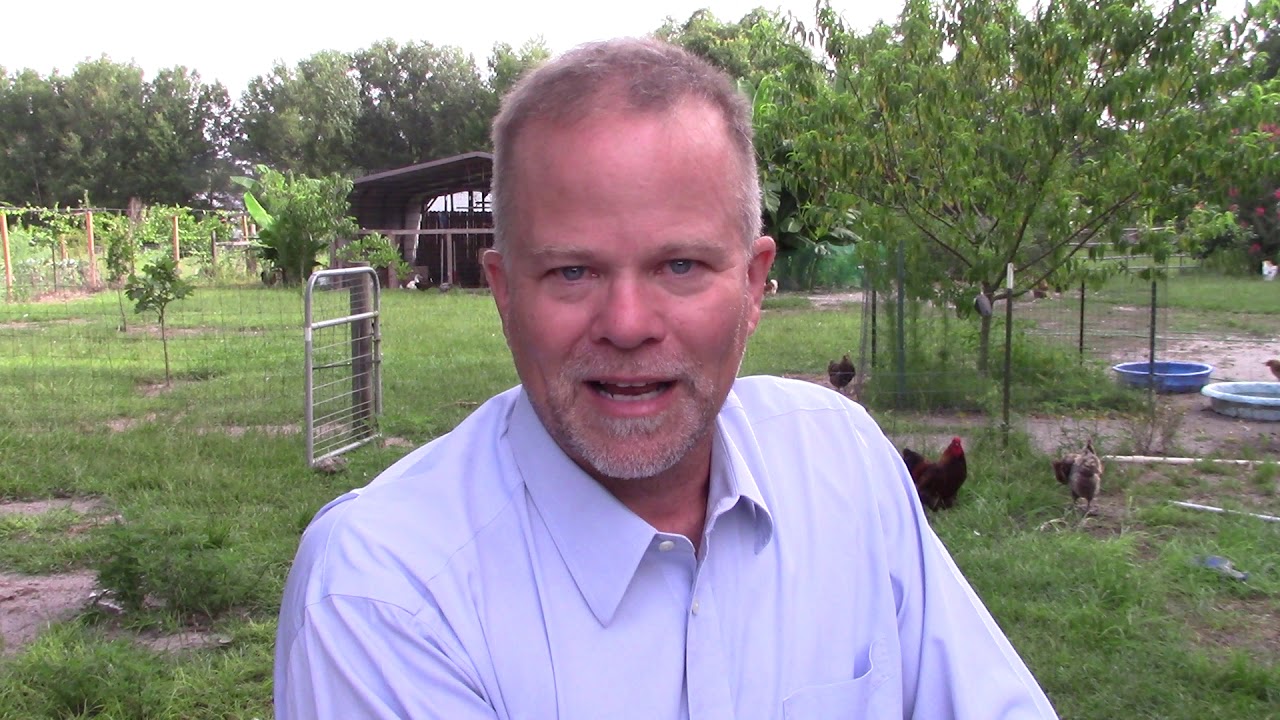
Plant geneticist Kevin Folta explains how GMO crops reduce pesticide use and saved Hawaiian papaya from viruses. He debunks the claim that plant viruses in GMO soy could recombine in animal guts to create a pandemic-like supervirus, and addresses why public mistrust of GMOs grew from poor communication by biotech companies.
Chapters
Okay, that's actually not too bad there. 1, 2, 3, 4, 5. 5, 4, 3, 2, 1.
Can you hear me, Ben?
Hi, everybody.
Nice. Hi, Kevin.
Hey, good morning.
Hey. Hi. Hi there. How are you doing?
Doing all right. Doing all right.
Hey, thanks for joining us here.
Hey, there's you. Hey, is my video on?
That's me. I'm another guy.
Yeah, that's the other— that's the other guy. My— I'm, I'm not on. I'm, I'm the one who reached out to you. My name is William, and this, this is Ben here. He'll actually be doing the interview.
Gotcha. Hi, Ben.
Hi. Where are you, in Texas or Florida? Oh, in Florida.
Yeah, Florida. Yeah, and so you asked me to record this independently, and so the video I have independent of this has really nice composition. So I'm a little bit off to the side here on the Skype, but I got you.
Okay, nice. That's excellent. That's perfect.
Yeah, that looks good.
Yeah, my composition's better on the real screen.
Great. How's the, how's the COVID situation in Florida?
Bad in the state in general. Everything's escalating as we predicted. It looks like we have record numbers of cases this last week in terms of daily numbers. We have very little interest in self-protection and protection of others in general. Mask use is probably at 30%, groups getting together all the time, things are very open. So it's kind of the recipe for disaster, but I'm safe. I'm out here. I'm a long way away from anybody else.
Where are you in the state?
We're in the north-central part of the state, so up near Gainesville. I'm about 10 miles outside of Gainesville, which is 2 hours from Jacksonville, 2 hours from Orlando, so kind of in the north part of the state. And I'm about, you know, 15 minutes out from the next— I'm 15 minutes from a Walmart, let me put it that way.
Okay.
Gives you an idea of where we are.
So it's pretty rural, yeah?
Yeah, we live on a farm out here. We have 17 acres and it's a gorgeous place to be.
Okay, nice, nice. Well, good you guys are safe and stay out of the madness.
Yeah, well, give me the scoop on what you're looking for here today. Like, you know what, give me a little sense of the project and, you know, it'll help me hit your target a little better.
Mm-hmm. Well, we're— it's, it's kind of a listicle, I guess that would be the best way. It's not really a full-blown documentary. It's it's meant to run about ten minutes or twelve minutes, and what we're going to do is just kind of go over some of the more common conspiracy theories that have been floating around over the and gained some bit of traction over the last couple of months. We're also going to focus on a few of the ones that are more Asia-centric or or reactions. In Asia to some of the bigger conspiracy theories. And essentially we wanted to try to bring on, you know, experts as it were to refute or at least speak to how plausible some of these theories might actually be. So I had seen the podcast that you did and pretty much what you did there Is what we would want you to do here, except to be a bit more succinct because—
Got it.
Our video is going to be so short that, that I think I said, as I said in the email, maybe like if you can keep your answers to kind of succinct 1-minute to 1.5-minute answers, as to the extent that that's possible, that would, that would help us because we don't want to take up 20 minutes and cut it down to 30 seconds.
Yeah, got it. Yeah, no, I'll keep it super tight.
Yeah, and of course, go ahead and, you know, say as much as you need to give the answer that you're happy with.
Oh, sure.
Yeah. And then we can go ahead and if we have to cut, we can keep true to that, but just give the most important bits.
Yeah, I do a lot of that. So that's why I asked what your frame was, because I'll be able to hit it pretty good.
Yeah, yeah, short and sweet would be the easy answer to that. So you saw the questions that we have, and so we'll go ahead and we'll hit record, and I'll shut off my audio, and then Ben will go ahead and ask you the questions, and then you can just go ahead and have the conversation with Ben.
Okay, and Ben, my camera's up here. So when I'm answering, I won't be looking at you here, okay? Just for you, just from your side as filmmakers, you don't think I'm crazy, okay?
Yeah, yeah, yeah, you just go ahead and focus on the primary camera. Just to ask, is that camera also recording audio as well?
Yes, it is.
Okay, great, great. I'm gonna Ben, you've got your questions there?
Yeah, I'm all good to go.
Okay, I'm gonna shut off my audio and then I'll just let you guys have at it, and then if there's something that I want to ask further or chime in, I'll do that. Okay, then we want to go ahead and record on our end.
Yeah, yeah, I'm recording now.
You're recording now? Okay, great. Yeah, so Kevin, you go ahead and just hit record and then we I'm already recording. Okay, awesome. Okay, Ben, I'm gonna go off audio now. Cool.
Okay, so just me and you now.
Okay.
I'll start off with, so in very simple terms, what exactly is GMO tech and what are the most common GMO applications related to crop and food production?
Well, genetic engineering is the process of adding a trait to a new plant by moving a piece of DNA that encodes that trait. It's all done in the laboratory and is really just an acceleration of what we've been doing for 10,000 years with traditional breeding, just getting all of the traits in the right place, this time by using recombinant DNA technology.
And what are the most common applications for this that we see every day?
The most common applications that you see for genetic engineering in plants Our introduction of resistance to insects, resistance to herbicides, or resistance to viruses. It's those 3 things primarily. The insect resistance allows farmers to use less insecticide. The herbicide resistance allows farmers to use less diesel and less labor by controlling weeds with a very low toxicity herbicide. And virus resistance has been brilliant in papayas and squash, mostly in papayas where it basically saved an industry in Hawaii.
Right, so it all sounds very helpful, but obviously there's a lot of misconception about it. The public have a lot of fear about what is GMO, am I going to die if I eat something that's GMO? Why do you think so many people have this attitude towards it?
Well, all the fears and misconceptions really come from the fact that genetic engineering was rolled out by companies that didn't take the time to talk to the public. They didn't talk about why they were doing it. They just had great technology that they knew farmers would love, and farmers were ultimately their customers, right? They're buying the seeds that have this new technology. And so the companies were largely ignorant of what the public wanted to know. And with the internet coming on, it allowed for a perfect storm where misinformation could really dominate that conversation, and companies stayed out of it. Scientists stayed out of it. And what we ended up with 20 years later is a very asymmetrical discussion where activists and others that didn't like big companies were attacking the food and the products that they made, the seeds really that they made that gave the ingredients that ended up in our food. And so with that, it was a perfect storm. And this is what led people to be so afraid. The misinformation online is amazing.
So it really is a case of just a failure to communicate all of the good things that come with it.
Well, it's 1,000%. It was a failure to communicate. It was the big companies at first, then it was on us, the scientists.
And what do you think about theories put forth by, you know, so-called anti-biotech activists such as Vedanta Shiva that basically say that viruses have gone from GMO soy that's just used in animal feed, and that's been hybridized with viruses in the guts of pigs to then create a super virus like SARS-CoV-2.
Well, the problem with Vandana Shiva is that she makes things up, and this is another perfect example of something that is not only not true, it's biologically impossible. You don't have viruses jumping kingdoms like that, where plant viruses would somehow infect And there's been a lot of discussion about this in the alternative truthiness press where people have made these claims, but time shows that she's wrong again. She's been wrong for decades on this topic, and many of her predictions— most of her predictions, most of her assertions just don't come true.
Why do you think people are willing to believe that?
Well, people believe her because She has an image and a— she's constructed an image where she comes out and says, well, I'm worried about the farmers, I'm worried about the earth, the Mother Earth. And, you know, you gotta kinda like that. You gotta appreciate that she has those concerns, the same as ours. The difference is, is that she has an agenda, and it isn't to help the earth, and it isn't to help farmers. It's to stop large corporations. And you'll hear her say the multinational Monsanto, you know, over and over again. It's really about that. And so that agenda is what's driving her copious misinformation.
Fair enough. So just to rewind it, we covered that viruses are used in these GMO technologies, but how and why are we using viruses like this?
Well, viruses are very good at doing something important, and that's invading cells and also expressing genes at a high level. So in human genetic engineering, this is amazing, we have viruses that are delivering genes to the eye that allow people to see. We're seeing new viruses, well, old viruses like herpes virus, poliovirus, repurposed to attack cancer, and it works. So viruses have been— have a very strong place in therapies for humans. In plants, it really is just a control element. Something called a promoter. It turns a gene on, and it comes from the Cauliflower Mosaic Virus 35S promoter. That's what it's called. But it's a piece of DNA that allows the gene next to it to be turned on at a high level. So if you want high insect resistance, you put the Cauliflower Mosaic Virus 35S promoter upstream of that piece of DNA. And that's all it is. It's just a control switch, and it's just a control switch that's Always on at a high level.
I'm just gonna pause there for a second. Sorry, is there there's like police cars behind you?
Not anymore. Yeah, they went by.
It was that was a thing. Yeah, we can redo it. Let's get you to just repeat that that that answer again.
Sure.
Thank you very much.
So give me the last end of the question.
Okay. Yeah. So so basically. Why and how do we use viruses in GMO technology?
Well, viruses are very important in genetic engineering because they have very useful life cycles and have great attributes. The best example that's happening right now with viruses is in human therapies like cancer, where the poliovirus, the herpes virus are being repurposed to attack those dreaded diseases. We also have issues with vision. where people are being given new genes via a virus that restore their sight. In plant biology, we use one part of a virus. It's called the Cauliflower Mosaic Virus 35S promoter. And the Cauliflower Mosaic Virus 35S promoter simply is on at a high level all the time. And so when you have this virus, this piece of the virus, it's a control switch. You can put your gene of interest, such as insect or virus resistance, adjacent to the This promoter element, and it'll turn it on at a very high level, and that's why it works so well.
Thank you.
Okay, so, um, what do you think about people like Ronnie Cummins and his theory that things like habitat destruction, factory farming, poverty, consumption of GMO foods, and all these other things are helping to contribute to the rise of COVID-19?
Well, Ronnie Cummins is an interesting personality who really isn't necessarily in favor of organic farming, which, which I am. Cummings is anti-biotech, and he tries to make any connection that he can between biotechnology and anything that's bad. That's what he does. Now, when I read— when you say that he's making connections between climate change and forest destruction and all these other attributes and COVID-19, he's not exactly wrong. Because COVID-19, just like many other viruses that are potentially zoonotic, meaning they can transfer to humans, They're present in wild animal repositories. And as we begin to encroach on animal space, destroy natural habitat, or have climate change it, those zoonotic viruses now are more adjacent to human populations. Genetic engineering, while the food has no way that it can transfer COVID-19 or the SARS-CoV-2 virus, the fact that land is cleared to produce more genetically engineered crops or any crops, you know, could be anything that's being farmed to feed people. That could be potentially something that could contribute, but that's quite a stretch to say that it causes COVID-19.
Okay, and so just to move out of the GMO realm and to look at some of— I mean, you've talked a lot about COVID-19, GMO foods, and all this kind of thing, but there's a lot of conspiracy theories out there from 5G networks making us susceptible To COVID, to Big Pharma, and it's all part of a government conspiracy. What do you think about all of this in relation to all these conspiracy theories in relation to COVID?
Well, when COVID started to break in early 2020, at least predominantly in the States, I thought this is going to be a watershed moment where we start to embrace science and forget about conspiracy theories. Man, was I wrong. You know, it's— but it's a very typical Of course, whenever we have science, and science gives answers that aren't definitive, we never say always and never. What we say is, here's the way it looks to us, and sometimes we're wrong. And in the case of COVID-19, scientists and the advisors from national health organizations have been essentially building the plane as they're flying it. We're learning as we go. New data is constantly coming in. And so with all of that new data— stupid geese are walking by.
I'm sorry. Hang on.
Let me shag them out of here.
Get out of here.
I'm sorry. They're so noisy, and I know that's going to be a problem on your thing. I mean, get them going.
Yeah, the geese need to make their way. I don't know if all the farm noises make him sound more authentic.
Yeah, we can introduce him as like being— you're live in a, in a wet farm, in a wet market.
That's right, we're gonna eat the— yeah, well, let me try that one again. So the, the, the, the— what was the question again? Oh yeah, what about conspiracy?
What are your thoughts on this whole conspiracy theory with regards to COVID?
So in early 2020, when COVID really started to become a major news story, I thought this would be a watershed moment. I thought this is where we finally will start to accept the science. and science will dictate policy and our personal opinions going forward. Man, was I wrong. Conspiracies are a perfectly natural part of this process, it turns out, because scientists speak in a soft language. We say, well, I— the scientist might say, well, this is the way I understand it now, and that may change. And the general public looks at that as weakness and flawed, when really it's a strength. We're Revising with new data. We're coming up with new guidance based on new information. And so conspiracy comes from that because some people profit from it handsomely. Others have an agenda to take out the government or major corporations or individual people or political opponents. And conspiracies are all part of that framework. The sad part is, is that it distracts us from the real problem, which is saving people from a pandemic.
Right, makes sense. Okay, so final question just to finish off. With all of this, with all of these mixed messages with regards to GMO technology and COVID, if you had to sum it up in one soundbite to tell people to stop thinking like that, how would you put it to them?
The bottom line is, is that we have to pay attention to the experts, and we have to pay attention to the science and the data. Because when we start to let the noise of the internet guide our decisions and change our policies, people die, people get sick, and we don't end a pandemic. The only way out of this is going to be through science, through vaccines and therapies. But we're going to have to rely on the scientific enterprise to get us there. That as long as we're listening to You know, politicians, folks online on Twitter, or somebody's aunt, we're not going to solve the problem of an international pandemic.
Perfect. That's great. Yep, that's the last question. Do the geese want to make an appearance on camera?
No, they— Yeah, actually, actually, that would be— that'd be pretty cool, Kevin, if you could. Can you pick up one of them?
I might be able to.
Can I move over to the camera?
Let me see if I can get it.
Yeah, you can.
Sure you can. Geese are the most dangerous animal on the planet.
No, they're cool. Maybe if you're pretty quick.
I could get a duck.
Yeah, duck. Something to—
I have, um, I have, I have a duck who's not doing real well and I can grab him, but the geese are pretty quick. Hang on just a second.
Okay, how about a duck? Holy hell! I got it, Brooks!
Okay, okay, okay, okay, okay.
Wow, you got it! All right, buddy.
Okay, you wanna—
I gotta—
you have a question for the duck?
Yeah, uh, Mr. Duck, uh, what do you think about COVID Why are your people spreading COVID?
Uh, he's— if I could get him to scream Aflac, it would be great. You know, health insurance and all that stuff. But he's, uh, Yeah, he's a good guy. Any other thoughts or things I should—
No, I think we're good. William, you okay with that?
Yeah, that works for me. I think we hit all the points. That was clear and yeah, I wouldn't add anything to it. Cool.
Yeah, tried to keep it tight for you, so you know, the answers are a little incomplete but under a minute, so.
Nice, nice. Thanks so much.
All right, well, good stuff. Let me know when this turns into something. I'd be glad to promote it for you, okay?
Definitely. And if I have any follow-up questions, I'll drop you a quick email.
Yeah, cool. My schedule is pretty flexible, so if we got to do any other follow-ups, give me a holler.
Okay, thanks so much, Kevin.
All right, thanks. See you later.
Thank you, Kevin.
Oh, Kevin?
Yeah, I'm here.
Sorry, sorry. Yeah, the video file that you recorded. Yeah. Um, maybe like a WeTransfer file? Do you know?
Yeah, that's what I was thinking. So I'll get it to you. I'll do WeTransfer.
Yeah, WeTransfer would be perfect to the email that we use.
Yeah, I probably won't— I won't trim it or anything. I'll send it as is. Okay.
That's perfect. Thanks so much.
All right, good stuff. We'll see you later.
Thank you, Kevin.
Thank you, Zach.
More from Kevin



Talking Biotech 503 - A New Strategy in the War on Obesity. Dr. Erik Issacson, Wave Life Sciences

Organic Production, Conventional Agriculture, Health Anxiety, and Social Media Disinformation

Stop Political Appointees from Grant Decisions - Dr. Colette Dalawalla, Talking Biotech 501




