Talking Biotech 031 Coffee Origins, Breeding and Challenges
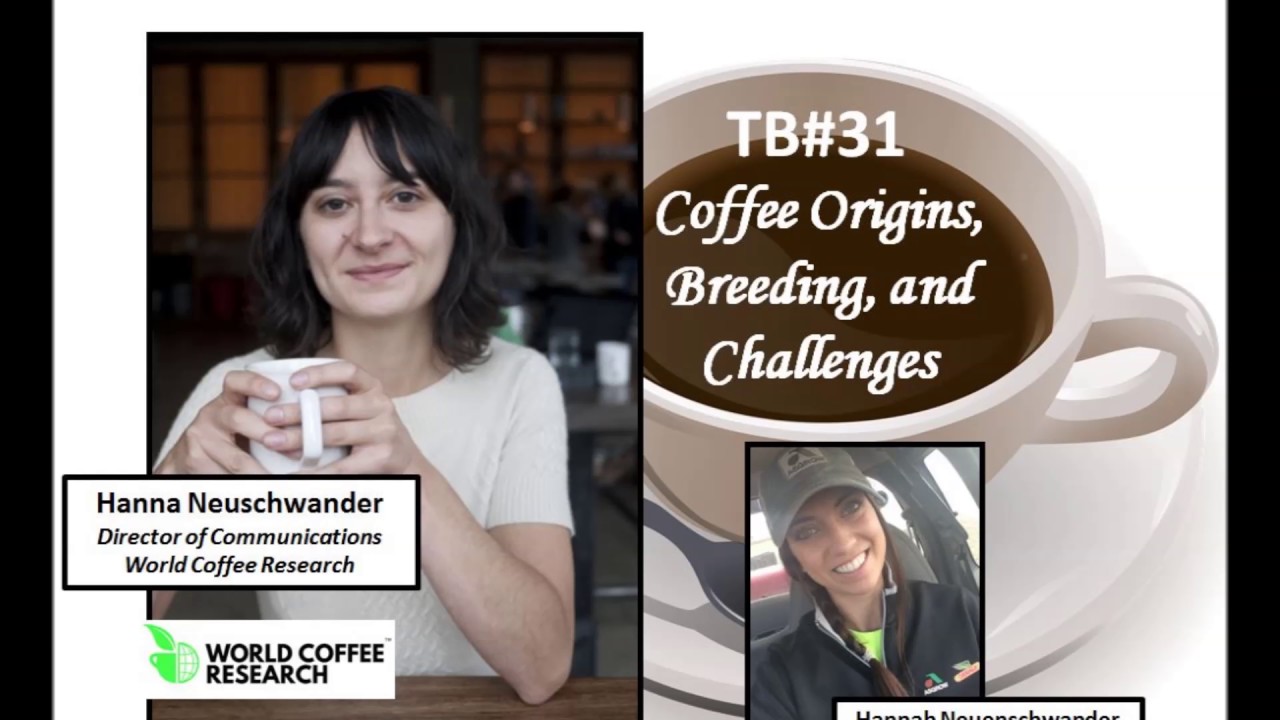
In this episode of the Talking Biotech podcast, host Kevin Folta explores the biology, history, and future of coffee with two guests who share a name: Hannah Neuschwander, Communications Director at World Coffee Research (WCR), and Hannah Neuenschwander, a soybean quality‑control specialist at Monsanto. Folta opens by declaring coffee his personal “performance‑enhancing drug” and frames the discussion around why a staple beverage matters to global food security. The conversation covers (1) the taxonomic background of Coffea, the split between Arabica and Robusta, their evolutionary origins in African high‑altitude forests, and the path of domestication from Ethiopia to Yemen to worldwide cultivation; (2) the complex post‑harvest processing chain (fermentation, drying, milling) that most consumers never see; (3) the alarming loss of wild coffee relatives and the fragility of existing gene banks, including the limited number of well‑maintained field collections and the challenges of preserving a tree‑seed crop; (4) the major biotic and abiotic threats to coffee production—leaf rust, coffee berry borer, leaf miner, drought, and climate‑driven stress—illustrated with historic outbreaks and their socioeconomic impact on smallholder livelihoods; (5) the state of coffee breeding, from the historic Timor hybrid that introduced rust resistance, to modern hybrid and “Arabusta” programs, and the bottleneck of long breeding cycles; (6) emerging tools such as molecular breeding, marker‑assisted selection, and the potential (but industry‑averse) role of genetic engineering, including decaffeination and disease‑resistance trials; (7) the shift in breeding priorities toward coffee quality and flavor, driven by specialty‑coffee markets, and the need to align agronomic traits with consumer preferences; (8) the socioeconomic landscape of coffee production, contrasting large‑scale mechanized farms in Brazil with smallholder, steep‑slope farms in Central America and East Africa, and the vulnerability of these farmers to market and climate shocks; and (9) ways listeners can support WCR through membership, volunteering, or social‑media engagement. Throughout, Folta’s tone is enthusiastic and advocacy‑driven, emphasizing that scientific solutions are essential for a stable, equitable coffee supply.
Chapters
I want to see science serve a useful purpose to improve the standard of living for all people. Hey, why is anyone fighting food advance? A very small percentage of the world's population is fortunate enough to have the luxury of turning down food. We've arranged a society based on science and technology in which Because nobody understands anything about science and technology. You can't build a peaceful world on empty stomachs and human misery.
You're listening to Talking Biotech, a weekly podcast illuminating issues in agricultural and medical biotechnology. Your questions and concerns are addressed using a science-based approach with the goal of driving discovery to application with communication. Now here's your host, Welcome to Talking Biotech.
I want you to think of the plants that are important to you.
Okay?
Now I want you to think of the plants that are the most important to you. What are the plants that maybe make medicines or have a place in your diet? Now I want you to think of one plant you can't live without. Got it? For me, it's coffee. It's the one plant I rely on every day. It's my fog lifter, it's a performance-enhancing drug, it's my third, fourth wind. Okay, this is really important to me, and sometimes I think it's the only thing that keeps my heart beating. I go through a pot in the morning and a pot in the afternoon and another one at night. So what is this stuff called coffee, and where did it come from in time, and what is the future like for coffee? And that's what we'll talk about today. Coffee is just this beverage, and it's made from roasted beans from plants that are in the genus Coffea. And there's a lot— there's several different ones, and we'll learn about that today. These are shrubs. They're mostly in the subtropical and tropical parts of the world and have tremendous value to smallholder farms as well as really substantial industries. But like any crop today, modern coffee production is really threatened, and pests and pathogens are endemic to specific areas on the planet and really threaten your cup of morning joe. So ultimately, this means that I'm going to be a little more surly if coffee goes away, but sadly, it would be catastrophic for areas of the world where coffee farming really underpins entire economies and then supports small. farmers, like that guy we see on TV with the, the mule. So today we'll have— we'll actually speak with Hannah Neuschwander, and Hannah works with World Coffee Research, and she's connected to some of the efforts to improve coffee through conventional breeding and other coffee-related research. And we'll talk to her in a few minutes. But imagine this, okay, so you're me and you send, um, the questions for today's podcast to Hannah Neuschwander. Then you open Twitter and read a clever tweet from Hannah Neuenschwander. Now I'm thinking, are these the same person? Is one just adding an N to the middle of her name so that she could hide from, uh, you know, keep anonymity on the internet? So I invited Hannah Neuenschwander to interview me with Hannah Neuschwander. So Hannah Neuenschwander comes to us today from— Hannah, where are you? Where are you located?
I'm in Ashton, Illinois. It's northern Illinois.
Oh, you're in Ashton. Okay, where in northern Illinois?
It's about an hour and a half directly west of Chicago.
Okay, so that's kind of my old stomping grounds out there. Is it near Rockford, or is it—
Yeah, it's just south of Rockford, about 40 miles.
Okay, so near Byron.
Yes.
Ah, okay. Yeah, I was in DeKalb for 6 years, so when I— on a clear day you could see the nuclear reactors. So that—
Oh yeah.
So, um, so tell me about what you do and, you know, what, what your, uh, what— it's like, I should preface this a little bit. I know you from Twitter because I frequently do see your tweets, and I do, um, I think I'm pretty sure I follow you. You've, uh, you have some rather advanced thinking in the way— in several topics, and I've really appreciated your follow-through on some things I've posted. And so it rang a bell when I saw your tweet. But tell me a little bit about what you do for a living.
Well, I work for Monsanto at a soybean production facility where we basically receive beans in, they run through our equipment, and we kind of clean out the debris and damaged seeds. And we end up repackaging that and sending it out to our farmer and dealer customers. So my role in all that is, as an entry-level employee, I really have a responsibility to Learn all aspects of the business as well as help maintain our quality assurance procedures.
Okay, so you're the one who makes sure that the soybean seeds that are being packaged for the next year are of good quality and likely to perform the way they're supposed to. Am I hearing you right on that?
That's exactly right.
Okay, so what's your background? I mean, what did you study in college and that kind of stuff? Because you're reasonably new at this position, right?
Yeah, definitely. I've just, I've just been working here a little over a year. I actually went to school at Texas A&M where I majored in animal science. That kind of stemmed from my, you know, growing up I was one of those girls that totally loved horses and was really involved in 4-H, grew up in a rural town, but really didn't have much experience in agriculture as a production system. So when I got to college, I decided to pursue animal science just because it really interested me and That's where I got all my exposure to agriculture, and that's sort of where I ended up speaking with Monsanto at a career fair my last semester at A&M. I had no idea what I wanted to do with an animal science degree, and honestly, Monsanto wasn't a company that was on my radar because they don't deal with animals at all. But I had a leftover resume as I was walking out of the career fair, so I thought, oh, I'll talk to these guys. I actually got an interview from that, and as I was researching them, just preparing for my interview, I kind of realized like, wow, this is a really cool company, and their values and the work that they do really aligned with my interest in sustainable animal production. So I was like, hey, you know, I think I could do this, and the rest is history. Here I am.
It's actually kind of funny because I, you know, I remember the other day you commented on something I I, I posted and, um, and I put two and two together that you worked for the company then. I didn't think about it last night when I invited you to the podcast. It didn't even occur to me. And then today I started thinking, oh, there's going to be all kinds of red tape and problems where, you know, you have anybody from a company online and they have to hear copies of it. And, you know, so I thought, oh no, or if you're even going to be allowed to do it. And I was really excited that you were able to do it and nobody really cares. I mean, you're just kind of And I said, well, she doesn't have to be here. She can just be here as the person from Twitter. But then, you know, it's no problem, right? I mean, everything's good.
Yeah, I'm, I'm taking my lunch break right now and doing this.
So it's kind of cool, because the, the other thing that you really help the wider ag community with, and you don't realize this, is that we have a tremendous number of young women who are really excited about veterinary medicine. And the numbers are astonishing about admittance. It's somewhere like 1, uh, or 2.7 to 5 applicants depending on the school for every 1 seat available in veterinary medicine or in veterinary school. And so there's this tremendous glut of— a tremendous number, I shouldn't say glut— tremendous number of very talented highly skilled, highly educated, sharp, clever women, and it's predominantly women. I mean, the numbers are like 3 to 1 female to male who are applying for veterinary medicine who won't get in. Yet there's many other opportunities within agriculture where there are plenty of seats and many high-paying jobs and great jobs, not just at, you know, say your company, but at anywhere in agriculture. You have a very limited footprint in my state here. Yet, there's many jobs that I can think of for well-trained women in agriculture. And what would be your best advice for them?
I guess just from my experience, you know, don't narrow down your focus so much. If I'd only looked for companies that were strictly involved with animals, I never would have found this opportunity to work for Monsanto. And just within this company, I've been exposed to a lot of really great opportunities. My eyes have just really been opened to You know, how big the industry is, and like you said, just how many opportunities there are if you don't focus so solely on one aspect.
So let's, um, what do you know about coffee?
Well, I drink a cup every morning. I know it's really convenient getting it out of my Keurig, but honestly, I really don't know that much about it other than that.
Well, this will be kind of fun because I'm not a— I know that I've been on coffee plantations, I've seen it growing in many places around the world, And, uh, and certainly, as I mentioned earlier, I rely on the stuff. I mean, it's kind of my fuel. And, um, it's pretty cool we'll be able to talk to Hannah today. So this is actually a first for Talking Biotech. I usually do like a very edited kind of put-together thing, but we're going to go spontaneous, at least at this point. Let me see if I can dial her up and we'll get her on the line here. Hang on.
Hello?
There she is. Hi, Hannah, this is Kevin Folta calling.
Hi, Kevin, nice to meet you.
Yeah, nice to talk to you too. And, uh, so Hannah Neuschwander Please say hello to Hannah Neuenschwander.
Hello, Hannah. Hi.
I've never met someone with the same name as me, so this is interesting.
I counted earlier and it turns out only 3 letters separate us. So you have an extra H and an E and an N.
And I thought that you were the same people, same person. And I wasn't. It was really odd, like just what I was going through there. So it's really a pleasure to be able to get You two together. Hannah Neuschwander is from— is actually involved in agriculture. She works in soybean QC and quality control and generating soybean seeds. And so it just was a really odd mix that this all came together. Hannah Neuschwander joins us. She's from the World Coffee Research Organization. Hannah, could you tell us a little bit about that organization and what you do?
Sure, yeah. I am the Communications Director for World Coffee Research, so I'm not a scientist myself, but I work with scientists and enjoy doing it. And we are a 501 nonprofit organization, which is a funny little designation in the IRS tax code for agricultural research organizations who do work for the benefit of producers in that field. So, we— our work is for the benefit of coffee producers around the world. And we're funded by the coffee industry, by roasters, and other folks involved in the business of coffee. And our sort of mandate is to connect their interest and concerns with the interests and concerns of coffee producers, and where those 2 things sort of align is usually around the plant. So, looking— we do a lot of work around the development of new varieties of coffee, how to get those plants out to farmers, healthy, genetically pure plants, And just basically how to help farmers boost their productivity and profitability so that they can make a dignified, sustainable living doing that work.
And that's really important. I get excited about learning about these new crops, both about their genetics and that kind of stuff, but also the production side and mainly the threats, because one of the really good things this podcast can do is illuminate for the listener just how fragile their association with important plants is.
Yeah.
And, uh, and so, you know, I know that many of us still rely on coffee. Um, you know, we're— we, uh, think about this stuff all the time. We know so little about how it's produced or where it comes from, and that's what's exciting about today. So can you give us a little bit of history on this plant? Like, where does it come from originally? Like, in terms of evolution, where, where is it from? Where was it first domesticated? Where did people really start to use it? And was it Always a beverage?
Yeah. Coffee as a family, the taxonomical family of coffee is called Coffea, and it originates in African and Madagascan tropical forests, sort of cool high mountain forests typically. There's 124 known species in the coffee family, but we only drink 2 of them really widely. 3 of them There's another one called Liberica that we drink a little bit, but not much, especially in our part of the world. So, most of the world drinks either Arabica coffee or Canephora, Coffea canephora, which is commonly known as Robusta coffee. And they're a little bit different in terms of their origins. So, Arabica is the coffee we're most familiar with. About 70% of the world's coffee production is Arabica.
It's—
associated with sort of higher quality and some of the kind of more interesting flavor nuances. And it comes from southwest Ethiopia and the Boma Plateau in Sudan, and it evolved in these very kind of wet, cool, high mountain tropical forests. And it evolved, we think it was kind of a spontaneous natural cross between Conifera robusta, or a closely related species, and another species called Eugenioides, probably about 10,000 years ago. And as my boss likes to describe it, we think it was kind of a one-night stand. So it sort of happened, it happened once and never again. So one of the really interesting things about Arabica is that it has— it's very genetically narrow. It is not very genetically diverse, which poses some challenges for the plant, especially in the face of things like climate change. So that's one species. The other is conifera or robusta, which is probably the term that I'll use because it's the one I'm the most comfortable with. And it evolved in sort of Western Africa, in Uganda, Côte d'Ivoire, Central African Republic. It's got a pretty wide natural distribution area. And it is more recently domesticated. Arabica, and it's the coffee that we associate with, like, instant coffees. It's kind of got sort of typically like a woodier flavor profile that people think of it as a kind of a filler coffee. So, in espresso blends, sometimes you'll have like 50% Robusta and then the rest might be Arabica to kind of fill out the flavor. But as the name implies, it is a little bit more robust as a plant, so it evolved at lower elevations, and it's more comfortable with warmer temperatures, and it's got some better disease-resistant traits. It's also much more genetically diverse within the species. So, there's a lot of interest in Robusta because, you know, in the face of a changing climate, warmer temperatures, higher incidence of some of the natural enemies, the diseases that follow coffee around, breeders think that there's some interesting potential to look to Robusta for some of those kind of qualities that would make the plant more resilient. So those are the 2. Arabica had, in terms of our kind of relationship to the coffee, we have the longer relationship with Arabica. It was domesticated in Ethiopia and brought over to Yemen around, like, the 8th or 9th century. It stayed, it was kind of a staple of the Arabi— Arabian trade routes, and in about the 15th century, it got taken up to Europe along those trade routes, and then from there, it ended up in some conservatories in Brussels and Amsterdam, and then it ended up going out as a sort of colonial, along the colonial trade routes into parts of the world, the Reunion Island, the island of Bourbon, and then down into Brazil and then up through the American continent through the 17th and 18th century. And it sort of very, it followed very clear kind of colonial trade patterns. And now it is pretty much all over the world. I think coffee in general is found in about 100 and— nobody has an exact count, but about 120 countries, and it's really commercially produced in about 70 countries. So it's one of our most common widespread agricultural crops in the world.
And how did people really figure out that— was it really domesticated because of its ability to roast the beans? Was it bean-centric or was it some other use that the coffee plant had?
Good question. Yeah. Well, we don't exactly know, although it's fun to imagine what the first human interaction with the plant was. There's a probably apocryphal tale about a goat herder in Ethiopia watching his goat eat these cherries. The bean that we know as the coffee bean is actually the seed of a fruit called the coffee cherry. And it's quite tasty and sweet, and so it's not hard to imagine that a hungry goat would want to go nibble on some.
That's true.
And this herder then watched the goat sort of frolicking energetically and thought that looked like a really good idea and that he would go try some. And so that's, you know, who knows if that's exactly the case, but definitely the assumption is that coffee was domesticated because people very quickly figured out that it had this really magical chemical called caffeine in it. And of course, as the world has sort of progressed toward industrialization and now the sort of post-industrial computer-centric world that we live in, it's pretty much the perfect drug for that, right? We just sit at our desks all day long and try to stay awake. And so, the growth of coffee has really found a very willing partner in humans to help it spread around the world.
That's always exciting to me to think about because when you think— so here's a plant that is making a compound that we, um, have to somehow serotypic— serotypic, whatever that word is— we have to somehow find. And how that human and plant collision happens. And I love the story of the goats that won't go to sleep, and, uh, yeah, it kind of fits really well.
Yeah.
I mean, you know, the way that we— the coffee that we consume, you know, if we just go down to the coffee shop, it's actually a pretty elaborate process that gets the bean from, you know, this— inside this fruit out into a cup. It involves fermentation, which most people don't realize. So, you take the fruit off the bean, usually through some sort of mechanical grinding property, and then you— it has like a slimy outer coating, kind of like a cherry pit does. And so that is fermented in one— there's different methods you can use, but basically yeast breaks that sugary mucilage down so that it can be washed off, and then you're left with the bean. But since you've just washed it, you've got to dry it, and then you've got to mill it to get this sort of extra parchment layer off, and then you've got to rest it. For reasons we don't fully understand, coffee likes to be left in big piles for 2 or 3 months before it gets roasted. It lasts longer if you do that. So, there's this whole long process that it goes through to get to the store shelf that most people don't realize. And there's a lot of really interesting sort of chemical things happening during those processes that we're just now beginning to understand. So, clearly, coffee has a really interesting relationship with yeast because fermentation is involved, and we just are at the beginning of understanding what that is.
If I was to be, like, trekking through Madagascar in the tropical forests, would I still be able to find some wild relatives of what we consider modern-day coffee? And is there any way that we can look at these, you know, kind of wild relatives and incorporate their genetics to improve our modern coffee varieties?
That's a— it's a great question, and it's something we're actually thinking a lot about right now. There are still wild relatives of coffee out in the world, but they are— they're going away rather quickly. So, of the 124 coffee species in the coffee family. We think about a third of them are threatened with extinction. And then, of the major crop varieties, especially Coffea arabica, there are definitely lots of wild varieties left in these forests in Ethiopia, but they're really rapidly disappearing. And that's partly because land pressures on forests are so significant, really, around the world, but they're sort of especially dramatic in Ethiopia. There was a UN report that came out a few years ago that showed that if sort of dramatic action wasn't taken, Ethiopian montane forests where Arabica evolved would be gone by 2020. So, there has been some action to try to create some biosphere reserves of those lands, and that's really important. But there's another complicating factor, which is that in the 1990s, Ethiopia closed its borders to the removal of plant material. And so, though there is some wild genetic diversity of the Arabica species available in those forests, They're not available outside of Ethiopia. So, and they did that for interesting and understandable reasons, which was that they were— a lot of bioprospecting had happened in Ethiopia over the '40s, '50s, '60s, '70s, and a lot of material was removed that was later commercialized in one way or another, and they weren't compensated for it. And so it was sort of a reaction against that, a very understandable one. But of course, it's frustrating when you work with plant breeders to just know that there's probably really great material there that's not available and potentially not being super well conserved.
So, with all the pressure on the natural populations, what efforts have there been to preserve that germplasm in gene banks?
Yeah, so there's about 19 gene banks that have coffee collections around the world. Most of the material was collected in the '50s, '60s, and '70s. A couple of key collections missions went out to areas in Africa, led by the FAO and by Orstam in France. But unfortunately, a lot of those gene banks are in really, really, really bad shape. Even the ones that are well maintained are not super well maintained. There's only one of them as well that participates in the international plant treaties, which means that breeders have access to that material. That's the Cartier gene bank in Costa Rica. And it's, you know, by the standards of most of them, it's pretty well maintained, but they've still had a lot of what we call genetic erosion, meaning that some of those trees have died for various reasons. And so, we've just lost that material. The other thing about Catier is that it is at about 600 meters above sea level, and that is not— it's too low for most Arabica coffee. And as temperatures are rising and weather patterns are changing, that whole field bank is especially vulnerable. And coffee, unfortunately, because it's a tree crop, it doesn't— the seeds don't freeze well. And so, it's not as— you pretty much have to have field gene banks, unless or until the technology changes to figure out how to preserve seeds in seed form. But basically, as of now, we basically have to have field gene banks, which are— they're much more expensive to maintain. You know, you basically just got a big field of trees. It's like an orchard. Someone's got to take care of it, and that costs money to do. And most of the places where these gene banks are located are in relatively poor countries that don't have a lot of budget allocated for this kind of thing. There's another gene bank in Madagascar that has the— they have the biggest collection of other species, of the non-consumption species. I think they've got about 40 of the 124 identified species of coffee. And that gene bank is is really important in our view, because there's a lot of genetic diversity included in that gene bank that just don't exist in some of the others that are more focused on the commercialized species, Arabica and Robusta. And in fact, our organization is gonna be partnering with Crop Trust, which is a big global organization that is devoted specifically to the preservation of genetic resources for food and other important agricultural crops, to try to create a strategy For the production of these coffee trees, how do those farms look?
Are they really, like, a lot of smallholder farms, or are they larger operations like we see in the US with row crop production?
Yeah, so coffee is not completely unique, but it's interesting in the fact that it is primarily produced by smallholders around the world. Coffee production in different countries does look differently. So, Brazil, which is the largest coffee producer in the world, is primarily is by volume the largest producer in the world. They produce like 30% of the world's coffee. They do have a more kind of industrialized coffee farming system. They have— they grow a lot of both Arabica and Robusta on big open kind of full sun farms in very nice neat rows, and they do a lot of the harvesting of the coffee cherries with machines. So the cost to produce coffee in Brazil is much lower than it is in places like Central America or East Africa, where you typically have farms that are maybe at higher elevations, growing on steep slopes, in very small sort of pockets, you know, farms that are less than maybe 2 hectares large, and most of the harvesting is being done manually. And I think we're at a sort of interesting point right now in the kind of trajectory of the coffee business, where we might be seeing a shift from how things have traditionally been done because the smallholders are— it's a very precarious way to make a living. And we have some recent shifts happening both with rising temperatures and some increased disease outbreaks and stuff. And these smallholders are very— they don't have a lot of ability to absorb big shocks like that, or for example, a drought. You know, a drought, a bad drought could wipe out your entire year's production. And if that's the primary income that you have, you may not be able to afford to buy seed for the next year or afford to fertilize or afford to prune or afford to pick someone to harvest the coffee for you. So, there's also a lot of shifts happening in the labor market for coffee. It's getting harder and harder to find people to do that handpicking. But a lot of farms, as I said, especially in Central America and East Africa, they're in Really, they're on mountains, and so you can't— you don't really have another option. There's no machine that can go through and pick that coffee for you. So, I think, you know, I think we're sort of on the precipice of some big changes, sort of shakeouts in how the whole coffee market works.
You mentioned the climate differences and the weather being a threat, and issues like disease. What are some of the specific examples maybe you could point to around the globe of specific coffee diseases or maybe insect pressures that are inhibiting the ability for these producers to thrive?
Well, the big example that most people in the coffee world would point to recently is coffee leaf rust, which is a fungus that infects the— gets down into the leaf tissue, and it causes the plant to drop all of its leaves, and then it has no ability to photosynthesize and create energy to produce fruit. And so, it can badly affect when you have a big infection on your farm, and if you're not managing the farm, if you don't have, you know, good pruning techniques or whatever, it can spread very quickly. You lose not only your current year's production, but it takes the plant a while to sort of build itself back up. And so it can significantly impact your production for 2 to 3 to 4 years, which, you know, again, when you're talking about smallholders, most people don't have that much time to sort of wait out a disease like that. And it's really been on everybody's mind because in 2011, there was just a massive outbreak of this fungal infection that spread up and down Central America. About 70% of coffee farms across Central America were affected. We just got some new numbers that about— they estimate that 1.7 million people lost their jobs related to coffee because of it, and that it cost about $8 billion in lost production. So it was a really big deal. Leaf rust has been around for a long time. We've known about it from since the middle of the 1800s. And in fact, the island of Ceylon, which we totally associate with tea now, used to be completely planted in coffee. But in 1892, they had a huge leaf rust epidemic that wiped out every coffee tree on the island, and it got replanted with tea. That, I mean, that's a huge one that people are thinking about a lot right now. But in different parts of the world, there are other diseases that are more prevalent. Leaf miner is one. Coffee berry disease is really prevalent in East Africa. The coffee berry borer, which is a little beetle that works its way inside the plant, is also another one.
Mm-hmm.
So, I don't know that anybody has really solid estimates on this, but I've seen sort of guesses that, you know, about 15% to 20% of, you know, global coffee production is lost every year to diseases and pests. So, just like any other farming, it's It's a huge— sort of a huge threat. And then drought also is another really significant thing. There was a huge drought in Brazil in 2014 that wiped out a lot of coffee. And Brazil being the largest producer around the world, when, you know, half of Brazil's production goes offline in a given year, it actually affects the price of coffee for every coffee farmer around the world, no matter where they are.
And let's take a quick break here and come back and we'll continue with some of the challenges to coffee production. And we'll be right back with more of Coffee with Hanna and Hanna.
If you've been reading on the internet lately, you know that the question has been raised about how the Talking Biotech podcast I can see why. I mean, this would come up again and again, as a high-quality, professionally produced podcast like this must depend on deep pockets from some major agricultural concern.
I'm not sure they're getting your sarcasm on that.
Well, I certainly can vouch for the fact that this is a volunteer effort. As the booth announcer for the Talking Biotech podcast, I get a lousy cup of coffee, and I pick up the donuts from the box that Kevin doesn't want. That's it. But that's okay. This enterprise is not about making a buck, it's about sharing science. The podcast is 100% funded by Folta personally, and no outside funding is considered. Go ahead, try us. Send us a check for $1 million and see if you don't get it right back. The real payment for the effort is the flood of kind words, the growing numbers of downloads, and the great questions that we get from listeners like you. Thank you for listening, and now back to the podcast.
Yeah, back to the podcast. And we're talking today with Hannah Neuschwander. Hannah comes to us from World Coffee Research, where they are interested in the genetic improvement of coffee to meet some of its growing world challenges. And we're also joined by co-host Hannah Neuenschwander, who looks like she's ready to ask her— ask another question. So go ahead, Hannah.
So, it's interesting to hear you talk about all this pressure that, you know, the coffee industry has been under lately, and we don't really, or at least personally, I haven't really felt that pressure here in the US. It seems like I can get a Starbucks on every corner. So, can you kind of explain, like, how breeders have been kind of meeting these challenges and how, you know, different genetic traits and things might be able to help them improve their production?
Yeah, so I can take coffee leaf rust as a specific example, because we've been really spending a lot of time and effort working on this. So, Robusta is actually— most Robusta is resistant to coffee leaf rust, and in the '20s, there was a natural hybridization that happened between a Robusta plant and an Arabica plant in East Timor, and the offspring of that, which we call Timor Hybrid, has— it's an Arabica species, but it has robusted genetics that confer the ability to resist leaf rust. So breeders have actually worked with this parent plant for a really long time, starting in the '50s and '60s when leaf rust first showed up in the Americas, to, to create, you know, new plants that are rust-resistant. A lot of work was done in the '70s and the '80s in Central America on that. Unfortunately, a lot of A lot of those varieties which were released and performed really well agronomically, they didn't have the quality traits that roasters really want. And because all this was done with traditional breeding techniques and coffee is a tree crop, it takes a really long time. So, you make a cross and then you got to wait 3 years for the offspring plant to produce its own cherries and babies, and then you've got to— you know, take the seed from that and plant it and see how it does. And you got to repeat that for, say, 6 or 7 generations when you're working on a pure line variety, and that takes 30 years. So, when a lot of this breeding work was being done for leaf rust resistance, you know, back in the '70s, starting in the '70s, there wasn't— the whole specialty coffee thing wasn't really a thing. And so, they weren't— people weren't too concerned about quality there wasn't a strong sort of signal being sent from consumers that quality was a trait. So a lot of these plants went into production in the '90s and early 2000s, just as all of a sudden everybody really cared about quality. And so farmers kind of got stuck in the middle of that, where they were being incentivized to plant these rust-resistant varieties from the national organizations, but buyers were like, we don't like this.
We don't want it.
And so, and that's still happening. That's still sort of a conversation that's ongoing right now. More recently, there has been more work and we have better technologies now to kind of speed up the breeding process a little bit. So there's some new hybrid varieties that were worked on in the kind of mid-2000s that have rust resistance but are because they're hybrid varieties, they have hybrid vigor, so they are more productive and they have better quality traits. And that's something that in the breeding program that we have at World Coffee Research that we're really explicitly focusing on is quality and flavor and trying to create varieties that work for farmers and for the market, for folks that are caring about flavor. So, we're just getting started with our breeding program. We have our first 50 hybrid crosses that we made in November, and we'll be evaluating them over the course of the next couple of years. We're hoping to do a little bit more breeding, what we call Arabusta breeding, which is breeding with— crossing Arabica with Robusta to try to get those disease resistance traits, but also the quality stuff. And frankly, we think there's a lot of potential for this. So, a lot of people in the coffee world just, I think, because historically the rust-resistant varieties have not tasted very good, they think that there's a sort of necessary trade-off between good agronomic performance and good quality. And we just think that's not true. Very, very little breeding has been done in coffee when you compare it to other crops, especially when you think about how big coffee is as an industry. I did a little experiment at one point to look at Just to try to compare coffee to another crop. So, I looked at tomatoes, and the US tomato industry is like a $2 billion a year industry. The US coffee industry is like a $120 billion a year industry, depending on whose numbers you look at. There are 450 almost tomato varieties registered in UPOV, the International Plant Variety Consortium. There's 13 for coffee. The market for coffee is so much bigger, but there's so little research that has happened.
Yes, and that's, um, that's something that, you know, we have a citrus crisis going on in the state of Florida right now, and where I, where I'm at, um, and our growers are looking for their next opportunity. And I hope that as these things start rolling out and as they're trialed, you know, think of us because we've got a lot of people who have horticultural expertise who could stick coffee plants in the ground here. And I know the cold sensitivity is a major issue, but, um, but we have spots down south that could support this. And if you want to really test something for disease and pests, bring it to Florida. I mean, you know, the, the odds are that if you put it here, it's going to be killed by a bug, killed by a bacterium, or trampled by a walker. So, you know, you've got many different opportunities here between, uh, between all of the pressures we face as a state.
Yeah.
So give it, you know, bring it on down and give it a shot. It's something that we could definitely discuss. But what about genetic improvement outside of just traditional breeding? I know that there's been very limited opportunities, or at least I've read about using genetic engineering to decaffeinate coffee in some efforts. Or are there possibilities of moving single genes from Robusta Robusta over to Arabica to confer those disease resistance traits while maintaining all of the Arabica qualities?
Yeah, so, I mean, so there's— there definitely are opportunities. The question is whether there's sort of a palate for it. Coffee has, you know, long been associated with movements like the Fair Trade movement and organic movement, and I think there's a strong kind of self-identification inside the industry with sustainability concepts in one form or another. And I don't know that anybody's actually sort of done any market testing on this, but the clear and prevalent sort of sense that we have from coffee companies is that there's no interest in pursuing that. So, we actually, as an organization, have as a policy that we won't pursue genetic modification in our breeding program. That said, There's definitely potential for it. The Robusta genome was sequenced last year, and the Arabica genome is being sequenced, and we think that is probably gonna get published this year. And, you know, once you have a genome sequenced, you have a lot more knowledge and opportunity for looking at, it's, you know, it's a tool in your toolkit if you're looking at genetic modifications. So there have been, that I know of, about 5 or 6, a small handful basically of lab trials of genetic engineering. There was some research in Japan on trying to create decaffeinated coffee. There was a trial in French Guiana to create a coffee variety that was resistant to leaf miner, which is another really, really devastating disease that can affect up to 50% of plants that are affected. So, and there have been some others that are looking at kind of like processing qualities. So, you know, if you're a company that makes, like, a lot of instant coffee, if you can kind of get the bean to be bigger in relation to the cherry, you have a more efficient plant for your supply chain. So, some work around that has been done, but no genetically modified coffee has ever come to market. And it's sort of widely accepted that it's going to require a pretty big shift in public attitudes for that to take off. That said, I think more lab work on genetic engineering is it's imminent. It's going to happen because we have the tools now and the technology is so much cheaper than it was. And it's the sort of— the need is there to try to get coffee to, you know, be a little bit more resilient for diseases, for climate change, profitable for farmers, etc. So, I think it'll be happening and then— but in terms of, you know, making its way to market, I think there's a big lift.
Yeah, and I understand that. I'm super sensitive sensitive to that because we saw that with orange juice, that the companies that said, you know, we don't want genetically engineered oranges, and now our orange juice industry is on the ropes. And, you know, sadly, it's one of these things that— and it makes sense, and it's good that you can accelerate this and use it to accentuate the need to conventionally breed or traditionally breed coffee varieties. And with all the challenges you mentioned, it's one of these things that if we look in the crystal ball Well, maybe it's something that's in the future. So at least people are thinking about it. And, uh, and the nice things for me as a scientist is I think that if we do go down that route, the biggest benefits may be to the people in the poorest nations of the world who see coffee threats as really their— uh, it's really threatening their lifestyles and what they do.
Mm-hmm.
And so maybe it's a way to accelerate breeding down the line.
There's a lot of space between sort of the old way of breeding and genetic engineering. So for example, molecular breeding is something that we're working on. There's a lot of opportunity for sort of science and technology to make breeding more efficient and more successful that falls short of genetic modification.
Yes.
So I think we're looking to all the tools that we can possibly leverage get our hands on. And luckily, the cost of a lot of this stuff has really come down to make it more feasible, so that getting a new variety from conception out into farmers' hands is not taking 30 years, which is just— that time lag is too big. The disconnect between what the market wants and what breeders were doing was just taking too long. So luckily, there's a lot of opportunity to make breeding more efficient and make it more responsive with, you know, that doesn't quite go all the way to genetic engineering.
Yeah, and I understand that, and that's really great. I remember when the coffee genome was first published, I was so psyched because they really did emphasize, here's the way that it makes caffeine, here's some of the pathways that we've elucidated. And that really, it really was a— it really is a great resource. And I'm a huge fan of molecular breeding. That's what we do We're molecular breeders, we're not genetic engineers per se. We, you know, we do that to study what genes do and as a resource to understand how they work, but for commercialization, we're on fire about how do we just do molecular breeding, or, well, marker-assisted breeding.
So with all this, you know, all these things we've been talking about with different ways to improve our production and also just the quality of coffee, what is kind of the future? What does that look like as far as the path of What kind of traits are breeders looking at, and what are the main areas that they're trying to improve right now?
Super question. So I think, you know, there's a sort of core set of traits that really matter for farmers that breeders have been paying attention to for a long time, but maybe we have some better tools for them now. So those are things like resistance to the major diseases. A very— a newer but increasingly important concern that people have is around drought. There have been a lot of droughts in coffee regions recently and seeing whether there might be some techniques, for example, to graft the higher quality Arabica plants onto Robusta rootstock, which typically is a little bit better at making use of water resources. That's a technique or a technology that we're looking at. So, I think all of those are going to continue to be really important and have maybe some new avenues for pursuing how to deal with them. Another really important thing is Leaf rust, which I have talked about quite a bit, although we have these varieties that are resistant to leaf rust, it's looking like a lot of the resistance is breaking down right now. So, there's probably going to need to be a lot more investigation into new pathways for disease resistance in the coming years. So, I think that will be really key. But the really big shift that's going to happen in breeding and genetic improvement for coffee is around quality. So, So, like I said before, pretty much no breeding program in coffee— and let's keep in mind that breeding programs for coffee have only actually existed since about 1920— pretty much no breeding program for coffee has taken quality into account in a consistent way until the last, say, 5 years. Clearly, the growth of interest in coffee's really interesting kind of nuanced flavors and aromas is driving that. It's important for farmers. They can earn more money if they have high-quality coffee. That's one of the levers that we can push for them. You know, they can either produce more, and they sell by weight, so if they produce more, they get paid more. But if they have higher quality, they also can get paid more. So, I think really focusing breeding efforts around this combination of agronomic traits and you know, traits around quality and what's going to be interesting for consumers, that's going to be really, really key going forward. And I think we're probably going to end up with coffees that are— it just seems like the trajectory is sort of an upward one. Like, because so little research and so little investment has been made in this, there's a lot of ground to gain. So, I think we're going to end up with—
Wow.
Some coffees that are, you know, much better for farmers and much better for consumers.
No, that, that's really great. I— it's, uh, it's, uh, it's, it's really exciting to hear about where things are going and that, uh, that quality is a trait going forward and that, that really matters. Um, to me, I was always not as freaked out about, about the quality as some people are, you know. Then I have some friends who are kind of coffee snobs, you know. Um, so could I ask you a few questions kind of like lightning round style? And I've never done this before on the podcast. So, Juan Valdez, real or fictitious? Real. Fictitious. Mrs. Olson, real or fictitious?
I don't even know who Mrs. Olson is.
Oh, you're kidding. She's the Folgers lady. She used to say the richest kind. Okay. Well, you I must be much older than you.
That was a tell. That question was a tell.
Yeah, that's all right.
All right.
Here's the other question: Why is a tall a small?
Very good question. I have had the same question for a long time.
It drives me nuts. I go, you know, because I don't go there. I don't go to— I'm not a Starbucks-y guy. And I go there and someone will say, order a coffee. And I say, give me a tall. And I make that thing with my hands where I hold them about 2 feet apart, like, give me a tall. And then I get this little cup of coffee. It's like, all right, here's the other question. Dunkin' Donuts or Starbucks?
Oh gosh, you know, Dunkin' Donuts has some pretty— their coffee's way better than it used to be, but I'm gonna have to go with Starbucks because they just have a much wider variety of coffees that they do, and I am a huge fan of variety. It's the spice of life.
Okay, well, I guess we'll have to separate ways there. I have like a bad— I have like the bad palate for things like Like wine, I don't care, as we talked about in episode 3. Uh, coffee, you know, it's, uh, coffee— I, I love coffee, but I like the stuff at the gas station as much, if not more, than the stuff that I get from a real high-end espresso place. And, uh, it just is kind of just how it sits with your palate and what you're used to. Maybe, maybe some cultural things there too.
But, um—
Well, it's the only good coffee is the coffee you Right.
And what about this flavored stuff? Bad, really super bad, like this French vanilla and all that stuff?
No, thank you.
Ah, ten-four. Where, you know, if I could high-five you through the microphone, there's nothing worse than even a place that brewed a pot of French vanilla before the regular kind that you could still taste that the the taste of the devil in that cup of coffee.
The taste of the devil. You know, they used to call coffee the devil's drink.
Really?
Oh, that's very interesting.
Way back in the day.
Yeah, go back to like the 1500s because it was associated with rowdy coffeehouses. People would get together and talk about politics and revolutionize, and that was— it was not looked highly upon by the powers that be at the time, so they called it the devil's drink.
I'm gonna guess that Bernie Sanders likes a good Sanka.
So if people listening to this podcast are really interested in your organization, Is there a way that we can contribute to it somehow?
Yeah, so we have— we're about to launch a new website, hopefully actually at the end of this week. So, that's a great place to come and get more information about the work that we're doing and about sort of coffee and some of the threats and risks facing coffee and coffee farmers. We are, like I said, primarily supported by the coffee industry. We're a 501 organization. So, if you are a coffee business, you can become a member and contribute that way, and we would love it if you did that. If you're not, there are other ways that, that you can contribute as well, and probably the best thing to do would be to get in touch with us through the website. We have a lot of folks that help us out with research projects or in-kind work, a lot of students that we work with around the country and around the world, so there's a lot of ways to help that aren't necessarily financial.
But it has been super informative. I learned so much from you today, and I really appreciate this so much. If we wanted to learn more in other places, do you or your organization have a social media presence on maybe Facebook, Instagram, Twitter?
Oh yes, we have, we have actually some great— we have a great Facebook page, a great, great Twitter page, and a really fun Instagram page where I think you just Just get a little bit different view on coffee than you maybe would from following your local coffee roaster or whatever.
Cool. How do I follow you on Twitter?
We are @wcoffeeresearch.
Okay.
It's the same with Instagram, and then on Facebook, we're World Coffee Research.
Excellent. Hannah Neuenschwander, how do we follow you on Twitter or find you on social media?
Well, I have, uh, my Twitter handle is @HannahAggie2014.
Wait, are you an Aggie?
I am actually from Texas A&M.
Did you know that World Coffee Research is based at Texas A&M?
You know, I had honestly Googled you before this and like an address came up that was College Station and I—
Yeah, that is crazy. We're in the Twilight Zone right now because we have the same name.
Oh, that is so funny. Actually, I didn't put that together, but it makes sense now.
Wow.
All right, go Aggies. Cool.
Well, it's, it's, it's really cool that we were able to make the connection here today, and I think just adds so much more interest for the listener. And, you know, and I hope that you two maybe get together. I mean, soybeans and coffee, they're not Not that different, but it's one of these things that just kind of happens in the magic of cyberspace here. So Hannah and Hannah, Hannah H and Hannah H, Aggie Aggie or whatever, thank you so much for your time today. This was really informative for me, and I really enjoyed this a lot. So thank you so much, Hannah Neuschwander.
Thank you so much for having me. This was It was really wonderful. I think, you know, one of the things that I find in my work talking to people who work in coffee or people who just drink coffee and care about it is it's really easy sometimes to forget that it's a plant and that it's a plant that's sort of the product of agricultural systems. And because it's so, you know, so far removed from the grocery store aisle. So, I really appreciate the opportunity to sort of talk about the roots so to speak, of coffee and help people understand a little bit more about how it makes its way to us.
Well, thank you. I think that's a great point because so much of our— and that's maybe a main point of this podcast— is how do we appreciate the tapestry of what we have in terms of plants and how they provide for us and help us understand that, you know, this bag of powder that we have has a significant history and a significant human element And, uh, in an energy element and what it takes to bring it to us, you know. And so I really appreciate you being aboard. I hope you'd join us again in the future if there's any big breakthroughs we have to talk about.
Sure, would love to.
And then, uh, Hannah Neuenschwander, thank you very much for joining us. I really appreciate your time on this.
Yeah, thank you. I, I really loved getting kind of pulled into this just sort of on a whim, and it was very informative and Great experience for me, so I appreciate you guys letting me kind of butt in on your conversation here.
Well, thank you very much to them, and thank you to the listeners who've joined us for another episode of Talking Biotech as we explore the genetic roots, this time of coffee, and some of the modern challenges. And I hope that next time you look at that cup that you have in front of you, that you think about this product a little bit differently. Reach out anytime at Talking Biohack Or join us on Twitter @TalkingBiotech. I'm always happy to answer your questions. Thank you very much for listening.
Thank you for listening to the Talking Biotech podcast. Please send your suggestions for guests, comments, or questions to talkingbiotech@gmail.com. Please write a review on iTunes and recommend this podcast to a friend. More downloads and reviews raise the visibility of this podcast and help us reach a wider audience with science.
More from Kevin



Talking Biotech 503 - A New Strategy in the War on Obesity. Dr. Erik Issacson, Wave Life Sciences

Organic Production, Conventional Agriculture, Health Anxiety, and Social Media Disinformation

Stop Political Appointees from Grant Decisions - Dr. Colette Dalawalla, Talking Biotech 501




