Talking Biotech 032 - Creating Celiac-Safe Wheat
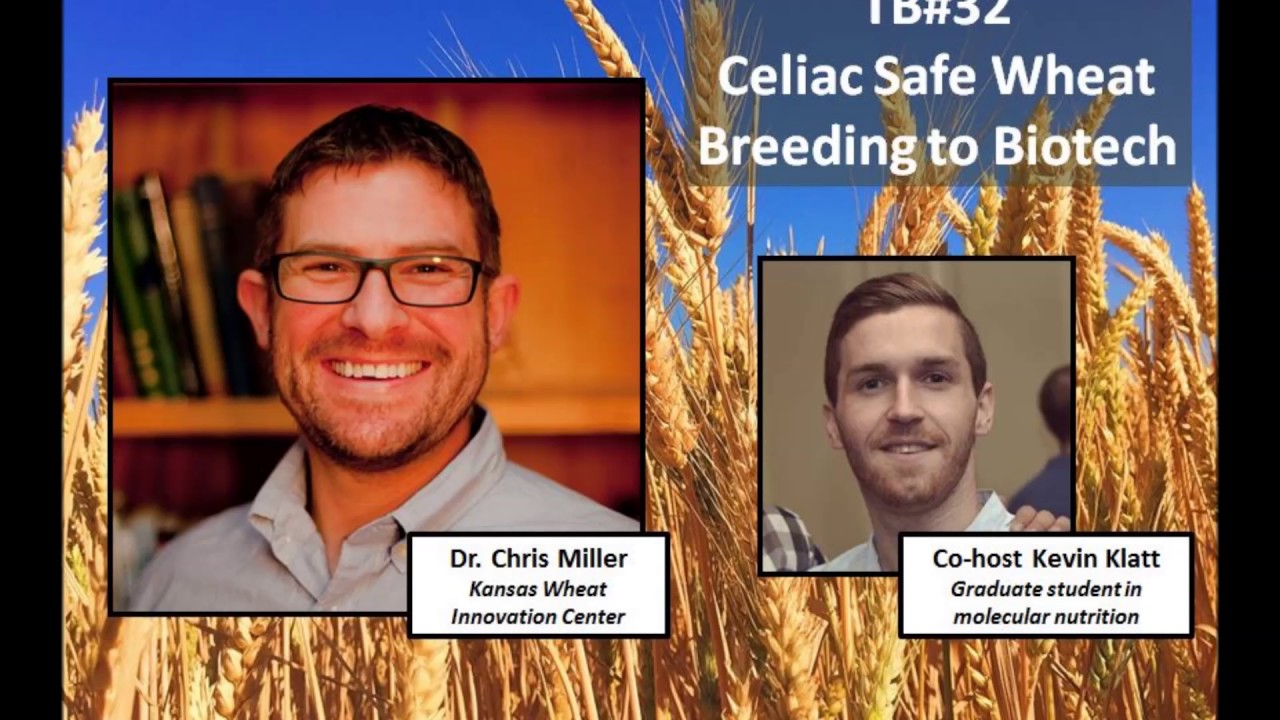
Kevin Klatt and Chris Miller discuss breeding wheat that won't trigger celiac disease, a condition affecting roughly 1 percent of people. They explain why gluten proteins cause immune reactions and compare traditional breeding to CRISPR editing. A celiac-safe wheat could take 10 to 12 years to reach the market.
Chapters
I want to see science serve a useful purpose to improve the standard of living for all people.
Hey, why is anyone fighting food advance? A very small percentage of the world's population is fortunate enough to have the luxury of turning down food.
We've arranged this society based on science and technology. Because nobody understands anything about science and technology. You can't build a peaceful world on empty stomachs and human misery.
You're listening to Talking Biotech, a weekly podcast illuminating issues in agricultural and medical biotechnology. Your questions and concerns are addressed using a science-based approach with the goal of driving discovery to application with communication.
Now here's your host, Today on Talking Biotech, we'll talk about wheat, and we'll talk about wheat allergies, and we'll talk about how to solve wheat allergies using modern molecular biology and modern techniques. And we really take ourselves into an area we haven't been in a while on the podcast, and that'll be talking about gene editing. in a way that we can use gene editing to solve problems to, in this case, help people who suffer from this particular disorder. And to help me with this, I have with me Kevin Klatt. And Kevin is a graduate student in molecular nutrition at Cornell University. He's currently undergoing— so Kevin, welcome to the podcast.
Thanks for having me, Kevin.
Yeah, I'll let you explain. So where are you in your degree program?
Sure. I'm in my second year of the PhD program here. I mostly work in maternal and child— maternal and fetal nutrition, looking at a number of different nutrients involved in one-carbon metabolism and lipid metabolism in the context of cell culture and animal models.
Oh, very cool. Fetal nutrition, it seemed like the biggest problem is You know, getting food to a fetus. Like, how do you, you know, get to the— I don't, I don't want to know.
Exactly what I study is the placenta, which its entire job is getting food from mom to the fetus. So I know a little bit about that.
Okay, so this isn't, uh, you know, syringe through the body wall full of Jell-O or anything like that?
We haven't gotten there yet, no.
Okay, well, maybe in our lifetimes. Um, uh, so what I wanted to, uh, ask— have you on for is a couple reasons. Well, first, I know that you've been active in science communication and at least in trying to learn more about, about doing this. I met you at the— we've, you know, I've known you for a while from online, but met you at Cornell at the Alliance for Science event last year. But can you tell me about your interests in that particular area?
Sure.
So, um, I kind of got involved in the whole Biotechnology and plants and the GMO debate, if you will. Back, I guess it was about a year and a half ago, I had written a blog post for the American Society for Nutrition just kind of questioning why no nutrition organization really took a stance on biotechnology. You have all these other health organizations that have kind of helped or tried to help dispel some of the myths that are out there about GMOs, but the nutrition community has kind of oddly sat silent. nutrition organizations don't have a position statement or just don't really provide any guidance for the public at all. So I wrote a post about that kind of questioning, hey, why aren't we here guiding this conversation? Because as I'm sure we'll talk about later, there's a lot of potential for genetic engineering to better our food and to make it healthier for specific populations.
And that's a really good point. I know that I have a— I'm relatively frequently asked by dietitians to speak at their conferences, and I'm actually speaking at one this summer, a major one here in Florida, and I've been inquired about the national ones about speaking because these are the folks in diet— in the dietitians and people providing nutrition advice. They're the ones who really are on the public interface much more than I am as a scientist. And they're the ones who have lots of questions, and they're really good. They, for the most part, I mean, there's a few folks who are out there, but in general very good and want to know how do they talk to concerned people about their food.
Yeah, they definitely need a bit of guidance too, because I've taken all the dietetics coursework and plan to do the dietetic internship and become an RD. some point in my time here at Cornell. But there in the dietetics coursework, there's very little molecular training to really be able to understand a lot of the concepts behind genetic engineering, especially as they get more and more advanced with things like CRISPR.
And that's what we'll talk about today with our guest, Chris Miller, who we'll talk to in just a moment. But we're going to talk about this issue of sensitivity to wheat allergens. And it really has been something that's become more and more prevalent. You see it on the grocery store shelves, you see it where everything from bologna to beer to salt is labeled as gluten-free. And it seems to be a little bit of marketing, it seems to be a little bit of maybe cautious labeling for those who have these afflictions or these disorders or sensitivities, I should say. But could you tell me a little bit about what this really is. What is this wheat sensitivity and maybe why is it becoming more and more prevalent?
Sure.
I think it's important to note that there is celiac disease, which is an actual autoimmune disorder that's an allergy to a protein in wheat, an allergy to gluten. But then there's also this other subset of individuals that identify as gluten insensitive or that they have some sensitivity To wheat, and there's a lot of kind of confusion in the scientific literature. Really isn't strongly settled on whether this exists, whether it's truly a reaction to gluten or something else in the food. But this sort of gluten sensitivity has sparked this, you know, prevalence of gluten-free labeled things in the food store, and it's kind of become a little bit of a fad diet. But it does seem like from the literature that's out there that there is.
Yeah.
Something to it and some people are sensitive to wheat for some reason, whether it's the gluten or some other component of it. But there's not really a strong way to medically diagnose that yet. Whereas with celiac disease, that's something that has been on the rise over the past few decades. There are a lot more people diagnosed with it now than used to be diagnosed with it back in the 1950s and '60s. And that's a true, the body is responding and mounting an immune response when gluten is ingested.
And that's different from something like Crohn's disease, right? I think that's autoimmune as well.
Yeah, there's some actually underlying— some of the genome-wide association studies have found that some of the variants that are associated with Crohn's are also associated— or with celiac are also associated with some of these other autoimmune diseases like rheumatoid arthritis.
And are there any hints as to why the increase in prevalence is? Is it something— because you see, you hear everything from, well, it's the GMO wheat, or it's the way the wheat is bred, or there's a number of hypotheses out there. What do you hear from the nutrition side?
Well, there's no evidence that it's from GMO wheat because there's not GMO wheat for consumption there, and I don't think there's evidence either for it being from modern wheat, as some people like to call it. Individuals with celiac still need to avoid some of these ancient grains. A lot of the theory behind why the prevalence is so much higher is related to the hygiene hypothesis, which is sort of your exposure to bacteria and other kind of bugs early in life might program the immune system. And so there's a lot of interest in not only looking at the genetics of celiac— And who's susceptible, but also to the microbiome and sort of this interaction between the bugs in your gut, the diet, and then your genetics. And also with diet, there's some interest in the timing of introduction of these proteins that might be antigenic. So, and there's been a lot of talk of peanuts, at least lately in the literature, where the timing of peanut introduction can affect whether you develop an allergy or not.
And there's some thought that might play Yeah, well, they're tough experiments to do because you're purely looking at retrospective studies like, did you know how much, you know, how much wheat exposure did you have as a child? And, you know, my mom, you know, I mean, I was eating, I pretty much ate everything from early on. I don't have a 3-second rule. I play by like the 3-minute rule. I've always, you know, played in the mud and, you know, I've always been outdoorsy. I've had pets and everything else, and I'm kind of bulletproof with respect to allergies, and I never get sick. And I think the people who I know who've— and this is all just anecdotal, but the folks who I know who their kid falls down and they wash them first and then cover them in Purell and then laminate them, those kids grow up and have allergies and asthma and everything else. So, maybe something to this hygiene hypothesis.
Yeah, for sure. Although it's still— there's a lot of ecological data that had originally suggested that the timing of gluten introduction might matter. And then there's been even more confusion because the— I think it's the European Society for Pediatric Gastroenterology, Hepatology, and Nutrition came out with a statement last year saying that the timing doesn't matter and breastfeeding isn't protective. So all of these hypotheses that we had originally thought were pretty well settled are constantly under re-review. So, well, the factors that are going to be implicated in the development of celiac are just— we need a lot more studies.
For people who do have gluten allergies or this celiac, what are the current treatments that are available?
So as of right now, the only treatment for celiac disease is just nutrition therapy that consists of a gluten-free diet. So that entails avoiding wheat. Rye, barley, malt, and there's some controversy over whether you need to avoid oats or not. It seems like there's a subset of individuals with celiac who might also be sensitive to oats, but it's a pretty strict diet, and the idea that people might not have to avoid these foods is a pretty promising potential.
Yeah, I think it would be really difficult. I have some friends who are legitimate celiacs or legitimate gluten sensitivity sufferers. And, you know, they're always, you know, if you can't have pizza unless it's gluten-free crust, I think for some people you'd mention that it's kind of a fad and maybe there's something to it there. But for these folks, it's something that is such a pain to have to deal with that there's no way that they would do it by choice.
Yeah, it does not sound like a fun lifestyle.
I'm quite glad I am So the person who can answer our questions about how to maybe fix wheat might be Dr. Chris Miller. And Dr. Chris Miller, he's the director of wheat quality research at the Kansas Wheat Innovation Center at the Heartland Plant Innovations in Manhattan, Kansas. So welcome to the podcast, Chris.
Happy to be here.
Yeah, it was really nice to meet you there last— whenever I was there, and I was so excited and was hoping I could get you on the podcast sometime. So, you know, thank Thank you very much for joining me. So what, what is, uh, what are some of the things that people work on there at, uh, at the Wheat Innovation Center?
Yeah, so we have a number of things going on in the building, but for the most part, the Wheat Innovation Center, um, is focused on advancing wheat. Um, and so the company I work for, Heartland Plant Innovations, we have a product, uh, called the Doubled Haploid. It's a, it's a service for wheat breeders, public and private, all around the world. So we have about 20 breeders that buy our double haploid lines, and that helps them speed the process of sending, you know, wheat varieties to the market. My project specifically is, as we're talking about today, related to celiac disease and really trying to identify the wheat origins of celiac disease and then With the long-term hope of reducing reactivity of wheat for everybody, really.
So if we go back to the beginning, what are these things called glutens? What is that really in terms of genes and kind of the technical nomenclature?
Gluten is not really a technical term necessarily, but gluten is what happens when you mix water with Wheat flour. So when you form a dough ball, that kind of viscous mass that you form is gluten. And that's a— it's the storage proteins of wheat that they basically come entangled and they're connected in long webs. And it basically makes dough. If you look at it scientifically, what they are, you're looking at a couple hundred, maybe more— Storage proteins. They're all very similar but different in some ways that actually come together. So gluten is not one thing. It's not a single protein or a single component of wheat flour, but it's kind of a hodgepodge. It's everything. It's all of the proteins together that come together and bind to form this dough.
So when you're talking about solving the problem of reactive wheat, Is that something that you can do by traditional breeding?
Yeah, we, we think so. I mean, our building, as you know, wheat as a species or crop commodity is non-GMO. So there's no GMO technology being used in commercial wheat. So everything we do in our building is strictly non-GMO because of our service to the, to the actual industry. So we can't We can't introduce any GMOs out into the wild. So everything we're doing right now is mostly based off of sequencing, doing gene sequencing and proteomics. Now, when you actually get to a solution of a celiac-safe or a low-reactivity wheat, we believe we can identify lines that exist today with low reactivity and then use a traditional approach to lower that reactivity. It's gonna take a long time. So using the traditional method, we're looking at 10, you know, 10, 15 years maybe before we would be able to have something with a significantly lowered reactivity. If we could use technology, you know, GMO technology or biotechnology, we could speed that process greatly.
So I was just thinking, with the traditional breeding, What are the effects on the wheat protein that come about from all this kind of backcrossing to get the gliadins and things out of it?
Ideally, we would be able to find gliadins, and that's the main cause of celiac disease reactivity in wheat is the gliadin protein. So if you look at the functionality of those proteins, not a biological function but a physical functionality of making a dough, the gliadin proteins, they're monomers, they don't form long, large webs. And so the reactivity of those is not related to their function as a dough. And so being able to identify gliadin proteins that did not contain the reactive, you know, epitopes is possible. I do believe it's possible to find those. And I don't believe that they would have any less, you know, dough-forming ability than the gliadins that have reactive epitopes. It's just they're there, they allow for some viscosity. So a dough, they call it a viscoelastic dough, and so the glutenin, the large high molecular weight glutenin, provides some elasticity of the dough. And the gliadin proteins provide some viscous flow. And so being able to identify gliadins without the reactive epitopes is possible. Breeding varieties that have more of those low-reactive gliadins than reactive gliadins is possible. So I think it's just a matter of identifying lines that are, are lower in reactivity.
Yeah, and so just to clarify for the listener, when we're talking about the epitope, it's actually the sequence of the protein. So the protein is made up of amino acids, and those amino acids form a very discrete signature on the surface of that protein that could trigger an immune response. So this is the actual sequence or the actual structure which interacts with antibodies. The immune system or triggers the immune response. And that's an awful way to state it, but it gives a rough idea. And the 2 proteins we're talking about are glutenin and gliadin, and those 2 proteins are the 2 principal ones that are involved in eliciting the response.
That's right. And it's interesting, so the epitope, it's a fragment of the protein that's basically left behind after digestion. These wheat storage proteins are unique in a way. They're very rich in a specific amino acid called proline, and whenever you have proline incorporated into a protein, your proteases, or the digestive enzymes in your body, they don't like to break the protein down anywhere near these proline amino acids. And so that's One thing that leads to a little bit of poor digestibility and these remaining fragments after you eat wheat proteins, but it's interesting, nobody really is able to digest these very well. So even you or I, when we eat wheat bread or have wheat proteins, nobody is really able to fully digest the protein.
Right.
The problem is that in some people, those fragments that are left behind, yeah, they trigger this autoimmune response that causes some gastrointestinal problems and a whole range of symptoms known as celiac disease.
I was curious whether you guys are also working on rye and barley, which also have some of the secalins and hordeins that the celiac individuals need to avoid.
Yeah, we aren't doing anything with rye or barley. I agree. And there's other— all plant storage proteins are evolutionary kind of similar in some ways. And so you'll see some proteins in other grains that are really similar to these known sequences of reactive epitopes. But yeah, we're not doing anything. Rye or barley, but yeah, definitely the same approach would work. You could easily have a celiac-safe barley. I think the brewing industry would be really excited to see that.
And I guess there's been some work that at least I've seen over the, over the last few years where people have used RNAi approaches to suppress the glutenins and gliadins in wheat, and it's worked pretty well. And the bread still has decent structure. But this would be probably suppressing the entire protein. So what are the strengths and limitations of those studies and those approaches to a durable change in wheat?
Yeah, so I mean, the RNAi approach, there's other groups that have worked on like deletion mutants that have— they're missing like the long arm of one of the chromosomes that codes for most of the gliadin proteins. They actually code in a big gene block. There's a couple hundred genes all in a, you know, kind of a single segment. And so they have deletion mutants where they delete those out. And really the plant has kind of some backup, you know, mechanism to— they over— you know, if you remove the gliadin, which is just a storage protein, has no real biological function for the plant other than to provide nutrition for the germinating seed. And so the plant replaces that with something else. So the plant knows that it needs a certain amount of protein deposited in the endosperm of the seed for that seed, you know, for propagation in the next generation. And so it just comes back with some other protein, overexpresses something else. I mean, you're right, the quality, the baking quality of those lines is not terrible. I mean, with some work, I'm positive you can get those lines to be, you know, high-performing.
And that's really the trick, is how do you make the edits and relieve the sensitivity to the wheat allergens, at the same time keep its quality for its applications in food. And so that's really, that's where we need to be. So with that idea, let's take a break. Thank you very much to Chris Miller talking about how we can knock down the sensitivity of wheat and wheat products. We'll be right back after this short message. Hello everybody. Now you might have noticed that the Talking Biotech podcast frequently incorporates guest hosts. The goal here is to expose those interested in science communication to a wider audience, And maybe provide a friendly entrance to how to actually engage the public in a meaningful way. Now, it's always hard to take that first step, but I'm glad to offer this platform for you to tell your story and work with me in discussing new technologies with people that created them or understand them well. So if you're interested in joining me as a co-host, send a note to talkingbiotechpodcast@gmail.com and let me know. We'll devise questions together. We'll find fun ways to make you part of the discussion. Heck, you do the whole damn thing. I'll just listen. Remember, science flows best when innovation moves to application, and, and that takes communication. If this vehicle can bring more voices to the discussion, it only amplifies my interest in sharing the beautiful stories of science and technology that can help people and help the planet. And a happy colon is the basis of a healthy planet, right? You think of people who have problems with digestion from wheat products, and being able to alleviate that opens such a wonderful world of different food options that may not be available to them. So with that in mind, we're talking today about celiac-safe wheat, or at least less reactive or non-reactive wheat. We have our guest, Dr. Chris Miller from Wheat Innovation Institute, and Kevin Klatt, who brings his expertise as a graduate student studying— who's studying molecular nutrition and also very, very knowledgeable on diet. And with that, go over to Kevin.
So Chris, what is the approach that you're taking in your laboratory to modify wheat?
Yeah, so we're not doing any, we're not doing any modifications. If I were going to do that, so today we're actually just on a search and find mission. So we're looking for epitopes. There's known epitopes, and we're trying to discover the unknown epitopes. The idea is if you could identify every reactive sequence in the wheat genome, then you could take a CRISPR-Cas9 approach, to basically edit the— edit those segments out, and have no reactivity. Yeah, I have to identify all of the reactive epitopes to get to zero. And so that's a challenging thing. But yeah, a technology like CRISPR-Cas9 would be beautiful for this type of application. And actually, there are groups that have done this on a smaller scale, proof of concept, that you can edit out reactive epitopes from wheat using CRISPR-Cas9. So yep, that would be how we would probably want to approach it, but we aren't currently doing any of that today.
So Chris, could you maybe give us some hints about what CRISPR-Cas9 is? What is that approach, just for the listener?
Yeah, so the CRISPR-Cas9 approach basically uses a system where you can create what's called a primer, or a— it's a little guide, a little license plate or a tag, a way to go and seek out an address or a specific place in the genome. And once you've identified, you give it the directions to the very specific sequence of the genome where you want to do your work, then the CRISPR-Cas9 system, you can either make deletions of those from that address, so you can delete the address, you could make additions, so you can add in some changes, and you can make some point mutations. So it's really just a way of very specifically targeting a very narrow region of the genome to either add or delete, basically is Simple as I can explain it.
Well, no, and maybe I'll just fill in a couple points there, is that the beauty of the CRISPR-Cas9 system is that you're not adding any non-plant sequence necessarily. You're able to edit. It's like being able to go into the book of Tom Sawyer and change a word around. Well, that was a really bad example. There's like one word that sticks out at you. That people have discussed editing in the— but let's go backwards. It allows you to go into any book of choice and change a word or two. So going into the Bible and removing every reference to whatever. It's just a way of tweaking individual elements inside DNA. So a good example here is that you're identifying the epitopes or the DNA sequences That— so the DNA sequence encodes the epitope, it encodes the protein sequence that causes the allergic reaction. So if you can change the DNA sequence a little bit, maybe disrupt those proline tracts or the ones that seem to be problematic, this may alleviate those specific symptoms in evoking an immune response in a celiac patient. Yet still leave the wheat amenable to its applications in food. So something like that?
Yep, you're right. That's exactly right. And the interesting thing about these storage proteins is that they're not under a, you know, a strong biological pressure for function in the plant because the plant— there's no lethal effect. If a gliadin incorporates a bunch of prolines, It doesn't benefit the plant necessarily. It doesn't hurt the plant. The plant's not, you know, having some negative selection against having these weird sequences because they're just a storage protein. They're meant to be digested by the plant. The plant actually has the proper digestive enzymes to break these things down. So maybe that is the selection. Maybe the plant incorporated a bunch of prolines because— insects or natural pests were not able to digest it, and so they would maybe shy away from eating plant seeds. Maybe that was the natural benefit to having all these proline amino acids incorporated. I'm not sure, but the plant can break it down, so there's no consequence. As far as editing those little fragments out, I think it also has no consequence to the plant.
Who is the sort of target audience of the population that this celiac-safe wheat would be kind of marketed to?
We've talked about this a lot within our groups, and really we believe celiac-safe wheat is for everybody. And maybe calling it celiac-safe is not the right thing. Maybe it's a low-reactive wheat. If you look at the total population that has active celiac disease, it's a small percentage of people, you know, maybe a Between 0.5% and 2% of the population. But if you look at the percent of the population that has a genetic predisposition for celiac disease, you're talking about 60% of the population. And so it's a question, why do certain people develop celiac disease later in life? And we haven't answered that question. I don't know that we fully understand what triggers somebody from being, you know, able to eat wheat products their whole life, and then suddenly they become symptomatic and they're celiac and they have to change their eating, their lifestyle, or their eating patterns. And so we think that a low-reactive wheat might be good for everybody in that it may prevent some of those people in that 60% from becoming symptomatic.
Okay.
It's possible that overexposure to wheats— I mean, there's a lot of different theories about why people are triggered into a celiac-positive, you know, condition, but we think that a low-reactive wheat might keep some of those people from becoming symptomatic. To have and be able to enjoy, you know, a biscuit or a slice of bread, that would be a dream. Getting to zero is difficult, you know that. So that's all we can hope for. Start lowering the reactivity with the hopes of someday getting to zero.
When we talk about the symptoms, is— are any of the symptoms like with, you know, how peanuts, you know, you can have anaphylaxis, you can actually— people have died from exposure to peanuts. And is wheat protein like arginine and glutenin, are they actually that dangerous or is it more discomfort or what are the real severe ends of this?
Yeah, so there's a range of symptoms from upset stomach type of symptoms, bloating, gas, things like that, but there's some people with a really serious affliction that will have Malabsorption through the intestines, so it's an intestinal deal. They can't absorb nutrients from their food. So it gets to be a very serious concern where none of the food that they eat is able to benefit them. So I mean, you could starve to death basically just from lack of nutrition. So that would be the most extreme case. Somewhere in the middle would be just massive discomfort and—
Fatigue.
You know, just really an unhappy, unhappy way of life. I do know people who are celiac, and I fall in that 60%. So I'm a current wheat and bread eater. I enjoy it, and I know that my clock is ticking. So I'm genetically predisposed to celiac disease. I hope to God I can figure out this thing before I become symptomatic. I'm asymptomatic and never have to stop eating the way I eat and the diet that I have. I don't know. I hope they can figure it out.
Well, it is an interesting question that to be working for wheat innovation and have celiac sensitivity or wheat sensitivity would be kind of like the ultimate irony and then being on a research team that's working on stopping it is kind of the— kind of completes the circle. It's a really interesting question and was excited to learn about what's happening there.
Yeah, one of my research collaborators is— she has the wheat allergy, so it's different from celiac disease, and I know that you've discussed some of these things. So she is actually allergic to wheat, and yeah, so we're kind of a strange duo here working on celiac-safe wheat, where we've got one allergic to wheat and one potentially celiac. So it's— it provides a sense of urgency, I guess, for us.
So on the topic of wheat allergy, Chris, is there any effort at your institution to target some of the other proteins that are allergenic to individuals and that are not celiac but have a wheat allergy?
Yes. The answer is yes. And actually, Complicates the discussion, but we're actually— we're studying wheat protein, everything. So wheat protein as it relates to end product quality, wheat protein as it relates to allergies, wheat protein as it relates to celiac disease. So we, we're studying the wheat proteome and the metabolome, tying it back to genetics, and we're providing some novel traits for the wheat breeders to bring into the marketplace. We hope to identify low-reactive wheat. We hope to identify wheat that makes the best loaf of bread you've ever seen in your life. We hope to produce wheat that doesn't cause wheat allergy reactions. So when we talk about what we're doing here, it's really a full and deep characterization of wheat proteins as it relates to function in human health and nutrition.
So yes, the answer is yes, we are looking at That's pretty cool because I could definitely see your products also helping us researchers kind of identify who is actually reacting to the wheat proteins. And then there's some concern that individuals also react to some of the fermentable carbohydrates. So I could see these products being used in research to kind of parse out what people are actually sensitive to. Yeah.
Absolutely. What kind of timeline are we looking at for these products to be available for people who have been waiting maybe years without having that piece of pizza?
Yeah, unfortunately, we're in the early stages of the research, and so, you know, developing a variety, once you have the parent lines identified, just Getting a variety developed, you're looking at 6 years, 7 years maybe. But we don't even have those parents identified yet, so you're really looking at 10 years probably.
And then I imagine there's a bunch of follow-up clinical testing to ensure that it's truly hypoallergenic.
That's, that's a different study in itself. We're hoping to verify lowering reactivity Being, you know, actually slapping a label on the product and say, this is safe, go ahead and eat it. I don't know if you're going to get a lot of people to sign up for that. I think our idea is we know if we can lower the reactivity of wheat, we should do that. It's the right thing to do. And so that's what we're doing to verify that this is celiac safe and that anybody with celiac disease that That eats it should not have a reaction. That's a legal hurdle that I don't know anybody wants to get into, sadly. It's just really hard to verify zero.
Yeah, and there's also some concern that— I know there was a recent study out the other year that some people with celiac have reactions to some of the proteins that are of similar structure in oats, but most of them don't. So it's sort of more of a spectrum disorder than we originally thought. than it seems to be characterized as sometimes.
One thing that we're missing is the human health side of things. I'm not— we're not a medical school here. Kansas State is not a medical school. And really, to get to the heart of it, I think it's a human study. I mean, you really need to understand the human reactivity piece of it. And identifying, you know, unknown epitopes requires somebody, an immunologist or somebody who understands the human immune system has access to patients and things like that. And so I don't have access to these resources, and so finding a collaborator that could work on the human side would be amazing for our work. So what I can do— so we've pooled together right now in our study, we're looking at— we have what we call a diversity panel, so it's wheat lines That were— that have been in the wheat breeding program at Kansas State from the early 1900s all the way until present-day wheat varieties, so the commercial varieties. So we have 50 lines of wheat that span 100 years of wheat breeding, and so we're trying to identify that question of, have we increased the reactivity of wheat over time due to breeding practices? We believe the answer to that is no, but it'd be interesting to see. Over that time span, whether we have some lower reactive wheat lines that are back on the shelf. We're also looking at some of the wild relatives of wheat. So in our building, the Wheat Innovation Center, we have the Wheat Genetics Resource Center, which is actually a university program. It's part of Kansas State, but it's a seed bank that houses a few thousand Assessments of wheat wild relatives and kind of these kind of wheat landraces. So we have a pool of lines out of the, out of the, you know, kind of these wild relatives that we'll also screen for reactivity to see, you know, if we could go back to the origin of wheat 10,000 years ago, what did that look like? I think we have the genetic stocks to lower reactivity. But having that medical partner would be key for us.
Could you do a free cookie day at a K-State football game and give each section a different cookie and then watch with binoculars to see who runs for the exits? I don't know that that'll get IRB approval.
Unfortunately, you know, you do run into people in your life that have either self-diagnosed or have been medically diagnosed with celiac disease.
My former postdoc has a daughter that if she comes in contact with wheat in her preschool, they made Play-Doh. So, you know, just the stuff where you mix wheat and water and whatever, make a gluten ball. And just handling the small amount of flour in that dough ball blew her eyes up and she had really, really severe reactions. So, you know, I think that's a really good point.
I was thinking about the idea of if this were to be made, kind of who has the ownership rights to it and all that. That's always a hot topic with these conversations.
My research is funded 100% by the Kansas wheat farmer. So we have grants from the Kansas Wheat Commission to do this study, and we're partnering with researchers at Kansas State, obviously, in the wheat breeding program, we have some industry partners who are, who are helping us kind of silently. And the work is all being done at the Kansas Wheat Innovation Center. So this is a brand new facility. It was built 3 years ago, fully funded by the Kansas wheat farmer. It houses the Kansas Wheat Commission offices and our corporate offices and research laboratories, greenhouses. for Heartland Plant Innovations. But yeah, this work is solely funded by the Kansas wheat farmer.
And your facility has a gorgeous test kitchen too. That's pretty remarkable.
It's amazing. It's just the wonderland. I love being here. It's amazing. We have state-of-the-art laboratories, fully equipped. We have growth chambers and greenhouses and everything that you could ever want as a wheat researcher, protein biochemist, we have kind of at our fingertips. So it's a great place to be. I think there's a lot of good things that are still coming down the road, and potential collaborations are endless, I guess.
Have you guys ever chatted with any food scientists? I've seen some literature out there that looks at pretreating wheat with, or like before cooking it, with a bunch of probiotic mixtures to kind of cleave all of these epitopes via bacteria. It sounds like there'd be some interesting potential for you guys to work with them.
Yeah, we haven't actively worked with any food scientists, but you're right. So there is an approach where they've created a transgenic wheat that contains a protease from a bacteria. This is the— it's a Lactobacillus. It's a the yogurt, you know, the bacteria that's responsible for yogurt. And they have— these bacteria have a remarkable ability to digest proline, this amino acid that's really kind of not easily digested. And so the protease from the bacteria was transgenically, you know, inserted into wheat and it's supposed to predigest It's kind of a— you know, it's supposed to break down these poorly digested proteins, leaving no reactive epitopes for the patient to have reactions against. The problem with that approach is that even if it works, which I think it's working, I believe it's working, but it's a GMO trait that is never going to come to market in the near future. So from my perspective, I would rather work on something using, you know, traditional breeding that we can actually get into the market and get in people's hands than to have a GMO solution necessarily that sits on the shelf tied up in regulations. So, I mean, I think the day is coming. I mean, we would love for the regulations to allow us to do this work quickly and efficiently and precisely using, you know, modern sound science, you know.
Uh-huh.
We just can't. It's too bad.
Yeah, it's a shame.
And so that's really a common theme here on the Talking Biotech podcast is kind of sensing the frustration of researchers who have really dedicated their lives to solving a problem for people, yet kind of throw their hands up in the air when you see the red tape gauntlet that you'd end up going through and then the public pushback and lack of acceptance. And it could be something that really could make life better for people with these types of afflictions or potentially save a life of somebody with severe allergies. So it really is too bad that we can't make these things go faster.
And these are the kind of technologies that make me wish the nutrition community would get more involved in a positive way regarding genetically engineered organisms because this has such potential to help out our patients So, Dr.
Chris Miller, thank you very much for spending the time talking to us today on Talking Biotech.
Thanks for having me.
Yeah, and Kevin Klat, thanks a lot. I really appreciate your expertise and thoughts in this process and hope to have you on again.
Happy to be here. Thanks, Kevin.
And that brings to a close number 32 of the Talking Biotech podcast series. And thank you very much to Dr. Chris Miller and Kevin Klatt for joining me today on today's podcast. And thank you for listening. It's really important that we understand how issues like wheat and wheat sensitivity just come from molecules that irritate the human condition, and that we can use technology to suppress those molecules in ways that helps us achieve a healthier food that's safe And that's a good thing. And this is just another example of how these kinds of technologies can help people and help people solve very real human problems. So thank you very much for listening. Think again about those who we may be able to serve with technology, the folks who all over the world are suffering from malnutrition and can benefit from technology. as we share those scientific stories. And remember always that we do stand on the shoulders of giants. I haven't said that in a while, and it certainly is something we should reflect on every day, is the fact that the science comes from so much innovation over so many careers that really allow us to be able to begin to think to employ these technologies. And our opportunity to simply tell those stories and communicate it, we got the easy job. So think about ways you can get out there and talk about science and talk about technology, even if it's with friends or in a small group or whatever you have. Take those opportunities to share the stories that others have built. We have the easy job of being that simple communications conduit. Thank you so much for listening, and we'll talk to you soon.
Thank you.
Thank you for listening to the Talking Biotech Podcast.
Please send your suggestions for guests, comments, or questions to talkingbiotech@gmail.com. Please write a review on iTunes and recommend this podcast to a friend.
More downloads and reviews raise the visibility of this podcast and help us reach a wider audience with science.
More from Kevin



Talking Biotech 503 - A New Strategy in the War on Obesity. Dr. Erik Issacson, Wave Life Sciences

Organic Production, Conventional Agriculture, Health Anxiety, and Social Media Disinformation

Stop Political Appointees from Grant Decisions - Dr. Colette Dalawalla, Talking Biotech 501




