Talking Biotech 063 --Effective Science Communications in 2017
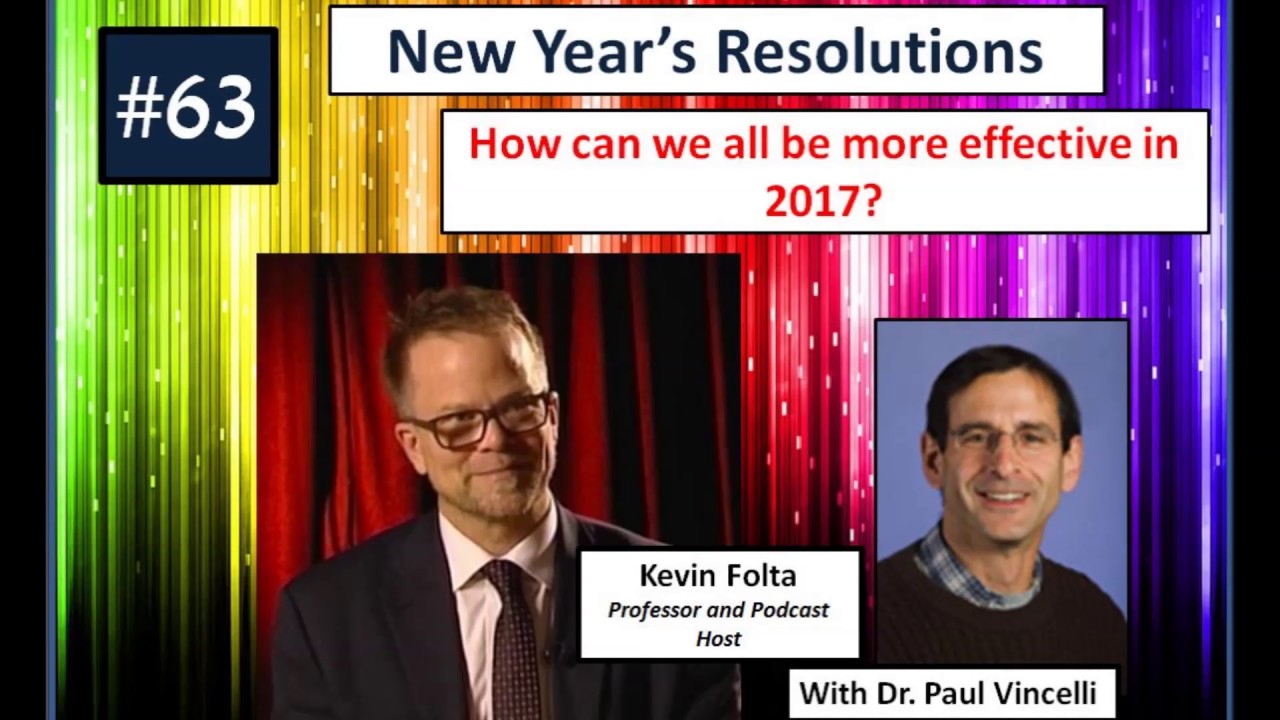
Kevin Folta outlines ten resolutions for better biotech communication in 2017, including ditching the term "GMO" for precise language like "genetic engineering," listening to skeptics, and leading with ethics over data. He and guest Paul Vincelli discuss building networks across disciplines and sharing concrete wins like BT eggplant and papaya.
Chapters
I want to see science serve a useful purpose to improve the standard of living for all people. Hey, why is anyone fighting food advance? A very small percentage of the world's population is fortunate enough to have the luxury of turning down food. We've arranged a society based on science and technology in which Because nobody understands anything about science and technology. You can't build a peaceful world on empty stomachs and human misery.
You're listening to Talking Biotech, a weekly podcast illuminating issues in agricultural and medical biotechnology. Your questions and concerns are addressed using a science-based approach with the goal of driving discovery to application with communication.
Now here's your host, Yeah, hi everybody and welcome to the Talking Biotech podcast. It's the weekly podcast where we discuss contemporary issues in science and technology with a focus on biotechnology and new innovations that can help people and the planet. I'm Kevin Folta, and today we'll be talking about our New Year's resolutions. Now, I usually like to avoid timestamps On this podcast, I don't like to really provide a reference as to where we are and when we are. The main idea is, is because I'd like to create a timeless resource for people looking for good information, that they shouldn't feel that the information is old or dated. And so what I'd like to do is provide a resource that can be used in any particular context, in any classroom, in any situation, between friends, or between 2 people having a discussion about food and farming. And with that, be able to illuminate what are the facts and who are the experts. And having some sort of a timestamp like, you know, right now, end of the year 2016, doesn't necessarily help that communications process. But in the terms of the continuum and the way that things have gone over the last 2 years, I think it's important for us to review where we've been and where we're going. And what I'd like to provide today is a show that really just covers What are some things we could do better? What are some things that have happened? And how do we make sure it doesn't happen again? Now, it would be very easy for me to talk about 2016 beginning in a very negative context. If you remember January and most of February, I was still off the air. I was technically unplugged. It was requested by many folks that I step out of the discussion. And stay away because of the intense animosity that had grown against me based upon Eric Lipton and Brooke Borrell's smear pieces last year in 2015. Here, 2 very seasoned journalists prepared pieces that were mostly founded on fallacy and misinformation cherry-picked from emails acquired through the Freedom of Information Act. Sadly, both of these reporters used this opportunity to cash a check, knowing that they were going to hurt somebody who was a public servant and a public scientist. It didn't matter, especially with Borrell, who I really sat and pleaded with, please don't do this. The nice part is, is that as those articles age, and as they fall into obscurity in the rearview mirror, I'm excited to remind people of what they were. And who wrote them? Because it's important for us to sit down and remember that even issues like dollars and ideology can sometimes override the science and sometimes override the evidence. It's really an unfortunate case of what happened. I'm currently taking this up with the New York Times, and the public editor who normally responds to public complaints has consistently been unresponsive. So we're trying some other channels to see if we can encourage, uh, perhaps, uh, journalists, artists, others to maybe take up the story and discuss how it was used, how transparency, how media, and how the internet was weaponized to cash a check and harm a scientist, perhaps with some sort of ideological bent. I don't understand either of their politics or what they feel about genetic engineering, I just know that what they did wasn't consistent with the facts or the science. So where do we go going forward? And I think that there's some things we learned in 2016 that can really help us be more effective in what we do going forward in our discussions of agriculture, food, and biotechnology, and the place they overlap. The first thing we need to do is stop using the term GMO. GMO. Please stop. I think you might notice when I do the podcast, I rarely bring up the term. Guests do it all the time, and it's one of these things that makes my skin crawl because it's not a scientifically precise term. Scientists don't use it. Now you'll see it frequently showing up in the scientific literature, mostly promoted by those who are against the technology. So the Seralini papers will always say GMO. Because their goal is to take this familiar term, a public term of derision, and attach it to what looks like scientific data. Scientists like me, we'll never use that term at all in our common parlance, let alone in a scientific scholarly paper. We may at times in just normal discussion with the public use it parenthetically, just so everybody's on the same page. But if you think about it, what parent would want to feed their kid an organism, let alone a modified organism, let alone a genetically modified organism, when they don't even know what genetically means? So let's stay away from that term, and let's instead use genetic engineering. And when we're talking about broader adjustments of plant genetics through breeding, hybridization, polyploidization, mutation breeding, whatever, Let's just call that plant genetic improvement. I think all of these things together will give us a much better command of what the words are that describe the science and the art of what this really is. The next thing we need to do in the new year is be better listeners. Let's go into conversations assuming that we're wrong, and let's be soft when we're talking to others, especially in a public place, such as in the comments section of a discussion board. Under a news article, something like that. Let's go in there and assume that we could be wrong. Try to understand where people are coming from, just because it helps us better frame our own arguments. It also shows them the empathy that we're not just arrogant scientists or experts that are trying to impose our will and our ideas. Let's be sure that we're open to what they're thinking about and understand what's in their hearts so that we can better connect with them. Along the same line, the third thing we need to do in the new year is lead with our ethics. Rather than beating people over the head with facts and figures, charts and graphs, p-values and statistics, can we just talk about why we do what we do and why it's important to us? Why is it important for me to be a scientist? Well, I adore the idea of working in public space. And helping our farmers, helping citizens, helping people have healthier food and more access to it. I'd like to see farming done with better environmental sustainability, fewer impacts that lower costs for farmers as well as leave the planet a little cleaner. That's all good stuff, and that's why I do what I do. It would be really exciting to see technologies and ideas leave our borders and serve those who have absolutely nothing. And it's always very difficult. You know, it's hard for me because I've visited places where people live in poverty, abject poverty beyond anything we've seen here in the States. And it does remind us that we have a much bigger mission to do. And before we talk about technology, before we talk about the tools that we have, let's talk about the problems that we care to solve. And I think in that way, our message is much more The next thing to do, number 4, is talk to the middle and stop wasting our time with activists and angry people who really don't care what we say or think. They're people who've made up their minds. They're unteachable. They're people that have decided that they know more than the scientists, that they know more than the farmers. Let them go. I mean, why would we possibly think we could use science and evidence To change the minds of people who freely admit that they don't make decisions on science and evidence. Let's instead focus on the people like the parents who just want to feed their kids safe and healthy food, the aging athletes that just want to eat something healthy, the baby boomers that are concerned about their health and their mounting medical bills. Let's talk to them about these technologies and ways that they can be helpful. Most of all, not just how they're being helpful to them, but how, again, how they meet our values of taking care of people and taking care of a planet. The next New Year's resolution for 2017 is to help build networks, especially in non-traditional places. And this is a really important story, and we can think of folks who are out there talking about biotechnology where they talk about network building. Vance Crowe does a really beautiful job of this. The idea is, is how do we be the scientist in the discussion on cooking? How do we be the scientist in the farmer group? How do we be the farmer in the cooking group? How do we be the farmer talking to a group of athletes? How do we reach beyond our traditional audiences or just talking to each other in our echo chamber? To reach out to the others who simply need to know why we do what we do and why it's important to us. The other thing that I'd like to see in the new year is a combination of number 2, be a better listener, with this idea of network building. And I've extended an invitation, a standing invitation, to anyone who wants to come on the podcast who vehemently disagrees with the technology. There are standing offers to anyone, like especially I talked to Kerry Gilliam, Vonnie Hari. They are welcome to be on the podcast and talk about why the technology is bad. And let me ask some hard questions. You know, if this really is as bad as it is, you should be able to defend it. And as a scientist of 30 years in public space, public research space, It'll be 30 years in 2017. Let's have that conversation. The problem is, is that they need an asymmetric forum. They need a place like Huffington Post blogs, their own blogs, Twitter, where they can have the discussion with their people in their echo chamber and not step out into actually discussing with scientists. And there's a reason for that. Even though I am extending that invitation to them in 2017, whoever wants to come on, I don't think you'll see anyone take me up on that offer. I think New Year's resolution number 6— and I haven't been numbering these all the way along, but I jotted them down here— 2017 New Year's resolution number 6 is those opposed to the technology need to stop lying. That's my resolution for them. You got to stop lying. And, and, and because this is the problem, um, I read very recently, you know, about how I'm paid to lie about science, how I'm lining my pockets with money from Monsanto. Um, this kind of stuff is out there purely to discredit scientists and to take away the credibility we have in the eyes of the people in the middle. It's because the people who are against the technology don't have science and evidence. So they have to knock down those of us that do. And I think what we need to do is hold them gently accountable, especially folks like Kerry Gilliam, who, you know, bless her heart, you know, Kerry writes— I think she believes what she's writing and believes that technology is bad stuff and that, you know, she's got it right and all the scientists are wrong. I think she does believe that, but when she says the things that she says, and she writes the articles that say that, you know, that I'm one of the biggest biotech-paid shills, I think it's important for us to, far and wide, write down that, wait a minute, isn't she the one being paid by an activist organization to write smear articles about scientists? We just have to talk to the middle and remind them of who we are, and who she is, and who people like her are. That they're the ones who are being paid to go after scientists. They're going out to take us apart. The folks like Vani Hari, the Food Babe, that when she writes on her blog that reaches millions of people, that scientists are all just paid by the industry to go after her? No, scientists are here to be on behalf of the citizens of the world. To help correct the scientific record. That our job is to hold people like her accountable, and to say, when you make a claim like that, we need you to back it with evidence. That's not shilling, that's our job as scientists— to correct each other as scientists, but also sometimes to step out of our strictly scientific role, hang up the lab coat, and step into a public forum. And discuss the claims that are being made by alleged internet experts who have no formal training in science and say, because this is important to the public, because we care about the things we care about, people and planet, that we need to address this particular issue. And of course, when we do that, we have to be prepared for the Freedom of Information Act requests, the requests for all our emails, the requests for all our records. Go ahead and take them. The problem is, is the tremendous public cost. And folks like her need— and like any of these people, USRTK, Kerry, Ivani, the rest of them— we need to be reminding people that this is how they operate. When you don't have evidence, you go after the scientist to smear them in ways that are rather unethical. It also costs the public tremendous amount of money to fulfill those requests, and it's really important for us to remind everybody that this is a burden on the taxpayer and a burden on the public to finance those who are trying to destroy public science and the reputations of public scientists. The other thing I would like to see us do a little bit better in the new year is can we— and this is New Year's resolution number 7— support art and media that correctly frame the questions in agricultural biotechnology? And this is really important. How do we get more media, more journalists engaging in this space to realize that they're doing the right thing by following these stories correctly and by being critical of the critics? And it's a really dangerous space, as we're seeing, for journalists. Currently, the last FOIA request for my emails tags a bunch of journalists to see what their conversations were with me. What they're trying to do is to smear the journalists that dare to cover the stories of biotechnology and do so in a fair way. Because when they can scare away journalists from covering the positive stories, then the narrow band of ideologues who are paid by the anti-biotech interests to provide a less than credible story, they have free rein. And this is, I think, their tactic. So it's important for us to encourage, support, and participate. In those opportunities with the media and also the art that's associated, the documentaries that are coming, Food Revolution, No GMO, K-N-O-W GMO, all the ones that are in the works that are beautifully done that show the scientific side of the story. Share them with your friends, write reviews. You know the 1-star trolls will be out there. Make sure we're telling the scientific story Kindly and telling it factually. Number 8 for the new year, um, of my new New Year's resolutions is that you should learn at least— my New Year's resolution number 8 is that you should try to learn at least 2 examples where the technologies were helpful. It's really nice of me to make these resolutions so, so selfless. You should do this. And the idea is, is if you know 2 good stories— learn the story of the brinjal, the BT eggplant. Learn the story of what's happening in banana. Learn the story of citrus greening disease that's threatening the citrus industry. Talk about the papaya. These are all stories that have been covered here in previous podcast episodes that you can take those episodes, really commit them to memory, and be able to share those stories about the good things we can do. With modern technology. Those aren't the ideas of, you know, of Dow, Monsanto, Genta, SF, Bayer, or whatever, the Big 6, right? Big 4, Big 2, whatever they are now. These are the ideas of individual scientists that saw a problem and solved it. And I think that's really a better way for us to be communicating this topic. The next thing is something I learned from Jay Baer, the author of Hug Your Haters. And if you can read Hug Your Haters, please do. So my next New Year's resolution is that you should read Hug Your Haters. And the idea is, is that one of the best pieces of advice that Jay Baer gives, not just in how to engage those who are hostile, but to engage trolls twice. And then move on. And in the Twitterverse, they— there are people, or there's a person, I think one person, I think it's a she, I think I know she is, who creates new personas simply to harass me and other scientists. And when I get the hint that there's this harassing voice who has a new account and 14 followers who make, you know, who obviously are just a smattering of unrelated Accounts. Block, mute, and walk away. And it's really frustrating for me knowing that this person is just there to cause problems, that they continually tag me in their discussion, and then others will join in thinking that they're defending science when all they're doing is entertaining a troll. Let them go. Block, mute, especially Ina and some of the people who are just the perennial problems. Who aren't scientists, who are there just to create problems.
Block, block, block.
Don't give them the interest. Don't give them your time. Spend it on people in the middle who just have questions about their food and are looking for an honest answer. Be that person. Don't be her punching bag. Don't be anybody else's. Just let them go. The last thing really ties in. Number 10. And my New Year's resolution for 2017, number 10, is that all of us should represent science and agriculture with kindness, humility, and grace. We need to always take the high road, talk to the people in the middle, you know, again, lead with our ethics and talk about what's important to us and how technology is just another way to achieve those goals. We saw this year from a very nasty election season How people can distort reality to hurt other people. And this happens in both directions. You see it all different places in politics these days. But one of the most important things that we've seen from this— and yesterday, First Lady Michelle Obama said, you know, we are going to take the high road and we're going to welcome this transition and assist in this transition, which is something that didn't happen for my husband. And that's really powerful because when it reminds everybody who, who is taking a high road, and it gives her a certain inherent credibility that you don't see from folks who are going to now tear her apart for saying it. And my point isn't to be political as much as it is to draw the distinction of when, how it appears and how, what the perception is when we're taking the high road. And taking a scientific discussion that is leading with ethics and talking about things fairly and treating people well. And all of us need to do that. We've got science and evidence on there on our side. Let the other folks tear us up. Let the other folks take the low road. Let the other folks FOIA every email I've written with other people who it's none of their business. Yet they feel that it's something that they need to have. Let the reporters and the journalists who appear to be friendly, the wolves in sheep's clothing, you know, going back to Lipton and Borrell, let them write their filth. But it's good for us to reject it, and it's good for us to remind others of who they are and how they've stood to Harm science and harm scientists. And I think it's really important. You know, you can tell I got a little bit of a grudge there. And although I continually say take the high road, I do think it is the high road to illuminate when, when someone acts tremendously unethically. And when I read Lipton's article about how I'm, how I'm on the inner circle of corporate lackeys or whatever he said, the, the— I mean, I'm in the inner circle of corporate lobbyists. It makes me want to puke and laugh at the same time. And it's one of those things, it's just the way it is. So we're gonna take the high road and we're gonna do this right, but we will hold people accountable. And I think that's really important. So with that, we'll have a special guest who's joining us here today. We go to University of Kentucky. Hey, Kevin.
I'm glad to be here.
Yeah, this is really nice. I really appreciate everything that you've done this year, both in, you know, really a great interview that you gave, but also in your capacity to interview others. So thanks a lot for joining the podcast.
My pleasure, man.
So what do you think are some of your big resolutions? If you had to think of some things that we could do better in the communication space or in the extension space with respect to genetic engineering, What do you think we could do better?
Oh boy, that's a good question. You know, one of the themes that you and I have hit on in our respective programs, and we maybe should continue to touch on, is how to talk about genetic engineering. Because I'd say in my case it's a path of discovery. I've learned a lot of good things, talked about some of those on the interview that I had with you, but I continue to discover how to make the science accessible. Again, a lot of it boils down to listening to social scientists and seeing what guidelines they have. Some of them hit pretty well and some don't necessarily work for me or I have challenges in implementing. But yeah, I think we're maintaining focus not only on the science itself, which is fascinating and of great potential, but also seeing what we can do to help people learn how to talk about the subject better with family, friends, associates, etc.
Yeah, it's a really good point, and I love the idea of borrowing more from social science. And what's really nice is that we do see more opportunities to do that, that we're seeing more social scientists get involved in this space, but also folks like you and me are becoming more interested in reaching out to them and saying, you know, how would you do this?
Sure. Yeah, I've got— in fact, I know you wanted to comment on, you know, ideas for future programming, and probably the biggest one— and again, I want to stress, I love learning about the science. It's probably the thing that, beyond the potential of genetic engineering, the pure what's going on with this technology, how does it work, what are the challenges and limitations, that part really fascinates me as a biologist. But I'm sort of looking ahead too, and there are probably 3 or 4 easily, maybe 5 individuals from the social science realm that I hope to be able to score an interview with That's really cool.
So what are some of the interviews that you plan to do in the— well, plan to put up in the new year?
Sure. Well, diversified. And again, I could talk about the ones that we're going to hit on biology too, but following this theme of social science awareness, Paul Robbins from the University of Wisconsin. He's the director of the Nelson Sustainability Institute. He doesn't know this yet, but I'm going to approach him for an interview because I follow him on Twitter, we've interacted on social media, and I really respect the man even though I haven't met him personally. There are one or two philosophers of science that I plan to approach. One is a University of Kentucky assistant professor and a very dynamic individual. So she doesn't necessarily have expertise in genetic engineering per se, but she's going to bring— help us— she's going to help us think a bit out of the box, just merely being a philosopher. So I'm looking forward to inviting her. And also there's Betsy— her name is Betsy Behmer-Farris. She is also from the University of Kentucky. And she is a geographer with experience in Tanzania. So again, she doesn't claim to be an expert in genetic engineering, but I think that at least short interviews with individuals like these are going to give us new insights. And so again, I've got quite a collection of people, I could continue naming them. I served, Kevin, Last— no, 2 weeks ago in D.C., Washington, D.C., on a panel that provided feedback in response to the National Academy of Sciences report on genetic engineering in crops, which of course was published in May and you had a program on. So the National Academy of Sciences invited a number of panelists from all kinds of scientific societies. I served on that panel.
Okay.
And, you know, so I've made some contacts there with some social scientists and other scientists, so I'm hoping that I'll be able to cull a few good programs both in the biology side of things and the social science thing from that experience. So yeah, I think 2017 is going to be a good year for the kinds of programs that I can contribute.
That's great. And I think it's a good opportunity for those listening. If you know of somebody or if you are somebody, you know, reach out. I mean, don't be bashful because, you know, it's, uh, for me, I mean, as much as I love doing this every week, it's a, it's a question of trying to find somebody. And, you know, I've got a million things swimming through my head. So to think of, you know, there's so many logical people who would be great to invite, but I just don't think to do it until, you know, something happens where I'm, you know, I have that aha moment. And, um, I have 1,000 pieces of scrap paper that I jot down names that I find in my lint trap and can't read. You know, it's, you know, reach out if you have an idea.
Yeah, absolutely. I've heard you say that on the program before, Kevin, and I just want to second that to people. We're always looking for ideas because what happens is, you know, in my limited experience, you come up with 3 good names and maybe one of those 3 will will follow through and actually schedule. And, you know, they'll all be good, but they're just so busy that we may or may not be able to fill all the slots we'd like to. So, yeah, suggest things by sending me an email or contacting you on what would be the best way for them to do that, Kevin.
Well, through any of the normal email channels. Just go look up FOIA emails and you can find my email address everywhere. You can find my phone number and call me if you want. But that's a really good point. Anybody want to just reach out, talkingbiotech@gmail.com. TalkingBiotech@gmail.com is great. And the other thought is, if you'd like to help host a show, you're more than welcome to join us as a co-host, or if you want to run with one yourself, it's really easy to do. And there's a number of tools that, you know, Paul, you can probably attest to some of the tools that are out there and how useful they are to hosting, right?
Yeah, actually that's true. Zencastr is the software that you directed me to for recording my programs. It's very easy to use. In fact, it's Yeah, if I can use it, anybody can use it. I haven't really developed any expertise in the editing of the resulting recordings, and I know you do that, Kevin, and I'm so glad you do. I'll be able to take that on someday if you wish, but for right now, my, you know, the thing I do most easily and effectively is to identify people for interviews and interview them and record the session. It's pretty— It can be, you know, it's sort of a tension-filled moment. I mean, because we are recording something that potentially can be heard by, you know, thousands of people. But on the other hand, it's pretty exciting to identify a speaker you would like to hear from, and it's quite easy to do.
Yeah, that's great. And I think that— and I love that idea. I'm so happy that you do those. As you think about the time it takes to do this, I mean, you just— you have discussed the idea of locating somebody, connecting with them, Thinking about and preparing questions and sharing them with them, actually doing the interview. And all of this, you know, that right there takes probably a couple hours. And then on top of that, we're doing the production, right? Well, you know, I mean, I do the production usually on Saturday morning unless I know I'll be out of town. I'm busy on Wednesday night, Thursday night. And altogether, each episode with the internet, YouTube, website, all the stuff that I do, all that probably takes between 3 and 4 hours. per episode, maybe 4 or 5 hours per episode. Yeah, it's a lot.
I just want to say, I remember when you backed away from outreach because of just the tsunami of really negative, hurtful, harmful social media kinds of things that were happening. I remember being quite sad that it would be lost, that the Talking Biotech podcast would no longer be. But I totally understood and totally respected the decision that you made at the time. And then it was a really exciting moment when I saw that it was back, that, you know, after that interval where you were sort of retreating from the negativity that was out in the social media, when you decided you're back and that you're not going to back down from doing important science-based outreach. And so I was so glad that Talking Biotech was was, was back. And, uh, yeah, so thanks for doing it.
Well, yeah, I mean, I can't tell you how horrible that was. That time off was, was the worst because you saw the discussion happening and it was asymmetrical. I couldn't respond and, um, I couldn't ignore it at the same time. And it was, it was torture. And to not be able to do the podcast, you know, to me, I, you know, I I'm all about the science. It's all I do all day, every day. And I adore the people in my lab and going out in the field. And I mean, this is what I do. And it's 7 days a week. I'm plugged in. I'm ready to roll. And to have this— and so where most people have a really intense job, they have some sort of intense hobby or something else they do or, you know, some other kind of getaway. And the podcast is that for me.
Hmm.
It's just a kind of a little more of a lateral move. It's not exactly building ships in a bottle or, you know, you know, something like that. Um, it, it, but it's, But it's something I really enjoyed doing that takes me out of the immediate grant writing and paper writing and administration. And to have that taken away was kind of tough.
Well, you've got those great quotes in the beginning of the program about the need for outreach in science generally, not just genetic engineering. And yeah, so you're— This is your space, man. Everybody who knows this subject knows your name, even if they don't know you.
Well, and I appreciate all your contributions. I think this is something that we together, it's much better, adds a lot more texture than just listening to my voice, and I'd love to see it get bigger. I'd like to see a network of podcasts where multiple scientists are contributing their thoughts and ideas under the same banner of better public discussion better discourse, and improving our communication ability with a public that simply wants to know answers. And so based on all that, who do you have planned for the new year?
Well, so yeah, I've recovered her name, I couldn't think of it before, but Julia Burnett— sorry, Burston, she's the assistant professor of philosophy at UK. So I tend to find people easily at the University of Kentucky, but I'm not Certainly wanting to interview people from throughout the world. She's one. Another UK person that I'm planning to contact is Betsy Behmer-Farris. She's the geographer. Let's see.
We're going to have a discussion with Nick Saik, and Nick is the guy who is the director and writer of the GMO documentary. I say GMO because that's what he calls it, but the genetic engineering documentary, Know GMO, K-N-O-W. And he shot over 100-something hours of footage between all different locations. And can't distill it down to a 90-minute documentary effectively without throwing out a lot of good material. So he's been creating a web-based series of tutorials and videos that are beautiful, and he's a talented guy who's done great work. So that'll be up, interview with him. I'm also talking with the folks at the Glowing Plant Project, which is great because I've been really critical of them And I'd love to be able to sit down and pick their brains. And I'm glad they're willing to talk to me about it because it's no secret that I've been a little bit harsh. And I know there's a bunch of other ones that are coming up and I'm very excited about. So we'll— you'll be seeing, you know, the usual kind of thing, but I think a little more texture, maybe some more panels. live events and maybe even some question and answer live on the podcast, maybe be able to take some questions live. Working on that too.
Yeah, great. Yeah, it's great to hear. Yeah, looking forward to it. I, I, uh, I'm anticipating between 1 and 2, uh, programs a month from me if, if that is something you wish to do, you know, to use.
So—
Oh sure. Yeah. Okay, good.
No, it's, it's always great because you You've always had something in the inbox right when I've been under the gun in the worst possible way. Like when I have, you know, I've been up for 3 days straight working on a grant proposal and it's Saturday morning and I got to put a podcast up. So I really do appreciate all your efforts and look forward to more in the next year. All right, well, thank you so much for joining me today. And all the best to you and your family and everybody else in the holiday season and new year, and we'll talk to you again in 2017.
All right. Thanks so much, Kevin, for the opportunity. Glad to work with you and, uh, and the best to you and family as well. Alrighty.
Thank you so much. And thank you, Dr. Vincelli, for adding a new dimension, some new texture to the Talking Biotech podcast in 2016. So that's it for the end of the year episode. I know it's not technically the end of the year, but I'm taking a week off next week and we'll not do a podcast on New Year's Eve. So we'll join you again in the new year. And thank you very much for listening. Thank you for all your kind words and feedback. We're quickly approaching 400,000 downloads, which is pretty cool. And most importantly, I want us to remember that, you know, especially in times when people are treating each other cruelly, when we hear of the atrocities that are happening all over the world, be grateful for what we have here. Be grateful for the food we have. Be grateful that someone is willing to grow it. Be thankful that someone is willing to harvest it, pick it, process it. Be grateful that we have the opportunity to move it from one end of a country to another. And be grateful that we can spend such a small amount of our income to have such a wide variety and access to such a wide variety of foods and healthy and nutritious food. Let's see what we can do in the new year to only increase the availability of, of our nation's best bounty to those who have it the least, to resolve the questions of urban food deserts, to help extend what we have to other nations, and improve genetics, improve production practices, and overall take care of people and take care of our planet. I'm Kevin Folta. Thank you very much for listening this year. I really appreciate all your support and feedback through the tough times. It really made a difference. We'll talk to you again in 2017. Thank you very much.
Thank you for listening to the Talking Biotech Podcast. Please send your suggestions for guests, comments, or questions to talkingbiotech@gmail.com. Please write a review on iTunes and recommend this podcast to a friend. More downloads and reviews Raise the visibility of this podcast and help us reach a wider audience with science.
More from Kevin



Talking Biotech 503 - A New Strategy in the War on Obesity. Dr. Erik Issacson, Wave Life Sciences

Organic Production, Conventional Agriculture, Health Anxiety, and Social Media Disinformation

Stop Political Appointees from Grant Decisions - Dr. Colette Dalawalla, Talking Biotech 501




