Talking Biotech Podcast 10th Year! Dr Liza Dunn
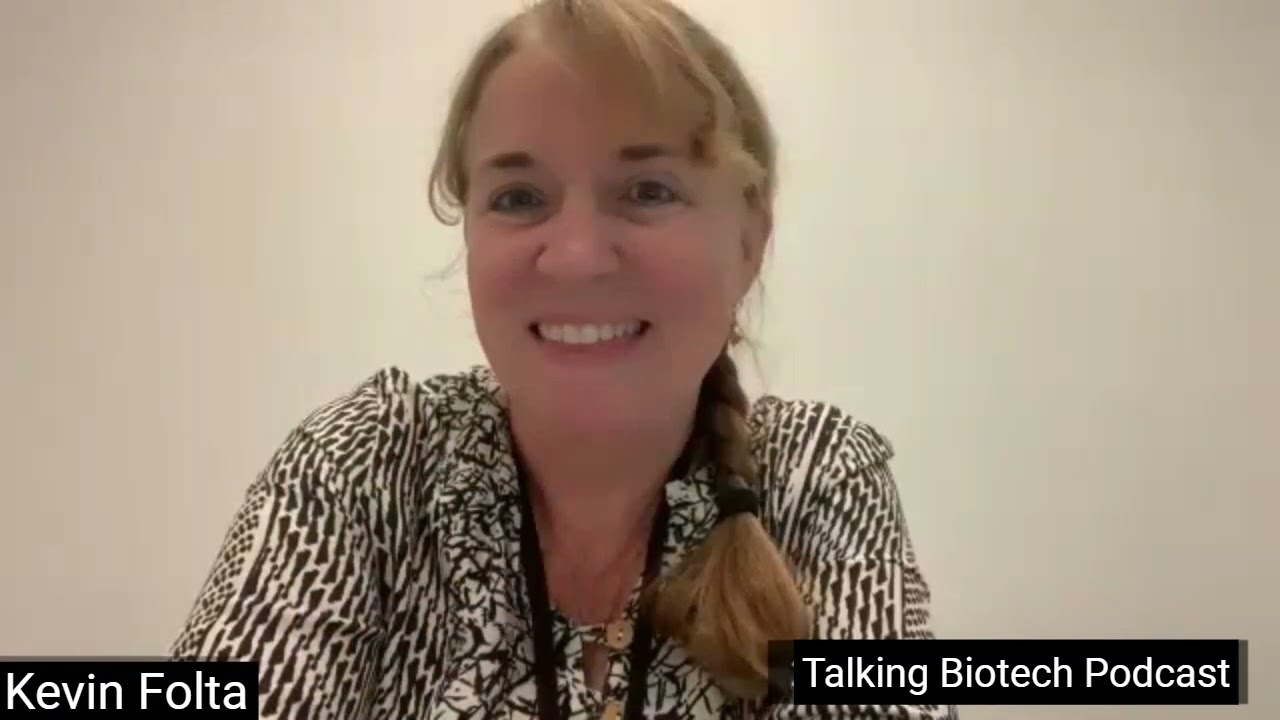
Kevin Folta and Dr. Liza Dunn, a medical toxicologist at Bayer, mark the podcast's 10th year discussing biotech and agriculture. They cover Golden Rice, the glyphosate IARC controversy, how agrochemical bans in Sri Lanka backfired, and why gene editing for sickle cell and cancer faces the same politicization as COVID vaccines.
Chapters
Hi everybody, and welcome to this week's Talking Biotech podcast by Collabra. And as you heard, it is a very special podcast by Collabra this week. It was 9 years ago, 9 complete years ago that I did the very first Talking Biotech podcast. And here we sit going into the 10th year. And most podcasts are around for 12 episodes, which is about a couple of weeks. Yeah, this one's made it a little bit longer and, and I really am very grateful for that opportunity to talk to you, the audience. And we'll talk about more of a retrospective on the specifics of the podcast next week. But today I thought it'd be really cool to talk to an old friend who is someone who's very active in science communication and explaining many of the benefits in biotechnology, Dr. Liza Dunn. So how you doing, Liza?
I'm doing great, Kevin. How are you?
Yeah, doing great. I'm very excited that this came around and very happy that you could join me today because we don't really have a plan, just to discuss where we were and where we're going and all the good things that are happening. Because it's fun to look back on the last decade and, and where that's been. And just real quick, let's do a couple of plugs for you. So tell me about where you're currently working, what you do, and then some of your social media exploits where people can find another cup of Liza.
Yeah, so I'm Liza Dunn. I'm an emergency medicine physician and a medical toxicologist that spent over a decade in academia until I made the move over to industry. And I am now the medical affairs lead for the crop science division of Bayer. And I spend a lot of time talking to people about the importance of modern agriculture and scientific advances in agriculture that have given us an unprecedented abundance and food security. And it's Really wonderful how far we've come in the past century. And so I love talking to Kevin. Kevin is one of my favorite science communicators. And 10 years, your university must be really proud of that achievement.
Yeah, the university, you're right. They should be proud of this. This would be a good thing. They're very much not interested. They have no interest at all in the podcast. They told me 2 times, stop doing it. I had the Dean for Research wag a finger in my face and say, not your job. And I was disappointed at the time. I guess I'll talk about it next week. I was super disappointed at the time because I thought this is exactly what we're supposed to be doing. Land grant university outreach extension, all that good stuff. And, and I was so disappointed and I did stop doing it. I was basically threatened with my job if I didn't. And yeah, it was bad. But I had a student who's really good, Modesto Abugu. Modesta took over and I, because he didn't say my students couldn't do it. Even. And so I gave them the microphone and said, here, you guys build your visibility in your careers and get some practice in this. And she did a wonderful job and she was so good. And then I realized, wait a minute, they can't control what I do at home on my own time. So I'll get a sponsor and I'll just do this at home.
And so I think that the general public really needs to access people who have your kind of expertise and have your talent for explaining things.
It's, it's, yeah, I appreciate that. It means a lot because it's one of these things where I think that it was maybe the expertise and understanding the subject, but I learned so much in the last decade about how to present it. And that's, it was 10 years ago, maybe this week. Or around this time that we did the first Biotech Bootcamp, which was here at University of Florida. And Cammie Ryan set that up. Cammie and I got together. We, and then it was an invitation that brought in journalists and scientists and farmers, and we all sat together and said, how do we do this right? And it was really cool because we learned so much from folks. Like the one that got me the most was Tamar Haspel and others. who Keith Kloor, others who really said, here's how you guys are doing it wrong. And it was great. It was really great. And it changed me forever. So I owe a lot to them. And both of them took a lot of heat for doing the Biotech Bootcamp, which was, it was a communications consortium. It was us learning together. And yet it was billed as an underground cabal by Monsanto to destroy the universe. It was unbelievable. Oh, we took so much heat. That was Yeah, that was 10 years ago already.
So you wound up on Joe Rogan at some point, didn't you?
Yeah, it was at Joe Rogan right around that time. It was actually this week too. And Rogan was the guy who we, he said, ah, this was great. We got to have, do this again. Why don't you do a podcast? You need to do it. And at the time I had toyed with the idea for a decade. Seriously, it seemed to be a good medium for me, but I was, I'm so busy professionally that I didn't want someone going, Yeah. You can't review the grants, but you got a stupid podcast, right? So I did the podcast with the Verbal Blade, like where I did the fake voice and did it as a pseudonym. And that didn't blow up too bad. That turned into a major mess because a certain journalist who shall remain nameless, she's in the Where They Are They Now file. She really went after me because she was anti-genetic engineering and thought that it'd be good to take me down a peg. And I don't forgive her for that. I, she's absolutely horrible. But anyway, you didn't want to come complain about me. Where did you talk about where we can find more of you? You do the Science Facts and Fallacies podcast every Friday with, or every week with—
Every week with, yeah, Cam English at the, through the Genetic Literacy Project. And then I, Cam and I and John Entine also host a space every Friday at 11:00 AM Central Standard Time. And we talk about a variety of different topics. And the nice thing about Spaces is that anybody can hop on and ask us questions. One of the things that I think is interesting is that a lot of people have questions for scientists and have questions about industry and have questions about academia and research and all of that. And it's a place where ordinary people have access to experts that they can go pepper with questions and ask, ask anything. We really like hearing from the audience and Hope that you can join us sometime to, to have discussions. They're kind of freewheeling and fun. They sometimes can go a little off the rails, but that's okay. That's what keeps them exciting. And you can have a scientific discussion with people who have different ideas. And so I think it's a great way to share the science publicly so people have access to it. And I've really enjoyed it so far.
Yeah, it's been really nice. I've been able to join a couple. They've always been bad timing for me. Fridays are tough because it's a harvest day. Saturday's tough because it's market day. And then there's all my normal stuff on top of it. But the nice thing about it is that there are a lot of varied opinions. A lot of, a lot of stuff comes from way out in left field. A lot of oddball opinions and stuff, but you guys are respectful and listen. And I think it's a really nice forum in a lot of ways. So. Folks should join this if you can. Definitely join. 11:00 AM Central Time.
Yeah.
And that's, and that's on Twitter. You can find it on Twitter.
Yes. So we advertise the Spaces. So if you look for @DrLizaMD Spaces on X, you'll be able to join us. And anybody can join in. If you have a question, raise your hand and we'll bring you up to the panel to talk and see what, and see what we can answer for you.
Very good. Yeah. And it's a variety of different topics. You'll focus on, do we trust big pharma results? Do— what's the current state of glyphosate? All the different things have been really nice topics to bounce around. And it's been a lot of fun. Well, let's talk about the last 10 years of stuff. And if you go back in your brain and think, what were some of the real key events that played a role either in agriculture, let's say start in agriculture. What were some of the big things that happened in agriculture in the last 10 years that were real milestones of biotechnology?
I organized the relief mission to Haiti after the earthquake. So this is a little more than 10 years. What it did was it reinvigorated my interest in how to manage malnutrition because the things that I kept on seeing besides traumatic injury from the earthquake and things like that were kids with malnutrition and people with insect-borne illness. And I thought to myself, Haiti's had such a difficult time over the past Over decades, and it's really largely due to things that we've been able to overcome in our country. And so I started looking at new things that I wasn't aware of in the position, and one of the things that really piqued my interest was Golden Rice. The Golden Rice, which was created prior to that—this is more than ten years ago; it's over two decades ago now—Golden Rice was created to as a public health gesture. To be able to help children avoid vitamin A deficiency blindness. And what golden rice does is it genetically modifies— what's that? So there are 3 grasses that are really important for global food security and feeds over 60% of the world. And those are rice, wheat, and corn. And while they're wonderful because you can grow them in all sorts of different environments and they can fill you up, they're missing in micronutrients. And so what this was created to do, Igor Petrakis and Peter Beyer and Adrian DeBock and a whole group of people got together to address this problem. And genetically modified rice can make beta-carotene, which is precursor for vitamin A. And they did a fantastic job doing that. And so when kids have vitamin A deficiency, first symptom that they have is night blindness because you need vitamin A for your retinas. And that leads to ulceration of the corneas. So if you can imagine having a foreign body in your eye and having, you know, discomfort that causes, this eventually causes real blindness, and it's excruciatingly uncomfortable. So unfortunately, this golden right has been blocked by Greenpeace for the past 20 years. And of course, they're Westerners whose children aren't going blind. And I found that very frustrating having been involved with so many humanitarian and global health issues and wanting to really try to figure out how to creatively use science to address these issues. So that was one big thing. But that, that, that discovered— my discovering Golden Rice got me very interested in biotech and genetic modification. gene editing and all of those things that I began to realize how much potential that had to help the Global South achieve the food security that we have and we take for granted in this country. So that, that, that was a really big turning point in my perception about genetically modified foods and things like that and crops. And so that was one of the things that prompted me to look at Monsanto and medical toxicologists In 2015, who was working for Monsanto that I knew, sent an email to our toxicology group. I was the chief of the toxicology program at Washington University in St. Louis. And he sent an email to our program asking if somebody wanted to come work at the company and train into his position over 2 years, because most doctors don't have any background in agriculture. And so this would take some— there was a steep learning curve that went When is this? I think it's my second movie. That's kind of a scary company. And in academia, there are all sorts of kind of perceptions about industry and about GMOs and about a whole variety of things that are often a little bit misguided, especially in the medical world. So anyway, I just sat on this email for a little while. And then a couple months later, a mom who had a son in my class said to me, Liza, there's still a job in toxicology at Monsanto. She was a lawyer at Monsanto. And I was like, that's still there? And so I went and I interviewed. I interviewed on St. Patrick's Day, and I count that as my lucky day because the company blew me away. The scientists that I met were fantastic. I had no idea that there was this much depth, And, and breadth, the expertise. One of the things that I loved about emergency medicine was I was always able to pick the brains of all sorts of other specialists and learn something from them. This was like that on steroids. And so the day I started the airbag company and voilà, here I am. And I haven't looked back. Been a wonderful thing. But there've been a lot of other things, a lot of other water under the bridge. That was just my personal career. that happened. We've got the Saralini affair, we've got all sorts of headwinds that we've had to deal with when we're talking about modern agriculture. And it's really critical that people get this right, because agriculture is the foundation of civilization. Without it, you and I wouldn't be able to have a conversation.
Now, you mentioned Saralini, but was there any other landmark papers or news stories or anything that really stick out in your mind as Turning points in either for, or maybe the uphill battle to win public hearts and minds?
Yeah. So the International Agency for Research on Cancer came out with the idea, with the claim that glyphosate was a probable carcinogen in March of 2015. And that was an absolute shocker because glyphosate is— so we said agriculture is the foundation of civilization, right? Glyphosate is the cornerstone of global agriculture. It is one of the most incredible chemistries because of its very favorable low toxicity profile. Very easy to use it off patent. It's inexpensive for for people to use. This way you don't have to. If you think that the vast majority of the world are are subsistence farmers and don't have access to many inexpensive tools to help them be as productive as possible. This is really one of the things that makes it much easier for them. If you don't have to hand weed in jungle, you really— and you think about all of the things in the jungle, snakes, the things that really affect agricultural workers. The World Health Organization in 2017 declared snakebite as one of the leading neglected tropical diseases that largely affect young, healthy agricultural workers, and it perpetuates a cycle of poverty. If you have an inexpensive, really easy-to-use, virtually non-toxic tool that does not cause cancer to be able to help prevent that thing, that's really important. And so when IARC said that, that really sent Global agriculture into a tailspin, and it's a shame. Yeah.
Yeah. It's really been horrible the way it's been maligned, and I couldn't believe it at the time. And I said, it's okay because the science will sort this out and science always wins and the evidence always wins. And this will— we won't lose public sentiment based upon a finding by this, I guess you'd say committee, which is basically—
Committee.
Which turned out to be a kangaroo court in a lot of ways. We could talk about that someday. Again, David Zarek has a lot on that. But one of the main, one of the main things that, and just to help with the understanding, my wife farms, I help her a lot. And what the use of glyphosate, people don't appreciate that you have to weed fence lines. You get young trees that are growing through them, they'll destroy your fence. You got to do them when they're young and you're not going to go with a weed whacker or by hand. Or how do you weed a fence line? You can use this relatively safe, benign chemical spray that's cheap to use, really cheap. And you drive your sprayer right down the fence line. You'll whack that fence line and then it's good for weeks or months even. And when you're doing irrigation, you're running irrigation on the surface of an orchard or something, to be able to, you can't, again, mow it. You can't weed whack it. You can't do it by hand. You go a gentle spray over the top. It kills the weeds around the irrigation, then you can mow around the rest of it. It is such a useful tool that enables us to be able to do this in a sustainable way and keep food prices low.
Yep, that's exactly right. That's exactly right. And I think that people underestimate how important this is. I think there was an article, I don't know if you retweeted it, somebody was retweeting it, or no, Cammie did. Cammie retweeted an article today talking about how weeds have gotten out of control. in the city, in an English city, and there's photographs of park benches that are absolutely covered with weeds because of their inability to control them. And once again, it's because of the unnecessary paranoia about this. That's important to realize. The other thing that people don't understand often is that it's not— weeding is not just a mechanical— it's really important to keep toxic weeds out of your food supply. For example? There's a weed called datura, and toxicologists are very familiar with this because some kids sometimes decide that they're gonna try to hallucinate by drinking jimsonweed tea. Jimsonweed is the sort of the colloquial name, right? And I've got a great story that I, the first time I really heard about datura was when a previous mentor of mine talked about 2 kids who took their girlfriends out to the desert. for a picnic. They were about 17, 18 years old. And the boys were like, we're gonna drink some jimsonweed tea cuz we hear that it's a great way to hallucinate. And the girls were like, that's a very dumb idea. And the boys were like, well, you all are boring. So what they did was that they boiled the tea and made some jimsonweed tea and drank it. And within 15 minutes, they found themselves in the throes of what we call a florid anticholinergic toxidrome. It's an agitated delirium where They're absolutely wildly confused. They ripped off all their clothes and started having intimate relations with cats. And the girls who were vitally involved wound up having to take them to the emergency department where they were running all over the emergency department until they got an antidote. And needless to say, the other patients in the emergency department were largely disturbed by these 2 naked young men running around.
Yeah.
Now, if you get that into your food, Why? Like they did in Martinique in, I want to say, 2019. You have 35 people show up to the emergency department, all in the throes of this. And guess what? The antidote is on short order. So they have run out of the antidote quite often. So this 35, group of 35 people in Martinique had eaten organic flour. And the weed that made the flour had been contaminated with that surest. So you want to make sure that you don't have toxic weeds contaminating your food. Abraham Lincoln's mother died because she got in, she got milk sickness. Her cattle had gotten into a weed, white snakeroot, and they concentrated a toxin called pramitol in the milk. Abraham Lincoln's mother drank that milk and wound up with nausea, vomiting, seizures, diarrhea, coma, and death. And so you really, weeding is much more than just a labor issue. You really want to make sure you have good weed control. to prevent toxic outbreaks as well.
Yeah, I thought you were going to do the— and I can't do it. And she gave birth to the 16th birthday president of the United States, had some bad milk. The cows were eating a weed familiar to the field, and that woman may be. Good day. So page 2, I guess the other thing. So we had this whole issue with glyphosate, and it's still an ongoing issue. Bayer let the tail wag the dog a little bit with respect to residential formulations and now has 18 different kinds of Roundup, which all contain other chemicals, everything from acetic acid to triclopyr to other stuff, which are actually more toxic than glyphosate acutely and maybe even chronically. But what's going on in the future? Do you think this is a discussion science will win? I don't know.
So, and then this is why science communication is so important. I think, I'm hoping we don't go the way of Sri Lanka. So Sri Lanka, because of a science-free health claim about kidney disease, banned glyphosate in 2015. And Sri Lanka's main export is tea. And it pays, tea, according to the Food and Agriculture Organization, pays for 71% Of Sri Lanka's food imports. Its food security is dependent on the health of this crop. It has such a negative impact because Sri Lanka is a tropical island. And so the jungle grew into the tea plantations and tea trees take 3 years to start becoming productive. When you lose a tea tree, you can't just replant like corn and have a new crop the next year. You've got to really Cultivate that tree. And so it caused such a huge financial impact and such a huge impact on their food security that they eventually reinstated the use of glyphosate in 2018. But in the meantime, well, once again, you had, you know, young Tamil women hand-weeding the jungle and just talked about snakes and that a lot of people were really scared about going in and farming in Sri Lanka at the time. Fast forward to 2022 when Didn't learn from that experience and decided to ban all ag. Lord only knows why. They wanted to go organic because they'd gotten some fairly bad advice from some fairly active people who are very vocal. And lo and behold, the whole country collapsed. And lots of people were saying, oh, there was corruption in this, or there was that, that, that all led to the collapse. It wasn't agriculture. I will contend that There's corruption in a lot of countries. Sri Lanka managed to survive a 27-year civil war without collapsing. It managed to survive its tsunami that wiped out tens of thousands of people in 2004, I think, right? 2004, 2005.
Yeah, right around there.
Yeah. It really was a thriving country with a, it was held up at the UN as a model for A country that had gone from really chaotic situation with the civil war to world-class education, world-class medicine, world-class economy building and things like that. And then overnight, they banned all agrochemicals. All of a sudden, catastrophic collapse in the tea sector and food insecurity. The medical system collapsed. No, you can't. If you don't have Cash. If you don't have crop that you're selling, you can't buy energy either. And so it wound up being a chain reaction. Before you knew it, the population overran the presidential palace and rioted, and the president had to flee. And the country's been in a fairly chaotic state with tens of thousands of people who once were food secure, now really food insecure. So I think it's a really important example for why you have to. carefully before you make bad agricultural policy.
Yeah, it's a really good point. We're on the precipice of it here in a lot of ways. And it's where American politics get a little tricky around agriculture, because you've got folks on one side of the aisle like Cory Booker, who, you know, who I adore in many ways, but he's a total idiot when it comes to glyphosate. He bought all the bad stories. You got RFK Jr. running around completely Completely misguided with respect to glyphosate, and trying to court farmers who are going to lose the tool if they vote for, for these folks. So you can start to see how political divisions around just keeping your business alive.
Yeah.
Because bad science is bad science. And so it's one of the ways in which I can understand farmers saying, I want to vote this way, because these other folks want to take away the tools that I use to do what I do. That are completely safe. And yeah, so it's one of the other weird edges of this whole thing.
Yeah, it's really, it's really important that the politicization of all of this stuff has really driven the country. It has been a problem for science communication too, because if science should be about pursuit of truth, regardless of your political persuasion. And so it's really unfortunate that if you are on one side or the other, you have to And you don't buy the narrative that one side or the other has about a particular scientific topic, you wind up being cast out. So I feel like I'm a, I'm absolutely homeless. Yeah.
Oh yeah, me too. Yeah, me too. I'm an NPA on my registration. That's why I'm working the elections this year because I don't have any particular affiliation. I, I, I I can't stand what one side wants to do over here, and I can't stand the other side wants to do over here. It's always voting for the lesser of two evils. And, but you see the problem in science communication is that when you say that, you alienate yourself because people are so polarized that it's very easy to piss off 50% of the people you need to communicate to.
That's a bad thing, right?
And I need farmers to trust me. And I can't go in there saying so-and-so is, is a problem or whatever. I have to be really careful about that. And so I tend to remain apolitical in these discussions. It's very hard because when political personalities start to immerse themselves in this, I have to criticize Cory Booker. I have to go after RFK Jr.
And RFK Jr. is the perfect storm of the anti-ag and anti-vaccine movement. That's, that is really a significant problem.
Yeah. Yeah. And this is, and If you break trust in, in agriculture, you break trust in medicine, you break trust in the judiciary, you break trust in voting, where the hell are we? And then I think this is why we look across the political spectrum at all the people who are trying to destroy trust in what we do. And I don't know that it's going to be easy sailing going forward, but we're veering into an unusual realm here. But do you have any thoughts along that line?
Yeah, no, I think it's really unfortunate that it's gotten politicized because science, the Point of science, once again, it's supposed to be about the truth. And one of the things that I've tried to do to try to mitigate that is bring people together that wouldn't normally cross paths. I feel like doctors and public health people have a big voice because there's so many of them, but I don't think that ag people have a big voice because only 2% of our population feeds us and then exports 25%, close to 25% of what they make. Our farming community is critical for global food security, and we wouldn't be able to be doctors and public health people without without those farmers. We'd be all subsistence farmers, and we would not be very good at this. But anyway, what I try to do is I try I'm trying to think of creative ways to bring different groups together. Farmers and growers tend to be more conservative and rural. Public health people and doctors tend to be more liberal and urban. And so what I've done is I've done I do a talk about how medicine became Monsanto. COVID-19 and pitfalls in scientific communication. Because for the first time ever, physicians and public health people were like, wait a minute, these vaccines are great. They are actually going to help us get out of COVID Why does everybody distrust them? Why does everybody think they're so bad? And this is what growers and farmers have been dealing with in terms of GMOs and pesticides. They're like, these are all science. This is great science. This is great science that contributes to our food supply. Why doesn't anybody understand why we do what we do?
Yeah.
If I get them together in the same group, I go and I go over how COVID vaccines work and how GMOs work. And then before you know it, both sides are like, wow, that's cool. So if we have more of a place to do that kind of thing where you get people who wouldn't necessarily be in the same room together. I think that would be a really positive outcome.
Yeah, I wrote a thing for CAST for their 50-year anniversary that was called A Tale of Two Infodemics and how the COVID situation, the COVID vaccine situation, was just the genetic engineering of crop plants experienced at high speed.
At high speed. At warp speed.
At warp speed, which is another great example of an unfortunate moniker that travels along with it. Just like with GMO, it's, we had It was, it, the parallels are so many. The polarizations around technology that is an outstanding technology. And the mRNA technology, when, and it was the same thing that when I was a little kid and I heard, read about genetic engineering fixing diabetes or giving us enzymes for cheese or any of that stuff, that to me it was cool way to make cheese. Someone else, it's Armageddon, right? It's like, yeah, we have, and I've been wanting to say that for months, but it was. Such a cool tool that could be used. And then when this COVID mRNA vaccine stuff, I followed the mRNA in vivo story since the late '80s. I remember the stuff from injecting luciferase under the skin of mice and imaging that stuff and thought, this is really neat. And when this came out, I thought, everyone's going to love this.
And lo and behold. Yes, that's exactly right. That's exactly right. Yeah. So it got too politicized. No, and it was politicized by, it was bipartisan politically. Yeah. Because at the first, at the first end, the, the whole kind of, the whole left side were saying, we don't trust this because it was done too fast. And then when they came in power, they're like, oh my gosh, we totally trust this now. Yeah.
And so, no, totally. It was, to me, it was the, it was something that was outstanding of the Trump administration, and I give them lots of credit for doing it. And to be honest, if you had a Democratic administration, you would've seen that not happen. I think you would've never released billions of funds for the development of an innovation through private companies. I think that it was, it really is something that they should campaign on, but they never will because 80% of the folks who are in that camp think it's Uh, it's, it's dangerous. It's, it's really an interesting problem because it really was, um, a crown jewel of that administration.
It really was. It's just, it, it, it, it's a shame how it, how it turned out. But, you know, there are promising things coming out of it anyway. One of the reasons why I think it's so important is you can tailor those vaccines to your very own personalized medicine projects like cancer. So there's some really interesting promise for glioblastoma.
Mm-hmm.
Which is a malignant brain tumor that has a very high mortality rate. Virtually no one survives that. And it, so there's some really promising data coming out with that. Really promising data in pancreatic cancer.
Okay.
Also very highly high mortality. I think less survival rate. So I just, incredible technology that has potential to really impact medicines and health, public health. So I think that yeah, we should, we need to get away from politics and try to stop throwing the baby out with the bathwater. Really great creative solutions are there for food security and medicine.
Yeah, just don't bathe the baby. That's the trick. And so we're, because we could talk about that on the other side of the break. This is a Talking Biotech podcast, beginning of the 10th year special edition with Dr. Liza Dunn. Thank you very much for joining me, Liza. We'll be back on the other side of the break and cover a few more topics. Thank you for listening. We'll be back in a minute. And now we're back on Calabria's Talking Biotech podcast, entering our 10th year. 9 years in the box and starting year 10. And we're speaking with Dr. Liza Dunn, who you know from Science Facts and Fallacies and from Spaces on Twitter and the vigorous discussions that happen there on a weekly basis at 11:00 AM Central Time on Twitter, X, Twix. And we're talking about just some of the cool things that have been happening. You mentioned the personalized mRNA-based therapies where essentially It's so cool that you're able to take a profile of the genes that are being expressed incorrectly in those tumor cells, and then in manufacturing a slurry of antisense mRNAs that specifically target those tumor cells. So they are toxic to those cells, probably not much more collaterally. And you mentioned pancreatic and glioblastoma, but liver cancer's been looking really promising, a number of others. And the other side of this that's super cool is now they've been able to use the, the nanoparticles, the encapsulation, and target nanoparticles. So nano, nanoparticles that can go to a prostate cell. That's exactly right. And deliver them. So really promising technologies that are born out of the COVID era, which I think COVID really accelerated.
Oh, it did. It's almost like the last huge pandemic, HIV, accelerated the development of antivirals, right? HIV was a universally fatal disease in the '80s and early '90s. And with the advent of protease inhibitors, all of a sudden it became a chronic manageable disease that people could have a relatively normal life expectancy with. And it was because of the panic that ensued from That pandemic. And I think that this is a similar thing. I think that this has got real innovation in medicine that can happen because of this. And they're both terrible, both terrible pandemics. A lot of people died, very tragic. But I would say that the silver lining is the technology that eventually was used to address both of those diseases.
We've got so many other zoonotic diseases, and you have to remember that COVID-19 or SARS-CoV-2 was the 3rd major virus of the 20th, 21st century. We had SARS, we had MERS, and both of those had some funny circumstances that limited their spread, but MERS had a 33% fatality rate. Yeah. Mortality.
One of my very best friends, I went to medical school, was a physician on call. The hospitalist for Aramco, physician on call the night that the outbreak started, the MERS outbreak in Saudi Arabia. And he kept on getting these funny calls showing up really bad. And one of his colleagues who was a cardiologist wound up dying of MERS as well. He had, he used to work for the CDC and then went to medical school and then here he was for this big outbreak.
Yeah.
He saw that up close and personal. It was absolutely— when SARS stuff started happening, but this time around, it was spooky for him.
Yeah, I bet. And I bet all these, all these bird flu or H1N1, H1N2, there's been fatalities in this now, which were previously unheard of. Maybe just, maybe it's not that there's more transmission of this, but maybe more surveillance. So maybe that we're just—
Yeah, that's probably what it is.
I think so too. I don't think we're seeing more incidents of it. I think we're just detecting it. As we're more careful with viral infections, but it's a major issue, and I think we will see another pandemic. And I think where we have the problem in public trust is that when we fire up Warp Speed 2.0 and generate the next vaccine to solve the problem, I think 50% of the country won't accept it. And if it does have that kind of penetration that MERS has in terms of fatality and transmissibility. I think it's going to be a really awful situation. And so we really got to work now to get the trust back. And that needs to be a bipartisan issue. Just stop trashing our public scientists. You know, they're going after Hotez, they're going after Fauci. It's, man, back off because you need them.
On the flip side, I think that one of the things that we need to be a little bit cognizant of, Doctors got frustrated. Doctors got frustrated because they were taking care of really sick people and they saw this vaccine as the light at the end of the tunnel. And what they didn't understand though, was that most people did not see very sick people. They saw a couple of people with a runny nose. They saw a kid being held from school and stuff like that. Doctors need, and public health officials need to acknowledge that maybe we weren't As patient as we should be with explaining this, we were like, oh my gosh! You have questions? You are an anti-vaxxer, and we were condescending. And the other thing is that doctors—this was the first time a scientific debate was actually held in public. Doctors disagree with each other all of the time in the hospital setting, and we were learning about this. This was an evolutionary process. Right. And instead of saying, yeah, we didn't know about that. We're learning as we go along. Just being a little bit more humble. We wound up alienating people. And I think that's where we as a profession could learn to be a little bit more understanding.
Yeah, that was the time I threw more things at the TV set when Fauci was on TV because of his level of certainty that all he was doing was setting himself up when it wasn't 100%. Yes. And when the data in the papers that came out testing the vaccine said it gives you a 95%— yeah, which means 5 people out of 100 are going to get sick. And so it's not perfect. And so you've got to say that it's not perfect, but it's good. And if we all do this, we'll limit the impacts on the most vulnerable people in our society.
That's exactly right.
And that would have been the right message. But despite all of my letters that went to the CDC, that probably went in the junk mail. And I was reaching out to say, let's get this right. Everything we learned about science communication, they ignored or didn't have people on their team strategically coaching them. And it was really obvious and it always was that way.
Yep. Yep. And it's unfortunate because some really good scientists got tagged as being disingenuous. So I think, I just think, I think that we're going to really have Really work on improving science communication going forward.
Yeah. And training physicians in science communication. Yeah. You know, maybe, maybe patient relations or something would be a better word for that. And I always toyed with the idea of maybe just getting out of university and going into that because I don't know if you know the name Skylar Johnson, but Dr. Skylar Johnson is a radiation oncologist at Utah University of Utah who he has as a radiation oncologist counsels patients. And he has patients saying, I'm going to try this other thing first. And he would, and he will say, okay, I get it. It's radiation, whatever. But people will, are, will go to Mexico and spend $50,000 of money they don't have on a treatment that can't work before they will accept a legitimate treatment.
And their treatment.
And, and so how do we get, and this is my big question is, Can we train physicians to learn what we learned from science communication that most of the physicians and most scientists don't know? And farmers, like the things that we're teaching farmers, can we get this into the hands of physicians and say, here's how we can convince them more effectively?
To make good public health decisions or to make good decisions about their health. Right. And not get bamboozled by the snake oil.
That's right. And not to change their mind, but to help— not to change their mind, but to help them change their own mind and to make them aware of the pitfalls that people who are going to try to exploit them along the way. And I think there's a career in this for me if I would decide to bet on myself and bail out of the university system, because I see that as a place that we can improve.
Yes, I think it's a gap and I think that is a really critical gap. To fill. There are just not enough people that are able to bridge that.
Yeah. So if anyone is listening in a healthcare environment that wants to hire Folta, give me a holler. I think it's something that I would really appreciate the opportunity to do because I've seen good physicians and bad physicians in this, and I've had them myself where they get it and there they don't get it. Other medical innovations that I'm in love with, sickle cell.
Oh yeah. Isn't that the coolest? That's really cool. That's the new frontier, right? Gene editing is, is, is a really hopeful thing for a lot of people.
It almost makes me cry because I know people who've had it. I've known who died early, suffered from it. I had, after I did the talk with someone from Veritas, I think it is, about, about sickle cell disease, the one who's working, they're working with the company CRISPR Therapeutics. And I got calls from people after that saying, how do we get in touch with them? How do I— my son has this and the bad 2-allele form that's super penetrating. He's symptomatic at the age of 3. And it's just, could we get this out there faster, please? And make this— this is— and the big problem I see is you've got 100,000 folks, mostly people of African derivation that need, that may need this therapy and need to get it. Yesterday. Yes. And will it be covered by insurance? Will it be covered by government programs? We need to make this accessible. And I wish that our government said a long time ago, this looks like it might have promise. We are going to set up clinics everywhere. We are going to, and we are going to defeat this thing. And we're going to have specialized clinics in every town where someone can go and get this done if you want it.
Yes. Having taken care of sickle cell patients for a very long time, just watching them suffer, just horrible. If you see it up front and you see the consequences of this chronic disease, they have strokes, they have breaks, get really sick, and it's extraordinary pain. And they often are requiring high-dose opiates, right? And everybody's concerned about opiates. This is a solution to that problem that is just a Real achievement from a scientific perspective.
Yeah. I wish I could get Victoria Gray on the podcast. She was the Neil Armstrong of sickle cell therapeutics. And this is just, this is a process where they edit a repressor that turns off fetal hemoglobin. So you use one type of hemoglobin as a fetus, one type as an adult. It switches over shortly after birth. And what they've been able to do is turn off the off switch. So now you generate good fetal hemoglobin later in life. And it's, it's, and the reason it works is, and it's, you know, the problem with gene editing is I can't edit all of your somatic cells. I can't, but I can do your bone marrow.
Bone marrow.
And if I can do your, if I can do your stem cells, your bone marrow stem cells, which I've donated for 60 times, I got paid $6,000 total to do it. Yeah. Long story. I, my, the molecular biology lab I was in for a PhD was above hematology oncology. So they'd come up and I was cheaper to anesthetize than a baboon. They'd give me a juice box and $100 that I was game for. And they could get me in, they could get me with 5 minutes notice. And I was always there. But anyway, you could take the bone marrow stem cells and edit that and then install them, just run them back into the bloodstream. They find their way into the bone marrow.
Wow.
You ablate the patient's bone marrow chemically or with radiation to get rid of the bone marrow that's there. And now they have new stem cells that create new pluripotent stem cells that create all the panoply of blood cells. And they're correct.
And they're correct. And they don't have sickle cell disease anymore, which is just a miracle.
Yeah. So this is something that I wish that we would have as a nation. This would have been our, should have been our moonshot.
Yeah.
And it should have been because this would've been another one that would've ushered in the new mRNA therapies, the CAR T-cell therapies that are smoking hot, getting better all the time. All of these things are, are so exciting. And, and I wish that there were, I don't know why there isn't this kind of drive to do this, because it's the right thing to do for one.
It's exactly the right thing to do. It is the right thing to do.
Politically, it would be a real win for anyone who would dedicate the going back to politics, because there's no bad optics on this at all.
No. Yes. And it is a real social justice issue because it largely affects African Americans who often have, don't have access to the same kinds of healthcare as we do.
Yeah. And I think that would be a real good thing. So if you're listening, but that was probably my favorite story of the last 10 years. And it makes me so happy to think about because don't get me started. If you can alleviate suffering of huge swaths of people, it's something to me that this is why we do what we do. This is why I work at a university. This is why I didn't go work in corporations. It's because I got excited about ways we could solve problems for people and for the planet, for environment. But then that's my frustration. Here we are 10 years later when we were talking about all the stuff we talked about 10 years ago. You can go back on GMO Answers to the questions I answered there. The 79 questions I answered for free, by the way. Wow. And yeah, this is, he's paid to answer questions. Of course he's going to say it's good. And every single question, the answer stands today.
Isn't that amazing?
Everything we said back then is true today. And the golden rice is even goldener. And We, everything we said back then is true. Everything they said is still false.
Yeah. Yeah.
And so when winning public trust, how much do you think it matters that the people who lie, or let's just say, let's not say lie for libelous reasons, but the people who we feel are a little bit flimsy with the truth, the Seralinis, the Senefs, the that Iodurai guy who said that glyphosate soybeans are full of— Moms Across America, all those groups, US Right to Know.
US Right to Know, which incidentally gets money from anti-vaccine groups.
All these folks fought us hard for 10 freaking years. And all these people were winning headlines, Environmental Working Group winning headlines, whereas we're telling the truth. And we're we're running podcasts and speaking everywhere and running the things you do. Why doesn't it resonate? How do we fix it?
I don't know. And at that time, we gotta keep on doing what we're doing. But I also do, I do think that Twitter and X is maybe an avenue for really starting to amplify these, these spaces because once again, it's a place where ordinary people can come ask questions to experts. And have a conversation with them and go, oh, look, this person, even though they work for industry, or this person, even though they're in medicine, they actually would have some good answers to my question, right? And that's an unprecedented thing. You usually go to medical conferences and talk, or professional societies and talk, or things like that. You go to academic institutions, but ordinary people only have had access to kind of mainstream media. And that mainstream media has been taking this other narrative for some reason. So I feel like this is a really valuable— acts as a really valuable way to try to help people understand better.
And I'm with you 100%. And I think that listeners need to do 2 things. They need to be involved in the content creation. You can have a 5-minute here's what I read today and how it doesn't fit with the article that it's written. Okay, that's great. Thanks. Or at the very least, and this is so important and you can do this, everybody listening, share people's content, share, share science facts and fallacies, share Talking Biotech.
Yeah.
I put out announcements that this is new and online and it gets 4 or 5 shares. Some environmental working group will get Kerry Gilliam to write something about how glyphosate is in your sperm, and it— which nothing says that anywhere, shows that anywhere.
No.
And they'll end up, you know, getting it shared 100 times. And so we need to be better at supporting the good science and the efforts of people who are attempting to create content in science communication. I think that is one real remedy. We gotta get in front of more eyeballs. So use your network, build your network, Share good content in your network.
Exactly right. And share with people who might be outside of your echo chambers. So farmers are good at sharing stuff, right, amongst themselves. But go to your neighbor who might have a little different kind of perspective than you. What do you think of this? So try to expand that, try to get as many people as possible to listen, at least so they have access to both sides of the story.
Very good. Yeah. And so let's wrap it, start wrapping up, but let's get out your crystal ball. Do you have any predictions? Something, what do you think is going to happen in the next 10 years, say, ag and medicine?
What would you— I think that mRNA technology is that same, has that same potential for both ag and, and human health. I think that we've got all sorts of really interesting things in the pipeline developing that can help us go ahead and have health for all and hunger for none, really amplify that. If we don't, if we don't have unnecessary roadblocks, I think that, I think that then we've got So much potential and the world is such an amazing place that I hope that science will prevail.
Yeah, that's it. And I do too. But then you go on the, on Facebook, on the biotechnology awareness group, and you realize that Bill Gates is controlling the food supply and making watermelons that are seedless. It's, it, we are in such an ecosystem of crazy where how can good technology grab a foothold When the average person on the street is, who has a refrigerator full of food and has access to healthcare if they need it, um, even if they deny it, that it can work, they'll be happy when it's their butt on the line. How do we reach them? And it's really, it's the big question for the next decade.
It is a big question. It is a grand challenge.
Yeah. That, and it really has, it shifted from, and this goes back to the, the, the biotech communication camp in 2014 when Tamar Haspel stood in front of everybody and she put on the board, facts don't matter. And every scientist in the room went, facts matter. That's how you change people's mind. You show them more evidence. And she was right.
Yeah.
And so how are it in a world where facts don't matter? How do you convince people about Evidence, and and I I think that it's a tough ship to turn. We're getting better at it, but it's it we need more people doing it, and I think that's the trick is how do we deputize this listenership to participate in content generation and sharing and going into the kooky chemtrail room on Facebook and engaging but with class and taking the high road and getting people excited about the good science. And I think that's what it's going to take, but it's going to take a lot more than you, me, Cameron, and about 40 other people who are regular. And I, it probably is a universe of about 40 other people that are really active. Yeah.
Yeah. So share.
The other good news, since I guess it's a good time for an announcement, is the other content that'll be generated is the Talking Biotech book. Yeah, the contract is almost ink dry. It's well on its way to being written, but it encapsulates where we were, where we're going, and what the future looks like in terms of biotechnology and the techniques that are used. And it's aimed at a high school audience that it has a lot of the, isn't this cool feel? Here's the story that's happening and here's how the solution fixes it. And here's how the solution works. And it opens the black box, but there's also a lot on communication and how we make mistakes and the mistakes we've made and how we, what we've learned from that. And hopefully that should be out early in 20— middle of 2025.
Might get an autographed copy.
Yeah. Yeah. I'll figure out a, I'll find out a way to do that, but it actually will be available. It's gonna be really nice. And I'm, I've already really made a lot of progress in it. And, and I've also been working on a science communication text that that has at least some buy-in with a publisher. It's, yeah, there's a lot, a little few dots, I's to dot and T's to cross there. But that was a compendium of case studies where basically said the problem was, is that it involved real people and the mistakes they made, mostly me, but also friends of ours. And they said, you really can't do that because we're going to— Yeah, but it's true. And we, maybe that's the last thing we can finish with is You mentioned earlier the question of humility and intellectual humility. I've really noticed a new superpower, and it's there in politics, it's there in scientists, and it's there in journalists, is that when we correct them and say, no, 1 1 is not 3, it's 2. Yeah. They go, it's 3, and we're digging in our heels and making it 3. Where the hell did this come from? Right. And why are scientists doing this? Why are the scientists at the American Academy of Pediatrics telling me that I'm wrong when I've shown them that they're wrong? Why is the journalist at The Guardian, instead of saying, gosh, thank you, I got that wrong and I really need to get it right, saying, you just work for Monsanto? Like, what the hell is happening?
I had a journalist interview me for Boston Globe. I was a physician. I gave him all of this information and he went to a lawyer in Cary-Hillam to ask about public health.
Yeah, no, it happens. It hasn't happened to me recently, but they always did this. They would say, oh, we have questions about genetic engineering and crops. Could we talk to you? And it'd be just for some general magazine. And I would give them a really good set of answers. And then I get the article and it says, And Folta says that there's no evidence of any problems in human health. And there's some important things we need to keep in mind about the environment, but that's not what Gary Ruskin says. And it's just two-sidedism. An expert with a non-expert and someone with a very pronounced agenda versus someone with the only agenda is teaching people an education. And so—
You're right. And I promise I'm not trying to sell anybody soybeans. I'm interested in science.
Yeah. And, and that, 'cause that's what it is. All of this is us on this little journey for a very short time in human history, in geological history, to make baby steps towards the truth and develop a body of evidence that supports that path and being open to exciting new findings. And, and I tell people all the time, If glyphosate causes cancer, I hope it's my lab that discovers it because we would be awash in grant money for the rest of eternity. And we would change the rules and we would be the ones who figured out, sorted out this controversy. It's not that scientists are trying to cover up the realities or like they'll say, we love big transformable, transformative science. That breaks the rules and changes the rules. And this is what the public needs to understand.
That's right. We have 5 public health advances of the 20th century that brought us an unprecedented increase in life expectancy by 35 years. It's never happened before in the history of man. In 1900, 45% of us farmed and we lived to the ripe old age of 45. By 2000, 2% of us farmed. which stopped postpartum hemorrhage. And that was life-saving. Those events in the 20th century were just revolutionary. And I hate to see them dismantled by some romantic notion of what it was like back in the Middle Ages.
Yeah. Back in the good old days, right? Yeah. No, it definitely is true. We live in the good old days. And I think that That kind of optimism can change hearts and minds. That when we focus on issues like sickle cell disease, and we talk about the excitement of being able to develop a new vaccine in 42 days from getting the genetic sequence, these are the kinds of things that maybe will build that excitement. Because I really feel that biotechnology is at a precipice, that what's going to happen in medicine and what will happen in agriculture is going to be literally an explosion. And how well we move that innovation to application is up to us and how well we communicate it.
That's exactly right.
All right. So Eliza Dunn, thank you very much for joining me on the podcast today. It was really nice to talk to you.
It was really fun to see you again, Kevin.
And for listeners, thank you for listening to this episode of the Talking Biotech Podcast, the first episode of our 10th year. And thank you all, um, always for listening. Always grateful to see the numbers on the, uh, Podcast every single week. I hope you keep listening, send your thoughts and ideas, and turn more people onto this podcast. Share, or better yet, start your own podcast and I'll share yours. This is the Talking Biotech Podcast by Calabria, and we'll talk to you again next week.
More from Kevin



Talking Biotech 503 - A New Strategy in the War on Obesity. Dr. Erik Issacson, Wave Life Sciences

Organic Production, Conventional Agriculture, Health Anxiety, and Social Media Disinformation

Stop Political Appointees from Grant Decisions - Dr. Colette Dalawalla, Talking Biotech 501




