AI Experimentation that Delivers Value in AEC
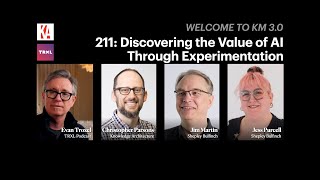
Podcast episode from the Troxell Podcast titled 'AI Experimentation that Delivers Value in AEC' (hosts/guests: Evan Troxell, Chris Parsons, Jim Martin, Jess Purcell). Shepley Bulfinch describes a disciplined, experiment-driven approach to AI and knowledge management: building process around unpredictable AI, using AI search to index 11 years (~300+) of video on their Finch intranet, and shifting to video-first content creation to reduce SME effort (reported 1–5 hours of SME time vs. ~200 hours for traditional guides). KM at Shepley is distributed (no KM department); culture, lightweight campaigns, visible mentorship and positive analytics (spotlighting bright spots) drive adoption. They emphasize 'trust but verify' for content accuracy, content weighting/burying rather than wholesale deletion, and pairing video with AI-generated written guides. Ongoing themes: experimentation, modular content, people-centered change management, and cautious adoption of LMS features that may harm culture.
Chapters
Welcome to the Troxell Podcast. I'm Evan Troxell and in this episode I welcome Jim Martin and Jess Purcell, joined by our KM 3.0 series partner, Chris Parsons. Jim is the Chief Information Officer at Shepley Bulfinch. Jess is a design technology leader who's been translating messy real world workflows into teachable practices. And Chris, as you know, is the founder of Knowledge Architecture and our guide for this AI powered knowledge management series. Today we open up Shepley's playbook 150 years of firm history, 11 years on their Finch Intranet and talk candidly about how they're discovering the actual value of AI through disciplined experimentation. Today we explore how to put process around unpredictable AI so results become repeatable. Why A video first approach is slashing the time it takes to document complex workflows, how AI search is unlocking institutional knowledge buried in recordings and and what it really looks like to run knowledge management without a KM department. We also get into knowledge exploration, trust but verify practices and why Shepley avoids the punitive traps of traditional LMS platforms while still building durable learning pathways. One of my key takeaways from this conversation was working out loud. The team at Shepley uses social enterprise behavior, not software, to shape its culture. In Inside Finch, Jim and Jess show how thoughtful posts, lightweight campaigns and visible mentorship create real engagement, not performative activity. From turning hallway conversations into firm wide mentoring templates, to using analytics to spot bright spots instead of compliance gaps, they're proving that culture changes come from participation, not policy. What struck me most is how much this grassroots transparency combined with leadership's restraint to to not over systematize it keeps curiosity alive across the firm. It's an elegant reminder that knowledge management is really about people making their thinking visible. As usual, there's an extensive amount of additional information in the show notes, so please be sure to check those out for links to connect with our guests and for more resources, including links to the other episodes in this KM 3.0 series. You can find them directly in your podcast app if you're a supporting member of Troxell and and if you're a free member you can find them at the website which is trxl.co. lastly, you can really help the podcast by of course sharing these episodes with your colleagues and by commenting and sharing on my LinkedIn posts. You can also leave a comment over on YouTube and engage with me and the other listeners there. This was a great conversation. So now without further ado, I bring you Jim Martin, Jess Purcell And Chris Parsons. Today we're talking with Jim Martin, Jess Purcell and of course Chris Parsons, back for another episode of our KM3 point. And I'm very happy to finally get these people on this podcast. It's been a long time. You've been on my wish list, Jim and Jess, for quite a while and this is a great subject to be talking about. The work that you have been doing for the long haul at Shepley Bullfinch, I think is really going to be shown a light on today. So Chris, introduce our guests.
Yeah, I think long haul was a great, great transition. Shepley Bolfange is a firm that I've known for a long time and they have a long track record of innovation in general. But more to our point on this podcast, innovation around knowledge Management. So Shepley has been a client of ours since 2014. Their intranet is called Finch. This is the first of many bird themed references coming in this episode. Just a spoiler alert. Jim Martin is the Chief Information Officer and Jess Purcell is our is the design tech. I almost said our design Technology manager. This is how like closely you hear that. That was amazing. Jess together as well as Shepley writ large. They've been huge contributors to the knowledge architecture community for over a decade. And as we kind of keep moving through this welcome to KM 3.0 series where we look at AI powered knowledge management, I had to bring Shepley on to really kind of talk about their recent AI work, their knowledge management work, a lot of the stuff they're doing with video and AI, which is where we're going to start today as well as. And I think I hope we get to this and can spend some time here. I think culture at Shepley around experimentation is something I've always admired. They're just, they have an idea and they run these very thoughtful experiments and some of them they keep doing that become programs as far as Shepley Bolt, Bench and some of them, they retire and they're just always experimenting and trying new things and then they've been super thoughtful and transparent and generous in sharing that with our community. So welcome Jim and Jess to The welcome to KM 3.0 podcast.
Thanks for having us.
I want to ask a quick question before we jump into what's actually going on with KM 3.0 at Shepley and that is okay. So one thing I know about Jim for sure is skeptical, cautious because there's the fire hose of tools and I can't even imagine what it's been like Jess to Work with Jim through the AI thing. So the things that Chris was just talking about with innovation and kind of this method, methodical, strategic, I know that is, those are the words that describe how it works at Shepley with this. And Jim, I'm just curious, like in the, in the sphere of the cloud, the cloudy muck of AI, what's that been like for you? Have your views changed on this over the last few years? If so, how are you still skeptical? I assume you were skeptical at the beginning because you have been with so many tools over the years. Right? So in a really good way. I mean that in the absolute best sense.
So yeah, I think the AI stuff has been really interesting because it has been immensely over promised. I mean the hype is just ridiculous. But from the very beginning, from the very earliest tools that we had access to, it was really clear that it was able to deliver some value. So as Chris mentioned, we are a culture of experimentation and we just started trying to figure out, well, what actually where is the boundary between what everyone is saying they can do and what can I actually do that it delivers value and we're constantly looking for that boundary and that boundary is all over the place. It's almost like asking someone, well, what is the value of the Internet? All right, well, it depends on a lot of things and it will change tomorrow versus today. And some of the times we find value in things and the limit of the value is because we didn't imagine hard enough. And sometimes it's because the capability didn't exist. But we also find ourselves going back and rerunning old experiments to make sure that nothing has changed because so much of the models have changed. Our understanding for what it can actually do can change and all the rest of it. That said, it really annoys me that you can't ask it the same question two times in a row and get the same answer. But if the answer you get is good enough in both cases for the use case that you're experimenting with, then it can still add value. So it's really about trying to understand what is it good for, what do you need? And finding all the ways that those Venn diagrams overlap in a meaningful way.
I think that, not to be too pedantic five minutes in, but I think skeptics are great and pessimists are the ones we want to watch out for. I think for anybody innovating, having skeptics on your team is really great because they can help counterbalance the wild eyed optimists that aren't seeing Any downside and just want to charge ahead. So I feel like any great team should have a blend there. I think pessimists just bring the whole vibe down. But like a skeptic that's asking hard questions and that's cool, but where's the value? Like, I think that's a really valuable thing to have.
Yeah, I think that's what we found with a lot of AI tools in the AEC industry. And really probably at large. It can make stuff, but can it make the thing that you want it to make and need it to make? And so once you apply it to an actual project, it just all falls apart.
Yeah, if you get lucky and you get the thing that you wanted or you didn't know what you wanted and you're just taking what you got and it's better than what you had, then fine. But it's like using it as a directed tool in order to achieve an end is a lot more work and is a lot more variable in its ability to produce.
And because you get a good outcome once in a while, it makes you think you're going to come back and get a great outcome the next time. And, and, and that's just like you said, Jim, you're going to get a different answer even asking it the same question two times in a row. And so I think that's frustrating for a lot of people too. Right. It's like, wow, it gave me this great thing first shot and then I go back the next time and it take, oh, that didn't work. Oh, that didn't work. Oh, that didn't work. And that, and then that, that's like this. It takes a lot of time because you never know the path that you're going to be going down when it comes to working with these tools. You don't know where it's going to take you. And you're not, it's not going to be a direct line like it was the last time. It's going to be a squirrely, squirrely line for sure.
I mean, as a builder of these tools, you know, every, every release of, for example, RAI Search that comes out, there's less and less AI in it, and there's more code around the AI to help make it more predictive and more deterministic. So there's this like really powerful, like almost like fire at the center of the product. Right. But you want to surround that. Powerful. Fire is a decent metaphor. I mean, we had, we had a lot of problem with fire and buildings and in society in general. Until we got some, like, safety mechanisms and understood how to contain it and use it, you know, more appropriately. And I think this is the same thing. I think every. As someone is building it, like, we don't like that either. We don't like the slot machine, you know, kind of effect. And so, like, how can we continue to use AI what it's good for, and then kind of surround it with deterministic code that helps make more predictable outcomes wherever we can.
Yeah, we don't do as much code. We do process, but we do the same thing. And it's like, if you have an unpredictable tool, you need to build process around it in order to make it more predictable. So you design the process and use case and as much as you can in order to bring it into a narrower focus and have a more reasonable expectation that when people come to use it, they will find repeatable value.
And you work at an architecture firm, which is. I mean, how many times have you heard, like, this is the way we've always done it. And so. And that process is like, okay, that process is unlock. Now we're just going to use that process and we're going to, you know, okay, that's autopilot. Now we can focus on.
But.
But to your point earlier, things just keep changing with this. And so I assume the processes also need to keep changing or just getting looked at again, because what didn't used to be possible is now possible. For example, there's different ways of doing things. There's new features added. There's all of this constant churn of change that's got to be difficult to deal with in a large organization.
Yes, it is. I mean, Jess, you should talk about our Miro board.
Oh, yeah. So any experiment with AI, we do, at least with my team, we document the whole thing in a Miro board, and it is actually split up by tool and it's dated. So you can see some of these tools, like, we drop it after, it's, like, not good. Two years later, we've picked it up again, and you can see it's actually giving better results. But the nice thing about Miro is it's open to anyone in the firm to actually go in and see what people are working on. What can you actually get out of it? What are our thoughts as geeks? We call our IT department geeks for context. And. Yeah, so we're very transparent, too. I think our policy around AI is very much like, experiment but understand, but like trust but verify. You know, what tools are safe, what aren't and that's something we're really struggling with too is like, how do we communicate that to the firm, Especially when things are changing. Like mid journey now, if you upload something, they will train the model on that that's no longer protected.
Moving goal posts.
Online. Eulas.
Jess, you. You spoke at Cake and I last month.
I sure did.
For people that don't know that are listening, that's our annual knowledge management conference for aec. Jess gave a talk called How Video became a Cam Superpower at Shepley Bullfinch.
I think that title really oversells it.
But yeah, I don't know. People were pretty into it.
They were. I was surprised, but I think it was. I think sometimes the simplest ideas are the ones that really resonate with people because it just feels like, oh yeah, absolutely. That's the thing that we need to do.
So.
Okay, so whether oversold or not. Yeah, tell us about this km Tell us about video and why, why it's important, why you were able to talk about it for 40 minutes. Like, yeah, what is it? What is it about video that. That you guys are doing?
Yeah, so I think it's two parts. We're 150-year-old firm, so we have 150 years of stuff, but we have about 15 years of digital stuff, 11 years of stuff on Finch. And so we have like 300 plus videos of just knowledge. We've shared trainings, we've done in person. And so the AI search that Chris has come up with really enables us to uncover information in those recordings that you wouldn't think of things about, like random history within the fern. You would think like, oh, that's not on the intranet, but someone made a comment about it in like a podcast style, like principal interview. And so like you can ask a question about it and you get an answer. And we're finding a lot, a lot of people like asking questions that I would not expect to see the answer. And they're finding the answer, which is really interesting. So that was kind of the first half of taking what we already have and making it discoverable. And then the second half of the talk was around our experiment in moving towards what I call video first, content creation. So I'm personally very obsessed with YouTube and also a little bit Instagram, although I find it annoying these days. So the idea of like, can you distill down something you want to do into a short video? Someone's scrolling through Finch and they need to like know how to do something or they see something interesting. It's two minutes. They can watch it and then move on with their day. It's not like a tutorial they have to click through with somewhere else, watch a whole thing. So we started experimenting with that and then we started experimenting with doing some longer form content, some video on demand stuff. And what we're doing lately, now that we have the AI search is we actually build the video first. So you spend a short amount of time doing like a prep session. You're like, these are the things we want to go over. You get an expert on the call, they talk through it. You can actually see screen clicks, which I love. And you can actually see everything on the screen, not just what's been screenshot and written guide. And then you can use something like Copilot or chatgpt or sometimes we use like the Finch, the synthesis AI to actually write a technical guide to go with it. And so instead of asking like the Internet or like AI basically to make you a thing from the Internet, you're asking it to summarize like content that you have built yourself already. Like you've already said the things, this is how we talk about how we do things at Shepley. And then it builds the written content around it. So we've been, I did a whole thing of interviewing all the people who have been building this kind of content and they're all the same people that usually write like all our written content did a little like comparison and it's like a fifth of the amount of time to do it. And then if you think about it like your content experts don't need to edit the video. That could be someone in like a level one position or in my case like our design technology specialists. So those people then it's even less of an ask when you're content experts. Like 20th of the time it gets it down to like 1 to 5 hours of their time. And then you have the people who are editing or consuming that content because they're watching and watching and watching while they're doing the edit. And so you're building that knowledge within someone who could become like the nextpert as Chris likes to use.
Can you give an example, Jess, of like some of the things that used to be like 100 or 200 hour efforts for these written guides that you're now doing video first and compressing that for sure.
One of the examples is like construction cloud, like just project startup. You would have like seven or eight guides of like setting up a project. This is our folder structure. This is why things are a certain Way they are, this is how you upload a model and that can be distilled down into eight, three minute videos. And then you have the AI write a guide within like an hour and a half. And so even though, like that one, for example, the guess is like 200 hours to write something like that. Like, that's a lot of content and it's very technical and it's a lot of screenshots. And then peer reviewing is a big part of it too. So someone having to actually like read through the thing, try it, see if you're missing anything. Whereas, like the reviewing, watching a video, like, you just watch it and you do it and you're like, yeah, that, that worked.
Because the writing's so slow. Right? Just because you have to stop, you don't have all the stuff memorized and you're like doing it on one screen, writing on another, screenshotting. And then for someone to QA it, they have to actually then go do all those things too, versus if I'm watching, if you recorded it, Jess, you don't have to think about that stuff. But I'm also watching you do it. And I'm like, well, unless she completely invented a ui, I don't need to go QA this thing. Right?
Right.
I think also, like, us as technical people, we get really into like writing the perfect way to describe how to do something versus, like someone recording you do it. That's the other thing too. And I was talking a little bit with Susan at KA that the prep meeting and the facilitating is probably part of what makes it faster, is you have someone who's kind of like, rather than asking someone like, hey, you're the expert at detailing doors. Teach this class. It's like, oh, we want to run a class on these five things. Can you speak to it? And I think our people don't necessarily think. Think of themselves as experts, even though they are, but they know that they're good at specific things. So you can kind of prompt out exactly what you need them to show or say in a video really quickly. And then you just kind of make them look good. Clean it up.
Jim, I have a question for you regarding this. In the culture of kind of continuous learning, which is always this, that you hear those buzzwords together all the time, we have a culture of continuous learning. Being an architect is just. That's all you ever do is you just keep learning because you can't ever know at all. And things are changing, et cetera, constantly. Yeah, but you also need teachers, right? You need people Creating the stuff that, that people are learning inside of the company. And traditionally that has come from the outside. So whether it's, you know, you're investing in some course LMS from some third party company or it's YouTube. Right. To Jess's example. Right. A lot of people are just learning ad hoc stuff from people who have been willing to put it on YouTube. And that may or may not align with the way the standards of the firm. Oftentimes it doesn't. Right. And it's like, oh, now we actually have to train people how to do this the way we do it. Not necessarily the eight different ways that you could do it or the 53 different ways you could do it. So how is this kind of sounds like it's lowered the barrier to entry to actually create the content and make it a lot less kind of overwhelming for people to share their expertise. I'm just curious, from a cultural standpoint, what have you seen happen in the company with the success of this rollout?
Yeah. I think Shepley's preference has been for people to go out and acquire knowledge, understand it through the lens of Shepley, and then regurgitate it to the rest of the folks at the firm. And that that has pluses and minuses, as does any strategy that anyone would run for something like this or anything else. The, the plus is, is that we are able to be pretty consistent in making sure that the information that we are providing for training the rest of our firm is not inappropriate or not sized properly or not shaped properly for the way that Shepley wants to work. The downside of that is that it is an incredible amount of effort for people who are already on projects, which is why Jess is kind of sussing out of our ability to use video to reduce the amount of effort on our SMEs. Subject matter experts is so critical because then they can spend more time learning and acquiring all this knowledge from wherever venues, conferences, something they've learned on the project, conversation with random partners or contractors, wherever it is, you know, when they find really useful information, they have a mechanism in order to convey that to the rest of the firm. Interestingly, Chris mentioned that we are, we at Shepley have been a contributing member of the knowledge architecture community. We're basically doing the same thing. When we learn something that is that we think is going to be helpful, we will kind of share it. And working out loud and exploring out loud are things that we, we do pretty much as a matter of course in the culture of the firm, which I think is great. You try to find ways to minimize the downsides of any strategy you're running. And that's why the, the AI search in the video stuff is so interesting for us because it allows us to reduce the friction in the overhead aggravation for people that are we are relying upon in order to do the actual architecture, but also to help everyone else get better at doing architecture so that they can keep going out searching and acquiring new useful information and knowledge from the world about the things that we do. Because Evan, as you suggested, it's like you don't get to stop learning as an architect because then you would only get to play with the tools you already know or the materials you already know or the processes that you already know. And so much is changing so quickly that we really do not have the ability to stop learning and still be effective in our chosen craft.
I think you said something really interesting there Jim, that I may want to ask both you and Jess about. So the rate of change does seem to be continuing to increase. And so, and I think you're right, you're not going to stop learning, but you could stop documenting and you could stop sharing. And so it feels like just the strategy you described about being video first and having your geeks, you know, your DT team help support subject matter experts in reducing the lift on their end. Feels like it makes those knowledge assets more sustainable and durable. Because it's not a 200 hour effort to replace this long written documentation. It's maybe for the subject matter. You said one to five hours. If ACC totally changes or your approach to site observation reports totally changes. Is that, is that part of like your conversation with them?
Yeah, I think important part of context. It's not like we are building a massive repository of information so we don't build content that exists in the world. I'm not going to build a series of how to use Bluebeam or an intro to revit. What we tend to build content around is when we're rolling out processes or we identify places that people need help. And so like we did a series on field reports, but it's really around how to use like our iPads, our templates. This is how we do field reports. It's not necessarily like an intro to Bluebeam on the iPad or how to do a field report in general. Same thing with acc. That series is being built because we are rolling out a new folder template. So it's really around. This is how you set up your project to be successful within Shepley. This is our folder Structure, this is how you apply permissions, that kind of thing.
To your point, there is part of people's reluctance to deal with change is the amount of aggravation that they know they're going to have to go through in order to get through the cycle of change. And making it easier to create documentation for a process means that people will have less perceived opportunity loss or sunk cost in, in the recreating of that content if the process needs to change in some meaningful way. So the more we can reduce the friction about creating like the, well this is the communication plan for how this change needs to take place in the business, the easier it's going to be for us to convince people, okay, well a new thing came out that is going to have substantial amount of value for us and we need to change that thing that we just put into place last year. If it took them 120 hours to write like documentation for it, the people that did that are going to be real sad and they're going to have.
A lot of costly.
Right?
Yeah, yeah, yeah.
They will be slightly less sad if it only took them two hours.
I think also building out that content into bite sized portions so if something changes you don't necessarily have to throw out the whole series. You maybe just like remove a video, add a new one or if there's like a new feature you can just like slip that one in in the midd. And so there's. It makes it easier to update content rather than rebuild content to make it.
Because it's more modular.
Yeah, but that said video is harder to edit. Pin text is. So you'd create strategies around managing video which will help it get closer to managing the. The effort to manage text and 3 caps.
It's easier to create video, but it's harder to edit. Whereas the text, it's harder to create, but it's easier to edit.
Yeah.
Unless you have to clear it. Yeah, yeah.
And we're doing both because I was having a conversation with our CEO and her comment was yeah, videos aren't as helpful for me if I know what I'm talking about because I'm really just looking to skim the document to find the piece in the text and the one screenshot that I need to bring me to the place they need to go. So different people have different preferences based on either their expertise in the particular process or their predilection for wading through a sequentially presented video versus a zip to the place that you need and then kind of beat on it until it works. Sort of deal. So we're doing both. So there's. You have to try and figure out how to make the upkeep of that knowledge asset as easy as possible. Considering that you've got so much stuff baked into it.
I want to ask about this. You know, you have 150 years like you said, you have 15 years of digital, but you have a huge storied history and a lot of information that's captured in various ways. Drawings and, you know, whether it was scans of paper versus digitally created from the beginning. But something that's come up previously in these kinds of episodes is just the idea of expiration dates on information. How do you handle that? I mean, it sounds like there's just this constant monitoring. This is like copy monitoring in Revit. What is going on with information and how do you flag it when you. How does it get flagged when it's, oh, this needs to be reviewed, or is it just on a running schedule? How are you dealing with that? Because I think a lot of people are just overwhelmed with the idea of, well, there's always just more information that we're teaching people about. Like these things just stack and stack and stack forever. Is that, well, how do you. How are you dealing with that?
At Shepley, I would say that it is in the closet and the closet door is mostly closed and we ignore it most of the time.
I mean, that's super honest, right?
So AI search has been really interesting because it has provided so much more visibility into content that just kind of hangs out. And in some cases that content hanging out is great because it is the only information about that particular subject that exists on our Internet. But in some cases it's just hanging out because it is no longer accurate and hasn't been for two years. Our intranet is 11 years old. Some of the things that we put into it 11 years ago were accurate and correct at the time, but are no longer the case.
Right.
So I would say at the moment, our strategy is, we have articulated to our folks. So if you see something weird or old, trust but verify, which is really good advice in the world of AI. And bring it up if you see something that shouldn't be there and we will address it at that time. I am hopeful that at some point we can develop more sophisticated tools to help do that proactively because it would be better if no one was ever presented from. With information that was out of date or inaccurate from our Internet. But as much as we use it as a tool for communications, it just doesn't seem like that's doable right now. So we know that that's a problem, and we struggle with that as much as anyone else does. And at some point we're going to figure out a way to solve that problem, and we do. We're going to let everyone else know in case it's helpful for them too.
Some of the things in our community, people do, they do a little. And correct me if I'm wrong if you guys are doing this, Jim. But like, they'll just set up a rotation schedule to go through the different sections of their intranet and make sure they hit everything twice a year. You know, kind of like a. That's. That's a way to do it. There are some technologies that we could put in play. I think that one of the things that's so hard about it is it's. It's not always clear when something's out of date. You know, it's not. It's not how old it is because there's things that were written 11 years ago that are still as true as they were, you know, and something six months old or three months old could also be out of date. So it's an interesting, like, awareness. So like as many tools and processes you put in place, some of it's just like culture and awareness and habit of, like, knowing that, like, if I'm making, if I'm making a change, we need to make sure that it's updated in the knowledge base. And that gets tricky to roll through an entire culture or the person that added the thing is no longer at the firm. And so it's a. It's. I think that Jim's point around AI search has just helped because you can start seeing the people that some things are inaccurate and don't really matter because no one's going to see it anyway, but then it will. AI searches have this way of kind of reactively. I think the kind of more review process would be proactive, the reactive way of being like, no, this is stuff people are seeing and they're coming across this on a regular basis and it's out of dip. It helps you prioritize the kind of more reactive knowledge management side in addition to the proactive strategy, if that makes sense.
Yeah. But we have, we have videos of town halls that we've run or quarterly meetings that we ran in 2018, 2017, and some of the stuff that's in there is great. But a couple of things we said in there is not our current practice.
Yeah.
But going into an hour and A half long video from eight years ago and chopping out the piece that is no longer relevant is a level of effort that we have not managed to build up the interest in solving.
And on top of that, Jim, like, and this is something that's come up at Shepley, but other places too is even if it's inaccurate, sometimes people want to preserve it as an artifact of culture.
Right?
So it's like sometimes inaccurate. Fine, because this is who we were back in 2014 when we were doing this thing and we don't want that to change, but we also don't want people to get the wrong information. So there's all this like stuff in AI around waiting and kind of biasing towards more recent concepts. You know, there's like a bunch of different strategies to take. But some of that is like, what was the thing you said in your presentation, Jess? It's not hoarding if it's organized. And so some of it is like, if we're going to keep more stuff rather than being ruthless and just deleting everything that's out of date, like how do we trust but verify, I guess is part of that, Jim. It's like, yeah, just take everything with it. You have to. People need to know to like question what they're seeing.
The weighting is an interesting thing because that's a strategy we move towards more than removing stuff. If something's really bad, we're going to remove it. But it's also possible to just bury it down. So for example, we had problems with file path links. This is going to get really crunchy and technical.
But all of our interesting.
I know, right? All our documentation about file path links refers to new Forma. So if you ask a question about it then like you're like, oh, we're not using New Forma, therefore this is not a problem anymore. And that's not true. So what we built an explicit page with explicit language that we knew the AI would like to pick up. And so now it doesn't refer to New Forma because that newer page doesn't refer to it at all and has more context outside of it.
So we're, we're finding ways to mitigate the problem. But I think for me the most important strategy we are running is trying to build discerning individuals in the firm. Because discernment, I think is going to be a really crucial skill moving forward in the world of AI. And if we can help people understand how to deal with the, the cognitive dissidents of this is a true fact. But Check to make sure that that true fact is still true. Yeah, feels like that's the sort of thing we're going to have to get better at as a species in order to deal with the onslaught of information that's coming at us beyond the Internet. Yes.
Most current true fact. I kind of think of like a bug bounty for these large, you know, companies that are building software. It's like incentivizing your staff with positive feedback to report these issues and let them know that, you know, raising the flag on. On these things is super helpful so that we can make sure that it. But that's, that's a cultural thing too. A lot of people are like, oh, not my problem. You know, somebody else will report it, somebody else will see it, somebody else will do that to actually helping people own that. I think it's gotta be a cultural level kind of a thing so that the company can actually identify what those are and get rid of them. Or like you say, push them down so that they don't surface as often when. When people are doing these searches.
Actually, that's a great segue, Evan. So we have brought people in this program who have firms that have formalized knowledge management programs and people that are kind of halfway in between and people where it's completely informal. At Shepley, there is no knowledge management department. There is nobody with knowledge manager in their job title. And yet you guys continue to do really cool stuff. So I'm curious if you can kind of talk about the structure of what you would consider knowledge management. You know, and so part of what everyone's getting at is knowledge management is everyone's job, which is, I agree with on one level. On the other level, it's like. But it needs orchestration and leadership and priorities and strategy and those kind of things. So I wonder if you two of you could talk about KM at Shepley.
Yeah, it's interesting. I think you don't get to be a firm of 150 years without transfer some knowledge here and there. And, you know, back in the day, Shepley Bullfinch was able to transfer its knowledge of over. I think we are on our 10th CEO, maybe ninth, and all that stuff has been happening and it's built into the culture. And if it wasn't, the firm would not be able to survive. And until relatively recently in the firm's history, it had nothing to do with computers, just didn't. The firm is real old. So I think we were pretty fortunate in that we were able to kind of come in and look around and say, okay, well, we can actually use some of this cultural heritage around knowledge sharing and put a spin on it using technology in order to help it kind of happen a little bit more at scale, so that it's not so much of a master journeyman sort of situation. But we can have master and many journeymen. And we've been kind of doing those experiments ever since. But I think we were very fortunate in that the firm itself recognizes the value of this information sharing, even if they'd never called it knowledge management. When I first saw the periodic table of knowledge management that Chris and KA put out, it was amazing because now it's like, okay, well, oh yeah, that's a great framework because I'm already doing some of those things. And I can now see in some of the things that we tried didn't work, like, oh, maybe I should have added some of that in there. So I was missing a crucial element sort of thing. So knowing that it is an actual thing and then there are professional people who are super good at it is really helpful. And I try and listen to those people anytime. They will talk to me because there's always things that we can learn and adapt in order to make it better and easier. But primarily the people that have the knowledge that needs to be shared, that is the most complicated to share are in the practice of interior design and architecture. The projects are fluid, the teams are fluid. You don't necessarily have the same person you're working with forever who might take interest in you and kind of take you under their wing and pour all the information that's in their head into your head, hopefully slowly as opposed to quickly, so everyone's brain doesn't explode. But, you know, these sorts of things are difficult problems to solve and we need to try and find ways for allowing for everybody in the firm to learn these little things, even if they didn't have that, that mentor journeyman specific relationship between two people. Because that model doesn't work in the way that we currently work in the modern day, where it's much more. We form teams as appropriate to solve the problems of our clients, not necessarily solving the problems of our people. But if we can't solve the problems of our people, we won't have people to solve the problems of our clients. And if anyone followed through that, congratulations, almost cut away from me and Jess.
Maybe the same thing kind of on, on learning into. I mean, because you're. How did you get roped into the, the knowledge management rodeo at Shepley? You know, like, because again, not an official title, but it's something you spend a lot of time doing.
Yeah, I mean, design technology is teaching people, right? No one cares what you made or figured out how to do. You're not adding value to the firm playing around with Dynamo on the side unless you're actually teaching that out to people. So it really is my job to teach people. And in experimenting with ways to teach people, we can then codify that into a process that we can hand off to the practice to be like, hey, this is an effective way to communicate what you want to try to communicate.
Well, I might just interject that we practice knowledge management in our department incessantly. Just. That might be worth talking about a little bit.
Yeah, we used to be. Well, we are still in OneNote. That OneNote actually chokes if you try to open it on a new device. You have to let it spin for, like, 20 minutes. But I've been pushing us to move our stuff to video and written on Finch because I am obsessed with the AI search. And the nice thing about that is the AI search will pull, like, our public facing pages as well as our private pages, so I don't have to have duplicate content. Places like, this is our help desk, internal content, and this is, like, our external content. I can actually have that synthesize answers back to me within one answer. It's also helpful for me because we are a national firm, so our team actually works different hours for coverage. So sometimes I'm the only one online being in Phoenix for the last three hours of the day, and something will come up that is, like, very it. And I haven't done it in years. And so, like, having that video to, like, watch someone poke through and do it is especially helpful because there are times where I don't have permissions to do stuff, so I can read a guide, and it says to do these things. And I'm like, push this button. But then if I watch a video, I'm like, oh, you have a different button that I don't have? So, yeah, absolutely. A whole thing. And I guess one of the things that's important for that, for us, is the way we run our design technology specialist program. We hire architects and interior designers straight out of school, we bring them in it for two years, we dump a bunch of knowledge in their head, and then we roll them on a practice, which is really great for delivering highly capable people into practice. But that also means a third of our department doesn't know what they're doing most of the time.
All the time.
You're constantly upskilling. Yeah.
Critical. Yeah. But that also means, I mean, we've been doing that for Jim. How long have we been doing it? Because you've done it even before you came to shepley. We've got 15 years of a. Part of their offboarding process is documenting everything they know. So we've got 15 years of design technology specialists leaving notes to future design technology specialists.
That's cool. That's very cool.
So do you feel like you're missing out by not having a dedicated knowledge manager overhead staff, like wrangling all this for the company that you guys are basically, this is an add on to. To what you're doing on the technology side.
Sometimes There are specific times that I can think of. During COVID was a really good example of that. Everyone was working home from home and our IT infrastructure was going through a massive transformation and it was all that anyone in IT could do but to kind of keep the wheels on. As we were moving everything from office based to cloud based and cloud virtual desktops and all that fun stuff, that was a massive undertaking.
Yeah.
And we were just too busy doing any of that stuff to be thinking about any of the KM stuff. And there were times where I would come up for air and I'd be like, it would be amazing if we could do some of this, this or this. And I was able to plant some seeds and other people absolutely did some things that qualify as knowledge management that didn't require us at all. But I saw a lot of opportunities that we didn't have the bandwidth or the focus to take advantage of. And I've felt that a couple of times over the last couple of years. The firm is small enough that we have an advantage in that it's not as difficult to talk to 200 people as it is talk to six. So I think at some level we can still be effective at managing our knowledge without having someone dedicated to it. But there are opportunities that we have lost and things that we could have done, I think better if we'd had someone who is competent and focused on it rather than just doing the experimentation room. Again, there's pluses, minuses of everything. And having a bunch of amateurs experimenting has got some upside, but it doesn't have all upside. So.
Yeah, I'm curious about that. You've had impact. You talked a lot about the kind of KM inside DT and it, but you guys are also. There's, there's a practice, there's also HR and marketing. You know, anything from onboarding to, you know, what are our procedures for doing things? How? I mean, I know some of the answers, but I don't know all the answers you got. Like, Jim Chambers is like, I would consider part of your KM team. Right. Your director. It's a director of practice is the title.
Yes.
Yep. Can you talk to, like, how you have done knowledge management across the whole firm and into other, including some of the practice parts that you say are really hard, hard to get to Again.
I think it would be disingenuous to leave everyone with the impression that all knowledge management happens in it. We can talk to you about the things that we do and the experiments that we run. And I am certainly not good at staying inside of my lane, so I will get out and dabble. We have a lot of experience with change management as well in it because software changes all the time. Sometimes it's choice, sometimes it's not. So we're really good at a lot of this stuff and we share that knowledge and expertise with other folks. I know that practice. Jim Chambers and his crew have built an entire process around beta testing, new technology and new processes for practice. We did a big lean kick a couple of years ago and the nucleus of that is still going strong, even if we're not speaking as much Japanese as we were at the time. Our P and D folks are doing a lot of this stuff all the time as well.
P and D is people in development.
People in development. So we have a lot of people who are doing a lot of different things in the company. It's just. But that's also a part of, like, if there was a dedicated knowledge management team, I think there would be less willingness for a whole bunch of people to try a whole bunch of stuff and kind of share what did and did not work. So if it's nobody's job, it's not necessarily nobody's job. Sometimes it could be everybody's job and everyone could kind of, hey, I did this. This is pretty interesting. This actually happened, that sort of thing. So there are opportunities in the distributed model as well. It's not fantastic. It's not the best thing since sliced bread, but it does allow us opportunities to spread around the work to a whole bunch of different people. We all are maybe doing it a little less expertly than we might prefer.
It's distributed, but you're still doing centralized. Like Jess is still teaching people the video part and your geeks are still editing videos and you're teaching them. So there is some, like, centralized support for that. Distributed.
Yes. Yeah, yeah. And if there's technology involved, people will come to the geeks to get help with that stuff. So we have an opportunity when IT influence.
Yeah. We also have a close relationship with Jim Chambers and his team. So Kate Rizzo, who I've worked with for a while, this video process started with me, but she really grabbed it and ran with it. So like the field reports thing, the acc, anything we're rolling out either from it or even from practice is being done on this platform as we're seeing how well it works and it's getting to the point. And a lot of like things we do within Shepley are like this. It's very grassroots. We're starting to see groups who want to push out content and release something who are starting to do video without us prompting them. So that to me is success. When someone experiences something enough that they're like, this is good. This is how we do it and that's how I'm going to do it. I don't like running a process for more than a few years. I get bored easily. So to me it's like if something was successful, it's because some like multiple people within the firm have picked it up and run with it. And that's just how we work now. If I have to keep pushing it for five years, it's not. That's not successful.
I'm curious about the consumption side of this and just how it works in your firm. I know we're going to segue into kind of like learning management. And that to me kind of just implies that there's a schedule to some of this or at least goals maybe towards consuming certain things within a period of your career or within some time frame, whatever. But the things that you're talking about I would imagine are somewhat consumed, just as needed, like ad hoc, like what's the latest? And so I'm just curious what you're seeing trend wise in your firm when it comes to consumption. Because creating the content and then actually having people learn from it is the whole goal, right? It's like you have to do one before the other can happen. But also like the consuming may not happen, right? It may not happen the way that you thought it was going to happen. And so I'm just curious when it comes to that, what's the feedback you're hearing in the firm regarding the type of content that's being put out and then how are they consuming it? Are they consuming it ad hoc, looking for learning opportunities when they have downtime versus not, I don't know, give us.
Some ideas, Yeah, I think it's, it's all of that. You, you're going to have some people when you release it who are like, oh, that's interesting, I'll go watch it. You're going to have people who just want to watch it when they need it. And that's part of why we're really looking towards that, like, smaller, more easy to consume kind of content. I'm gonna go do a site visit and I haven't done CA in five years. Like, how do I use this template that someone gave me? I think also like you said, there are times where people aren't as busy. And I think we see a lot of emerging professionals are craving knowledge. So that's an opportunity for them to kind of like dig through and see, like, what do we have? What can I know about? All of our market groups have like a 101 session. So if you're like a emerging professional and you're like, I think I'm kind of interested in healthcare architecture. Like, there are a couple videos that you can sit and watch that really kind of give you the download of like, what it is you have to think about and do within healthcare.
One thing that I'll maybe share that I thought was pretty interesting is if we have people who are on the bench who are waiting for the next assignment to start because timing didn't work out or whatever the case may be, we'll oftentimes ask them to look at something in the bird feeder catalog, which is what we call our current L and D learning development repository. It's not really a platform, it's just a place where we put all this stuff. But if you ask them to go look at the stuff, it's, it's helpful. But I have found that it is more helpful if you ask them to look at the stuff with some other meta intention involved. So it's not just go there, watch the thing, it's like, go there, watch the thing, tell us four things that we could improve on that video. And that helps them kind of maintain a level of focus I think that they otherwise might struggle to have because they're looking around thinking, all right, well, I don't have my project to work on. I'm getting pestered with questions from my last project and these other things that I have going on that are my kind of passion projects for the firm. But if you're going to focus on this other thing, it's like, don't just do that. It's not just about your personal knowledge acquisition, but it's also about helping someone in the future by getting better information in front of everything.
Yeah, there's something, Jim, in what you're saying around that, you know, for full disclosure to the audience. Shepley is in our private beta for synthesis lms. So one of the things that has been true throughout that process is it's been very little about the technology. It's been more around kind of philosophy, culture, norms, you know, like, how, how are we going to do this? And to like overly simplify the universe, there's kind of like knowledge sharing on one hand and like maybe knowledge transfer on the other hand. So the knowledge sharing is here's a lunch and learn or design tip or go watch the Healthcare 101 if you're interested. It's kind of like you can do it. Like the world doesn't fall apart if you don't. And then on the other hand, there's like, you're going to go out and do this field observation report, like we need you to know our process or you're going to be a project manager. You need to understand these things about billing or these things about difficult conversations with clients, whatever the things are. And I think one thing that, not just at Shepley, but I think you can speak to it a little bit is I think you guys said the thing in our last meeting which was, you know, knowledge management is for the people, by the people. You know, at Shepley, we don't, we don't tell people they can't share anything. You know, there's not like a lot of guardrails there. But when it gets to knowledge transfer, there's perhaps still a different, a different kind of set of rules like this. Actually, no, we don't want to have it be like the Wild west when it comes to teaching them how to do this thing. And I'm wondering just kind of your two thoughts on, on that. Kind of like what it means to start doing assignments, you know, or start having it be a little bit more directed versus just, you know, we're a learning organization that, and that people should consume what they're interested in.
Yeah, we've, we've looked at learning management systems in the past and when we see one that doesn't match our culture, we kind of immediately back slowly away. Because I'm not interested in the learning management platform. Changing the culture of the firm. That is not the reason to change the culture of the firm so that you can adopt a learning management platform.
Agree.
We're in an interesting situation because we went on to synthesis the Internet platform 11 years ago @ this point. And we had the benefit of a bunch of other people getting onto the platform before us and knowledge architecture, helping us understand what the platform could and should look like. So we knew what good looked like and we were able to understand how we would take that and turn it into something that would be a force of positive change for the firm. This time around, we are in the private beta and I think we are all a little bit trying to figure out together, you know, what the learning management system actually is going to be. So we don't have the added benefit of knowing what it looks like when it's finished. So it's much more difficult for us to figure out, well, how are we going to actually use this tool in order to be a positive force for change in the firm? Fortunately, it's looking like it's going to be absolutely that, but we kind of have to wait for it to be finished before we're going to know how we would go about integrating it with the rest of the.
Firm. Yeah, I mean, I think, you know, LMS systems have been around for 30 years, but so many of the, the conventions that are built in come from like a high school or point of view of very punitive or you're going to get X grades. Are you turning your homework this time? Like, it's very, I don't know, it's just like the vibes aren't great. Yeah, I think that's what Ken, you're getting at. And so we're like, how do we describe, how do we design a system for high trust organizations that are full of professionals who very much are motivated to want to learn, but then also sometimes they have to learn something. But how do we just. You don't want to turn that dial up too high where it feels like it's. You're just getting your hand slapped all the time. And so we've been erring on the side of not doing that kind of. But. But I agree with you. I think we can do all the design conversations with our clients as we want. We go build the software, but until people start using it, like that's exactly what you're describing, is we're in that now. It's like, so we had a hypotheses like, how do we not do that? But I think it's. That's on the tech side. But then I think you guys maybe had hypotheses around like, well, what does it mean to have a learning path with assignments and somebody has to complete it over a certain time. Like, what happens when they don't? Right. You know, like, what does that.
Mean? That's an excellent question.
Chris. Right.
Exactly. He's going to leave it. He's going to leave it right.
There. No, no, no. I. I mean, Rilke has. The poet has this thing about living the questions. And I feel like that's the era we're in right now is we're just trying to accumulate as many of the right questions to ask as we can without having to try and answer them all on day one because they're unanswerable. If you want to do it.
Right. And I'll just want to throw in that, like, the whole, like, the communication side of this equation is huge. And traditionally the IT department is deploy and then put out fires. Right. Like, this is how we've lived for a long time. And it's not proactive communication around the intentions. And, like, what are the values of why we're doing this? And so I'm just curious from your point of view. I mean, that seems to me to be an integral part to effective rollouts, especially with things like this that are a little bit like people are wondering, what are they doing? Why are they tracking? I mean, there's other parallels, especially in the technology side of things, with analytics and tracking what people are doing in the software for good and various reasons. Right. So I'm curious, from your point, where do you guys stand on the communication side? How are you handling.
That? We have a pretty robust process that Jess has been filling out for the last couple of years for, you know, rolling out technology change over time. And it includes multiple phases, alpha beta and just early adopters and getting them to tell the stories so we're not telling the stories and blah, blah, blah, blah. So we have a pretty robust process for that. I think for me, the bigger issue is, like, what is this technology going to do for the processes of the firm and for the culture of the firm? And, you know, that's where it's like, I have zero interest in gamification of learning management. That feels gross. And that would feel.
Gross. And like leaderboards and that kind of thing.
And. Yes, yes. So there are certain things that if they were options in our tools, we would simply turn them off or not use the tool. I do not have any interest in making people think that because they didn't watch 57% of this video, that it doesn't.
Count.
Right. Again, it's like there are. There are things that we could do that would be really Helpful from a statistics point of view, that would be really detrimental to the culture. So I don't want any of the tools that we build to detract from the culture of the firm that we have spent so much time building and curating, because it's just way harder to build positive.
Culture. This makes me want to just point out how I think it sounds so important to have the continuity of someone like Jim Martin in a position that you're in as a tastemaker who understands the culture and understands the intentions of the firm and what those things are. Because I think a lot of times people come into these positions and they just don't have that baseline to keep calling back to to fully understand that. And so then it's. It's way less. Well, it's more difficult, I think, to make things stick because they're trying a lot more things because they're not having the tastemaker say, this absolutely doesn't fit the culture. So, I mean, I just thought it might be worth pointing that out because this is something that ultimately is a deciding factor for so many things that you guys are deciding to pursue or.
Not. It is nice kind of having the history and being trusted in the organization in order to do that stuff, but, you know, it doesn't require 12 years of time at a firm in order to do it. It just requires a good process. And to this day, I have opinions about what I think is going to be good for the culture of the firm, but I also test them against reality wherever possible, so I don't take it for granted. And by not taking it for granted, I think I build up even more goodwill with the folks in the firm, that the things that I'm doing are intended to be in the best interest of the firm. And so when I make a bad call, you know, they give me the good grace of allowing a redo, and I get a.
Mulligan. It's interesting we ended up here. We interviewed Kate Grimes from snohetta. She will have been on Try and Go into the Future. She will have been on last month's episode. And we ended up in this area of, like, being very thoughtful around AI adoption and understanding what certain tools will do to the culture and trying to find tools that support the culture and don't unintentionally change it, you know, and it sounds like we're here again now with you talking about learning and being careful around adopting tools and understanding the cultural impacts of certain technology that they're not neutral. Yeah, I'm curious, Jess. It sounds like, you're the guardian of the change management process. Now, like, is that. Is that kind of built in to that process, or is the process more like, here are the steps of rolling something out and the big picture stuff is done outside of it. Like, how does that. How does that fit.
In? Yeah, I think it absolutely is. I mean, part of it is that that's at the evaluation phase. Before we even think about testing something or rolling it out. There's always the question of, like, not just is it going to add value, but does it work within how we work and are there other tools that do that better? I think also, Evan, you were talking about the tracking thing for us. We build a lot of goodwill and can track a lot of stuff because of how we act on it. I am not interested in any tool that tracks things to the level of, like, what buttons are pushing, like, how people are working in the tool. What I am interested in is, you know, people who are using a tool a ton that we just rolled out that we were not expecting that person to be in it. And so it's like, oh, that's a person I can get to go post or do a show and tell about the value they're getting out of it, because I'm not necessarily pushing them to use it. And so they're clearly getting value out of it because they're using it a lot. And that kind of message always comes better from your peers than from it. Telling you this is going to help your.
Workflow. So you're using analytics to find bright spots, essentially, and then you positively amplify those bright.
Spots.
Yeah. Positive deviance. Is that what you said.
Jim?
Yeah. Yeah, right. I love that. I remember, Jim, you and I, back in the KM 2.0 days of knowledge sharing coming in so long ago. So long ago. You are working on a dashboard. And we kind of like went back and forth on it, showing, like, principal contributions, I think, to the firm in terms of sharing. And there was like a very red version which kind of showed who wasn't sharing. And then there was a green version which was like, here's who's sharing the most. Like, oh, the green version seems.
Nicer. We should definitely do that one. Yeah. But no one wants to be below the CFO in sharing. Yeah. So when we first launched our Internet, we were. We were concerned because we wanted to make sure that leadership was showing up on the Internet at the same level of frequency that the rest of the firm was, so that it wasn't just seen as a place where they weren't sort of thing. And so during all of our principals meeting, I just. We started every meeting with a slide that showed stats for how many likes, shares and posts that all of our leadership was doing at the time. And we talked about it the first time and then we just left it up for a good six months and then we didn't have to ever talk about it again. So it was, it was pretty effective. But, you know, Jess put it together for us in Power Bi and the first one was like, all right, well, what we're focusing on is people who aren't showing up. Okay, so you do that one. You're like, okay, well, what does the inverse of that look like? Okay, great. Make that green.
Perfect. You know, speaking of the km 2.0 days, which was the social side of things, and the likes and the shares, I mean, is that still something that's going on? Is that something that became cultural and has stuck and now we're building on top of that? Because it seems like, I don't know, social media is, is a dirty word nowadays, right? It's like, but, but there's a social aspect to sharing and there's a social aspect to the way people are consuming and talking about. You know, there's a buzz around certain things, I'm sure. I'm just curious what that looks like inside of Shepley on the, on a place like this where it's like you're disseminating information, but it really is a participation and engagement kind of a thing as.
Well. Yeah, I'd say it's still going strong. I actually did a post last, on Friday of last week asking about informal mentoring. So just asking people, it's like, what questions should someone who's looking for mentoring ask someone who's further along in their career? And it was interesting. It got a couple of responses along the lines of, oh, you should do a 40 minute workshop, do a conversation about that. And my response to that was do that came from people who are more senior in their careers because they couldn't think of anything to ask, which I thought was pretty interesting in and of itself. So I started poking every single designer in level one that we have, the entire company, and asking them to contribute to that post. And, you know, Today we've got 20 responses back on it of really interesting questions, which we're going to turn into a Finch page and include example templates for. If you are a mentor and you want to offer to mentor to somebody, you could use this email template. And if you were a mentee who was interested in being mentored by someone else. You could use this email template and then here's a list of 50 questions that you could ask to give people inspiration for what to do. Just trying to reduce the friction of the platform. And you know, that is all social enterprise. I mean, that is anyone feeling comfortable kind of saying something. The added benefit was that people really appreciated being reached out to and several people commented that they thought was a really important topic to be thinking about and it gave them an opportunity to be seen. And I'm going to see if I can convince the CEO to reach out to every person who responded and say thank you personally because that's a nice touch at the end of the effort. So building campaigns like that, you can really use the social aspect of the Internet in order to build a lot of positive change and a lot of tools and crowdsource things and get people thinking about, oh, I actually I could reach out and ask someone for mentoring. You know, I've got some thoughts of my own about it, but let me just pause.
On. I mean, I hope people just like. So yes, there is a share box. You can write a post. You can get comments in the technology. That is 5% of the story Jim just told. Right. That is a process culture orchestration. Why in the hell is Jim Martin, who works in it, helping us figure out informal mental mentoring on a Friday? I have questions there, like outside the swim lines. But like, this is the kind of thing that I've seen Shepley do and not just Jim. I've seen Jess and other folks do stuff like this where it's a very, I feel like it feels secondhand to like, I don't. Like you knew that. Like, I need to back channel with some people to get like some, some voices heard. Oh, I'm not just going to leave this in the comments of a post. We'll turn this into an asset. We'll figure out how to put it into the flow of work. Like, that was such an elegant example of what like, great knowledge management looks like. Whether or not you have knowledge management in your title. Like, that kind of thoughtfulness. And I'm curious, like I, I said, culture of experimentation that's just like, that feels like a very lightweight. Like maybe nothing would have happened. Right. Oh, well, you didn't put a.
Lot of it out there and then just wait and.
See. Yeah, but like you, as you started seeing you're getting some value, you started ramping up your effort, right. To see if like, oh, this has got some legs. Like, let's see if we can make something out of this. But really like Jim, why informal mentoring on a Friday? Are you asking that.
Question? Well, I. I was in the studio on Thursday, was talking to one of the directors and we had a conversation and informal mentoring came up. And it became clear to me that she wasn't quite sure how to go about it. And the process that I just articulated is a process that we had developed maybe six years ago or so. And we've got it documented. We know what exploring out loud looks like and how to use the Internet and the culture and the willingness to be vulnerable that we've cultivated in order to generate value for the business. And you know, that's how. So you basically, you come up with an important question that needs a whole bunch of people to kind of ruminate on and to think about, and you create a process that encourages that sort of stuff to pop up on there has a lot of ancillary benefits of connecting the firm together. We are hybrid. So getting people to connect with each other is really important because a lot of times firms use their physical environment in order to facilitate that connectivity. And at Shepley, we don't have that as much. We have offices for certain, but not everyone goes into them all the time. And we want people to be as connected as possible because when they start working on projects together, they've got pre existing relationships to build on in order to make the project process easier. So there's a lot of things that kind of go into it, but it's understanding your tools and then understanding the way that you can use your tools in an elegant way in order to get multiple value propositions satisfied. So, like, I legitimately think that if, if people at our firm felt like there was more friction in order to reach out and get mentoring, the firm would be a better place. But I also think that getting a whole bunch of early career architects and interior designers engaged in thinking about this sort of thing together on Finch is also good for the firm. It's also good if we can create a content after the fact that is more curated, that it has expectations around social norms kind of baked into it that help people understand what is socially acceptable for them to do. And that, yeah, it's actually okay for you to reach out to your project manager if you do it in this way. And there's a. There's a bailout button baked into that process for the project manager. So we're not committing our future project managers to something they're not comfortable with. And we'll kind of go through all that. So it's, it's all about developing process, but developing it together and not just being one person. I mean, it would be totally inappropriate for me as the CIO of the firm, to sit in a room and think, well, here's a process that we will do. It'll help this thing. Bam, done. You're welcome, people. It's your process, but doing it with everyone else, I think it is. That is how I justify going out of my lane so.
Frequently. It even seemed like if you'd just gone to the most senior people, that wouldn't have worked either. Right. So it's not the target audience going to the. To the user. What's.
That? They're not the target.
Audience. They're not the target audience. Yeah.
Yeah. The target audience is the early career architects and interior designers that we have, because they're the ones that need the mentoring, whether they feel comfortable asking for it or.
Not. Jess, I'm curious, as you're looking forward to 2026 and kind of the future, like, what are you, what are you excited about? Like that around knowledge management or learning or AI or any of the kind of things in that bucket, like, what are you, what are you dreaming about?
Well, you always get me with a question that I don't have a good answer.
For. I know what I'm excited for, Jess.
About. Yeah, you tell me and then I'll repeat.
It. We're excited about getting the ability to see all of our data with.
AI. Oh, yeah, I'm doing that. Yeah. So I am currently moving, or at least copying, making a copy of all of the data we have within our environment, inside fabric, into one lakehouse. And this is going to enable teams, like operations teams, to do easier reporting on it, but that also puts it in a place where it's accessible for AI tools. So we're playing around with agents that can do things like if we want to stay in the cam realm, I want to build a database of metadata around our content that then we can use to make smarter decisions. So rather than the kind of traditional route with an LMS of like, anybody who's about to be a PM gets these courses, or anybody who is a level one just starting gets these courses. You know, could it be something like we have these baseball cards, which is where people can self elect their skill level on different tools and things that you would do within design, can you then have an agent that looks against an individual's skill set and then against all the content? And so you could even do something like oh, this person has some extra time. What could I assign them? We have a cohort that's starting to do some specific thing. What courses do I have that I could point them at? You know, much more tailored individual assignments and identifying opportunities. Even like, I would love to get to a point where it could recognize quality of content. You know, how many pauses there are. Is like the audio bad? Are there a lot of side stories and questions? There's a conversation in the LMS beta group around recorded sessions. Watching them later, you feel like a second class citizen because there's probably only like 30 minutes of content in there for you, surrounded by stories and questions and answers. And those are all really great things. Live. That makes a great, engaging session live, but it makes a bad recording. So can we use AI to start identifying chunks to pull out of a video to build into a course or remake into a course? Those are the kinds of things I'm looking at with AI within.
Km. That's awesome. Yeah. And I mean, this is why we love working with Shepley too. Because I could take 70 or 80% of that and I'm like, well, how can we generalize that and build that into the product? Right. So it's fun to watch people. I mean, Jim, you laugh, but like, I think that's. You're cool with that. Yeah. You're like, how do I make something compelling enough that Chris will take it over and like, we don't have to continue to support.
It? Take the.
Weight. I got other.
Problems. Absolutely. The strategy. We experiment to make basically working proof of concept that fits within the culture and solves the problems that we need. And then sometimes we have people who just take it over. Sometimes we pay people to make it better. But that frees up our time to try the next thing because we're not continuing to maintain internal.
Tools. Yeah. And we're not Gensler, we're not aecom. We don't have a lot of resources for internal development. So it's really one of the only ways that we can get the tools that we need built built is to partner with people. And so we try and be really good at being a partner to people that we think can develop tools and software and processes that will help.
Us. You guys are a good partner at that. I will say that. I don't remember where I heard this quote, but it was, you can't innovate without innovative clients. And I couldn't agree. I think it's just like it was not in a technology context. It was an architect actually saying And I can't remember who said it, but I was just like, that's the one. Jim, as you look forward, what's your hopes and.
Dreams? Well.
I. Maybe Jess should answer this one for.
Jim. Yeah, Jess, what should Jim talk.
About? Oh, yeah, all right.
Excellent. Yeah, that's a good.
Question. Yeah. I would say for 2026. I'm also, I'm looking forward to the AI tools. They're infuriating to figure out, but there's so much value to be had if we can figure out the appropriate application of them and the guardrails that need to be in place in order to make sure that they're reliable, repeatable, and don't lie to us constantly. But the more information we have available to kind of do that, I think the more tools we can start to build that will help people solve a lot of the daily grind problems, a lot of the friction, a lot of the sand in the wheels sort of thing that people deal with on a daily basis. And I just think that we will have even more things that we can think of to apply it to that will add even more value as it gets better and we get more facile with understanding what it can and cannot do and what all the new stuff.
Is. I'm curious what you guys would both say. Maybe, Jess, we can start with you. Just what would you say to firms who don't have any kind of knowledge management system in place? Or maybe it's totally ad hoc.
Right?
It's. It's email, it's instant messaging, it's file servers, it's PDFs, it's all, you know, models. It's all of those things, these disparate things that every firm has had deals with. You guys have been doing KM for a long time. If you were to go back and tell yourselves, like, this is where you'll be in 11 years, I bet you wouldn't believe it, right? So. So what would you tell people who don't have anything in place today who might be considering getting started with.
This? I'm not convinced that no one's doing km. You might, like Jim said, not know that you're doing it. I mean, architects are storytellers. So you have people in your firm who are sharing. You have people in your firm who are getting all the questions, and they want a place to answer that question once so they can get new, more interesting questions. So I think there's a lot of strategies we've built that we've talked about already around identifying those people that want to share and making it easier for them to formally share. One of the things we do when we have live sessions of things and we want someone to do like a post on Finch after with like a recap and things they took away. I'll find the person who was the most active in chat because then I'm not asking someone who, like, was maybe working on the side to, like, think through, like, what should I say about this? This is someone who's already really invested in the topic and asking them to just kind of, like, put their thoughts.
Down. I think, Jess, like, from like a. From an outsider's perspective, I think there's two things that Shepley does that maybe you guys want to expand on or not, but one of them is you guys are the opposite of build it and they will come. Firms like you kind of already understand the culture, the change management, the process that has to go on behind the scenes to make a new thing sticky and kind of get momentum of its own. And I think there's this you can't just buy a tool, you can't just write a check thing that I think is very clear from watching you. And I also think you're very clear that you can't manage all of the knowledge at Shepley. Like you said early on, Jessica, like, we're not going to repeat a Bluebeam guide, you know, and teach people how to use Bluebeam here, but we're going to teach them how to. How Shepley uses Bluebeam. I feel like those are two things that you do really, your company does really well. That for somebody that hasn't like invested either in knowledge management technology or formalized knowledge management, that would probably save them a lot of heartache is to understand that there's going to be a process change management component that goes on beyond launching. I mean, you guys have been on Finch for 11 years and you're still investing in getting better at knowledge management, if that makes any.
Sense. Yeah, I think Carol wedge, our former CEO, was fond of saying that Chevrolet Bullfinch is 150 years old and a fixer.
Upper. I.
Remember. I think that is absolutely true. And the reality is, is that synthesis makes it easier for us to share knowledge, but it is not critically necessary for that process to occur. A lot of the things that we do are just are agnostic of the platform. I mean, a lot of the behaviors that we built into people around sharing knowledge on synthesis evolved to do the same thing on, on teams. So we have very active communities that have taken to using teams instead of synthesis to share really critical knowledge around the specific thing that they're talking about. Our sustainability group is on teams. Our Revit users group is on teams for two examples. The problem is, is that if you aren't also on that team, you don't get to see all that knowledge. So there's. We struggle with that a little bit. But I have made the determination that if we tried to force them to move, they would just stop. And so I don't want to kill the golden goose. We just let them roll and we'll figure out a way to incorporate that back into the overall strategy at some point. But when people are doing something that you want them to do, it's, I would say, pretty important not to chastise them for doing it in the wrong place if you can help it. But different processes have existed with the firm over the years, whether since this was evolved or not. All of the in place workshops that we do are knowledge management, knowledge transfer around markets or around projects. We have project sharing and design inspiration related things at Town hall every two weeks we have all these things that we do. We do Shepley Spotlights where bullfinches pop up on Town hall and tell a quick Shepley origin story or some other kind of related story which helps people connect more effectively, which is one of the things that is important for us to do as a business. So if you're worried that, oh, I don't have all the tools that I need in order to get started, get started with the tools that you have. Talk to some smart people who have already figured some stuff out. Listen to some content on podcasts or other, go to professional conferences that exist around the whole knowledge management domain. I still feel like I know very little about knowledge management. I know a lot more about it than I do about knowledge management. But I know some things that I can repeatedly use in order to make things that have value to our business. And they happen to also be knowledge management strategies. So anyone can do it. You're already doing it. Look around, point at stuff, say that is actually knowledge management and then make a list and you're going to be surprised at how long that list is. I think in your firm, even if it's not being done by a single person or a single.
Department. That's great. Jim. You made me think of somebody on a podcast I was listening to recently. Not an aec, it was a knowledge managey AI kind of person was saying, I think he worked at McKinsey or something. He's like, we could take every knowledge management process that we have and we could take it back to paper. You should be able to kind of figure out the paper version of whatever this is. We don't have to use technology to your point, but then understanding that process at a paper level helps you understand how it works better. And now you can understand how to apply technology to kind of speed it up and scale it up or whatever your goal.
Is. Yeah, I mean, in my example of the informal mentoring, we could absolutely just have an interdepartmental envelope going around with a piece of paper on it, just asking everyone to keep adding to it and then when we got to the end of the process, document it and post.
It. Right.
Yep. Would have been a lot.
Harder. I just think, I think that you're kind of, you know, process is something we've talked a lot about. Culture, experimentation, probably the title of this episode and somewhere in the nexus of those words. But I just think I appreciate you, you two coming on to kind of underscore all of the non technology aspects that make that make knowledge management sing, because it's most of it. And then, you know, you try and pick good tools, we try and build good.
Tools. But I gotta tell you, I've said this, I think, to you before, Chris. For me, the software that Knowledge Measurement creates is fantastic, but not the primary value of Knowledge Architecture. For me, the primary value of Knowledge Architecture is the community of people that you have kind of created around the product that are all trying to do the same thing at the same time. And it is so much more enjoyable to be on this journey with a bunch of smart people from a bunch of different places than just trying to solo it. So kudos to the community and kudos to Knowledge Architecture for creating said.
Community. I think big takeaway for me builds on what Chris was just saying. And it really has to do with the people aspect of all of this, that you've got the people in the process and the tools. And you may have been kind of intrigued early on in your career. I know I was with tools and what was possible and then that just has built and built and built. But to constantly go back to why do we do what we do and how do we facilitate that to happen at the most basic level and all the other levels of alignment to values that happen in between is super impressive. And I just want Jess in particular. Jim, how lucky are you, right. To have somebody like Jess who thinks the way that she does about, about these things. I think that's, it's absolutely incredible. Yeah, I'm very fortunate and then just your leadership. And that's the other word that keeps coming to mind is just leadership. With this, in order to ensure like, like the intention behind all this is so amazing. Right? And to, to keep your reputation of a firm of 150 years takes diligence to just stay on top of this stuff and roll it out with intention and make sure people are getting what they need because they are the engine behind. It's not the tools, right. It's those people. So I'm super, super impressed with everything that I've heard today. So kudos to both of you and the whole team at Shepley Bullfinch for really sticking to it. I mean that to me is really the glue is this leadership team and this constant looking out for the benefits and the needs of others. I think that's just super. It's really impressed upon.
Me. I'll throw one more into that. This is for both Jess and Jim equally, maybe a little bit more just because of recency bias, because we spent time working on our cake and I've talked together. But I think another thing that people can learn from the Shepley example is around kind of what I was saying with the gym piece is like going to end users. Like they could be interns, they could be job captains. A lot of times enterprise software, like a synthesis, it doesn't get bought by end users, it gets bought by leadership and management. And then kind of like people are told, this is what you're using now. And you only get so far with that approach. And I think what's great about what Shepley does is they go to the people, whether it's a process, whether it's a tool, some kind of change, and they go to the people who are going to be impacted the most and learn from and with them to help shape the way that they message something, the way that they support or roll something out. And I think folding in those actual end users and make them the center of the story is something I think a lot of firms could learn.
From. Thank.
You. Well, thank you all for taking the time to have this conversation today. There was so much wisdom and experience shared in this episode, so appreciate you. We'll have links to everything we talked about in the show notes for this episode, so be sure to check those out and that will include links to connect with both of these on LinkedIn and follow along and see what they've been up to. So again, thanks everybody. This has been a fantastic.
Conversation. Thanks.
Evan. Thanks for having.
Us.
More from Christopher

Human in the Loop? Testing Our Assumptions About Where People Add Value in Learning | Todd Henderson

Redesigning Work for the AI Era: How Greenprint Turns Implicit Knowledge into Shared Intelligence

Designing Learning Like a Product: Branding, Culture, and the Unseen Work of Building an LMS

Scaling Design Excellence: How Diamond Schmitt Amplifies Knowledge Through Learning and AI

From Tame to Wicked Problems: Rethinking Learning and Development in a VUCA World | Ellen Bensky

Learning at the Speed of Change: Adapting L&D to Your New AEC Workforce | Kristina Williams

Designing Modern Learning Organizations: Rethinking AEC Learning Development in the Age of AI

The Link Between Learning, Motivation, and Career Fulfillment for AEC Professionals


Why Communication Skills Are Foundational to Teaching, Leading, and Adapting in AEC F

A Framework for Collaboration and Quality: SMMA’s ISO 9001 Journey | Ryan Farias & Jessica Smith