Becoming a Knowledge Manager | Julie Weston, Knowledge Manager, HGA
In this 40‑minute webinar, Julie Weston, Knowledge Manager at HGA, walks through her personal and organizational knowledge‑management (KM) journey. She begins with a baseline assessment in 2017 that used surveys and knowledge‑mapping to reveal strong but siloed communities and gaps in cross‑office sharing. The findings informed a strategic plan that prioritized two initial actions: educating the firm about KM and creating visible, centralized knowledge‑sharing infrastructure. Julie describes how she integrated KM concepts into onboarding, developed a hierarchical KM graphic, and refined messaging to focus on “knowledge sharing” and “knowledge capture.” She then details the rollout of a learning site on the company intranet (HIP), the design of a firm‑wide learning calendar, and the use of surveys to shape content delivery. To sustain the program, she introduced a maintenance framework called “KM Care,” which monitors content timeliness, access equity, governance responsibilities, and engagement pathways. Measurement relies on updated mapping models, champion testimonies, and anecdotal evidence. The Q&A segment covers where KM should sit within an organization (marketing/communications with IT support), success metrics, the impact of her library‑science background, software tools (Miro, intranet, network drives), and how to prioritize learning opportunities. Throughout, Julie emphasizes iterative, community‑driven practices, transparency, and the importance of trust in fostering knowledge creation and sharing.
Chapters
Alright, well, hello and welcome to this deep dive on becoming a knowledge manager featuring Julie Weston of HGA. I'm Susan Strom. I'm the Director of Client Success at Knowledge Architecture. Today, Julie is going to join us and she's going to give a presentation for about 40 minutes on her journey on becoming a KM-er inside HGA, and then we'll have some time at the end for Q&A. So please feel free to use the Q&A panel to ask questions. Questions as we go. You don't have to remember them. We'll save them for the end. The deep dive portion of today's program is being recorded and will be available to everyone who registered shortly after the webinar. For those of you who signed up for the 45-minute hangout afterwards, we'll be leaving the webinar and heading over to a Zoom meeting at that time so we can use the breakout feature. If you didn't register for the hangout but you want to stay, don't worry about it. We'll share the link at the end of the webinar and you can just follow that and hang over— head over to the Hangout. That's it for logistics. So let me tell you a little bit about Julie for anyone who doesn't know her. Julie Weston is a knowledge manager at HGA, which is a full-service firm with 11 locations across the United States. She's a founding member of HGA's Research Council and coordinates internal education, including HGA University. She's an Intranet Core Team member and a tireless proponent of knowledge management. She has a Bachelor's in Arts from the University of Minnesota and a Master's of Library and Information Science from Dominican University. Those of you who have been part of this community for many years may recognize Julie as she helped us host a KA Advance workshop in Minneapolis in 2016 and spoke at KA Connect 2016 and 2017. I am very happy to welcome Julie Weston back to K-Advance. So Julie, please turn on your camera, unmute yourself. Welcome.
Thank you. Happy to be here.
Yeah, so the stage is yours. Awesome.
All right, let's get going. All right, the token. Can everyone see my screen?
Yes.
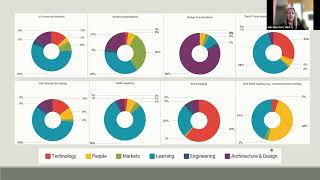
Excellent. Okay, um, so taking you on my knowledge management journey. Each knowledge management journey is a little bit different. It's about your firm culture as much as it is about process, so they won't be the same. But I want to share my journey in hopes that it'll provide you some insight or some ideas to advance KM in your firm. First, some basics on HGA. The firm was founded in 1953, 68 years ago. We have more than 900 people, people across 11 offices, and we work on diverse project types. And then since culture is important to this discussion, I wanted to go over HGA's values of empathy, Curiosity, hard work, originality, and legacy. I started my career at HJ in 2000 as a research librarian and have always had a focus on knowledge management, bring it up any chance I get. But it wasn't until the mid-20-teens that knowledge started getting a lot of publicity in the business world as the hot commodity for future success. The emphasis was now on investing in your people. This is when the KM journey officially started at HGA. I will take you along this path and look at each checkpoint or transition point along the way. The first step toward exploring any change is to assess where you are currently. So in this case, it's Define your KM baseline. Where is your firm creating, sharing, and storing knowledge? In 2017, I was part of a task force formed by our board to evaluate current state and make recommendations for future actions. We were tasked with finding where we are currently sharing knowledge in our firm, how people are sharing their knowledge, and then how do we support our individuals, groups, and communities and encourage more knowledge sharing. Through surveys and knowledge mapping, we were able to chart where knowledge sharing was happening and where there were gaps and weak points. So we looked at things like, um, when we looked and talked to the groups that were sharing their knowledge, were they local or were they sharing across offices? The local being in yellow, the reddish color being cross-office. And then was it focused? Was it sharing knowledge just within the group, or was there a broad reach, sharing across practice groups, across offices? Was it formal or informal? Formal being directed by leadership, informal being more grassroots or just a, a specific effort within a community. What we found was that we had strong communities of varying types, but they weren't strongly connected. In most cases, we had a lot of knowledge silos. So after analyzing the survey data and results from knowledge mapping exercises, our task force recommended these action items to our board. We thought we needed to present a clear way to understand KM. We needed to clarify where we were to capture and share. We thought we needed to create a knowledge sharing network drive, maybe a cloud drive that was easily accessible to everyone, and then clarify where to store information depending on what type of information it was. Was it the network or was it the intranet? And then we wanted to provide opportunities, more opportunities for sharing and for feedback. And then we thought we needed to either name or hire a knowledge manager. And then we wanted to make sure that all of this was transparent and communicated to groups and communities. So leadership did recognize that knowledge creation and knowledge sharing is essential to the future success of our firm. So knowledge management was featured in our 2017 strategic plan, the goal being to create a culture of knowledge networks. And then these are the action items under that goal: to create a clear and robust knowledge sharing system with a single place for dissemination, to reinforce the culture of knowledge sharing across practice groups and project types. We wanted to seek opportunities to share our research and expertise with our peers, with our clients, and externally with our communities. And then, of course, develop a continuous feedback loop to maximize the impact. So leadership also recognized that HGA needed someone to guide the process. And I spoke up and was given the role. Now that sounds really easy, and it wasn't really easy, but I had been speaking about knowledge management for a long time, and after that and speaking at KA Connect a couple of times, I was given that role. My first task as new knowledge manager was to set priorities that align with align the knowledge management strategy with the strategic goals of the firm. This was supposed to be easy in theory, um, because the strategic plan laid the groundwork. So I focused on the first 2 action items under our goal on the strategic plan and aligned them with my first 2 priorities for knowledge management: educating the firm and creating visibility for KM. To enact change, people— I really felt people needed to know what KM is and why it matters and how they can apply that within their roles and their communities. And then I broke these goals down into manageable actions that I could take. Educate through teaching new and existing employees, new employees through onboarding and existing by meeting with communities. And then create visibility through both place, in this case the intranet, and process, a more coordinated internal education system. The first priority was presenting a clear way to understand KM and communicate it to individuals and communities. I started by adapting our intranet onboarding to include language about KM. This was a way to familiarize all the new staff with the KM purpose and the vocabulary. Then I put some introductory KM slides together and went on the road meeting with each of the communities in our offices. To explain knowledge management theory, I use this hierarchical pyramid graphic. There's several like this available. You can find by searching Google Images if you want to use one. This one looks at the difference between information management and knowledge management, and it relates it to risk and decision-making. I really felt that this was something every person working on projects in our firm could relate to. It was important to show people that to make the best decisions, it's not just having the information that matters, it's knowing how to use that information when, and why through the context and through your own experiences. Then on the right, I incorporated real-world examples at each level to help bridge theory and practice. This really became the favorite graphic. People understood it and how to apply it. They could clearly see the advantages of moving beyond just know what into the know how and the know why. They could see that they could make better decisions this way. To relate CAM to everyday work life, I started with the basic premise of people, process, and technology and added in governments to support change management. This slide was my fail, learn, adapt moment. This did not translate well in the firm. They question how to fit knowledge management into their work process rather than being just one more thing they had to add to their to-do list. It was a little too abstract, I think. So I started over and talked about knowledge management from a perspective of how and where it applies in everyday work and at what scale. Was it local, cross-office, or project? I also returned to the— a more graphic representation, areas of focus for knowledge. I even started using the phrases knowledge sharing and knowledge capture instead of knowledge management so that the concepts would be more concrete and understandable. I broke the examples into levels: firm-wide, communities, and projects. Firm-wide showed all the ways knowledge is or can be shared across all offices and all levels in the firm. Some of these probably look familiar to you and are applicable in your firm, and then some might be unique to HGA. At the community level, all of the examples our knowledge transfer within communities, in our practice groups, you might call them studios, our knowledge sharing events, lessons learned, project reviews, project stories, and mentoring. And then communication paths, how we communicate. Critical knowledge transfer, it was important to talk about Knowledge that could leave the company with someone who left or with someone who is retiring, and how do we capture that? Different ways through mentoring, ethnography, and interviews. And then examples at the project level are knowledge transfer within projects, project stories, marketing stories, lessons learned, project reviews. Um, some of these like lessons learned, mentoring, and project reviews are overlap between different levels, between communities and projects, and that's okay. It's intentional because knowledge sharing is fluid and can happen within or across levels. I now use this combined list to work on applying knowledge management practices whenever the opportunity arises. Sometimes you can't plan everything out, you just have to go with where the needs take you. You also can't— sorry, went too fast. You also can't possibly work on everything at once. So a list like this can be used like a checklist to monitor strengths and gaps. Like the ones in blue, I check off that they have been implemented, and then what is in red is currently being worked on. And then the items that aren't blue or red need future intention— attention. The colors shift as needed because everything again is fluid. The next priority, creating visibility, aligned with our strategic plan action item, which was to create a clear, accessible, and robust knowledge sharing system with a single clearinghouse for dissemination. So first, I worked with our intranet team to concentrate on creating a place on HIP that would be recognized as the place to find captured knowledge, and later I would work on an internal system of knowledge sharing or internal education. So our overall goal for intranet was to provide easier access to learning opportunities. We had some ideas, but they needed to be tested. We created a user survey about learning at HGA and asked employees of less than 4 years to take the survey. Of the 400 employees we sent the survey to, we received a 62% response rate, which is pretty darn good. We then talked through the results with the task groups that provide the learning opportunities before we moved forward. Let's look at some of the survey results. First, we wanted to know how we were doing. We— were we providing the right amount of educational opportunities? So on the top graph, we asked, how would you rate the availability of learning and training at HGA? We found that we were doing pretty well. Overwhelmingly, we had just the right amount. Then we wanted to know how our intranet compared with others that employees might have used in the past. So we asked how, compared to other intranets people have used, how would you rate findability for learning and training opportunities on HIP, which is our company intranet. That went pretty well too. We had the majority saying about the same, somewhat better, or much better. Here we wanted to look at the push and pull of information. We wanted to find out how to best present education or push information to people. We asked, "How would you like to receive information?" The two most popular responses indicated that people like to receive information from a live interaction, either one-on-one or through group interaction. And then next in popularity were videos and print. To find out how people like to pull information, we asked about when they seek to learn a new skill, where did they go? Here's where we found we had some work to do. We wanted to increase the use of our internal resources rather than having people turn immediately to Google or YouTube. We really wanted to focus on sharing our internal knowledge. So we created a closed card sort for the survey recipients to use. This means we provided two lists that they then had to match up, and we did not allow for write-in answers, hence the closed part. Categories were at the bottom here. These were all currently existing in our intranet except for learning, which was added to see if our proposed direction was sound. So for each content type listed at the top of the donut graphs, people were asked in what category would they look for that content. The majority of the content was linked to the learning category that we wanted to create, but not all of them. Notice that the Design Conversation and the Revit Training are overwhelmingly linked to other categories. And in a couple of cases, people were divided on where they wanted to look for content and for vendor presentations and also for soft skills training. So not everything was exact. But with this evidence we gathered and after presenting the results to the leaders and task groups providing this content, we moved ahead with adding a site for our learning at the top level of our intranet. In the cases where the content was linked to categories other than learning, those groups retained that content, um, on their sites on HIP rather than being forced to move it to the learning site. And now that we have a destination for captured knowledge, we could look at the educational offerings They definitely needed some organization. So in 2019, I took on the task to coordinate our HGAU and a wide variety of other knowledge-sharing events happening around our firm. Some have a monthly cadence, others pop up whenever they have content to share. Um, but I wanted to increase the visibility for learning at HGA. So I created this calendar and I share them at our monthly all-office meetings. I post it to the learning site on our HIP internet, and I make it available through an Outlook calendar. So we have 3 points of access. Most of these events are also recorded and posted to our learning site on HIP for employees to find and watch on their own time if they're not able to attend. So that's like a fourth access point. So the strategy to reinforce a culture of knowledge sharing across markets also meant that our communities were asked to step up their game when it came to knowledge sharing. I work with many of the groups to improve their knowledge sharing within their groups and knowledge capture by creating or expanding internal learning events. Or changing up their communication within their communities. One example of success over the past few years has been sharing our research efforts happening at the firm through presentation and discussion forums. This new format allowed people to share research findings and then discuss their experience and insights for integrating it in other projects or processes. So now we're on to maintenance. Everyone always wants to know what's new and, and talk about the— this win or this great change effort. Maintenance is not cool, but it is important and necessary to stay relevant when you are waiting for that next big opportunity. So let me talk about some of the ways to maintain a visible presence for knowledge management. Provide some tools that people can use and inspire small changes. So I think of my work in this phase at 3 altitudes: managing myself, direct one-on-one work with community leaders or others who need help with knowledge management, and then continuing to educate the firm and maintain visibility for this work on a firm-wide level. Of course, it needs to start with me. If I'm not organized, then I am not of service to others. My goal at this point is to optimize the color— culture of knowledge sharing. We have, over the last 5 years, created that culture, but we need to keep working on it in order to maintain it. I have started to put together a maintenance plan that I call KM Care. Through research and study and from my own experience with this knowledge management journey, I have found 4 main areas that are significant to a successful KM program. Content. You must ensure content is timely and consistent. I want to promote cross-team and cross-office collaboration so people have equal access. I want adaptive governance. Governance, um, roles and responsibilities need to be attended to. And then engagement, making sure that our paths, our communication paths, are transparent for equity and collaboration. I use this plan to look for strengths and for areas for improvement. When I review content, I look at our data and information management. Is the collection consistent and the organization intuitive? In the area of access, I want to be sure we are being inclusive with our knowledge sharing at all levels.. And then can people find the resources, whether data, information, or people, um, that they need? In the area of responsibility, I check in with the people. Do I need to provide support to the knowledge leaders? Do I need to support the, the knowledge brokers? Um, these are the knowledge hubs and knowledge connectors. Knowledge hubs being the ones who have the knowledge, and knowledge connectors are the ones who know who has what knowledge. So do I need to gently nudge them to capture or share knowledge? And finally, I look at engagement. Are the systems that we put in place already working? Are there gaps in communication that need to be bridged? How can we be more transparent and equitable with knowledge transfer and knowledge capture at HGA? So these are the areas I look at when I'm working on maintaining what we have built. So the next level is working directly with other individuals and groups, using tools to help communicate with and guide people in how to access, how to successfully share and access knowledge. KM Care is not only for my planning and review and maintenance. I use it as a communication tool to talk with leaders about where our KM successes are happening and what areas currently need attention. It's important to keep leaders informed. I also use coaching tools I mentioned for both one-on-one and communities. One of the coaching tools I find helpful is a Creative Brief for Presenters. This tool helps people clarify their thoughts and create a purposeful presentation. Here we go. We have people look at when they're thinking about sharing their knowledge, what is the topic or the knowledge that they are sharing? I want people to look at why they're sharing, not just because I want people to know, but I want them to align their goals with the business case, with the overall goals of the firm, or opportunities for improvement. And then I really want people to think about the recipient's benefit. What will they learn? And what will— what are the prospective outcomes that we can achieve? And then it's important to look— I want everyone to know kind of thing. But who needs to know? I did not come up with this tool. This one is adapted from a chart by one of our own KA Advance community members, Drew Lieber. So thanks, Drew, for this. I have adapted it so I can work one-on-one with a person or a community group, and then when working on how to— that community group shares outward. The questions at the top are a good means of helping them focus. Should there, you know, be a cadence that we need to consider for your communication? How active will the leaders be? What are the goals for messaging, whether educating, inform, or inspire? How are they sharing information, making sure that it's open and transparent? And transparent? And then what communication channels are they using? So I won't go through the whole thing, but I want to point out that it can be really useful to help people focus their message by figuring out what they're sharing, who needs that information, and what are the best channels to reach them. So The widest-reaching level of my approach is communicating firm-wide, providing visibility and tools for knowledge management. And sometimes it means reaching beyond just your firm to networking communities like this one. Maintaining a visible presence for KM includes being a visible presence. For myself as a knowledge manager, But if you don't have a knowledge manager, it could mean a community champion. It could be a knowledge champion. It could be an intranet champion. Providing tools can also refer to teaching people the skills they need to share effectively or set up the right environment for sharing. This year I developed a knowledge sharing series that I present each month at our all-office meetings. It includes a teaching moment which relates to an aspect of KM. I call them knowledge nuggets because they need to be digestible, something people can take away and use today, like this one on building trust to enable knowledge creation and knowledge sharing. First give them facts and then give them something they can use, in this case, 5 ways to build trust. And then I need to reinforce that teaching moment, taking that and relating it to knowledge sharing that's already happening somewhere in the firm. So I want to provide the tools, but I also want to inspire people to use them. So highlighting a program, an existing program like this 8x8 program brief, um, that's happening in one market sector It shows them how to demonstrate a lot of those trust-building tips, encouraging the sharing of ideas that inspire people on a personal level while also focusing on design. People telling stories, expressing who they are, will allow people to trust them and relate to them. So then we have to bring people back to the source. First teaching moment, then reinforce it, and then showing them, um, wrapping up with where they can access the information. So I sometimes throw in recent learning events that's important for either review or to spotlight in the firm, like the series on the AAA framework that was developed by our design council. They worked really hard on a 6-part series, um, and we wanted to highlight where people can— to show people the knowledge capture, that we captured the videos and where they could access them. Thinking in terms of knowledge connections, it highlights not only the event but the capture and the access on HIP. And then also who they can contact for more information. So we show the video capture, we show the post on HIP that has all the information they need to access that series. So journeys like this are rarely easy, or they rarely take a straight path, but they are worth it. I hope this one has inspired you to look at how knowledge can be managed in your own firms. And I want to leave you with one of my favorite knowledge management quotes: Volume may be the friend of data management, but it is the enemy of knowledge management, simply because humans have to sift through the volume to find the desired knowledge. Or in my case, I simplify it to volume is the enemy of knowledge management. It's easier to remember that way. Thank you for taking this journey with me today.
Thank you so much, Julie. So we have some time for questions. As a reminder, you can ask questions using the Q&A panel, and you can also upvote any questions that are there that you want to draw attention to. Um, while we're waiting for questions to come in, I thought I'd get us started, Julie, with a question about where KM sits in the organization. This is something you and I talked a lot about as we were developing this story, that it kind of might take on a different flavor if it sits in marketing communications versus operations or IT. So I was wondering if you could just share a little bit about your perspective on that and yeah, if you have any thoughts on where it should sit or how to figure out where it should sit.
Oh, should is— should is a tough word. Because as I mentioned, every firm is different. Now, for me, I, I sit within marketing and communications, specifically in communications. And it's a good place to be because knowledge management has a lot to do with internal communication. IT is a great support, and I think we need to have a well-rounded KM team. You need to have the support from IT as well. So I kind of think of a tripod as the intranet, the knowledge management, and IT as a unified group. So in a perfect world, It would sit somewhere between there.
We just got a question in from Mark about how you measure success. How do you measure success?
I, I really use tools that I mentioned here. I— the list that I have of what is happening firm-wide at community level, and in projects to show that where we were when we started in, in the task force group has grown. So I, I use the similar models and I update them to show how it has expanded, how we have moved into all of the quadrants on that graph. I also use a lot of champions around the firm to give testimony to what has been better, how we've won projects based on the sharing of our knowledge and the research and the evidence-based design that we have increased because of this. So a whole lot of different methods.
Yeah, the testimony question, or approach is really interesting. Can you share a little bit more about how that happens, like how you gather and share testimony?
Sure. Sometimes it's in the moment, so I'll help people with something and it will work out to increase their knowledge sharing and it will help on specific projects. So I'll get thank yous and I'll save those. Or I'll ask them for more information on how it helped or why it helped. And then I save that for when I'm asked those questions of how do you measure and how do you know you're being effective. So I, I keep a file on all of those testimonials.
Yeah, nice. Um, another thing that you and I talked about is that you're not a architect.
Correct.
Right, or an engineer. And I'm curious how that has impacted your role, or if that has impacted your role as a knowledge manager. Like, have you— do you feel like you've had to navigate, I guess, the, the world differently or any unique ways? Because of your unique background in library science versus architecture and engineering?
I think there are both strengths and weaknesses. It is sometimes challenging to be taken seriously at a high level without having an architecture engineering degree. Um, but it's, it's challenging for people to understand how I can understand what they're going through without having either one of those degrees. But it's also a strength in that I can ask all the dumb questions, and I can really root in and get to some of the base levels of what's going on in communication. Because I do have expertise through library science, um, and through my previous experiences at evaluating how people are communicating, evaluating how we are creating and capturing and sharing our knowledge. So it allows me to access it from a different viewpoint and get people to see things differently.
Mm-hmm. I have a question from Dion about the software that you use to support your KM structure and any like unique modifications perhaps that you have employed to get the job done.
Um, you know, so software, I don't know that there's anything unique about it. Miro is a great tool. I noticed people in the chat love Mural. It, it really is flexible for collaboration and has made life a lot easier as far as doing things like knowledge mapping. You can, you can, people are more engaged if they can participate in a live-action way. So that's one tool that has helped increase participation in knowledge management. Other than that, you know, it's, it's pretty much the standard tools, you know, the network drives and our company intranet and making sure that, that everyone can access it. Has to— you really have to look at transparency and equity and accessibility as far as making sure that knowledge can be accessible at the right time when people need it.
There's a question from Kristen Fulmer, really good, interesting one. Do you ever run into too many learning opportunities? And if so, how does, how does your firm or practice area prioritize what becomes part of your firm-wide learning calendar/opportunities?
Well, that's a good question because it, you know, and recently, as recently as last year when the pandemic hit and we were all working from home and business was hesitant at the time, they said maybe there's too much overhead time being spent on learning opportunities. And I— they didn't pose it that way. That's what they meant. They said maybe there's too many learning opportunities, and I said, well, I think that's a good problem to have. I think structure and organization can make it seem like everything can work, or make it actually work in a better way and make it more seamless. So It's yes, we have more than we can handle, but we— the cadence we work with, and it can be different in different firms. I like to see no more than 2 learning opportunities per week, and that is simply firm-wide. I should say firm-wide learning opportunities. We can overlap with, in community opportunities, but firm-wide I like to see no more than 2. I prefer 1. We get the most, um, we kind of get the balance between the most attendance and, um, the least amount of worry from leadership. So it's a balancing act, but it's a good problem to have. You can always spread out learning opportunities. You, you can't, it's harder to create them when they're not there.
Yeah, thank you so much, Julie. We are at time for the webinar portion of this day. I want to thank Julie for putting together this presentation, for taking the journey and taking the time to share it with us. I always love talking about all things KM, organization, learning, architecture with you. Your unique perspective. For everyone who joined us today as an attendee, thank you so much for coming and for answering your questions. I'm sorry we didn't get to all of them. That said, we are going into a Hangout in a few minutes, so if you want to bring any of those lingering questions on over, I would love that. And finally, we will be sending this recording and Julie's slides out later today.
More from Christopher

Human in the Loop? Testing Our Assumptions About Where People Add Value in Learning | Todd Henderson

Redesigning Work for the AI Era: How Greenprint Turns Implicit Knowledge into Shared Intelligence

Designing Learning Like a Product: Branding, Culture, and the Unseen Work of Building an LMS

Scaling Design Excellence: How Diamond Schmitt Amplifies Knowledge Through Learning and AI

From Tame to Wicked Problems: Rethinking Learning and Development in a VUCA World | Ellen Bensky

Learning at the Speed of Change: Adapting L&D to Your New AEC Workforce | Kristina Williams

Designing Modern Learning Organizations: Rethinking AEC Learning Development in the Age of AI

The Link Between Learning, Motivation, and Career Fulfillment for AEC Professionals


Why Communication Skills Are Foundational to Teaching, Leading, and Adapting in AEC F

A Framework for Collaboration and Quality: SMMA’s ISO 9001 Journey | Ryan Farias & Jessica Smith