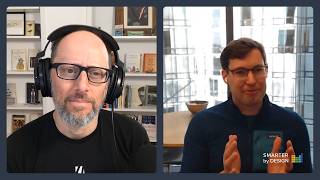
In this interview, Christopher Parsons and Speaker A examine how apprenticeship‑heavy training models, especially surgical residency, struggle to keep pace with paradigm‑shifting technologies such as robotic surgery. They cite Matt Bean’s qualitative study showing that the traditional progression from peripheral tasks (holding a leg) to core surgical responsibility is replaced by a binary split: either the trainee drives the robot or merely watches on a screen. Because the training curriculum has not adapted, residents resort to “shadow learning” and off‑hours, off‑book practice to gain hands‑on experience. The conversation highlights the need for dedicated simulator labs and a redesign of the residency schedule that aligns learning activities with novice needs. A parallel is drawn to the military’s switch from custom UAV controllers to standard Xbox controllers, illustrating how tool design that matches novice cognition can dramatically improve training outcomes. The speakers argue that a generation of trainees who have navigated these work‑arounds will eventually reshape surgical education, but doing so requires institutional investment in simulation infrastructure and learner‑centered design.
Chapters
Apprenticeship-heavy models also suffer the burden of being slow to change because you get a lot of that, well, this is the way I was taught.
Totally.
And so you, you sort of move one generation at a time. But some of these technologies are paradigm shifts, right? It's a little older now, but Matt Bean at UCSB has this fantastic qualitative study of robotic surgery and how it upended the whole idea of a surgical community of practice. So you used to literally move from the periphery to the core. You might hold the leg, then you might be helping retract, then you're assisting, then you're doing the surgery, right? So you had degrees to move into expertise and, and participation there. With the robot, you're either driving or you're watching on TV.
Mm-hmm.
There, there is no in-between. You either are controlling the instruments yourself or you're watching on a screen with everybody else. And so it created this fundamentally different training need, and yet the training model stayed the same. There was still this apprenticeship model of you move from a first year to a second year to a third year resident to a fourth year. And what he describes are these processes of shadow learning where essentially people had to go around the existing training paradigm.
I thought you meant shadow, like shadowing somebody. You mean like literally like off book?
Oh no, I mean off book in the dark. And it was things like going in in off hours to use the robot, right? To get some practice. Wow. When things were available to them. So overnight cases where they probably wouldn't call in one of the attending surgeons, some of the senior residents might say, yeah, I'm able to do that. I'm confident doing that case when they might not have done it before, right? Having to sort of essentially circumvent the training process because it hadn't changed. And it was partly, at least in my opinion, because the folks who were at the top of that training model had no mental representation for how to become a surgeon other than what they went through. And so it, it's just been really hard for everybody to say, okay, well, what does residency look like now if the tools are totally different?
Yeah.
And I think it'll take a generation who figured it out through backdoor shadow means and got there, and then they'll be able to say, okay, here's how we're gonna do things differently. And we're starting to see that now. You have a lot more simulator labs. You have a lot more, Right.
So if the only way to do it is watch on TV or do the thing, then simulating the thing.
Exactly. Do the thing, but on not a real person.
Not on real person.
That, you know, so again, and they're not— it's not rocket surgery, right? There are obvious answers like that, but it's just that requires reorganizing the surgical training schedule. Right. Because right now they're supposed to be in the OR watching and it would take somebody going, Okay, this is not a good use of my time to be the third person standing here watching this screen. I should be in the simulator lab doing it. It requires building a simulator lab, right? Staffing it, doing all these things. So it's a simple answer, but a non-trivial change to adjust the training program.
And it almost has to be designed, I would think, in concert with the novices. Yeah. Because it's been so long since an expert has been a novice that they don't even really remember what it is to not know what they know in the first place. Yeah.
And to try to figure out live as you go. I mean, the military provides a great example. They were having such high failure rates with some of their remote operated vehicles until they switched the controller from this custom DOD-built controller to an Xbox controller, a literal Xbox controller, because they found it has all the same— it has, it can do everything it needs to do. And suddenly it was second nature to all these young kids coming through. And the success of their UAV training program goes through the roof because they just, they made it a tool that made sense to these novice users rather than something designed by someone who had never really used, hadn't used a remote control since the era of like remote control toy airplanes and things like that. Like it was one of these crazy old things with knobs and sticks and stuff like that. So yeah, you have to kind of go where the learners are in that sense.
This has been— I don't know, I'm very curious to stay in touch with you as you— because I actually— there's— I don't— I should be clear. I don't think apprenticeship and that kind of like idea that you learn progressively is completely gone. I just feel like it's not enough.