Continuously Improving the Employee Experience | Carol Wedge of Shepley Bulfinch
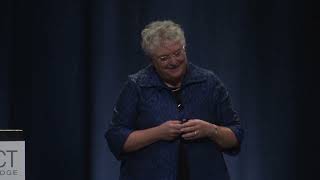
Transcript of a 2026 YouTube presentation by Carol Wedge (CEO) describing Shepley Bulfinch’s 20+ year effort to institutionalize continuous improvement. Wedge tells four core stories—clarifying leadership and career pathways (principals, directors, VPs, fellows), building firm-wide communication and onboarding via an intranet (“Finch”), reforming project staffing with a skills-based “sushi ticket” process plus analytics (baseball cards, staffing dashboard), and broadening design practice to be more collaborative and inclusive—then reflects on measuring diversity, the CEO’s role in culture, and simple gestures (personal thank-you cards) to boost engagement.
Chapters
Thank you. Hello, everybody. It's a pleasure to be here. Many folks in our firm have attended KA before, and so I feel like I'm being welcomed in a way that is very hospitable. And so it's exciting to get to know many of you who are return attendees. So we're going to talk a little bit about Chepley. Chris already gave you a sense of we're a national firm. And one of the things that I think is really interesting about Shepley is it was founded by H.H. richardson in 1874. So we wouldn't be around if we didn't continuously improve and change. And I probably have a thousand stories that I could tell you about that. So what we tried to do is distill it down into four stories that I think are pretty meaningful around how we've engaged employees, but also how we've made ourselves better by being a we that makes ourself better. The thing that's interesting, I think about my experience is I started at Chapley in the mail room in 1986. I was a student at the BAC. I had had a recession experience in another field, but because I had been an employee at kind of every level of the firm, I had this authentic experience of knowing what it felt like when no one would give you information or when things are very hierarchically decided and you felt like you had something to offer, but nobody included you in that process. So I think that started my wheels turning as I grew and developed in the firm because I felt like I have ideas about changing that. I have ideas about changing that almost to a fault. But I think that's what led me to be a leader in the organization and progressively took me to the roles of, you'll see, senior associate, associate principal, president and then CEO when we were coming up, you can see in 1998, this is a promotion photo. Very classic historic photo. We don't do that anymore. On the left. This is a firm in the late, I think, 1890s of what architecture looked like then. And we used to call it like it's a fixer upper. And so it was a very old boy firm in New England. I used to say it's like an old shingle style house you inherited from your family. Everything's broken, but at least you own it. And I think there's something about feeling connected to it and the humanity of it that allowed us to change it. So the kind of lens that I'm going to explain these stories to you is the questions I was asking When I was coming up in the firm and how did take I use my role as a leader to empower the firm to answer those questions differently in the last 20 years. So when I was growing up, we would have these really horrible lobster bakes. I'm from New Jersey, so I had never really eaten lobster. I didn't really understand the attraction. But the real cool thing for me was the gentleman with the lobster bib and the two gentlemen who were principals who were making the cocktails for the Christmas Eve holiday party always said to me, if you need anything, just let us know. And I feel like that kind of offering of, we care about you, we want you to succeed here. We acknowledge you're a student, but we still care about you, regardless of what level you're in in the organization has been an enduring part of the firm. The principals, when I joined, you can see in the lower right to you. Zibi Erickson was a woman who was a principal at Shepley Bulfinch when I joined in 1986. And I thought, wow, that's pretty progressive. Not many firms, especially large firms, had women principals. Unfortunately, in 2000, I was the next woman principal. So that sort of empowered my idea about what culture needed to be like and the kind of pace of change that we needed to embrace. So today, similarly to some of the things Jim talked about were how do we create camaraderie, how do you build trust among people, and also how do you cross those tribes? So you might not be working on the same project, but you're working in the same organization. And I would say there are many aspects to our firm that have contributed to that. A lot of it comes from synthesis and the things we've learned at ka. But we also learned to poke fun at architecture and not take it too seriously and not think it's so precious. And so we celebrate Bow Tie Day. Does anyone know why bow ties architects wore bow ties? Yeah, it's because the May line would catch a long tie in the main line, you'd, like, choke yourself or ruin your drawing. So it comes from the hand drawing days that all the men wore bow ties in the office when I was coming up and young men who were my peers when they started to wear bow ties, it would give them a hard time. Oh, you're bucking for being an associate because you're starting to dress like the guy you work for. So that shared sense of purpose is important part of our culture. And I think it's really encapsulated for me as a leader of, yes, we could do that, and how would you like to execute it? And I'd say my philosophy about ideas in the firm are if you come up with the idea, you're part of implementing it and owning it. If you come up with a suggestion or a complaint, what's your recommendation for changing it? And I think that has helped us empower people to feel. Feel like they could be part of the change. If you can observe the problem, you should be part of fixing the problem. So four stories of continuous improvement around our firm, and all of them include employees. I used to say, without people, we don't have a firm. 85% of our revenue are elevator assets. If no one cared about working at Shepley and didn't come in tomorrow, there would be computers and office space and nothing going on in them. So the people are really what the firm is about, and they're what make the firm tick. So when I was coming up in the firm, everyone wanted to know how I became a principal. It was a total mystery, black box. No one understood it. We had principals of all different flavors, so you could never really correlate who was who another was. How do you find what's going on here? Because I was going to night school, I used to hang out in the studio outside the principal's meetings, and they would talk in the corridor. So we would all kind of hang out and wait for them to come out of their meeting, and then we would learn what was going on in the firm. How did you get assigned to a project? It was very political, and there were all these different operators, some very artful in sort of sucking up to people and encouraging them to put them on their team, not telling them they were actually committed to another project. So there's a sort of dysfunction junction in trying to pursue opportunities. And then our biggest ambition in the last 20 years has been how do we take design beyond. How do we take design beyond in our aspirations for what it could be. So how do you become a principal? At first, we started with, well, what are principals supposed to do? Like, how are they supposed to perform? What's their responsibility? And that a title is not a reward, it's a responsibility to be a leader. It's not an attaboy or a pat on the back that comes in different ways. And so we realized we hate to create some clarity of roles, but also a way to get someone to the level of principle. And also, probably most importantly, not to make it a mystery. So people didn't feel like they lost out, but they realized that people were on different paths. So this was the organizational structure when I was a young architect in the professional staff. And it was a complete mystery what any of those terms mean. We didn't know what an associate was. We didn't know what it meant. It was all kind of cryptic and it was all traditional. And so whenever you asked a principal or the president of the firm to explain it to you, they would sort of fall back on, well, it's always been that way. That's the way we do things. And that was never quite fulfilling enough for my peers and my generation of leaders. So the first thing we did was to start to develop what are leadership criteria? What does it mean to be a leader at Shepley Bulfinch? And I would hope that every firm looks a little bit different, but I bet they're very common attributes. And what we found is there were a number of people that were quite ambitious that only had a couple of these and they were driving them really hard. But if you didn't really have the full complement of those, you weren't going to succeed as a leader in the organization. So we broke the idea of principle. Instead of having the Baskin Robbins of all different flavors of principle into a couple different categories. One was focused on business development and how does work come to the firm? Who wins work for the firm? Who takes on the responsibility of nurturing relationships with clients so that we could continue to build the practice we wanted to have and the exciting projects we wanted to do. The second was who does the work? Who gets the projects done? They were getting more complicated, they were getting larger. They were needing areas of expertise. That's a huge area for us to focus on. And then the administrative, which I'd say is really operations as well, was who are the departments that are running things? Well, whether it's IT or HR or marketing or the frameworks, finance, the frameworks that ran the whole organization. And so we broke down what had been one principal group into principals, directors and vice presidents. And so they had that correlation to their responsibility. Of course, the VPs have managers that help them run their department and their projects. They have administrative staff or entry level positions that kind of feed that pipeline. And there have been people in our office that started in administrative staff, and our VP of HR started that way, grew with the firm and was developed in the organization. The next phase was identifying professional staff is where much of the design staff, interior design architects, start their process. But then they get developed. So they are project leaders, whether they're project architects or Job captains or running an area of expertise as a programmer or planner. And then the new category that we framed that was a little bit different was the idea of having a fellow that once we had identified that you had those leadership characteristics, we actually needed to teach you business development. We had to actually start to scaffold you and pipeline and train you how to think about being a principal, how to compose a proposal, how to go to an interview, how to design all of that process. And very little of what you had done in your project area had really trained you for that. And so it was a very visible place where we've said, we've made this person a fellow. We're identifying them, we're developing them, we're investing resources in them. And the exciting thing was people in the professional, staff and project leadership areas and other manager areas were like, wow, that is a great person. I do want to follow them. I'm excited about a firm that might have that person as a principal someday. So it started to feed our secession planning. The next story is, how do I find out what's going on here? Shepley was always a verbal culture. Probably 135 years of verbal culture. You learn things by talking to people working in the firm. After a couple of years, you figured out who knew what and how that happened. You learned on your project and from the people you worked with. But there was very little learning across the firm. It was really episodic, and it was all delivered verbally or 90% verbally. And there was also an aspect of us, as Chris mentioned, we were growing. We had an ambition to be a national practice. All of a sudden we had other offices. Sharing and communicating and feeling like one firm was much more difficult when it was really about flying someplace and just talking to people. So hence synthesis and KA and sort of our adventure. But our intranet is called Finch. There was a design competition that Jim ran to name that. So Finch is now a verb. People say, well, you should Finch that, which means put it on our Internet. But this was the pipeline in onboarding that you got a to do list and a training program of. These are the things you need to do to get to know Finch. These are the things we suggest you share about yourself and also let people know what you're a resource for. I often say it's kind of a lottery when you come into the firm what your first assignment is. And just by having grown up there, I saw how you became so defined by your first assignment. Assignment. It was so hard to know what else people were good at and what they were interested in. So it really helped us answer questions, get smarter together at our table, we were talking about this kind of intense debate about how do you count toilet counts in all these different codes? How do you get gender neutral toilets through a building code? So there's these hysterical and interesting and very technical discussions that happen on Finch. But there's also a place to celebrate, whether it's someone becoming an architect or winning a design award or winning a new project. And that's all shared across the firm. And I feel like even when we're going to interviews or being better about sharing, we're going to an interview. Here's the link to the deck that we're sharing. So it's not such a mystery how the firm wins work or what we're saying about ourselves or what those stories are. And probably the most important role for me is kind of the coaching I get and the help I get from our team, but how important it is as a CEO to be a cheerleader. The intranet isn't just for the people that work in your firm. It's for you to encourage them, like what they do, comment on what they do, post things. Jim and I posted our bow tie day picture yesterday, but it's an important role for. How does the leadership say this is important? And when you're thinking about whatever communication tool, intranet diagram you have, how do you create cross firm culture? People, I think underestimate the role of a leader in people will follow you just because you're the leader. And you can move people along a lot faster than you think just by being willing to participate in something very actively. The third story is how do you get assigned to a project? So who in the room loves the way they do staffing or project assignments in their office? Yeah, okay. We work in the same world. The hardest thing for us was really trying to map. And this was exacerbated by being quite successful in business development and winning a couple projects simultaneously that we really needed to staff up for. But also we needed to understand who had what skills and how did we move more quickly. And interestingly, listening to Jim's discussion, I think there have been some collateral benefits. But the way it used to be done about three years ago was that the principals were actively involved and they didn't ask for skills, they asked for people. And I used to say, so you want a Kelly, like, object to work on that project? Because Kelly's already fully busy, we can't put her on something else. But there were way Too many cooks in the kitchen from marketing and the principals and project managers and then all the politics of individuals. There was a cool new project that came in. Eight people were lined up at the principal's desk to say, I'd be really interested in working on that. So we created a staffing workshop which came very much from our work in lean and learning to be continuous improvers, which many ways came from our healthcare clients. And the problems we were trying to solve were, could there be more transparency in the process? We had done a design lab workshop one summer and people said, we have no idea how staffing gets done. We have no idea how these choices get made. We also realized there was no consistent language about skills. Everyone was using different terms for different activities and abilities. There was a lack of alignment on individuals needs with the skills they had. And also what was the stretch assignment that would help them grow that new skill. And so as a result, there really wasn't trust in the system. There were too many cooks in the kitchen and not a reliable outcome. So you can see the problem statement that there was a disconnect. So in the first workshop, the project managers, mostly supported by some HR and no principles, key element, no principles, created a diagram for how we could run staffing in the future. That was project manager centric, project manager led. And it's almost a little odd, but they created the tool called the sushi ticket. So instead of asking for a person, you actually had to ask for the skills that you needed on a team. They created the staffing responsible body who was responsible for vetting those, comparing them, contrasting them, and starting to figure out how to recommend a team for a project. So here's what a sushi ticket looks like. And there's a couple other subtle things in there, like, do you even have a contract? Are we staffing a project that really shouldn't start yet. But here you can see you can get to the capabilities that you need for a project and start to think about the composition of the team before you think about the people. This is what our project manager meeting looks like every Monday, cross office, all locations, everyone with their laptops open. Did you actually do a work plan for that project? We don't even see any demands for that. What do you mean you need four people? Someone will say, well, why don't you work on that work plan? We'll get to you at the end of the meeting. But what it created was a kind of shared sense of mission. And what I love is one of the more recent joiners to the staffing responsible body said, we have to staff the firm first and the project second. And so that means you can't hold on to people. If the exact right skill is in a project that's probably finishing, maybe it's a little early for that person to leave. But this other team critically needs them and it's best for the firm if we move them. And that comes from the project manager. So they have incredible buy in and they're making the decisions. And so when principals come to me and say I really need, blah, blah, blah, I'm like, I'm not responsible for that. You need to go talk to the staffing responsible body. They'll listen to you. They really care about you being happy with the teams. And more recently, those people have said, we think we could have a bigger role in the career path and engagement and fulfillment for people who work in the firm. So back to a workshop. You can see our typology. We always do workshops for group buy in and sort of synthesis and it comes from our design process. But out of that came we don't really know all of the skills people have. We don't know what they're passionate about, we don't know what they want to learn more about. And we also don't know what they know that they would love to teach to someone else. So the outcomes of that were a baseball card. It might have to do with the Red Sox being, being in Boston, but it was really about how do we create a staffing dashboard and move from the verbal description of what someone does to a more analytical database that gives our staffing teams more information, more information about who these people are. Now that we're growing and in multiple locations. Not everybody knows everybody, not everybody knows everyone's skill. It's not possible. And so I credit Jim Martin and a lot of the IT team with working with the teams to create this product process. And I love that the first box is what are your goals and passions? Tell us a little bit more about yourself. And so then people rank themselves on where they think they are in these capabilities. I should say we're happy to share these tools. It's using them that's important, not making them. So we're happy to share them, but it starts to get at a discussion. Then the staffing body looks in and says, I don't think that person is a four in that category. I think they're actually more like a two. They're, you know, a good opinion of themselves. But there's sort of a vetting that goes on and Then the staffing tool is you pull the filter and you choose the things you need. And then it shows you the criteria of employees that fit that search. So who are the people that are advanced in having that skill? Who are the people that are interested in growing that skill, which you see on the next one? So on the left, you see the number of people that want to learn programming as a specialty, and you see on the right in the 24 yellow, the number of people that are skilled at it. Be happy to teach someone else to do it. So you get a sense of our tracking that over time and having analytics about it. And the other interesting thing is the little yellow line is that even people who are really advanced in things want to learn new things. They want new challenges, they want to take on something different. They want to continue to grow. And I feel like I relate to that because my story at Shepley was, I'm just a learner. I want to learn new things. As long as I'm learning something new, exactly what it is isn't as important to me. And so I could totally relate to wanting those growing experiences. When I look back on 33 years in the firm, I feel like I've had like 20 different jobs there. And so keeping that sort of ambition for the firm present and relating to that has been important for our staff. Here you just see a little more granularity as we get busy. How long does it take to hire someone once you've identified a need? How long does it take to advertise, recruit, interview, hire? Longer and longer in a really busy market, and how do we manage those expectations? And then you see our distributions of market. Most importantly, you see how requests are closed by month. So this analytics starts to give HR and our managing principal a sense of we really do need to be hiring a little faster than we thought or the requests are tapering off. Let's go double check and see if we should really be hiring as quickly as we outlined. So a lot to share there, but probably the big theme is going from a verbal firm to a more analytical firm and going from a firm that was based on the people you know versus the people you could get to know and the skills that you have kind of hiding in plain sight. I would say the feedback from staff is strong and very positive, but I still think there's a lot more to do in knowing what my career path is and when I'm going to have access to the opportunities that I articulated on my baseball card. So we're always in continuous improvement. You Know, I think if you think you're done, you're going to start falling behind immediately. I think you're always working on these things. You just reach sort of the next level of inflection point of what to take on next. So my fourth story is how do we take design beyond? And some of this came from probably. I entered architecture in the 70s and Shepley had this ongoing discussion of were we a design firm or a service firm? Were the client's more important? I never really thought that it was a binary thing. I thought we were supposed to do all those things. So as a young person, I was a little bit challenged by the way some of the people in the firm were talking about that. And so as we were up and comers, we were ambitious for design. We were ambitious to do things in new ways, to use new materials. The thing that gets under my skin the most is when someone says, well, that's the way we do things. I'm like, yeah, tell me it's the best way to do it. Do not tell me it's the way we do things. Because I think that's sort of showing a lack of curiosity and a lack of interest in continuing to improve things. I don't know about you, but I grew up in the world where there was a design principle and the rest of us were just architects. And the way that ran in the firm, from the time I joined the firm, they did some beautiful projects, but I didn't think those projects were as good as they could have been if they had listened to more voices. So that was my personal experience and the experience of a lot of my generation. And it really fueled our design ambition. In our last strategic plan, which was almost about 10 years ago. So about 10 years ago we were saying we needed leaders to engage multiple points of view, and we wanted to break down that kind of hierarchical structure within the design team. And you can see how we've evolved from writing a design manifesto to refining our strategic direction, to now defining skills of successful designers who work effectively in a healthy design culture. And the diagram that best represents that for us was the hierarchical design driven process, where there was the id, the architecture ID that had the vision, and then everyone else had to implement that vision. And people found places of happiness and sort of fulfillment in executing that. They mostly got close to the clients for validation, but they didn't feel like they were really included in the design process. And so our effort has really to make design an idea driven process that relies on a lot of discussion, a lot of iteration A lot of dialogue, engaging the clients in dialogue. Increasingly, we're involved in processes where we're in a big room with the architecture, engineering, client contractor, subcontractors, users, this incredibly diverse group of people that need to feel like it's a we and that it is a process that we can choreograph that includes multiple points of view. I don't think it works for every firm, but it certainly works for us, and it certainly works for the kind of work that we do and the kind of clients that we engage with. So for me, it was, how do we measure design progress? And are design awards necessary? And I don't know that they are, but I think they're pretty simple validation of, are you succeeding? Are you recognized in the market? Do people know that you're doing great work? And so pursuing those became important for us, but also tracking our progress. And so I think this starts in 1923. But you can see that service firm in the 70s, right? That service firm decided not to pursue design awards and focus completely on servicing the client, which was probably valid since we're still here. But for our generation, starting around the early 90s to the mid-90s, we were more ambitious than. And we wanted. And I think there has actually been. Not think, but I know there's been a design resurgence in our culture that cares about design in different ways. And so for us, that was also kind of a reflection of that, of tracking that accomplishment over time. So my bonus, my last five minutes of bonus is what's a CEO's role in this kind of culture? And what's a CEO's role in engagement? And I'd really start with, you know, being human being. Okay with being vulnerable and human with all of your employees. Just because you're maybe the most senior person doesn't mean you can't be the most human person. And so it framed for us our values. In 2000, we radically redesigned the firm. And it's a long story, but short story is created significant leadership in a president, organized our principals around the clients, not around a board where 23 principals were on the board that met every week, and in my humble opinion, did very little. I come from a big Irish Catholic family. 23 people can't decide where to go for dinner, much less where to drive a firm. But the exciting thing was that we defined diversity as a key value, and I think part of it was us. A lot of our principals grew up in the 60s, were pretty liberal, had been part of the civil rights movement, and so they really cared about Diversity. But I think the thing that really most got their attention is we worked for hospitals and higher ed, by and large, and those were the clients that cared about diversity ahead of architecture. And they started sending us RFPs that said, please describe your EEOC policies. And some of our principals were like, what is that? What is an EEOC policy? In the 90s and the early 2000s, we had a very progressive head of HR and a principal who did the hiring and made the rules around flexibility. And so we've had flex time for 25 years. What they said to us was, what do you need? Tell us what you need. And so I have two daughters who used to sleep under my desk at the firm on Fridays. But we got to design what we needed. And I think that's a clue to the future because we wanted to be successful at work. We wanted to be leaders, but we wanted flexibility to do it in a way that worked for our families. And I think the firm supported that in a way ahead of a lot of other organizations. Don't underestimate the value in saying that you care about something. I think stating your values, even though it sounds kind of corny, I don't know that any of you would really disagree with these, but making them part of that, you say what you care about, I think is really important. It's kind of pulling the curtain away from the things that feel invisible to your employees and bothering to say them. And so our culture is really around, inspiring, fostering, developing others. I think I'm ninth generation Shepley Bulfinch, so we know we're all passing through, so we're always developing the people that are coming up behind us and insisting on respect across the organization. There are definitely times that our clients don't have those values. And that's a whole other story Chris could ask me about. But this is a representation of the firm in terms of gender. Male and female. Female's the lighter blue color. And then the important thing that we've done in the last couple of years is actually measure gender and racial diversity across the different aspects of the firm. And interesting to me that the managers are more female. It's marketing and accounting and hr. Interesting. And the directors, which are more technical, more about getting the buildings done, and the expertise in architecture that's a little bit more technical, are more male. And so we're paying attention to that. I think you've heard other firms say all of our design principal leaders are male. What's that about? So I think just bothering to look at that and Think about it and see is there something structural going on in your organization that's implementing that. The thing I'm most proud of is when I joined Chapley Bulfinch, it was actually a pretty racially diverse place. There was a principal from China, a principal from Egypt, There was a woman principal. It was an old boy firm. But it was actually already changing when I joined in the 80s and I think in 2000, around 50% of the firm was women, but very small percentage of the principal group was women. And so today we're a women owned business with more than half of our principals are women. Interestingly, the next generation's a little more male. So hope for you white men in the audience. For us it's more about talent, but it's about caring that people of all kinds feel comfortable working at Chefway Bullfinch. And then also in the last couple of years, we've started to be more overt about measuring our diversity across race, trying to learn and understand how to create an equitable culture, learning how to talk about being white and the privilege that goes with that, and trying to appreciate the experiences of our colleagues who are not white and owning that whiteness of America and of architecture. So I've been really actively involved in that in the last couple of years. I think we have a long way to go. But I'm really excited that organizations like the Large Firm Roundtable are really talking about it. A number of firms are hiring really creative consultants to help kind of open up that conversation. And so I'm very hopeful that that will continue to change. For me, architects need to reflect the communities they serve. And if you reflect the community you serve, you can engage in that community in a dialogue that will help you design the solutions that community needs. And I think that's the reality of it. I think architecture has a longer way to go than some other professions. But I'm very hopeful that the dialogue is ongoing and continuing. And here you see ethnic diversity across our different organizational groups. And exciting that we have some principals that are more racially diverse and come from other parts of the world. Again, interesting that our technical director, architects are all white. And then I'll just end on two things. I recently wrote an article. I met Wanda Lau, who's at Architecture at Equity by Design, and she said, you seem very opinionated. Would you like to write something for me? And so I needed to think about what I wanted to write about and how I wanted to empower people to have voice and solve the problems that they interact with and it kind of came from an experience I had on a plane. Has to be about eight or 10 years ago. So I was president of our firm. I'd been president for about five years. I was upgraded to first class. I always do a little assessment of who's sitting in first class. How male is it? How diverse is it? That's my little game with myself. But I sat down next to this man and started chit chatting. What do you do? He was a professor. And he said, what do you do? And I said, I'm an architect. And he said, oh, they let women be architects. I mean, seriously? I'm like, I'm 50 years old. Are you kidding me? And I said, yeah. And they let blacks and Latinos and Asians and all kinds of people be architects. And I thought, I'm so glad that I was ready to answer that question in a way that felt human and who I was and represented the culture I came from. And I think the interesting thing, the response he had was, thank you. Thank you so much for saying something. I really didn't mean it that way. I meant to say I'd never met a woman architect before, but for me, it's been sort of writing this idea about speaking up and being prepared to speak up because you will interact with those, I call them the kind of idiotic comments that spill out of someone's mouth. And maybe they meant it and maybe they didn't, but it still happened. And how do you prepare yourself to confront those and address them? And it's sort of one teachable moment at a time. And what I've encountered in our office is people who. Something weird happens, whether it's racial or design or someone didn't listen to me or whatever, and they didn't say anything in the moment, and they think the moment's gone forever and they can never do anything about it. And my big mantra is conversation number two is a really important conversation because you can go back to that person and say, I should have said this then. But I was not happy with how that went. I really didn't appreciate how we handled that situation, and I'd like to improve on that with you. And I think that's such an empowering conversation because you get to rehearse for it, prepare for it, decide what to say, ask for help. But it also, I think, strengthens people who feel like they're enduring things that they shouldn't have to endure and empowers them to feel like they can do something about it. So the last thing I'll end on about employee engagement is how we deal with bonuses at the end of the year. And it's really just about being human and saying thank you and appreciating people and thanking them for their hard work. So the first year I was president, we had a pretty low bonus pool. I wasn't very proud of it. I was very happy about it. And I thought, what else could I do to show these people that work at Shepley that I appreciate them? So I wrote Christmas cards on sort of a architecture logo or a Shepley logo to every employee in the firm. And it was just me being me, and probably something my mother and grandmother taught me to do, to write thank you notes. The feedback I got from the employees was startling. Like, to a person, to a level, the thank yous I got from people for noticing them, thanking them, and bothering to write them a card that took maybe a minute was pretty remarkable. So I'm on year 15 of writing Christmas cards to every person in the company that gets clipped to their bonus check. And that's the thing that I hear more about from employees around engaging them and caring about them as people than any of the other stories that I've told you. So I'll leave you with that very simple human thing to think about how that works, might work or could work in your organization. So thank you.
More from Christopher

Human in the Loop? Testing Our Assumptions About Where People Add Value in Learning | Todd Henderson

Redesigning Work for the AI Era: How Greenprint Turns Implicit Knowledge into Shared Intelligence

Designing Learning Like a Product: Branding, Culture, and the Unseen Work of Building an LMS

Scaling Design Excellence: How Diamond Schmitt Amplifies Knowledge Through Learning and AI

From Tame to Wicked Problems: Rethinking Learning and Development in a VUCA World | Ellen Bensky

Learning at the Speed of Change: Adapting L&D to Your New AEC Workforce | Kristina Williams

Designing Modern Learning Organizations: Rethinking AEC Learning Development in the Age of AI

The Link Between Learning, Motivation, and Career Fulfillment for AEC Professionals


Why Communication Skills Are Foundational to Teaching, Leading, and Adapting in AEC F

A Framework for Collaboration and Quality: SMMA’s ISO 9001 Journey | Ryan Farias & Jessica Smith