Corey Squire | Knowledge Management: The Secret to Unlocking Sustainable Design at Bora
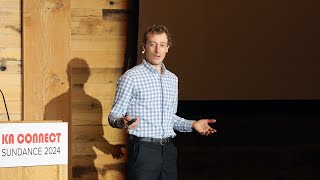
Corey Squire (Sustainability Director, Bora Architecture & Interiors) argues that sustainable design at the firm level requires deliberate knowledge management. He describes Bora (Portland; ~75 people; ~65 years), the firm’s North Star—climate, health, equity—and shows how an intranet called Chaco links vision → measurable outcomes → repeatable strategies → documentation. Squire lays out five principles for “sustainable knowledge management” (single source of truth; codified best practices; answers, not resources; highest common denominator; useful approximations), illustrates dashboards and tooling, and closes with a Holgate Library case study showing the approach in practice.
Chapters
Little bit of housekeeping. This is Chaco. This is our kind of firm mascot at Bora and also the name of our intranet. So if I reference Chaco during the talk, that's what I'm talking about. Quick introduction to Bora Architecture and Interiors. We're in Portland, Oregon. We're a statistic 75 person firm. We've been around for 65 years. So it's a relatively old firm and we work in a variety of market sectors. Architecture, interiors, experiential design. Most of our work is public work. A lot of schools, libraries, performing arts centers, and everything that we do as a practice is viewed through a lens of climate, health and equity. This is our kind of fundamental purpose for existing and what we want to bring the ideas that we want our work to bring into the world. So Borai mentioned it's an old firm. It's always had this deep sustainability ethos. Right. Here's a picture of the Bohra beach house. We built this for ourselves back in the early 90s to kind of immerse ourselves in nature. It's a very energy efficient building and it really did a good job of kind of describing who we were, but we also did buildings like this up until about 2018. And does anyone need a primer about why all glass buildings are no good? For a variety of reasons, I'll assume no. So I was brought in a few years ago as the sustainability director, the first sustainability director that Bora has had. And my job is to change culture. The firm decided we were going to go all in on sustainability. We were kind of reimagining the firm was reimagining who they wanted to be going through the third generation of leadership of the firm. And there was this clear goal about being very knowledge, sorry, very mission driven. So here's my approach to sustainability. Sustainability is not a fight, right? We're not fighting for better energy performance or better daylight. Sustainability is also not about chasing after a project with a pooper scooper, right? Trying to clean up mistakes that other people have made. So if you take one idea away from this talk, this is the most important one. Sustainability exists at the level of a practice, right? It's not project by project. It's really either all or nothing. So here's an example. A bunch of projects along the horizontal axis and they all. A typical architecture firm has projects that kind of hover around typical. Typical could mean code minimum. Typical could mean culturally accepted norms in the construction industry, wherever the project is. And then a lot of firms have the sustainability project or the sustainable project, the one project that they're very proud of that kind of stands above the rest, that really performs well, right? This project might be the bullet center. It might be Rocky Mountain Institute. Here's one at Lake Flato that I worked on. Even Bora had one of these projects. This is Creekside High School. It's a alternative high school that was our first net zero energy educational space. But the thing about the sustainable project is that there's a story that sets it apart, right? Maybe the client founded Earth Day or something like that. But what really matters is what happens on all the other projects, right? We want to take a portfolio that looks like this and transform it into this, because this is what sustainability looks like. So how do we get here? How does any practice get here? How do we shift from sustainability being reserved for a special project into sustainability just being the normal course of action, just how we do things. You have to find your North Star. And this is what we did at Bora. I led a sustainability visioning workshop actually, before I joined the firm officially. And we identified these three driving principles for our work. Climate, health and equity. We then identified very clear, measurable outcomes that we wanted. I mean, people just throw around the word health or equity or climate, but we actually wanted kind of real focus on body carbon reduction, real attention to climate risk, really great indoor air quality, a focus on climate justice. And then we identified key building systems, key design strategies that allow us to get there, tying our vision to our work. And then we needed Chaco, our KM platform, which is going to guide the way there. So as, as Chris mentioned when he introduced me, kind of, I came to this epiphany through my work that sustainability is really just knowledge management. Sustainability is not about caring more, having better morals, not about trying harder. It's not about lead certification. Sustainability is about getting the right person, the right information at the right time to result in a better project. Sustainability can't really exist without knowledge management. And this is my bold claim and I'll give a little bit of a backstory. So this is kind of a bit about my career, my journey, how I started as a. A young sustainability professional and kind of developed into, developed this worldview about sustainability and knowledge management really being one in the same. So here's a picture of me on the first day of my job as an architect. I'm reading electrical meters. Fairly typical for introduction into sustainability. We just designed this 400. Sorry, yeah, 400 unit apartment building. And I went floor by floor to read every electrical meter every month, just to see if it was performing relative to how we had hoped given our energy model. Later on, I moved to Lake Flato where I was the sustainability manager for a number of years. Here's a picture of the Josie Pavilion. It's the Living Building Challenge certified project. I really like this image because it has the wastewater treatment plant right in the foreground, which kind of shows that you need your technical strategies to underpin any sort of good design. So my role at Lake Flato was as a technical expert. And as a technical expert, I supported project teams in doing higher performance projects and answered a lot of questions right. Project teams would come to me and they would say, how much insulation should I put in the wall? What mechanical system should I use? How do I size a cistern for rainwater harvesting? And I got these questions over and over and over again. In about 2015 or so, we got an intranet for the first time, a synthesis based intranet. It was called the Flake Net. And I developed the page that we call design and sustainability. Part of that, I built the sustainability toolkit. I extracted all of the sustainability knowledge that Lakeflay had and documented it in a way that was accessible for all project teams. If you looked at the entire word count of our entire intranet, maybe 80, 85% of the total word count was in the sustainability toolkit. It was fairly massive. I learned later that interns were downloading the whole thing before they left the firm and then taking it back to school or their next firm. But the question stopped. People stopped coming to me and saying how much insulation should I use? And I stopped having to give the same answer over and over again. Which means that my role was able to shift not from just technical expert, but to really to be a leader, right? To focus on culture, to focus on the other questions about how we get sustainability and sustainable strategies into our project. In 2018, I was selected to join the AIA National Committee on the Environment. This is that group. We're staging an impromptu protest in front of the White House. At one of our meetings at the AIA headquarters, sustainability was a topic. We talked about climate action at the time. We talked about architects role in climate action. But it wasn't really clear about how we would accomplish those goals. There was usgbc, there was, I don't know, limited leadership from the aia. And the Committee on the Environment at the time had been running the coat top 10 awards program since the early 90s. Cotop 10 awards program kind of reviewed projects or awarded projects based on these top 10 measures. Of sustainable Design, Design for Integration, Equitable Communities, wellness, resources, full 10 of them. So we thought this, this committee of ours, we thought that we could rename the coat top 10 measures into the AIA Framework for this for Sustainable Design. Like, if the AIA formally defines sustainable design, then us as a profession could all start moving in one direction. But then we had a better idea. We could take this a step further. What if we renamed it the AI Framework for Design Excellence and not just define sustainable design, but really redefine good design for the entire architecture profession. So we brought this idea to the Board of Directors. They said, thanks, but no thanks. They said, maybe we'll think about this for a little bit. And then we drafted a resolution that we brought to the floor of the convention in Las Vegas in 2019 at the AI Convention. And among other things, it said that the Institute would adopt the COTOP 10 measures as the new AIA Framework for Design Excellence. It went up to a vote of the membership. It passed with about 93% of the delegates voting in favor. And we felt like we had really accomplished this big thing. We were able to redefine sustainable design, or really just good design for the profession, but underneath a vision, you need to have knowledge to support it. And I led a small group of people, kind of subject matter experts from around the country, to develop what we called the code Top 10 framework, or the later it was the Design Excellence. Sorry, the Design Excellence Toolkit. This was based on the Lake Fatal toolkit that I had written when I was at that firm. And we broke down those 10 measures of stage sustainable design into about 54 topic areas with over 400 best practices. This was published on the AI's website underneath the Framework for Design Excellence. The idea is that you have a vision and then you have the knowledge, the accessible knowledge to get you there. So who here is familiar with the framework Design Excellence? Some people probably have heard of it. If you haven't heard of it, go check it out, it's great. But if you have. The entire thing was approached with a knowledge management focus, right? We have a new vision, we have a toolkit to let anybody get there. And I've actually heard from firms around the country, mostly smaller firms, sole practitioners, who said, this is the resource that we've been needing. We didn't know how to focus on sustainability, but now we have this kind of accessible guide. We have a clear mission, we can get there. I've even seen kind of phrases and content that I wrote into the framework being used at rfp. Responses by other firms. Because as a profession we now have more of a joint language, a common language to describe sustainability. So in 2018, I went off on my own. I started a consulting practice I call the Department of Sustainability. The idea here was that some firms like Lakeflado 100 person firm, can afford a full time sustainability director, but most firms are much smaller. Most firms couldn't. So. So my practice, I was going to be the sustainability department for a variety of firms kind of simultaneously. That was the idea. But it also allowed me the opportunity to explore some ideas that I was interested in. Why do some projects perform better than others? Or even stepping back, why do some practices perform better than others? If we knew this, then we can maybe unlock something and any practice could design at a really high level. So these are the lessons from my consulting practice. In order to excel at sustainability, a practice needs two things, the right knowledge and the right culture. If you only have the right knowledge, but you don't have the right culture, then you'll have resources that go unused. And if you only have the right culture, but you don't have the right knowledge, you might be all excited to jump in and get started with sustainability, but have just no idea what to do. You need both. And if you have both, your firm will can produce consistent high performance, similar to those green graphs that I showed earlier. But there was a gap in the literature. There's lots of resources out there that describe sustainable design strategies, right? Sun, wind and light. Maybe a lead checklist, maybe me. There's all this stuff, but there's no resource that said both what to do and how to do it. So my goal was to bridge that gap. I wrote a book, People Planet Design. The idea is that a practice can pick up this book and it's really a one stop shop for what are the design strategies that we need to apply? How do you build them into practice? How do you talk about them? Why are we doing any of this stuff in the first place? And it's the only, as Chris mentioned, the only book about sustainable design that I know of that has a whole chapter dedicated to knowledge management, which I think again is fundamental to kind of success in this field. The book is about design and it has a few basic assumptions. Right? Good design solves problems. If it's not solving problems, it can't be good design. It's probably not design at all. We already have all the technology we need. We don't need to wait for nuclear fusion to orient our buildings in the right direction. The constraints are not what they Seem, and this is an important one, it's not about money, it's not about client interest, it's not about schedule, it's about knowledge. And the environment influences outcomes. And it's not just the physical environment that you're practicing in, but also the social environment. Are people comfortable asking questions? The design culture, the, the knowledge environment, what information is available? But the barriers to kind of this goal of consistent, high performance design are real. There's the challenge of complexity. Architecture is already a very complex, challenging, time consuming endeavor. And sustainability often feels like it's just dumped on top of that. There's a challenge of prioritization. If you were to look at a lead checklist, it lists a whole bunch of sustainable design strategies as like, point for this, point for this, point for this. But the window wall ratio is many orders of magnitude more important than plumbing fixtures. You just buy the plumbing fixtures, it's fine, you don't have to think about it. But other things are fundamental to the design of the building. There's a challenge of purpose, right? Fundamentally, sustainability is about human thriving, but it's often confused with filling out a checklist. And then there's the ever present problem, distraction. So we know what the barriers to sustainable design are not, right? We know that cost is not a barrier. And everybody thinks cost is not a barrier, but it's clear the cost is not a barrier. If you think about it for a minute, right? People often say, I can't afford sustainability and then they spend all this money on expensive interior finishes. We know that design is not a barrier, right? People think about Earthships and they're like, oh, I want a nice building, I don't want that sustainable building. But there's so many beautiful, high performing projects. Just like there's plenty of ugly energy hogs out there, we know that interest is not a barrier. I've worked with dozens and dozens of project teams over many years and I found no indication that those who know more about climate change, those who care about sustainability, purposely, those who love hiking, have any better outcomes in their projects than anyone else. But access to the right knowledge and the culture that allows it to be used will always result in a better project. And that's where Chaco comes in. So a little bit about how we organize Chaco. We started with the vision. The vision clearly leads to the outcomes we want to achieve. The outcomes are then linked to the strategies, and the strategies are then linked to the documentation. So here's an example of that. Bohr's goals of climate, health and equity Meaningful climate action is a fundamental vision of the organization on Chaco. Those ideas are now linked to one of those outcomes, energy conservation. One of the strategies that supports energy conservation is high performance glazing. How do you document high performance glazing? By choosing this specific window. Right. And that's kind of the flow of all information within Jocko. So thinking about the connection between knowledge management and sustainable design, for a few years I developed these five principles of what I call sustainable knowledge management. And I'll walk through each of those and this is. These are the ideas that Chaco is based on. The first one is a single source of truth. So this is broader and sustainability. We talk about single source of truth a lot, but we often speak about single source of truth in terms of metrics or numbers. But we can broaden that to include processes and strategies as well. What are the goals we want to achieve, what are the KPIs that we need to use to get there and what are the strategies that we want to employ? So again, Bora's goals, Bora's vision of climate, health and equity, the specific outcomes we want to achieve, the building systems that get us there. And this maps exactly onto the navigation in Chaco. Right. I'm going to actually go back on that. We have energy conservation, body carbon, climate risk, indoor air quality. Right. And these are the high level pages under the project outcomes tab. So it's no mystery about how you design in a way that kind of realizes the firm's goals. We also built dashboards. There's lots of discussion about dashboards. I love dashboards as well. We built our dashboards directly in Chaco and we built a variety of types. This is kind of the sustainability process tracking dashboard. So as sustainability director, it's really important to me that project teams do a few things on all their projects. I want there to be a visioning charrette so that we can collectively establish a project mission. Usually project performance goals come out of that charrette. I always say that if you're not, if you, if you haven't set project goals then than where are you heading off into? We define clear project performance requirements on every project. Kind of like an opr, but more of a sustainability focused one that we share with our clients. And it's really important that projects create sustainability diagrams because that's how you speak about intangibles. Right. Indoor air quality doesn't appear in finished photography, but it's incredibly important. So if we want the client to know that this is something that we're Focusing on, we need to create a diagram. So I'm able to kind of go in and track in real time where projects are, who's completed which of these kind of essential pieces of the process. We also track performance across our projects. So what's our benchmark eui? What's our predicted energy performance? Is the project all electric? A big focus of ours is to eliminate gas. What's the primary structural system? Our goals are either mass, timber or adaptive reuse to reduce embodied carbon window operability. This is fundamental for equity. I make the case that if you, if you have a sealed building where the windows don't open, you're basically telling people that you don't trust them to open a building, sorry, open a window. So what else do you not trust them to do? We work really hard for operable windows on our projects and then glazing area. As I mentioned before, this is kind of a fundamental metric for energy performance, for daylight, for thermal comfort. We track all these metrics in vision and then we've created that. We created this dashboard directly into, into Chaco. All right, so number two is about codifying best practices. This was the idea behind the Framework for Design Excellence. And the toolkit that supports it is we don't need to do calculations, we just need to follow best practices. People have experimented on buildings for thousands of years. We basically know what works at this point. We need to do a little bit less reinvention and a little bit more following, following the literature, following the best practices that we know will receive good outcomes. Here's an example of that from structural engineering. This is a wood frame wall. The studs are set 16 inches on center. This is not an optimized spacing. Right. There's more wood here than there needs to be, but it's not worth running through the calculations to eliminate a stud. Right? We know that we're going to get good outcomes by doing 16 inches on center. And we'd have to think about it. So we could just repeat this over and over again without investing new time into research. Here's another example. Do we specify low flow toilets or do we specify dual flush toilets if our goal is to conserve water? So here's the best practice. Low flow toilets in public spaces where people might not know how to use a dual flush system, but dual flush toilets in private spaces where people will understand how to use it and save a little bit more water, we never have to think about that. Then again, we can just apply that same rule over and over again. We've documented it. We Did a little bit of research upfront, we've documented it and we never have to think about it. Buildings that follow best practices typically perform really well. Here's an example. This is a coat top 10 winning project from Bruner Kot out in Massachusetts. It basically is an example of a project that did everything right, has the orientation right, the windows are right, wood structure for reduced embodied carbon, this nice native landscaping. You don't have to do all this research, you just follow follow best practices. Alternatively, if you don't follow the best practices, you're going to get subpar performance if you think that for whatever reason your all glass buildings perform better than every other glass building before you that didn't perform well at all. It's a recipe for bad outcomes. And on Chaka we document all of these best practices and we get down to a very detailed, detailed level. So here's flooring rules of thumb for any individual circumstance you're going to be designing. These are the, this is the flooring system to use. We have a preferred option and we have alternative option and that's it. We don't have to spend time research, we don't have to kind of, we don't have to reinvent what we're doing. Okay, so number three, provide answers instead of resources. When somebody asks for the codebook, they're not really looking for the codebook. They're looking for the answer to a specific question. And we need to be very clear about what those questions are and what answers we need to provide them. So we created a page on Chaco. It's called the Bora Perfect Project. And this is basically our starting assumption on all of our projects. If we get everything right, if we have the opportunity to kind of design in the way that we want for every system, this is where we want to end up. So we don't need to rethink this on every project. Right. We have strategies that we want to use to improve energy conservation, to improve health and wellness, to advance equity. And this is our starting point. Nobody needs to read meb, right? I read meeb and then I took that information that I thought was useful and put it on Chaco. One person at any firm reading any resources. Enough. We don't discuss window specification. This is our window. We decided that given our climate and giving our building type, this is the best window and we use it on every project and we don't have to have that conversation. Similarly, here's the code path for achieving, kind of for doing a mass timber structure. These are the interior Materials that you should either specify or not specify. We do a lot of post occupancy in our projects. It's super important to go back and see how the project performed in real life. We found that this email has been really effective. So we just posted the email to Chaco and people can use it. Right. Hi. So and so I worked on the X project at Bora Architecture and Interiors and I'm really proud of the team's effort in completing the school. Add compliment here. We are now curious a couple of years later about how it's operating, how the building is performing for you and your staff. And we get consistently good responses. Yeah, come in, take some measurements. Here are our utility bills. So this allows us to, without having to rethink this ask to kind of consistently build onto our success. All right, number four. Choose the highest common denominator. Every state out there has a different energy code. All sorts of jurisdictions have different energy codes. Right. But what results in the best building energy code is not or your enclosure system. The insulation you have in your walls, the specifications of your windows. This is fundamental to the values and outcomes of your project. This is not about code compliance. We decided what level of installation results in the best product. The best product along the lines of what we want to achieve. And that's what we've documented on Chaco. We haven't documented IECC 2015, IECC 2018. Depending on where your project is, choose this one. These are our go to assemblies in the Pacific Northwest and. And it gets us good performance every time. There's a lot of reasons why we want to have a really good enclosure. Right. There's a balance between active system and passive systems in every project. Whatever you don't supply through your passive systems through enclosure needs to be supplied with the active systems. Which means that if you have less insulation, you're burning more fuel to make up the difference. There's a lot of other benefits for using a really high quality enclosure. Right. Might be indoor air quality, might be thermal comfort. We have the resources on Chaco so the project teams can make this case to the client, describe the value that they get from the improved enclosure. And we don't have to fight over inches of insulation. We can make a very kind of coherent and desirable argument for the enclosure that we think the building should have. And we've been successful in achieving that. We also can pull good ideas from from our project. So we're working with Portland Public Schools right now. They have a really ambitious climate action policy and we've been able to pull good ideas from that document as part of our internal standards on Chaco, and then apply those lessons to different clients like the Multoma County Library, which is now better because of what we were able to take from Portland Public Schools Climate Action plan. All right, so finally, number five, get good. Get comfortable with good approximations. So there's two maps of Germany on the map. One of them has a lot more information, but the other one is a lot more useful. And this is the focus that we're trying to bring to all of our communication and all of our information. There are plenty of people out there who want to convince you that sustainability is really complicated, right? Specifically those who are selling calculation software or simulation software. This was put out by Sapphira describing their complex system of multi variable optimization. Right. This is completely unnecessary. Sustainability is actually not that hard, right? When it's hot, you want to keep the sun out. Fundamental principle. You don't need a simulation software to do that. You can get 90% of the way there towards the highest performing buildings in the world with just best practices without adding any time or effort to your design process. So here's the roadmap for sustainable practice. And this is when I was consulting, this is what I brought to the firms that I worked with, and this is what I've brought to Bora as well. You start by defining your goals. Every firm has different goals, climate, health and equity for Bora. But it's really important to understand what those goals are, right? They might be sustainability focused goals, they might not be, and that's fine as well. You then want to design the right environment, right? What environment do we want? We want maybe limited hierarchy. We want a lot of curiosity. We want the ability to explore, the ability to ask questions. People feel uncomfortable speaking up. And then we want to provide access to simple, effective design strategies that could be repeated over and over again that result in predictably good outcomes. So I use this phrase a lot when I'm talking about the Internet, talking about Chaco at the office. An intranet is not neutral, right? We're not copy and pasting the encyclopedia so that it's suddenly searchable. It's very, it's targeted, it's very directional. The goal of our intranet, the goal of Chaco, is to guide us towards the outcomes that we defined. Right? And that X on the map is Bohr's vision of great design. Here's our design philosophy on our website again. Climate, health and equity, that's what we're aiming for. And then also we could Think about how this works for a project. Right. So I'll give a super quick case study. This is the Holgate Library. This is the first project that we've completed that's open to the public in our office after. We define climate health inequity as our fundamental design vision. And a lot of design strategies in this project were based on information that we had on Chalco. So the site that we were given was oriented north south. So we had a few different massing options. But we knew that we wanted an east west orientation for better daylighting and to keep down solar heat gain. So we went with that option C, the east west oriented building. We then wanted to minimize heat gain as much as possible, particularly from the east and west, because we wanted a super efficient mechanical system and we needed to get the loads way down. So we took the core elements, the elevators, the bathrooms, storage. We push those to the sides, we push those to the east and west. So the majority of our glazing is on the north and the south. Because of site constraints, the building was a little thicker, a little deeper than we wanted it to be. So we used daylight simulation to optimize a skylight that brought light down into an atrium on the ground floor, but also provided even daylight throughout the space. And here's a section cut through that building. We got mass timber structure, which is a big goal of ours for embodied carbon reduction. It was FSC certified, got solar panels. We had operable windows in the project, which violated the county's design guidelines. But we were able to make a strong case based on information that we had collected in Chaco about why we were able to do that, why we wanted to do that. The mechanical system is in slab radiant heating and cooling, which is super efficient. It's all hydronic based. It's more comfortable, but it's only possible if you have very low loads. And here's the library. Here's the existing library. This actually. The little kid in red is. Sorry, yeah, the little kid in red is my son. On opening day, here's that skylight with kind of sculpted baffles that bring light down to the ground floor. We used acoustical lighting fixtures so that we can have less acoustical material on the ceiling and expose more wood. Was a major goal of ours. Brought in plants for Biophilia. This is an air quality meter that I brought to the project on opening day. It's recording 99% out of 100 air quality score, which is super impressive given that the building had just opened. So all the materials are brand new. We had really no off gassing at all because of our material selection choices. And we wanted the community to feel real ownership of this project. We developed three different options for exterior finishes, and we put this up to a vote and the community chose the green option. So at the end of the day, on a very tight public project budget, we were able to give the community the super efficient, super comfortable, really nice library that they have ownership of. There's no sustainability features in this project. Right. All it is is good design. So just to wrap up, I would say, thinking about intranet, Decide where you want to go, build the platform to get there, and that's it. Thank you.
More from Christopher

Human in the Loop? Testing Our Assumptions About Where People Add Value in Learning | Todd Henderson

Redesigning Work for the AI Era: How Greenprint Turns Implicit Knowledge into Shared Intelligence

Designing Learning Like a Product: Branding, Culture, and the Unseen Work of Building an LMS

Scaling Design Excellence: How Diamond Schmitt Amplifies Knowledge Through Learning and AI

From Tame to Wicked Problems: Rethinking Learning and Development in a VUCA World | Ellen Bensky

Learning at the Speed of Change: Adapting L&D to Your New AEC Workforce | Kristina Williams

Designing Modern Learning Organizations: Rethinking AEC Learning Development in the Age of AI

The Link Between Learning, Motivation, and Career Fulfillment for AEC Professionals


Why Communication Skills Are Foundational to Teaching, Leading, and Adapting in AEC F

A Framework for Collaboration and Quality: SMMA’s ISO 9001 Journey | Ryan Farias & Jessica Smith