Gillian Hutchinson | Focusing on What Matters Most: Preparing for Synthesis LMS at RIOS
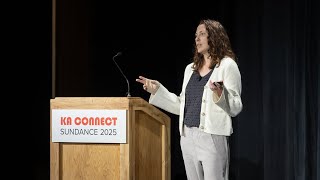
Gillian Hutchinson (RIOS) describes the firm’s rapid multidisciplinary growth since 2018, the evolution of their intranet ‘Loop’ (Synthesis 5 → Synthesis 6), and the creation of Apollo (a center of excellence) to produce training content. RIOS has a large, geographically distributed staff with limited L&D capacity; they produced many recordings and knowledge artifacts but face gaps in curated, role-aligned learning and manager-level tracking. To prepare for Synthesis’s LMS they mapped content, piloted course/lesson examples (Revit, Rhino), debated granularity, and are prioritizing learning paths tied to promotions and technical skills while considering resourcing (DIY vs instructional designer) and manager buy-in.
Chapters
I want to give a bit of context. So we're kind of earlier stage learning and development. Like, we don't have an L and D department. We're just very diy. So, as Chris said, this is just a bit of a leap of faith here. So we're very much in progress with this. And for those of you that don't know, LMS is Learning Management Systems. So it's a tag on to the existing synthesis that tracks learning and development for staff, and you can do video quizzes, that kind of stuff. So as I've talked to some of you the last couple days, I've realized that not everyone knows what LMS means. Yeah, so this is me. I'm Gillian. My title is Random doesn't really mean much. I kind of, like Chris said, I do a bit of everything. I jump into whatever I can get my fingers into, kind of a thing. And I'm with Rios. Who are we? So, as I've said in some of our other breakout talks, our company does everything from coffee cups to cities, and that's our tagline. We have everything in between, as you can expect. We do architecture, landscape, urban design, interior design, product design experience, all of that. Our headquarters is in Los Angeles, so that's where we started. But we do have a smattering of international offices as well. Forty years of practice, which after hearing Shepley Bulfinch with 150 or whatever, feels really young. I was a child when it started. This is just a bit of a map for you guys to understand our reach. Our offices are the large icons and our remote people, or all the smaller little location icons, then our general project reach of how we service. A lot of this I thought it was interesting to show. Los Angeles as our headquarters, is obviously the largest amount of people that we have. Our second largest is our remote people. A lot of our office is disparate, largely across North America. Then as we look at the staff count section, notice there's no learning and development people. Again, as I mentioned at the beginning, very DIY architecture is our largest amount of staff. Landscape is close second. But we do have a wide variety of people kind of spread across the globe. So I wanted to kind of give you a context as to why this learning journey is kind of important for us right now, especially not really having anything official prior to this. So back in 1985, when we started, it was a Los Angeles firm, and it remained that way until the early 2000s. We've always been multidisciplinary, so it started as a Landscape and architecture practice. And very quickly we started kind of building on that. So we added interiors very quickly. After graphics was added, we brought in, not neutral, our product design. You might recognize these mugs in a lot of coffee shops all over the globe. Really. I've seen them in Amsterdam, Calgary, where I'm from. And then we also added urban design around 2003 as well. And so why this is important, up until the early or mid 2000, 2018, it's been a very steady, gradual growth and really all sort of California based as our headquarters. But in 2018, our growth, staff wise, exploded. I also wanted to acknowledge because someone asked me about this at one point there was a bit of a drop. This was post Covid, I call it the post Covid pause. We had a lot, a lot of large projects sort of go on hold in this moment. So our staff numbers did go down a bit, but we have leveled off and started to plateau there. But from there we also at that point started adding more partners and more offices. And so we opened an office in Portland, in Boulder, Austin, and then we started going global. London, Shanghai, Singapore. This rapid rise in both staff and global reach really happened within the last seven years. With that, although we've always been multidisciplinary, we really started refining some of those disciplines. Within that, our graphics department really got into experience design. Our RIOS home, which is our residential practice, kind of broke off and became specialized, although we've always still done sort of commercial projects. And then we also started RIOS plus, which is our nonprofit wing, to do those kinds of projects within that time as well. And so alongside that, Synthesis has been with us. So when this growth really started to explode, we signed on with synthesis five around 2019. So just when we started, you know, growing before we even signed on, our first sort of second office location. And then Synthesis. Oh, I knew this was gonna be a thing. Synthesis 6, we migrated over to last year, last May, and then now we're obviously in the sort of private beta 0.5 LMS test. And so we've been, it's been a really important partnership, I think for us in these very time crunch, explosive growth times. Why does this matter? Gillian, why are you going on about your company? Okay, as I said, rapid growth and expansion. As any company realizes, if you're acquiring new companies, if you're just growing and opening new offices, there's a lot of obstacles and challenges that you have to overcome. One of those for us was maintaining a cohesive design identity. As we expand, how do we make sure our Vision and our identity as RIOS comes through in all of our work. Also integrating different work cultures because we're a very California based company, as we've exploded globally, we really need to identify and work with the different cultures and not try and make everyone do what we do in the US or all of that. How do we both listen and respond and grow to those different cultures? Defining global standards is obviously another one. So even around this time, before we started opening up all these different offices, we had some standards, but it was really not sort of documented in the same way that you need when you start opening up a bunch of different offices and not even just sort of US standards. Now we're dealing with international projects not just as design architects, but we do have licensed architects globally as well. And so representing what Riba might be in the UK or having sort of technical expertise in all of these places and making sure that what we're saying in one place aligns with another. And then obviously along with that, having a sort of cohesive qa, qc, document control to manage that. Again, for the different standards, not even just different states, but different countries obviously. And then as we said we had, or as I said, I had some sort of content in our synthesis 5, starting to build a lot of recordings and in person kind of stuff like that. But we do have a big sort of on demand, just in time content gap, especially when you have some of your technical directors that are sleeping. What do the people do in the other time zones? And so making sure that those people have those kinds of answers as they need it. And so right in the middle of this period, in 2021, we opened this or we started a studio called Apollo and that's our sort of center of excellence. And that's our SME studio. That's where I live. And so that's when a lot of the training content started getting produced. So this studio was created in response to a lot of these obstacles. And how do we fast time put all of our most expert people together in one room in their variety of expertise and collaborate on how we're going to tackle these different challenges? As we launched Synthesis 6, it was a great moment for us to start thinking about we have all of this content, how are we curating it? Now as we're moving into a new platform as Apollo, we had a few challenges to tackle. How do we help staff hone these skill sets, especially remote, especially globally, how do we track these skills across multiple offices? It's not just good enough that we know we're teaching is it being effective. How do we know when someone wants a promotion that they actually have the experience that they need? And how do we do it in a way that's authentic to Rios? So I think, as a lot of the speakers have been saying, you don't want to just plug something off of the Internet. It has to obviously speak to what your culture is. So as Apollo, we do what we always do, we start diagramming. And so a lot of this is sort of workflow brainstorming analysis of how things were currently working, where we saw certain problem spots, the line dot at the, @ the bottom, I don't even know how to describe it. We called it the abacus. And that's where we mapped out the life cycle of a project and where our different SMEs would plug in and then ultimately map that on the left into sort of workflow processes and content. Then on our. I should have introduced this in the beginning, but our synthesis is called Loop. So when you hear me say Loop, that's what I mean. So have our processes up on Loop. And so as Apollo, we started doing quarterly trainings. And so these are just a few of our sort of adverts and a lot of it will be in person, but we do always have Zoom recordings and that's what we operate off of for our zoom or our video recording. And so this was producing a lot of content. But again, it's meant to presentation style. It's not really kind of training. But this is the only thing that we were sort of offering other than sort of one on ones with folks as they needed it in different times. So as I mentioned, Loop is our intranet. And so this was our first version, synthesis 5, and we started in 2019. And the initial goals for this was having some sort of central repository to bring everybody together, having an internal comms, as I think we've heard some other people mention, UX and ui, part of it was challenging. It was both challenging for the content creators as well as users. And so people struggled with search and finding things. And so it was something that we had. It was great at the time and we worked with it, but we were really glad with the Synthesis 6 rollout. Around the same time, we also opened up a platform called Build Help Desk. And this was really just a mirror of our IT ticket system. And this was a way for our technical directors, who are our technical experts, to field questions. And this was the idea that globally anyone could ask a question, it would get sent to the right technical director to answer that question. And that you would then have a repository for questions in the future. If people needed to search it, they could find those technical questions somewhere. Challenges were it was really meant for an IT ticketing system. Getting into it, you had to do an SSO login and password check verification on your email. And it was just nobody used it because it was just too long to even log in and track. And then they ended up just teamsing whoever they knew anyways. And so it was really hard to get off the ground. And we ended up sunsetting it last year. And so now in 2024 we brought on synthesis six. So this is loop 2.0. And you know, as I mentioned earlier, the UX much better. We have really found that content creators are kind of going crazy, which is making me happy because I don't have to chase after people to create pages. Things are happening without me even knowing. And then that's when I know that there's been some sort of situation, success. Document libraries have been a huge change for us. So instead of things sort of living in disparate places on the server, we used to use Vimeo for a lot of our video uploads and sharing. So now we've pulled all of those off and are putting them natively into loop. And so, you know, as others had said, that helps with the AI search. And so now we launched actually the AI search fully in January, February this year. And it was a bit of pulling teeth to get people to just go into that search bar. Cause a lot of I feel like I am Google and people are like, Jillian, where do I find this thing? And I'm like, I don't know, did you use the search bar? Are you trying it? And so once people figured it out and now they're sharing stuff with me from it and it just makes me feel happy that they're using it and they understand it. And now I'm getting sort of of the feedback from the AI search of why don't we have this and why don't we have that. And to me that's a big win that people are digging deep enough to help me find some of the gaps. So some of the challenges that we are finding is that users still want more clarity on what's applicable to them. And actually I've heard with the AI agent that's going to be coming out soon, I think that's really going to help tackle some of that filtering and customization that I think some people are wanting for their personal view. Then another challenge that we're still finding is no way that managers can track an individual's performance. As topical specialists or as some of our content creators, you can see if people have watched videos or if they've looked at certain pages, but our staff managers aren't the ones doing that. There's no way to really cohesively see someone's user journey and making sure that they're learning or watching the videos or doing the things that they need to do, especially for promotions or things like that. So we have a few other initiatives that have kind of been driving audiences to loop as well. And as I just mentioned, we have created Loop content managers. And so these are the people that are kind of owning the different areas, practice areas, or even like HR marketing or things like that. So they are taking ownership of their content. And then we meet quarterly, which is the analytics on the left. And so I'll help and kind of review with the full group of them and we all kind of share out our lessons learned, what works, what hasn't. And that's been a great way to kind of deputize other people to be free agents, if you will, in what they're doing. And not everyone has to check in with me and what's happening on the site, which makes me happy. Another segment that we created is stuff you should know. And so on our weekly all hands we have. It's like a one or two minute segment. We intentionally keep it short because attention spans. And it'll be someone from our Apollo group, so maybe it's our fabrication lab or our video people, myself, anybody will do a segment. And we kind of rotate through and just share a little tidbit, usually directing people to stuff that's already existing on loop and just reminding them that it's there. And this is the process. And so we've had a lot of great sort of feedback from that. Another one is myself and Bob, who's in the audience here too, who also works at rios. We do a loop tip segment. And so this is our way just to help kind of demystify Loop. And it's again, always really maybe like a 30 second, like, did you know you can use icons? And it's always super simple little tips like that. And the responses in the chat is really great because people are just like losing their minds. Like what? We have an icon library. To me, it seems like simple stuff. And it's funny how little people don't really dig around, they just need to be shown sometimes. So now here we are, our wall of content that we've created in the last four years. Really? And we're at that point of what do we do? What do we do with this all? And as we're thinking about the lms, how do we curate? This has become the biggest question. It's great that we have all of this content. We didn't have all of this, you know, 10 years ago. And so this is where I've been banging on Chris's door of like, whenever the LMS is out, let me in, let me in. Like we want to, like, I would rather organize directly in the tool than us try and find something else. And the utility of having everything in the same place and the AI search and all of that connection, like, we just, we understand it now and we just want to feed into that more and more. So as we've been preparing for this, Bob and myself and another one of our technical directors started the content map on the left. And we did that sort of, you know, okay, what are some large bucket ideas of how we could imagine all of the high level content? And then we took it to Apollo, which is our sort of map on the left, and we did a bit of a gap detection. What is anything and everything? If we had the pie in the sky vision of all of the content, what would that be? And so this is a bit of a work in progress of where we were going with that as a mental brain dump from all of our SMEs. As we started discussing with our Apollo group, certain things, insecurities started bubbling up. How do we cater to different learning styles? Curriculum feels super high stakes. Can we do it ourselves? Some people in that group are teachers, A lot of us aren't. And do these need to be accredited training? Do we go that far with it? Is this RIOS U? How much of this do we need to tackle all of that? Everyone started freaking out a little bit. And so a bit of a summary of some of those challenges that we were trying to articulate for ourselves as Apollo was time. And I think a lot of us have mentioned this in other ways in the presentations. Creating content, updating content, reformatting content, maintaining existing old content. Our SMEs are highly billable at our firm. A lot of our people are very project heavy. We don't have a lot of overhead staff, which is why I had my question for Jess. And so this was everyone's big red flag, like, I don't have time to do what I'm doing now. How am I going to do this? We also wanted to think about the sort of strategy for reforming the presentation. So is it Going to be sort of just in time, wiki pages. Does it need to be sort of learning on demand content? And so thinking about the different formats of that as well. And then obviously efficacy. If we're going to spend all of this time, how do we know it's working? Like, is testing, is quizzing really effective? Or how do we measure that? Especially if we're not instructional designers. And so we thought maybe we should hire, maybe we could propose a role to leadership to help us. So Bob, myself and our technical director started brainstorming, strategizing, we started interviewing instructional designers on what they would do, how we could even present this to leadership. Because ourselves, we didn't even know that that existed. We're very like, it's just not something that happens in our firm in that way. This is some of our slide decks that we started pulling together and some of our company metrics and how can we articulate this to leadership? So these were some. This was pulled from one of our slide decks of how we were trying to sell this. So some of our goals of an instructional designer and a learning program would be skilled retention, you know, some of the obvious stuff, refined knowledge, framework for global practice, peer reviewed learning content was important for us. Some of the benefits of so just again, trying to appeal to C suite. So informed design decisions, improved accuracy and quality, decreased liability, consistent, efficient knowledge, and so on. Our answer was no, no, you have to do it yourself if you want anything. So, which is fine because that's kind of how we do everything anyways, especially in our Apollo group. So we decided we're going to do a diy, but we're going to build a test case because we're in the design world. A lot of people are visual. They need to see the product before they're going to buy it. They're like, they'd never heard of instructional designers. They never heard of learning systems. Our next step from that Miro board kind of gap detection diagram that we had was to pull it into an Excel file and, and then make that Excel file visible in loop. And so we have a shared Excel that the Apollo group uses. And so it's a way for us to kind of bring certain content together. Cause often it might live in disparate places on loop. Some of it might be in a learning area, some of it might be wiki pages or in a code document. And so this way we can pull those things together in kind of a course format for people as step one and give them the links to find that as a different way and this can also feed into the AI search as well. And so through these discussions we started thinking about prioritization, but we think perhaps it's beyond prioritization, that maybe it's more philosophy. How are we going to approach this task of an lms? And so as I said in the opening, it's got to represent RIOS and our methodologies. We don't want to be replicating stuff that lives on a Bluebeam website. We don't need to train people on products, we need to treat people on our methodologies on how things are executed. Another thing that we were talking about is safe zones. We do have multidisciplinary and there can be often be hurt feelings if one discipline has stuff that another doesn't. And so we started thinking about cross cutting content and that one of that being an obvious one. HR Onboarding technologies, Revit and Rhino, those are, you know, everybody uses those in our firm. Project management is another obvious one. And then we also were kind of thinking self serving. What are some easy wins as Apollo that we could do to help ourselves? And as others have said, frequent questions, how can we answer those questions that we don't have to keep answering over and over? Or what are some of the big gaps in staff knowledges, in staff knowledge that we see? So how can we upscale quickly in areas that we know need to happen fast? So our next effort was to start organizing that content into learning content. And so as we were thinking about sort of courses and lessons, we then started thinking about that into learning paths. So what might someone's journey be not just in taking a Revit course, but what would their trajectory be? And so these are just a couple rough examples just for this presentation. But an obvious one is Revit mastery. And so beginner best practices advanced and all of the supporting classes for that. Another one, project management orientation, one close to my heart. My background is project management. And so, you know, onboarding, lifecycle, financial health, like what, what could be that bucket that we would assign somebody in order for them to get what they need. So go back to diagramming as we always do. And so we started doing a bit of a mind map of what we could imagine these different learning paths are. We started using some past examples of different staff's journeys. So we do have some records of people that were looking for promotions and what their feedback was on the things that they needed to do. And so we pulled a bunch of those into using a Miro AI tool to sort of mind map what those commonalities were. And if we could extrapolate those into different roles and positions, and if there's common buckets and that maybe there's just levels of detail within those topical hierarchies for each role. And promotion was something that was a big kind of learning path topic that we identified to start pulling out. At this point, we started engaging our studio directors, who are really our staff managers. So in Apollo, we don't have a studio director. We're just kind of freewheeling and we're the specialist group. But most or all of the other studios do have some sort of figurehead who is sort of managing their career life cycle and monitoring their sort of annual review growth and all of that. And so for this part of the effort, I think it's been really important to engage that staff management group just to make sure that they're the ones kind of overseeing this kind of a process. So right now in the lms, there's no learning path options. So we are currently just testing the course and lesson section. And so that's what I can show you. And so these are some of the mockups or the testing scenarios that we have. One of the things we've been thinking about is even just within core structures, there can be complexity within that. So the technology areas were the ones that we decided to start testing first. Revit being one of those that is way more deep dive. So as you can see, we have sort of sort of multiple lessons, multiple quizzes, and even within a lesson, we have a series of videos and workshops. And there's In Pink, you'll see some exercises that people actually need to jump out of the LMS, go into Autodesk360, upload their sort of revit file exercise that they've done, and then jump back in. And so some of the things we've been thinking about are, you know, how do we track that within just the one page of a lesson? Is that really one lesson or is that multiple? They jump out into a quiz, then back into another lesson. This is one example of a technology course that's quite complex. I'm going to jump in now into Rhino, which is another one of our technology courses. In this example, it's a lot simpler course, I would say simple, but there's less to it. So you really have one video that has multiple bookmarks, and then you have a quiz, and that's a course. And so this has been some of the debate for us is, you know, what actually is a course versus a lesson? How granular do you get with these? I know our revit Specialist. He's kind of used to the format. He's probably the furthest along of all of us because he already does all of this kind of testing. And so that's where some of our debate lies now. And so what's next for us is fine tuning those inaugural learning paths. So as I said, I think promotions is going to be a big one for us. Having those we get often the mid level folks who are looking at if I want this next level, what are the things that I need to do is the question that we get all the time. So I think that'll be an easy one to start picking off. I think the revit, the Rhino, those kind of technology tutorials will be some of the early stuff that we need to wrap up. As I mentioned clarifying our team course monitoring. So I think the studio directors for us, our staff managers are going to be really important to engage on that. And this is on me and I'm working on this currently is really getting their buy in and them getting to have a hand in what this is so that they take ownership of it. Because it's ultimately not gonna be up to our Apollo group to monitor this. And so I think some of the feedback we've been getting out of that engagement is how we line up the learning paths to some of our annual review learning metrics. And so that's gonna be a really challenging exercise to get through. So maybe not day one, but that's gonna be important to tackle and then obviously launch. I'm kind of, you know, an early launcher. Let's get something out there. I'm sure as soon as we're able to, we'll probably launch our Revit one just to get it and start testing those outcomes and seeing how it's really working. Obviously developing and launching subsequent learning paths, that's the ultimate goal. And then personally, I would love to reassess L and D focused staff. So. So whether it's myself or whether we. If there's other people within this process that start rising up who want to spend more time doing this, if, if leadership will be able to give them space to do that or if we do look at external hires, I think having some sort of dedicated oversight to a super large effort like this is going to be very important to. Yeah. To ensure its longevity. And that's it. Thank.
More from Christopher

Human in the Loop? Testing Our Assumptions About Where People Add Value in Learning | Todd Henderson

Redesigning Work for the AI Era: How Greenprint Turns Implicit Knowledge into Shared Intelligence

Designing Learning Like a Product: Branding, Culture, and the Unseen Work of Building an LMS

Scaling Design Excellence: How Diamond Schmitt Amplifies Knowledge Through Learning and AI

From Tame to Wicked Problems: Rethinking Learning and Development in a VUCA World | Ellen Bensky

Learning at the Speed of Change: Adapting L&D to Your New AEC Workforce | Kristina Williams

Designing Modern Learning Organizations: Rethinking AEC Learning Development in the Age of AI

The Link Between Learning, Motivation, and Career Fulfillment for AEC Professionals


Why Communication Skills Are Foundational to Teaching, Leading, and Adapting in AEC F

A Framework for Collaboration and Quality: SMMA’s ISO 9001 Journey | Ryan Farias & Jessica Smith